
Reviewed · WORKSHOPS
Twilight in Buenos Aires – Photography Workshop
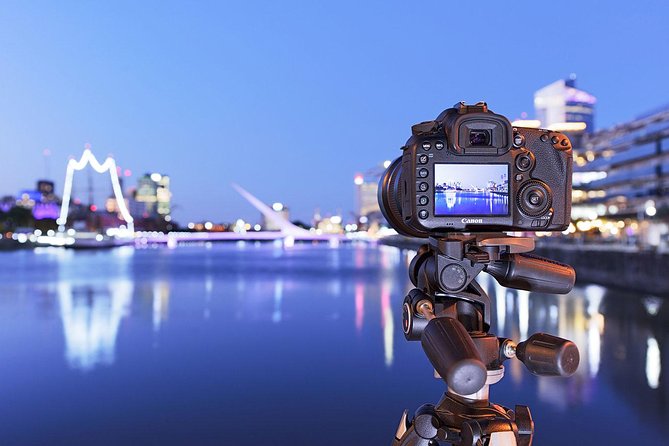
Twilight changes the city. This three-hour photography workshop gives you a practical way to photograph Buenos Aires as daylight fades, with clear instruction on composition, exposure, and the different stages of evening light. I especially like the small private groups of one to six people, and I like that the workshop welcomes beginners as well as experienced photographers. The main consideration is weather: the experience depends on good conditions, and the $175 price is a serious spend for three hours.
You meet at Av. de Mayo 501 at 6 p.m. and finish back at the same point around 9 p.m. The route includes the Obelisco, Casa Rosada, Plaza de Mayo, Avenida de Mayo, and Puerto Madero. You also get the assistance of professional travel photographer Nicolas, who can provide two tripods at no extra charge if you request them.
In This Review
- Key Things to Know Before You Book
- Why Twilight Is the Right Time for This Workshop
- Meeting Nicolas and Setting Up Your Camera
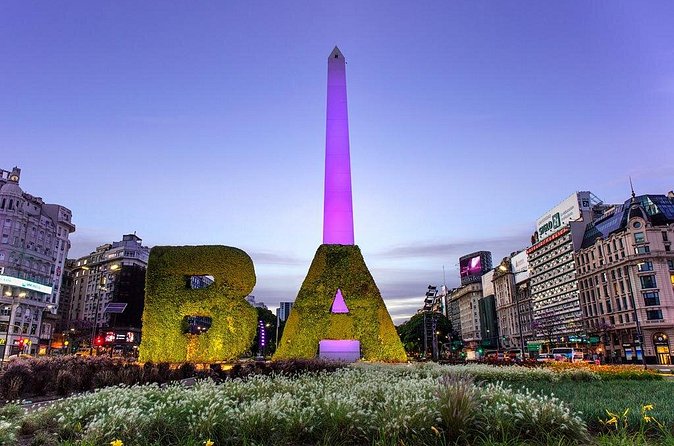
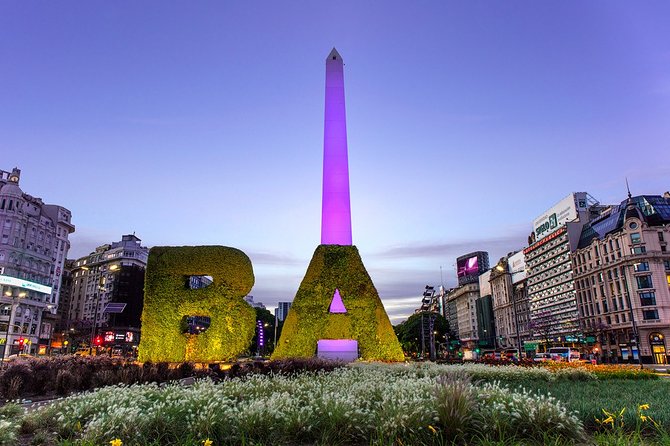
- The Obelisco as Your First Big City Frame
- Casa Rosada and Plaza de Mayo at Dusk
- Avenida de Mayo and the Problem of Mixed Light
- Puerto Madero Under the Evening Lights
- What You Actually Learn About Photography
- Is Three Hours Enough?
- The $175 Price and Who Gets Good Value
- Weather, Cancellation, and Practical Planning
- Who Should Book Twilight in Buenos Aires?
- Should You Book This Photography Workshop?
- FAQ
- Where does the workshop begin?
- Where does the workshop end?
- How long does the experience last?
- Is the workshop available every day?
- How many people can join?
- Is the experience suitable for beginners?
- Which locations are included?
- Are tripods provided?
- Is transportation included?
- What happens if the weather is poor?
Key Things to Know Before You Book
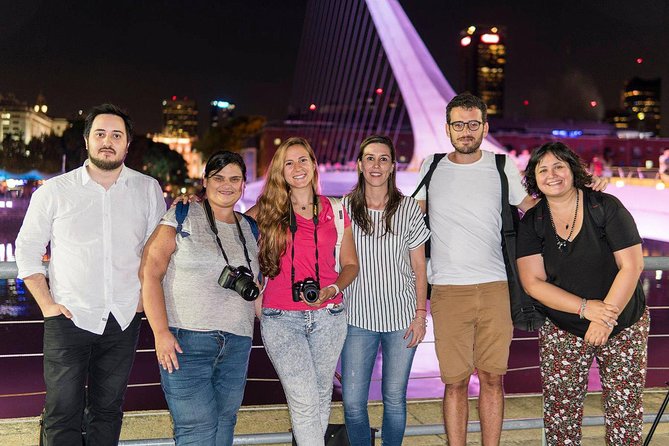
- You photograph several landmark settings as daylight fades, moving from central Buenos Aires toward Puerto Madero.
- The workshop teaches real camera control, including exposure as evening lights come on and composition in urban scenes.
- Groups are limited to one to six people, so the instruction can be more personal than on a large city tour.
- Beginners are welcome, and Nicolas can give an introductory photography talk if you need help with your camera.
- Two tripods are available by request, useful for low-light work without carrying your own support.
- The $175 cost is easiest to justify for photographers, especially if you want instruction rather than a simple sightseeing walk.
Why Twilight Is the Right Time for This Workshop
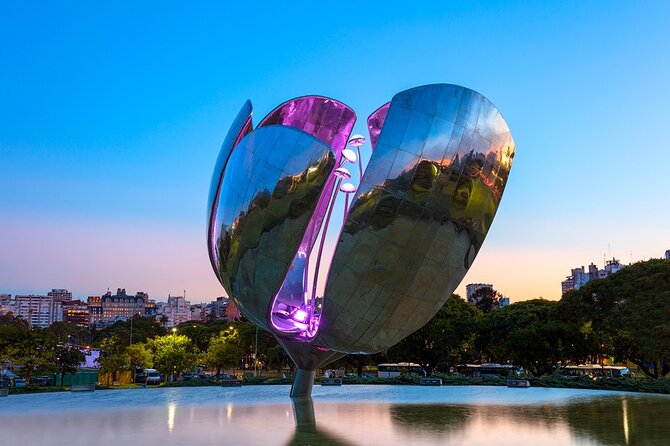
The useful part of this experience is not simply seeing Buenos Aires after dark. It is learning how to work during the short period when daylight, artificial light, and shadow all share the frame.
The workshop focuses on the different types of twilight and the changing Magic Hours of the evening. As the sun drops, the brightness of the sky changes quickly. Streetlights and building lights begin to matter more, while bright areas can remain difficult to expose correctly.
That gives you a real photographic problem to solve. You need to decide how much of the sky to preserve, how to handle bright lamps, and how to keep architectural details from disappearing into shadow. Nicolas teaches you how to maintain the correct exposure as the light goes down, rather than relying on a single setting for the whole evening.
You also work on composition. In a city setting, that can mean adjusting your position slightly to improve the shape of a building, control lines, or make a landmark sit more effectively within the frame. A small shift in where you stand can change the photograph more than an expensive lens.
This makes the workshop useful even if you are not technically advanced. You are not just collecting postcard views. You are learning why one position, exposure, or camera adjustment works better than another.
A few more Buenos Aires trips worth putting side by side
- Private Photography Tour in Buenos Aires
★ 5.0 · 35 reviews - Photo Session in Buenos Aires
★ 5.0 · 26 reviews - Your Personal Photographer in Buenos Aires
★ 5.0 · 24 reviews
Meeting Nicolas and Setting Up Your Camera
The workshop begins at Av. de Mayo 501, C1066 Buenos Aires. Once the group meets, Nicolas gives an introduction to photography when needed, then explains the plan for the evening.
That opening matters. If you are new to manual settings, you can use the first part of the session to get comfortable before the light changes quickly. If you already know your camera, you can move more directly into composition and low-light technique.
Nicolas also evaluates the best area for the group to work and place tripods. The possible working area is between Plaza de Mayo, Puerto Madero, Plaza Lavalle, and Avenida 9 de Julio. The final arrangement depends on the conditions and the light, so you should expect a practical session rather than a rigid route that ignores the evening.
Two tripods are available free of charge if you request them. That is a helpful extra, especially if you are flying with only a camera and one lens. You should ask for them when booking rather than assume they will automatically be waiting.
The activity is private, meaning only your own group takes part. With a maximum of six people, Nicolas can spend more time looking at individual camera settings and answering questions. That is one reason the price makes more sense for a couple, family, or small photography group than for someone seeking a low-cost city introduction.
The Obelisco as Your First Big City Frame
The Obelisco is the first listed stop. Its tall, simple form gives you an obvious subject, but photographing it well still requires choices about position and exposure.
The changing sky can help separate the monument from the surrounding city. As evening arrives, the contrast between the structure and nearby lights becomes more important. Nicolas can help you decide how to include the Obelisco without letting the brightest lights overwhelm the frame.
This is also a good point for working on urban composition. You can practice using strong vertical lines, surrounding streets, and the relationship between a landmark and the city around it. The value is not only the final image. You are learning a method that can apply to towers, facades, bridges, and monuments elsewhere.
The Obelisco is a major city landmark, so it may appeal most if you want a recognizable Buenos Aires image. The tradeoff is that this is an iconic subject with an obvious visual identity. You will need to work on viewpoint and framing if you want your photograph to feel personal rather than standard.
Casa Rosada and Plaza de Mayo at Dusk
Casa Rosada and Plaza de Mayo follow. These locations give you a different kind of urban subject, with historic civic architecture and a broad public square.
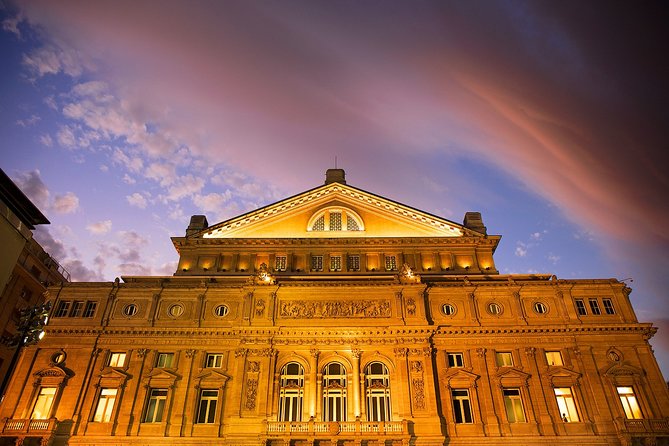
The open area of Plaza de Mayo can help you experiment with spacing and balance. Casa Rosada gives you a large architectural subject, while the fading light creates a chance to compare the building’s exterior with the darker sky and nearby illumination.
The instruction here is especially useful for architecture. Nicolas explains how to photograph buildings and how to deal with scenes that contain contrasting light. That practical advice may include small changes in your position and minor camera adjustments, rather than simply telling you to use a particular setting.
You should expect to spend time making choices. The goal is not to rush past Casa Rosada, take one picture, and move on. It is to understand how the building changes as twilight progresses and how your camera records that change.
Plaza de Mayo also brings a wider view. You can work on how much surrounding space to include and how to keep a large square from feeling empty. The setting gives you room to test both broad compositions and tighter architectural images.
Still Argentina, but a completely different sort of afternoon:
- Local Foodie Adventure in Buenos Aires with Sherpa Food Tours
★ 5.0 · 6,875 reviews - Buenos Aires City Private Tour with Local Guide
★ 5.0 · 3,475 reviews - Buenos Aires Small-Group City Tour
★ 5.0 · 2,226 reviews - Buenos Aires Hop-On Hop-Off Bus, Free Walking Tours & Discounts
★ 4.5 · 2,218 reviews
Avenida de Mayo and the Problem of Mixed Light
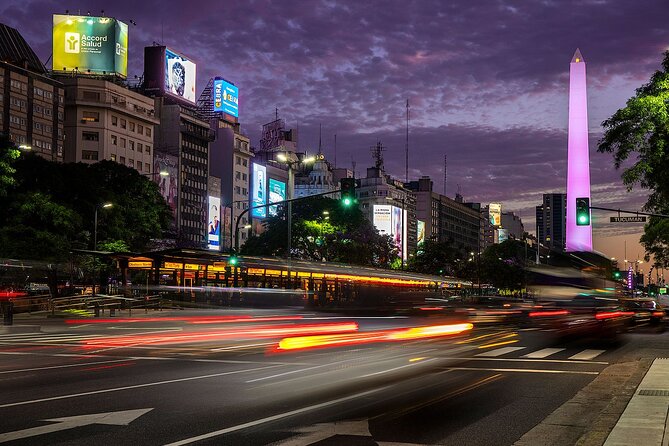
Avenida de Mayo adds a street-based setting to the workshop. By this point, the evening light should be more advanced, making the shift from natural light to artificial illumination easier to see.
This is where the lesson about correct exposure becomes practical. Urban scenes can contain bright lamps, illuminated buildings, darker corners, and a sky that still holds some color. The camera may not record all of those areas as your eyes do, so you need to decide what matters most in the frame.
Nicolas also offers guidance on positioning. A slight change in where you stand can alter reflections, lines, building edges, and the balance between light and shadow. That is useful advice for any city photographer because it encourages you to solve the frame before changing settings.
The review material highlights Nicolas’s patience and clear explanations, along with his sense of humor. That combination matters during a technical activity. Photography instruction can become stiff when every moment turns into a lesson, but the reported experience included plenty of laughter as well as useful camera guidance.
Avenida de Mayo may be less immediately simple than the Obelisco. You have more competing visual elements, which can make composition harder. That is also why it has teaching value.
Puerto Madero Under the Evening Lights
Puerto Madero is the final listed stop. Its modern setting gives the workshop a useful contrast with the historic center.
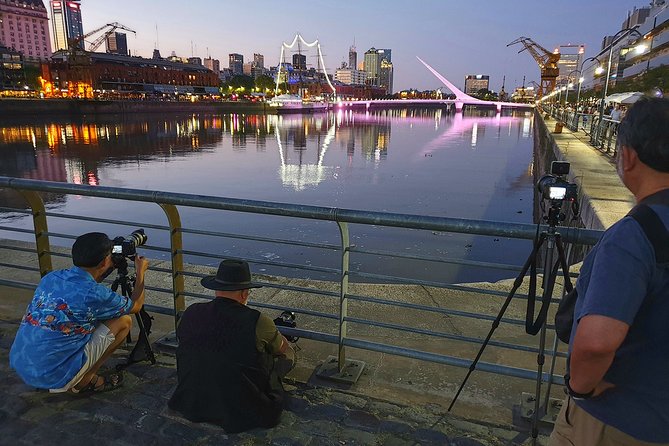
By the time you reach this part of the experience, the evening light should be more subdued, and artificial lights should play a larger role in your images. This is a good setting for practicing the techniques introduced earlier, including exposure control, composition, and tripod use.
The area also gives you a chance to compare different kinds of city photography. Earlier stops focus on major civic and historic landmarks. Puerto Madero brings a more modern urban setting, so you can see how the same camera decisions work with different shapes, surfaces, and light sources.
The information provided does not promise a fixed number of minutes at each stop or a specific route between them. That is worth noting. The experience may adapt to conditions and the best available light, rather than guaranteeing an identical schedule every evening.
The workshop ends back at the meeting point. Since transport to and from the meeting point is not included, you need to arrange your own way to Av. de Mayo 501 and your return afterward.
What You Actually Learn About Photography
The strongest part of this workshop is its focus on decisions you can reuse. Nicolas covers several useful areas:
- Composition: how to arrange buildings, streets, monuments, and open spaces in the frame.
- Exposure: how to keep control as natural light fades and artificial lights become stronger.
- Contrasting light: how to handle scenes with bright and dark areas at the same time.
- Positioning: how a small change in where you stand can improve the subject.
- Camera controls: how to use available features to determine suitable settings in different conditions.
- Tripod technique: how a stable camera can help during darker portions of the session.
One especially useful outcome is gaining a better understanding of your camera’s features. The experience is not limited to telling you what settings to use. It helps you understand how to judge the situation and choose settings for yourself.
That distinction matters. A preset recommendation may work for one scene, but it does not teach you what to do when the next building has different lighting. The workshop aims to give you a way to think through the problem.
If you are already advanced, you may find the introductory speech unnecessary. Nicolas can provide it if needed, so experienced photographers should be ready to say what they already know and ask for more targeted help.
Is Three Hours Enough?
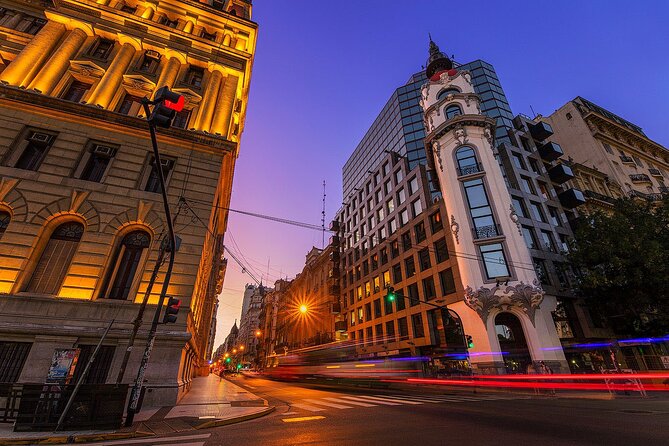
Three hours is a sensible length for a twilight session because the light changes within a limited window. A shorter workshop could feel rushed, while a much longer one might repeat the same technical problems after darkness has fully arrived.
The schedule runs from 6 p.m. to 9 p.m., Monday through Sunday, during the stated operating period. The exact quality of the light depends on the date and weather, so the experience is not identical from one evening to the next.
The workshop is best treated as a focused photography class with city views, not as a full historical tour of Buenos Aires. Nicolas provides historical and cultural information about the locations, but the main purpose is photography.
That distinction helps you choose correctly. If you want broad sightseeing commentary and a relaxed look at many neighborhoods, this may feel too specialized. If you want to improve your photographs while visiting major central landmarks, the three-hour format is well targeted.
The $175 Price and Who Gets Good Value
At $175 per person, this is not a bargain activity. The value depends on what you want from the evening.
You are paying for a private experience, a professional travel photographer, a maximum group size of six, and hands-on instruction during a difficult type of light. For a beginner who wants patient help with camera settings, that can be worthwhile. The same is true for a photographer who wants focused advice instead of a standard group tour.
The free tripod option adds practical value, though only if you request it. The experience also avoids the distraction of a large group, where instruction often becomes general and rushed.
The price is harder to justify if you already have strong low-light skills and mainly want a guide to show you landmarks. In that case, you may be paying for teaching you do not need.
I would book this for a photographer who values personal instruction, a couple sharing a camera interest, or a small group that wants a planned evening of shooting. I would skip it if your main goal is simply to see the sights at the lowest possible cost.
Weather, Cancellation, and Practical Planning
Good weather is required. If poor weather causes cancellation, you are offered another date or a full refund. That policy is useful because twilight photography loses much of its appeal when conditions prevent the group from working outdoors.
You can cancel for a full refund up to 24 hours before the start time. Changes or cancellations made less than 24 hours ahead are not accepted for a refund, and the cut-off follows local Buenos Aires time.
The meeting point is near public transportation, and most people can participate. Transport to and from the meeting point is not included, so allow time to reach Av. de Mayo 501 before 6 p.m. The activity ends there as well.
Bring the camera you actually plan to use and make sure you know how to access its basic controls. The workshop can help you learn, but you will get more from the evening if you are not spending the first half trying to find the shutter-speed menu.
Who Should Book Twilight in Buenos Aires?
This workshop suits you if you want to:
- Improve your exposure choices in changing light
- Photograph major Buenos Aires landmarks with guidance
- Learn more about composition and urban architecture
- Work in a private group of one to six people
- Get patient help as a beginner
- Refine your approach if you already understand basic camera controls
It is less suitable if you want a general sightseeing tour, dislike scheduled photography stops, or need a fully flexible activity that can proceed in poor weather.
The strongest praise centers on Nicolas’s patience, clear advice, and friendly manner. One participant left with a better understanding of camera features and how to adjust settings for different situations, including architecture and scenes with strong light contrasts. That is the kind of result you should expect to aim for: not just a handful of evening photographs, but better judgment behind the camera.
Should You Book This Photography Workshop?
Book it if photography is a real part of your Buenos Aires trip, not an afterthought. The private format, small group size, tripod option, and focus on changing light give the $175 price a reasonable purpose.
I would be especially keen to book if I were still learning manual exposure or wanted direct help with urban composition. If you already photograph twilight scenes confidently, ask yourself if personalized guidance is worth the cost.
The best reason to choose this experience is its practical focus. You move through five important city settings, but the real souvenir is learning how to make stronger decisions when daylight fades.
FAQ
Where does the workshop begin?
It begins at Av. de Mayo 501, C1066 Buenos Aires, Argentina.
Where does the workshop end?
The activity ends back at the meeting point.
How long does the experience last?
The workshop lasts approximately three hours, from 6 p.m. to 9 p.m.
Is the workshop available every day?
The stated opening hours are Monday through Sunday, from 6 p.m. to 9 p.m.
How many people can join?
The workshop is private and accepts groups of one to six people.
Is the experience suitable for beginners?
Yes. It is designed for photography enthusiasts from beginner to advanced. An introductory photography explanation is available if needed.
Which locations are included?
The listed stops are the Obelisco, Casa Rosada, Plaza de Mayo, Avenida de Mayo, and Puerto Madero.
Are tripods provided?
Two tripods are available free of charge by request.
Is transportation included?
No. Transport to and from the meeting point is not included.
What happens if the weather is poor?
The experience requires good weather. If it is canceled because of poor weather, you can choose another date or receive a full refund.
Recently added around Buenos Aires
- Photo Session in Buenos Aires★ 5.0 · 26 reviews
- Your Personal Photographer in Buenos Aires★ 5.0 · 24 reviews
- Discover Buenos Aires’ independent art scene — Ticket included★ 5.0 · 30 reviews
- Your Private Photographer in Buenos Aires★ 5.0 · 4 reviews
- Yerba Mate Workshop – Learn to Drink Mate like a Local!★ 5.0 · 11 reviews
- Taste of Tradition: Yerba Mate & Alfajores Experience★ 4.0 · 5 reviews
- Wine tasting in OASIS Palermo★ 5.0 · 2 reviews
- Day Tour Classic★ 3.5 · 35 reviews
Workshops, compared.
Cooking Class Designed by Michelin Chef @ Argentine Experience
Read our review →
Polo Match, BBQ and Lesson Day-Trip from Buenos Aires
Read our review →

Private Cooking Lessons and Food Tasting in Buenos Aires
Read our review →
3-Hour Buenos Aires Empanadas and Alfajores Cooking Class
Read our review →Browse the lists this tour appears in