
Reviewed · ASADO AND ARGENTINE FOOD
Buenos Aires: Empanada & Alfajor Cooking Lesson in Palermo
Food tells you plenty about Argentina. This Palermo cooking class makes that lesson delicious, with hands-on instruction in two national favorites: savory empanadas and dulce de leche alfajores. I like the way the class connects recipes with Argentine customs, especially through mate tea and conversation with a local host. I also like that you can choose meat or vegan empanadas, making the activity useful for different diets. The main consideration is that parts of the cooking may be demonstrated rather than done by every participant, especially in a family or larger group.
At $49 per person for 150 minutes, this is a fair-value activity if you want more than a restaurant meal. You make the food, eat what you prepare, and leave with recipes you can try at home. Just confirm the exact meeting address before setting out, since the information gives both Gorriti 4882 and Gorriti 4886 in Palermo.
In This Review
- Key points to know before booking
- Why empanadas and alfajores make a smart Buenos Aires class
- Arriving in Palermo for the 150-minute session
- Starting with Argentine empanadas
- Making dulce de leche alfajores from scratch
- Mate tea and the social side of the lesson
- Eating what you prepare
- What the guides do well
- Is $49 a good value?
- Who should book this Palermo experience?
- Booking details worth checking
- FAQ
- How long is the empanada and alfajor cooking class?
- What food do you make during the experience?
- Are vegan empanadas available?
- Is mate tea included?
- Which languages are offered?
- Is hotel pickup included?
- Should you book it?
Key points to know before booking
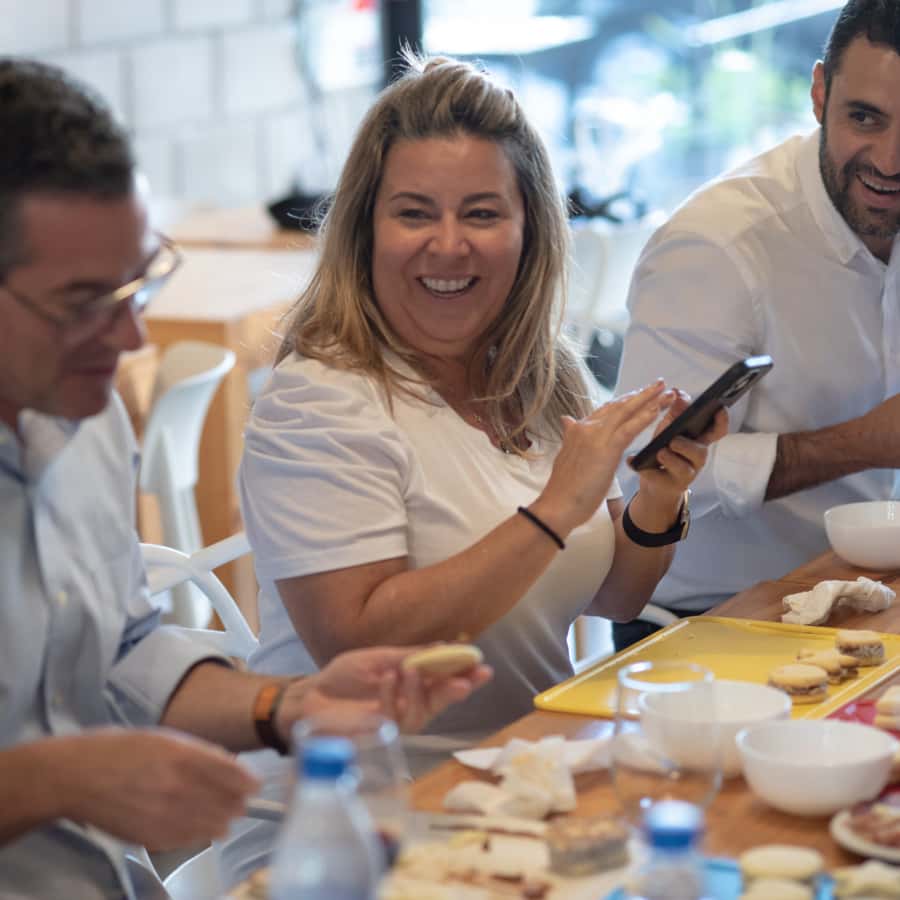
- Two Argentine classics in one class: You prepare empanadas and dulce de leche alfajores, then enjoy the results.
- A genuinely hands-on format: You mix, shape, fold, bake, and assemble rather than simply watching a chef.
- Good for families: Children can take part, and the 150-minute session gives the activity enough time without taking a whole day.
- A social introduction to Argentina: Mate tea, food customs, and conversation add local context to the recipes.
- Flexible food choice: Meat and vegan empanada options are available.
- Strong guide feedback: Carolina, Tomas, Catalina, Paulina, Lourdes, Layla, Nyla, and other hosts have been praised for clear instruction, patience, and warmth.
Why empanadas and alfajores make a smart Buenos Aires class
You could spend an afternoon simply eating these foods around Buenos Aires. That is enjoyable, but learning to make them gives you a better sense of how they fit into everyday Argentine life.
Empanadas are among Argentina’s most familiar foods. They are portable, adaptable, and closely tied to home cooking, family gatherings, bakeries, and casual meals. The class gives you a chance to work with the fillings and dough, then practice the folding style that makes each pastry recognizable.
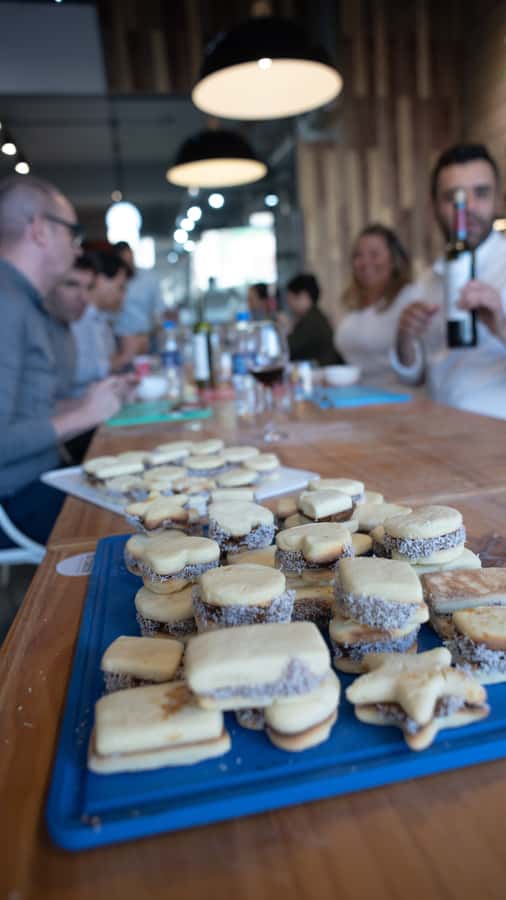
Alfajores are a different kind of pleasure. These soft cookies are filled with creamy dulce de leche, Argentina’s famous milk caramel. Making them from scratch lets you see the steps behind a sweet that is easy to buy but more satisfying to prepare yourself.
I especially like the pairing. The empanadas give the class a savory center, while the alfajores provide a sweet finish. You are not spending two and a half hours on one repetitive recipe.
More Asado Experiences in Buenos Aires
- Buenos Aires: 9-Course Argentine Meat Tasting at Fogón Asado
★ 4.9 · 826 reviews - Join a Local Family Asado in Buenos Aires with Betty and Marcelo
★ 5.0 · 686 reviews - Buenos Aires: Empanadas and Alfajores Guided Cooking Class
★ 4.8 · 486 reviews
Arriving in Palermo for the 150-minute session
The class takes place in Palermo at Gorriti 4882, with the meeting information also showing Gorriti 4886. Those addresses are close, but you should check the final confirmation carefully so you do not lose time looking for the host.
Hotel pickup and drop-off are not included. Plan to reach the Palermo meeting point on your own and allow a little extra time, particularly if this is your first visit to the neighborhood. The activity runs in rain or sunshine, so weather does not cancel the cooking plan.
The class is listed as wheelchair accessible. If you have specific mobility needs, it is still sensible to confirm the room setup in advance, since accessibility can depend on the entrance and kitchen arrangement.
The guides work in English, Spanish, and Portuguese. That language range is useful for families and mixed-language groups, and it helps keep the cooking instructions clear when you are handling dough or shaping pastries.
Starting with Argentine empanadas
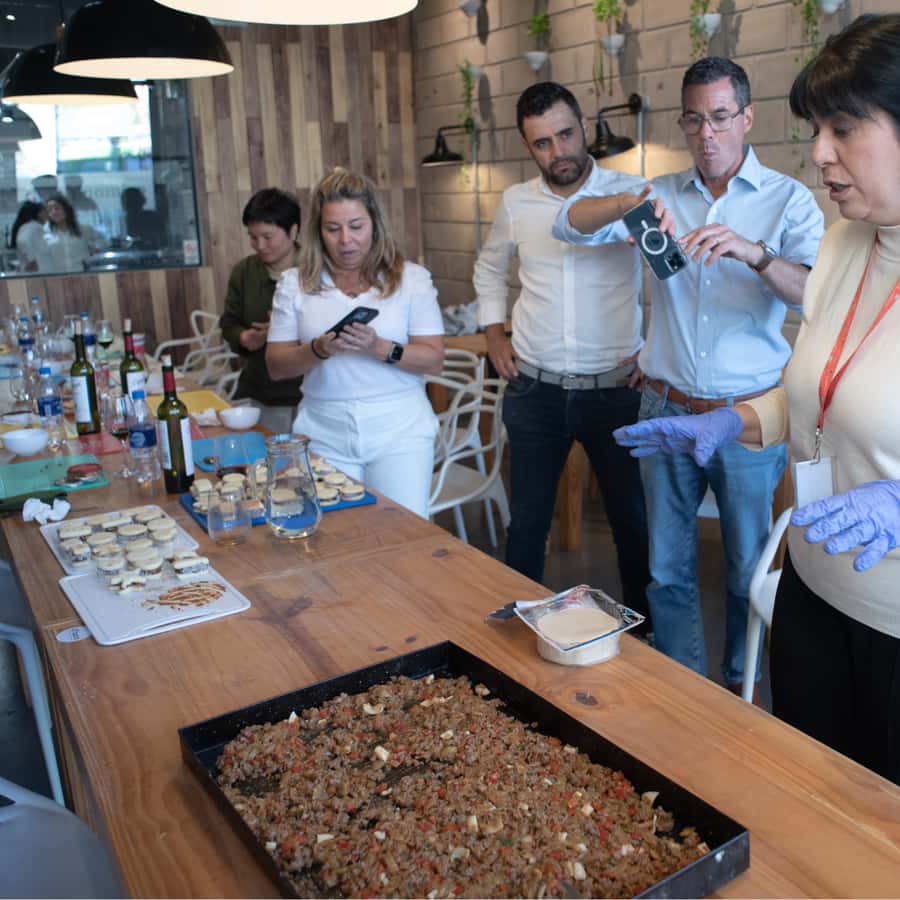
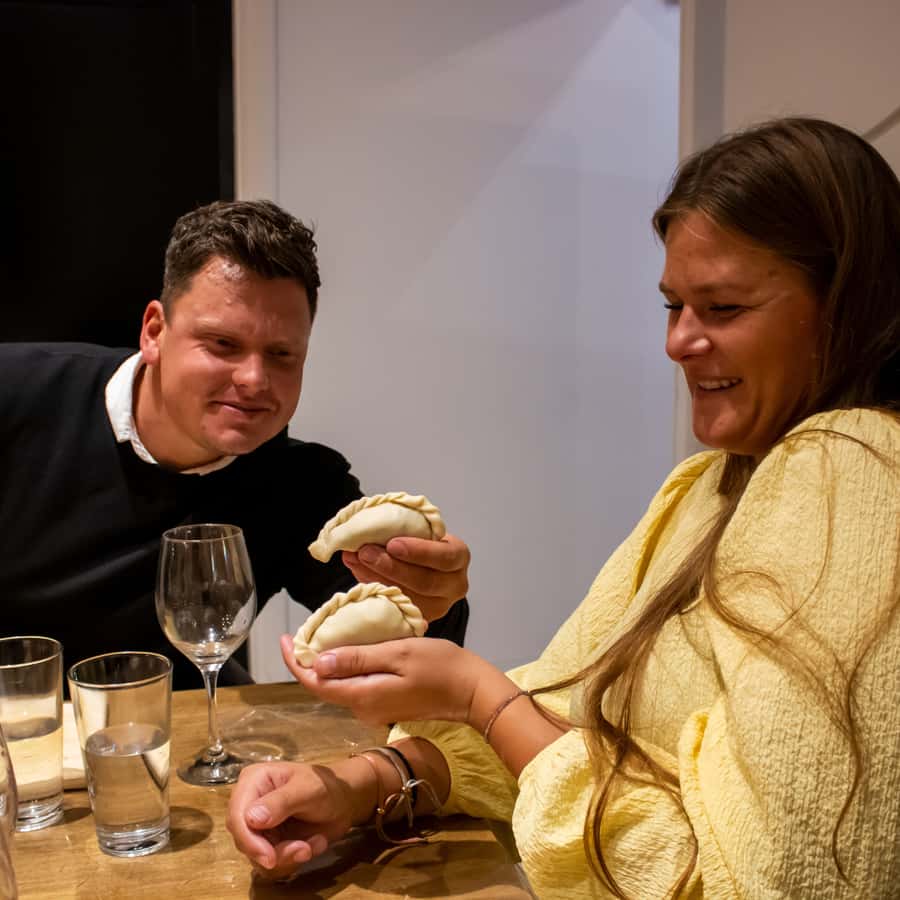
The first major cooking task is the empanada. Your host explains the ingredients and walks you through the preparation before you begin making your own.
The most useful part is the hands-on work with the dough. One participant described comparing packaged empanada dough with freshly made dough, which gives you a practical lesson rather than a vague cooking demonstration. You can see how the two approaches differ and decide which method makes sense in your own kitchen.
The filling can be meat or vegan. That choice matters because empanadas are often associated with meat, yet you do not have to miss the experience if you follow a plant-based diet. The supplied information does not specify every filling, so do not book expecting a particular regional recipe unless the host confirms it.
Shaping is where the class becomes a little playful. Folding the edge of an empanada is an Argentine kitchen skill, and it can be harder than it looks at first. Your guide helps you work through the steps and corrects the shape as needed.
The teaching quality seems to be one of the strongest parts of the experience. Carolina has been praised for explaining every step and keeping the class fun. Lourdes was described as patient, while Tomas received repeated praise for clear instructions and useful cooking tips. Those details matter more than a fancy kitchen. A good instructor keeps beginners from feeling clumsy.
One practical limitation is that not everyone may be actively cooking during every stage. A family group noted that some sections involved more demonstration than participation. If you are booking with children, ask the host how tasks will be shared. The class is still suitable for families, but the youngest participants may need to take turns.
Making dulce de leche alfajores from scratch
After the empanadas, the class turns to alfajores. You mix the cookie ingredients, bake them, and assemble the finished treats with dulce de leche.
This section gives you a nice change of pace. Empanadas involve savory filling and careful folding, while alfajores require attention to dough, baking, and assembly. The result is also immediately rewarding. Several comments describe the alfajores as especially delicious, and one person said they became a favorite dessert during time in Argentina.
Dulce de leche is central to the experience. The filling is creamy and sweet, and it gives the cookies their unmistakable Argentine character. You get to handle the process rather than simply receive a finished biscuit with coffee.
The class also has value for home cooks. One participant returned home and taught a parent how to make alfajores. Another planned to use the empanada and alfajor recipes for future parties. You should be able to recreate at least the general method at home, though your exact results will depend on ingredients, oven temperature, and how carefully you shape the dough.
If you are not an experienced cook, the class remains approachable. The guides are used to explaining the steps, and the strongest feedback consistently points to patience and easy-to-follow teaching. If you already cook often, you may still pick up useful ideas about dough, filling, and Argentine food customs.
More asado and Argentine cooking in Buenos Aires:
- The Asado Experience – Premium Steak
★ 5.0 · 347 reviews - Authentic Rooftop Asado Experience with Argentine Wine Pairing
★ 5.0 · 274 reviews - Parrilla Tour Palermo
★ 5.0 · 185 reviews - Buenos Aires: Authentic Argentine Asado BBQ with Live Music
★ 5.0 · 178 reviews
Mate tea and the social side of the lesson
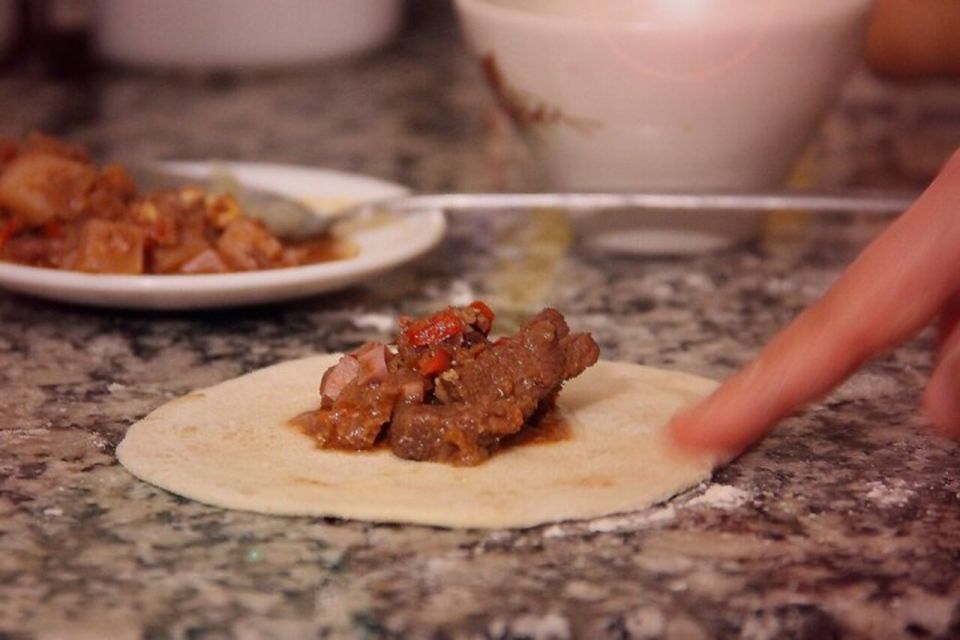
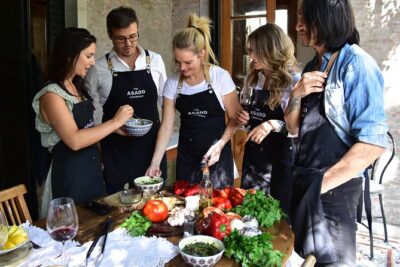
Mate tea gives the class a cultural layer that a standard cooking demonstration might miss. Your host serves local mate while explaining aspects of Argentine food and social life.
Mate is not simply another hot drink on the table. Sharing it is part of social life in Argentina, and trying it during the lesson helps you understand the custom in a natural setting. You are learning about food while sitting with a local guide and other participants, rather than moving through a scripted attraction.
The atmosphere appears to be friendly and conversational. Hosts such as Catalina, Paulina, Layla, and Tomas have been praised for making people feel welcome and involved. Paulina was especially appreciated for sharing her home, cooking skills, culture, and recipes, while Layla was praised for dividing the work so the meal felt manageable.
Some sessions have also included wine, although wine is not listed among the official inclusions. Treat that as a possible extra rather than a promised part of the booking. Mate tea is included, along with the empanada and alfajor ingredients.
This social element may be the best reason to choose the class over a recipe video. You can ask questions, meet people from other countries, and talk over the food afterward. One family described the activity as enjoyable for ages 11 to 48, which gives you a good sense of its broad appeal.
Eating what you prepare
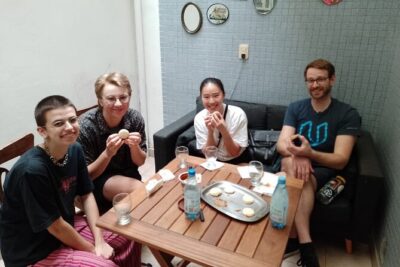
The class does not end when the cooking is finished. You sit down and eat the empanadas and alfajores you have made.
That meal is important for two reasons. First, you can judge the results while the techniques are still fresh in your mind. Second, shared food turns the lesson into a relaxed social experience rather than a short practical workshop.
Expect enough food to make the session feel like a meal, not just a tasting. One person specifically noted that there was more than enough food. Another appreciated having leftovers packed to take away, though that is not guaranteed and should not be treated as part of the formal package.
You may also have time to compare your work with the other participants. Empanada folds will not all look identical, and that is part of the fun. The food does not need to look perfect to taste good.
The strongest praise focuses on flavor as well as instruction. People repeatedly describe the empanadas and alfajores as delicious, and one participant called the experience good value because the meal after cooking was substantial. At $49, the price makes more sense when you count the food, ingredients, guide, cultural explanation, and time spent in the class.
What the guides do well
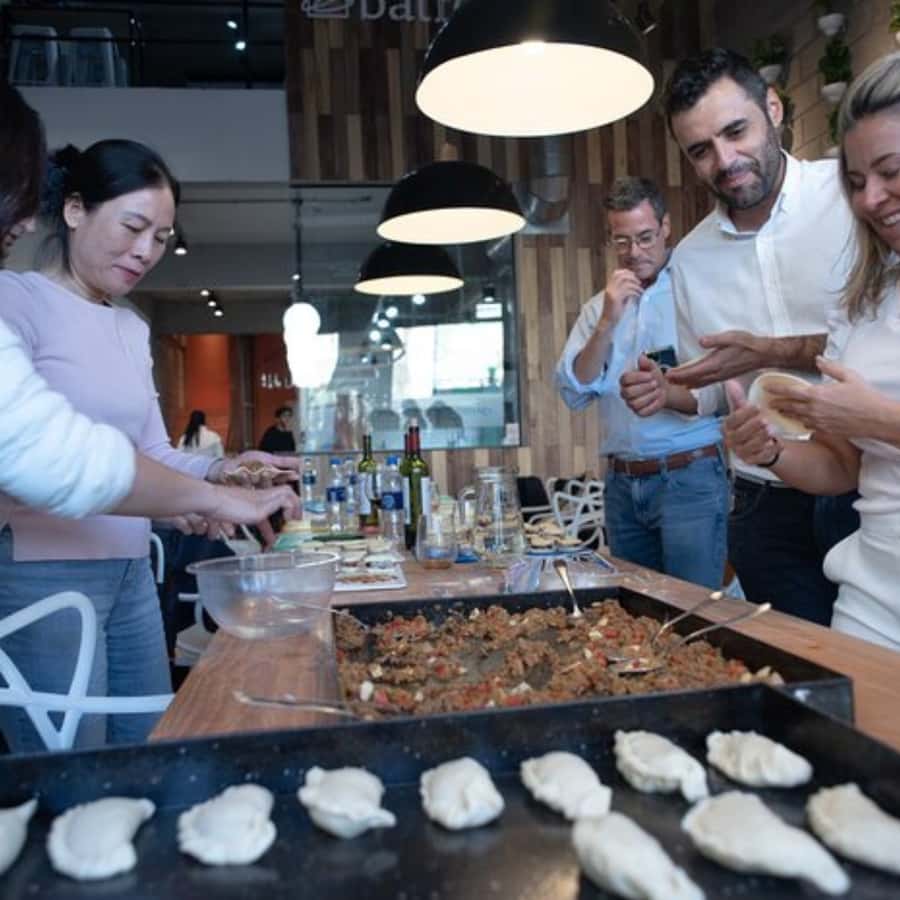
The host makes or breaks a small cooking class, and this one has a deep bench of well-liked instructors. Carolina is praised for enthusiasm and patience. Tomas is described as both an excellent chef and a clear teacher. Catalina receives repeated praise for her warmth and ability to keep everyone involved.
Paulina’s sessions seem to place extra emphasis on hospitality and personal connection. Layla is noted for managing the group so that the work never felt overwhelming. Nyla and Lourdes also received strong praise for their teaching and friendly manner.
The names matter because the experience may vary slightly depending on the host. Each instructor brings a different personality, and the class can feel more like a meal with a helpful local friend than a formal culinary school lesson.
Do not expect a highly technical professional cooking course. The appeal is practical instruction, cultural conversation, and a good meal. If you want advanced knife skills, restaurant-level pastry work, or a long discussion of regional Argentine cuisine, this may feel fairly light. If you want recipes you can use and an easy way to meet local people, it fits well.
Is $49 a good value?
For 150 minutes, $49 is reasonable, especially in Buenos Aires where you can pay a similar amount for a meal without learning anything about it.
The value comes from the combination of ingredients, instruction, food, and setting. You are not paying only for a plate of empanadas. You are paying for the chance to make them, practice the fold, prepare alfajores, taste mate, and ask a local guide about Argentine food.
The price is less attractive if you are looking only for a quick snack or if you dislike group activities. You also need to arrange your own transport to and from Palermo, and the exact amount of wine or takeaway food is not guaranteed.
For families, the price can be justified because the activity serves as both a meal and an experience. For couples and solo participants, the social setting adds value. For serious cooks, the class is worthwhile if you want Argentine techniques and recipes, but it is not advertised as an advanced masterclass.
Who should book this Palermo experience?
I would recommend it most strongly to:
- Families with children who enjoy making and eating food
- First-time visitors who want an easy cultural activity in Buenos Aires
- Couples looking for something more active than a restaurant dinner
- Home cooks who want to recreate empanadas and alfajores
- Vegetarians and vegans who want an available empanada option
- Anyone who enjoys meeting people through food
You may want to skip it if you prefer private instruction, dislike shared cooking spaces, or want a strictly scheduled professional kitchen lesson. The relaxed social format is part of the charm, but it also means some stages may be shown while participants take turns.
The class is a good choice for a rainy afternoon, since it runs in all weather. It also works well near the beginning of your Buenos Aires stay. You can use the recipes later in the trip, and you may start noticing different empanada folds and alfajor styles in bakeries and restaurants.
Booking details worth checking
The activity costs $49 per person and lasts 150 minutes. Ingredients for both dishes, a local instructor, and mate tea are included. Hotel transportation is not.
You can book and pay later, which helps if your schedule in Buenos Aires is still moving around. Free cancellation is available up to 24 hours before the activity for a full refund.
The experience is offered in English, Spanish, and Portuguese. It is wheelchair accessible, and the in-person class takes place in Palermo. Since the meeting information lists both Gorriti 4882 and Gorriti 4886, confirm the exact door and arrival instructions before you go.
FAQ
How long is the empanada and alfajor cooking class?
The class lasts 150 minutes, or two and a half hours.
What food do you make during the experience?
You make Argentine empanadas and dulce de leche alfajores. The class includes preparing, cooking, and assembling the food.
Are vegan empanadas available?
Yes. Meat and vegan empanada options are available.
Is mate tea included?
Yes. Local mate tea is included, along with the ingredients and instructor.
Which languages are offered?
The live guide can lead the experience in English, Spanish, or Portuguese.
Is hotel pickup included?
No. Hotel pickup and drop-off are not included, so you need to make your own way to the Palermo meeting point.
Should you book it?
Book this class if you want to understand Argentina through food, not just eat it. The combination of empanada folding, homemade alfajores, mate tea, and friendly instruction gives you a useful two-and-a-half-hour introduction to local tastes.
The biggest strengths are the hands-on format, flexible vegan option, generous food, and consistently warm teaching from hosts such as Carolina, Tomas, Catalina, and Paulina. The main caution is that not every participant may cook during every step, and the exact meeting address should be confirmed.
For $49, I consider it a solid choice for families, first-time visitors, and anyone who plans to keep cooking after returning home. You leave with a full stomach, a few Argentine food stories, and recipes that can bring a little Buenos Aires into your own kitchen.
More Cooking Classes in Buenos Aires
- Argentine Experience Interactive Dining and Cooking
★ 5.0 · 1,382 reviews - Cooking Class Designed by Michelin Chef @ Argentine Experience
★ 5.0 · 1,123 reviews - Private Cooking Lessons and Food Tasting in Buenos Aires
★ 5.0 · 223 reviews - Pachamama – Argentine Cooking Experience in Buenos Aires
★ 5.0 · 144 reviews
Recently added around Buenos Aires
- Photo Session in Buenos Aires★ 5.0 · 26 reviews
- Your Personal Photographer in Buenos Aires★ 5.0 · 24 reviews
- Discover Buenos Aires’ independent art scene — Ticket included★ 5.0 · 30 reviews
- Your Private Photographer in Buenos Aires★ 5.0 · 4 reviews
- Yerba Mate Workshop – Learn to Drink Mate like a Local!★ 5.0 · 11 reviews
- Taste of Tradition: Yerba Mate & Alfajores Experience★ 4.0 · 5 reviews
- Wine tasting in OASIS Palermo★ 5.0 · 2 reviews
- Day Tour Classic★ 3.5 · 35 reviews
Asado and Argentine Food, compared.
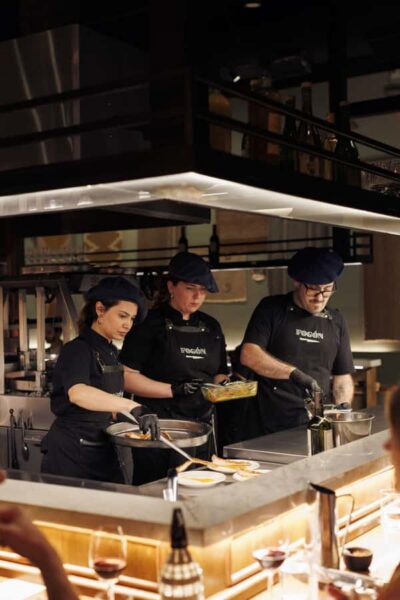
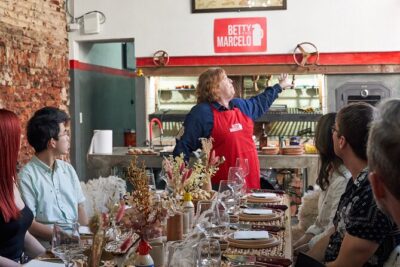
Join a Local Family Asado in Buenos Aires with Betty and Marcelo
Read our review →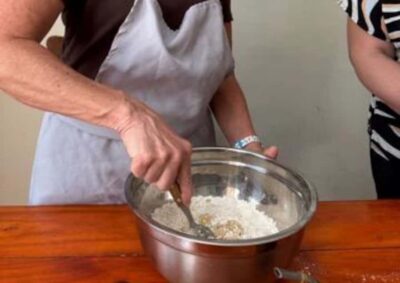

Authentic Rooftop Asado Experience with Argentine Wine Pairing
Read our review →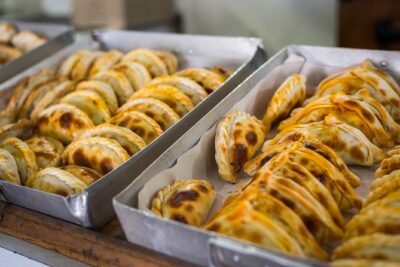
3-Hour Buenos Aires Empanadas and Alfajores Cooking Class
Read our review →Browse the lists this tour appears in