
Reviewed · ASADO AND ARGENTINE FOOD
3-Hour Buenos Aires Empanadas and Alfajores Cooking Class
Come hungry, leave with recipes. This three-hour Buenos Aires class brings you into a local home to make empanadas, alfajores, and mate, three simple ways to taste everyday Porteño culture. I like the small groups of up to eight, and I like that you make the dough and fillings yourself rather than only watching a demonstration.
The price is $37 per person, which is fair for a meal, dessert, cultural lesson, and plenty of food. The main thing to consider is that the class is casual rather than polished. Most people enjoy its warm, home-based setting, but a few have found the organization or communication less smooth than expected.
In This Review
- At a glance: what makes this class worthwhile
- Walking into a Porteño kitchen at Av. Paseo Colón
- Mate, conversation, and the rules of sharing
- Making empanadas from dough to braided edges
- Alfajores, dulce de leche, and the sweet finish
- A full plate, not just a demonstration
- The hosts and the feel of the group
- Who should book this Buenos Aires cooking class?
- Timing, transport, and small details that matter
- My verdict: book it for food and connection
- FAQ
- How long does the Buenos Aires cooking class last?
- Where does the class start?
- Where does the class finish?
- How much does the class cost?
- How many people can join the class?
- Do I need cooking experience?
- Are vegetarian options available?
- Is the class suitable for someone with a gluten allergy?
- What foods do you make?
- Can I cancel for a full refund?
At a glance: what makes this class worthwhile
- Mate comes first: Learn how to prepare and share Argentina’s famous herbal drink in a relaxed social setting.
- Two classic recipes: Make empanada dough and filling, then shape alfajores with dulce de leche.
- Small-group attention: The maximum group size is eight, with several sessions described as having five or six people.
- A real Buenos Aires home: You get a glimpse of local domestic life rather than a formal cooking school.
- Generous portions: The food is usually enough for a full meal, with some people taking leftovers home.
- Useful for vegetarians: A vegetarian version is available if you tell the hosts ahead of time, but the class is not suitable for people with gluten allergies.
Walking into a Porteño kitchen at Av. Paseo Colón
The class starts at Av. Paseo Colón 1355 in Buenos Aires and finishes at the same place. It is not presented as a central restaurant activity near the Obelisk, so check the address carefully before leaving your hotel and allow time to find the entrance.
One person found the address difficult to locate, while another reported that map information led to the wrong part of the city. At the same time, other people arrived without trouble. My practical advice is simple: copy the exact street address, keep the booking details available offline, and contact BsAs Mio before the day if you need a clearer landmark or entrance instruction.
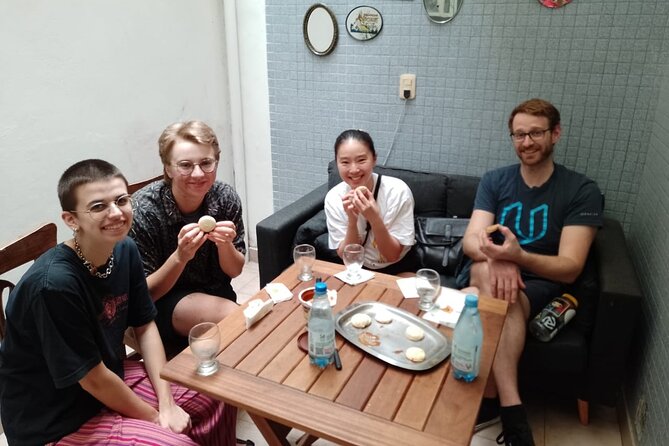
Once inside, you should expect a home kitchen and a few tables rather than a large commercial cooking studio. That is part of the appeal. You are not being placed in a staged restaurant setting. You are sitting around a table, talking with hosts and other people from different countries, and preparing food in an ordinary Buenos Aires home.
The home setting also explains some of the mixed impressions. Many people appreciate the relaxed, down-to-earth atmosphere. A small number have found the space cluttered or the class less organized than hoped. If you prefer a sleek, highly choreographed culinary school, this is probably not your best match.
More Asado Experiences in Buenos Aires
- Buenos Aires: 9-Course Argentine Meat Tasting at Fogón Asado
★ 4.9 · 826 reviews - Join a Local Family Asado in Buenos Aires with Betty and Marcelo
★ 5.0 · 686 reviews - Buenos Aires: Empanadas and Alfajores Guided Cooking Class
★ 4.8 · 486 reviews
Mate, conversation, and the rules of sharing
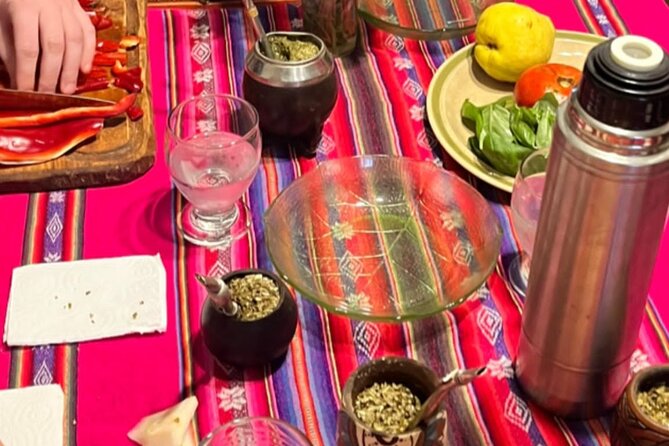
The class usually begins with mate. The host prepares the drink and passes it around in a cup with a metal straw, giving you a chance to taste it and learn how the ritual works.
Mate is more than a beverage in Argentina. It is a social custom, and the way it is prepared and shared tells you something about how people spend time together. This opening gives the class a useful cultural frame before the cooking starts. You are not simply learning to boil water or drink an herbal infusion. You are learning one of the everyday customs that helps define local life.
The mate portion also breaks the ice. You can talk with the other people in the group before everyone starts chopping and shaping dough. That matters in a class this small. Several people who came alone found it easy to join the conversation, and the group format often turns a short lesson into a pleasant shared meal.
The class is linked to the wider culture of Buenos Aires. The host from BsAs Mio describes a background in city guiding and tango, which helps connect the food lesson with Porteño customs. I would not book this as a tango class, since tango is not the main activity, but that cultural connection adds context to the mate and food.
Making empanadas from dough to braided edges
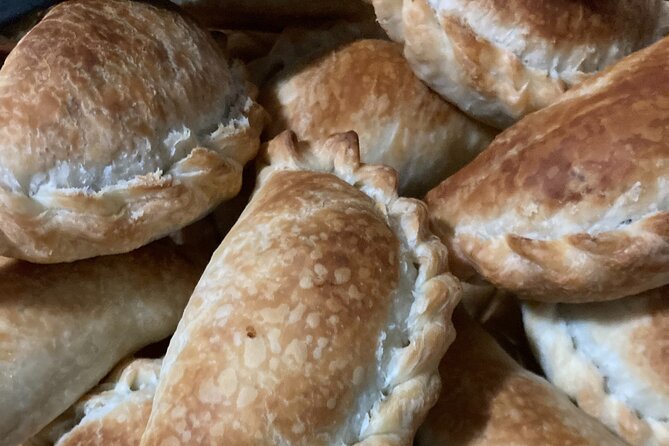
The empanada portion is the most hands-on part for many people. You learn to make the dough, prepare the filling, roll the dough, add the filling, and close each pastry.
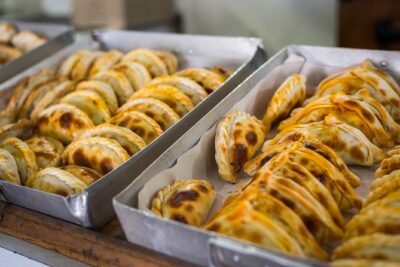
The filling includes chopped vegetables, and the class can provide a vegetarian option when requested in advance. You then use round pieces of dough and learn how to seal the edge in a braided or folded style. That final crimp is an important part of the lesson. It helps keep the filling inside and gives the empanada its familiar look.
I like this approach because it teaches a repeatable process. You are not only eating a finished pastry. You are learning a recipe that can be made again with ingredients available in many countries. Several people specifically appreciated receiving recipes or being shown methods simple enough to copy at home.
The cooking does not appear to demand advanced skill. One person described the class as suitable even for non-cooks, and another found the instructions clear enough to recreate the dishes later. Younger children can also take part. A six-year-old was included successfully, with patient help from the host.
There is one reasonable qualification. One person expected more individual hands-on time and felt that the class explained the whole process without giving quite as much personal practice as hoped. In a group of five or six, you should get a good turn at the work, but this is still a shared class. You may not spend every minute handling dough.
Alfajores, dulce de leche, and the sweet finish
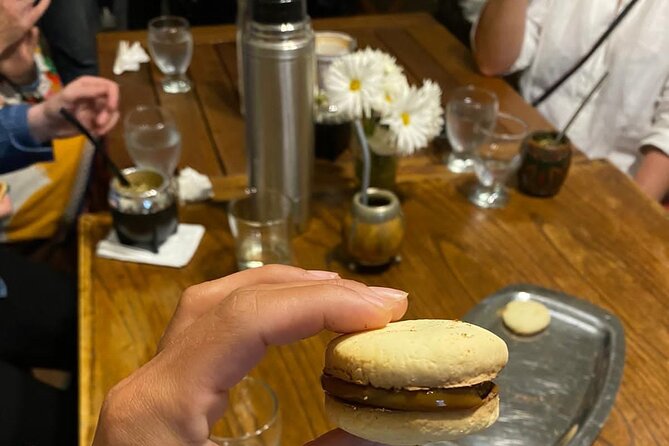
Next comes the alfajor dough. You mix it from scratch, roll it out, and cut round pieces with cookie cutters. The baked pieces are then joined with dulce de leche, creating the soft, sweet sandwich cookie associated with Argentina.
This is a good second recipe because it balances the savory empanadas. You move from chopping and filling to pastry work and dessert assembly. It also gives you a chance to understand why dulce de leche appears so often in Argentine sweets.
A lactose-free dulce de leche option has been provided for at least one class, but you should still explain your dietary needs in advance. The stated information confirms vegetarian suitability, not every possible allergy or dietary variation. The class is specifically not suitable for people with gluten allergies, since both recipes depend on wheat-based dough.
The dessert is not an afterthought. You make the alfajor dough yourself rather than simply spreading dulce de leche onto prepared cookies. That extra step makes the recipe more useful when you return home. You learn the basic shape, texture, and assembly, then get to eat the result at the end.
More asado and Argentine cooking in Buenos Aires:
- The Asado Experience – Premium Steak
★ 5.0 · 347 reviews - Authentic Rooftop Asado Experience with Argentine Wine Pairing
★ 5.0 · 274 reviews - Buenos Aires: Empanada & Alfajor Cooking Lesson in Palermo
★ 4.6 · 186 reviews - Parrilla Tour Palermo
★ 5.0 · 185 reviews
A full plate, not just a demonstration
The strongest practical reason to choose this class is that it functions as a meal. You make and eat the empanadas and alfajores, and portions are often generous enough to leave you very full. Some people have had enough food to take leftovers home.
That makes the $37 price easier to justify. You are paying for about three hours of instruction, a cultural introduction to mate, ingredients, a savory dish, dessert, and a social evening. Comparable value depends on your priorities, but this is not a quick snack stop with a short explanation.
The class also works well during a trip when you want a break from sightseeing. Buenos Aires can fill your days with museums, plazas, historic buildings, and late dinners. A kitchen session gives you something slower and more personal. You sit down, work with your hands, and learn recipes you can use after the trip.
Wine may be available, but one person was unhappy about an extra charge for red wine that was not clear to them. I would ask about the cost before accepting any additional drink. Water is available, and one person described it as unlimited.
The hosts and the feel of the group
Thomas and Cynthia were praised for being warm and helpful during one small-group session. Other descriptions refer to friendly, patient hosts who explained each step, answered questions, and made an effort to involve everyone.
The class has earned a 4.7 rating from 142 reviews, with 92 percent of people recommending it. That is a strong result, and the praise is consistent in a few areas: the hosts, the relaxed atmosphere, the food, the chance to meet people from around the world, and the ease of following the recipes.
Language does not appear to be a major obstacle for mixed groups. One family described a class with four English speakers and two Spanish speakers, and the host managed to communicate with everyone. Still, the exact language support can vary by session, so you should ask BsAs Mio if you need instruction in a particular language.
The hosts’ style is informal. That is a plus if you enjoy local contact and do not need every step to feel formal. It can be a minus if you expect strict timing, perfectly printed instructions, or restaurant-level service.
Most of the feedback is very positive, but two serious complaints concern communication. One person arrived after a cancellation and said no notice had reached them. The provider stated that the cancellation had been communicated because of circumstances beyond its control and said the payment would be returned, though transport costs would not be covered.
Another person had difficulty finding the location and felt that later communication was unhelpful. These are isolated issues beside a large number of positive experiences, but they are worth noting. Confirm the meeting point and start time before setting out, especially if you are relying on a prepaid ride or have a tight evening plan.
Who should book this Buenos Aires cooking class?
I would recommend this class to you if you want food, conversation, and local customs in one compact activity. It is especially suitable for:
- Solo visitors who want an easy way to meet people
- Couples looking for a low-key evening activity
- Families with children who enjoy simple kitchen tasks
- Vegetarians who give advance notice
- People who want recipes they can repeat at home
- Anyone curious about mate beyond simply ordering it in a café
You will probably like it less if you have a severe gluten allergy, need a highly controlled kitchen, dislike eating in a private home, or want a professional chef demonstration with every portion individually prepared.
The activity is also a good choice for non-cooks. The recipes are approachable, and the process is broken into clear stages. You do not need to arrive with pastry skills. The most important requirement is willingness to participate and accept that a small home class can feel informal.
Timing, transport, and small details that matter
The class lasts about three hours, so do not schedule another activity immediately afterward. You will likely want time to finish eating and get back across the city without rushing.
The maximum group size is eight. A group of five or six seems to provide the best balance: enough people for conversation, but not so many that the cooking becomes a spectator event. If the class reaches its maximum, you may have less individual attention around the tables.
The meeting point is near public transportation. Since the address has caused confusion for a few people, I would not rely only on a pin in a map app. Save the address as Av. Paseo Colón 1355, C1063ADA, Ciudad Autónoma de Buenos Aires, Argentina, and keep your confirmation accessible.
Confirmation is provided at booking. Free cancellation is available up to 24 hours before the start time. Changes or cancellations inside that 24-hour window are not accepted for a refund, so check the local Buenos Aires time before making plans.
My verdict: book it for food and connection
I would book this class if I wanted an affordable, social introduction to Argentine food that went beyond eating in a restaurant. The mate ritual, homemade empanadas, alfajores with dulce de leche, and generous portions give you a lot for three hours and $37.
Go in expecting a friendly home kitchen, not a polished culinary production. Confirm the address, ask about any extra drink charges, and notify the hosts about vegetarian needs before arriving. If those conditions suit you, this is a warm and practical way to spend part of your Buenos Aires visit, with recipes that can keep the experience going after you get home.
FAQ
How long does the Buenos Aires cooking class last?
The activity lasts approximately three hours.
Where does the class start?
It starts at Av. Paseo Colón 1355, C1063ADA, Ciudad Autónoma de Buenos Aires, Argentina.
Where does the class finish?
The activity ends back at the same meeting point.
How much does the class cost?
The listed price is $37 per person.
How many people can join the class?
The maximum group size is eight people.
Do I need cooking experience?
No specific cooking experience is stated as necessary. The class teaches the recipes step by step, and it has been described as suitable for non-cooks.
Are vegetarian options available?
Yes. The class is suitable for vegetarians, but you need to inform the hosts in advance.
Is the class suitable for someone with a gluten allergy?
No. The provided information says the class is not suitable for people with gluten allergies.
What foods do you make?
You make traditional empanadas and alfajores with dulce de leche from scratch.
Can I cancel for a full refund?
Yes, if you cancel at least 24 hours before the experience start time. Cancellations or changes made less than 24 hours ahead are not accepted for a refund.
More Cooking Classes in Buenos Aires
- Argentine Experience Interactive Dining and Cooking
★ 5.0 · 1,382 reviews - Cooking Class Designed by Michelin Chef @ Argentine Experience
★ 5.0 · 1,123 reviews - Private Cooking Lessons and Food Tasting in Buenos Aires
★ 5.0 · 223 reviews - Pachamama – Argentine Cooking Experience in Buenos Aires
★ 5.0 · 144 reviews
Recently added around Buenos Aires
- Photo Session in Buenos Aires★ 5.0 · 26 reviews
- Your Personal Photographer in Buenos Aires★ 5.0 · 24 reviews
- Discover Buenos Aires’ independent art scene — Ticket included★ 5.0 · 30 reviews
- Your Private Photographer in Buenos Aires★ 5.0 · 4 reviews
- Yerba Mate Workshop – Learn to Drink Mate like a Local!★ 5.0 · 11 reviews
- Taste of Tradition: Yerba Mate & Alfajores Experience★ 4.0 · 5 reviews
- Wine tasting in OASIS Palermo★ 5.0 · 2 reviews
- Day Tour Classic★ 3.5 · 35 reviews
Asado and Argentine Food, compared.
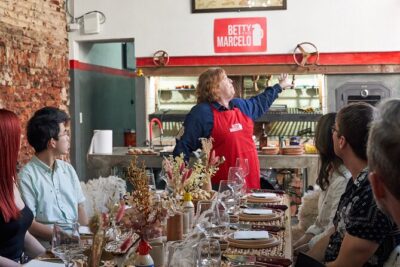
Join a Local Family Asado in Buenos Aires with Betty and Marcelo
Read our review →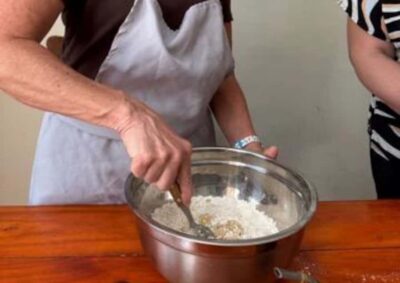
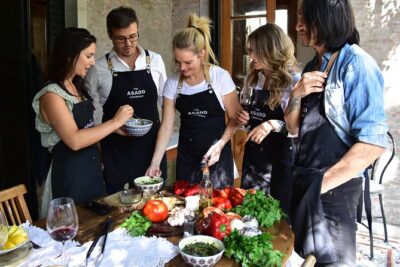

Authentic Rooftop Asado Experience with Argentine Wine Pairing
Read our review →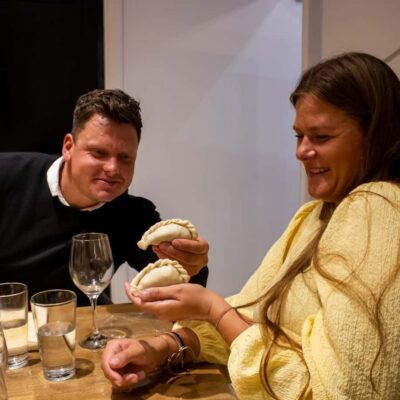
Browse the lists this tour appears in