
Reviewed · WALKING TOURS
Shared Jewish Walking Tour – Visit Libertad Synagogue + Jewish Museum
Buenos Aires tells its Jewish story in plain sight. This half-day walk connects the Once neighborhood, AMIA, the Jewish Museum, and Libertad Synagogue while placing Jewish life inside the larger story of Argentina. I especially like the small group limit of 15 people and the way the tour moves beyond museum displays into shops, restaurants, synagogues, murals, and working streets. I also like the guides’ personal connection to the subject, with Melanie, Cande, Fernando, and Estaphan receiving especially warm praise for clear English, strong historical command, and thoughtful answers. The main drawback is simple: this is a serious 5-kilometer walk with standing, stairs, and sensitive material about terrorism.
The $105 price is not cheap for Buenos Aires, but it includes admission to both the Jewish Museum and Libertad Synagogue and fills four to five hours with guided context. You should plan ahead, since the tour is often booked about 54 days in advance, and bring your actual passport. A passport copy was not accepted for one museum visit, while another guide, Cande, helped rearrange the stops when a participant had forgotten theirs.
In This Review
- Key points before you book
- Why this tour adds something different to Buenos Aires
- Starting at the gateway to Once
- AMIA and the weight of public memory
- Walking through Once’s Jewish commercial district
- The Jewish Museum and the immigration story
- Libertad Synagogue, the visual high point
- Ending at Plaza Lavalle near the Colón Theatre
- How demanding is the five-kilometer walk?
- Guides who shape the experience
- Is $105 a fair price?
- Who should book this walking tour?
- My verdict: book it for context, not just sights
- FAQ
- How long does the Jewish walking tour last?
- How far do you walk?
- What admissions are included?
- Where does the tour finish?
- Do I need to bring my passport?
- Is the tour available to cruise passengers?
Key points before you book
- Once is the heart of the route: You see Jewish shops, garment businesses, quinceañera stores, kosher restaurants, synagogues, shuls, and even kosher phone shops.
- AMIA and its memorials matter: The tour explains the 1990s terrorist attack on Argentina’s leading Jewish institution and the community’s response.
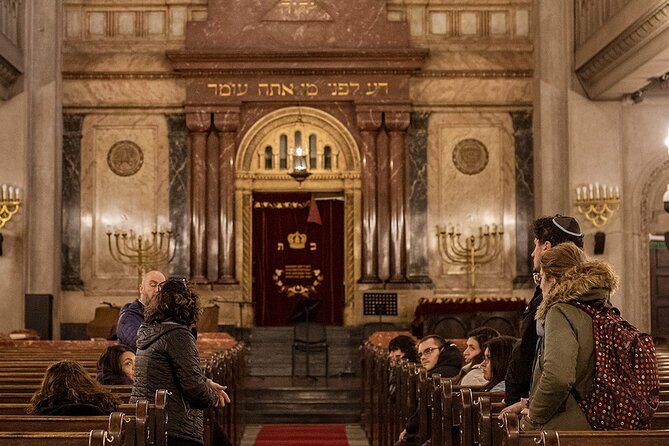
- Libertad Synagogue is a major highlight: Admission is included, and the synagogue is frequently singled out as a must-see.
- The story reaches beyond religion: You learn about immigration, Argentine politics, antisemitism, Israel, and Jewish life today.
- Expect a real city walk: The route covers roughly 5 kilometers, with standing and stairs in some places.
- The experience is best for a curious small group: It suits Jewish visitors, students of history, and anyone wanting a less polished, more local view of Buenos Aires.
Why this tour adds something different to Buenos Aires
Many city tours in Buenos Aires focus on grand avenues, elegant cafés, tango, football, or famous political figures. This one follows a community whose story is woven into the city but is easy to miss if you only visit the main sights.
The route links Once, Tribunales, Retiro, and Plaza Lavalle. That geography matters. You are not simply taken from one isolated attraction to another. You walk through commercial streets and neighborhood spaces, then finish among major civic and cultural landmarks near the Colón Theatre.
The historical range is broad. The tour begins with the colonial origins of Jewish life in Argentina, moves through the large immigration of the late 1800s, and reaches the modern community. Along the way, your guide can connect local Jewish life with Argentine history and explain how community institutions developed.
This is also a useful tour for people who are not Jewish. The subject is presented as part of the story of Buenos Aires, not as a specialist lecture meant only for members of one faith. Several guide accounts describe discussions of antisemitism, Israel, geopolitics, and the current Israeli-Hamas war. Those subjects can be difficult, but they give the tour a current human dimension.
More Walking Tours in Buenos Aires
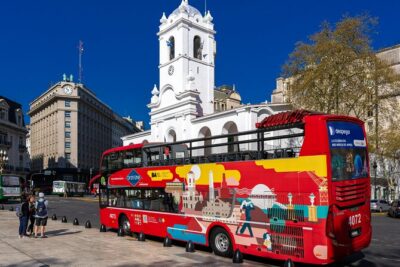
- Buenos Aires Hop-On Hop-Off Bus, Free Walking Tours & Discounts
★ 4.5 · 2,218 reviews - Buenos Aires: La Boca Guided Walking Tour in English
★ 4.8 · 1,587 reviews - La Boca Walking Tour
★ 5.0 · 1,029 reviews
Starting at the gateway to Once
The meeting point is at Junín 802 to 900, near Plaza Prof. Dr. Bernardo Houssay, with a 10:00 a.m. start. The plaza is described as a gateway to Once, Argentina’s most important Jewish neighborhood.
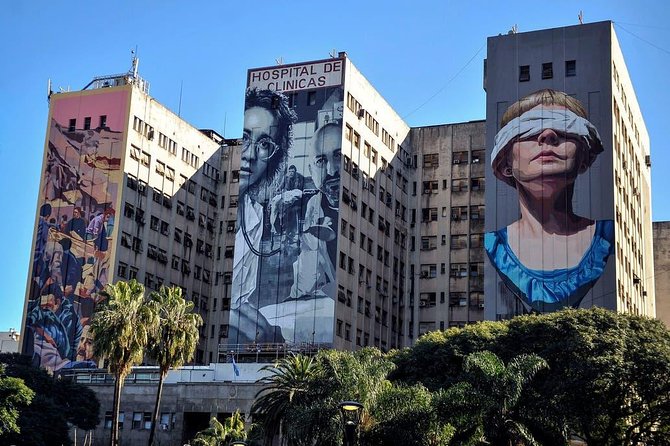
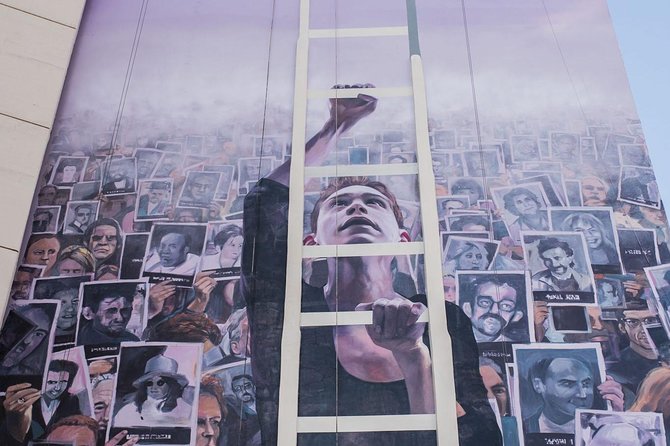
The opening stop takes about 20 minutes. Here, the guide explains the early roots of Argentine Jewry and points out murals honoring doctors and first responders who helped after a terrorist attack on a major Jewish institution in the area.
This is a good beginning because it sets the tone. You are introduced to Jewish Argentina through both arrival and endurance. The murals are not just decorative street art. They connect public memory with the people who acted during a crisis.
The start also gives you a first look at the city as a working place rather than a postcard. Once is associated with trade, clothing, wholesale businesses, religious institutions, and a dense mix of daily activity. Wear comfortable shoes from the first minute. You will not spend the opening portion sitting down.
AMIA and the weight of public memory
The next stop is Asociación Mutual Israelita Argentina, usually called AMIA. The visit lasts about 15 minutes and focuses on the terrorist attack in the 1990s that targeted the institution.
The building was rebuilt, and the tour discusses the attack along with the memorial artwork. This is one of the most important portions of the experience, but it is not light sightseeing. You should expect a respectful discussion of loss, rescue, recovery, and the continuing place of AMIA in Jewish life in Argentina.
A longer review described the visit to AMIA, the nearby hospital mural, and the story of rescue and recovery as one of the most moving parts of the day. That reaction makes sense. The route shows how a community remembers tragedy in public, rather than placing the subject safely behind museum glass.
Your guide’s ability matters here. Melanie is praised for her careful explanations, while Cande and Estaphan are also noted for presenting difficult subjects with clarity. The best version of this stop will leave you with historical facts, but also with a better sense of how the attack affected institutions and ordinary people.
Walking through Once’s Jewish commercial district
The Once neighborhood is where the tour becomes especially local. The walk through the commercial district lasts about 45 minutes and includes garment and wholesale trading areas, quinceañera shops, kosher restaurants, synagogues, shuls, and a place called Diversity Corner.
You also enter the Orthodox area and see kosher phone shops. That last detail may sound small, but it is exactly the sort of thing that makes a neighborhood tour useful. It shows religious practice operating in ordinary commercial life, not only in formal houses of worship.
The discussion of kosher restaurants is another strong point. You learn how this part of the food trade developed and how businesses serve a community with specific dietary and religious needs. The tour does not promise a meal, so you should not book it expecting a food tour. Instead, you get context and recommendations that may help you choose where to eat later.
This section also gives you a chance to ask practical questions. Guides have discussed Jewish life in Argentina from personal experience, including Estaphan’s candid explanations of what it has been like for him. That personal layer can make the neighborhood feel less like a historical exhibit and more like a living part of the city.
The tradeoff is that Once can be crowded and visually busy. The walk is not designed for slow architectural admiration at every corner. You are moving through an active district, so keep your group in sight and expect the pace to vary with the streets.
Still Argentina, but a completely different sort of afternoon:
- Local Foodie Adventure in Buenos Aires with Sherpa Food Tours
★ 5.0 · 6,875 reviews - Buenos Aires City Private Tour with Local Guide
★ 5.0 · 3,475 reviews - Buenos Aires Small-Group City Tour
★ 5.0 · 2,226 reviews - Buenos Aires: Piazzolla Tango Show with Optional Dinner
★ 4.4 · 2,122 reviews
The Jewish Museum and the immigration story
The Museo Judío de Buenos Aires is a 30-minute stop, with admission included. The museum provides the clearest place to discuss the great immigration of the late 1800s and the formation of Jewish communities in Argentina.
After seeing the neighborhood in action, the museum helps organize the story. You can better understand why institutions, synagogues, shops, restaurants, and schools developed as they did. The stop works best as a bridge between broad Argentine history and the details of Jewish family and community life.
Bring your passport. This is an important practical point. One participant could not enter because a passport copy was not accepted, while another guide went back to a hotel with a participant and adjusted the route so the person could retrieve the document. That is generous guide service, but it is far easier to carry the required identification from the start.
The museum visit can also be affected by holidays or closures. On one occasion, the synagogue was closed because of a Jewish holiday, and the operator arranged a partial refund after the guide contacted a supervisor. That suggests a useful question to ask before departure: confirm that both included admissions are operating on your date.
Libertad Synagogue, the visual high point
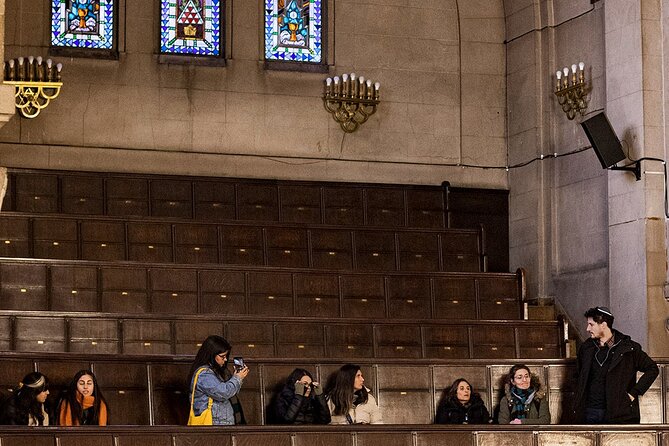
Libertad Synagogue, also known as Templo Libertad, is often described as the tour’s essential sight. It is located at Libertad 769, and admission to the synagogue is included in the tour price.
The visit gives the route a strong architectural and spiritual finish. Earlier stops show institutions and neighborhoods. Here, you enter a major place of worship and see the formal side of Jewish life in Buenos Aires.
The itinerary allows about three hours for the broader final section, which includes the synagogue, the Once area, Tribunales, Retiro, and an exterior view of AMIA. That time allocation can change depending on walking speed, access, and the group’s questions. You may spend more time discussing one memorial or institution than expected.
The synagogue is not just a photo stop. Your guide explains its place in Jewish life in Argentina and connects it with the community’s longer story. If you have limited time in Buenos Aires, this visit gives you a meaningful alternative to a standard city-center tour.
Remember that religious buildings may have access rules, holiday schedules, or security procedures. The supplied information does not give a fixed dress code or photography policy, so ask your guide on the day rather than assuming.
Ending at Plaza Lavalle near the Colón Theatre
The tour finishes at Plaza Lavalle, beside the Jewish Museum and close to the Colón Theatre. This is a useful ending point because you can continue sightseeing without crossing the city again.
If you want to visit the Colón Theatre afterward, the location makes that easy to plan. The ending also places you near Tribunales and Retiro, two central areas included in the wider route.
The tour does not return you to the starting point. That is convenient if you want to continue into central Buenos Aires, but you should plan your afternoon from Plaza Lavalle rather than from Once. Check your own onward transport before booking anything with a tight departure time.
How demanding is the five-kilometer walk?
The tour covers about 5 kilometers, or 3.5 miles, and requires a moderate level of fitness. You will walk outdoors, stand during explanations, and encounter stairs in some places.
The distance is manageable for most people who are comfortable walking around a city for several hours. Still, do not treat this as a short stroll between nearby buildings. One account specifically notes substantial walking, standing, and lots of stairs in some locations.
Wear supportive shoes and bring water. The 10:00 a.m. departure gives you a full morning and early afternoon, but the length can feel greater because the tour mixes walking with stops, security procedures, and discussion.
The maximum group size is 15. That is small enough for questions and personal attention, while still large enough that the tour may not feel private. The guides’ ability to answer questions is a major part of the value, so a smaller group helps.
Guides who shape the experience
The strongest praise is directed at the guides. Melanie is repeatedly described as passionate, personable, enthusiastic, and able to explain both Jewish and general Argentine history. Cande is praised for her command of the subject and for taking practical action when a passport problem threatened the museum visit.
Estaphan is noted for perfect English, an expansive knowledge base, and an entertaining delivery. Fernando is praised for explaining Buenos Aires history and offering suggestions for restaurants and other activities.
That range matters because this tour covers difficult material and many layers of context. You want a guide who can explain the 1990s attacks without turning the visit into a lecture, discuss Jewish practice without making assumptions about your background, and answer questions about modern political issues with care.
Guide assignments can vary. The listed names do not guarantee who will lead your departure, but the consistent emphasis on strong communication and personal engagement suggests that the human side of the tour is one of its best assets.
Is $105 a fair price?
At $105 per person, this costs more than an ordinary free neighborhood walk. You are paying for a four-to-five-hour guided experience, a small group capped at 15, and admission to the Jewish Museum and Libertad Synagogue.
The price makes the most sense if you want interpretation rather than only access. You could walk through Once on your own, but you would miss much of the connection between the shops, memorials, institutions, immigration story, and modern community.
The value is also stronger for a first visit. The tour gives you a framework for understanding what you see, plus restaurant and activity suggestions from guides such as Fernando. If you already know Buenos Aires’ Jewish neighborhoods well, the price may feel less attractive.
The published score is 4.9 from 28 reviews, with 100 percent recommending the experience. That is a small sample, so I would not treat the rating as a guarantee. Still, the consistency of praise for the guides, the synagogue, and the historical explanations supports the idea that this is a carefully delivered tour.
Who should book this walking tour?
I would recommend it to Jewish visitors who want an introduction to Jewish Buenos Aires, especially on a first trip. It is also a good fit for anyone interested in immigration, urban history, religious communities, terrorism memorials, or the way a city carries its past into daily life.
You do not need to be Jewish to appreciate it. The guides explain the wider Argentine setting, and the route includes commercial streets and central districts that make sense even if you are exploring the city for the first time.
I would hesitate if you dislike long walks, stairs, serious historical subjects, or group tours. The experience is not built around shopping, food tastings, or relaxed café time. It asks you to listen, walk, and think.
The tour is not available to cruise passengers. If you are arriving by ship, you will need another way to explore this part of the city.
Booking at least several weeks ahead is sensible, especially since the average booking point is about 54 days before the date. Free cancellation is available up to 24 hours before the local start time, but changes or cancellations inside that window are not refunded.
My verdict: book it for context, not just sights
Book this tour if you want the Jewish story of Buenos Aires explained by a guide who can connect public memorials, religious buildings, immigration, commerce, and present-day life.
The strongest reasons to go are the included synagogue and museum visits, the close look at Once, and the guides’ personal and historical command. The main cautions are the price, the 5-kilometer walk, the stairs, and the emotional weight of the AMIA discussion.
Bring your passport, wear good shoes, leave room in your schedule, and confirm the museum and synagogue are open on your date. For the right reader, this is not just another walking route. It is a thoughtful way to see a part of Buenos Aires that many visitors pass without understanding.
FAQ
How long does the Jewish walking tour last?
The experience lasts approximately four to five hours. It begins at 10:00 a.m.
How far do you walk?
The tour involves approximately 5 kilometers, or 3.5 miles, of walking. It also includes standing and stairs in some locations.
What admissions are included?
Admission to the Jewish Museum and Libertad Synagogue is included in the price.
Where does the tour finish?
The tour finishes at Plaza Lavalle, by the Jewish Museum at Libertad 769. It is close to the Colón Theatre.
Do I need to bring my passport?
You should bring your actual passport. A passport copy was not accepted for one museum entry, so do not rely on a copy.
Is the tour available to cruise passengers?
No. This experience is not available to cruise passengers.
More Museums in Buenos Aires
- Buenos Aires: Tickets to Boca Juniors Museum & Stadium
★ 4.5 · 581 reviews - Buenos Aires: River Plate and Boca Juniors Museum Tour
★ 4.5 · 72 reviews - Buenos Aires: Hop-On Hop-Off Bus and Football Museums
★ 4.3 · 39 reviews - Buenos Aires: Tickets to River Plate Museum
★ 4.6 · 32 reviews
Recently added around Buenos Aires
- Photo Session in Buenos Aires★ 5.0 · 26 reviews
- Your Personal Photographer in Buenos Aires★ 5.0 · 24 reviews
- Discover Buenos Aires’ independent art scene — Ticket included★ 5.0 · 30 reviews
- Your Private Photographer in Buenos Aires★ 5.0 · 4 reviews
- Yerba Mate Workshop – Learn to Drink Mate like a Local!★ 5.0 · 11 reviews
- Taste of Tradition: Yerba Mate & Alfajores Experience★ 4.0 · 5 reviews
- Wine tasting in OASIS Palermo★ 5.0 · 2 reviews
- Day Tour Classic★ 3.5 · 35 reviews
Walking Tours, compared.
Buenos Aires Hop-On Hop-Off Bus, Free Walking Tours & Discounts
Read our review →
German Footprint & Nazi presence – Walking Tour in Bariloche
Read our review →
Full Day Buenos Aires Private Walking Tour – Your Own Personal BA 101
Read our review →
Discover Buenos Aires: Walking Tour Through San Telmo & Center!
Read our review →
Browse the lists this tour appears in