
Reviewed · FOOTBALL AND STADIUM TOURS
Buenos Aires: Tickets to River Plate Museum
Football tells Argentina’s story. Buenos Aires makes that story personal at River Plate Museum, where trophies, famous goals, club legends, and fan emotion fill a full day of access. I like the chronological time tunnel, which gives you a clear path through River Plate’s past, and I like the 360 cinema, where the club’s passion is presented with plenty of drama. The $27 price is fair for football fans, especially if stadium access is included.
The main caution is organization. One visitor waited 40 minutes for an express tour and was eventually moved to the full tour. English support may also be limited, since the guide spoke only Spanish and no English audio headset was available.
In This Review
Key points to know before you go
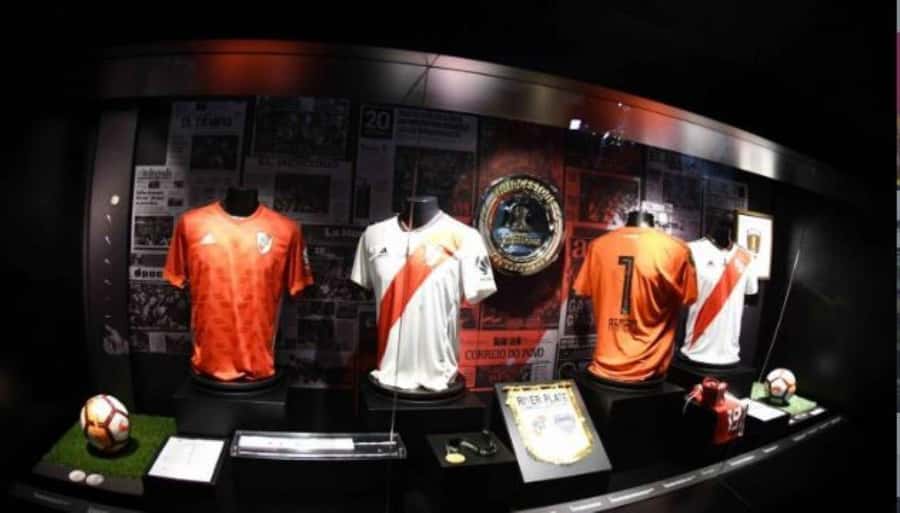
- The time tunnel follows River Plate from its origins to modern glory, making the museum easier to understand than a simple trophy room.
- The 360 cinema focuses on fan emotion, not just match results and statistics.
- The full visit includes views from the stands and access near the playing field, subject to stadium conditions.
- A home match can affect stadium entry, and a temporary stage or event may block part of the field.
- Guides receive strong praise for their warmth and club knowledge, though English assistance may not be available.
- The $27 admission includes the museum, with transfer offered only when you select that option.
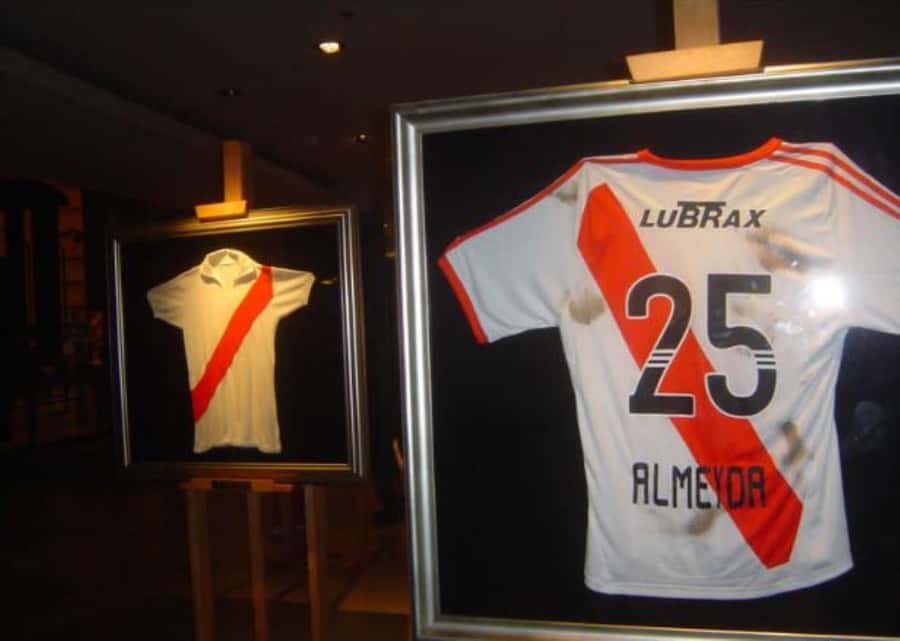
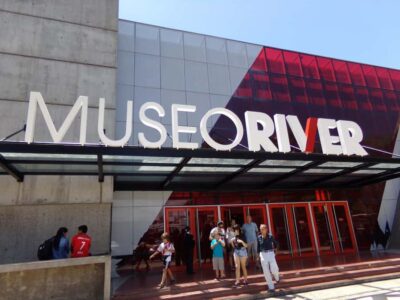
River Plate Museum is more than a room full of old shirts and silverware. Founded on November 9, 2009, it was created to preserve the most important objects and stories connected with Club Atlético River Plate, one of Argentina’s great football institutions.
You get a guided route through the club’s beginnings, its first years as a professional team, its major victories, its best goals, and the players who made River famous. The material is arranged to give you a sense of progress, from the early days to the teams that brought the club its greatest glory.
That structure matters. If you arrive knowing little about Argentine football, you can follow the basic story without feeling lost. If you already support River Plate, the same route gives you a chance to pause over the details that matter most to the club’s identity.
The museum is in Buenos Aires Province, at the River Plate stadium complex. Your ticket is valid for one day, so you should plan to visit during the stated availability window rather than treating it as an open-ended attraction.
The time tunnel is the museum’s main storytelling device. Instead of presenting the club’s past in a random order, it moves chronologically through key moments, players, teams, goals, victories, and trophies.
I like this approach because football museums can easily become a jumble of names and dates. Here, you can see how River Plate changed over time and how one generation of players led to another. The focus is not just on individual stars. It also includes the teams that helped turn River into one of Argentina’s best-known clubs.
The route recalls the club’s origins and its first steps in professional football. That early section gives useful context before the displays move toward the most celebrated eras. You get a sense of how River Plate developed from a local club into a team with a huge following.
The emphasis on memorable goals is a smart choice. Football history can feel abstract when you only read about titles. A famous goal, presented as part of a larger story, helps explain why certain matches remain important to supporters long after the final whistle.
You should allow yourself time here instead of racing straight to the cinema or stadium. The displays are the part that gives meaning to the rest of the visit. Without them, a stadium view is simply a stadium view. After the time tunnel, you understand why the field matters so much to River fans.
The museum includes a 360 cinema room showing a film about the feelings of millions of River Plate supporters. It is designed to communicate the emotional side of the club, not simply list achievements.
This is probably the most theatrical part of the visit. The presentation aims to place you inside the atmosphere of River fandom, with the club’s victories, symbols, and shared memories brought together in one short experience.
I would not treat the cinema as a substitute for the historical displays. Its value is different. The time tunnel explains River Plate. The cinema tries to show you what River Plate feels like to its supporters.
That distinction is useful if you are visiting with family or friends who do not follow football closely. The film may give them a quicker sense of the club’s importance than a long sequence of statistics would. It also helps explain why football in Argentina is tied so closely to identity, memory, and community.
The presentation is built around emotion, so expect something proudly partisan rather than a neutral documentary about Argentine football. That is part of the charm, but it may not suit you if you prefer a quiet museum with a purely factual tone.
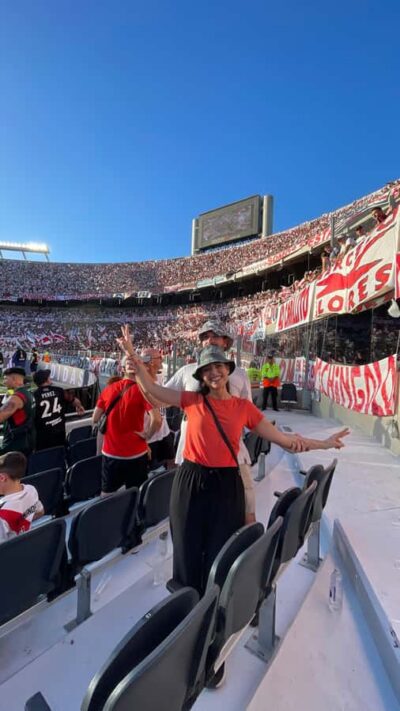
The full visit includes a chance to view Argentina’s largest stadium from the stands. The supplied information describes the stand area as covering more than 3,437 square meters, giving you a broad view of the stadium rather than a narrow look at one section.
This is an important difference between the museum visit options. The museum alone gives you the club’s story. The full visit adds the physical setting where that story continues on match days.
From the stands, you can appreciate the scale of the stadium and picture the crowds that gather there. You can also connect the displays inside with the place where River’s victories, defeats, and famous goals became real events.
Do not assume the stadium will always look exactly as pictured in promotional material. A concert stage, temporary structure, or other event may block part of the field. The experience provider specifically warns that an obstructed view is not grounds for a claim.
That warning is practical, not a reason to avoid the visit. It simply means you should book the stadium portion for the atmosphere and setting, not for a guaranteed perfect photograph of every inch of the pitch.
The full option also lets you enter the playing area and see the field from close to the touchline. The description uses the word playpen, but the useful point is clear: you are not limited to the seats.
This part gives the visit a stronger sense of place. From the stands, you see the stadium as a spectator. Near the field, you get a different perspective, one closer to the surface where the matches take place.
For football fans, this is likely the most memorable part of the day. You can compare the view from the pitch with the views shown in the museum’s historic material. You also get a better feel for the distance between the field and the crowd, something television never quite conveys.
The stadium portion is also the area most affected by match schedules and events. On days when River Plate plays at home, entry to the stadium may be changed or restricted. Check the date carefully before booking, especially if access to the stands and field is the main reason you are going.
The guide can make a major difference here. The strongest feedback praises the guides for being friendly, polite, and well informed. Fausto, visiting from Malta, described the guide as especially kind, while Cristian from Chile praised the guide’s courtesy and command of the subject.
That personal touch matters in a museum about football. A good guide can explain why a particular team is remembered, point out the importance of a player, and add feeling to a display that might otherwise seem like a row of objects behind glass.
The language issue deserves equal attention. One visitor from the United Kingdom booked the express tour, waited 40 minutes without being collected, and was eventually upgraded to the full tour after asking for help. The entire tour was in Spanish, and there was no English audio headset available.
If you understand Spanish, this may be a strong reason to choose the guided option. If you do not, you should be prepared to get less from the spoken explanation. The museum’s visual displays, film, trophies, and stadium areas still offer plenty to see, but you may miss details delivered only by the guide.
The souvenir photograph can have the same limitation. One visitor received a memory photo that included a brochure written only in Spanish. That is a small point, but it shows why you should not assume English materials will be supplied.
The express option may suit you if you mainly want a quick look at the museum. It can work for a tight schedule, but the reported wait shows that the shorter format may not always run smoothly.
The full visit is the better choice if you care about the stadium. You get the museum’s displays plus the stands and field area, which makes the day feel like a complete River Plate experience rather than a museum stop.
I would choose the full visit if the price difference is reasonable and your schedule allows it. The stadium is the part you cannot recreate elsewhere, while the museum can be taken at a more relaxed pace.
If your main goal is a simple indoor attraction, the museum ticket may be enough. If you are a committed fan, visiting with a supporter, or curious about Argentina’s football culture, the full option offers more memorable moments.
The choice also depends on the match calendar. On a home-match day, the stadium experience may be affected, so the express option could make more sense if the field is unavailable. Confirm the conditions before you commit to the visit.
At $27 per person, the ticket is not the cheapest museum admission in Buenos Aires. The value depends on how much of the experience you receive and how seriously you take football.
For a River Plate supporter, the price is reasonable because it combines club history, trophies, famous goals, a 360 film, and possible stadium access. The full visit gives you several different parts rather than one short exhibition.
For a casual football fan, the value is more mixed. You may enjoy the cinema and stadium views, but the Spanish-only guiding could limit the historical detail you take away. The museum is more rewarding if you already know some River Plate names or if you are willing to enjoy the visual side of the visit.
A transfer option is available if you choose it, which may help if you do not want to arrange your own route. Food is not included, so budget separately for anything you want to eat during the day.
The flexible booking terms also reduce the risk. You can cancel up to 24 hours in advance for a full refund, and the reserve-now, pay-later option lets you hold a place without paying immediately. Those terms are helpful when your Buenos Aires plans are still changing.
I would recommend this experience first to River Plate supporters and football fans who want more than a match ticket. The museum connects the club’s trophies and legends with the stadium itself, which gives the visit a clear purpose.
It also suits visitors who want an introduction to Argentine football culture. You do not need to know every player in advance, since the chronological route provides a basic framework. Still, Spanish ability will make the guided portion more rewarding.
Families can find something to enjoy here as well, especially if some members are football fans and others are more interested in the cinema and stadium. The emotional presentation may help younger visitors understand why the club matters to so many people.
I would be more cautious about recommending it to someone who wants an English-language museum tour with precise organization. The lack of an English audio guide and the reported express-tour wait are real drawbacks.
Small groups are available, which may make the experience easier to manage than a large crowd. Pickup is optional, and if you use it, you should wait in the lobby five minutes before the indicated time.
The single most important planning tip is to check whether River Plate has a home match on your chosen date. Stadium entry may be affected, and the usual route may not be available in full.
You should also consider concerts and other events. A stage or temporary installation can obstruct part of the field. The museum itself may still be worthwhile, but you should set your expectations correctly if the stadium view is your priority.
The attraction is valid for one day, with starting times depending on availability. That gives you a defined window rather than unlimited access at any point during your Buenos Aires stay.
I would avoid booking this as a rushed stop between several distant attractions. The time tunnel, cinema, and stadium areas each serve a different purpose, and the visit is more satisfying when you have time to absorb the displays and listen to the guide.
Book it if you want a direct look at River Plate’s identity, especially with the full visit and stadium access. The chronological displays are easy to follow, the 360 cinema adds emotion, and the stands and field connect the club’s past with its present home.
Choose carefully if you need English explanations or perfect stadium access. Confirm the date, check for a home match or event, and consider the full option only when the stadium is expected to be open.
At $27, this is good value for committed football fans and a fair cultural stop for curious visitors. It is less compelling for anyone uninterested in football or anyone expecting a polished, fully multilingual tour. Go with realistic expectations, and River Plate Museum can give you a memorable look at the passion behind one of Argentina’s best-known clubs.
FAQ
More football and stadium visits in Buenos Aires:
- Buenos Aires: Tickets to Boca Juniors Museum & Stadium
★ 4.5 · 581 reviews - Boca Juniors Tickets for a Match at La Bombonera
★ 4.5 · 140 reviews - Soccer Match in Buenos Aires with Transfers and Local Guide
★ 5.0 · 103 reviews
Where is River Plate Museum located?
River Plate Museum is located in Buenos Aires Province, Argentina, at the River Plate stadium complex.
How much does admission cost?
The listed price is $27 per person.
What does the museum ticket include?
The ticket includes museum admission. A transfer is included only if you select the ticket option that offers transportation.
A few more Buenos Aires trips worth putting side by side
- Buenos Aires: River Plate and Boca Juniors Museum Tour
★ 4.5 · 72 reviews - Buenos Aires: Hop-On Hop-Off Bus and Football Museums
★ 4.3 · 39 reviews - Boca Juniors and River Plate Stadium Tour + TOP Museum.
★ 4.5 · 30 reviews - Shared Jewish Walking Tour – Visit Libertad Synagogue + Jewish Museum
★ 5.0 · 28 reviews
Does the visit include the stadium?
The full visit includes access to the stands and the playing-field area. Stadium access may be affected on River Plate home-match days or during events.
Is food included?
No. Food is not included in the activity price.
Can I cancel the booking?
Yes. You can cancel up to 24 hours in advance for a full refund. You can also reserve now and pay later, depending on the available booking option.
Recently added around Buenos Aires
- Photo Session in Buenos Aires★ 5.0 · 26 reviews
- Your Personal Photographer in Buenos Aires★ 5.0 · 24 reviews
- Discover Buenos Aires’ independent art scene — Ticket included★ 5.0 · 30 reviews
- Your Private Photographer in Buenos Aires★ 5.0 · 4 reviews
- Yerba Mate Workshop – Learn to Drink Mate like a Local!★ 5.0 · 11 reviews
- Taste of Tradition: Yerba Mate & Alfajores Experience★ 4.0 · 5 reviews
- Wine tasting in OASIS Palermo★ 5.0 · 2 reviews
- Day Tour Classic★ 3.5 · 35 reviews
Football and Stadium Tours, compared.

Boca Juniors Tickets for a Match at La Bombonera
Read our review →
Soccer Match in Buenos Aires with Transfers and Local Guide
Read our review →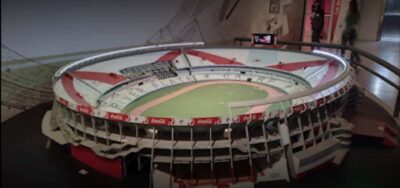
Buenos Aires Football Experience: Boca & River Stadium Tour
Read our review →Browse the lists this tour appears in