
Reviewed · HISTORICAL TOURS
Private Tour: Historical Journey through Argentina’s Struggles in the 20th Century
Argentina’s past is never far from the pavement. This four-hour private tour connects Plaza de Mayo, Museo Evita, Parque de la Memoria, and Recoleta Cemetery to the country’s political struggles, military dictatorship, and return to democracy. I like the private format, which gives you room to ask questions, and the hotel pickup and drop-off, which keeps the half-day simple. The main drawback is that entrance fees are not included, despite the tour’s otherwise tidy package.
The route is best for visitors who want more than dates and famous names. You will hear about Evita, political power, state violence, and public memory in places tied directly to those subjects. The guide is described as friendly, professional, and very well informed, but the tour is serious in tone and may feel heavy if you prefer a lighter city outing.
In This Review
- Key points to know before booking
- Why this four-hour route works
- Plaza de Mayo: Buenos Aires history in an open-air room
- Museo Evita: a personal story with political weight
- Parque de la Memoria: a quiet place for difficult facts
- Recoleta Cemetery: Evita’s final resting place
- What the private car and guide add
- Is $200 per person good value?
- Who should book this experience?
- Should you book this Buenos Aires history tour?
- FAQ
- How long does the private Buenos Aires tour last?
- What time does hotel pickup begin?
- Is hotel pickup and drop-off included?
- Are entrance fees included?
- Can children join the tour?
- What happens if it rains?
Key points to know before booking
- Four sites, one clear theme: The route links Argentina’s political events through Plaza de Mayo, Museo Evita, Parque de la Memoria, and Recoleta Cemetery.
- A genuinely private experience: Only your group takes part, so you can ask questions and spend more time on subjects that interest you.
- Hotel pickup begins at 9:00 am: Pickup and return are included within the Buenos Aires hotel service.
- Two entrance fees require extra payment: Museo Evita and Recoleta Cemetery tickets are not included. Recoleta costs $12 per person, payable by credit or debit card.
- The tour handles transport: A car and guide are included, a useful benefit for reaching Parque de la Memoria.
- The subject matter is serious: This is a political and historical tour, not a general sightseeing drive.
Why this four-hour route works
Buenos Aires can present its past in layers. A grand square may also be a place of protest. A former mansion may tell the story of a political icon. A riverside park may confront you with the names and memory of people killed during Argentina’s last dictatorship.
That is the strength of this private outing. It does not treat each stop as an isolated attraction. Instead, the guide uses four places to explain how power changed hands, how public figures shaped national life, and how Argentina continues to remember periods of violence.
I like that the tour begins with familiar ground and then changes your view of it. If you have already seen Plaza de Mayo on a general city tour, this visit gives the square a different purpose. You are not simply checking off another landmark. You are looking at the political events that unfolded there during the 20th century.
At $200 per person, the price is not low, especially once you add the separate admission charges. Still, you are paying for a private car, a private guide, hotel transport, and a focused four-hour lesson in Argentine politics. For two people or a small group who value flexible conversation, that can be a fair trade. For solo visitors, the minimum booking requirement of two people makes the price less convenient.
More History Tours in Buenos Aires
- Historical Sherpa Food Tour of San Telmo with Street Food, Drinks
★ 5.0 · 920 reviews - Nazis in Buenos Aires: a historical walking tour
★ 4.9 · 193 reviews - San Telmo: Historical Guided Tour with Street Food & Drinks
★ 5.0 · 87 reviews
Plaza de Mayo: Buenos Aires history in an open-air room
The tour allows about 30 minutes at Plaza de Mayo, with no admission charge. This is a sensible opening stop because the square gives you a physical setting for Argentina’s political story before you move into museums and memorial spaces.
You may have already visited the plaza while seeing Buenos Aires’ main sights. This time, the focus shifts from architecture and photographs to public life and political events. Your guide explains how the square became connected with the major struggles of the last century, helping you read the surrounding area as a place where national decisions and public protests took shape.
Thirty minutes is enough for an introduction, but not enough for a long architectural survey. That is fine. The purpose here is to establish the themes that return later: political power, public memory, and the cost of dictatorship.
I would pay close attention during this first stop and ask questions early. Since the tour is private, you can request more context about a particular event or period without worrying that you are slowing down a larger group. That freedom is one of the clearest reasons to choose this format over a standard group excursion.
Museo Evita: a personal story with political weight
Next comes Museo Evita, with about 45 minutes inside. The museum occupies a former mansion that Evita turned into a shelter, and the building itself helps show the link between her public image and her social work.
The visit focuses on Evita’s life. You can expect the guide to place her within Argentina’s political development rather than present her only as a famous figure associated with her husband, President Juan Perón. That distinction matters. Evita remains an emotionally charged figure, and a useful explanation needs to address both her charitable work and her role in public life.
The museum visit is included in the route, but the admission fee is not included in the tour price. The supplied information does not give a separate price for Museo Evita, so you should confirm the current fee before departure if you need an exact budget.
The 45-minute stop gives you enough time for a focused visit, though you should not expect to see every display at length. If Evita is your main interest, you might wish for more time here. If your goal is to understand the wider political story, the allotted time keeps the tour moving toward the dictatorship memorial.
I especially like this stop because it adds a human scale to the itinerary. Plaza de Mayo presents politics in public space. Museo Evita brings the story indoors, where personal biography, social programs, and political identity meet.
Parque de la Memoria: a quiet place for difficult facts
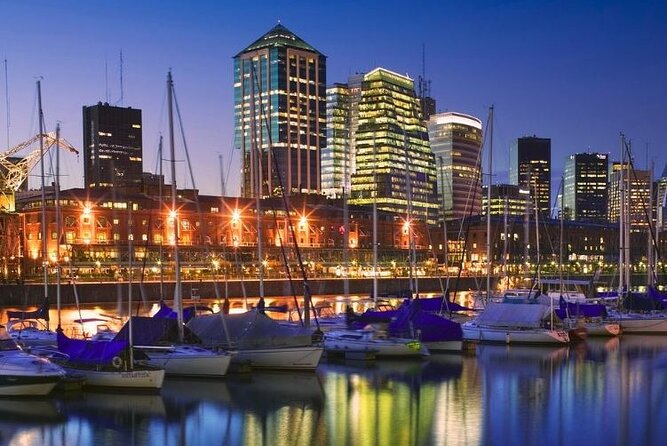
Parque de la Memoria receives about 45 minutes. Located beside the river, this public park remembers people who were kidnapped and killed during Argentina’s last dictatorship through works of art and memorial installations.
This is likely to be the most solemn part of the tour. The park does not treat dictatorship as a distant chapter. Its purpose is remembrance, and the setting asks you to slow down and think about the people behind the numbers and political labels.
Your guide’s role is especially important here. Political history can become abstract when it is reduced to dates, governments, and military terminology. At this park, the subject is personal. A clear explanation can help you understand why memorials matter and how a society keeps painful events present in public life.
The park may close in rainy weather. This is the one stop most affected by conditions, so check with the local operator if the forecast looks poor. Since it is a public outdoor site, there is no admission fee.
I would bring comfortable shoes even though the tour includes car transport. You will be walking at several stops, and the park is not the kind of place you want to rush through in stiff footwear. Wheelchair access is listed, which makes the route workable for many visitors with mobility needs, although weather-related closure remains possible.
More Private Tours in Buenos Aires
- Buenos Aires City Private Tour with Local Guide
★ 5.0 · 3,475 reviews - Private Airport Transfer In or Out : Ezeiza (EZE) – Buenos Aires
★ 5.0 · 548 reviews - Private Full-Day Iguazu Falls Tour with Airfare from Buenos Aires
★ 4.5 · 387 reviews - Private City Tour with a friend in Buenos Aires
★ 5.0 · 363 reviews
Recoleta Cemetery: Evita’s final resting place
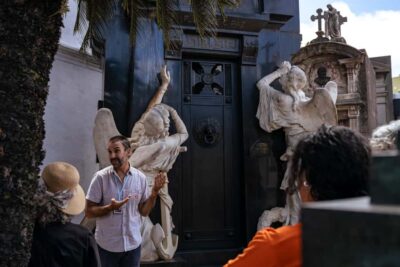
The final stop is Recoleta Cemetery, with about 30 minutes inside. The cemetery is famous for its elaborate tombs and for the grave of Evita, making it a fitting close to a tour that has already examined her life and political role.
Here, Evita’s story becomes physical again. After learning about her social work and public influence at the museum, you see the place where she is buried. The stop also gives the guide a chance to connect personal memory with national identity.
The admission fee is not included. The stated price is $12 per person, payable at the entrance by credit or debit card. Bring a working card and budget for this cost separately. The tour details also describe the general admission tickets as excluded, so you should not assume that the $200 price covers every door along the route.
Thirty minutes is a short visit in a large cemetery, but it suits the tour’s purpose. This is not designed as a complete exploration of every notable tomb. The focus is Evita and the wider meaning of the site. If you want extended time for photography or detailed cemetery architecture, you may find the schedule tight.
Still, ending here gives the route a strong sense of connection. The tour begins with politics in a public square, moves through Evita’s life, confronts dictatorship at a memorial park, and finishes beside the grave of one of Argentina’s most debated public figures.
What the private car and guide add
Pickup is offered at your Buenos Aires hotel at about 9:00 am, with return afterward. You must provide the hotel name, address, and phone number when booking, then confirm the exact pickup time with the local operator using the instructions on your voucher.
This arrangement removes a lot of morning friction. You do not need to find a meeting point or work out public transport to Parque de la Memoria. The car also helps link sites that are spread across different parts of the city.
The tour is private, so only your group participates. That is a major advantage for this subject. You can ask for clarification, pause on an issue, or tell the guide that you want more detail about Evita, the dictatorship, or the return to democracy.
The guide is repeatedly praised for being friendly, professional, and able to explain Argentina’s political developments clearly. No guide name is supplied, so you should not expect to request a particular person. The important point is the style of guiding: this is intended to be an informed conversation, not a scripted ride with a long list of facts.
The tour is offered in English. That makes the political content easier to follow if you are not comfortable discussing complex events in Spanish. Since the subject involves sensitive topics, clear language matters more here than it might on a simple sightseeing route.
Is $200 per person good value?
The cost needs a close look. At $200 per person, you receive roughly four hours of private touring, hotel pickup and drop-off, a car, a guide, and the route through four important sites. The price is easier to justify for a couple or small group that wants direct access to a guide without sharing the vehicle.
It is less attractive if you are mainly seeking transportation. Buenos Aires has many lower-cost ways to see individual attractions. The value comes from the interpretation and the carefully connected subject matter, not from the number of stops alone.
You also need to set aside money for admissions. Recoleta Cemetery costs $12 per person, payable by card, and Museo Evita has a separate admission charge that is not provided here. Lunch is not included, although the four-hour schedule may allow you to eat before or after the tour.
The free cancellation policy gives you some protection. You can cancel at least 24 hours before the start time for a full refund. Changes or cancellations made inside that 24-hour window are not accepted for a refund, so pay attention to local time when making plans.
Who should book this experience?
I would choose this tour if you want political context, prefer a private guide, and have already covered Buenos Aires’ basic landmarks. It suits adults and older teenagers, with a minimum age of 12. The serious subject matter makes it a better fit for people who are ready to discuss dictatorship, political conflict, and loss.
It also works well for visitors with limited time. Four hours gives you a concentrated look at several major themes without taking up a full day. Hotel pickup is useful if you are still learning the city or want to avoid organizing several separate rides.
You may want a different outing if you are looking for food, music, shopping, or a broad introduction to Buenos Aires. This route is narrow by design. Its strength is its focus, but that focus means you will not get a general tour of the city.
The route is listed as wheelchair accessible, and most people can participate. Comfortable shoes remain a good idea, and you should keep the weather in mind because Parque de la Memoria can close on rainy days.
Should you book this Buenos Aires history tour?
Book it if you want to understand Argentina through its political conflicts and public memory rather than simply photograph its famous buildings. The strongest parts are the private format, the capable guide, and the way the four stops build on one another.
Before confirming, make sure your group meets the minimum of two people, your hotel details are ready, and your budget includes the separate entrance fees. Also check the weather if Parque de la Memoria is a priority.
For a visitor who values clear explanations and serious historical context, this is a strong half-day choice. For someone seeking a relaxed city sampler, it may feel too weighty. Know which kind of morning you want, and the $200 price becomes much easier to judge.
FAQ
How long does the private Buenos Aires tour last?
The experience lasts approximately four hours.
What time does hotel pickup begin?
Pickup is scheduled for 9:00 am. You should confirm the exact pickup time with the local tour operator after booking.
Is hotel pickup and drop-off included?
Yes. Free pickup and drop-off are included for hotels in the provided service arrangement. You must submit your hotel name, address, and phone number when booking.
Are entrance fees included?
No. Entrance tickets are not included. Recoleta Cemetery costs $12 per person, payable at the entrance by credit or debit card. Museo Evita also requires a separate admission payment, but no price is provided.
Can children join the tour?
The minimum age is 12 years.
What happens if it rains?
Parque de la Memoria may close because of rainy weather. The tour information specifically notes that this stop can be subject to weather-related closure.
Recently added around Buenos Aires
- Photo Session in Buenos Aires★ 5.0 · 26 reviews
- Your Personal Photographer in Buenos Aires★ 5.0 · 24 reviews
- Discover Buenos Aires’ independent art scene — Ticket included★ 5.0 · 30 reviews
- Your Private Photographer in Buenos Aires★ 5.0 · 4 reviews
- Yerba Mate Workshop – Learn to Drink Mate like a Local!★ 5.0 · 11 reviews
- Taste of Tradition: Yerba Mate & Alfajores Experience★ 4.0 · 5 reviews
- Wine tasting in OASIS Palermo★ 5.0 · 2 reviews
- Day Tour Classic★ 3.5 · 35 reviews
Historical Tours, compared.
Historical Sherpa Food Tour of San Telmo with Street Food, Drinks
Read our review →
Nazis in Buenos Aires: a historical walking tour
Read our review →
San Telmo: Historical Guided Tour with Street Food & Drinks
Read our review →
Recoleta Cemetery – Small Group Tour of History & Secrets
Read our review →
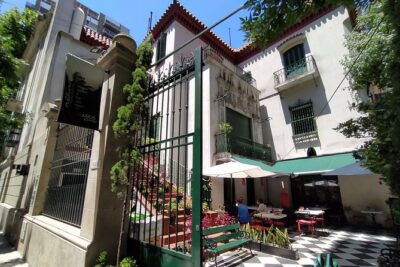
Private Evita and Peronism Historical Tour in Buenos Aires
Read our review →Browse the lists this tour appears in