
Reviewed · HISTORICAL TOURS
Private Evita and Peronism Historical Tour in Buenos Aires
Evita’s story still shapes Buenos Aires. I like the private format, which lets you ask direct questions, and I like the way the tour links political history to real places, from Plaza de Mayo to Evita’s tomb. The main drawback is that the published information is unclear about entrance fees, so you should budget an extra $8 for the Evita Museum and confirm cemetery costs before setting out.
At $140 per person for about three hours, this is not a cheap sightseeing ride. But it can be good value if you want a focused introduction to Buenos Aires, a private vehicle, hotel pickup and drop-off, and a guide who can explain both Eva Perón and the wider Peronist movement. Guides such as Julieta, Rosa, Diego, Miguel, Leandro, Florencia and Leo have been praised for clear English, strong subject knowledge and friendly presentations.
In This Review
- Key points to know before booking
- Why Evita makes a good introduction to Buenos Aires
- Starting at Casa Rosada and Plaza de Mayo
- The Evita Museum, where the public image takes shape
- Seeing the former Eva Perón Foundation headquarters
- Recoleta Cemetery and the architecture of power
- Evita’s tomb and the strange journey of her remains
- What the private vehicle adds
- The guide can make or break the history
- Is $140 per person a fair price?
- Who should book this Buenos Aires experience?
- Should you book the Evita and Peronism Historical Tour?
- FAQ
- How long does the private Evita tour last?
- What time does the tour start?
- Is hotel transportation included?
- Is the Evita Museum entrance fee included?
- Is the tour private?
- Can children take this tour?
Key points to know before booking
- Evita’s life is told through real Buenos Aires locations, including Casa Rosada, the Evita Museum, the former Eva Perón Foundation headquarters and Recoleta Cemetery.
- The private group makes a difference, especially if you want to ask about Argentina’s politics, Evita’s public image or the disputed parts of her legacy.
- A historian leads the experience, with guides praised for explaining both sides of the story rather than presenting Evita as a simple saint or villain.
- Hotel pickup and drop-off are included, making this a convenient first-morning activity in a large city.
- Plan for possible extra entrance costs, since the museum fee is listed separately at $8, while cemetery admission details should be confirmed.
- Book ahead if your schedule is fixed, since the tour averages about 71 days between booking and the experience date.
Why Evita makes a good introduction to Buenos Aires
Eva Perón is not just a famous Argentine figure tucked inside a museum. Her image appears in the country’s political memory, public buildings and popular culture. To understand Evita, you need to understand Juan Domingo Perón, the working class movement that supported him, and the fierce opposition that still surrounds Peronism.
That is what makes this tour useful. It gives you a story to follow while moving through several important parts of Buenos Aires. Instead of seeing Plaza de Mayo, Recoleta and Palermo as disconnected sights, you connect them through Evita’s rise, public work, death and afterlife.
I would especially recommend this tour early in your stay. The route provides a broad orientation to central Buenos Aires and Recoleta, while the private vehicle saves time between stops. It is also a good choice if you prefer conversation to a large group lecture.
The subject needs careful handling. Evita remains a polarizing figure in Argentina, and one guide may emphasize her social work while another gives more attention to political power, propaganda or the strange journey of her remains. The best experience is one that gives you the basic timeline first, then lets you weigh the competing views.
More History Tours in Buenos Aires
- Historical Sherpa Food Tour of San Telmo with Street Food, Drinks
★ 5.0 · 920 reviews - Nazis in Buenos Aires: a historical walking tour
★ 4.9 · 193 reviews - San Telmo: Historical Guided Tour with Street Food & Drinks
★ 5.0 · 87 reviews
Starting at Casa Rosada and Plaza de Mayo
Casa Rosada is the pink seat of Argentina’s executive power, facing Plaza de Mayo in the Monserrat neighborhood. The president’s office is inside, and the building is one of Buenos Aires’ most recognizable landmarks.
The tour uses Casa Rosada as a starting point for understanding Evita’s public role. Inside is the Eva Perón Room, once used by Evita as one of her offices while she led the foundation named after her. The room includes photographs from her life and a cap worn at the 1949 Youth Championships.
The stop is listed at about 15 minutes, and admission is not included. That means you should treat it mainly as an exterior orientation unless your guide confirms that interior access is available on your date. Even a short visit helps place Evita within the machinery of government rather than only within the world of celebrity.
Plaza de Mayo also gives your guide a chance to explain the wider history of Buenos Aires. Several people who took this tour found that the city introduction added real value, particularly on a first morning. You are not simply being taken from one Evita memorial to the next. You are getting a quick framework for the city’s political center.
A brief stop at Luna Park adds another personal detail. Juan Domingo Perón and Eva Duarte first met there at a charity festival on January 22, 1944. That meeting gives the political story a human beginning, before the speeches, offices and national campaigns.
The Evita Museum, where the public image takes shape
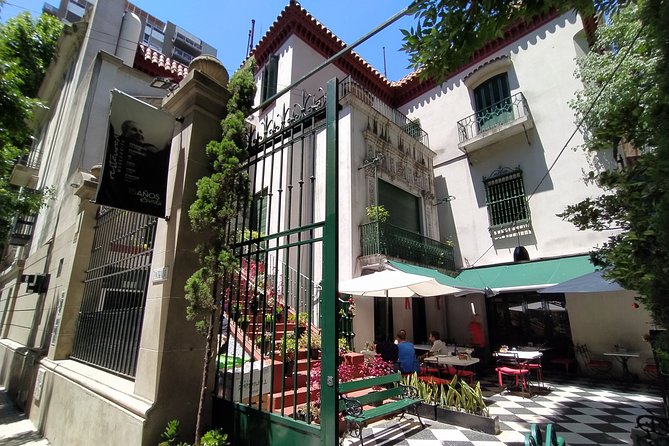
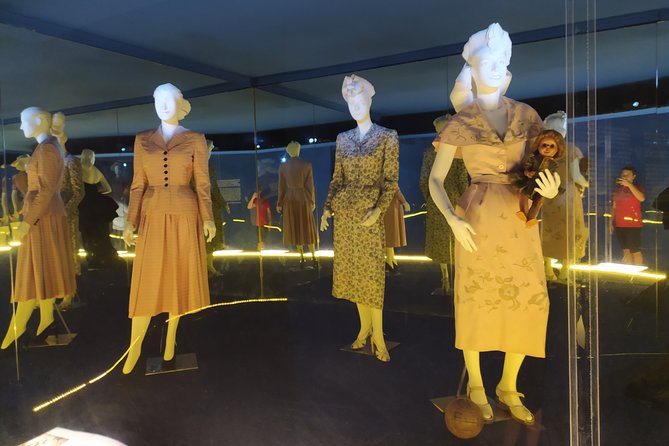
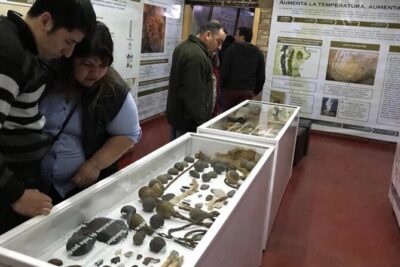
The Museo Evita is the heart of the tour. It opened in 2002, on the 50th anniversary of Evita’s death, and presents her life through photographs, film, documents and period material.
The museum is designed as a chronological journey. You first encounter the Argentina of Evita’s childhood and early life. Then the story moves to her meeting with Perón, her role as First Lady and the social programs connected to the Eva Perón Foundation.
Allow about 30 minutes here. That is enough for a guided overview, but not a long museum visit. If you like reading every label or studying every photograph, you may wish for more time. In a private tour, ask your guide to point out the displays that best separate documented events from later legend.
This is where a strong guide matters most. Julieta has been praised for clear English and a personable manner. Rosa has been described as passionate and able to answer wide-ranging questions. Diego, Miguel, Leandro, Florencia and Leo have also received praise for making the subject engaging rather than dry.
One useful feature of the private setup is the chance to set the level of detail. If you already know the basic story, ask about Peronist politics, Evita’s relationship with organized labor or the construction of her public image. If this is all new to you, ask the guide to begin with a simple timeline.
The museum entrance is listed as $8 per person and not included. There is a practical inconsistency in the supplied tour details, since the stop information also describes the museum as included. One person had the fee covered after showing the booking details, while another was surprised to pay entrance costs. I would not rely on the lower price. Confirm before the tour, and carry enough money for the museum.
The museum also has a restaurant, which could be useful if you want to return later for a meal. The scheduled tour, however, allows only about half an hour, so do not assume there will be time to eat during the morning.
Seeing the former Eva Perón Foundation headquarters
The next stop is the Faculty of Engineering building, where the Eva Perón Foundation had its headquarters for seven years after the foundation was created in 1948.
Today the building belongs to the University of Buenos Aires and is a national historic monument. Its Doric design is imposing, with five floors, two basements and enough room for 4,300 students. The listed area is 46,000 square meters.
The stop lasts about 15 minutes and has no admission fee. It is less immediately dramatic than a cemetery or museum, but it explains how Evita’s charitable work operated through an institution rather than only through speeches and photographs.
I like this part because it gives the tour a needed change of pace. Evita’s story can easily become a collection of famous images: the white dress, the balcony, the photograph, the tomb. Seeing the foundation’s former headquarters points you toward administration, social services and the practical side of her public work.
You will probably view the building from outside. The short stop is best understood as a contextual pause, not a major interior visit.
More Private Tours in Buenos Aires
- Buenos Aires City Private Tour with Local Guide
★ 5.0 · 3,475 reviews - Private Airport Transfer In or Out : Ezeiza (EZE) – Buenos Aires
★ 5.0 · 548 reviews - Private Full-Day Iguazu Falls Tour with Airfare from Buenos Aires
★ 4.5 · 387 reviews - Private City Tour with a friend in Buenos Aires
★ 5.0 · 363 reviews
Recoleta Cemetery and the architecture of power
Recoleta Cemetery is one of Buenos Aires’ most famous sights. Opened in 1822, it contains the tombs of prominent Argentine figures and is known for marble mausoleums, sculptures and elaborate family vaults.
The cemetery also reveals the wealth and ambition of Argentina’s late nineteenth-century elite. Its grand tombs reflect a period when the country was becoming an economic power and wealthy families moved into Recoleta.
The scheduled visit is about 20 minutes, followed by another 10 minutes at Evita’s tomb. That is enough to locate the main sites, but it is a brisk look at a large cemetery. One account described spending only about five minutes inside, so you should ask your guide at the start how much walking and viewing time is planned.
Wear comfortable shoes. The route through the cemetery includes paved and possibly uneven surfaces, and one guide even took care to keep a visitor off the cobblestones. That small detail matters if you have mobility concerns or dislike rough walking areas.
The published details list cemetery admission as free, but another booking experience involved an unexpected entry fee. Since the information is not fully consistent, ask your guide or the tour company to confirm current charges before departure. The tour includes hotel pickup and drop-off, but small entrance costs may still be your responsibility.
Evita’s tomb and the strange journey of her remains
Evita is buried in the Duarte family vault, about 200 meters from the cemetery’s main entrance. Her remains lie five meters underground, in the second basement.
The vault received her body in 1974, after the remains were brought back from Spain. Before that, her body had been moved into exile during the political upheaval of the mid-1950s and buried in an Italian cemetery under a false name.
The Duarte vault has an Art Deco character. Its bronze door features flowers and leaves around a Latin cross. It is not the grandest structure in Recoleta, and that is part of the point. The famous woman is below ground in a family vault, not displayed in a national monument built solely for her.
This stop often draws attention to the mystery and political drama surrounding Evita’s body. That story is compelling, but it should not replace the rest of her life. One less satisfied experience focused too much on the kidnapping and concealment of her remains, while leaving other important parts of her work underdeveloped.
If your guide rushes toward the sensational details, bring the conversation back to the questions that interest you. Ask how the foundation functioned, how Evita worked with Perón, why she remains loved by many Argentines and why others reject the Peronist legacy. A private tour gives you room to steer the discussion.
What the private vehicle adds
Hotel pickup and drop-off are included, and the experience is private, so only your group takes part. Those details can make a three-hour tour feel much easier than trying to connect these places on your own.
The vehicle is especially useful because the stops are spread across different parts of Buenos Aires. Several accounts praised the drivers, including Michael, Brian and Gustavo, for being punctual, pleasant and helpful. One person described the van as making sightseeing easier by getting close to the sites.
The tour begins at 10:00 a.m. That is a comfortable start for most schedules, though it leaves less of the day for additional sightseeing than an early morning departure. The advertised duration is approximately three hours, but allow some flexibility if traffic, museum access or extra stops affect the timing.
A few people received visits to additional places, such as La Biela café near Recoleta. That kind of extra stop appears to depend on the guide and the day, so do not count on it as a guaranteed part of the route. If you have a special interest in Buenos Aires cafés or Peronist sites, ask politely if there is room to add something.
The guide can make or break the history
The strongest part of this experience is the guide. The best guides explain Evita with energy while keeping the political setting clear. They also adjust the presentation to the group, which matters when one person knows Argentine politics and another is hearing the names for the first time.
English ability has been praised repeatedly, especially with Julieta. Rosa, Diego and Miguel have also been singled out for their warmth, detail and ability to connect the locations to Evita’s life. Families have found the tour suitable for children, including two boys aged 12 and 16 who enjoyed the political and historical material.
Still, guide quality can vary. One less successful experience felt that the presentation lacked a basic timeline and leaned too much on sensational material. That is a fair warning for any history tour. A private setting does not automatically guarantee a perfect lecture.
You can improve your experience by arriving with two or three questions. Ask what Evita actually controlled, what the foundation did, how Perón used her public role, and why Argentines still disagree about both of them. These questions encourage a fuller discussion than simply asking for famous stories.
Is $140 per person a fair price?
At $140 per person, the tour costs more than a standard group sightseeing excursion. You are paying for a private guide, private transportation, hotel pickup and drop-off, and a focused subject rather than a general city loop.
The value is strongest for first-time visitors who want a clear orientation without handling Buenos Aires traffic and distances themselves. It is also a good fit for couples, friends or families who want to set the pace and ask questions freely.
The value is weaker if you already know Buenos Aires well, can use local transportation comfortably and only want to see Evita’s tomb. In that case, the three-hour private format may feel expensive, especially if entrance fees are added.
The tour is booked an average of 71 days ahead, which suggests that planning early is sensible if your dates are limited. Free cancellation is available up to 24 hours before the start time. Changes or cancellations inside that window are not accepted for a refund.
Who should book this Buenos Aires experience?
I would choose this tour if you want:
- A first-day introduction to Buenos Aires through politics and biography
- A private guide rather than a large group
- Hotel pickup and drop-off
- A focused look at Evita, Perón and the Eva Perón Foundation
- A family-friendly history activity
- Help connecting Plaza de Mayo, Recoleta and the Evita Museum
I would think twice if you want a long museum visit, extended time in Recoleta Cemetery or a purely architectural tour. The schedule is compact, and each stop gets a short visit.
You should also confirm the museum and cemetery fees before booking. The museum price is listed as $8, while the cemetery fee information is inconsistent. Tips are not included.
Should you book the Evita and Peronism Historical Tour?
Book it if Evita interests you and you want the story tied to actual Buenos Aires locations. The tour’s strongest features are its private format, convenient transport and guides who can explain the political arguments around Evita rather than only repeating famous anecdotes.
It is best as an early orientation, not as a slow museum day. Keep your expectations focused: you will see several important places in about three hours, but you will not have unlimited time at each one.
For most first-time visitors with a genuine interest in Argentine politics, the $140 price can be justified. Confirm entrance charges, request a guide who will cover both Evita’s social work and Peronism’s political impact, and use the private time to ask questions. Done that way, this is a useful and memorable way to begin understanding Buenos Aires.
FAQ
How long does the private Evita tour last?
The tour lasts approximately three hours.
What time does the tour start?
The scheduled start time is 10:00 a.m.
Is hotel transportation included?
Yes. Hotel pickup and drop-off are included.
Is the Evita Museum entrance fee included?
The published information lists an $8 entrance fee per person as not included, although another part of the tour details describes the museum admission as included. Confirm this point before the tour.
Is the tour private?
Yes. Only your group participates in the private activity.
Can children take this tour?
Yes. The tour is described as kid-friendly, and most people can participate.
Recently added around Buenos Aires
- Photo Session in Buenos Aires★ 5.0 · 26 reviews
- Discover Buenos Aires’ independent art scene — Ticket included★ 5.0 · 30 reviews
- Your Personal Photographer in Buenos Aires★ 5.0 · 24 reviews
- Your Private Photographer in Buenos Aires★ 5.0 · 4 reviews
- Yerba Mate Workshop – Learn to Drink Mate like a Local!★ 5.0 · 11 reviews
- Taste of Tradition: Yerba Mate & Alfajores Experience★ 4.0 · 5 reviews
- Wine tasting in OASIS Palermo★ 5.0 · 2 reviews
- Day Tour Classic★ 3.5 · 35 reviews
Historical Tours, compared.

Historical Sherpa Food Tour of San Telmo with Street Food, Drinks
Read our review →
Nazis in Buenos Aires: a historical walking tour
Read our review →
San Telmo: Historical Guided Tour with Street Food & Drinks
Read our review →
Recoleta Cemetery – Small Group Tour of History & Secrets
Read our review →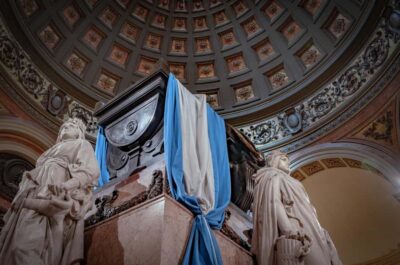
Browse the lists this tour appears in