
Reviewed · WALKING TOURS
Bariloche: German Immigration and History Walking Tour
Bariloche’s past has more than chocolate and ski slopes. This 90-minute walk makes the city’s German connections easier to understand, from early immigrants and local institutions to the uncomfortable story of Nazi fugitives after World War II. I especially like the clear focus on three waves of German immigration and the way the route links history to real buildings. I also like the guide’s use of photographs, stories, and changing locations to keep the walk moving.
The main drawback is the hill. The route covers only about 1 kilometer, but parts of the German neighborhood are uphill. The tour may also be bilingual, so some time can go to Spanish and English explanations. At $41 per person, this is not a bargain-priced stroll, but it offers a focused history lesson that you will not get from simply admiring Bariloche’s chalet-style buildings.
In This Review
- Key points before you book
- Why Bariloche’s German story is worth your time
- Starting at the Civic Center
- The first two waves of German immigration
- The German School and the evidence in plain sight
- Belgrano Square and the German neighborhood
- Erich Priebke’s house and the Nazi connection
- Diego’s guiding style and language balance
- Is $41 a fair price for 90 minutes?
- Who should book this Bariloche walking tour?
- Practical advice for making the walk better
- Should you book it?
- FAQ
- Where does the tour start?
- How long does the tour last?
- How far do you walk?
- Is the route uphill?
- Which languages are available?
- Does the tour include a guide?
- Which places do you visit?
- Does the tour discuss the three waves of German immigration?
- Does the tour cover Erich Priebke?
- What is the price?
Key points before you book
- The route starts at the Civic Center, beside the tourist information office, making it easy to fit into your first day in town.
- You visit the German School and the former home of Erich Priebke, linking local architecture to a difficult chapter of 20th-century history.
- The three immigration waves provide the tour’s backbone, helping you separate established German communities from later Nazi arrivals.
- The walk is short but partly uphill, so comfortable shoes matter more than high fitness.
- Diego is frequently praised for his storytelling and English, though the guide may vary by departure.
- The tour ends with myths and theories about German activity in Patagonia, while distinguishing rumor from documented history.
Why Bariloche’s German story is worth your time
Bariloche often presents a polished Alpine image. Wooden buildings, steep roofs, chocolate shops, and mountain clubs all help create that look. It is easy to assume the German influence arrived as one neat package. This tour argues otherwise, and that is its real value.
You learn about three main waves of German immigration to Argentina and Bariloche. The first came in the 19th century, followed by later arrivals who shaped local institutions and community life. The third wave came after World War II and included Nazi figures who found refuge in Argentina.
That distinction matters. It prevents the usual shortcut that treats every German resident as part of the same political or social group. You get a clearer picture of ordinary settlers, educators, climbers, business people, and, later, men connected to the Nazi regime.
I like that the tour does not stop at architecture. The buildings are clues, not the whole story. A school, a club, a public office, and a private house each show a different part of how German identity took root in Bariloche.
More walking tours in San Carlos De Bariloche:
- Buenos Aires Hop-On Hop-Off Bus, Free Walking Tours & Discounts
★ 4.5 · 2,218 reviews - Buenos Aires: La Boca Guided Walking Tour in English
★ 4.8 · 1,587 reviews - La Boca Walking Tour
★ 5.0 · 1,029 reviews
Starting at the Civic Center
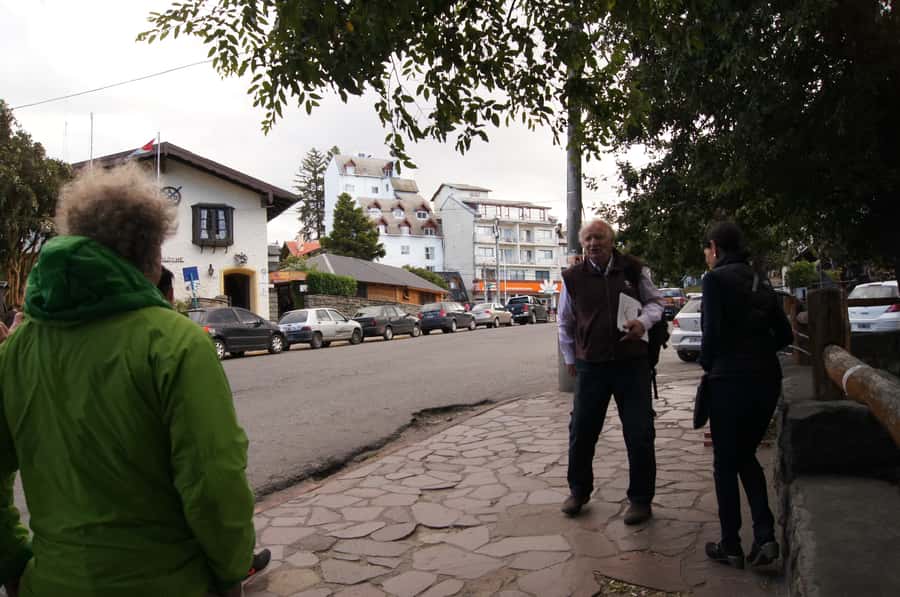
Meet your guide in the square at the Bariloche Civic Center, beside the tourist information office door. This is a practical meeting point because it is central and easy to locate. The Civic Center itself also gives the tour a strong opening setting, since it is one of the main symbols of Bariloche’s European-inspired public image.
From here, the guide introduces the town’s founding and the first German connections. The opening context is important because the tour later moves into more sensitive material. You are not dropped straight into stories about Nazi fugitives without first hearing how German immigration developed over time.
The pace is one of the tour’s strengths. The guide explains a point, walks the group to the next location, and then adds another piece of the story. That rhythm keeps the session from feeling like a lecture in a square.
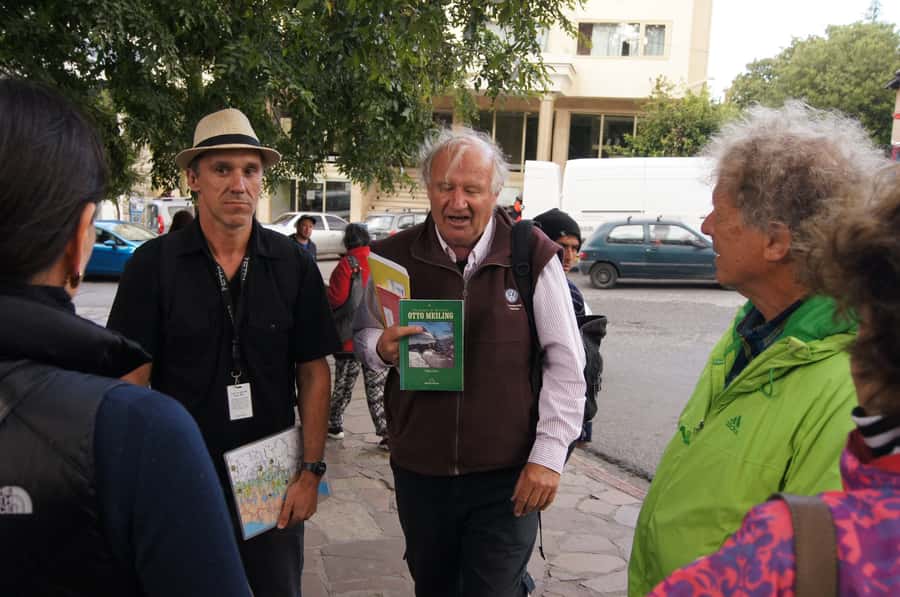
Several people praised Diego’s ability to use cliffhangers before moving on. That sounds like a small teaching trick, but it works well on a walking tour. You have a reason to keep going, and the next stop feels connected rather than random.
The first two waves of German immigration
The early part of the walk focuses on the first two German immigration waves. The exact experience depends on the guide and group, but the aim is to show how German arrivals became part of Bariloche’s civic and cultural life.
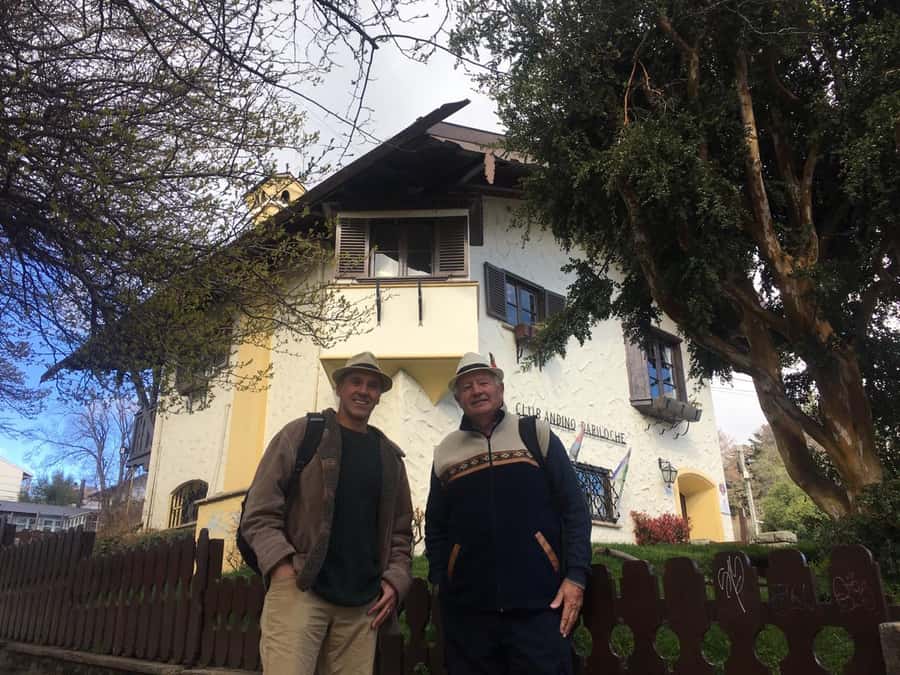
You visit the Bariloche Andean Club and the administration of Nahuel Huapi National Park. These sites help explain the connection between German-speaking residents, outdoor culture, mountaineering, and the creation of a distinct local identity.
The Andean Club is especially useful in the story because Bariloche’s mountain setting is not just scenery. Outdoor institutions helped shape the town’s reputation and linked it to European Alpine traditions. You begin to see why Bariloche’s architecture and cultural image can feel so different from other Argentine cities.
The National Park administration adds another layer. The tour connects the development of Bariloche with the institutions that organized and promoted the surrounding region. It is a useful reminder that immigration history is not only about private families. It also affects clubs, schools, public bodies, and the way a city presents itself.
This section should appeal to you if you want a broader introduction to Bariloche. It is not only about Germans. It is about how a town was built, marketed, and shaped by several cultural influences.
The German School and the evidence in plain sight
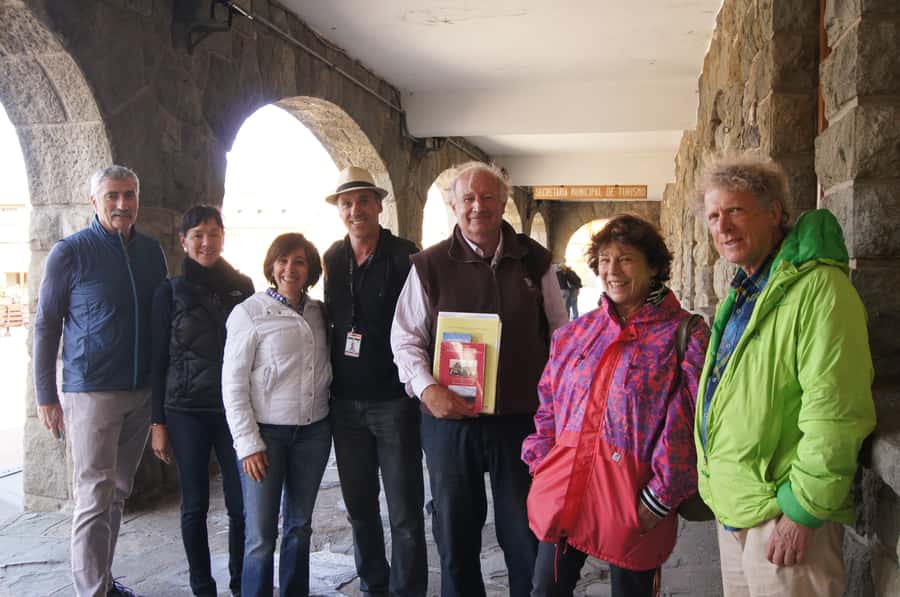
The German School is one of the most memorable stops because it makes the story tangible. Rather than discussing a distant community in abstract terms, you are looking at a real institution tied to German life in the city.
The school also has a direct connection to the Erich Priebke story. According to the tour description, this is where Priebke was intercepted by American journalist Sam Donaldson. Seeing the location gives the later part of the history a physical anchor.
That connection needs careful handling, and the guide’s role is important. The subject is not presented as a quirky mystery alone. The tour places Priebke within the story of postwar Nazi residents in Argentina, while also discussing the myths that grew around German activity in Patagonia.
You should expect a serious subject, but not a grim or hostile presentation. The strongest comments about the tour praise the guide for explaining difficult material clearly and sensitively. Frances described the information as engaging while still being handled with care, which is the right balance for this part of Bariloche’s past.
More history-led tours in San Carlos De Bariloche:
- Indigenous People of Patagonia History Tour
★ 5.0 · 8 reviews - Historical Sherpa Food Tour of San Telmo with Street Food, Drinks
★ 5.0 · 920 reviews - Nazis in Buenos Aires: a historical walking tour
★ 4.9 · 193 reviews - San Telmo: Historical Guided Tour with Street Food & Drinks
★ 5.0 · 87 reviews
Belgrano Square and the German neighborhood
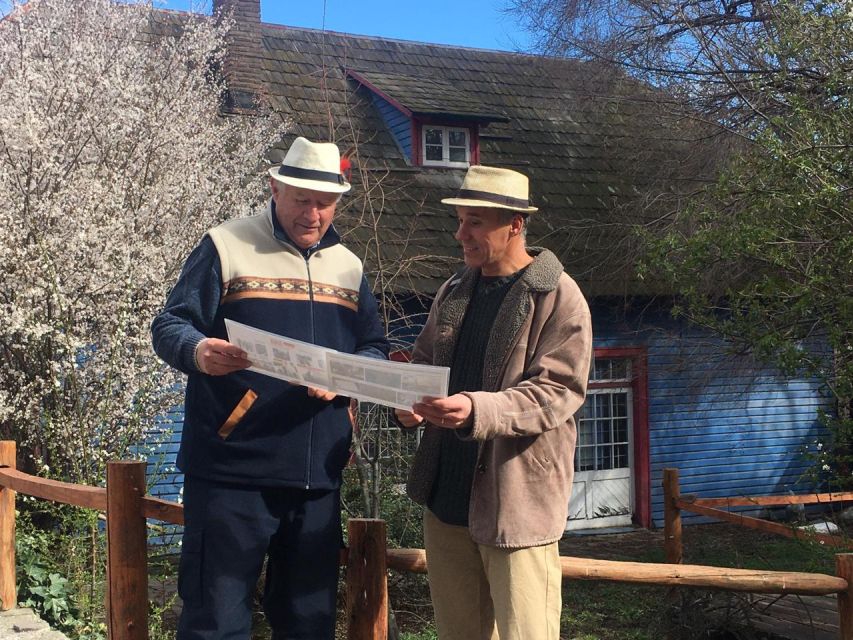
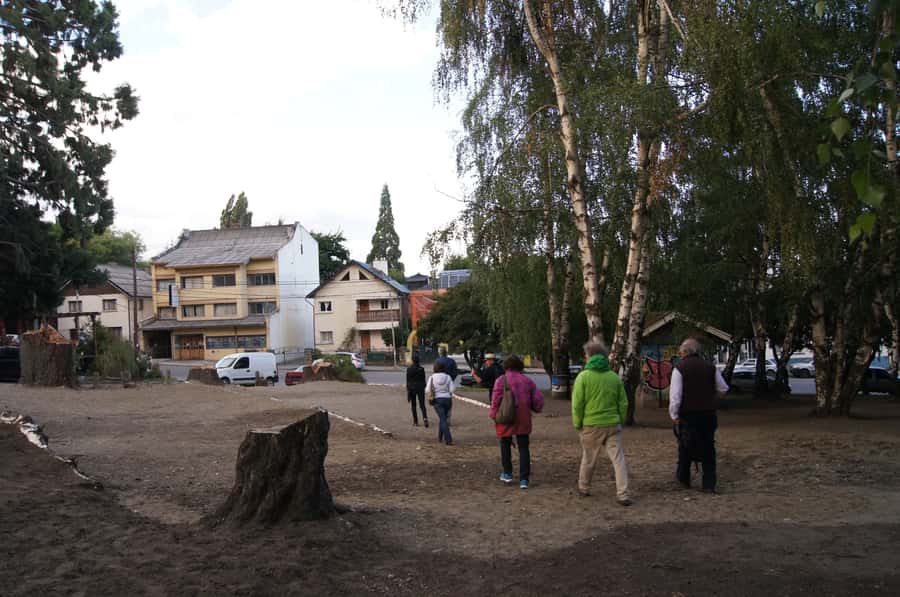
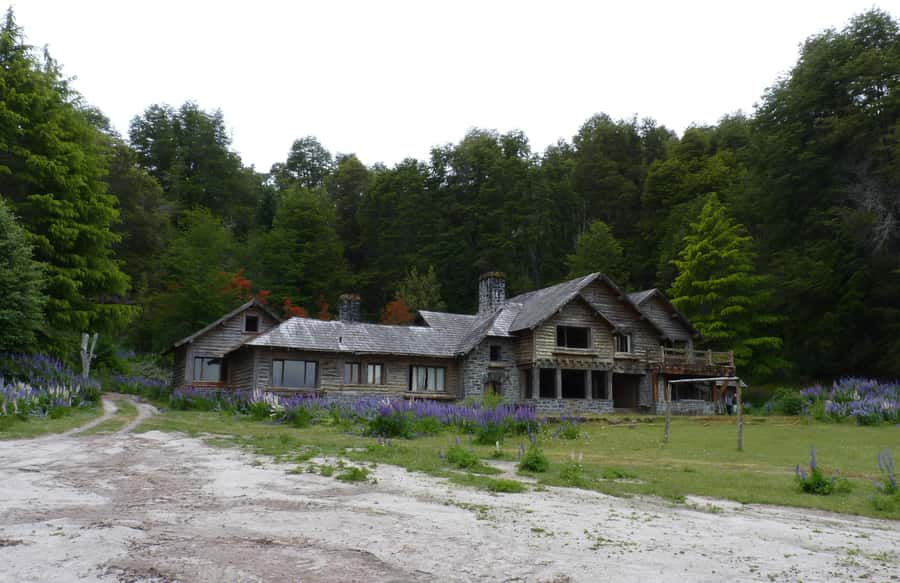
The walk continues through Belgrano Square and nearby streets associated with the German neighborhood. Here, the value is visual. You can compare different house styles and see how German traditions became part of the built environment.
Do not expect a preserved open-air museum. This is a working part of Bariloche, not a reconstructed historical district. That is part of its appeal. The German influence appears through scattered buildings, community sites, and architectural details rather than one tidy row of historic houses.
The guide helps you read what you are seeing. Without context, a steep roof or chalet-style house may look like a simple tourist feature. With the history explained, those details become part of a larger story about immigration, climate, social life, and local taste.
The route is about 1 kilometer, so the walking demands are modest in distance. The hill is the bigger issue. Diane specifically noted that much of the area is uphill, though she also treated it as manageable. If you walk slowly or have trouble with inclines, plan for a steady pace and wear shoes with good grip.
Erich Priebke’s house and the Nazi connection
One of the tour’s main draws is the house where Erich Priebke lived before his extradition in 1994. An American journalist discovered that he was living in Bariloche, and Sam Donaldson later intercepted him at the school connected with the story.
This stop changes the tone of the tour. Earlier, you are learning about immigration, institutions, and architecture. Here, you confront the question of how Nazi figures reached Argentina, lived there, and remained part of local society for years.
The guide also discusses the difference between historical evidence and the many stories attached to German activity in Patagonia. That distinction is essential. Patagonia has attracted dramatic theories about secret Nazi colonies, hidden settlements, and escape networks. Some stories have a basis in real postwar flight, while others have grown through repetition and speculation.
The tour closes with a discussion of these theories rather than pretending every mystery has a neat answer. I find that approach more useful than a sensational version of the subject. You leave with a better sense of what is documented, what is disputed, and why the myths remain so powerful.
If you are mainly interested in Nazi history, this stop will likely be the reason you book. If you prefer a light city walk, the subject may feel heavier than expected. The tour is educational, not entertainment built around shock value.
Diego’s guiding style and language balance
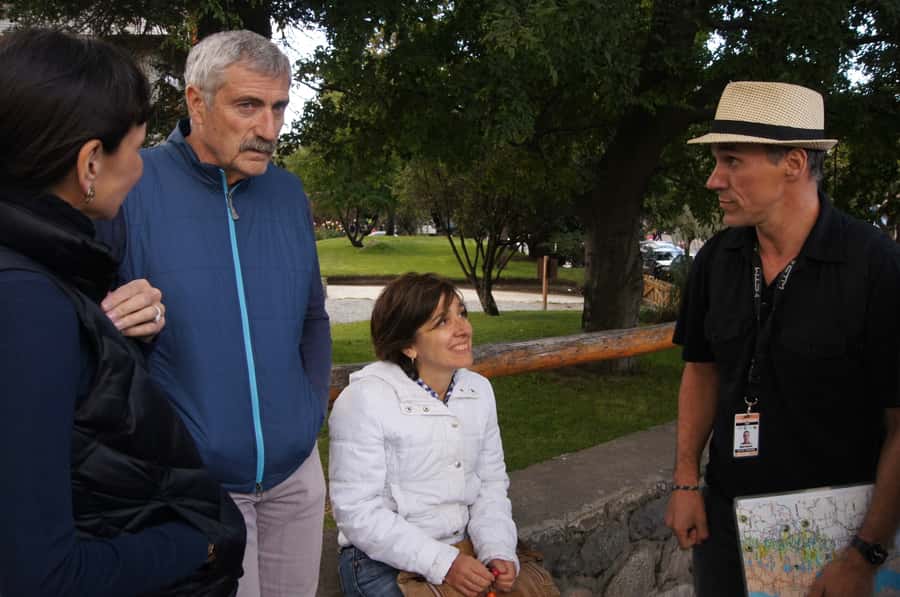
The guide is central to the experience. Diego receives repeated praise for his English, organization, storytelling, and ability to answer questions. People describe him as an engaging teacher who keeps a large group included and adjusts his explanations as he goes.
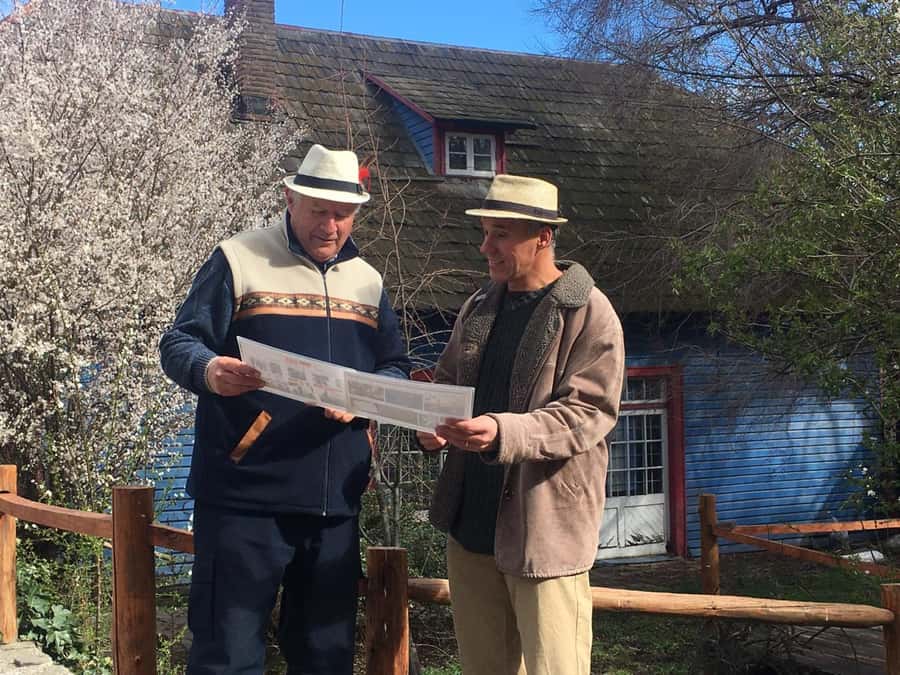
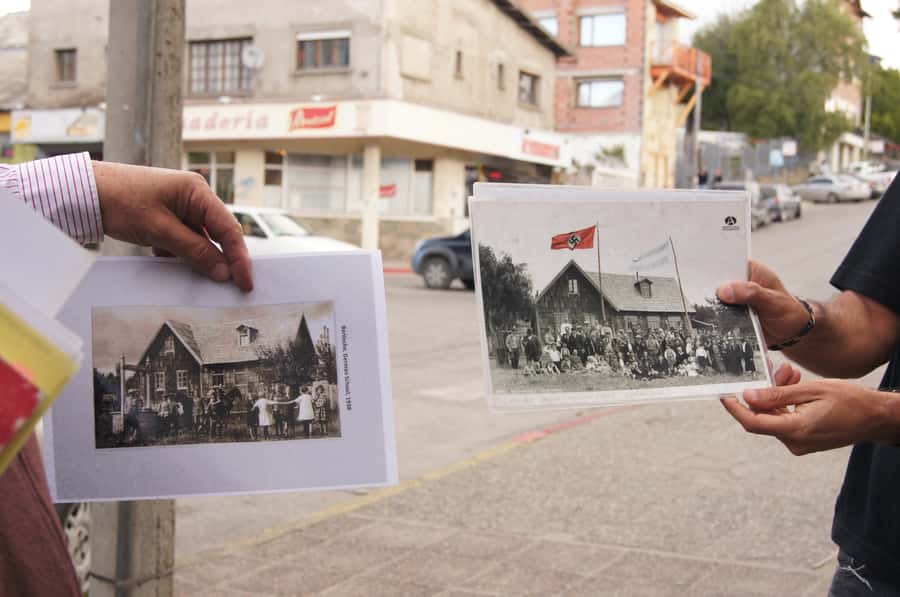
That teaching style matters because the subject has many names, dates, institutions, and competing stories. A dry list of facts would be hard to follow while walking. Diego’s use of old photographs and suspenseful transitions helps connect one stop to the next.
The tour is offered in Spanish and English. Some departures may be bilingual, with the guide alternating between both languages. This makes the experience accessible to mixed groups, but it can reduce the time available for questions or lengthen the walk.
One person felt there was not enough time for questions because the session became bilingual. Another praised a guide for continuing beyond the scheduled 90 minutes. That tells you the exact rhythm can vary with group size, language mix, and the guide on duty.
A review names Pedro as the guide on one departure, while many others praise Diego. I would not assume Diego will lead every session. The important point is that the experience depends heavily on having a strong history guide, and the available feedback suggests the guiding has been a major strength.
Is $41 a fair price for 90 minutes?
At $41 per person, the tour costs more than a basic free walking tour or a casual self-guided stroll. You are paying for a narrow subject, a live guide, and the interpretation that connects scattered places across central Bariloche.
The value is strongest if you have a real interest in immigration, World War II history, architecture, or the myths surrounding German activity in Patagonia. For you, the tour can provide a useful framework for the rest of your stay. Afterward, the Civic Center, German School, Andean Club, and chalet-style houses will make more sense.
The value is weaker if you want mountain views, food tasting, or a broad introduction to every part of Bariloche. This is not a general sightseeing tour. It spends much of its time on one historical thread.
I would also factor in the guide’s skill. Many comments describe the experience as going beyond expectations because the explanations were clear, accurate, and entertaining. A strong storyteller can make 90 minutes feel full without making it feel overloaded. At the same time, the bilingual format may make the price feel high if you want a long question period.
The ability to cancel up to 24 hours before the activity for a full refund, plus the option to reserve and pay later, makes it easier to fit into a changing itinerary. Those policies do not change the tour’s content, but they reduce the risk of booking it around weather or shifting plans.
Who should book this Bariloche walking tour?
I would choose this tour for a first or second day in Bariloche if you want history before heading into the region’s outdoor activities. It gives you cultural context without taking a full morning or afternoon.
It suits you especially well if you:
- Want to understand why Bariloche looks and feels partly Alpine.
- Are curious about German immigration beyond the usual tourist story.
- Want a careful account of Erich Priebke and postwar Nazi arrivals.
- Prefer a guide-led explanation to reading plaques or watching videos alone.
- Enjoy architecture, old photographs, and local anecdotes.
- Can manage a short uphill walk.
I would skip it if your time in Bariloche is extremely limited and you only want the city’s major sights. I would also think twice if the Nazi connection is your only interest and you expect a full investigation of postwar escape routes. The tour places that subject within a wider immigration story, and the entire walk lasts only 90 minutes.
Practical advice for making the walk better
Arrive at the Civic Center square with enough time to find the tourist information office door. Since the meeting point is specific, this is better than simply waiting somewhere in the broad square.
Wear comfortable walking shoes. The distance is short, but the uphill sections are the one physical issue raised in the feedback. Bring water if you prefer to walk prepared, particularly on a warm afternoon.
If you speak English and Spanish, the bilingual format may be a plus. If you speak only one of those languages, listen for the guide’s transitions and stay close enough to hear clearly. A larger group can also affect the amount of time available for questions.
Try to pay attention to the buildings between formal stops. The tour is designed to show how German influence appears in different house styles and institutions, not just in one landmark. You will get more from it if you treat the walk itself as part of the evidence.
Finally, ask questions as they arise. The guide is praised for answering questions along the route, but the timing can change when the group is bilingual or larger than usual. Asking during the walk may work better than saving every question for the final minutes.
Should you book it?
Yes, if you want a focused, serious look at the people and ideas that helped shape Bariloche. The combination of the three immigration waves, local institutions, German-style buildings, the German School, and Priebke’s former home gives the walk a clear structure.
I would book it early in your stay, when the information can sharpen your view of the city. The uphill streets and $41 price are fair cautions, but the short route, flexible booking terms, and strong guiding make this a worthwhile choice for history-minded visitors.
Skip it only if you want a purely scenic or relaxed city walk. For everyone else, it is a useful way to look past Bariloche’s polished Alpine image and ask harder questions about how the town became what it is.
FAQ
Where does the tour start?
It starts in Bariloche Civic Center square, beside the door of the tourist information office.
How long does the tour last?
The scheduled duration is 90 minutes.
How far do you walk?
The guided route covers about 1 kilometer.
Is the route uphill?
Yes. Parts of the German neighborhood are uphill, so comfortable walking shoes are recommended.
Which languages are available?
The tour is offered in Spanish and English.
Does the tour include a guide?
Yes. A live guide and the walking tour are included.
Which places do you visit?
The route includes the Civic Center, the Bariloche Andean Club, the Nahuel Huapi National Park administration, the German School, Belgrano Square, and the house where Erich Priebke lived.
Does the tour discuss the three waves of German immigration?
Yes. The guide explains the three main waves of German immigration to Argentina and Bariloche.
Does the tour cover Erich Priebke?
Yes. It visits his former house and the school where he was intercepted by American journalist Sam Donaldson before his extradition in 1994.
What is the price?
The listed price is $41 per person.
Recently added around San Carlos De Bariloche
- Navigation through Isla Victoria and Bosque de Arrayanes★ 4.4 · 9 reviews
- From Bariloche: Half-Day Circuito Chico Sightseeing Tour★ 4.3 · 9 reviews
- From Bariloche: San Martin de los Andes and 7 Lakes Circuit★ 4.6 · 22 reviews
- From Bariloche: Chico Circuit & Colonia Suiza Tour★ 4.4 · 35 reviews
- Crossing to Puerto Blest and Cascada de los Cántaros★ 4.4 · 5 reviews
- Bariloche: Cerro Tronador and Ventisquero Negro Glacier Tour★ 4.8 · 24 reviews
- Bariloche: Tour to Circuito Chico + Optional: Arrayanes★ 4.2 · 3 reviews
- Bariloche: Victoria Island and Arrayanes Forest Navigation★ 3.4 · 7 reviews
Walking Tours, compared.
Buenos Aires Hop-On Hop-Off Bus, Free Walking Tours & Discounts
Read our review →
German Footprint & Nazi presence – Walking Tour in Bariloche
Read our review →
Full Day Buenos Aires Private Walking Tour – Your Own Personal BA 101
Read our review →
Discover Buenos Aires: Walking Tour Through San Telmo & Center!
Read our review →
Browse the lists this tour appears in