
Reviewed · HISTORICAL TOURS
Indigenous People of Patagonia History Tour
History comes alive in Bariloche’s town center. This 90-minute walk links the Museum of Patagonia, the Cathedral of Our Lady of Nahuel Huapi, and the shore of Nahuel Huapi Lake, giving you a quick but thoughtful introduction to the city and its original inhabitants. I like the clear focus on Indigenous Patagonian history, and I like that your museum ticket lets you return later the same day. The main consideration is time: at only 90 minutes, you will get an introduction rather than a full museum visit.
The tour costs $41 per person, with an optional $2 contribution for museum entry. That makes the value depend on what you want from Bariloche: it is a useful first look at the city and its past, but anyone hoping to study every exhibit or spend long periods at the cathedral will need extra time afterward.
In This Review
- Key points to know before booking
- Why this short Bariloche walk is worth considering
- Meeting at Centro Civico Square
- Inside the Museum of Patagonia
- The Cathedral of Our Lady of Nahuel Huapi
- Ending beside Nahuel Huapi Lake
- What the $41 price gives you
- Who will enjoy this experience most
- Timing, languages, and cancellation
- My verdict: book it for context, not a full museum day
- FAQ
- How long is the Indigenous People of Patagonia History Tour?
- Where does the tour meet?
- What language is the tour offered in?
- What is included in the tour?
- Is museum admission included?
- Can I visit the museum again after the walking tour?
- What should I bring?
- Can I cancel the booking?
Key points to know before booking
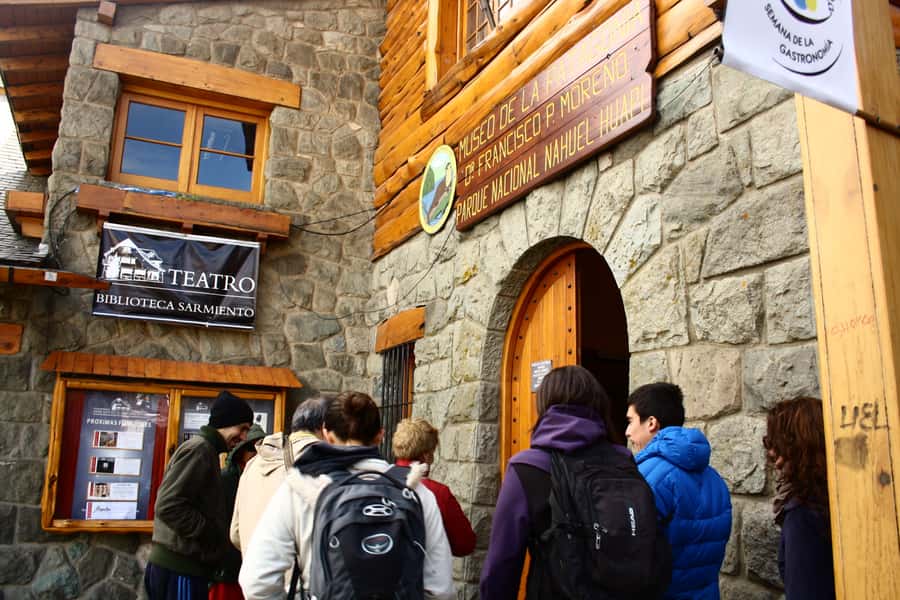
- The Museum of Patagonia anchors the tour: You visit its main sections inside Bariloche’s Civic Center and learn about the area’s natural history and original inhabitants.
- The route ends beside Nahuel Huapi Lake: The final views reach toward glacial valleys, giving the walk a strong scenic finish.
- The cathedral adds art and local character: Look for the stained glass windows, gardens, and Via Crucis at the Cathedral of Our Lady of Nahuel Huapi.
- A named guide has earned strong praise: Diego is noted for explaining Native Patagonian people clearly and covering a lot in a short time.
- The museum ticket remains useful after the walk: You can return later that day and examine fossils, tools, and implements at your own pace.
- This is a compact downtown walk: Comfortable shoes matter, and the tour does not include transport or a long excursion outside Bariloche.
Why this short Bariloche walk is worth considering
Bariloche is often introduced through its lakes, mountains, chocolate shops, and ski reputation. Those are good reasons to visit, but they can push the area’s Indigenous past to the side. This tour corrects that balance by making local history the main subject, not a quick footnote between scenic stops.
I like the way the route connects three different parts of the city. The museum gives you objects and explanation, the cathedral gives you architecture and religious art, and the lake provides the broad setting in which the story took place. You are not simply moving from one attraction to another. The stops give you several ways to understand Bariloche.
The guide is important here. The strongest praise has gone to Diego, who is described as thorough, kind, and able to explain Native Patagonian history clearly within a tight schedule. One visitor also praised the amount of culture covered during the walk. That is exactly the kind of guidance you want when a subject can otherwise feel difficult to approach in a short visit.
At the same time, keep the format in mind. This is a walking tour lasting 90 minutes, not a full-day cultural program. You will see the main parts of the museum, but the tour cannot give every fossil, tool, and historical display equal attention.
More history-led tours in San Carlos De Bariloche:
- Bariloche: German Immigration and History Walking Tour
★ 4.8 · 169 reviews - Historical Sherpa Food Tour of San Telmo with Street Food, Drinks
★ 5.0 · 920 reviews - Nazis in Buenos Aires: a historical walking tour
★ 4.9 · 193 reviews
Meeting at Centro Civico Square
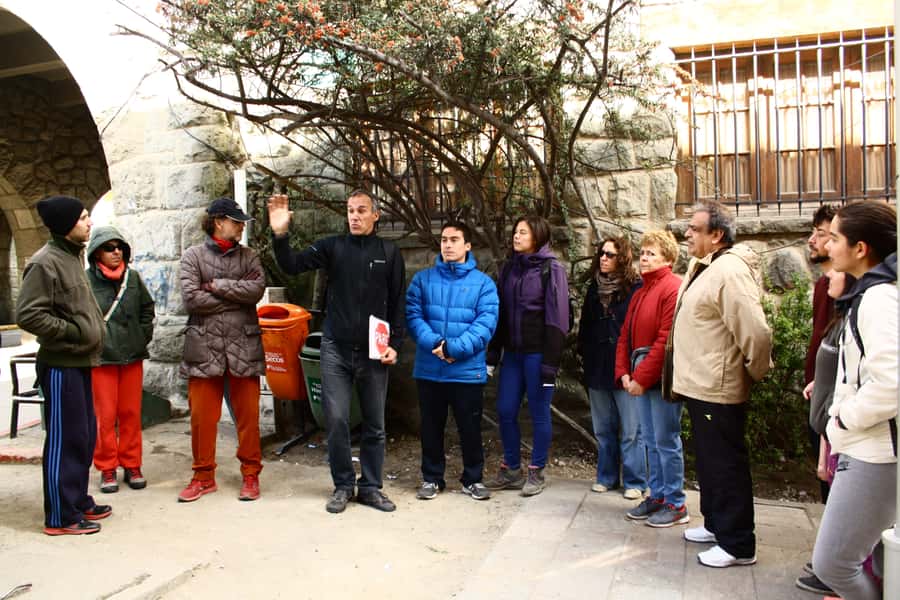
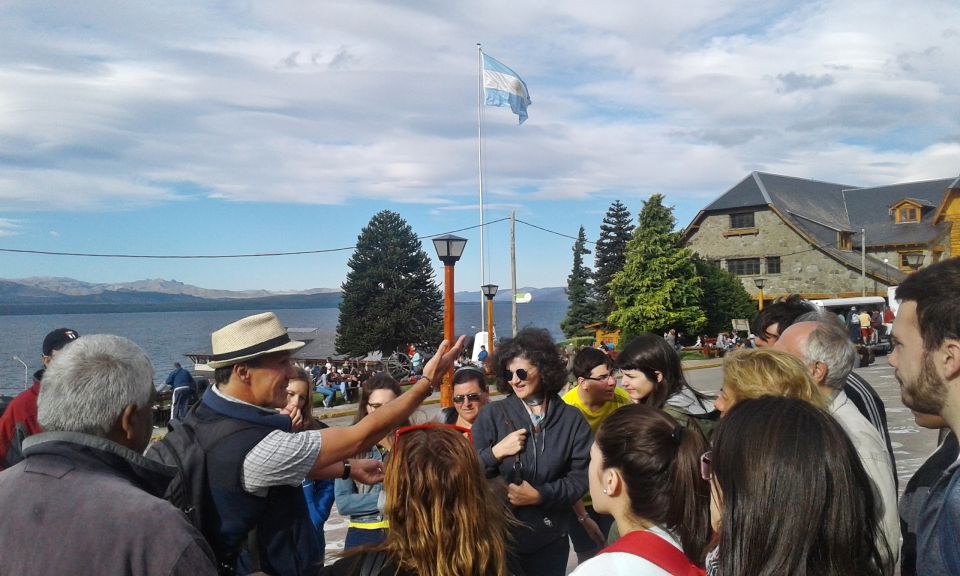
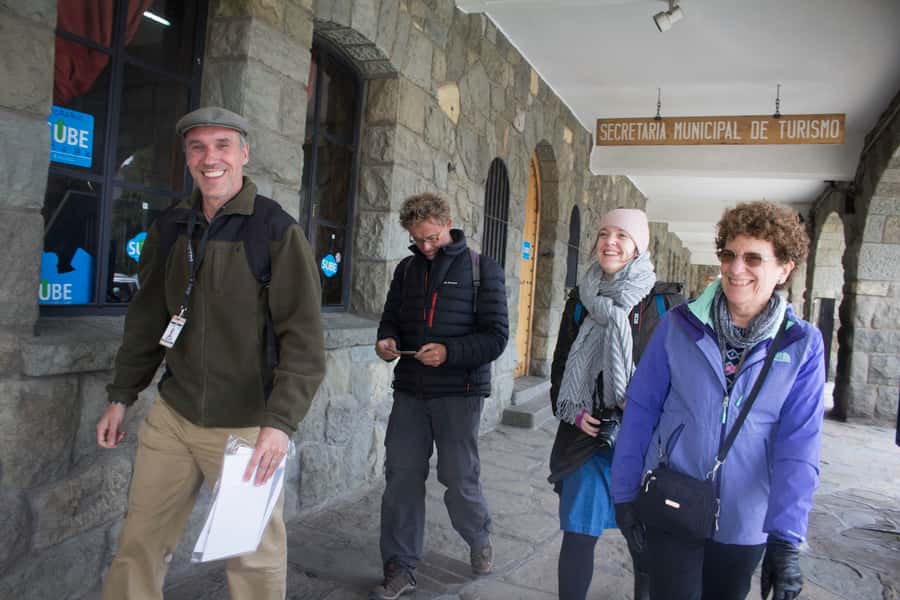
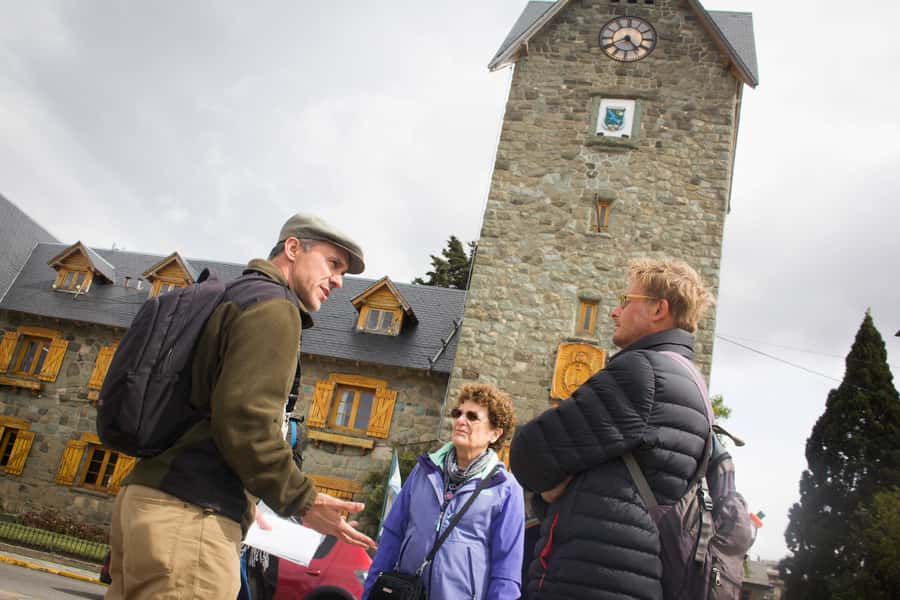
You meet by the door of the tourist information office at Centro Civico Square. This is a practical starting point because the Civic Center is also home to the Museum of Patagonia, so the tour begins in the middle of Bariloche’s principal civic area rather than at an outlying site.
The meeting point should be easy to identify from the supplied directions, but arrive with enough time to find the tourist information office. A short walking tour works best when you are ready at the start. There is no included transportation, so plan to reach the square on your own.
The tour is offered in English and Spanish with a live guide. That language choice matters for a history walk. You can ask questions, request clarification, and hear explanations in a more natural way than you might from a printed display alone.
Inside the Museum of Patagonia
The Museum of Patagonia was established in 1940 by the national government, at a time when Bariloche was being promoted as a remote ski resort town. That detail gives the museum a useful double purpose. It presents the area’s natural history and Indigenous cultures, while also reflecting the way Bariloche was being shaped as a destination.
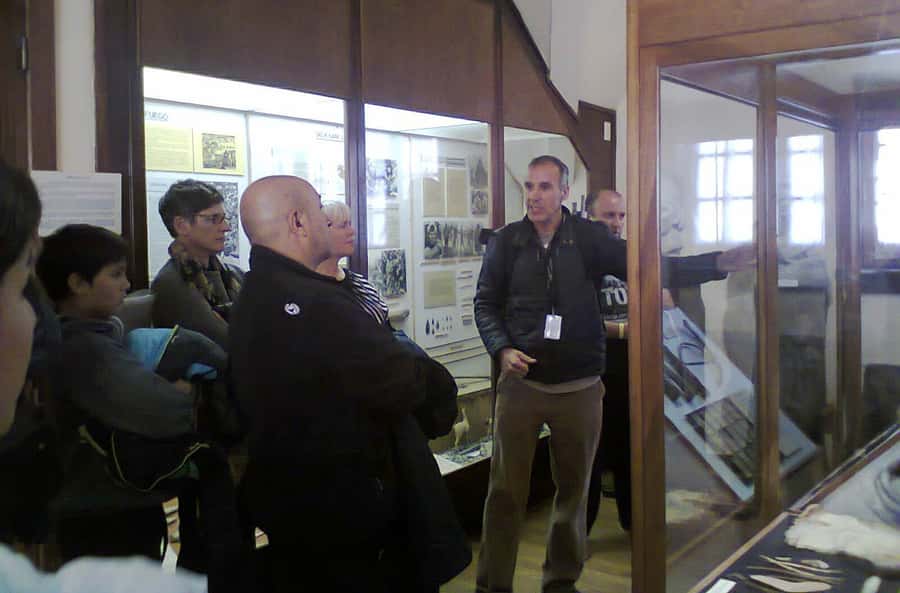
During the guided visit, you explore the main sections of the museum. The focus includes the natural history of the area and its original inhabitants. Collections include fossils, tools, and implements, so the experience is not limited to dates and names. Objects help show how people lived and how the region’s natural conditions affected daily life.
This is the heart of the tour for anyone interested in Indigenous Patagonia. A guide can point out connections that you might miss when looking at displays alone. The positive comments about the amount of information covered suggest that the guide keeps the visit moving while still offering plenty of cultural context.
There is a practical bonus here: your entry ticket allows you to return later in the day. I consider that one of the tour’s best features. The guided portion gives you a framework, then a second visit lets you take your time with the exhibits that caught your attention.
The museum entry requires an optional $2 contribution. Since the tour price is $41 per person, that small extra payment is easy to overlook, but you should carry it in mind when working out the final cost. The tour description does not specify an included museum admission fee, so treat the contribution as separate.
A limitation is the pace. Ninety minutes must cover the museum and two outdoor stops. If fossils or historical objects are your main reason for booking, plan to return later rather than trying to inspect every case during the guided walk.
The Cathedral of Our Lady of Nahuel Huapi
From the museum, the route continues to the Cathedral of Our Lady of Nahuel Huapi. The cathedral is surrounded by gardens, giving you a change of mood after the museum’s indoor displays.
The main details to look for are the stained glass windows and the Via Crucis. These features add an artistic and religious layer to the tour. You are not only hearing about the city’s Indigenous past. You are also seeing how later communities expressed faith and identity in Bariloche.
The cathedral stop should appeal to you if you enjoy buildings and decorative details but do not want to spend an entire day on religious architecture. The stained glass is the clear visual highlight, while the Via Crucis offers another way to read the space.
The supplied information does not promise a long interior visit, so keep your expectations sensible. This is one stop within a compact walking route. The guide will likely direct your attention to the key features, but you may want to return independently if you prefer to look at the windows slowly.
The nearby gardens also make this a welcome pause in the walk. Still, wear comfortable shoes. The tour is on foot, and the route includes several downtown stops rather than one single indoor attraction.
A few more San Carlos De Bariloche trips worth putting side by side
- Bariloche: 7 Lakes & San Martin de Los Andes Road Trip
★ 4.5 · 624 reviews - Bariloche: Circuito Chico with optional Cerro Catedral
★ 4.5 · 316 reviews - San Martín de los Andes por 7 Lagos
★ 4.4 · 155 reviews - Circuito Chico
★ 4.5 · 146 reviews
Ending beside Nahuel Huapi Lake
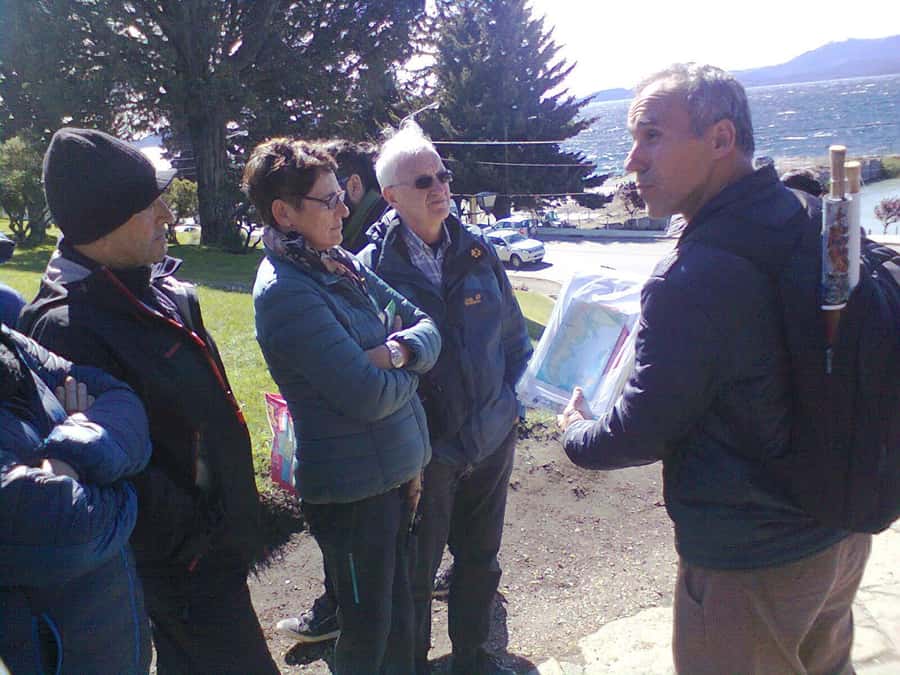
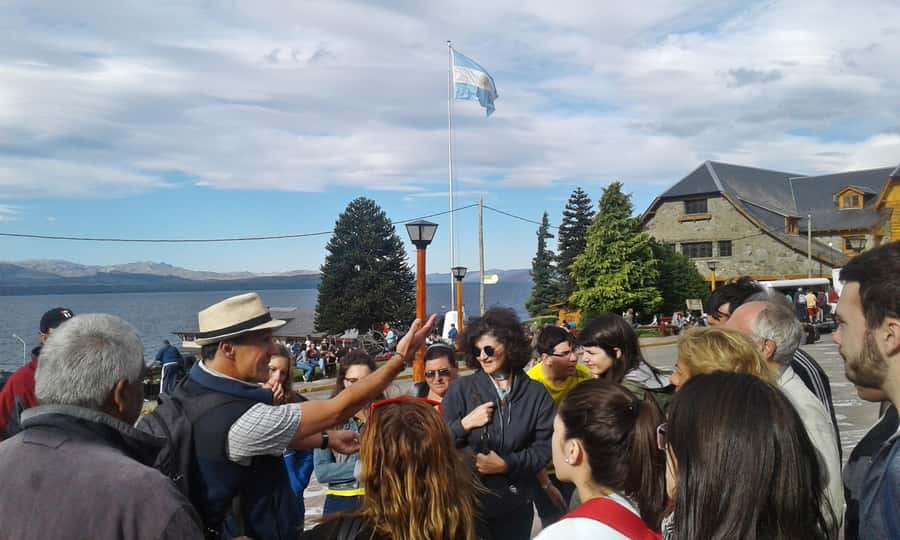
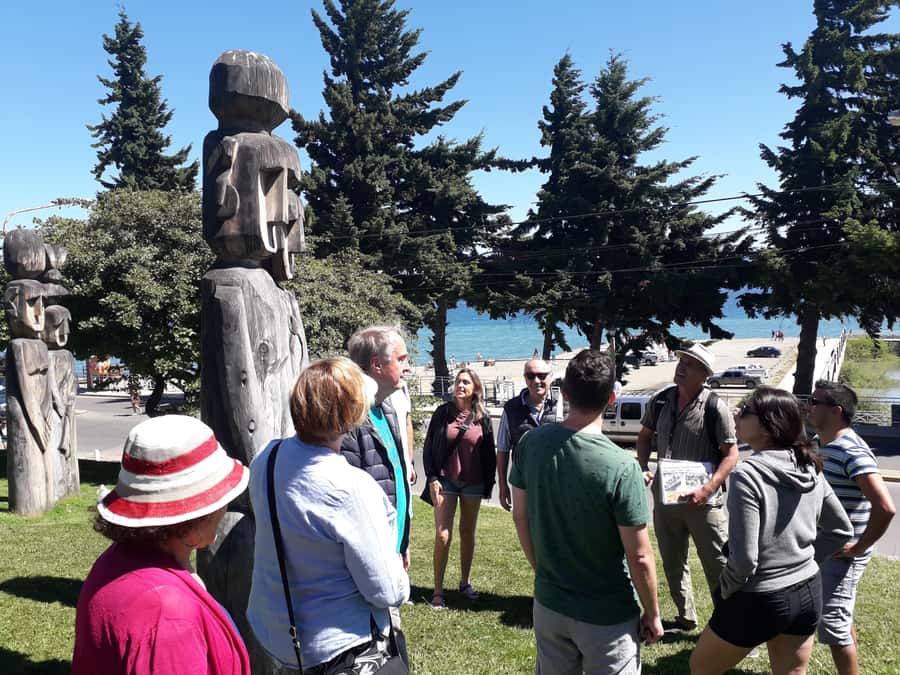
The final stop is the shore of Nahuel Huapi Lake. Here, you can look toward glacial valleys and connect the city’s history with its dramatic natural setting.
This ending works well because it gives the tour room to breathe. The museum supplies detail, the cathedral supplies visual character, and the lake opens the view. After learning about the people and natural history of Patagonia, you finish by looking across the water toward the valleys shaped by glaciers.
The lake stop is especially useful if you are still getting your bearings in Bariloche. You see the setting that makes the city such a popular base in the Lake District, without committing to a longer boat trip or mountain excursion.
Do not mistake this for a dedicated sightseeing cruise. The experience ends at the shore, and the attraction is the view rather than a ride on the lake. If you want extended time on the water, you will need a separate activity.
Weather can also affect how much you enjoy this final stop, although no specific weather arrangements are provided. Bring suitable clothing for a walk and leave room in your schedule if you want to pause by the water after the guided portion.
What the $41 price gives you
At $41 per person, this is not the cheapest way to take a city walk. The value comes from the combination of a live bilingual guide, museum access, cultural interpretation, and three distinct parts of central Bariloche.
The price makes the most sense if you want context quickly. In 90 minutes, you receive an introduction to the city’s Indigenous past, see museum collections, visit an important cathedral, and reach the lake. Doing those stops independently would cost less in guiding fees, but you would lose the explanations that tie them together.
The return option at the museum improves the value. You can treat the guided visit as an introduction, then go back later to look carefully at fossils, tools, and implements. That is better than paying for a museum visit and rushing through it once.
The value is less convincing if you only want photographs or a broad city orientation. The walk has a specific cultural focus. You are paying for historical explanation, not simply a list of postcard stops.
Remember the optional $2 museum contribution. Also remember that transportation is not included. Since the meeting point is at Centro Civico Square and the route remains in the downtown area, the lack of transport should not be a major problem if you are staying nearby.
Who will enjoy this experience most
I would recommend this tour to you if you want to understand Bariloche beyond its outdoor activities. It suits first-time visitors who prefer a short introduction before exploring on their own, and it works well for anyone interested in Indigenous Patagonian history.
It is also a good choice for people who like mixed itineraries. You get a museum, a cathedral, gardens, and a lake view in one compact route. The variety keeps the walk from feeling like a single long lecture.
The tour may suit you particularly well if you are comfortable learning at a fairly brisk pace. The guide has to cover a lot in a short time, and the comments about Diego’s thorough explanations suggest a full presentation rather than a casual stroll.
I would be more cautious about booking it if you want extensive time inside the museum. The tour cannot replace a dedicated museum visit. Use the return privilege, or plan an additional visit later in the day.
Families and older visitors should note only the basic practical point provided: comfortable shoes are recommended. No detailed accessibility information is supplied, so you should ask the provider directly if mobility needs affect your plans.
Pets are not allowed. That rule matters if you are traveling with an animal and should be checked before booking.
Timing, languages, and cancellation
The tour lasts 90 minutes, with starting times available according to the date you choose. Because the route includes the museum, cathedral, and lake, an early or mid-day slot could help you use the rest of the day for your return to the museum or other Bariloche plans. The exact start times are not provided, so check availability before making a schedule around it.
English and Spanish tours are available. The guide is described as official and live, which gives the experience a more personal feel than an audio route.
You can cancel up to 24 hours in advance for a full refund. You can also reserve now and pay later, which is useful when your Bariloche plans may change. These policies do not alter the content of the tour, but they reduce the risk of booking a short activity before your wider schedule is settled.
My verdict: book it for context, not a full museum day
Book this tour if you want a focused introduction to Bariloche’s Indigenous past, a few important downtown sights, and a final view over Nahuel Huapi Lake. The guide’s ability to explain a lot in a short time is the main reason to choose it, and the option to revisit the museum adds real value.
Skip it if your priority is a slow, detailed museum visit or an extended lake excursion. For everyone else, $41 is reasonable for a bilingual 90-minute walk that gives Bariloche more meaning than scenery alone. Wear comfortable shoes, allow time to return to the museum, and keep the optional $2 contribution in your budget.
FAQ
How long is the Indigenous People of Patagonia History Tour?
The tour lasts 90 minutes, or one and a half hours.
Where does the tour meet?
Meet by the door of the tourist information office at Centro Civico Square in Bariloche.
What language is the tour offered in?
The tour is offered in English and Spanish with a live guide.
What is included in the tour?
The experience includes an English and Spanish-speaking official guide and a 1.5-hour historical walking tour.
Is museum admission included?
An optional $2 contribution is required to enter the Museum of Patagonia. The supplied information does not list this contribution as included in the tour price.
Can I visit the museum again after the walking tour?
Yes. Your entry ticket allows you to return to the Museum of Patagonia later the same day.
What should I bring?
Bring comfortable shoes because the experience is a walking tour.
Can I cancel the booking?
Yes. You can cancel up to 24 hours in advance for a full refund. You can also reserve now and pay later.
Recently added around San Carlos De Bariloche
- Navigation through Isla Victoria and Bosque de Arrayanes★ 4.4 · 9 reviews
- From Bariloche: Half-Day Circuito Chico Sightseeing Tour★ 4.3 · 9 reviews
- From Bariloche: San Martin de los Andes and 7 Lakes Circuit★ 4.6 · 22 reviews
- From Bariloche: Chico Circuit & Colonia Suiza Tour★ 4.4 · 35 reviews
- Crossing to Puerto Blest and Cascada de los Cántaros★ 4.4 · 5 reviews
- Bariloche: Cerro Tronador and Ventisquero Negro Glacier Tour★ 4.8 · 24 reviews
- Bariloche: Tour to Circuito Chico + Optional: Arrayanes★ 4.2 · 3 reviews
- Bariloche: Victoria Island and Arrayanes Forest Navigation★ 3.4 · 7 reviews
Historical Tours, compared.
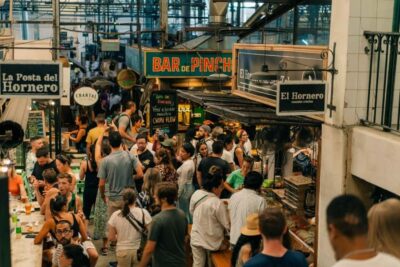
Historical Sherpa Food Tour of San Telmo with Street Food, Drinks
Read our review →
Nazis in Buenos Aires: a historical walking tour
Read our review →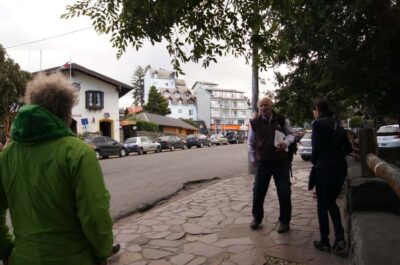
San Telmo: Historical Guided Tour with Street Food & Drinks
Read our review →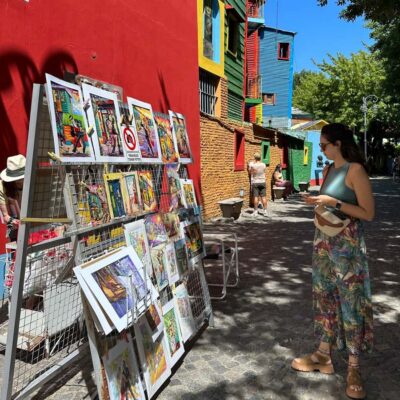
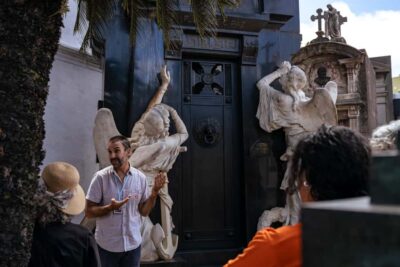
Recoleta Cemetery – Small Group Tour of History & Secrets
Read our review →
Private Evita and Peronism Historical Tour in Buenos Aires
Read our review →Browse the lists this tour appears in