
Reviewed · HISTORICAL TOURS
Private Jewish Heritage Tour in Buenos Aires
Buenos Aires tells its Jewish story with unusual honesty. This three-hour private tour links immigration, worship, memory, and the painful legacy of terrorism through the Jewish Museum, Templo Libertad, the Holocaust Museum, and AMIA. I like the personal format and the hotel pickup, which save you time in a large city. I also like that guides such as Matias, Ariel, Eli, and Axel have been praised for clear English and a warm approach.
The main caution is price. At $166 per person, plus required donations of about $20 at each institution, this is not a cheap outing. The schedule can also feel tight, and one past visitor felt the community-center stop took too long while other parts received only a quick look.
In This Review
- Key points to know before booking
- What this tour helps you understand about Jewish Buenos Aires
- Starting at the Jewish Museum beside Templo Libertad
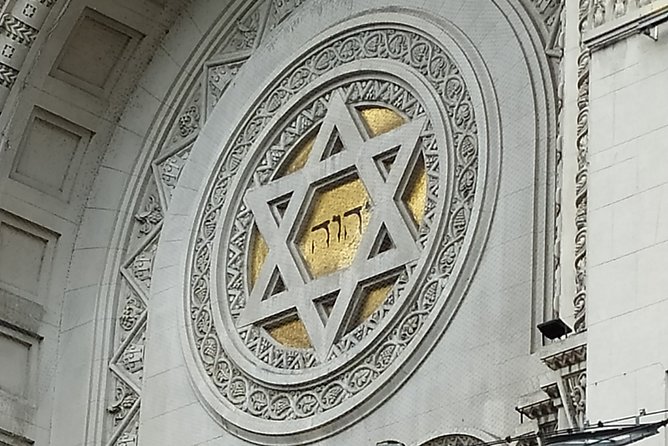
- Templo Libertad and the oldest synagogue in Argentina
- The Holocaust Museum and the evidence of persecution
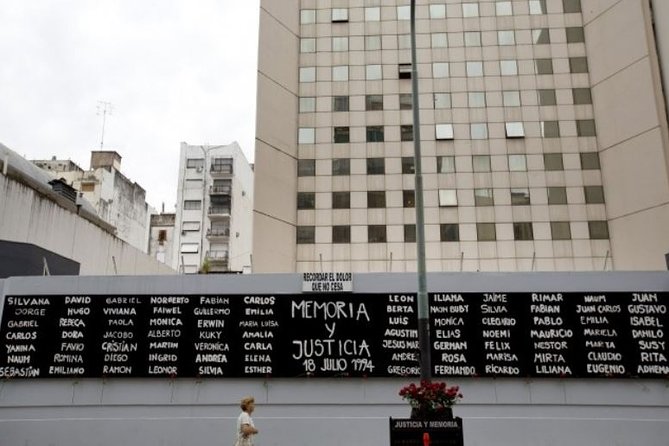
- AMIA and the memory of the 1994 bombing
- The Once neighborhood and everyday Jewish life
- What the private format is really worth
- Timing, donations, and what to bring
- The guides make or break the morning
- Who should book this Jewish heritage tour?
- Should you book it?
- FAQ
- How long does the private Jewish heritage tour last?
- What time does the tour start?
- Does the tour include hotel pickup and drop-off?
- Is this a private tour?
- Which sites are included?
- Are admission tickets or donations included?
- Do I need to bring a passport?
- Are the institutions open on weekends and holidays?
Key points to know before booking
- Four important Jewish sites in about three hours: The route covers the Jewish Museum, Templo Libertad, the Holocaust Museum, and AMIA.
- A private car and guide save time: Hotel pickup and drop-off make this easier than arranging several taxis across central Buenos Aires.
- Donations are extra: Plan on at least $25 per person in cash, with each institution setting its own required amount.
- AMIA is the emotional center: Its memorials and account of the 1994 bombing give the tour much of its weight.
- Weekday planning matters: The main institutions are closed on weekends and holidays.
- Bring your passport: It is required on the day of the tour, and you should carry it throughout the outing.
What this tour helps you understand about Jewish Buenos Aires
Jewish life in Buenos Aires is not presented as a footnote to the city’s general history. It is tied to immigration, religious practice, education, community aid, European persecution, and two major terrorist attacks.
The Jewish community grew through immigration and the creation of Jewish colonies in Argentina. This tour gives you a short introduction to that story, then places it in the city itself. You are not simply looking at old objects behind glass. You are moving between institutions that still serve the community today.
That mix is the tour’s greatest strength. You see a synagogue that dates to the early Jewish presence in Buenos Aires, a museum focused on culture and memory, a Holocaust museum with material from Europe and Argentina, and AMIA, a working community center marked by a devastating attack.
The experience is best for you if you want context rather than a quick photo stop. It is also useful if you are interested in Jewish family history, immigration, religious architecture, or the way Buenos Aires remembers political violence.
More History Tours in Buenos Aires
- Historical Sherpa Food Tour of San Telmo with Street Food, Drinks
★ 5.0 · 920 reviews - Nazis in Buenos Aires: a historical walking tour
★ 4.9 · 193 reviews - San Telmo: Historical Guided Tour with Street Food & Drinks
★ 5.0 · 87 reviews
Starting at the Jewish Museum beside Templo Libertad
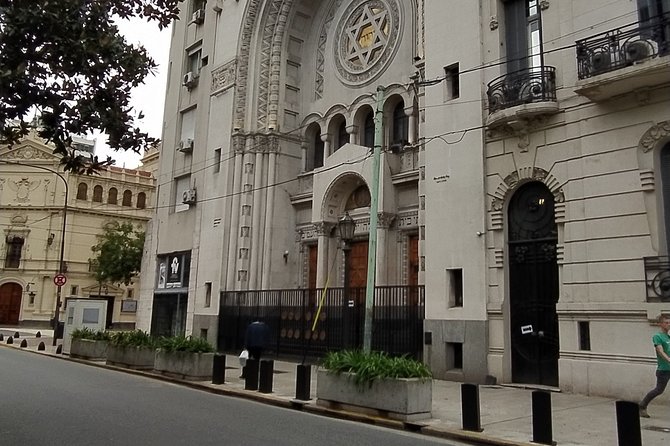
The Jewish Museum of Buenos Aires opened in 1967 through the work of Dr. Salvador Kibrick, a member of the Israeli Congregation of the Argentine Republic. That congregation was founded in 1862 and is described as the first Jewish institution in Argentina.
The museum sits next to Templo Libertad, which makes the first part of the visit especially efficient. In a short time, you can connect the community’s objects and stories with one of its most important religious buildings.
The museum focuses on immigrants, Jewish traditions, and Jewish colonies in Argentina. Its permanent collection is presented as an interactive experience, with an effort to connect the exhibits to the present. That is important because the museum is not only about origins. It asks you to consider how Jewish identity and community life continue in Argentina today.
You should expect about 20 minutes here. That is enough for an introduction, but not enough for a slow, detailed museum visit. If museums are your main reason for booking, ask at the start how the guide plans to divide the time.
Admission is not included in the tour price. Each institution requires a donation, and the amount is defined at the beginning of the visit. The practical advice is simple: bring at least $25 per person for donations, even though the stated amount is about $20 per institution.
Templo Libertad and the oldest synagogue in Argentina
Templo Libertad is the oldest synagogue in Argentina and the first synagogue built in Buenos Aires. It received National Historic Monument status in December 2000.
The building gives the tour a sense of place that a museum alone cannot provide. You are looking at a religious institution connected to the early formation of Jewish Buenos Aires, not just a display about that community.
The visit is scheduled for around 20 minutes. That short window may include religious artifacts and Torah scrolls. One especially meaningful detail mentioned about the synagogue is the chance to see Sephardic Torah scrolls and symbolic objects connected with Jewish worship.
This is a good stop for anyone interested in architecture and religious practice, but the experience may depend on access and the day’s schedule. The tour provider does not promise a long interior visit, so you should not book it expecting an extended architectural tour.
The guide adds real value here. A good guide can explain what you are seeing without turning the visit into a list of dates and names. Past guides including Matias, Ariel, Eli, and Axel have been praised for their personal manner and clear explanations.
The Holocaust Museum and the evidence of persecution
The Museo del Holocausto Buenos Aires presents the lives of Jewish people in Argentina and Europe before and during the Second World War. It uses objects, photographs, and written accounts to explain both ordinary life and the destruction brought by Nazi persecution.
One important item is a collection of photographs taken by the German Heinz Jöst in the Warsaw ghetto in 1941. That material gives the museum a direct visual record of life under Nazi control.
The building itself was originally constructed for the Italo Argentina Electricity Company. Today, the museum’s work centers on teaching about the Shoah and raising awareness of racism and xenophobia.
You have about 20 minutes here, which is enough for a focused introduction but can feel brief given the subject. This is not a place to rush. The material is serious, and you may prefer to spend more time with a few exhibits rather than pass quickly through the entire collection.
The museum’s purpose also gives this tour a wider message. The visit connects the history of European Jews with the responsibilities of Argentine society today. It is not only a stop for Jewish visitors. Anyone interested in memory, prejudice, or human rights can find value here.
If you have young children, consider their age and temperament. The tour is described as family-friendly, but the Holocaust material is difficult. A private guide can help adjust the explanation to suit your group.
More Private Tours in Buenos Aires
- Buenos Aires City Private Tour with Local Guide
★ 5.0 · 3,475 reviews - Private Airport Transfer In or Out : Ezeiza (EZE) – Buenos Aires
★ 5.0 · 548 reviews - Private Full-Day Iguazu Falls Tour with Airfare from Buenos Aires
★ 4.5 · 387 reviews - Private City Tour with a friend in Buenos Aires
★ 5.0 · 363 reviews
AMIA and the memory of the 1994 bombing
AMIA, the Asociación Mutual Israelita Argentina, is a major center of Jewish community life in Buenos Aires. Its work includes supporting the welfare and development of the Argentine Jewish community and keeping its traditions and values alive.
On July 18, 1994, a car bomb attacked the AMIA headquarters. Eighty-five people were killed and about 300 were wounded. It was the largest terrorist attack in Argentine history.
The current building opened in 1999 after reconstruction began in 1995. Its design keeps the scars of the former building visible from the adjacent block, an intentional reminder of what happened.
For many people, this is the most moving stop. The visit can include films, art installations, and the Igam sculpture, which has been described as a powerful tribute to those who died. The combination of testimony, visual art, and the physical memory of the destroyed building gives AMIA a force that is hard to get from a taxi ride or a quick independent visit.
The time allocation is again about 20 minutes, though some versions of the tour have spent longer here. That can be good or bad. If you want a fuller explanation of the attack and the community’s response, the guide may need to reduce time elsewhere.
You should also know that the 1994 bombing is sometimes discussed alongside the 1992 attack on the Israeli embassy in Buenos Aires. The tour can help place both events in the broader story of Jewish life and security in Argentina. One past itinerary included a stop where the outline of the former embassy could be seen on a neighboring building after the original structure was destroyed.
The Once neighborhood and everyday Jewish life
The four named institutions are the formal core of the experience, but the tour can also bring you into the Once neighborhood. Past outings have included views of kosher restaurants, yeshivas, synagogues, and the Jewish community center.
This part matters because it moves the subject beyond museums and memorials. You see signs of a living community, not only a historical one. Once can help you understand where Jewish residents gather, study, eat, and worship in the city.
Do not assume that every tour will include an extended walking visit through the neighborhood. The route and timing can change, and the main schedule is already full. If Once is a priority, tell the provider when booking and ask the guide at pickup.
This is also where a private tour can be better than going alone. You may pass places that are not obvious to someone unfamiliar with Buenos Aires, and the guide can explain what is a community institution, what is open to the public, and what is mainly for local members.
What the private format is really worth
The tour costs $166 per person, and that price needs careful thought. For a solo visitor or a couple, it is a substantial amount for three hours, especially once you add the required donations.
The value comes from the private transport and the guide’s time. Buenos Aires is large, traffic can be heavy, and the stops are spread across the city. Hotel pickup and drop-off remove the need to find each institution, work out taxi routes, and manage the timing yourself.
The private setup also allows questions. You can ask about Jewish immigration, religious customs, the terrorist attacks, or the current community without worrying about a large group or a fixed public-tour script.
The value is weaker if you mainly want to see buildings from the outside. One past visitor felt the tour could have been arranged independently with taxis and that too much time went to a community-center presentation. That criticism is worth taking seriously.
I would book it if you want interpretation, door-to-door transport, and a route shaped around your interests. I would skip it if you are comfortable researching the sites, using taxis, and accepting that some institutions may offer only brief access.
Timing, donations, and what to bring
The tour begins at 9:00 a.m. and lasts about three hours. With four stops listed at roughly 20 minutes each, the remaining time is used for driving, introductions, security, and any added neighborhood visits.
The route works best on a weekday. The main institutions are closed on weekends and holidays, so check your Buenos Aires dates before paying.
Bring:
- A current valid passport
- At least $25 per person for donations
- Comfortable shoes for short walks
- Extra patience for traffic and institutional entry procedures
The tour includes a private local guide and hotel pickup and drop-off. Tips are not included. Admission tickets are also not included, though the institutions are described as requiring donations rather than standard admission.
Confirmation is provided at booking. Most people can participate, and the activity is private, meaning only your own group joins the tour.
The guides make or break the morning
The strongest praise centers on the guides. Matias was singled out for a tour that covered Once, the community center, and Templo Libertad. Ariel was praised for being personable and well informed, while Eli was appreciated for explaining both the community’s difficult past and its current life.
Axel received particular praise for his English and for handling a demanding program with care. Another account praised the driver for dealing with heavy Buenos Aires traffic while coordinating with the guide.
That division of work matters. You are not simply being driven from one address to another. The best version of this tour depends on a guide who can keep the history clear, respect the seriousness of the memorial sites, and adjust the pace to your group.
Because this is private, speak up early. Tell the guide if you want more time at AMIA, more detail about immigration, or a stronger focus on synagogue architecture. The schedule is short, so your priorities should be clear from the beginning.
Who should book this Jewish heritage tour?
I recommend it most strongly for:
- Visitors with a specific interest in Jewish history or family roots
- Couples and families who prefer a private guide
- First-time visitors who want hotel transport
- People who want to connect religious life with Holocaust memory and modern Argentine history
- Anyone who would find it difficult to arrange four institutional visits independently
It may not suit you if you want a relaxed half-day museum visit. The three-hour format is compact, and the 20-minute stop at each major site can feel rushed.
It is also a weaker choice for budget-minded visitors. At $166 per person, plus donations and tips, you are paying for convenience and interpretation more than for a large number of included admissions.
Should you book it?
Book this tour if you want a focused introduction to Jewish Buenos Aires with private transportation and a guide who can connect the sites. The AMIA memorial, Templo Libertad, and the stories of immigration give the morning real purpose.
Before booking, confirm the donation amount, ask how much time will be spent at each stop, and request Once if that neighborhood matters to you. Choose a weekday, carry your passport, and bring cash.
I would recommend it to you if three hours is all you have and the subject matters to you. If you have more time, a self-guided visit with longer museum stops may offer better value. The tour’s published 4.8 rating and 94 percent recommendation suggest a strong experience for the right audience, but the high price makes it important to know what you are buying: a guided introduction, not an exhaustive study of every institution.
FAQ
How long does the private Jewish heritage tour last?
The tour lasts approximately three hours.
What time does the tour start?
The scheduled start time is 9:00 a.m.
Does the tour include hotel pickup and drop-off?
Yes. Hotel pickup and drop-off are included.
Is this a private tour?
Yes. Only your group participates in the activity.
Which sites are included?
The route includes the Jewish Museum of Buenos Aires, Museo del Holocausto Buenos Aires, Templo Libertad, and Asociación Mutual Israelita Argentina, also known as AMIA.
Are admission tickets or donations included?
No. Donations are not included. Each institution requires a donation, and the amount is defined at the start of the tour. You should bring at least $25 per person.
Do I need to bring a passport?
Yes. A current valid passport is required on the day of the tour, and you should carry it throughout the experience.
Are the institutions open on weekends and holidays?
The main institutions are closed on weekends and holidays, so plan this experience for an appropriate weekday.
Recently added around Buenos Aires
- Photo Session in Buenos Aires★ 5.0 · 26 reviews
- Your Personal Photographer in Buenos Aires★ 5.0 · 24 reviews
- Discover Buenos Aires’ independent art scene — Ticket included★ 5.0 · 30 reviews
- Your Private Photographer in Buenos Aires★ 5.0 · 4 reviews
- Yerba Mate Workshop – Learn to Drink Mate like a Local!★ 5.0 · 11 reviews
- Taste of Tradition: Yerba Mate & Alfajores Experience★ 4.0 · 5 reviews
- Day Tour Classic★ 3.5 · 35 reviews
- Wine tasting in OASIS Palermo★ 5.0 · 2 reviews
Historical Tours, compared.
Historical Sherpa Food Tour of San Telmo with Street Food, Drinks
Read our review →
Nazis in Buenos Aires: a historical walking tour
Read our review →
San Telmo: Historical Guided Tour with Street Food & Drinks
Read our review →
Recoleta Cemetery – Small Group Tour of History & Secrets
Read our review →
Private Evita and Peronism Historical Tour in Buenos Aires
Read our review →Browse the lists this tour appears in