
Reviewed · HISTORICAL TOURS
Private Jewish Heritage Tour in Buenos Aires
Jewish Buenos Aires tells a powerful story. This private three-hour tour connects migration, faith, memory, and the lasting effects of terrorism through four important institutions. I especially like the private format, which gives you room to ask questions, and the hotel pickup and drop-off, a useful comfort in a large city.
The tour also brings personal context to the subject. Guides such as Gabriel, Deborah, Ariella, Kevin, and Gabrielle have been praised for explaining the community’s past in clear, human terms. The main drawback is cost: at $157 per person, plus required donations, it is not a budget sightseeing trip. The institutions are also generally closed on weekends and public holidays.
In This Review
- Key points to know before booking
- Why Jewish Buenos Aires deserves a dedicated tour
- A private 9:00 a.m. start from your hotel
- Museo Judio de Buenos Aires: artifacts and community memory
- Museo del Holocausto Buenos Aires: a serious and necessary stop
- Temple Libertad: Buenos Aires Jewish life in a historic setting
- AMIA Cultura and the memory of the 1994 bombing
- The guides are a major part of the value
- What $157 per person really buys
- Who should take this tour
- Booking and cancellation details
- Should you book the Private Jewish Heritage Tour?
- FAQ
- How long does the Private Jewish Heritage Tour last?
- What time does the tour begin?
- Is hotel pickup included?
- Are museum admissions and donations included?
- Do I need to bring my passport?
- Is the tour available on weekends?
Key points to know before booking
- Four Jewish institutions in about three hours: The route includes the Jewish Museum, Holocaust Museum, Temple Libertad, and AMIA Cultura.
- A private guide makes the difference: Your group travels alone, so you can ask about migration, family connections, religious life, or the 1992 and 1994 attacks.
- Bring your passport: A current passport is required on the day, and you may need it to enter the institutions.
- Budget for donations: The tour price does not cover donations. You should carry at least $25 per person, although the amount is set at the start.
- Weekday timing matters: The main institutions are closed on weekends and holidays, and pickup begins at 9:00 a.m.
- A strong choice for Jewish heritage and serious history: This is less about general sightseeing and more about understanding one of Argentina’s major Jewish communities.
Why Jewish Buenos Aires deserves a dedicated tour
Buenos Aires has one of the largest Jewish populations in the world, and this tour gives you a way to understand that community through its own institutions. Instead of seeing only grand buildings or famous monuments, you follow a story of migration from Europe, religious practice, cultural life, communal support, and painful attacks that changed the city’s Jewish community.
That focus gives the experience real value. A standard city tour may point out a synagogue or Jewish neighborhood, but it is unlikely to explain how Jewish life developed in Argentina over roughly the last 150 years. Here, the guide helps connect each stop to the larger story.
I would choose this experience early in your Buenos Aires visit if Jewish heritage is important to you. It can give later city sightseeing more meaning, especially when you encounter neighborhoods, memorials, or cultural institutions connected to the community.
The subject is not light. You will hear about the 1992 attack on the Israeli Embassy and the 1994 bombing of the AMIA Jewish community center. Those events are central to understanding modern Jewish life in Buenos Aires, so you should book this tour expecting serious discussion rather than a casual photo stop.
More History Tours in Buenos Aires
- Historical Sherpa Food Tour of San Telmo with Street Food, Drinks
★ 5.0 · 920 reviews - Nazis in Buenos Aires: a historical walking tour
★ 4.9 · 193 reviews - San Telmo: Historical Guided Tour with Street Food & Drinks
★ 5.0 · 87 reviews
A private 9:00 a.m. start from your hotel
The morning begins with pickup from any centrally located hotel or apartment in Buenos Aires. That is a practical advantage because you do not have to find a meeting point or arrange a taxi to an unfamiliar part of the city.
The tour is private, meaning only your group takes part. This matters more here than it would on a simple sightseeing drive. You may want to ask about Jewish migration, local customs, the history of a particular institution, or the impact of the terrorist attacks. A private guide can adjust the conversation instead of following a fixed script for a large busload.
The start time is 9:00 a.m., and the full experience lasts about three hours. Each listed stop receives about 20 minutes, so the remaining time is used for transport, introductions, security procedures, and explanation between locations. Do not expect a long museum visit at any single stop. This is a compact introduction to several places, not a slow day spent in one collection.
Bring your passport. The tour information specifically requires a current valid passport, and entry to the institutions may depend on it. I would also carry the required donation money in cash or in the form the operator confirms before departure. The published instructions say to bring at least $25 per person, while also noting that each institution requires a donation of $20 per person and that the amount is set at the beginning. Since those instructions do not fully match, ask for the exact total when you book or when the tour starts.
Museo Judio de Buenos Aires: artifacts and community memory
The first stop is the Museo Judio de Buenos Aires, with about 20 minutes set aside for the visit. Admission is not included in the tour price, and the institution requires a donation.
The museum is important because it gives the tour a physical connection to the community’s past. You can expect the guide to place objects, exhibits, and Jewish institutions within the story of migration from Europe to Argentina. The experience is not only about dates. It is about how people carried religion, customs, family life, and communal identity across the Atlantic.
Twenty minutes is enough for a focused introduction, but it is not enough for an unhurried museum visit. If you enjoy reading every label, you may find the pace quick. The advantage is that the tour does not spend the whole morning in one place. You see how the museum fits with the synagogue, Holocaust memorial work, and community center that follow.
This stop will likely appeal most to visitors with a family connection to Jewish history or an interest in migration. It can also help you understand Buenos Aires as a destination shaped by many immigrant communities, not only by Spanish and Italian influence.
Museo del Holocausto Buenos Aires: a serious and necessary stop
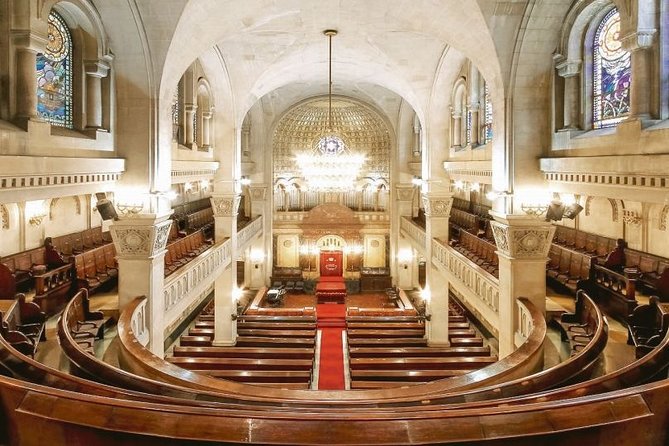
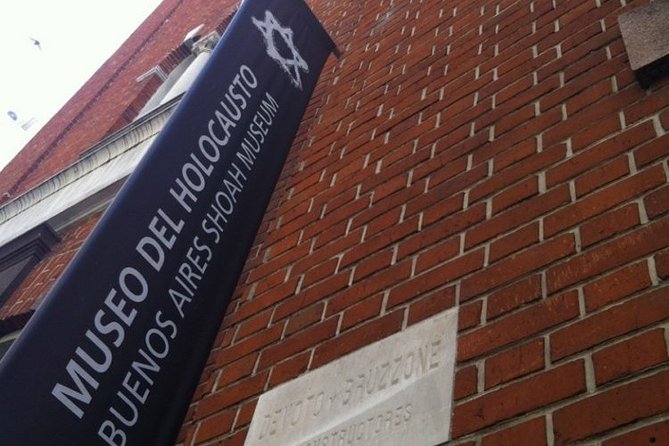
The second stop is the Museo del Holocausto Buenos Aires, also visited for about 20 minutes. A donation is required here as well, and admission is not included.
The museum adds a broader European frame to the local story. Jewish life in Argentina cannot be separated from the migration caused by persecution, war, and the Holocaust. Your guide can help explain how events in Europe affected Jewish families who came to Argentina and how memory is preserved in Buenos Aires today.
This is likely to be the most emotionally demanding part of the morning. The short visit means you will receive an introduction rather than a complete museum study, but that can be useful if you are new to the subject. You can ask your guide to clarify the timeline and to connect the museum’s material to the formation of Argentina’s Jewish community.
I would not schedule this tour immediately before a carefree lunch or a light entertainment plan if you prefer time to process difficult subjects. The experience is worthwhile, but it asks for attention and respect.
The donation also matters here. These institutions rely on support, and the tour’s extra cost is not simply an entry fee folded into the booking. Plan for the donation as part of the actual price of the experience.
More Private Tours in Buenos Aires
- Buenos Aires City Private Tour with Local Guide
★ 5.0 · 3,475 reviews - Private Airport Transfer In or Out : Ezeiza (EZE) – Buenos Aires
★ 5.0 · 548 reviews - Private Full-Day Iguazu Falls Tour with Airfare from Buenos Aires
★ 4.5 · 387 reviews - Private City Tour with a friend in Buenos Aires
★ 5.0 · 363 reviews
Temple Libertad: Buenos Aires Jewish life in a historic setting
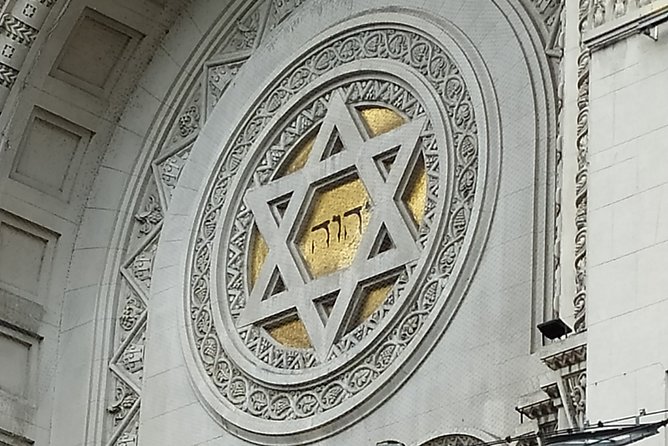
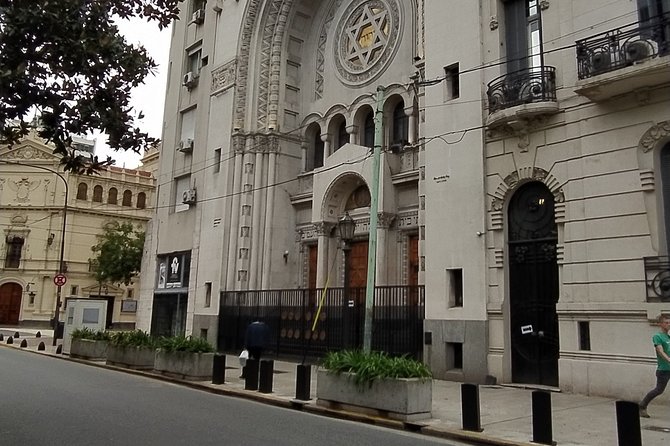
Temple Libertad is the third stop, with approximately 20 minutes for the visit. The synagogue offers a different kind of understanding from the museums. Instead of looking mainly at objects and displays, you encounter a place connected to worship and communal life.
The value of this stop is its human scale. A synagogue shows that Jewish history in Buenos Aires is not only a subject preserved behind glass. It remains part of daily religious and cultural life. The tour’s guides have been praised for explaining both the institution and the wider community, and some have offered personal connections and stories from their own lives in Buenos Aires.
You should keep your passport close and follow the guide’s instructions at the entrance. Institutional visits may involve security checks or entry rules, and the tour specifically warns you to carry identification throughout the morning.
The 20-minute window again makes this an overview. You may have time to see the principal spaces and hear the key history, but not to linger at length. If religious architecture is your main interest, you may wish the schedule allowed more time. If your goal is to understand the role of the synagogue within the community, the concise visit works well.
AMIA Cultura and the memory of the 1994 bombing
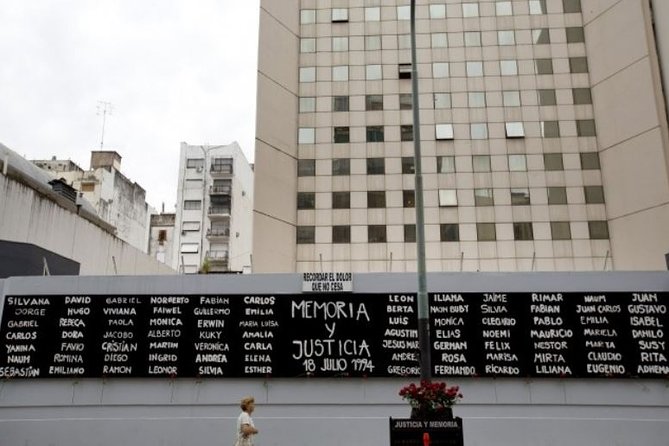
The final listed stop is AMIA Cultura, also planned for about 20 minutes. This is one of the most meaningful parts of the tour because AMIA is tied to the 1994 bombing of the Jewish community center, an attack that deeply affected Buenos Aires and the Jewish community across Argentina.
The tour addresses how the community responded and rebuilt after the attack. That gives you more than a tragic event and a date. You see how a community works to preserve its institutions, support its people, and continue cultural life after violence.
This stop may also explain why the tour feels different from a museum-only visit. The subject is connected to a living organization and to the public memory of Buenos Aires. You are not simply collecting facts. You are learning how a community dealt with loss and continued its work.
Allow yourself time to absorb this part of the tour. The review information describes visits to the sites of the 1992 and 1994 attacks as moving, and that is a fair expectation. The guide’s role is especially important here. Guides named in the feedback, including Kevin, Gabriel, and Deborah, were praised for clear explanations and for adding personal or community context.
The guides are a major part of the value
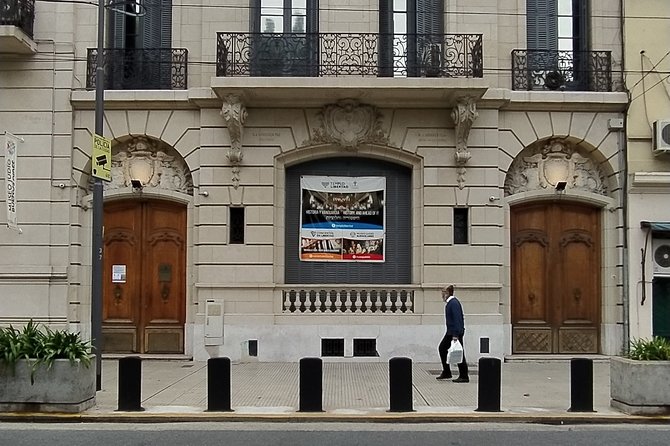
The quality of this experience depends heavily on the guide. The strongest feedback centers on guides who explain the subject clearly, answer questions, and connect large historical events to Jewish life in Buenos Aires.
Gabriel was praised for his account of the history of Argentina’s Jewish population. Deborah was described as deeply connected to the local community and willing to show as much as possible while adding personal stories. Ariella helped one couple feel more connected to the Argentine Jewish community and even accommodated a request to visit a Jewish store.
Kevin was singled out for making the subject fascinating and easy to follow, especially the migration of Jews to Argentina and the effect of the terrorist attack. Gabrielle was also praised for a clear, informative approach.
You should not assume that every guide will offer the same personal details, but the private format gives you the best chance to shape the conversation. If you have family names, a country of origin, a particular branch of Judaism, or questions about Argentine Jewish neighborhoods, mention that at booking. The operator asks for all necessary information in advance, so providing useful background can help.
What $157 per person really buys
The price is $157 per person before donations. That is a high price for a three-hour activity, especially since museum admission and institutional donations are not included.
Still, price is not the whole value. You are paying for a private local guide, hotel pickup and drop-off, private transportation, and a tightly organized route through four institutions that would be difficult to connect efficiently on your own. You also receive interpretation, which is the main reason to take this tour rather than simply visit one museum independently.
For one person or a couple, the cost may feel steep. For a family or small group, group discounts could improve the value, and the private structure means you are not paying for a generic large-group excursion. Ask about the discount before booking rather than assuming it applies automatically.
You also need to add the required donations. The published information says each institution requires a donation, and the amount is defined at the start of the tour. Carry at least $25 per person, but confirm the total because the separate note about $20 per institution suggests the final amount could be higher.
I would call this good value for someone who places a high priority on Jewish history, local context, and convenience. I would not recommend it to someone seeking inexpensive general sightseeing or long museum visits.
Who should take this tour
This experience suits you best if you want to understand how Jewish migration shaped Buenos Aires and how the community functions today. It is especially useful for visitors with Jewish family roots, students of European migration, or anyone who wants to learn about the 1992 and 1994 attacks in a local setting.
It also suits first-time visitors who prefer a guide to handle transport and introductions. The hotel pickup removes some friction, and the private vehicle keeps the morning focused.
You may want to skip it if your schedule includes only weekends or public holidays, since the main institutions are closed then. You should also think twice if you dislike emotionally difficult subjects or prefer to explore museums independently at your own pace.
Most people can participate, according to the tour information. A current passport is required, and you should provide all required booking details in advance.
The tour is offered in English, which makes it a useful choice for English-speaking visitors who want a detailed explanation rather than a self-guided visit. The compact schedule also leaves most of your day free for other Buenos Aires activities.
Booking and cancellation details
The tour starts at 9:00 a.m. and picks you up at a centrally located hotel or apartment. It is offered as a private activity, so only your group participates.
You receive confirmation at booking. If your plans change, you can cancel for a full refund up to 24 hours before the start time. Cancellations or changes made less than 24 hours in advance are not accepted for a refund.
Book a weekday rather than leaving this for a Saturday or Sunday. Since the main institutions close on weekends and holidays, weekday availability is an important part of planning.
Should you book the Private Jewish Heritage Tour?
I would book it if Jewish Buenos Aires is a central interest for you and you want a guide to connect museums, synagogue life, migration, and the AMIA tragedy in one morning. The private transport, hotel pickup, and strong guide feedback make the price easier to justify for a small group.
Before paying, confirm the total donation amount and make sure your travel date falls on an open weekday. Bring your passport and expect a serious, tightly paced visit rather than a relaxed museum morning.
If you want personal context, efficient transport, and access to several key institutions, this is a worthwhile choice. If you want the lowest price or extended time at each museum, choose independent visits instead.
FAQ
How long does the Private Jewish Heritage Tour last?
The tour lasts approximately three hours. Each of the four listed stops is planned for about 20 minutes, with the remaining time used for transportation and arrangements between institutions.
What time does the tour begin?
Pickup begins at 9:00 a.m. from any centrally located hotel or apartment in Buenos Aires.
Is hotel pickup included?
Yes. A private local guide, hotel pickup, and hotel drop-off are included.
Are museum admissions and donations included?
No. Admission tickets are not included, and each institution requires a donation. You should bring at least $25 per person, while confirming the exact amount at the start of the tour.
Do I need to bring my passport?
Yes. A current valid passport is required on the day of travel, and you should carry it with you throughout the tour.
Is the tour available on weekends?
The main institutions are closed on weekends and holidays, so you should plan to take the tour on a weekday.
Recently added around Buenos Aires
- Photo Session in Buenos Aires★ 5.0 · 26 reviews
- Your Personal Photographer in Buenos Aires★ 5.0 · 24 reviews
- Discover Buenos Aires’ independent art scene — Ticket included★ 5.0 · 30 reviews
- Your Private Photographer in Buenos Aires★ 5.0 · 4 reviews
- Yerba Mate Workshop – Learn to Drink Mate like a Local!★ 5.0 · 11 reviews
- Taste of Tradition: Yerba Mate & Alfajores Experience★ 4.0 · 5 reviews
- Wine tasting in OASIS Palermo★ 5.0 · 2 reviews
- Day Tour Classic★ 3.5 · 35 reviews
Historical Tours, compared.
Historical Sherpa Food Tour of San Telmo with Street Food, Drinks
Read our review →
Nazis in Buenos Aires: a historical walking tour
Read our review →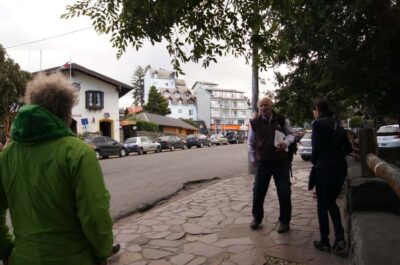
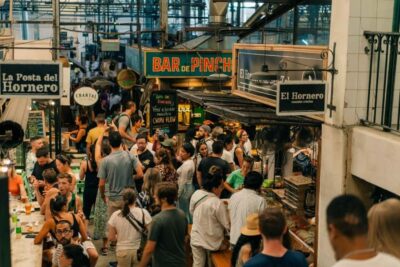
San Telmo: Historical Guided Tour with Street Food & Drinks
Read our review →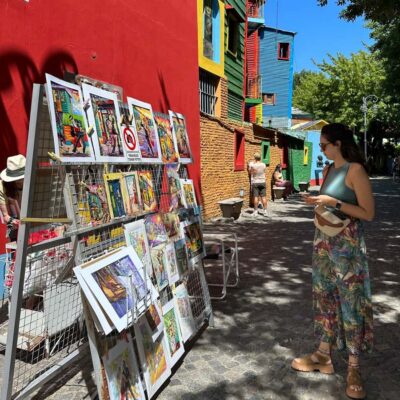
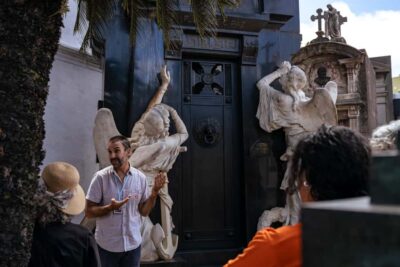
Recoleta Cemetery – Small Group Tour of History & Secrets
Read our review →
Private Evita and Peronism Historical Tour in Buenos Aires
Read our review →Browse the lists this tour appears in