
Reviewed · HISTORICAL TOURS
Private Classic 4 hour City Tour with Historical sites
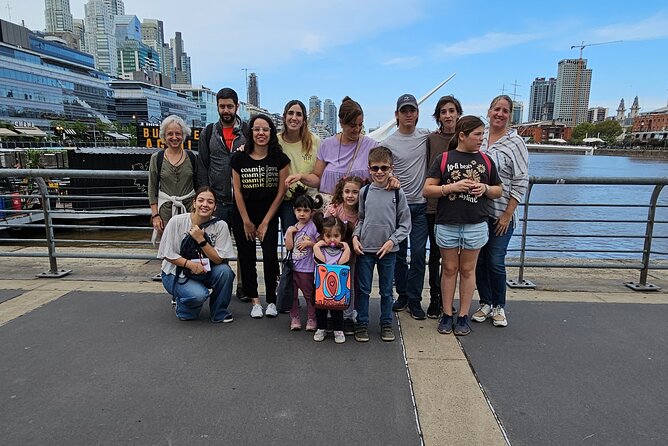
Buenos Aires rewards a fast first look. This private four-hour tour links the city’s big stories, from immigrant La Boca and tango to Plaza de Mayo, Recoleta, and Puerto Madero. I especially like the private vehicle and the chance to shape the experience around your group. I also like the guides’ warm, personal approach, with Eugenia and Natalia earning especially strong praise for making history clear and fun. The main drawback is the short schedule: free time at several stops is limited and can change with traffic or the guide’s judgment.
At $223 per person, this makes the most sense for a small group that wants a broad introduction without figuring out Buenos Aires transport alone. You will see a lot in four hours, but this is mainly a panoramic orientation tour, not a series of long museum visits or leisurely neighborhood walks.
In This Review
- Key points at a glance
- Why this four-hour route works
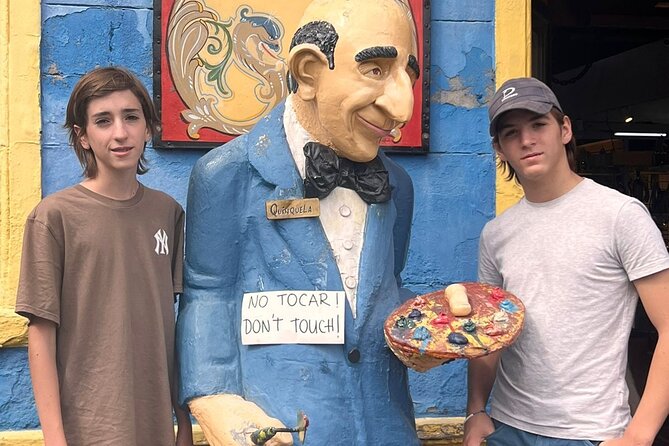
- La Boca, where color meets port history
- The city’s greener side and Floralis Generica
- San Telmo and the memory of 1871
- Downtown, Plaza San Martín, and the British imprint
- Plaza de Mayo, the civic heart of the route
- Recoleta, the polished French-influenced district
- Puerto Madero, bridges, ships, and converted warehouses
- What $223 per person really buys
- Who will get the most from this tour
- Practical advice before you go
- Should you book it?
- FAQ
- How long is the Buenos Aires city tour?
- Is the tour private?
- What is included in the price?
- Are tips included?
- How much free time is provided at the stops?
- Can I cancel for a full refund?
Key points at a glance
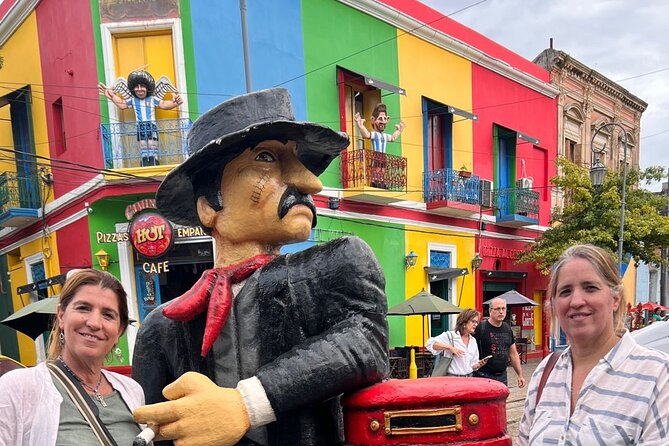
- La Boca gives you the city’s strongest visual start: colorful old tenements, cobblestones, tango, football, port culture, and souvenir stalls.
- The route covers five very different areas: La Boca, San Telmo, central Buenos Aires, Recoleta, and Puerto Madero.
- Plaza de Mayo packs in the country’s political story: the Casa Rosada, Cathedral, National Bank, ministries, old city buildings, and the city’s oldest monument.
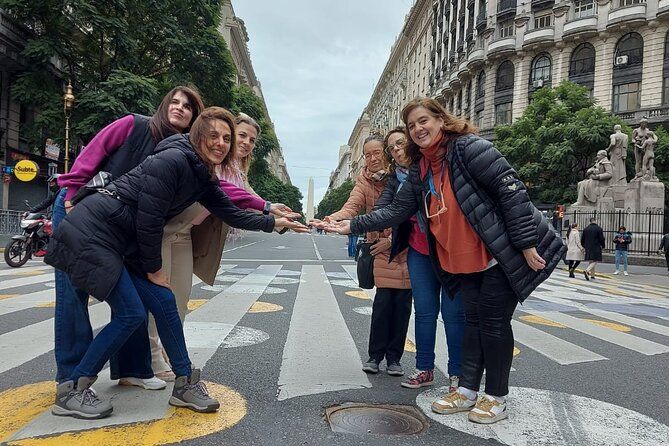
- Your guide matters here: Eugenia and Natalia are praised for clear explanations, humor, patience, and a personal touch.
- The tour is private, but the timing is not fully fixed: traffic and guide decisions can change how long you spend outside the vehicle.
- The price buys convenience and flexibility: it is easier to justify with several people sharing the vehicle and guide than for a solo visitor.
Why this four-hour route works
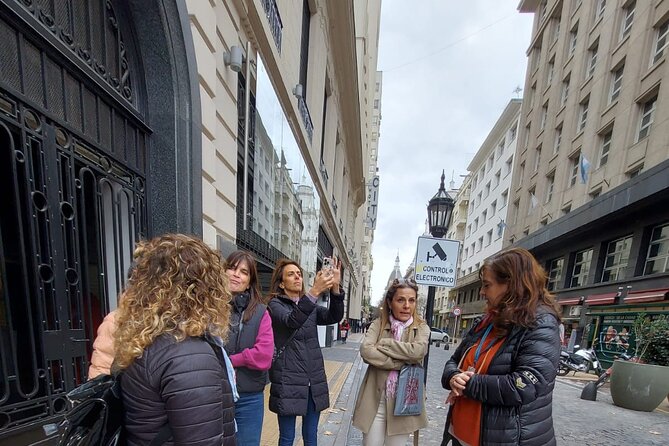
Buenos Aires can feel scattered at first. Its major districts are spread across a large city, and each has a different character. La Boca is tied to immigrant life, port workers, tango, and football. San Telmo carries colonial-era buildings and antique-market atmosphere. Recoleta is polished and French-influenced, while Puerto Madero presents a newer, tidier waterfront face.
This tour puts those contrasts together in one compact outing. You are not asked to spend half a day in one district. Instead, you get a guided introduction to the city’s cultural and political backbone, with transportation between areas.
That format is particularly useful on a first day in Buenos Aires, after a late arrival, or during a short stay. I would not treat it as a substitute for returning on foot to La Boca, San Telmo, or Recoleta later. Think of it as a smart reconnaissance mission that helps you decide where to spend more time afterward.
The guide is central to the experience. Eugenia Calcarami is praised for her passion for Buenos Aires, patience with families, and ability to explain the city in an easy, lively way. Natalia also receives warm praise for history-focused tours and for making the subject fun for children and adults. Your assigned guide may be different, so those names are useful examples rather than a promise.
More City Tours in Buenos Aires
- Buenos Aires City Private Tour with Local Guide
★ 5.0 · 3,475 reviews - Buenos Aires Small-Group City Tour
★ 5.0 · 2,226 reviews - Buenos Aires: City Highlights Guided Tour with Transfer
★ 4.7 · 1,946 reviews
La Boca, where color meets port history
La Boca is the loudest visual chapter of the tour. Old tenement buildings once housed European immigrants, and their bright painted facades now frame cobbled streets filled with artists, souvenirs, and tango associations.
The district is described as a little Italy, but its identity is broader than that label suggests. It connects immigrant life with the port, Argentine football, tango, and lunfardo, the local slang that grew from the city’s mixed urban culture. A good guide can turn those separate subjects into one readable story about how Buenos Aires developed.
You get about 25 minutes at this part of the route, including roughly 15 minutes of free time for a restroom stop, snack, drink, or souvenir browsing. That is enough for a quick look and a few photographs, but not enough for an unhurried exploration of every side street.
The timing is not fixed. Traffic, the day’s conditions, and the guide’s judgment can shorten or adjust your free time. If La Boca is a priority, tell your guide early. You may need to choose between browsing, refreshments, and a longer look at the streets.
The area’s colorful appearance can make it easy to focus only on photographs. I would pay attention to the social story as well. This is a place where architecture, migration, sport, language, and music all meet. The tour gives you that framework quickly, then moves on before the visit becomes repetitive.
The city’s greener side and Floralis Generica
The route also takes in greener parts of Buenos Aires, including Floralis Generica, the enormous metal flower associated with architect Eduardo Catalano. Its petals open and close with the sun, giving the monument a changing presence rather than leaving it as a static sculpture.
You will also see fountains, monuments, leafy residential streets, and large mansions. This portion helps correct the idea that Buenos Aires is only dense avenues and historic facades. The city has formal parks and spacious residential areas, and the shift in scenery is welcome after La Boca’s compact streets.
The information provided does not give a separate fixed duration for this section. Treat it as a vehicle-based sightseeing segment with possible photo pauses rather than a guaranteed long park visit. If you want time to linger at Floralis Generica, ask how the guide plans to handle that stop.
San Telmo and the memory of 1871
San Telmo receives about 10 minutes, so this is another brief introduction rather than a full neighborhood walk. The focus is on the facade of the Church of St. Pedro Telmo, the first medical school, and an old Jesuit home that later became Argentina’s first women’s jail.
The church is linked with the yellow fever outbreak of 1871 and with important colonial events. That connection gives the stop more weight than a quick architecture photo. You are looking at a building tied to public health, religion, and the city’s early civic life.
The old Jesuit home offers another useful reminder that historic buildings often change purpose. A religious residence becoming a women’s jail tells you something about how institutions developed in colonial and early national Buenos Aires.
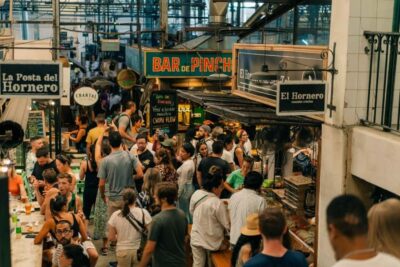
Ten minutes is tight. You may get an exterior explanation and a short look around, but you should not expect a full interior visit or time to browse San Telmo’s shops and cafes. I would plan a separate return visit if you want the neighborhood’s slower atmosphere, food, markets, or antiques.
More History Tours in Buenos Aires
- Historical Sherpa Food Tour of San Telmo with Street Food, Drinks
★ 5.0 · 920 reviews - Nazis in Buenos Aires: a historical walking tour
★ 4.9 · 193 reviews - San Telmo: Historical Guided Tour with Street Food & Drinks
★ 5.0 · 87 reviews - Buenos Aires: La Boca Art and History Walking Tour
★ 4.8 · 55 reviews
Downtown, Plaza San Martín, and the British imprint
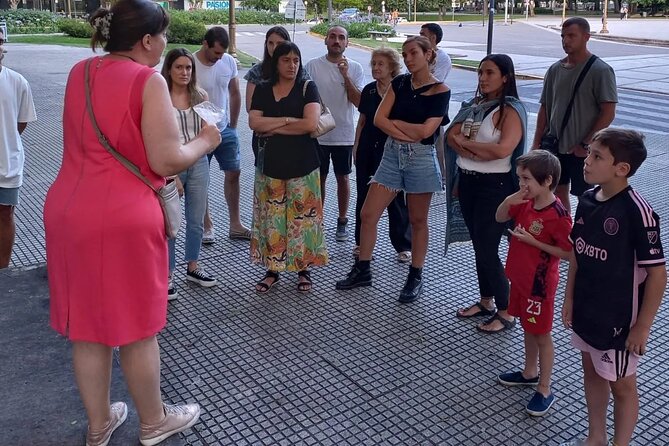
The central-city portion introduces older skyscrapers, Plaza San Martín, the British Tower, and railway stations built by the British in the late 19th century. This is a useful counterpoint to the Spanish and Italian associations of other districts.
Plaza San Martín is one of the route’s most appealing open spaces. Its trees came from different parts of the world, and the square includes a monument to those killed in the Malvinas War. The setting invites a short pause, but the schedule appears to treat it mainly as a sightseeing drive or brief stop.
The British Tower was presented to Buenos Aires by the British community in 1910. Together with the railway stations and other older structures, it points to the foreign influence that shaped the city’s transport, commerce, and architecture.
This section rewards a guide who can explain connections instead of merely naming buildings. Ask how the British presence affected Buenos Aires, and you will get more from the drive than a string of facade descriptions. Since the tour is private, you have a better chance of asking those questions than you would on a large group bus.
Plaza de Mayo, the civic heart of the route
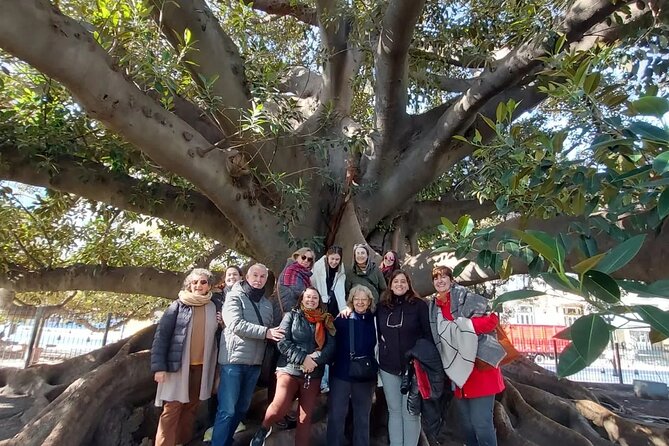
Plaza de Mayo is the most concentrated historical stop, with about 15 minutes to look around. Here you see the Casa Rosada, the presidential office, along with the National Bank, Internal Revenue offices, Ministry of Economy, Cathedral, and several older civic buildings.
The square also includes the city’s oldest monument, the old jail and city hall, the former French City Hall, and the City Legislature. Even if you are not interested in political history, the collection of government, religious, and municipal buildings makes the plaza the clearest place to understand Buenos Aires as a capital.
The Casa Rosada is the visual anchor. Its pink exterior is familiar from photographs, but the surrounding buildings explain how power is organized around this square. The Cathedral adds another layer, while the older municipal structures show the city’s changing administrative life.
Fifteen minutes will give you a useful overview, not a complete political history. You will likely spend much of it listening and orienting yourself. If you want interior visits, detailed architecture study, or more time at the square, you will need to return independently.
I like this stop because it ties together several themes from earlier in the morning: colonial institutions, European influence, national politics, and urban change. The guide’s role is especially important here. One of the strongest patterns in the guide praise is the ability to make history understandable without turning it into a lecture.
Recoleta, the polished French-influenced district
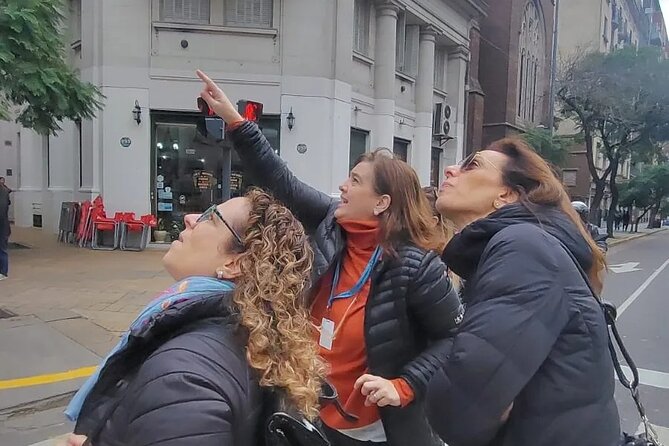
Recoleta shifts the mood again. It is described as Buenos Aires’ most French and elegant neighborhood, with boutiques, restaurants, cafes, apartments, mansions, and a long association with Argentina’s upper-class families.
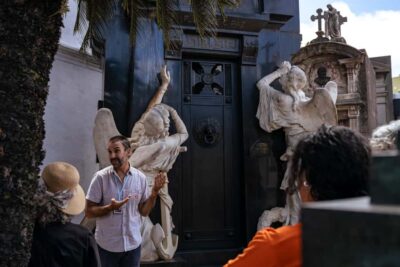
You get about 15 minutes here. That is enough to see the architectural style and get a feel for the district, but not enough for a relaxed cafe stop or detailed exploration of the famous cemetery, which is not specifically included in the supplied route. Do not assume a cemetery visit unless your guide confirms it.
Recoleta matters because it shows the city’s taste for European models in a different way from La Boca’s immigrant tenements or the British railway structures downtown. Here the emphasis is on wealth, formal buildings, elegant public life, and residential streets.
One past experience with Eugenia also included a little Palermo, though Palermo is not listed as a guaranteed stop on this particular tour. You can ask about possible adjustments, but keep your expectations tied to the stated route. In four hours, extra districts usually mean less time somewhere else.
Puerto Madero, bridges, ships, and converted warehouses
The final waterfront section takes in Calatrava’s Puente de la Mujer, or Women’s Bridge, crossing the dock in a dramatic sweep. The bridge provides a modern architectural finish after the colonial churches, older civic buildings, and 19th-century railway structures seen earlier.
You will also see the Sarmiento Frigate, built in England and used as Argentina’s old naval training ship. Along the docks, former brick warehouses built by the British and Mr. Madero now serve as lofts, restaurants, and offices.
This is a good ending because Puerto Madero shows Buenos Aires looking forward. Old port buildings have been given new uses, and the waterfront has become a place for dining, offices, and urban walks. The contrast with La Boca is striking: both are tied to the port, but they present very different chapters.
The route does not state a fixed free-time period here. You may see the bridge, ship, and warehouses from the vehicle or during a short pause. Ask if you want a photograph stop, especially if the bridge is one of your priorities.
What $223 per person really buys
The price is $223 per person, with the vehicle and professional guide included. Tips for the driver and guide are extra.
That is a serious price for four hours, so the value depends on how you use the private format. If you are a family or small group, the cost may be easier to accept because you receive dedicated transportation, a guide focused only on your party, and a route that crosses several distant districts. For one person, the same price feels harder to justify unless convenience and personal attention are your top concerns.
You are paying for more than admission tickets. The listed stops are free, and no major attraction entry is included. The real purchase is time saved, traffic handled by someone else, and a guide who can explain the city as you move between neighborhoods.
The tour is strongest when you want an overview quickly. It is weaker as a value proposition if you prefer to walk, linger, use public transport, and explore one neighborhood at a time. Most of the stops are short, and several are likely to be viewed from the vehicle or with only a brief pause.
Who will get the most from this tour
I would recommend it to first-time visitors with limited time, families who want to avoid transport hassles, and people arriving in Buenos Aires who need a clear introduction before exploring on their own.
It also suits visitors who enjoy history and architecture but do not want a large group format. The private setting lets you ask questions, request a little more attention at a favorite stop, and communicate easily about family needs. One especially warm account describes Eugenia keeping young daughters entertained during another outing, while another praises her patience after a participant became separated from the group. Those details suggest a personal style that can help families feel at ease.
Children may also respond well when the guide uses songs, humor, and stories. Natalia is praised for making historical and cultural subjects accessible to younger people, though the exact guide for your booking is not guaranteed.
I would hesitate if your main goal is a long La Boca walk, a slow cafe afternoon in Recoleta, a museum visit, or a detailed tour of every building. This route covers breadth, not depth.
Practical advice before you go
Confirm the meeting point when you book, since the supplied information gives opening hours but does not name a specific pickup address. The tour operates Monday through Sunday between 8:00 a.m. and 4:00 p.m. during the stated operating period, from September 22, 2025, through December 8, 2026.
Wear comfortable shoes, even though the vehicle does much of the work. You will want to step out at several places, and cobblestones in La Boca are not ideal for hurried walking.
Keep your schedule flexible. The amount of free time is not fixed, and traffic can affect the route. If you care most about one stop, tell the guide at the start rather than hoping the timing will work out.
There is free cancellation if you cancel at least 24 hours before the local start time. Changes or cancellations made less than 24 hours ahead are not accepted for a refund.
Should you book it?
Book this private tour if you want to see Buenos Aires’ major districts in one morning or afternoon, with a guide handling the route and explaining the connections. The strongest reasons are the private vehicle, the wide range of neighborhoods, and the personal guide style praised in the experiences with Eugenia and Natalia.
Skip it if you want a slow, inexpensive, walking-based visit or if a $223-per-person price feels too high for a four-hour overview. The schedule is brisk, and free time can change.
For a short stay, a family group, or a first orientation to Buenos Aires, I think the convenience can be worth the cost. Use the tour to learn the city’s shape, then return on your own to the district that caught your interest most.
FAQ
How long is the Buenos Aires city tour?
The tour lasts approximately four hours.
Is the tour private?
Yes. Only your group participates in the activity.
What is included in the price?
The vehicle and professional tour guide are included.
Are tips included?
No. Tips for the driver and guide are not included.
How much free time is provided at the stops?
The listed stop times include about 25 minutes at La Boca, 10 minutes at San Telmo, 15 minutes at Plaza de Mayo, and 15 minutes at Recoleta. The free time is not fixed and can change because of traffic or the guide’s judgment.
Can I cancel for a full refund?
Yes, if you cancel at least 24 hours before the experience start time. Cancellations or changes made less than 24 hours ahead are not accepted for a refund.
More Private Tours in Buenos Aires
- Private Airport Transfer In or Out : Ezeiza (EZE) – Buenos Aires
★ 5.0 · 548 reviews - Private Full-Day Iguazu Falls Tour with Airfare from Buenos Aires
★ 4.5 · 387 reviews - Private City Tour with a friend in Buenos Aires
★ 5.0 · 363 reviews - Private Tour: Buenos Aires and Delta del Tigre with Local Guide
★ 5.0 · 334 reviews
Recently added around Buenos Aires
- Photo Session in Buenos Aires★ 5.0 · 26 reviews
- Your Personal Photographer in Buenos Aires★ 5.0 · 24 reviews
- Discover Buenos Aires’ independent art scene — Ticket included★ 5.0 · 30 reviews
- Your Private Photographer in Buenos Aires★ 5.0 · 4 reviews
- Yerba Mate Workshop – Learn to Drink Mate like a Local!★ 5.0 · 11 reviews
- Taste of Tradition: Yerba Mate & Alfajores Experience★ 4.0 · 5 reviews
- Wine tasting in OASIS Palermo★ 5.0 · 2 reviews
- Day Tour Classic★ 3.5 · 35 reviews
Historical Tours, compared.
Historical Sherpa Food Tour of San Telmo with Street Food, Drinks
Read our review →
Nazis in Buenos Aires: a historical walking tour
Read our review →
San Telmo: Historical Guided Tour with Street Food & Drinks
Read our review →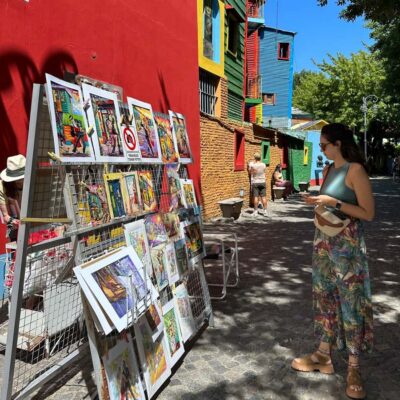
Recoleta Cemetery – Small Group Tour of History & Secrets
Read our review →
Private Evita and Peronism Historical Tour in Buenos Aires
Read our review →Browse the lists this tour appears in