
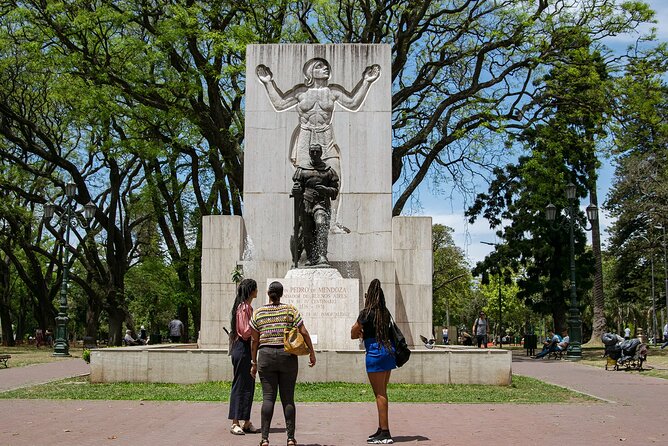
Reviewed · WALKING TOURS
Private Afro-Argentine Heritage Walking Tour in Buenos Aires
Buenos Aires has a story many visitors never hear. This three-hour walk brings Afro-Argentine history into focus through San Telmo, with a guide from the Afro-Argentine community and stops that connect slavery, immigration, tango, asado, and Lunfardo. I like the private format, which gives you room to ask questions, and I like the way the tour uses ordinary streets and old buildings instead of treating history as a museum display.
The strongest reports praise Karl for being friendly, patient, and clear, as well as for adjusting the schedule to suit the group. The main consideration is the $207 per person price, which is high for a three-hour walking tour, even with a private guide and a drink included. You will get the most from it if Afro-Argentine history is a main reason for your visit, not just a side topic.
In This Review
- Key points to know before you book
- Why this San Telmo walk is different
- Casa Minima and the path after slavery
- A drink in San Telmo, with colonial life in view
- The Sunday antiques square and San Telmo’s public face
- San Pedro González Telmo and the city’s religious past
- Galería del Viejo Hotel and the erasure of African heritage
- Parque Lezama and the origins of the Rio de la Plata story
- What the private format adds at $207 per person
- Who will get the most from this experience?
- My booking advice for an honest decision
- FAQ
- How long does the Afro-Argentine heritage tour last?
- Where does the tour begin?
- Where does the tour finish?
- Is the tour private?
- Is a drink included?
- Can I cancel for a full refund?
Key points to know before you book
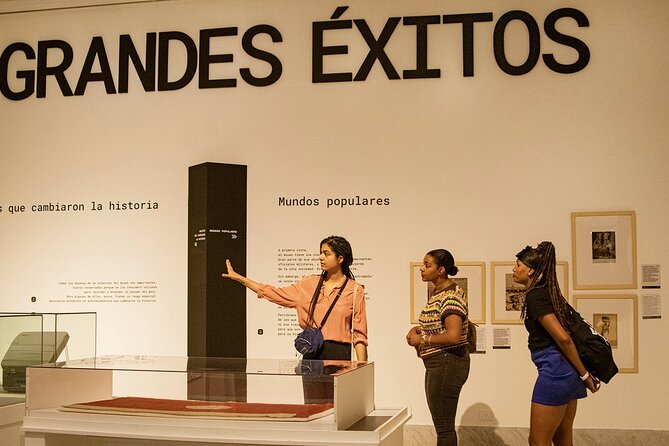
- Afro-Argentine history leads the tour: This is not a general San Telmo walk with a brief mention of slavery. The tour examines how African people shaped Buenos Aires and why that history became so difficult to see.
- Casa Minima gives the story a human scale: At Buenos Aires’s smallest house, you learn about freedom and how Afro-Argentines organized after slavery ended.
- San Telmo connects daily life with larger history: A drink in a traditional setting becomes a chance to discuss Africa before colonization and the people who worked inside colonial homes.
- The private group format matters: Only your party participates, so you can ask questions and set the pace within the roughly three-hour schedule.
- Culture gets a wider lens: Tango, asado, and Lunfardo are presented with attention to their African roots, alongside the effects of European immigration.
- The finish works well for independent exploring: The walk ends at the gates of the Museo Histórico Nacional in Parque Lezama, where you can visit the exhibition on your own.
Why this San Telmo walk is different
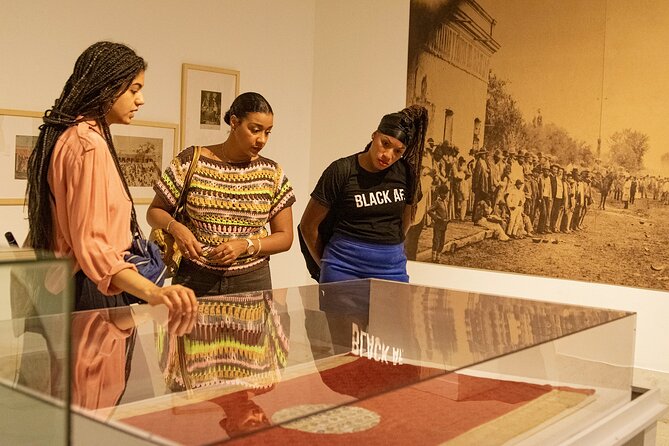
San Telmo is often sold as old Buenos Aires in an easy package: cobbled streets, colonial buildings, antiques, and tango associations. Those things are here, but this tour asks you to look at the neighborhood from another angle.
You will hear about the African presence in the Rio de la Plata region, the slave trade in what is now Argentina, and the lives of people who worked in colonial households. You will also look at the process of European immigration and the way it helped push African heritage out of the country’s public story.
That focus gives the walk a clear purpose. You are not simply checking off old churches and plazas. You are asking why a population that once played a major role in Buenos Aires can now seem almost absent from the city’s usual tourist narrative.
The private setup is useful here. This subject can lead to questions about memory, identity, language, and historical evidence. In a large group, you might hesitate to interrupt. With only your own party and the guide, the conversation can stay focused on what interests you.
The tour is offered in English, and the company reports that the guide can work with scheduling needs. Karl receives particularly warm praise for being personable, patient, and methodical. That matters on a subject that needs care rather than a rapid list of dates.
More History Tours in Buenos Aires
- Historical Sherpa Food Tour of San Telmo with Street Food, Drinks
★ 5.0 · 920 reviews - Nazis in Buenos Aires: a historical walking tour
★ 4.9 · 193 reviews - San Telmo: Historical Guided Tour with Street Food & Drinks
★ 5.0 · 87 reviews
Casa Minima and the path after slavery
The first main stop is Casa Minima, described as the smallest house in Buenos Aires. The building itself is a compact and memorable starting point, but the real value is the history attached to it.
Here, the guide explains the path to freedom and the organization of Afro-Argentines after slavery ended. That shifts the story away from slavery as a single event and toward the difficult period that followed. Freedom did not erase inequality or make a community’s place in society secure. You will hear about the efforts required to organize and build a life in the years after emancipation.
The stop lasts about 30 minutes, which is a generous share of a three-hour walk. That suggests the guide will spend time on explanation rather than only pointing out the façade.
Admission is free, so the cost here is your time and attention. Casa Minima is also a good reminder that historical evidence does not always come in grand monuments. Sometimes a narrow house, an address, or a building linked to ordinary life can raise larger questions about who lived in the city and who gets remembered.
A drink in San Telmo, with colonial life in view
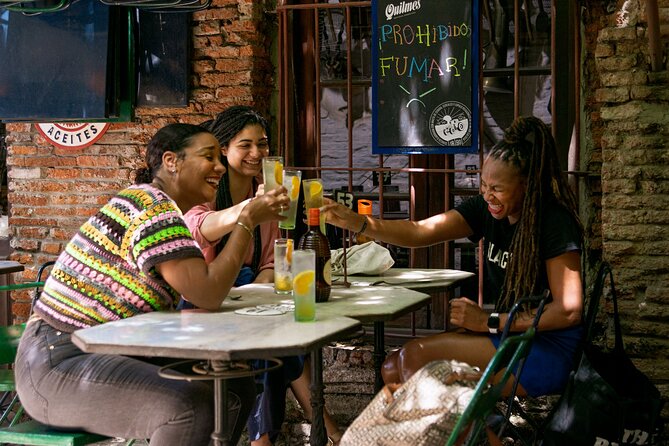
The next stop takes place in a traditional spot in the heart of San Telmo. You will have a drink and discuss Africa before colonization, along with the daily lives of people who worked in the house.
This is one of the more useful parts of the route because it links broad history to routine human experience. Instead of hearing only about political decisions or shipping routes, you consider the people who cooked, cleaned, carried, served, and maintained colonial households.
A coffee or tea, along with a non-alcoholic drink, is included. The stop lasts about 20 minutes, so do not expect a long café break. Think of it as a seated pause that gives the group time to talk.
The discussion of Africa before colonization is also important. It prevents the story from beginning with European enslavement, as if African history started only when Africans were brought to the Americas. The tour places that forced migration within a much longer human story.
Because the setting is part of daily San Telmo rather than an isolated lecture room, this stop may help you connect the past with the neighborhood around you. The exact traditional venue is not specified, so you should treat the drink as a modest included refreshment, not a full meal or a formal tasting.
The Sunday antiques square and San Telmo’s public face
The route also passes the square where San Telmo’s famous antiques market takes place every Sunday. The stop does not list a set duration, but it gives you a look at one of the district’s best-known public spaces.
This is a useful contrast with the tour’s central subject. The market square represents the version of San Telmo many people come to see, while the guide adds histories that are less visible in the usual sightseeing script.
If your tour takes place on Sunday, the market may shape the feel of the area. If it takes place another day, you will see the place without the full market setting. The provided schedule does not promise market stalls on every tour, so plan around the square itself rather than assuming a Sunday event.
The route also involves regular walking between stops. Comfortable shoes are a sensible choice, though the tour is listed as suitable for most participants and close to public transportation.
More Private Tours in Buenos Aires
- Buenos Aires City Private Tour with Local Guide
★ 5.0 · 3,475 reviews - Private Airport Transfer In or Out : Ezeiza (EZE) – Buenos Aires
★ 5.0 · 548 reviews - Private Full-Day Iguazu Falls Tour with Airfare from Buenos Aires
★ 4.5 · 387 reviews - Private City Tour with a friend in Buenos Aires
★ 5.0 · 363 reviews
San Pedro González Telmo and the city’s religious past
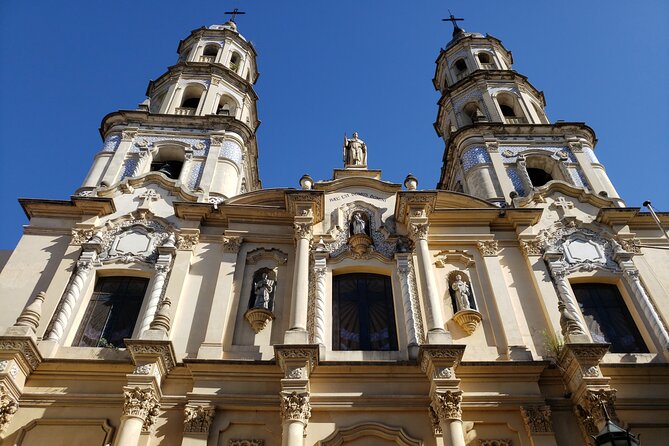
The walk continues to Parroquia de San Pedro González Telmo, one of Buenos Aires’s oldest churches. Work began in 1735, and the Bethlemite religious order continued it after the expulsion of the Jesuits.
You will spend about 10 minutes here. That is enough for a focused explanation and a look at the church’s place in the city’s development, but it is not an extended church visit.
The parish also has a museum with pieces more than 200 years old. Admission is listed as free for the stop, though the schedule does not promise a full museum tour or specify how much of the collection will be open during your visit. If that museum is a high priority, ask the provider about the day’s access before booking.
This stop helps place Afro-Argentine history within the institutions of colonial Buenos Aires. Churches, religious orders, homes, and public squares were not separate from the social system being discussed. They were part of the city where different groups lived, worked, worshipped, and struggled for place.
Galería del Viejo Hotel and the erasure of African heritage
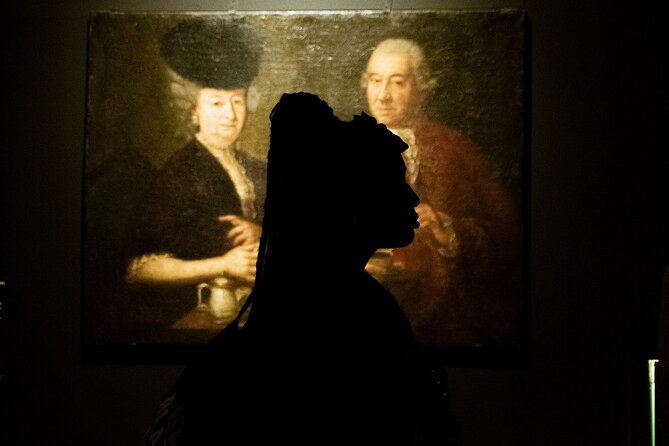
At Galería del Viejo Hotel, the subject turns toward European immigration and the way it symbolically erased African heritage from Argentina’s national story.
This is a key stop because it explains the disappearance you may notice when looking through standard accounts of Buenos Aires. The tour does not present the reduced visibility of Afro-Argentines as a simple matter of population change. Instead, it examines how cultural memory can be reshaped, leaving African contributions underplayed even when they remain part of everyday life.
You will learn about African roots in several familiar parts of Argentine culture:
- Tango
- Asado
- Lunfardo slang
That list gives the discussion practical relevance. You may already know these as symbols of Argentine identity, but the tour asks you to consider whose work, language, music, and customs helped form them.
The stop lasts about 15 minutes. Its short length means the guide will need to keep the explanation moving, but it also keeps the walk from becoming a long indoor lecture. I would pay close attention here and save questions for the private conversation, since this is likely one of the most thought-provoking parts of the route.
Parque Lezama and the origins of the Rio de la Plata story
The final guided stop is Parque Lezama, where an accredited guide explains the origins of the African population in the Rio de la Plata region and the slave trade in what is now Argentina.
The park gives the tour a broader regional frame. Earlier stops deal with houses, churches, language, and culture. Here, the story reaches back to the movement of people through the Rio de la Plata and the system that brought enslaved Africans to the region.
You will spend about 20 minutes with the guide. The tour then finishes at the gates of the Museo Histórico Nacional. You are free to enter and see the exhibition on your own, but museum admission is not described as part of the guided experience.
That ending is practical and intellectually useful. The guide’s work concludes, but you have the option to continue with national history at your own pace. If you want a longer museum visit, allow extra time beyond the three-hour tour. The schedule does not include a guided museum tour or a guaranteed amount of time inside.
What the private format adds at $207 per person
At $207 per person, this is not a budget walk. The value depends on how much you want a personal conversation about a specific subject.
A standard group tour can give you a broad introduction to San Telmo for less money. This experience offers something narrower and more tailored: an English-language guide, a private group, a route built around Afro-Argentine heritage, and the freedom to ask questions without a crowd.
Group discounts are available, though the exact discount is not provided. The price may make more sense for couples, families, or small groups who can share the private experience and receive the discount. For a solo visitor, the cost is harder to justify unless this topic is central to your trip.
The three-hour length is also part of the value calculation. It is long enough to cover several sites without using an entire day, and the route ends in a district where you can continue exploring. On the other hand, the short stops mean this is an introduction rather than a full academic study of Afro-Argentine history.
I would book it for the access to a focused guide and the chance to discuss a history that many general city tours skip. I would not book it expecting major interior visits, a meal, or a full museum experience.
Who will get the most from this experience?
This tour suits you if you want to understand Buenos Aires beyond its most familiar images. It is especially useful if you are interested in African diaspora history, the social effects of slavery, cultural identity, or the way national stories are shaped.
It also fits travelers who prefer conversation over a fixed script. The private format lets you ask about points that catch your attention, and Karl’s praised patience suggests a guide who is willing to explain rather than hurry you along.
You may find it less satisfying if your main goal is a general introduction to Buenos Aires, a long architectural tour, or a full afternoon inside historic buildings. Several stops are viewed from the outside or handled in brief visits, and the focus stays firmly on Afro-Argentine heritage.
Most participants can take part, and the route is near public transportation. Service animals are allowed. The meeting point is at San Lorenzo and Defensa, and the end point is Parque Lezama near the Museo Histórico Nacional, so you should plan for a one-way walk rather than returning to the starting point.
The tour is typically booked about 13 days ahead. That is a useful planning clue, especially if your Buenos Aires schedule is tight. You receive confirmation when booking, and free cancellation is available if you cancel at least 24 hours before the start time. Changes or cancellations inside that window are not accepted for a refund.
My booking advice for an honest decision
I like this experience because it treats Afro-Argentine history as part of Buenos Aires itself, not as a footnote. Casa Minima, the church, the old hotel gallery, the antiques square, and Parque Lezama become connected pieces in a larger story about freedom, labor, migration, culture, and memory.
The strongest reason to choose it is the guide. Karl is specifically praised for being friendly, patient, and methodical, and the company has shown flexibility with scheduling. Those details matter more here than a long list of attractions because the quality of the explanation shapes the whole walk.
The price is the main hurdle. At $207 per person, I would compare it with your priorities and group size. If you are traveling with others and can use a group discount, the private format becomes easier to defend. If you want only a quick look at San Telmo, choose a less specialized tour.
Book this tour if you want a focused, personal account of a part of Argentina’s past that is often overlooked, and if you are ready to spend three hours listening, asking questions, and reconsidering familiar cultural symbols. Skip it if you mainly want a broad city orientation or a long series of interior sightseeing visits.
FAQ
How long does the Afro-Argentine heritage tour last?
The tour lasts approximately three hours.
Where does the tour begin?
It begins at the intersection of San Lorenzo and Defensa in Buenos Aires.
Where does the tour finish?
The walk ends at the gates of the Museo Histórico Nacional in Parque Lezama. You can visit the museum exhibition on your own after the guided portion.
Is the tour private?
Yes. Only your group participates in the activity.
Is a drink included?
Yes. Coffee and tea are listed as included, along with a non-alcoholic drink during the stop in San Telmo.
Can I cancel for a full refund?
Yes, if you cancel at least 24 hours before the experience start time. Cancellations or changes made less than 24 hours before the start time are not accepted for a refund.
More Walking Tours in Buenos Aires
- Buenos Aires Hop-On Hop-Off Bus, Free Walking Tours & Discounts
★ 4.5 · 2,218 reviews - Buenos Aires: La Boca Guided Walking Tour in English
★ 4.8 · 1,587 reviews - La Boca Walking Tour
★ 5.0 · 1,029 reviews - Recoleta Cemetery Walking Tour
★ 5.0 · 668 reviews
Recently added around Buenos Aires
- Photo Session in Buenos Aires★ 5.0 · 26 reviews
- Your Personal Photographer in Buenos Aires★ 5.0 · 24 reviews
- Discover Buenos Aires’ independent art scene — Ticket included★ 5.0 · 30 reviews
- Your Private Photographer in Buenos Aires★ 5.0 · 4 reviews
- Yerba Mate Workshop – Learn to Drink Mate like a Local!★ 5.0 · 11 reviews
- Taste of Tradition: Yerba Mate & Alfajores Experience★ 4.0 · 5 reviews
- Wine tasting in OASIS Palermo★ 5.0 · 2 reviews
- Day Tour Classic★ 3.5 · 35 reviews
Walking Tours, compared.
Buenos Aires Hop-On Hop-Off Bus, Free Walking Tours & Discounts
Read our review →
German Footprint & Nazi presence – Walking Tour in Bariloche
Read our review →
Full Day Buenos Aires Private Walking Tour – Your Own Personal BA 101
Read our review →
Discover Buenos Aires: Walking Tour Through San Telmo & Center!
Read our review →
Browse the lists this tour appears in