
Reviewed · HISTORICAL TOURS
BA Jewish Heritage + North of the City Tour
Buenos Aires tells its Jewish story in plain sight. I like that this private tour connects immigration, worship, memory, and daily life across the city, rather than treating Jewish heritage as a single museum stop. I also like the mix of Jewish sites and famous Buenos Aires landmarks, including the Teatro Colón, Plaza de Mayo, and Recoleta Cemetery. The main consideration is the price: at $513.50 per person, this is a serious investment, especially if you are traveling alone or as a couple.
The day lasts about seven to eight hours and is offered in English with pickup. You will need your original passport at the Jewish Museum and Libertad Synagogue, and the tour is not available to cruise passengers. Because it is a private activity, your group has the guide’s attention, but you should still expect a full day with several stops and a moderate amount of walking.
In This Review
- Key points at a glance
- Why this tour gives Buenos Aires a wider story
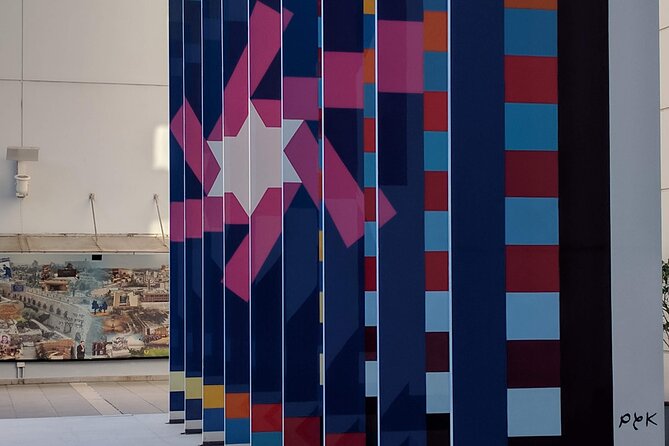
- Jewish immigration at the Buenos Aires Jewish Museum
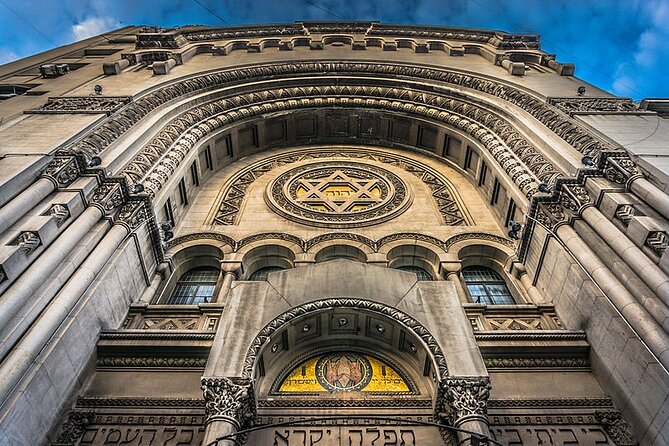
- Libertad Synagogue and the center of Jewish life
- Once, a traditional Jewish neighborhood in daily motion
- Tribunales and the Teatro Colón
- Plaza de Mayo and the political heart of Buenos Aires
- Recoleta Cemetery closes the day
- How the private format affects the experience
- Who will get the most from this day
- Practical details before you reserve
- Should you book the BA Jewish Heritage and North of the City Tour?
- FAQ
- How long does the BA Jewish Heritage and North of the City Tour last?
- What is included in the tour price?
- Is this a private tour?
- What language is the tour offered in?
- Do I need to bring my passport?
- Is the tour suitable for cruise passengers?
- What is the cancellation policy?
Key points at a glance
- Jewish history beyond the usual sights: Learn about the great immigration of the late 1800s and the growth of Argentina’s Jewish community.
- A private English-language experience: Only your group participates, with pickup offered and no larger tour group to manage.
- Access depends on your passport: Bring your original passport for entry to the Jewish Museum and Libertad Synagogue.
- Once adds everyday context: The traditional Jewish neighborhood gives the tour a street-level feel, with shops and local city life alongside historic institutions.
- AMIA adds difficult modern history: The tour includes Argentina’s central Jewish mutual aid institution and sites connected with attacks on Jewish targets.
- A strong final stop: Recoleta Cemetery closes the day with Evita Perón, famous Argentine figures, and a cooler late-afternoon setting when conditions allow.
Why this tour gives Buenos Aires a wider story
Many first visits to Buenos Aires focus on grand avenues, tango, cafés, churches, and political monuments. This tour adds another thread: the Jewish experience in Argentina, from immigration in the late nineteenth century to religious life, community institutions, neighborhood commerce, and painful acts of violence.
That wider frame is the reason I find the tour useful. Argentina has the fifth-largest Jewish population in the world, and the Jewish community has played an important part in the country’s urban and cultural life. You are not simply checking off a synagogue and a museum. You are looking at how a community took root in Buenos Aires and how its institutions still matter.
The guide can also connect the Jewish subject to Argentine culture more broadly. Candela, one guide praised for her warmth, interesting stories, and practical suggestions, helped place each stop in the setting of the wider city. Fernando was also described as easy to work with and well informed about Argentine Jewry. Guide quality matters here because much of the value comes from explanation, not from dramatic architecture alone.
More City Tours in Buenos Aires
- Buenos Aires City Private Tour with Local Guide
★ 5.0 · 3,475 reviews - Buenos Aires Small-Group City Tour
★ 5.0 · 2,226 reviews - Buenos Aires: City Highlights Guided Tour with Transfer
★ 4.7 · 1,946 reviews
Jewish immigration at the Buenos Aires Jewish Museum
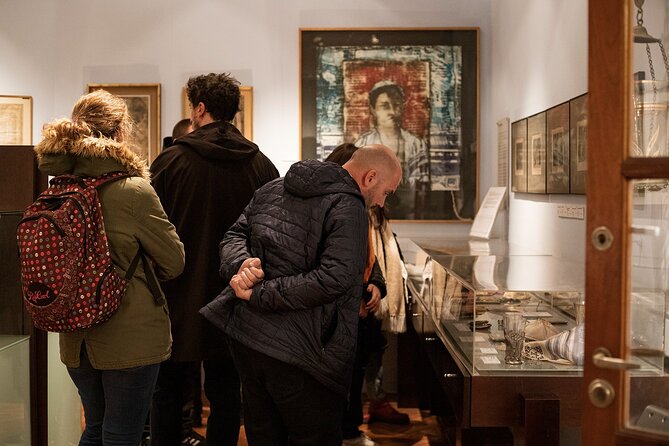
The first stop is the Museo Judío de Buenos Aires, with about 30 minutes set aside and admission included. The focus is the great immigration of the late 1800s, an essential starting point for understanding why Jewish institutions developed in Buenos Aires.
I like beginning here because it gives the rest of the day a human frame. Once you hear about immigration and community formation, the synagogue, Once neighborhood, and AMIA are easier to understand as parts of a long story rather than isolated attractions.
Thirty minutes is enough for an introduction, but it is not a long museum visit. If you prefer to read every display at length, the schedule may feel brisk. The tour is designed to give you a guided foundation before moving into the city itself.
Bring your original passport. This is not a casual pass-by stop, and the passport requirement is specifically noted for the Jewish Museum and Libertad Synagogue. Keep it accessible rather than buried in your luggage.
Libertad Synagogue and the center of Jewish life
The tour continues to Libertad Synagogue, described as the large, centrally located synagogue, and then to AMIA, the Asociación Mutual Israelita Argentina. These sites help show both religious life and the community’s wider social role.
Libertad Synagogue gives the tour a place of worship and public identity. You can expect the guide to explain its place in Argentine Jewish life, not simply point out its façade. Entry is listed as free, though you must present your original passport.
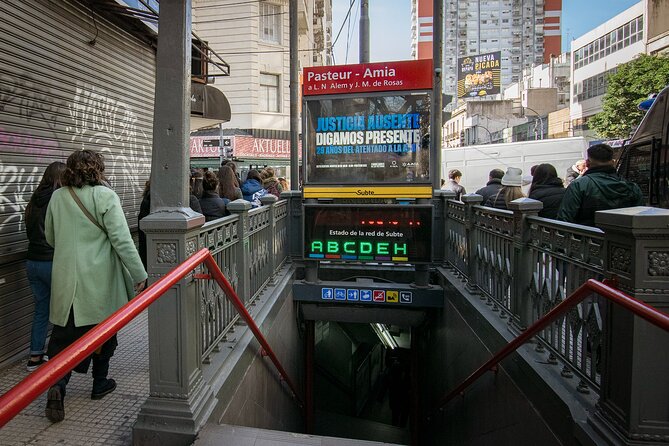
AMIA is called the mother institution of Jewish life in Argentina. The visit lasts about 30 minutes, and admission is free. Its importance is not only religious. A mutual association can serve community, cultural, educational, and social purposes, so this stop helps you see the Jewish community as a living civic network.
The AMIA visit also brings the tour into more difficult territory. The experience includes two sites where Jews were targeted by bombers. The supplied details do not name both locations separately, so you should expect discussion of attacks and their effect on Argentine Jewish life rather than a simple sightseeing stop.
This is one reason the tour works best for people who want context. The subject is serious, and the day is not designed as a light architectural outing. At the same time, the guide’s role is to make the material understandable and connected to the city around you.
Once, a traditional Jewish neighborhood in daily motion
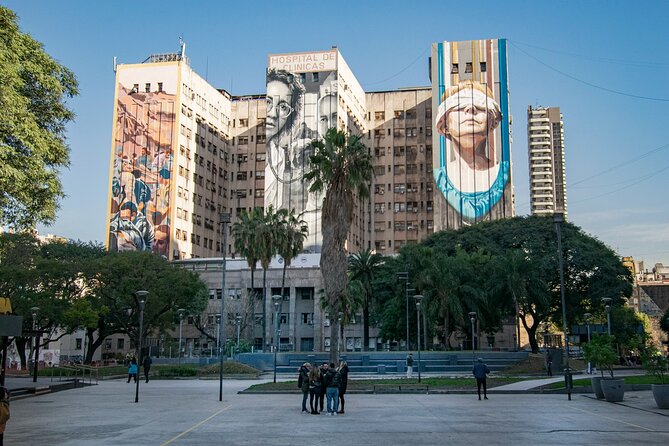
The Once neighborhood receives about an hour. This is one of the tour’s most useful stops because it moves the story away from formal institutions and into an urban district.
Once is described as one of Buenos Aires’ traditional Jewish neighborhoods and a commercial area. Here you can see how heritage is tied to ordinary streets, shops, trade, and community life. The value is less about one grand building and more about understanding a neighborhood that has carried a Jewish identity over time.
I like this part of the day because it gives you a break from museum-style learning. The neighborhood helps answer a practical question: where did people live, work, shop, and build community? You will also get a stronger feel for Buenos Aires as a working city rather than only a collection of historic squares and monuments.
The itinerary places Once within a larger three-hour city segment that also includes Tribunales, Retiro, Libertad Synagogue, and AMIA. That means the exact order and time spent at each point may depend on the day. If you want a slow, unstructured neighborhood walk, this is not that. It is a guided introduction within a packed city program.
More History Tours in Buenos Aires
- Historical Sherpa Food Tour of San Telmo with Street Food, Drinks
★ 5.0 · 920 reviews - Nazis in Buenos Aires: a historical walking tour
★ 4.9 · 193 reviews - San Telmo: Historical Guided Tour with Street Food & Drinks
★ 5.0 · 87 reviews - Buenos Aires: La Boca Art and History Walking Tour
★ 4.8 · 55 reviews
Tribunales and the Teatro Colón
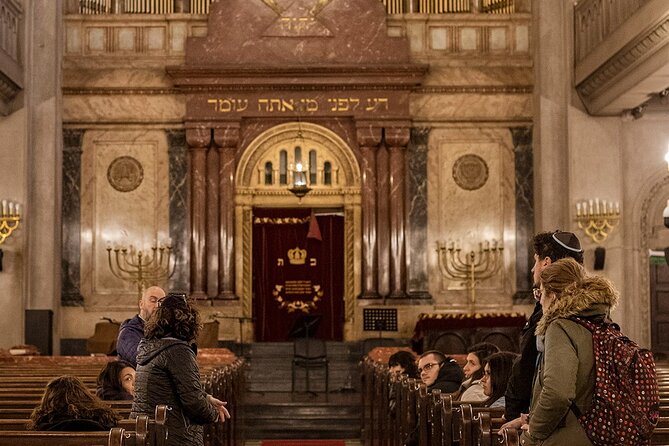
The tour passes through Tribunales and stops to see the Palacio de Tribunales, home of the Supreme Courthouse, from outside. There is no admission charge, and the courthouse is an exterior sight.
This stop adds a civic layer to the day. Buenos Aires is not only defined by religious institutions and immigrant neighborhoods. Courts, government, culture, and public space all sit close together in the central city. Seeing Tribunales alongside the Jewish sites helps place the community within Argentina’s national capital.
The Teatro Colón is another exterior highlight. It is one of the city’s famous opera houses, and the stop gives you a chance to see a major cultural landmark without adding a separate performance or interior tour.
Neither Tribunales nor Teatro Colón should be treated as full visits. You are seeing them as part of a broader city tour. That is useful if you want orientation and context, but less satisfying if your main goal is a detailed courthouse or opera-house tour.
Plaza de Mayo and the political heart of Buenos Aires
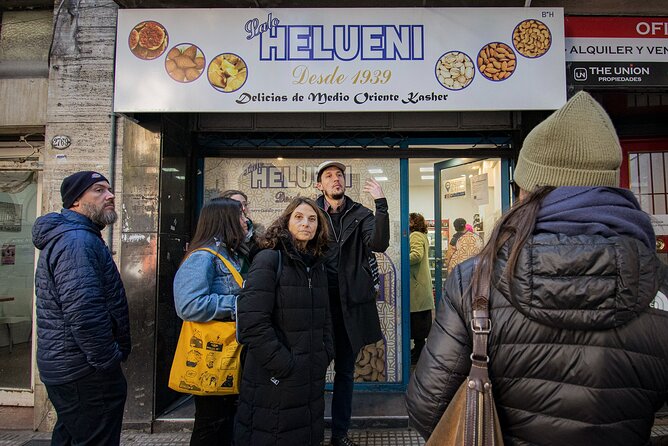
Plaza de Mayo receives about 35 minutes. This is the foundational square of Buenos Aires and one of the essential public spaces in the city.
The square gives the day a change of scale. After focusing on a particular community, you return to the national story of Argentina. Plaza de Mayo is where the city’s political memory becomes visible, and the guide can connect the capital’s major events and institutions to the streets you are seeing.
The stop is long enough for an explanation and a look around, but not a full historical tour of every building surrounding the plaza. I would treat it as a well-placed orientation stop, especially if this is your first day in Buenos Aires.
Its inclusion also makes the tour more useful for people who want a general city introduction along with Jewish heritage. You are not spending seven hours on one narrow topic. You are following Jewish history through the center of Buenos Aires and then seeing several major places that help define the city.
Recoleta Cemetery closes the day
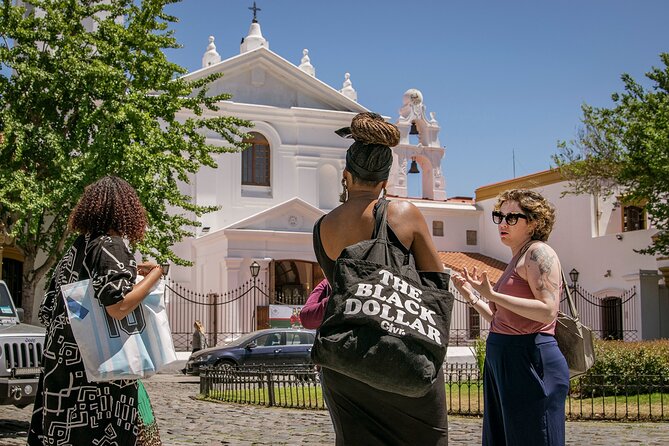
The final listed stop is La Recoleta Cemetery, with about an hour. The cemetery is famous as the resting place of Evita Perón, along with Argentine politicians, actors, and other public figures.
This is a fitting end to a day about memory. Recoleta is a major Buenos Aires attraction in its own right, with elaborate tombs and a strong connection to the country’s public figures. It also gives you a chance to process the earlier parts of the tour in a quieter setting.
One detail is easy to miss: only one Jewish person is buried there. That means Recoleta is not primarily a Jewish heritage stop. Its purpose is broader, linking the tour to Argentina’s famous personalities and the city’s customs around public memory and burial.
Timing matters here. The day can be hot, and one guide ended the tour at Recoleta in the late afternoon, when it was a little cooler. The cemetery is large enough to absorb crowds, so you may find quiet moments even when other people are present.
An hour gives you a meaningful look, though the cemetery is large and could easily take longer if you want to examine many tombs. Because this is the final stop, you should not assume you will have unlimited time to wander.
How the private format affects the experience
This is a private tour, so only your group participates. That is a major benefit when the subject is personal, complex, or emotionally difficult. You can ask questions about immigration, religious life, Argentine culture, AMIA, or the bombing sites without trying to speak over a busload of people.
A private guide can also adjust the rhythm to your group, within the limits of a seven to eight-hour schedule. Candela was praised for being warm and friendly, while Fernando was praised for being easy to work with and well informed. Those comments suggest that the human side of the tour is a major part of its appeal.
The tradeoff is price. At $513.50 per person, you are paying for a full day, private attention, pickup, and a specialist subject. The value improves if you are sharing the cost among several people, especially since group discounts are offered. For one person or a pair, the cost may feel high compared with a standard group sightseeing tour.
The tour is offered in English and includes mobile ticketing. It is near public transportation, but pickup is offered, which can simplify the start of a long day. Since the program combines walking and city stops, a moderate level of physical fitness is expected.
Who will get the most from this day
I would recommend this tour most strongly if you want to understand Buenos Aires through immigration and community life, not just famous sights. It is especially suitable if Jewish heritage is important to you or if you have already seen the city’s standard highlights and want a different angle.
It also suits first-time visitors who want a broad introduction. The schedule includes Once, Tribunales, Teatro Colón, Plaza de Mayo, and Recoleta Cemetery, so you gain a useful outline of several central areas while following the Jewish story.
You may want to choose another activity if you prefer a relaxed day with long café breaks, or if you want full interior tours of the Teatro Colón and Palacio de Tribunales. Both are seen from outside, and the itinerary moves across many subjects.
The emotional tone is another consideration. The tour addresses bombings and attacks against Jews in Argentina. I see that as an important strength, but it means the day includes grief and political violence along with architecture, neighborhoods, and culture.
Practical details before you reserve
The price is $513.50 per person, with group discounts available. Pickup is offered, and the tour lasts approximately seven to eight hours. It is a private activity in English, with a mobile ticket.
You should receive confirmation when booking, except when reserving within one day of departure. In that case, confirmation arrives as soon as possible and depends on availability.
Bring your original passport for the Jewish Museum and Libertad Synagogue. This is essential, not a suggestion. The experience is not available to cruise passengers, so it is intended for people staying in Buenos Aires rather than making a short port call.
Free cancellation is available if you cancel at least 24 hours before the start time. Cancellations made less than 24 hours ahead are not refunded, and changes within that period are not accepted.
Should you book the BA Jewish Heritage and North of the City Tour?
Book it if you want a serious, personal look at Jewish life in Argentina and appreciate having major Buenos Aires sights woven into the same day. The strongest parts are the private format, the combination of museum, synagogue, neighborhood, and community institution, and the guides’ warm, story-driven approach.
Think twice if $513.50 per person strains your budget or if you want a slow museum day. The price makes the most sense for a small group that can share the cost and wants a guide focused on a subject that ordinary city sightseeing often leaves out.
For the right person, this is more than a checklist of Jewish landmarks. It is a way to connect immigration, worship, commerce, national history, painful memory, and famous Buenos Aires monuments in one carefully focused day.
FAQ
How long does the BA Jewish Heritage and North of the City Tour last?
The tour lasts approximately seven to eight hours.
What is included in the tour price?
The experience includes pickup, an English-language private tour, mobile ticketing, and admission to the Museo Judío de Buenos Aires. Admission is listed as free at the other scheduled stops.
Is this a private tour?
Yes. Only your group participates in the activity.
What language is the tour offered in?
The tour is offered in English.
Do I need to bring my passport?
Yes. You must present your original passport at the Jewish Museum and Libertad Synagogue.
Is the tour suitable for cruise passengers?
No. This experience is not available to cruise passengers.
What is the cancellation policy?
You can cancel for a full refund up to 24 hours before the experience start time. Cancellations or changes made less than 24 hours before the start time are not accepted for a refund.
Recently added around Buenos Aires
- Photo Session in Buenos Aires★ 5.0 · 26 reviews
- Your Personal Photographer in Buenos Aires★ 5.0 · 24 reviews
- Discover Buenos Aires’ independent art scene — Ticket included★ 5.0 · 30 reviews
- Your Private Photographer in Buenos Aires★ 5.0 · 4 reviews
- Yerba Mate Workshop – Learn to Drink Mate like a Local!★ 5.0 · 11 reviews
- Taste of Tradition: Yerba Mate & Alfajores Experience★ 4.0 · 5 reviews
- Wine tasting in OASIS Palermo★ 5.0 · 2 reviews
- Day Tour Classic★ 3.5 · 35 reviews
Historical Tours, compared.
Historical Sherpa Food Tour of San Telmo with Street Food, Drinks
Read our review →
Nazis in Buenos Aires: a historical walking tour
Read our review →
San Telmo: Historical Guided Tour with Street Food & Drinks
Read our review →
Recoleta Cemetery – Small Group Tour of History & Secrets
Read our review →
Private Evita and Peronism Historical Tour in Buenos Aires
Read our review →Browse the lists this tour appears in