
Reviewed · MUSEUMS
Visit to the Diego Maradona House Museum in Buenos Aires
Football has a front door here. This two-hour visit takes you into Diego Maradona’s first family home in Buenos Aires, then connects it to Argentinos Juniors, the club where his professional career began. I especially like the preserved 1978 to 1980 interiors and the chance to see the Argentinos Juniors stadium area, including its murals and Maradona tributes.
The tour costs $90 per person, including hotel transfers, a bilingual Spanish-English guide, and admission to the house museum. That is a fair price if you want a guided, focused Maradona experience, though it may feel high if you only want a quick photo outside the stadium or have little interest in football.
In This Review
- Five details that shape the experience
- Why La Paternal matters to Maradona’s story
- Inside La Casa de D10S
- From the house to Argentinos Juniors
- Why the guides make a difference
- Is $90 a fair price?
- What the two-hour schedule feels like
- The best reasons to book
- Booking advice and cancellation terms
- Should you book La Casa de D10S?
- FAQ
- Where is the Diego Maradona House Museum?
- How long does the experience last?
- What is included in the price?
- How many people can join the tour?
- Will I visit the Argentinos Juniors stadium?
- When did Maradona make his professional debut at the stadium?
- Can I cancel for a full refund?
Five details that shape the experience
- Maradona’s first Buenos Aires home: See the house where Diego lived with his family from 1978 to 1980.
- A direct link to Argentinos Juniors: The home is only a short distance from the club’s stadium, where Maradona made his official debut at age 15.
- Small groups: The tour accepts a maximum of 10 people, making it easier to ask questions and keep the visit personal.
- Strong guide service: Fernando and Federico receive special praise for their warmth, English skills, local advice, and care with families.
- A football-focused neighborhood: La Paternal gives the visit a local setting rather than placing Maradona’s story in a general city museum.
- Flexible cancellation: You can cancel for a full refund up to 24 hours before the scheduled start.
Why La Paternal matters to Maradona’s story
The tour takes you to La Paternal, a neighborhood in the central-northwest part of Buenos Aires. It was founded in 1904, and its name is linked either to the La Paternal insurance company, which owned land and built homes for workers, or to a grocery store that served carts traveling toward Luján.
That background is useful because La Paternal is not simply a stop chosen for a famous football name. It is a long-established neighborhood with a strong connection to Argentinos Juniors, a century-old club that has played in Argentina’s top division and won the Copa Libertadores.
For you, the appeal is the setting. Maradona’s early story is tied to an actual local club and an actual family home, not just a display of trophies gathered in a central museum. The neighborhood helps explain how football was part of daily life here.
The tour is especially suited to anyone who wants to understand Maradona before the international fame, Napoli years, World Cup glory, and endless arguments about his place among the greatest players ever. This is the beginning of the story: a young player, his family, a modest home, and the club that gave him his first professional chance.
A few more Buenos Aires trips worth putting side by side
- Buenos Aires: Tickets to Boca Juniors Museum & Stadium
★ 4.5 · 581 reviews - Buenos Aires: River Plate and Boca Juniors Museum Tour
★ 4.5 · 72 reviews - Buenos Aires: Hop-On Hop-Off Bus and Football Museums
★ 4.3 · 39 reviews
Inside La Casa de D10S
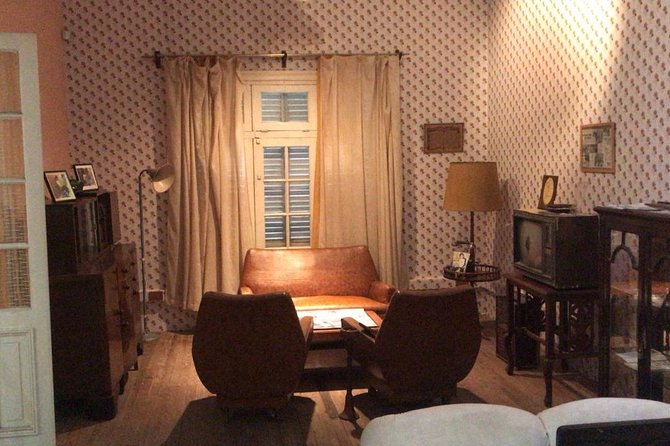
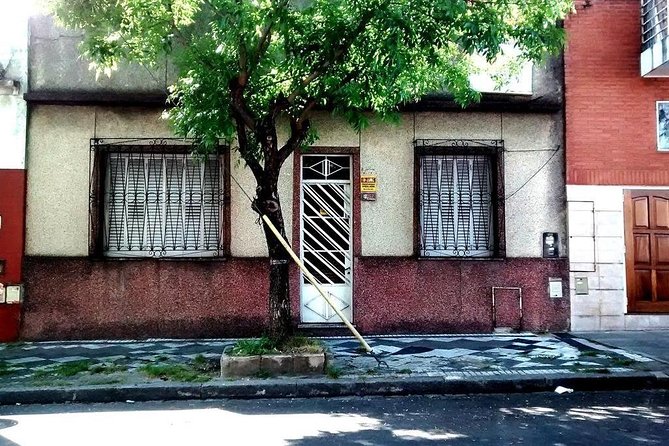
The main stop is La Casa de D10S, known as the House of D10S. It was Diego Armando Maradona’s first owned home in Buenos Aires, shared with his family from 1978 to 1980.
Argentinos Juniors gave the house to Maradona for his 18th birthday. The property was later recovered and restored, then recognized by Argentina’s national parliament as a historic place. That status gives the visit more weight than a simple celebrity-home stop. You are seeing a place connected to the early life of a major national figure.
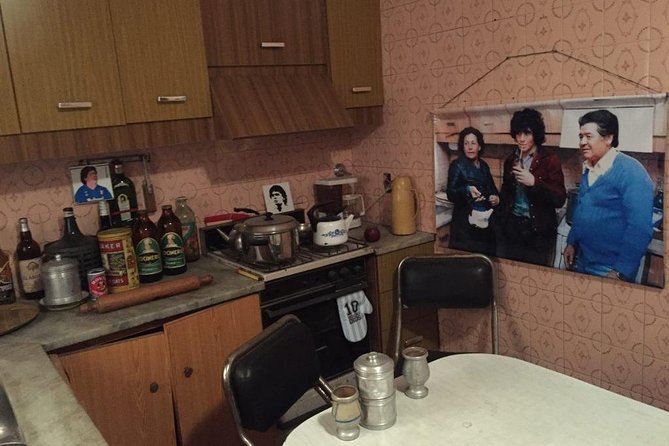
The house has been kept in the style of the period. One review highlights that the rooms looked just as they did at the time, while another points to the photographs and collected material covering Maradona’s early years. Together, these details suggest a visit built around atmosphere and personal history rather than a large, high-tech museum layout.
Expect roughly one hour at the house, with admission included. The precise room-by-room route is not specified, so I would treat this as a compact historic-home visit rather than a full-day archive or football hall of fame.
That distinction matters. If you want rows of medals, shirts, and career statistics from every stage of Maradona’s life, this tour may feel narrow. If you want the place where his family lived while his career was taking shape, the house offers something a larger museum cannot.
The restored rooms also give your guide room to tell stories. Fernando received repeated praise for explaining Maradona’s early beginnings in clear English. Federico was also singled out as friendly and helpful. The guide is a major part of the value because the house itself cannot explain every photograph or object without context.
From the house to Argentinos Juniors
The house is close to the stadium of Asociación Atlética Argentinos Juniors, the club that shaped Maradona’s early career. The stadium now carries his name: Estadio Diego Armando Maradona.
Maradona officially debuted there on Wednesday, October 20, 1976, at age 15. He played for Argentinos Juniors for five years in the First Division and scored 116 goals, making him the club’s second-highest historical scorer.
Those facts turn the stadium visit into more than a quick football photo stop. You are looking at the pitch where a teenage Maradona entered Argentine professional football. The route connects his family life at home with the public beginning of his career, which gives the two stops a clear and satisfying order.
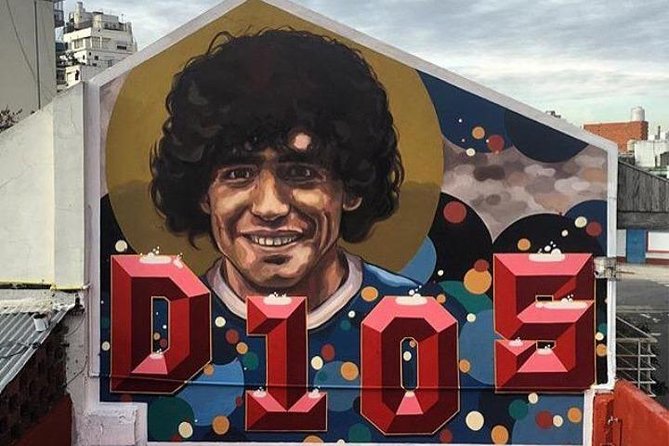
The stadium has capacity for 26,000 people. It is an Argentinos Juniors venue and remains closely tied to the club’s identity. The available details describe a visit around the stadium, with exterior murals and a Maradona shrine or sanctuary. There is also a quick look at the first team he played for.
Do not book this expecting a full stadium match-day experience. The information provided points to an exterior visit and a brief connection to the first team, not a guaranteed tour of every stand, dressing room, or restricted area. That limitation is worth keeping in mind when judging the $90 price.
Still, for a Maradona fan, the physical link is powerful. The house shows where he lived. The stadium shows where he became a professional. In a short visit, you get both sides of his early life.
Why the guides make a difference
A small-group tour can be good or merely cramped, depending on the guide. Here, the maximum group size is 10 people, and the strongest praise focuses on the people leading the experience.
Fernando is mentioned several times as friendly, polite, hospitable, and very well informed about both Maradona and Buenos Aires. His English was described as excellent, which matters if you are following football details, family stories, and local background through a second language.
He also appears to offer practical help beyond the basic route. One family received assistance with a child’s car seat, and Fernando made a toilet stop possible. Those details are small, but they show the kind of attention that can make a two-hour outing easier for parents.
Another useful point is that Fernando gives recommendations for Buenos Aires beyond this particular area. I would use that opportunity. Ask about nearby neighborhoods, football-related sights, or how to fit the visit into your wider city plans.
Federico also receives praise for being friendly and for explaining what kind of player Maradona was. If you are assigned a different guide, the experience may vary in personality, but the tour is clearly designed around a human guide rather than a self-guided audio route.
The bilingual format is included in the price. That makes the tour more accessible to English-speaking visitors who want more than a few translated labels. Football vocabulary can be technical, and a good guide can explain why Argentinos Juniors mattered to Maradona’s development.
Still Argentina, but a completely different sort of afternoon:
- Local Foodie Adventure in Buenos Aires with Sherpa Food Tours
★ 5.0 · 6,875 reviews - Buenos Aires City Private Tour with Local Guide
★ 5.0 · 3,475 reviews - Buenos Aires Small-Group City Tour
★ 5.0 · 2,226 reviews - Buenos Aires Hop-On Hop-Off Bus, Free Walking Tours & Discounts
★ 4.5 · 2,218 reviews
Is $90 a fair price?
At $90 per person, this is not a bargain attraction. The price makes more sense when you count the package: hotel transfer to and from the experience, a Spanish-English guide, admission to the museum, the house visit, and the stadium connection.
If you are staying in Buenos Aires and would find it easy to reach La Paternal on your own, you may question the cost. The tour is only about two hours, and the stadium portion appears to be brief. A person who wants only a general Maradona photo opportunity could likely find the outing too specialized.
I see better value for visitors who want a planned, guided story and do not want to manage local transport or figure out how to connect the house with Argentinos Juniors. The hotel transfers remove some friction, and the small group keeps the visit from feeling like a large commercial excursion.
The price also reflects the subject. Maradona is one of Argentina’s most important sporting figures, and this is a specific historic home rather than a standard city museum. You are paying for access, explanation, transport, and the connection between two places that are difficult to appreciate fully as separate stops.
The tour receives a 4.9 rating from 20 reviews, with 100 percent recommending it. That is a small sample, so I would not treat the score as a guarantee. Still, the repeated praise for the guides, the preserved house, and the stadium connection gives you a clear idea of where the experience earns its money.
What the two-hour schedule feels like
The approximate duration is two hours. One hour is allocated to the house, leaving the remaining time for transfers, the neighborhood, and the Argentinos Juniors stadium area.
That is a sensible length for a focused football outing. You get enough time for the house to feel meaningful without turning the visit into an exhausting study of every chapter of Maradona’s career.
The pace also suits a wider Buenos Aires itinerary. You could fit this between other city activities, although the exact pickup and return timing is not provided. Since the tour includes hotel transfers, confirm the meeting details when booking and leave some breathing room in your day.
A maximum of 10 people is another practical advantage. You should have a better chance to hear the guide, ask questions, and pause at photographs or murals than you would in a large bus group.
Most people can participate, according to the tour information. No special participation limits are listed. If you have particular mobility needs, contact the operator before booking because the available details do not explain the layout of the house or the precise stadium route.
The best reasons to book
I would book this experience if Maradona is a main reason you came to Buenos Aires, especially if you want to see the early chapter of his life rather than only famous career memorabilia.
It is also a good choice if you enjoy places with a direct personal connection. The house was his family home, and the stadium is where he made his professional debut. That combination gives the tour a clear emotional center.
Families may appreciate the private transfer and the guide’s willingness to help with practical needs. Football fans who do not speak much Spanish should also value the bilingual format and Fernando’s strong English.
You may enjoy it less if you have no interest in football, want a long stadium tour, or expect a large museum covering Maradona’s entire life. The house is the heart of the experience, and the stadium portion appears to be shorter and more exterior-focused.
The neighborhood itself adds local flavor, but this is not a general La Paternal sightseeing tour. You are there for Maradona and Argentinos Juniors.
Booking advice and cancellation terms
The experience is often reserved about 28 days in advance, so I would not leave it until the last moment if your Buenos Aires dates are fixed. The small maximum group size may help explain why advance planning is useful.
Confirmation is provided when you book. You can cancel for a full refund up to 24 hours before the local start time. Cancellations or changes made inside that 24-hour window are not accepted for a refund.
That policy is reasonably flexible for a planned city visit. Just remember that the cut-off is based on local time, not the time zone where you made the reservation.
Should you book La Casa de D10S?
Book it if you want a personal, early-career look at Maradona, value a bilingual guide, and like the idea of linking his family home with the stadium where he debuted at 15. The preserved rooms, photographs, murals, and local football setting give the visit a clear sense of place.
Skip it if $90 feels too high for a two-hour activity or if you want a full stadium tour and a broad museum of Maradona’s whole career. For the right person, though, this is a focused and well-supported visit, made stronger by guides such as Fernando and Federico and by the close connection between the house and Argentinos Juniors.
FAQ
Where is the Diego Maradona House Museum?
The house is in La Paternal, a neighborhood in the central-northwest part of Buenos Aires.
How long does the experience last?
The visit lasts approximately two hours. About one hour is allocated to the house museum.
What is included in the price?
The $90 price includes hotel transfers to and from the experience, a bilingual Spanish-English guide, and admission to the museum.
How many people can join the tour?
The experience has a maximum of 10 participants.
Will I visit the Argentinos Juniors stadium?
Yes. The tour includes the Argentinos Juniors stadium area, which is now named Estadio Diego Armando Maradona. The visit includes the stadium exterior, murals, a Maradona shrine, and a quick connection to the first team he played for.
When did Maradona make his professional debut at the stadium?
Maradona officially debuted for Argentinos Juniors on October 20, 1976, at age 15.
Can I cancel for a full refund?
Yes. You can cancel at least 24 hours before the local start time for a full refund. Cancellations or changes made less than 24 hours before the experience are not accepted for a refund.
Recently added around Buenos Aires
- Photo Session in Buenos Aires★ 5.0 · 26 reviews
- Your Personal Photographer in Buenos Aires★ 5.0 · 24 reviews
- Discover Buenos Aires’ independent art scene — Ticket included★ 5.0 · 30 reviews
- Your Private Photographer in Buenos Aires★ 5.0 · 4 reviews
- Yerba Mate Workshop – Learn to Drink Mate like a Local!★ 5.0 · 11 reviews
- Taste of Tradition: Yerba Mate & Alfajores Experience★ 4.0 · 5 reviews
- Wine tasting in OASIS Palermo★ 5.0 · 2 reviews
- Day Tour Classic★ 3.5 · 35 reviews
Museums, compared.


Boca Juniors and River Plate Stadium Tour + TOP Museum.
Read our review →
Shared Jewish Walking Tour – Visit Libertad Synagogue + Jewish Museum
Read our review →
Discover Underground Art Galleries in San Telmo!
Read our review →Browse the lists this tour appears in