
Reviewed · WALKING TOURS
Small Group Buenos Aires Walking Tour
Buenos Aires reveals itself on foot. I like this tour for its remarkable architectural range, from Teatro Colón and grand civic buildings to Recoleta’s aristocratic palaces, and for its small maximum of 15 people, which should make it easier to hear the guide and ask questions. The main drawback is its brisk pace: you cover a lot of ground in about two and a half hours, with no listed admission to the major interiors.
The route also gives you a useful first look at several central districts instead of keeping you in one plaza. Guides such as Joaquín and Danila have been praised for warm, flexible storytelling about architecture, immigration, and local culture. Bring comfortable shoes, and remember that the tour ends near Recoleta Cemetery rather than at the metallic flower.
In This Review
- Key points at a glance
- Starting beside Teatro Colón and Plaza Lavalle
- Walking Calle Florida from old commerce to San Martín Park
- From Barrio Norte to the polished streets of Recoleta
- La Biela, Nuestra Señora del Pilar, and Recoleta Cemetery
- The final walk to Floralis Genérica
- What $10 buys you in practical terms
- Pace, guides, and the feel of the walk
- Who should book this Buenos Aires walk
- Should you book it?
- FAQ
- Where does the Buenos Aires walking tour begin?
- Where does the tour end?
- How long does the tour last?
- What language is the tour offered in?
- How many people can join the tour?
- Can I cancel for a full refund?
Key points at a glance
- Teatro Colón and Plaza Lavalle begin the story: You start among courts, opera, religious, and cultural landmarks in central Buenos Aires.
- Florida Street shows the city’s commercial side: The pedestrian avenue brings together old department-store façades, galleries, and landmarks linked to the city’s growth.
- Recoleta supplies the grand finale: Mansions, palaces, luxury hotels, Nuestra Señora del Pilar church, and Recoleta Cemetery give the walk its polished finish.
- A $10 price makes this a strong orientation walk: You get 150 minutes of guiding across several major areas without paying separate attraction admission.
- The route ends at La Biela: You can finish there, or possibly continue into the cemetery if you and the guide agree.
- English guiding and a small group keep it approachable: Confirmation is normally immediate, and most people can take part.
Starting beside Teatro Colón and Plaza Lavalle
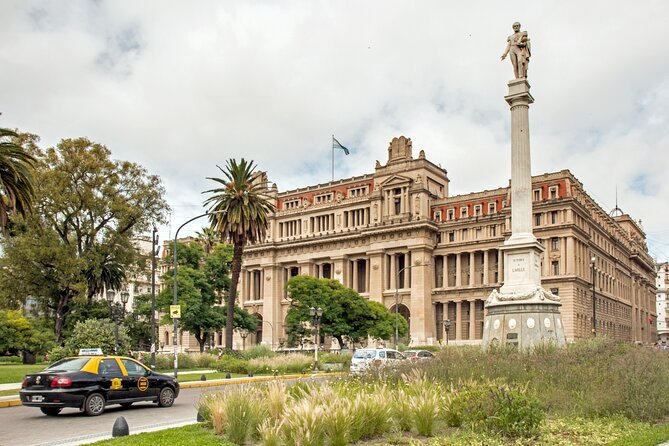
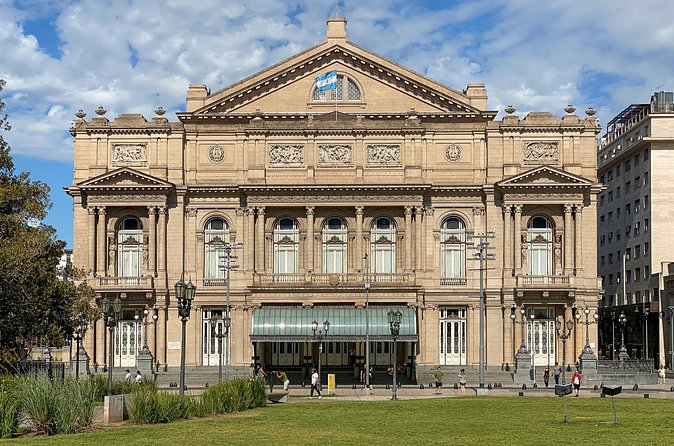
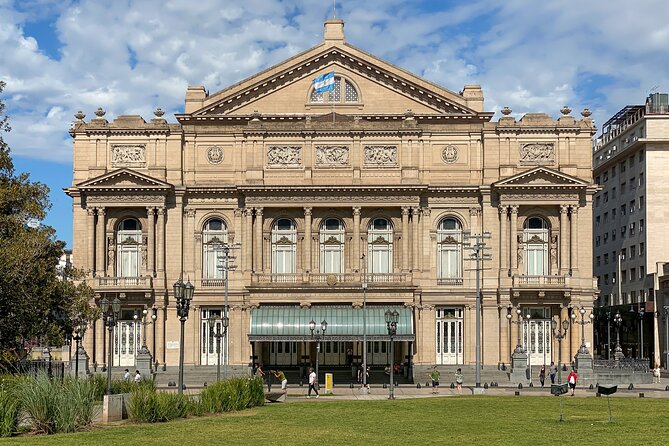
The meeting point is Petit Colón at Libertad 505, near Plaza Lavalle. That location puts you close to one of Buenos Aires’ most impressive cultural buildings, Teatro Colón, the city’s famous opera house.
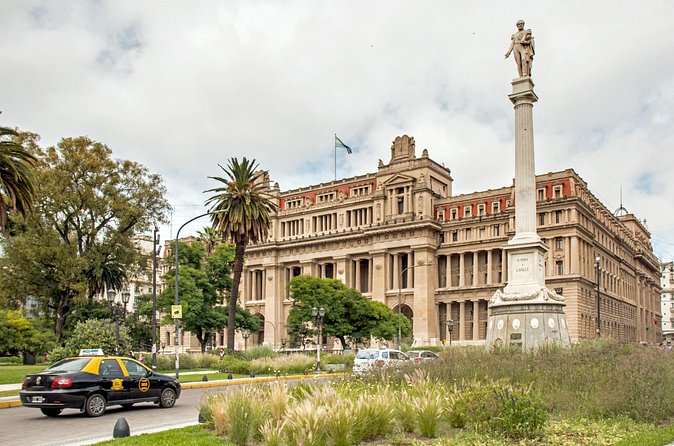
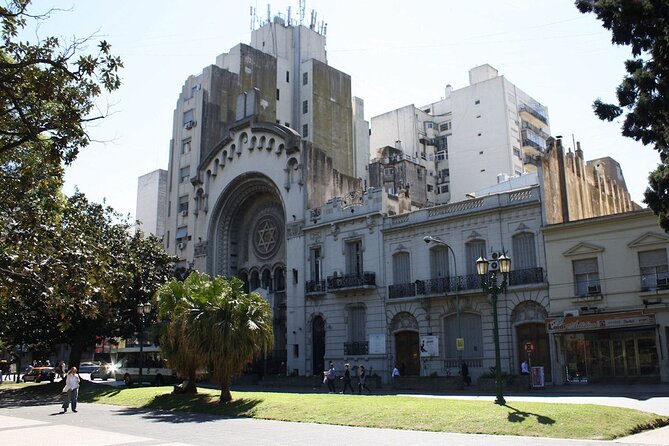
Your first 40 minutes take in Plaza Lavalle, the Law Courts Building, Teatro Colón, the Main Synagogue, and Cervantes Theatre. Even without entering any of them, this is a useful opening because it places Buenos Aires’ civic, religious, and performing-arts life side by side.
I like the way this beginning sets up the city as more than a collection of pretty façades. The Law Courts Building gives the square a formal public character, while Teatro Colón points to the city’s long connection with opera and high culture. The Main Synagogue and Cervantes Theatre add different parts of the city’s cultural story.
You then walk along Córdoba Avenue toward Florida Street. This transition matters. Instead of jumping between isolated sights, you see how the city changes from an institutional district into a shopping and business area.
The first portion is also a good test of the pace. Forty minutes can pass quickly when the guide is explaining several buildings and their place in Buenos Aires. If you prefer slow photography stops or long interior visits, this may feel more like an overview than a full architectural study.
More Walking Tours in Buenos Aires
- Buenos Aires Hop-On Hop-Off Bus, Free Walking Tours & Discounts
★ 4.5 · 2,218 reviews - Buenos Aires: La Boca Guided Walking Tour in English
★ 4.8 · 1,587 reviews - La Boca Walking Tour
★ 5.0 · 1,029 reviews
Walking Calle Florida from old commerce to San Martín Park
The next section covers about 40 minutes on Calle Florida, the well-known pedestrian street. Here, the guide explains how Buenos Aires developed while pointing out Pacific Galleries, the Centro Naval, the former Harrods building, and other notable façades.
Florida Street is valuable because it connects everyday city life with older commercial history. Pacific Galleries and the Harrods building suggest the grand retail ambitions that helped shape central Buenos Aires. The Centro Naval adds another layer, showing how civic and institutional architecture share the same streets as shops.
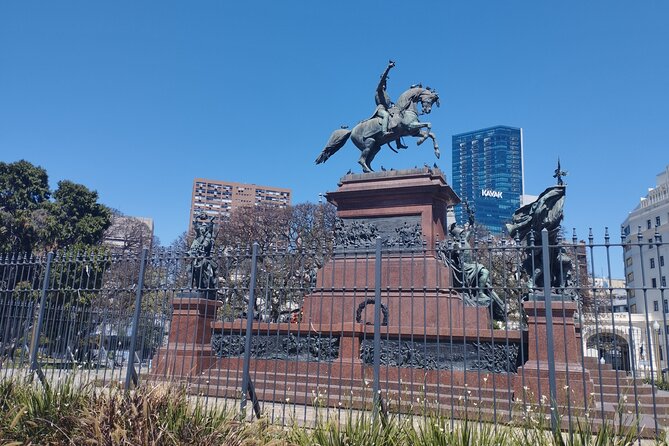
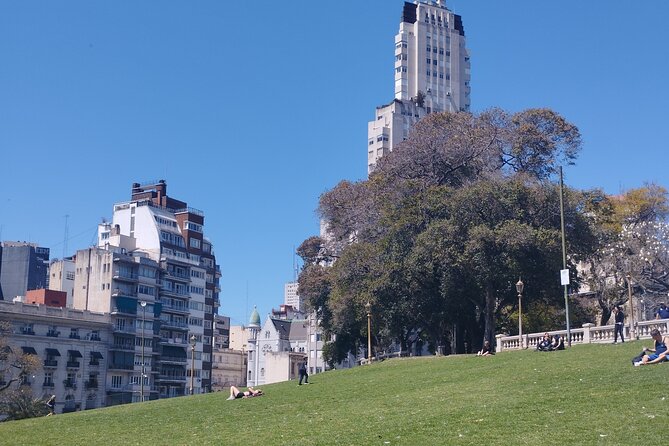
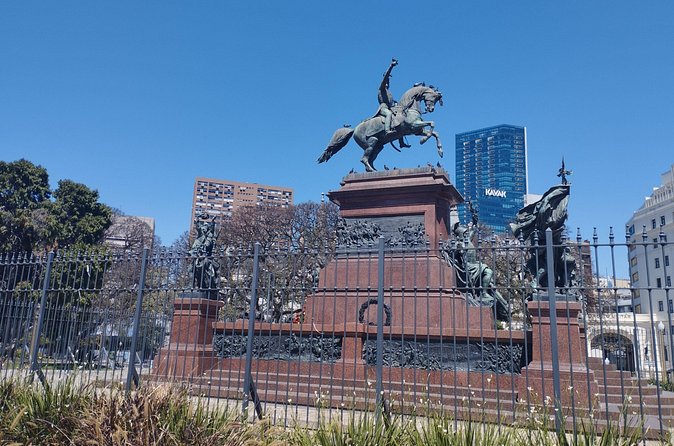
From there, the walk continues toward San Martín Park. The route includes the Kavanagh Building, Santísimo Sacramento Church, the British Clock Tower, the monument to San Martín, and Paz Palace.
This is one of the strongest parts of the walk for architecture lovers. You see different periods and styles in a compact area, from the Kavanagh Building’s tall modern profile to the more formal Paz Palace and the church’s religious design. The British Clock Tower offers a clear reminder of the international influences visible throughout the capital.
The guide’s role is especially important here. A quick walk past these buildings can blur into a parade of names, but the tour’s praised focus on architectural styles and immigration gives you a way to understand what you are seeing. Joaquín, for example, was singled out for explaining Buenos Aires through its buildings, culture, and immigrant roots.
There is a practical point to keep in mind. Calle Florida is a pedestrian shopping street, and this portion may feel more urban and commercial than the quieter Recoleta section later. That contrast is useful, but it means the tour is not a calm park walk from start to finish.
From Barrio Norte to the polished streets of Recoleta
After San Martín Park, the group moves through the lavish Barrio Norte area toward Recoleta. This part takes about 35 minutes and includes aristocratic mansions, art galleries, European-style buildings, and several grand palaces.
The route highlights the Mihanovich and Estrugamou buildings, along with Alvear palaces such as the Vatican, Duhau, and Hume buildings. You also pass five-star hotels and the Patio Bullrich shopping center.
This stretch explains why Recoleta is often associated with Buenos Aires’ old upper-class identity. The buildings are not simply attractive backdrops. Together, they show how wealthy families and institutions used architecture to express status and European taste.
Patio Bullrich provides a modern counterpoint. The tour shows you the shopping center as you continue toward Recoleta, so you get a sense of how the district still combines luxury retail with grand historic buildings.
I would pay close attention to the guide’s comparisons here. The appeal lies less in entering each building than in seeing the relationship between them. A palace, a hotel, an art gallery, and a shopping center can tell a larger story about how the area changed while keeping its upscale character.
This portion may be the most rewarding for visitors who enjoy façades, urban planning, and social history. It may be less satisfying if your priority is entering attractions. The schedule lists free admission at each stop, but it does not promise interior visits to the palaces, hotels, or shopping center.
La Biela, Nuestra Señora del Pilar, and Recoleta Cemetery
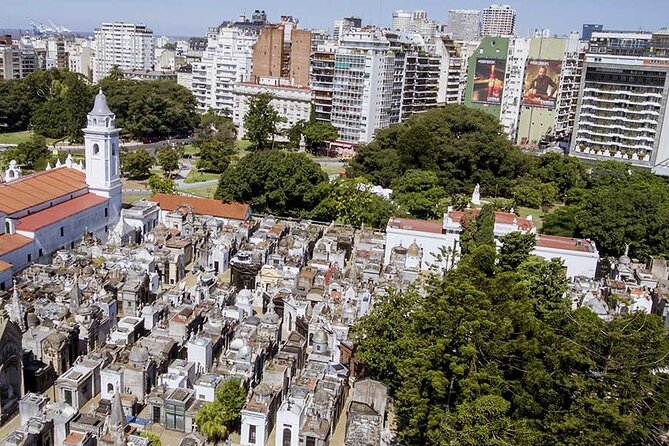
The tour then reaches La Biela, a famous café at Avenida Presidente Manuel Quintana 596. This stop lasts about 15 minutes and includes Nuestra Señora del Pilar Church, the café, the entrance area of Recoleta Cemetery, and the nearby park.
La Biela gives the route a human scale after so many formal buildings. You are no longer looking only at government offices, palaces, and monuments. A historic café helps connect the district’s grand appearance with its social life.
Nuestra Señora del Pilar is another key sight, and its position beside the cemetery makes this a natural point to pause. The tour ends around here, which is helpful if you want to continue exploring Recoleta on your own.
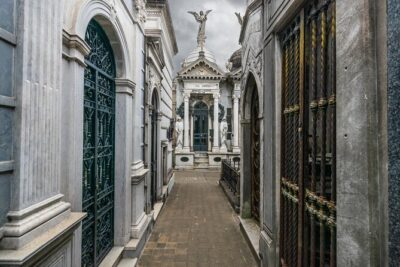
The cemetery itself needs a clear note. The stated finish is the Recoleta Cemetery area, and the guide may continue with you inside if you agree. That wording means you should not assume a cemetery visit is automatically part of the timed route or that an entry charge is covered.
If the group does go inside, the extra visit could make the walk longer than the approximate two and a half hours. If you have a later reservation or another scheduled activity, ask the guide about timing before continuing.
Still Argentina, but a completely different sort of afternoon:
- Local Foodie Adventure in Buenos Aires with Sherpa Food Tours
★ 5.0 · 6,875 reviews - Buenos Aires City Private Tour with Local Guide
★ 5.0 · 3,475 reviews - Buenos Aires Small-Group City Tour
★ 5.0 · 2,226 reviews - Buenos Aires: Piazzolla Tango Show with Optional Dinner
★ 4.4 · 2,122 reviews
The final walk to Floralis Genérica
The final 20-minute section passes through Recoleta without stopping at several important places. These include the National Fine Arts Museum, Palais de Glace, Evita’s Foundation, the National Library, and Errazuriz Palace.
The route ends at Floralis Genérica, the giant metallic flower. This sculpture gives the walk a memorable visual finish after the churches, courts, opera house, commercial street, and palaces of the earlier sections.
The phrase without stopping matters. You can see these places from the route, but this schedule does not provide a museum visit or a long pause at each one. That is not a flaw if you want orientation. In fact, it lets you cover more of Recoleta in a short time.
I like the final sequence because it shows another side of the neighborhood. The National Fine Arts Museum and Palais de Glace connect Recoleta with art, while the National Library and Errazuriz Palace add public and residential architecture. Floralis Genérica then shifts the mood toward modern sculpture.
The ending also gives you a clear choice. You finish near La Biela and Recoleta Cemetery, with the metallic flower as the final sight on the route. You can use the tour as a launching point for more independent sightseeing, or agree with the guide to continue at the cemetery.
What $10 buys you in practical terms
At $10 per person, this is priced as an orientation walk, not an all-inclusive sightseeing package. You receive about 150 minutes of English guiding across Plaza Lavalle, Calle Florida, San Martín Park, Barrio Norte, and Recoleta.
That is good value if you want help making sense of Buenos Aires’ central districts early in your stay. A guide can point out buildings you might otherwise walk past, explain how architecture connects to immigration and culture, and help you see the city as a connected story.
The price is also favorable because the listed stops have free admission. You are paying mainly for the guide’s time and route planning, not bundled tickets. If you want museum interiors, an opera-house visit, or a detailed cemetery tour, plan to arrange those separately unless the guide confirms otherwise.
The group limit of 15 is another part of the value. It is small enough to feel more personal than a large city walk, though the actual group can vary. One booking had only two people, allowing Joaquín to offer a particularly attentive experience.
The booking pattern also suggests planning ahead. The experience is booked about 43 days in advance on average, so I would reserve early if your dates are fixed. The mobile ticket is convenient, and the starting point is near public transportation.
Pace, guides, and the feel of the walk
The strongest praise centers on the guiding. Joaquín was described as hospitable and strong on the city’s architecture, culture, and immigration story. Danila was praised for being friendly, thoughtful, well informed, and flexible with the pace.
That flexibility matters on a walking tour. People do not all stop for photographs at the same speed, and some groups want more explanation while others prefer to keep moving. A guide who can adjust the rhythm makes the route easier to enjoy.
Still, the schedule is full. The five sections total 40, 40, 35, 15, and 20 minutes. You should expect frequent movement and short pauses rather than long periods sitting or browsing inside buildings.
Wear comfortable shoes and consider the weather, since the experience is outdoors for most of its duration. The information says most people can participate, but it does not provide a detailed accessibility statement. If you have specific mobility needs, contact the provider before booking.
The tour is offered in English. That makes it a practical choice if you want architectural and cultural explanations without arranging a private guide.
Who should book this Buenos Aires walk
I would choose this experience if you are visiting Buenos Aires for the first time and want a quick mental map of the central districts. It works especially well near the beginning of a stay, when you can return later to the cemetery, museums, churches, or buildings that catch your interest.
It also suits you if architecture is a main reason for visiting. The route gives you courts, opera, synagogue, theatre, commercial buildings, churches, clock tower, monuments, palaces, hotels, museums, and modern sculpture in one walk.
You may want something else if you prefer a single-site tour with plenty of interior time. This experience shows many places from the outside, and the cemetery extension is dependent on agreement with the guide.
Families, couples, solo visitors, and small friend groups should find the format easy to understand. The maximum of 15 people keeps it from becoming a city procession, while the free cancellation policy gives you flexibility if you cancel at least 24 hours before the start time.
Should you book it?
Book this tour if you want a low-cost, well-paced introduction to central Buenos Aires, especially if you value buildings, city history, and a guide who can adjust the walk to the group. The combination of Plaza Lavalle, Florida Street, San Martín Park, Barrio Norte, and Recoleta gives you broad coverage for only $10.
Skip it if your main goal is extensive time inside museums, Teatro Colón, palaces, or Recoleta Cemetery. For everyone else, this is a practical first walk, with a strong final stretch through Recoleta and an easy option to keep exploring after the guide finishes.
FAQ
Where does the Buenos Aires walking tour begin?
It begins at Petit Colón, Libertad 505, C1012, Buenos Aires, near Plaza Lavalle and Teatro Colón.
Where does the tour end?
The stated endpoint is La Biela at Avenida Presidente Manuel Quintana 596, in the Recoleta Cemetery area. You may be able to continue inside the cemetery if you agree with the guide.
How long does the tour last?
The tour lasts approximately 2 hours and 30 minutes.
What language is the tour offered in?
The tour is offered in English.
How many people can join the tour?
The maximum group size is 15 people.
Can I cancel for a full refund?
Yes. You can cancel at least 24 hours before the experience start time for a full refund. Changes or cancellations made less than 24 hours before the start time are not accepted for a refund.
Recently added around Buenos Aires
- Photo Session in Buenos Aires★ 5.0 · 26 reviews
- Your Personal Photographer in Buenos Aires★ 5.0 · 24 reviews
- Discover Buenos Aires’ independent art scene — Ticket included★ 5.0 · 30 reviews
- Your Private Photographer in Buenos Aires★ 5.0 · 4 reviews
- Yerba Mate Workshop – Learn to Drink Mate like a Local!★ 5.0 · 11 reviews
- Taste of Tradition: Yerba Mate & Alfajores Experience★ 4.0 · 5 reviews
- Wine tasting in OASIS Palermo★ 5.0 · 2 reviews
- Day Tour Classic★ 3.5 · 35 reviews
Walking Tours, compared.
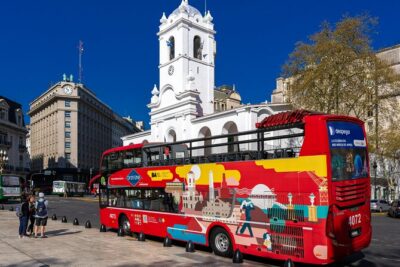
Buenos Aires Hop-On Hop-Off Bus, Free Walking Tours & Discounts
Read our review →
German Footprint & Nazi presence – Walking Tour in Bariloche
Read our review →
Full Day Buenos Aires Private Walking Tour – Your Own Personal BA 101
Read our review →
Discover Buenos Aires: Walking Tour Through San Telmo & Center!
Read our review →
Browse the lists this tour appears in