
Reviewed · WALKING TOURS
Shared Afro-Argentine Heritage Walking Tour in Buenos Aires
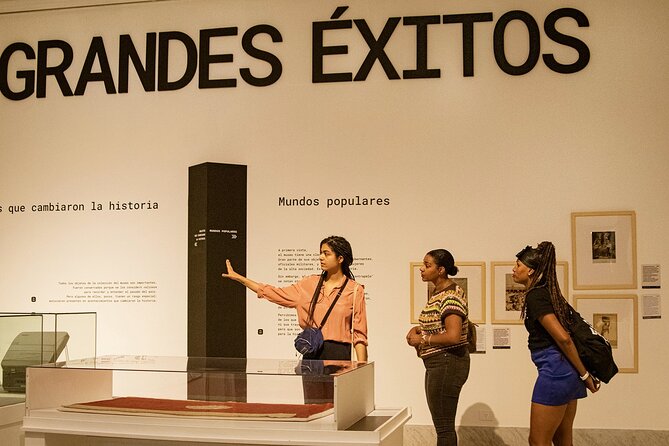
The history you were not shown is waiting in San Telmo. This walking tour connects Afro-Argentine people and traditions to Buenos Aires through María Remedios del Valle, colonial buildings, tango, asado, and Lunfardo. I especially like the small group of 15 or fewer and the way the route links past events with living Black culture today. The main consideration is that this is a serious history tour, so it may feel less like casual sightseeing and more like a moving outdoor classroom.
I also like the thoughtful finish at El Tambo Afro, a shop for Black artists and business owners. Guides Karl and Julia have been praised for making the subject personal, clear, and open to questions rather than simply reciting dates. At about $70 per person for two and a half to three hours, it is not a bargain-basement walk, but the focus and access to a part of Buenos Aires often left out of standard tours give it real value.
In This Review
- Key points to know before you book
- Why this walking tour changes your view of Buenos Aires
- Starting with María Remedios del Valle
- San Telmo, colonial homes, and the first conversation
- The Galería del Viejo Hotel and cultural erasure
- San Pedro González Telmo, an old church with layered meaning
- Plaza Dorrego and the everyday face of San Telmo
- Parque Lezama and the origins of Afro-Argentine communities
- Finishing at El Tambo Afro
- What the $70 price includes
- Timing, meeting point, and who should join
- Should you book the Afro-Argentine Heritage Walking Tour?
- FAQ
- How long does the Afro-Argentine Heritage Walking Tour last?
- What time does the tour start?
- Where does the tour begin and end?
- How much does the tour cost?
- What is included in the tour?
- How many people can join the tour?
- Is cancellation free?
Key points to know before you book
- María Remedios del Valle begins the story: You meet a major Afro-Argentine figure from the Independence Wars before walking through the older parts of the city.
- San Telmo provides the setting: A drink break becomes a chance to discuss Africa before European colonization and the lives of enslaved household workers.
- Culture is part of the lesson: The tour connects African roots with tango, asado, and Lunfardo slang.
- Parque Lezama adds difficult context: You learn how Africans arrived in the Río de la Plata region and how the slave trade shaped Argentina.
- El Tambo Afro supports the present: The final stop introduces a shop devoted to Black artists and entrepreneurs in Argentina.
- The pace is manageable: The walk lasts roughly 2 hours 30 minutes to 3 hours, with stops for conversation and explanation.
Why this walking tour changes your view of Buenos Aires
Buenos Aires often presents itself through grand European avenues, Italian and Spanish immigration, cafés, tango, and elegant old neighborhoods. Those parts are real, but they are not the whole story. Afro-Argentine people helped shape the country, yet their presence was often pushed out of the public story through immigration policies, racial ideas, changing census categories, and cultural erasure.
This tour gives you a way to notice what ordinary sightseeing can miss. A monument, church, painting, mosaic, or street corner takes on a different meaning when your guide explains who built the city, who worked in colonial homes, and whose cultural contributions were later treated as European or simply Argentine.
I appreciate that the tour does not stop with slavery or the Independence Wars. It also discusses more recent African immigrants and Argentinians who have only recently begun to explore their own African ancestry. That wider frame helps you understand Afro-Argentine identity as something living and changing, not a subject locked in a museum case.
The strongest part of the experience is the guide. Karl has been singled out for a remarkably detailed presentation delivered without relying on notes, while Julia has been praised for turning the walk into a conversation. That difference matters. You can ask how Argentina’s story connects to the wider African diaspora in the Americas, or pause over a detail that catches your attention.
More History Tours in Buenos Aires
- Historical Sherpa Food Tour of San Telmo with Street Food, Drinks
★ 5.0 · 920 reviews - Nazis in Buenos Aires: a historical walking tour
★ 4.9 · 193 reviews - San Telmo: Historical Guided Tour with Street Food & Drinks
★ 5.0 · 87 reviews
Starting with María Remedios del Valle
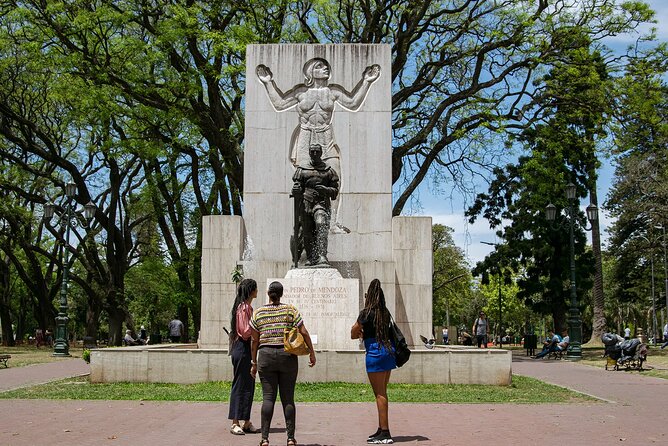
The walk begins at the María Remedios del Valle Monument on Estados Unidos. You spend about 20 minutes here, receiving an introduction to the tour and learning about del Valle, an Afro-Argentine woman who fought in the Wars of Independence.
Her place in the national story is especially important. She became known as the Mother of the Nation or Mother of the Homeland, yet many people visiting Buenos Aires will not encounter her name on a standard city walk. Starting with her sends a clear message: Afro-Argentine history is not an extra chapter added to Argentina’s story. It is part of the country’s foundation.
This first stop also helps you get your bearings. The guide establishes the main themes before the group moves through San Telmo, so later explanations about colonial society, immigration, and cultural borrowing have a firm starting point.
San Telmo, colonial homes, and the first conversation
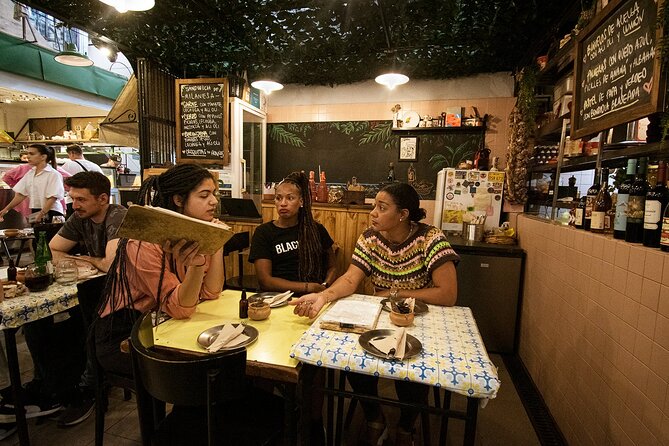
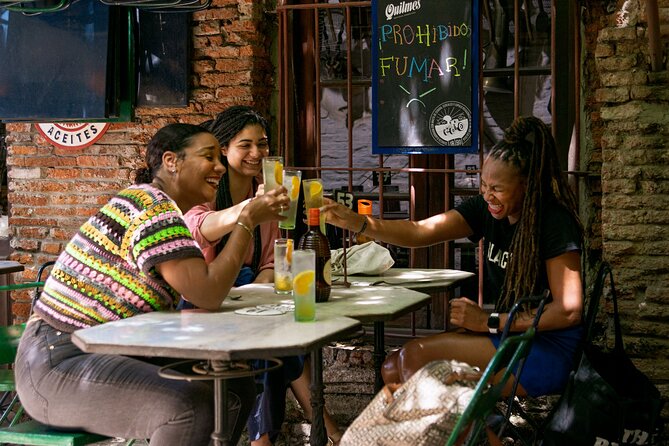
The next stop takes you into San Telmo, one of Buenos Aires’s most atmospheric older neighborhoods. The tour pauses at a traditional place in the colonial district, where you have a drink and talk about Africa before colonization and the daily lives of people who worked in colonial households.
The drink break gives the walk a useful change of rhythm. You are not standing in one place for three hours while someone talks at you. Instead, you get a moment to sit or pause, take in the setting, and ask questions. One particularly praised experience included delicious lemonade, though you should treat the exact drink as part of the scheduled stop rather than assume a specific beverage.
This section can be emotionally difficult. The tour addresses slavery and domestic labor directly, rather than softening the subject into vague language about colonial life. At the same time, the focus on ordinary daily work helps you picture the people behind the broad historical terms.
San Telmo is a strong location for this discussion because its old buildings and streets make the colonial period easier to imagine. Still, remember that the neighborhood itself is also a modern commercial district. The setting is historic, but the surrounding city continues to operate around you.
The Galería del Viejo Hotel and cultural erasure
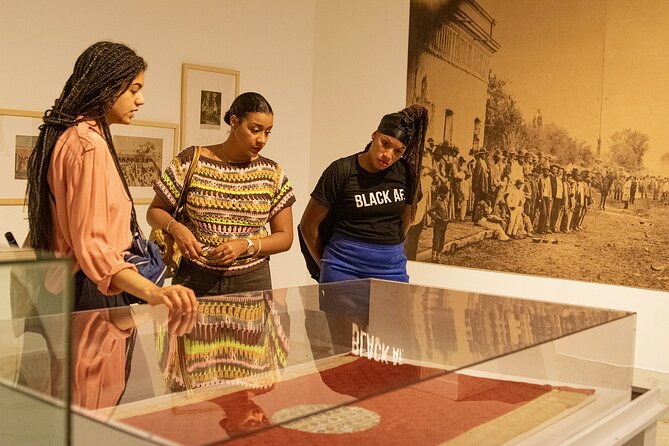
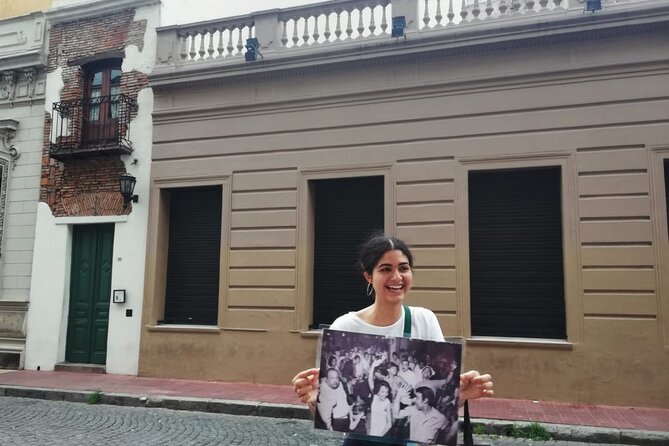
At the Galería del Viejo Hotel, the guide turns to European immigration and the process that symbolically erased much of Argentina’s African heritage. You spend about 15 minutes here, but the ideas introduced may stay with you for the rest of your Buenos Aires visit.
This is where the tour makes an important connection between racial history and familiar Argentine culture. You learn about African roots in tango, asado, and Lunfardo, the slang associated with Buenos Aires. These are not small side notes. They are central parts of the country’s public identity.
The value here is interpretive. You may already know tango as a signature Argentine art form or recognize Lunfardo from music and local speech. The guide asks you to reconsider how those traditions were formed and which communities received credit for them.
The discussion of immigration also adds needed balance. European immigration changed Argentina in major ways, but the national story can become distorted when that contribution is presented as the entire story. This stop helps you see how a country can celebrate its immigrant past while pushing other ancestral contributions out of view.
More Walking Tours in Buenos Aires
- Buenos Aires Hop-On Hop-Off Bus, Free Walking Tours & Discounts
★ 4.5 · 2,218 reviews - Buenos Aires: La Boca Guided Walking Tour in English
★ 4.8 · 1,587 reviews - La Boca Walking Tour
★ 5.0 · 1,029 reviews - Recoleta Cemetery Walking Tour
★ 5.0 · 668 reviews
San Pedro González Telmo, an old church with layered meaning
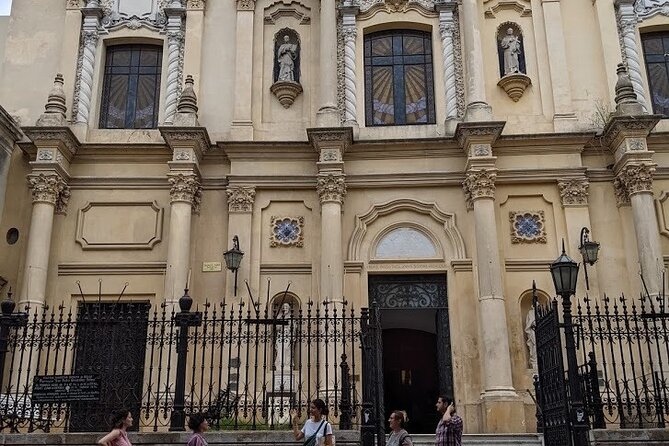
The Parroquia de San Pedro González Telmo is one of the city’s oldest churches. Work began in 1735, and after the Jesuits were expelled, the Bethlemite religious order continued the construction. The church also has a museum with objects more than 200 years old.
The stop lasts about 10 minutes, so do not expect a long museum visit or a full architectural tour. Instead, the church works as a compact piece of colonial context. Its age, religious connections, and changing institutional history help place the earlier discussion in a real setting.
A useful point for you is that this is not a separate church tour pasted onto the Afro-Argentine walk. The building supports the larger story about colonial power, labor, religion, and the people who lived and worked around such institutions.
If you want to explore the church museum at length, you may need to return on your own. The scheduled stop is brief, and the tour has several more places to cover.
Plaza Dorrego and the everyday face of San Telmo
The route passes Plaza Dorrego, the square famous for its Sunday antiques market. There is no admission fee, and the stop is more of a walk-through than a formal presentation.
That may sound minor, but it helps keep the tour connected to the city you are actually visiting. San Telmo is not only a backdrop for the past. It is a neighborhood of shops, street activity, old façades, and public life. If your tour happens on a Sunday, the antiques market adds a distinctive scene, though the information provided does not promise that the market will be operating on every tour date.
The square also gives you a chance to absorb the route between more formal history stops. You can look around, ask a follow-up question, or simply notice how quickly Buenos Aires shifts between colonial references and modern city life.
Parque Lezama and the origins of Afro-Argentine communities
At Parque Lezama, an accredited guide explains the origins of African populations in the Río de la Plata region and the slave trade in what is now Argentina. This is another approximately 20-minute stop, and it provides the broad regional context that makes the earlier San Telmo discussions easier to understand.
Here, the tour moves from individual figures and buildings to larger systems. You learn how African people arrived in the region and how forced labor shaped Argentina. The subject is not treated as an isolated local issue. It is part of the history of the Río de la Plata and the wider Atlantic world.
Parque Lezama is also a practical place for a longer explanation. You are outdoors, with room for the group to gather, and the stop breaks up the walk before the final section. Wear comfortable shoes and bring water, especially if the afternoon is warm. The tour is not described as physically strenuous, but you will be on your feet for several hours.
This stop may be the most valuable for anyone who has only heard the old claim that Argentina had little or no Black population. The tour directly challenges that idea by explaining both the historical presence of Africans and the later forces that made that presence less visible.
Finishing at El Tambo Afro
The final stop is Lunfarda Travel’s El Tambo Afro, described as the first shop in Argentina for Black artists and entrepreneurs. The shop is at Bolívar 1063, where the tour ends after about 10 minutes.
This finish gives the experience a useful present-day purpose. You are not simply learning about people whose contributions have been overlooked. You also have a chance to support Black-owned creative work in Argentina.
The shop provides a restroom before you continue exploring Buenos Aires, a small but welcome practical touch after a long walk. You can also browse and support the people connected to the project. The tour does not include purchases, so plan to pay separately if something catches your eye.
Ending here feels more meaningful than finishing at an ordinary street corner. It connects the historical subject to current artists, business owners, and community life. For me, that is one of the tour’s best design choices.
What the $70 price includes
The cost is $70 per person, and guiding services are included. Entry fees are not a major issue because each listed stop is free, so the price mainly covers the guide’s time, preparation, interpretation, and the small-group format.
That makes the value depend heavily on what you want from a city walk. If you only want quick photographs of San Telmo, this will feel expensive. You can see many of the streets and plazas without paying for a tour.
If you want a clear account of Afro-Argentine history, cultural credit, colonial labor, and modern Black identity, the price is easier to justify. A good guide changes what you see, and the strongest descriptions of Karl and Julia point to exactly that benefit: clear explanations, thoughtful answers, a steady pace, and a willingness to make connections across the African diaspora.
Tips are not included and are welcomed by the company. The tour is capped at 15 people, which should make it easier to hear the guide and participate than on a large coach-style excursion.
Timing, meeting point, and who should join
The tour starts at 2:00 p.m. at Estados Unidos, C1072, in Buenos Aires, and ends at Bolívar 1063. It lasts approximately two hours and 30 minutes to three hours.
You should allow extra time to reach the starting point, especially if you are unfamiliar with San Telmo. The route is near public transportation, and the end point is useful for continuing your afternoon in the neighborhood.
The tour suits you best if you:
- Want a fuller account of Argentina beyond its European image
- Care about Black history and the African diaspora in the Americas
- Enjoy walking tours built around conversation and explanation
- Are visiting with a multigenerational family
- Want to support Black artists and entrepreneurs
- Have already seen the main Buenos Aires sights and want a more focused subject
It may not suit you if you prefer a light, fast-paced introduction with little discussion of slavery, racial erasure, or historical injustice. The subject matter is serious, and the tour’s value comes from giving it time.
Most people can participate, and service animals are allowed. The provider also states that the activity is near public transportation. You receive confirmation at booking, and free cancellation is available if you cancel at least 24 hours before the start time. A cancellation made later is not refundable.
Should you book the Afro-Argentine Heritage Walking Tour?
I would book this tour if you want to understand Buenos Aires beyond its polished European image. The strongest reasons are the carefully chosen route, the small group, the connection between African history and everyday Argentine culture, and the finish at El Tambo Afro.
I would especially recommend it for Black visitors who want to compare Argentina’s racial story with experiences elsewhere in the Americas, and for families looking for a thoughtful history activity that can prompt conversation across generations. It also works well for curious first-time visitors who want their sightseeing to have more meaning than a list of pretty streets.
The $70 price is fair when you value expert guiding and a focused subject. Skip it only if you are looking for a quick neighborhood stroll or have little interest in social history. For everyone else, this is a worthwhile way to see San Telmo, question the story Buenos Aires often tells about itself, and support a project keeping Afro-Argentine heritage visible.
FAQ
How long does the Afro-Argentine Heritage Walking Tour last?
The tour lasts approximately 2 hours 30 minutes to 3 hours.
What time does the tour start?
The tour starts at 2:00 p.m.
Where does the tour begin and end?
It begins at Estados Unidos, C1072, in Buenos Aires, and finishes at El Tambo Afro at Bolívar 1063.
How much does the tour cost?
The price is $70 per person.
What is included in the tour?
Guiding services are included. Admission fees are not charged for the listed stops. Tips for guides are not included and are welcomed.
How many people can join the tour?
The maximum group size is 15 people.
Is cancellation free?
Yes. You can cancel at least 24 hours before the start time for a full refund. Cancellations made less than 24 hours before the start time are not refunded.
Recently added around Buenos Aires
- Photo Session in Buenos Aires★ 5.0 · 26 reviews
- Your Personal Photographer in Buenos Aires★ 5.0 · 24 reviews
- Discover Buenos Aires’ independent art scene — Ticket included★ 5.0 · 30 reviews
- Your Private Photographer in Buenos Aires★ 5.0 · 4 reviews
- Yerba Mate Workshop – Learn to Drink Mate like a Local!★ 5.0 · 11 reviews
- Taste of Tradition: Yerba Mate & Alfajores Experience★ 4.0 · 5 reviews
- Wine tasting in OASIS Palermo★ 5.0 · 2 reviews
- Day Tour Classic★ 3.5 · 35 reviews
Walking Tours, compared.
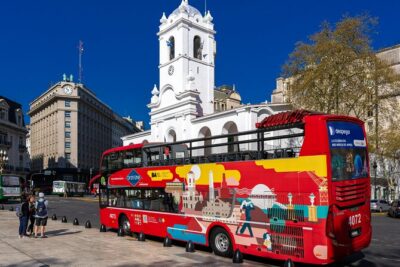
Buenos Aires Hop-On Hop-Off Bus, Free Walking Tours & Discounts
Read our review →
German Footprint & Nazi presence – Walking Tour in Bariloche
Read our review →
Full Day Buenos Aires Private Walking Tour – Your Own Personal BA 101
Read our review →
Discover Buenos Aires: Walking Tour Through San Telmo & Center!
Read our review →
Browse the lists this tour appears in