
Reviewed · WALKING TOURS
Jewish Sites Buenos Aires Private Walking and Car Tour
Memory lives in Buenos Aires streets. This private tour offers a thoughtful look at Jewish life in Argentina through Templo Libertad, the Holocaust Memorial, and the AMIA site. I like the personal format, since your guide can explain difficult subjects at your pace. I also like the choice of three tour lengths, including a museum visit and private car on the longer options.
The main drawback is that the 2-hour and 3-hour tours involve getting to the meeting point yourself, and synagogue entry is not included. The walking portion is not huge, about 25 to 30 minutes, but you should expect uneven surfaces, some steps, and a tour that runs in rain or shine.
In This Review
- Key points to know before booking
- Why Jewish history in Buenos Aires deserves time
- Templo Libertad and the early Jewish community
- The Holocaust Museum and the work of remembrance
- AMIA and the memory of the 1994 bombing
- What the three-hour museum upgrade adds
- The four-hour route by private car
- How the private guide shapes the experience
- Price, timing, and practical value
- Who should book this Jewish heritage tour?
- Should you book it?
- FAQ
- How long is the Jewish Sites Buenos Aires tour?
- Is the tour private?
- Which languages are available?
- Is museum admission included?
- Do I need identification for the museum?
- Does every tour include private transportation?
- Where does the walking tour meet?
Key points to know before booking
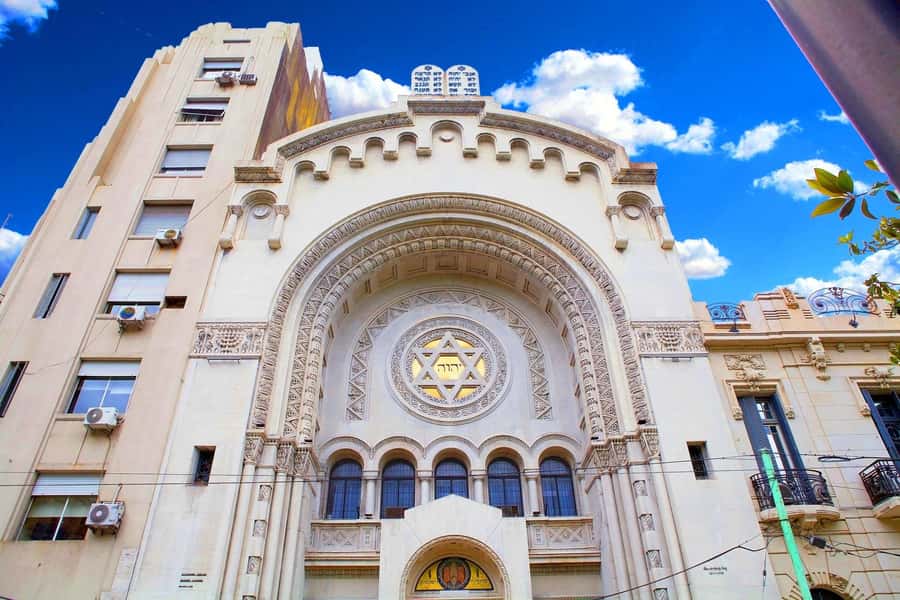
- Templo Libertad is the historic anchor: You see the façade of Argentina’s first synagogue and hear how Jewish immigrants helped shape Buenos Aires.
- The AMIA stop carries serious emotional weight: Your guide explains the 1994 bombing and its effect on Argentine Jewish life.
- The three-hour option adds the Salvador Kibrick Museum: Entry includes ritual objects, photographs, and documents, but you must bring an original passport or national identity card.
- The four-hour option covers more ground by private car: Pickup and drop-off, Plaza Libertad, 9 de Julio Avenue, the Israeli Embassy Memorial, and Plaza General San Martín are added.
- Guide quality is central to the experience: The tour is private, offered in five languages, and guides can tailor the pace and discussion to your interests.
- The price buys context more than sightseeing: At $129 per person, the value depends on how much you want history, explanation, and private attention rather than a quick checklist of landmarks.
Why Jewish history in Buenos Aires deserves time
Buenos Aires has one of the largest Jewish communities in Latin America, and this tour gives you a way to see that story through places tied to worship, migration, remembrance, and public life. You are not simply looking at façades. You are tracing how a community built institutions, preserved traditions, faced violence, and continued forward.
That makes this a different kind of city tour. It is not designed around grand views or famous cafés. The subject is more serious, and the best moments come through your guide’s explanations. If you have a personal connection to Jewish history, the tour may carry special meaning. If you know little about Argentina’s Jewish community, it offers useful context that regular sightseeing often skips.
The private format matters here. You can ask direct questions about immigration, religious life, the Holocaust, antisemitism, Argentine politics, and the AMIA bombing without trying to squeeze into a large group discussion. Your guide can also slow down when a subject needs care or move faster when you already know the background.
The tour is offered in English, Spanish, French, Italian, and Portuguese. Group size can range from one to 25 people per guide, with extra guides arranged for larger groups. That is a broad range, so the experience may feel especially personal with a small party, while a group near the upper limit will naturally feel less intimate.
More Private Tours in Buenos Aires
- Buenos Aires City Private Tour with Local Guide
★ 5.0 · 3,475 reviews - Private Airport Transfer In or Out : Ezeiza (EZE) – Buenos Aires
★ 5.0 · 548 reviews - Private Full-Day Iguazu Falls Tour with Airfare from Buenos Aires
★ 4.5 · 387 reviews
Templo Libertad and the early Jewish community
The tour begins around Libertad Street, where Templo Libertad provides a strong visual starting point. It is described as Argentina’s first synagogue, and its façade gives you an immediate sense of the community’s early presence in the capital.
You do not enter the synagogue on this tour. That is worth knowing before you book, especially if interior architecture is your main interest. The exterior visit still works well as an introduction because your guide connects the building to the arrival of Jewish immigrants and the creation of a Jewish cultural identity in Argentina.
I like this part of the route because it begins with something concrete. You can look at the building while hearing about the people and institutions behind it. That is more useful than receiving a general lecture before seeing any place connected to the subject.
Nearby, you pass the Museo Judío de Buenos Aires. The museum helps explain immigration and integration through its collections and architecture. On the 2-hour tour, you see the area from outside, while the 3-hour and 4-hour options include entry to the Salvador Kibrick Jewish Museum.
The museum name can cause a little confusion. The included museum visit is specifically the Museo Judío de Buenos Aires Dr. Salvador Kibrick. The 2-hour option does not include admission, so check the tour length carefully instead of assuming every version includes indoor visits.
The Holocaust Museum and the work of remembrance

The Buenos Aires Holocaust Museum adds another layer to the tour. Here, your guide discusses Argentina’s role during and after World War II, along with the stories of survivors who rebuilt their lives in the city.
The supplied details do not promise museum entry for every tour length, so you should think of this stop primarily as a guided visit connected to Holocaust memory. Ask about the exact entry plan when booking if indoor access is essential to you. The included Salvador Kibrick admission applies only to the 3-hour and 4-hour versions.
This portion may be emotionally demanding. The tour deals with persecution, survival, and memory, not just old buildings. I would not choose it if you want a light morning of sightseeing. But if you want a more serious understanding of how Jewish life in Buenos Aires developed after the war, the stop adds needed depth.
Your guide’s role is especially important here. A good guide can put local events into a wider setting without turning the visit into a string of dates. One review praised guide Richard Shpuntoff for combining historical and current political context with personal and family stories. That kind of explanation can help you understand Argentina as a living country, rather than a collection of past events.
AMIA and the memory of the 1994 bombing
The AMIA building is the emotional center of the shorter tour. AMIA, or Asociación Mutual Israelita Argentina, is a major Jewish community institution, and the 1994 bombing became one of the darkest events in Argentine Jewish history.
Your guide explains what happened and why the attack still matters. The stop is not presented as a dramatic spectacle. It is a place of remembrance, community identity, and unresolved pain. You will likely get more from it if you allow time to listen rather than rushing on for the next sight.
This is also where the value of a private guide becomes clearest. You can ask how the bombing affected Jewish institutions, public memory, and the wider nation. The tour information promises discussion of the attack’s lasting impact, but it does not promise a formal memorial ceremony or a special interior visit. Keep expectations focused on guided interpretation at the site.
I appreciate that the itinerary places AMIA alongside older sites such as Templo Libertad. Together, they show that Jewish life in Buenos Aires is not only about origins or historic buildings. It includes present-day institutions, public memory, and the effort to maintain community life after violence.
More Walking Tours in Buenos Aires
- Buenos Aires Hop-On Hop-Off Bus, Free Walking Tours & Discounts
★ 4.5 · 2,218 reviews - Buenos Aires: La Boca Guided Walking Tour in English
★ 4.8 · 1,587 reviews - La Boca Walking Tour
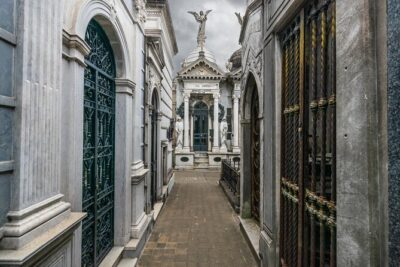
★ 5.0 · 1,029 reviews - Recoleta Cemetery Walking Tour
★ 5.0 · 668 reviews
What the three-hour museum upgrade adds
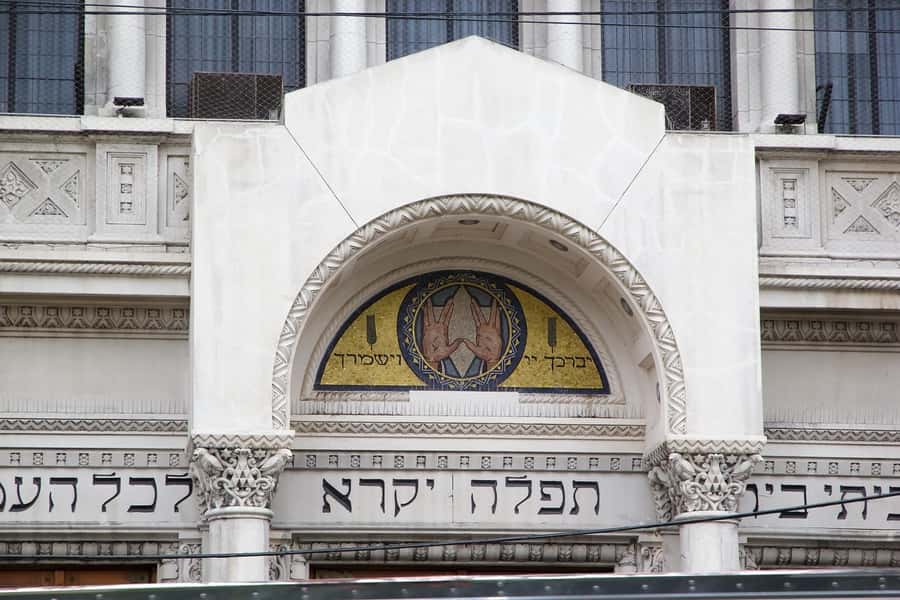
The 3-hour version keeps the main walking route and adds entry to the Salvador Kibrick Jewish Museum. Inside, you can see ritual objects, photographs, and historical documents. These items give physical form to subjects that can otherwise feel distant.
For me, this is the most useful upgrade if you care about Jewish culture and daily life. A synagogue façade tells you where a community worshipped. Museum objects can show how people marked holidays, preserved customs, recorded family stories, and carried traditions into a new country.
The museum also gives your guide something specific to discuss. You can look at an object while asking what it was used for or why it matters. That tends to make the conversation more memorable than a purely outdoor route.
There are two practical points. The museum ticket is included only in the 3-hour and 4-hour tours, and foreign visitors must bring an original passport. Argentine visitors must show their national identity card. A photograph or photocopy may not satisfy the stated security requirement, so carry the original document.
The 3-hour option does not include private transportation. You will need to reach the meeting point and return to your accommodation independently. That is not a major problem for many people, but it matters if you have limited mobility, heavy luggage, or a hotel far from central Buenos Aires.
The four-hour route by private car
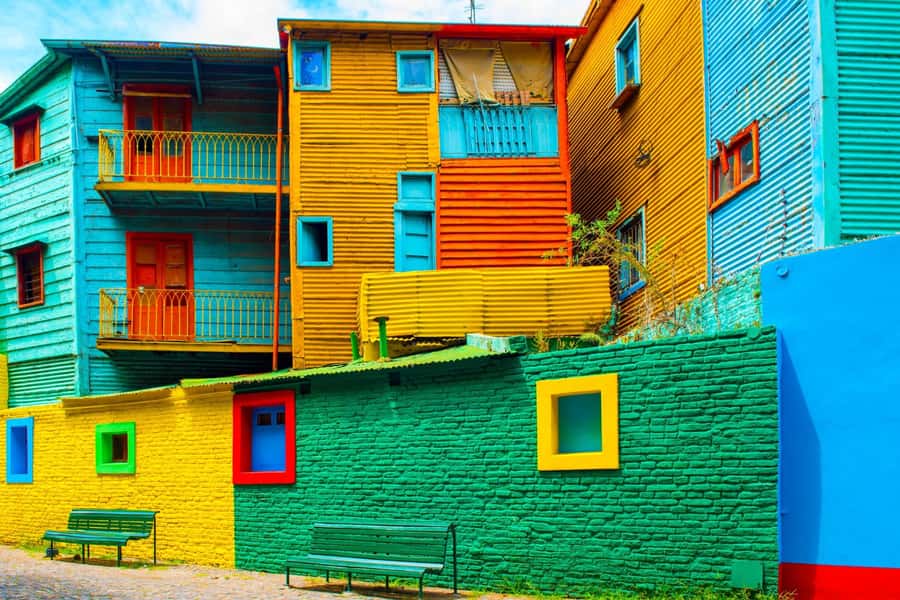
The 4-hour tour is the broadest version. It includes the walking itinerary, museum entry, and private transportation with pickup and drop-off at your accommodation in Buenos Aires.
The car changes the rhythm. Instead of spending your extra hour only on foot, you can connect several parts of central Buenos Aires without working out taxi routes or navigating public transport between stops. You still have a walking component, but the car lets the guide frame Jewish heritage against the city’s major civic spaces.
The added stops include Plaza Libertad, 9 de Julio Avenue, the Israeli Embassy Memorial, and Plaza General San Martín.
Plaza Libertad offers a quieter public space surrounded by notable architecture. It works as a pause between more solemn locations and helps place Templo Libertad within the broader central district.
9 de Julio Avenue gives you a sense of Buenos Aires scale. It is one of the widest boulevards in the world, and seeing it during a heritage tour creates useful urban context. Jewish institutions here are part of a major capital city, not an isolated quarter separated from everyday Argentine life.
The Israeli Embassy Memorial marks the 1992 attack and provides another place for reflection. When combined with the AMIA stop, it shows that Jewish remembrance in Buenos Aires includes more than one act of violence and more than one generation.
Plaza General San Martín adds a stately public setting linked to Argentina’s military and immigrant history. This stop broadens the story again, connecting community history with national identity and the movement of people into Argentina.
If you want the fullest itinerary with the least transport fuss, the 4-hour option is the logical choice. The tradeoff is cost and time. You need to reserve a larger part of your day, and you may not want a serious historical tour if you are looking for a quick introduction between other plans.
How the private guide shapes the experience
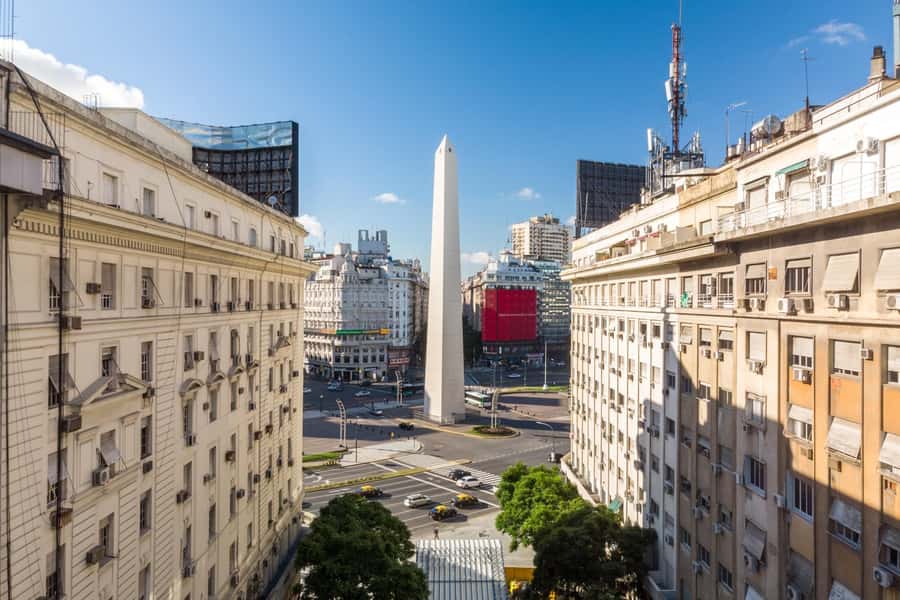
The guide is the most important variable here. The tour promises a five-star licensed guide fluent in your chosen language, with commentary adjusted to your interests and pace.
The feedback is strongly positive on this point. One person described a guide as warm, open, generous, and able to explain both historical events and the current political climate. Another praised the city and Jewish history commentary as very informative. Those descriptions point to the kind of experience you should hope for: a conversation that links places, events, and personal stories.
Richard Shpuntoff is specifically praised for sharing family stories that helped connect Argentina’s past with its present. That personal element can be valuable, but it also means guides may bring different strengths and styles. The provider does not promise that every booking will be led by Richard, so treat his name as a useful example rather than a guaranteed assignment.
Because the group is private, tell the operator in advance if you have a specific interest. You might want more time on religious practice, immigration, World War II, the AMIA bombing, Argentine politics, or architecture. The guide can adjust the pace, and customer support can discuss special needs before the tour.
Price, timing, and practical value
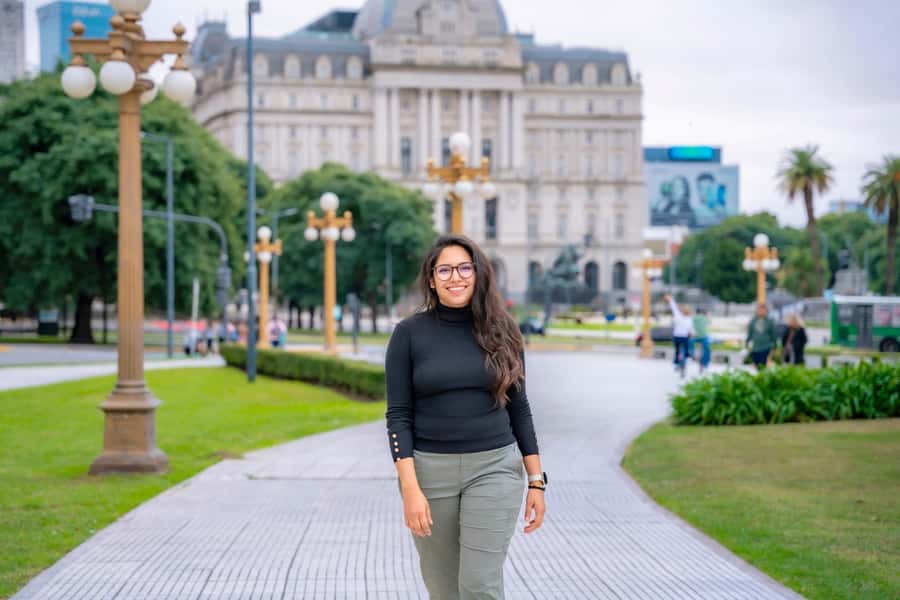
The advertised price is $129 per person. That is not a bargain-priced orientation walk, but it can be reasonable if you value a licensed guide, a private group, multilingual service, and the chance to ask detailed questions.
The 2-hour option is best for a focused introduction. It covers Templo Libertad, the Jewish Museum area, the Holocaust Museum, and AMIA, with about 25 to 30 minutes of walking. Choose it if your schedule is tight or if you want the main story without museum time.
The 3-hour option is the strongest middle choice. You gain entry to the Salvador Kibrick Museum and have more time for explanation, but you still arrange your own transport. For many people, this adds the most meaningful content without committing half a day to the full car route.
The 4-hour tour gives the clearest value if you want convenience. Pickup and drop-off are included, as are the museum and extra city stops. The private car is particularly useful if you want to see the Israeli Embassy Memorial and the other central sites without piecing together your own route.
The meeting point for the walking options is in front of Hotel Presidente at Cerrito 850. Do not go inside the hotel. Hotel staff are not informed about the tour, so wait outside at the stated location.
Check your email the day before for final information from Rosotravel Argentina. Wear comfortable shoes, prepare for changing weather, and remember that the tour runs rain or shine. Free cancellation is available up to 24 hours ahead, and you can reserve now and pay later, which gives you some flexibility.
Who should book this Jewish heritage tour?

I would recommend this experience to you if you want history explained with care, not just a list of buildings. It is a strong match for people with Jewish family connections, students of Holocaust memory, visitors interested in immigration, and anyone who wants to understand a less commonly presented side of Buenos Aires.
The tour also suits first-time visitors who want a guided introduction before exploring the city independently. The four-hour version places Jewish sites beside famous public spaces, giving you a broader sense of central Buenos Aires.
I would be more cautious if you need a fully accessible route, since uneven surfaces and steps are noted. Contact support before booking if you have specific mobility needs. I would also skip the 2-hour option if entering the museum is important to you, since admission is not included there.
Should you book it?
Book this tour if you want a serious, personal look at Jewish life in Buenos Aires and prefer asking questions to following a large group. Choose the 2-hour route for the essential sites, the 3-hour route for the best balance of walking and museum content, and the 4-hour route for private transport and the widest city coverage.
At $129 per person, the tour makes the most sense when the guide’s context is central to your plans. If you only want exterior photographs, it may feel expensive. If you want to understand Templo Libertad, the Holocaust Museum, AMIA, the Israeli Embassy Memorial, and the community stories connecting them, the private format gives you far more than a quick pass through downtown.
FAQ
How long is the Jewish Sites Buenos Aires tour?
You can choose a 2-hour, 3-hour, or 4-hour private tour. Starting times depend on availability.
Is the tour private?
Yes. It is offered as a private group experience, with one to 25 guests per guide. Additional guides are arranged for larger groups.
Which languages are available?
The live guide service is available in English, Spanish, French, Italian, and Portuguese.
Is museum admission included?
Entry to the Salvador Kibrick Jewish Museum is included with the 3-hour and 4-hour options. It is not included with the 2-hour option.
Do I need identification for the museum?
Yes. Foreign visitors must present an original passport. Argentine visitors must present their national identity card.
Does every tour include private transportation?
No. Private pickup and drop-off are included only with the 4-hour tour. The 2-hour and 3-hour options do not include private transfers.
Where does the walking tour meet?
Meet your guide in front of Hotel Presidente at Cerrito 850, C1010 Cdad. Autónoma de Buenos Aires. Do not enter the hotel, since its staff are not informed about the tour.
Recently added around Buenos Aires
- Photo Session in Buenos Aires★ 5.0 · 26 reviews
- Your Personal Photographer in Buenos Aires★ 5.0 · 24 reviews
- Discover Buenos Aires’ independent art scene — Ticket included★ 5.0 · 30 reviews
- Your Private Photographer in Buenos Aires★ 5.0 · 4 reviews
- Yerba Mate Workshop – Learn to Drink Mate like a Local!★ 5.0 · 11 reviews
- Taste of Tradition: Yerba Mate & Alfajores Experience★ 4.0 · 5 reviews
- Wine tasting in OASIS Palermo★ 5.0 · 2 reviews
- Day Tour Classic★ 3.5 · 35 reviews
Walking Tours, compared.
Buenos Aires Hop-On Hop-Off Bus, Free Walking Tours & Discounts
Read our review →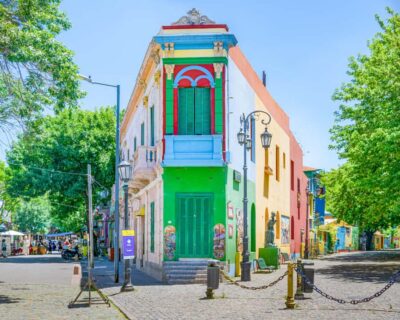
German Footprint & Nazi presence – Walking Tour in Bariloche
Read our review →
Full Day Buenos Aires Private Walking Tour – Your Own Personal BA 101
Read our review →
Discover Buenos Aires: Walking Tour Through San Telmo & Center!
Read our review →
Browse the lists this tour appears in