Reviewed · GUIDED
Hop-On Hop-Off Buenos Aires (26 Stops) + Smart Guide AI
See Buenos Aires from the top deck. This bus route gives you a handy first look at a huge city, linking Recoleta, San Telmo, La Boca, Palermo, downtown, and several major museums in one day. I like the wide spread of stops and the included map and multilingual audio guide, which make the first day easier to plan. The main concern is reliability: buses may run late, stop numbering can be confusing, and some audio units have not worked.
At $42 per person, this is not the cheapest way to move around Buenos Aires. It makes the most sense if you want a simple city orientation, plan to hop off several times, and value seeing far-flung districts without arranging separate rides. If you only use the bus twice, a city map plus taxis may offer better value.
In This Review
- The route’s best use: get your bearings before exploring
- Key points to know before you book
- Stop Zero in Recoleta starts the day well
- Teatro Colón and the grand downtown avenues
- San Telmo to La Boca: the most characterful stretch
- Lezama Park and the riverfront change the mood
- Downtown stops cover the city’s classic postcard sights
- Palermo offers the longest list of worthwhile pauses
- The audio guide is helpful, but bring a backup plan
- Timing, QR codes, and the $42 question
- Who will get the most from this bus tour?
- My verdict on Hop-On Hop-Off Buenos Aires
- FAQ
- How much does the Buenos Aires Hop-On Hop-Off tour cost?
- How long does the pass last?
- How many stops does the tour have?
- Where does the tour begin?
- What is included in the ticket?
- Are museum admission fees included?
- Does the tour include meals?
- What happens if I need to cancel?
- Do I need a QR code to board?
The route’s best use: get your bearings before exploring
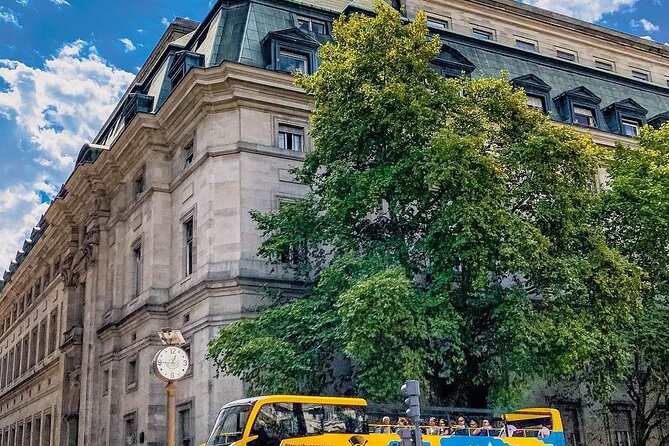
Buenos Aires is spread across many districts, each with its own mood and architecture. Recoleta feels formal and museum-heavy. San Telmo has older streets and a strong neighborhood character. La Boca is colorful and theatrical. Palermo gives you parks, galleries, and broad avenues.
A hop-on hop-off bus is useful here because those areas are not clustered around one compact old center. You can ride through the city first, note what catches your eye, then return to the places that deserve more time.
The advertised circuit has 26 stops. The detailed route information names 23 stops, from Stop Zero in Recoleta through the National Museum of Fine Arts. That difference is worth checking when you receive your map or QR code, especially if you have a particular stop in mind.
Key points to know before you book
- Stop Zero begins in Recoleta, a practical starting point near major museums and elegant avenues.
- The route links very different districts, including San Telmo, La Boca, downtown, Palermo, and the ecological reserve.
- The bus operates from 9:00 a.m. to 7:00 p.m., but one operating account describes service ending closer to 5:00 p.m.
- A multilingual audio guide, headphones, printed map, and discount passport are included.
- The QR code matters, and a confirmation number alone may not be enough to board.
- The tour is best value when you make several stops, not when you remain on board for one long circuit.
A few more Buenos Aires trips worth putting side by side
- Local Foodie Adventure in Buenos Aires with Sherpa Food Tours
★ 5.0 · 6,875 reviews - Buenos Aires City Private Tour with Local Guide
★ 5.0 · 3,475 reviews - Buenos Aires Small-Group City Tour
★ 5.0 · 2,226 reviews
Stop Zero in Recoleta starts the day well
The first named stop is at Av. Pres. Manuel Quintana 535, in Recoleta. This is a sensible beginning because Recoleta gives you an immediate introduction to the city’s grander side, with formal streets, cultural buildings, and major sights nearby.
If you begin here, you can use the first ride as a broad orientation. Pay attention to the neighborhoods rather than trying to memorize every fact from the audio. The purpose of this first circuit is to decide where you want to spend your limited time.
Stop 23, at Avenida del Libertador and Doctor Luis Agote, returns you to this cultural part of the city near the National Museum of Fine Arts. That makes the Recoleta section especially useful for anyone interested in art and museums.
Teatro Colón and the grand downtown avenues
Stop 2, at Cerrito 892, serves the Columbus Theatre, better known as Teatro Colón. Even if you do not enter, this is one of the city’s major cultural landmarks and a good reason to leave the bus for a closer look.
Stop 3 on Av. de Mayo takes you along one of Buenos Aires’ most important historic avenues. This is a good place to walk, look up at the older façades, and connect the political center with the city’s Spanish and Italian influences.
Congress Square, Stop 4 at Av. Rivadavia 1573, brings you to an important civic space. It is a practical stop for anyone who wants to see the National Congress area and understand the scale of Buenos Aires’ central boulevards.
Stop 5 at Av. Belgrano 390 is the Paseo de la Historieta, a lighter and more local attraction based around Argentine comic characters. This stop offers a change of pace from grand theaters and government buildings. It may appeal most to families and visitors who enjoy playful public art.
San Telmo to La Boca: the most characterful stretch
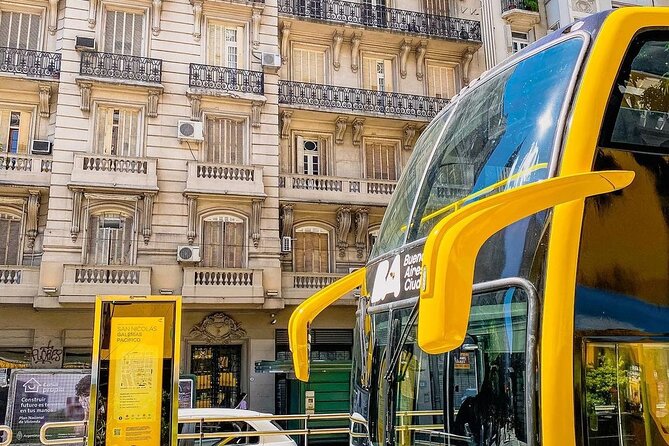
Stop 6, at Avenida San Juan and Defensa, serves San Telmo and Plaza Dorrego. This is one of the strongest places to hop off. San Telmo rewards walking, with older streets, cafés, small shops, and a more lived-in feel than the monumental center.
You should give yourself time here rather than treating Plaza Dorrego as a quick photo stop. The bus can show you the district, but the real pleasure is on foot. Watch your timing carefully, since waiting for the next bus can be inconvenient if service is delayed.
Stop 7 reaches La Bombonera at Brandsen and Juan de Dios Filiberto, home ground of Boca Juniors. This is a useful stop for football fans, but the area is also part of the cultural identity of La Boca. If you are not attending a match or a separate stadium visit, you can still use the stop to understand the neighborhood’s importance.
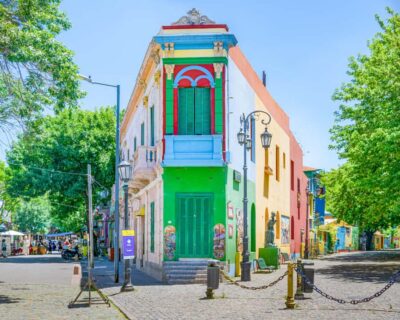
Stop 8 at Av. Don Pedro de Mendoza 1959 brings you to Caminito. This is one of the route’s most recognizable stops, with brightly painted buildings and a strong tourist focus. It is visually memorable, but it can feel more staged than San Telmo. I would visit both, then decide which atmosphere suits you better.
The key practical point is to keep your belongings secure and stay aware of your surroundings, as you should in any busy city district. The supplied information does not promise a guided walk at either San Telmo or Caminito. You are buying transport and commentary, not a personal escort through the neighborhood.
Still Argentina, but a completely different sort of afternoon:
- Buenos Aires Hop-On Hop-Off Bus, Free Walking Tours & Discounts
★ 4.5 · 2,218 reviews - Buenos Aires: Piazzolla Tango Show with Optional Dinner
★ 4.4 · 2,122 reviews - Buenos Aires: City Highlights Guided Tour with Transfer
★ 4.7 · 1,946 reviews - Buenos Aires: Hop-On Hop-Off City Bus Tour
★ 4.2 · 1,855 reviews
Lezama Park and the riverfront change the mood
Stop 9 at Brasil 369 serves Lezama Park. This is a welcome green break after the dense streets of downtown and La Boca. A park stop can also help you pace a one-day circuit, especially if you do not want to spend the entire day moving between major sights.
Stop 10 at Juana Manso and Manuela Sáenz reaches the Women’s Bridge in Puerto Madero. The bridge is one of the area’s defining modern landmarks, with a distinctive curved design over the waterfront.
Stop 11 at Cecilia Grierson 400 serves the Ecological Reserve. This broad, open area gives you a different view of Buenos Aires, away from its avenues and monuments. The route makes it possible to pair a city bus ride with a walk in a more natural setting.
These three stops are close in theme only because they offer breathing room. Lezama Park is a traditional urban park. Puerto Madero is modern and redeveloped. The Ecological Reserve feels more open and removed from the city center. I like that the route does not limit you to museums and historic buildings.
Downtown stops cover the city’s classic postcard sights
Stop 12 at Av. Córdoba 500 is for Pacific Galleries, a major central shopping and architectural landmark. This can be a convenient pause if you want shops, a break indoors, or a look at one of the city’s better-known commercial buildings.
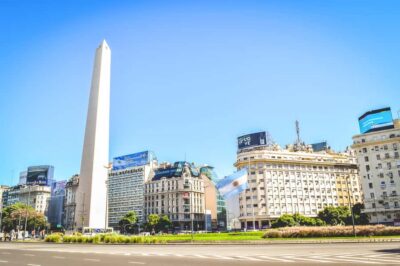
Stop 13 at Carlos Pellegrini 956 brings you to Av. 9 de Julio. This is the place to appreciate the scale of Buenos Aires’ famous central avenue. The view from the bus is useful because the avenue is too broad to understand quickly from one sidewalk.
Stop 14 at Florida 1065 serves Plaza San Martín. Florida Street is a major pedestrian corridor, while the plaza provides a more formal setting with trees, monuments, and surrounding architecture. This stop works well if you want to combine shopping streets with a quieter public square.
Do not expect the bus to replace walking downtown. The route shows you how the parts connect, but the best details are found at street level. Use the bus to save energy between districts, then explore a selected area on foot.
Palermo offers the longest list of worthwhile pauses
The Palermo section gives this tour much of its value. Stop 15 at Avenida del Libertador and Libertad serves Thays Park, a good pause for public art, open space, and an easier pace.
Stop 16 at Avenida Presidente Figueroa Alcorta and Jerónimo Salguero is for MALBA, the Latin American Art Museum of Buenos Aires. Admission is not included, so you will pay separately if you go inside. For art lovers, this may be one of the best reasons to use the bus, since the museum is not simply a downtown stop.
Stop 17 at Avenida Sarmiento and Avenida Presidente Figueroa Alcorta serves the Planetarium. Stop 18 at Avenida Sarmiento and Avenida Colombia covers Plaza Italia and the Eco-Park. These stops make Palermo a strong area for families, museum fans, and anyone who wants a break from dense central streets.
Stop 19 at El Salvador and Jorge Luis Borges is Plaza Julio Cortázar. This part of Palermo is known for cafés, restaurants, and a more neighborhood-based evening atmosphere. It is a particularly good place to return later in the day, although the stated operating hours mean you should not assume the bus will run late into the evening.
Stop 20 at Paraguay and Avenida Juan B. Justo serves the Arcos District. This adds another modern shopping and dining area to the circuit. The route gives you choices, but you should resist trying to enter every museum and park in a single day. Pick two or three Palermo stops and enjoy them properly.
Stop 21 at Av. del Libertador 3880 serves the Forests of Palermo and Rosedal. This is one of the most appealing places to hop off if you want flowers, paths, and open parkland. Stop 22, at Avenida del Libertador and Avenida Sarmiento, reaches the Monument to the Spanish, another useful landmark in the same broad park district.
The route groups enough Palermo sights together that you can build a half-day around them. That is where the tour works better than a simple sightseeing ride. You get transport between places that would otherwise require several separate trips.
The audio guide is helpful, but bring a backup plan
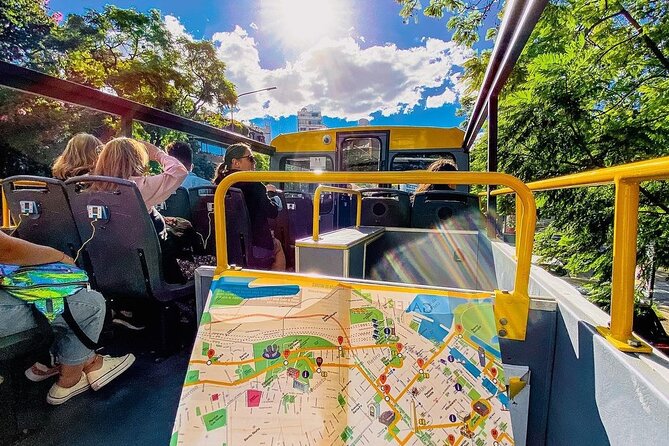
The package includes headphones, a physical circuit map, and a multilingual audio guide. Those are meaningful additions. The map helps you see the whole city at once, while the audio gives you context as you pass major landmarks.
The quality may not be consistent from bus to bus. One operating account described an older vehicle with audio units that did not work, while another reported that one bus had no information. Stop numbers have also been confused on at least one bus.
I would keep the map with you and use your phone for basic route notes if possible. Do not assume every onboard audio unit will work perfectly. The information can add real value, but you should be prepared to enjoy the views without it.
The experience is not a small guided group. You are using shared city buses with scheduled stops. That gives you independence, but it also means delays, crowded boarding points, and occasional confusion can affect your day.
Timing, QR codes, and the $42 question
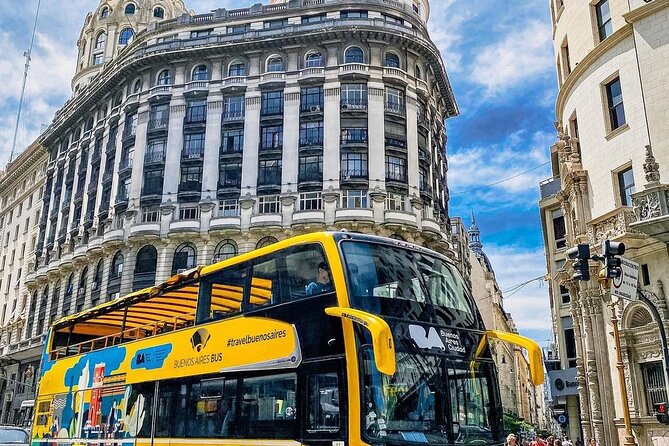
The advertised operating window is 9:00 a.m. to 7:00 p.m., every day during the listed operating period. Yet one account reports buses stopping around 5:00 p.m. Since a one-day pass gives you limited time, I would start early and plan your final hop-off well before evening.
A full circuit can help you see the city, but the strongest value comes from getting off several times. If you only ride twice, the $42 price can feel high. A group of four would pay about $168 before any separate admission fees, so families should compare that cost with local transport and a self-guided plan.
The QR code is an important practical detail. One passenger had only a confirmation number, was placed on the wrong bus, and then had difficulty getting back to the starting point. Fontenay Tours accepted responsibility, confirmed the missing QR code was a company error, and processed a full refund of $42.
Check your booking materials before departure. If the QR code is missing, contact the provider before you reach the stop rather than relying on a street attendant to sort it out.
A positive point is that staff can be helpful when a problem is clear. One passenger who had trouble locating a stop was allowed to board without first going to the offices. That kind of quick fix matters, but it is still better to begin with the correct boarding information.
Free cancellation is available up to 24 hours before the start time. Changes or cancellations inside that window are not accepted for a refund.
Who will get the most from this bus tour?
I would consider booking it if you are visiting Buenos Aires for the first time, want a broad overview, or prefer not to arrange separate transport between distant districts. It is also useful if you have only one full day and want to identify places for a later visit.
The tour suits you best if you plan to:
- Get off at San Telmo, Caminito, a Palermo museum, or Rosedal.
- Use the bus as a framework for your own walking.
- Enjoy city views without needing a fully guided group.
- Make several stops during the day.
- Have enough flexibility to handle a late bus or a faulty audio unit.
I would hesitate if you are watching every peso, dislike waiting, or expect a tightly timed service. The positive side is clear: the buses have been described as clean, and staff have been praised as polite and helpful. The weak points are also clear: price differences at local kiosks, uncertain timing, missing or incorrect stop information, and inconsistent audio.
The physical map is more useful than it may sound. It lets you see the route as a whole and can help you plan an efficient day. The discount passport may add value, but the supplied details do not specify which discounts apply, so ask before counting them into your budget.
My verdict on Hop-On Hop-Off Buenos Aires
This is a good orientation tool, not a perfect transport system. I like the coverage, the mix of cultural sights and parks, and the freedom to build your own day. Recoleta, San Telmo, La Boca, Puerto Madero, and Palermo are too spread out for casual walking, so a city circuit has a real purpose.
At $42, I would book it when I expect to make at least three or four stops. I would start at Recoleta, use the route through downtown and San Telmo, then spend the most time in Palermo. I would also confirm the QR code, carry the map, and leave plenty of time between planned connections.
If that sounds like your travel style, this bus can save planning effort and give you a useful first picture of Buenos Aires. If you want guaranteed punctuality or only need a couple of rides, choose local transport instead.
FAQ
How much does the Buenos Aires Hop-On Hop-Off tour cost?
The listed price is $42 per person for an approximately one-day experience.
How long does the pass last?
The tour is listed as a one-day experience, approximately. Operating hours are shown as 9:00 a.m. to 7:00 p.m.
How many stops does the tour have?
The tour is advertised with 26 hop-on hop-off stops. The detailed stop information names 23 locations, so confirm the current map for the full route.
Where does the tour begin?
Stop Zero is at Av. Pres. Manuel Quintana 535 in Recoleta.
What is included in the ticket?
The ticket includes the Buenos Aires bus tour, a multilingual audio guide, a physical circuit map, headphones, and a discount passport.
Are museum admission fees included?
No. Admission to cultural spaces is separate and is paid directly on site if you choose to enter.
Does the tour include meals?
No. Meals are not included.
What happens if I need to cancel?
You can cancel up to 24 hours before the experience start time for a full refund. Cancellations or changes made less than 24 hours before the start time are not accepted for a refund.
Do I need a QR code to board?
You should have the required QR code before departure. A confirmation number alone may not be sufficient for access to the service.
Recently added around Buenos Aires
- Photo Session in Buenos Aires★ 5.0 · 26 reviews
- Your Personal Photographer in Buenos Aires★ 5.0 · 24 reviews
- Discover Buenos Aires’ independent art scene — Ticket included★ 5.0 · 30 reviews
- Your Private Photographer in Buenos Aires★ 5.0 · 4 reviews
- Yerba Mate Workshop – Learn to Drink Mate like a Local!★ 5.0 · 11 reviews
- Taste of Tradition: Yerba Mate & Alfajores Experience★ 4.0 · 5 reviews
- Day Tour Classic★ 3.5 · 35 reviews
- Wine tasting in OASIS Palermo★ 5.0 · 2 reviews
Guided, compared.
Buenos Aires City Private Tour with Local Guide
Read our review →