
Reviewed · WALKING TOURS
Buenos Aires: Deluxe Walking Tour Like a Local, Recoleta Cemetery
Buenos Aires reveals itself one palace at a time. I like this small-group walk for its clear focus on Belle Époque architecture and its route from San Martín Palace to Recoleta, which gives you a useful story instead of a string of unrelated sights. I also like that a licensed local guide leads the tour, with no more than 12 people in the group. The main catch is that the $60 price does not include the $15 cemetery admission.
This is a good choice if you want to understand how Buenos Aires’ wealthy families, diplomats, shipping magnates, clubs, and hotels shaped the city. The walk lasts about three to four hours, finishes around midday, and requires a moderate level of fitness. Bring comfortable shoes, water, and sunscreen.
In This Review
- Key points at a glance
- Why this route explains Buenos Aires so well
- San Martín Palace and Palacio Estrugamou
- Arroyo Street and the Nicolás Mihanovich Building
- The Israel Embassy Plaza and the meaning of memory
- Avenida Alvear, from France to Brazil
- The Jockey Club and the limits of elite society
- Vatican Nunciature, Duhau Palace, and the Maguire Residence
- Plaza Francia and the approach to Recoleta Cemetery
- Is the extra $15 cemetery visit worth it?
- Price, pace, and what the $60 covers
- Who should book this walking tour?
- Should you book it?
- FAQ
- Where does the tour begin?
- Where does the tour end?
- How long does the experience last?
- Is Recoleta Cemetery entry included?
- How large is the group?
- What should I bring?
Key points at a glance
- Belle Époque Buenos Aires: Follow the city’s old upper-class quarter from San Martín Palace along Arroyo Street and Avenida Alvear.
- A small group of up to 12: The size should make it easier to hear the guide and ask questions during the walk.
- A strong architectural route: See French-inspired residences, embassies, palaces, grand hotels, and one of Buenos Aires’ early skyscrapers.
- History beyond pretty buildings: The tour connects wealth and architecture with immigration, shipping, diplomacy, religion, memory, and social exclusion.
- Recoleta Cemetery is optional: The walk ends outside the cemetery, and entry costs an additional $15 paid to the city government.
- Best for curious walkers: You need enough energy for several hours outdoors, but the route uses streets and public squares rather than difficult terrain.
Why this route explains Buenos Aires so well
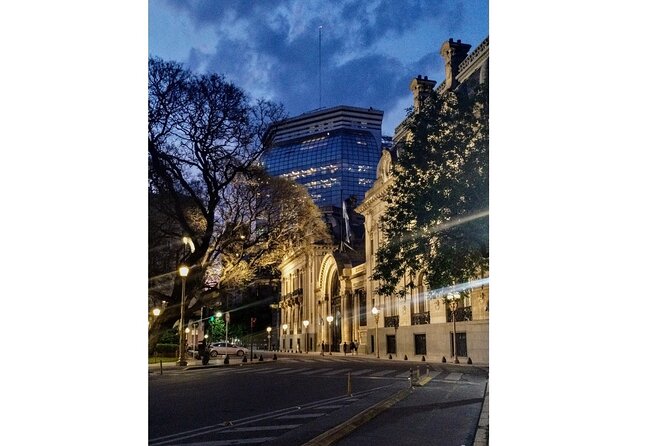
Buenos Aires is often called the Paris of South America, and this walk shows you why. That comparison can be lazy when used as a slogan, but here it has real substance. The buildings along the route reflect Argentina’s close ties to France, the enormous wealth of its ruling families, and the desire of the city’s elite to live with European polish.
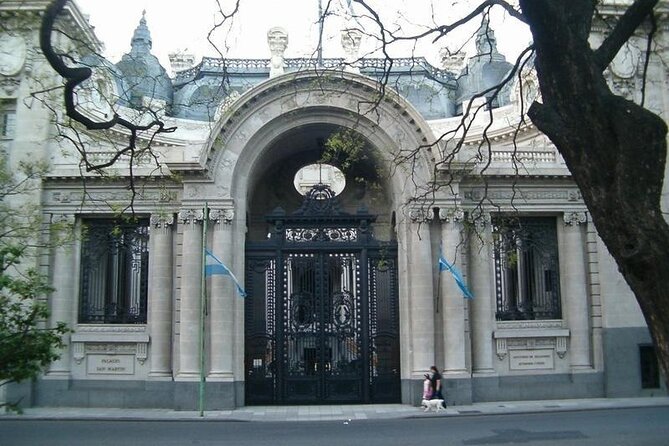
The walk begins at 10:00 a.m. in front of Palacio San Martín on Arenales Street. That meeting point matters because the palace gives the tour its opening idea: Buenos Aires at the height of its confidence. The former aristocratic residence now houses the Ministry of Foreign Affairs, linking private wealth with the workings of the modern state.
From there, the guide helps you read architecture as social evidence. A grand entrance, an enclosed courtyard, a palace facade, or a private club tells you who had money, who had access, and how strongly the upper classes looked toward Europe for models of taste and status.
I like this approach more than a simple photo walk. You are not only being shown attractive buildings. You are given a way to read the neighborhood.
More Walking Tours in Buenos Aires
- Buenos Aires Hop-On Hop-Off Bus, Free Walking Tours & Discounts
★ 4.5 · 2,218 reviews - Buenos Aires: La Boca Guided Walking Tour in English
★ 4.8 · 1,587 reviews - La Boca Walking Tour
★ 5.0 · 1,029 reviews
San Martín Palace and Palacio Estrugamou
The first stop lasts about 15 minutes at Palacio San Martín. Admission is not included, so expect to view it from outside unless the guide explains otherwise. The important point is its former role as an aristocratic home and its present role in public life.
The palace introduces the Belle Époque, the period when Buenos Aires’ elite invested heavily in grand residences and European-style city planning. Argentina’s wealth gave powerful families the means to commission large houses that announced their rank before anyone entered the door.
A short walk brings you to Palacio Estrugamou, a refined residential complex shaped by French architectural ideas. Its inner courtyard contains a replica of the Nike of Samothrace, the famous winged sculpture associated with the Louvre.
That detail is especially useful. It shows that European influence was not limited to building facades. It reached into courtyards, decoration, art, and daily life. The people who commissioned these homes wanted to present themselves as part of an international cultural world.
You will spend only about 10 minutes here, so this is an exterior-focused stop. If architecture is your main interest, listen closely to the guide’s explanation rather than expecting time for a long inspection.
Arroyo Street and the Nicolás Mihanovich Building
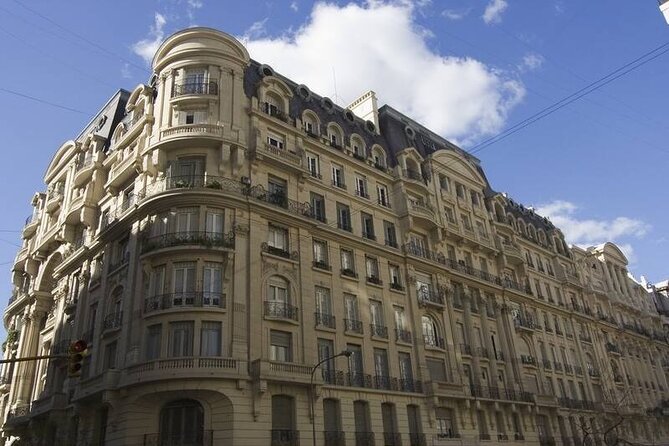
The walk continues for about 30 minutes along Calle Arroyo. This is one of the quieter and more elegant parts of the route, and the slower pace should help you notice how the street differs from Buenos Aires’ larger avenues.
Arroyo is useful because it turns grand history into a sense of place. The street reflects the refined lifestyle associated with the city’s upper class, along with its interest in art and French culture. You may find that the quieter setting makes the story easier to picture than a crowded civic square would.
The Nicolás Mihanovich Building adds a different note. It was one of Buenos Aires’ early skyscrapers and represented modernity in a city still filled with palaces and traditional residences.
Its story reaches beyond architecture. The building’s connection to shipping, immigration, and global trade reminds you that Buenos Aires was not only copying Europe. It was also tied to the movement of people, goods, money, and ideas across the Atlantic.
This contrast is one of the tour’s strengths. One moment you are looking at aristocratic residences, and the next you are considering the commercial networks that helped make such wealth possible.
The Israel Embassy Plaza and the meaning of memory
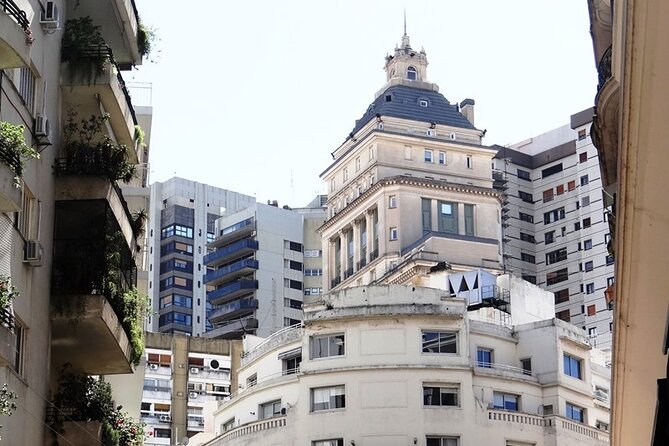
The Plaza Embassy of Israel is a place of remembrance on Arroyo Street. The stop lasts about 10 minutes and is free to view.
This section gives the tour a more serious tone. The route is not limited to luxury and architecture. It also asks you to consider loss, resilience, and the way a city marks painful events.
The plaza’s location within this elegant quarter creates a striking contrast. Wealthy streets and diplomatic buildings are not separate from modern history. They are part of the same urban setting, where memory and public life continue alongside old residences and fashionable addresses.
The guide’s role is important here. A short stop can easily become a quick photo opportunity, but the stated focus is reflection and historical significance. Give this part your attention.
Still Argentina, but a completely different sort of afternoon:
- Local Foodie Adventure in Buenos Aires with Sherpa Food Tours
★ 5.0 · 6,875 reviews - Buenos Aires City Private Tour with Local Guide
★ 5.0 · 3,475 reviews - Buenos Aires Small-Group City Tour
★ 5.0 · 2,226 reviews - Buenos Aires: Piazzolla Tango Show with Optional Dinner
★ 4.4 · 2,122 reviews
Avenida Alvear, from France to Brazil
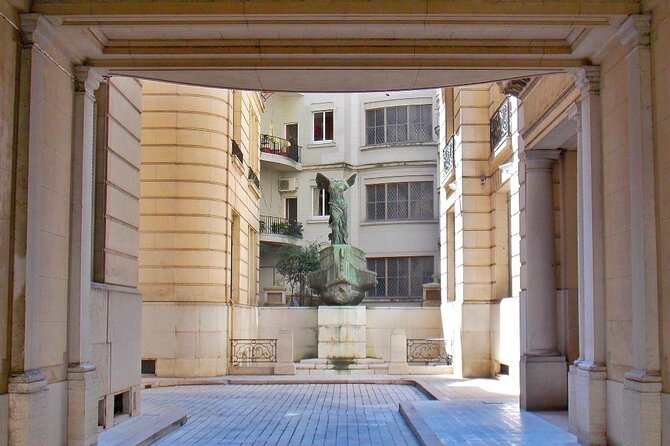
Avenida Alvear is the central stretch of the experience, with about 40 minutes devoted to the avenue itself. This was the heart of high society during Buenos Aires’ Belle Époque.
The avenue is lined with palaces, embassies, and grand hotels. I like the way the tour presents it as a social setting, not just an architectural one. Here you learn how luxury, status, diplomacy, and international connections shaped the city’s public image.
The Embassy of France is an early highlight. Its French academic design reflects Argentina’s cultural relationship with Paris and the upper class desire to mirror European elegance. The building is viewed from outside, and admission is not included.
You then reach Pereda Palace, now the Embassy of Brazil. This residence shows how architecture, diplomacy, and private wealth overlap. A home built for an influential family later became a diplomatic building, giving the structure a new role without erasing its original sense of ceremony.
That change is worth noting as you walk. Many historic buildings in Buenos Aires survive because they were adapted for embassies, hotels, ministries, or other modern uses. The city’s grand past is not preserved in a museum alone. It remains part of everyday urban life.
The Jockey Club and the limits of elite society
The Jockey Club offers a chance to look directly at the institutions behind high society. The club was one of Argentina’s most exclusive organizations, shaping leisure and social networks among the powerful.
The stop also covers a less flattering part of that world: women were excluded from membership until very recently. This fact keeps the tour from treating old wealth as an uncomplicated story of elegance.
For me, this is the kind of detail that makes a walking tour worthwhile. The buildings may be beautiful, but beauty does not tell you who held power. The club helps connect social customs to the city’s wider structure.
You will spend about 10 minutes here, and admission is not included. Expect to admire the exterior and hear the historical explanation rather than tour the institution’s private interiors.
Vatican Nunciature, Duhau Palace, and the Maguire Residence
The Embassy of the Vatican, also called the Apostolic Nunciature, continues the avenue’s theme of international influence. Its European-inspired architecture reflects the role of religion, diplomacy, and international power in Buenos Aires’ elite circles.
Next comes Palacio Duhau, once the residence of one of Argentina’s most powerful families. It now operates as the Park Hyatt Buenos Aires. This is a practical example of historic preservation through adaptation, although the building’s luxury hotel use also reinforces the area’s continuing association with privilege.
The Maguire Residence gives you a rare contrast. It is the only palace on Avenida Alvear that remains a private home. You cannot treat it like a museum, and that is precisely the point. The residence shows that exclusivity and private ownership still shape this part of the city.
The Alvear Palace Hotel brings the avenue’s old social world into the present. It has hosted aristocrats, famous figures, and world leaders, and it continues the tradition of grand hospitality.
These stops are brief, generally about 10 minutes each. That is enough for an exterior explanation, but not for a full architectural study. If you want to examine every doorway and facade, you may find the pace brisk.
Plaza Francia and the approach to Recoleta Cemetery
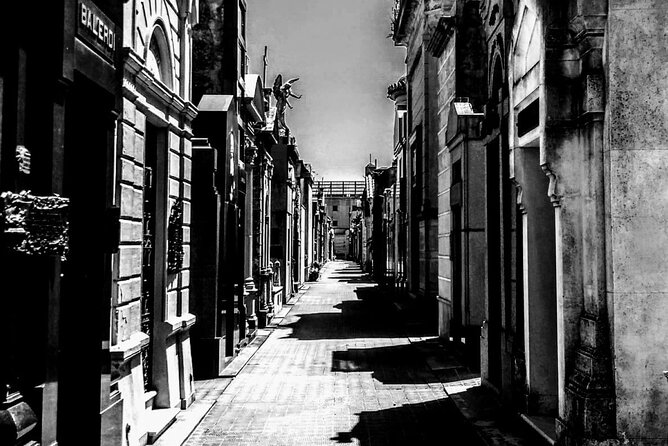
The walk along Avenida Alvear ends at Plaza Intendente Torcuato de Alvear, commonly called Plaza Francia. The stop lasts about 15 minutes.
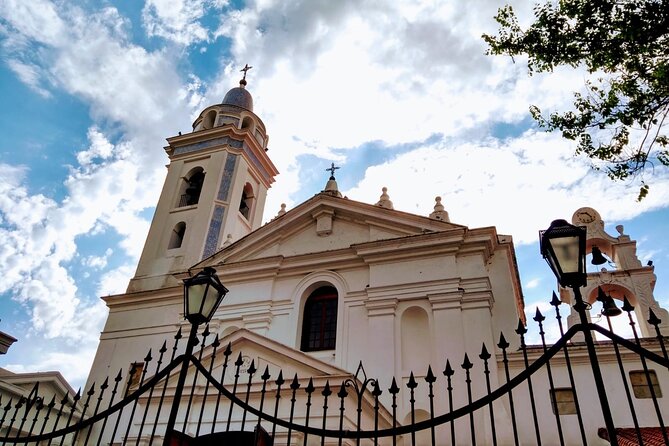
This square is the heart of Recoleta and provides a useful pause after the formal avenue. You can see the Basilica de Nuestra Señora del Pilar and learn why the plaza carries its official name. The setting connects monumental architecture with ordinary city life, public space, and local culture.
The tour ends facing Recoleta Cemetery around midday. That timing is convenient. You finish the street portion before the hottest part of the day is likely to become a problem, and you can decide what to do next instead of being rushed through a fixed final stop.
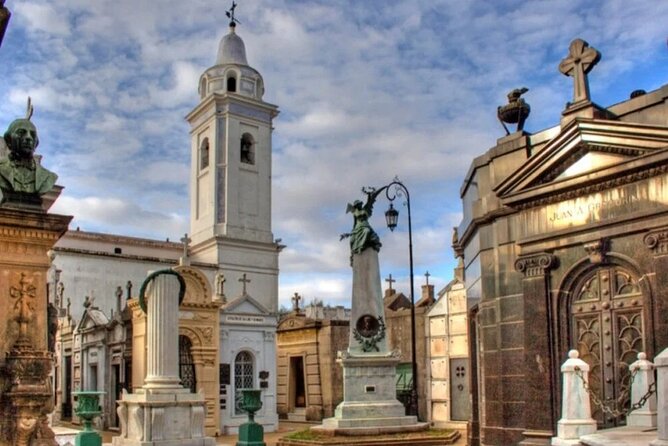
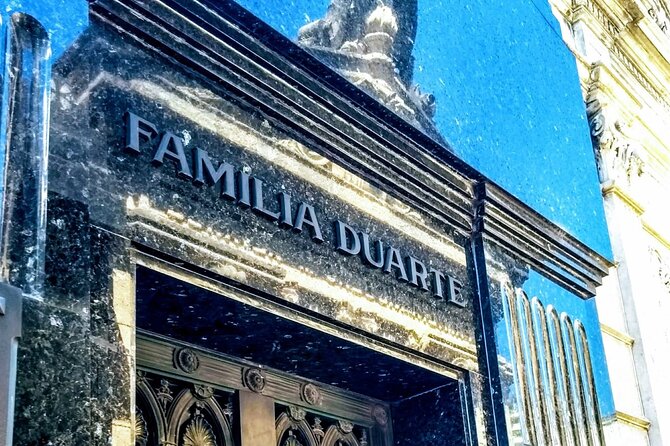
Recoleta Cemetery is one of Buenos Aires’ defining sights, known for its elaborate tombs and its ties to wealth, memory, and social status. This walking experience does not include the cemetery interior as part of the $60 fee.
Is the extra $15 cemetery visit worth it?
Entry costs an additional $15 per person, collected by the Government of the City of Buenos Aires. You buy it at the entrance, and the tour provider asks you to make contact in advance if you want to add the cemetery visit.
The optional arrangement has one clear advantage: you can choose. If you have already visited Recoleta Cemetery, you can end the experience at the entrance and continue with your day. If it is new to you, the extra visit gives you more time in one of Buenos Aires’ most important landmarks.
There is also a practical pause between the street tour and the cemetery portion. People who enter can take a break nearby and recharge before going inside. That helps turn a long morning into a more manageable half-day outing.
I would add the cemetery if you are visiting Recoleta for the first time and want the full context of the neighborhood. I would skip it only if you have already seen it or have limited interest in monuments and burial sites.
Price, pace, and what the $60 covers
At $60 per person, this is not the cheapest way to see Buenos Aires from the street. The value rests in the guide’s interpretation, the licensed local leadership, the small group, and the carefully connected route.
You are paying for roughly three to four hours of walking through some of the city’s most expensive and historically important addresses. The route covers more than a dozen stops, though many are short exterior visits. There are no major included admissions, so do not mistake the price for an entrance-ticket package.
The group is capped at 12 people. That is a useful limit for a city walk. You should have a better chance of hearing the guide than in a large coach group, and it should be easier to ask about a building or historical point that catches your attention.
The tour receives a five-star rating from 15 reviews, with 100 percent recommending it. One review from Ali praised the way the experience made Recoleta and the view toward the cemetery easier to understand, especially after having already visited the area. That is a telling strength: the tour is designed to give the neighborhood a framework, not merely introduce its most famous facade.
The activity is conducted in a shared small group. It runs outdoors and is suspended only for very heavy rain or a weather alert. Wear shoes you can walk in for several hours, and carry water and sunscreen.
Who should book this walking tour?
I would recommend it to a first-time visitor who wants a well-organized introduction to Recoleta and the city’s old elite quarter. It also suits solo visitors, since the small shared group provides structure without the expense of a private guide.
You will get the most from it if you enjoy architecture, urban history, diplomacy, social customs, and stories about how buildings change purpose over time. The route is also useful if you want to understand why Buenos Aires feels so strongly connected to Europe.
I would be more cautious if you dislike long walks, need frequent indoor breaks, or want to enter every building. Most stops are outside, several last only 10 minutes, and the cemetery costs extra.
The tour is confirmed at booking, is near public transportation, and offers free cancellation up to 24 hours before the start time. Changes or cancellations made inside that 24-hour window are not accepted for a refund.
Should you book it?
Book this tour if you want the story behind Buenos Aires’ grandest streets. The route links palaces, embassies, hotels, a private residence, a social club, a memorial plaza, and Recoleta Cemetery in a logical half-day walk.
At $60, it makes the most sense for someone who values explanation over simply checking off sights. Add the $15 cemetery entry if you have not been inside before. Skip the tour if you prefer exploring at your own pace or if your priority is entering museums and historic interiors.
For most curious first-time visitors, the strongest reason to book is the connection between places. By the time you reach Recoleta Cemetery, you have seen the wealth, politics, culture, and social rules that give the neighborhood its meaning.
FAQ
Where does the tour begin?
The tour begins at 10:00 a.m. in front of Palacio San Martín at Arenales 761 in Buenos Aires.
Where does the tour end?
The walking tour ends facing Recoleta Cemetery at Junín 1760, around midday.
How long does the experience last?
The walk lasts approximately three to four hours.
Is Recoleta Cemetery entry included?
No. Cemetery entry is optional and costs an additional $15 per person, paid at the entrance to the Government of the City of Buenos Aires.
How large is the group?
The shared group has a maximum of 12 people.
What should I bring?
Bring comfortable walking shoes, water, and sunscreen. The tour is outdoors and requires a moderate level of physical fitness.
Recently added around Buenos Aires
- Photo Session in Buenos Aires★ 5.0 · 26 reviews
- Your Personal Photographer in Buenos Aires★ 5.0 · 24 reviews
- Discover Buenos Aires’ independent art scene — Ticket included★ 5.0 · 30 reviews
- Your Private Photographer in Buenos Aires★ 5.0 · 4 reviews
- Yerba Mate Workshop – Learn to Drink Mate like a Local!★ 5.0 · 11 reviews
- Taste of Tradition: Yerba Mate & Alfajores Experience★ 4.0 · 5 reviews
- Day Tour Classic★ 3.5 · 35 reviews
- Wine tasting in OASIS Palermo★ 5.0 · 2 reviews
Walking Tours, compared.
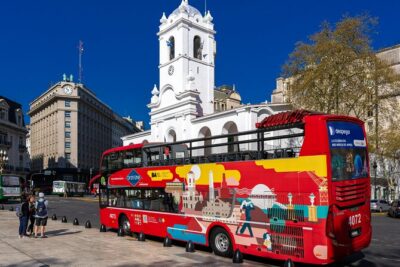
Buenos Aires Hop-On Hop-Off Bus, Free Walking Tours & Discounts
Read our review →
German Footprint & Nazi presence – Walking Tour in Bariloche
Read our review →
Full Day Buenos Aires Private Walking Tour – Your Own Personal BA 101
Read our review →
Discover Buenos Aires: Walking Tour Through San Telmo & Center!
Read our review →
Browse the lists this tour appears in