
Reviewed · WALKING TOURS
Buenos Aires: 7 Hour Small Group “BA 101” Walk
Buenos Aires reveals itself one neighborhood at a time. This seven-hour small-group walk links Recoleta, the city center, and San Telmo with an English-speaking guide, local food, public transit, and plenty of street-level history. I especially like the mix of major sights and small surprises, from El Ateneo bookstore to the old Palacio de Aguas Corrientes. The included lunch, coffee, water, transport, and Recoleta Cemetery entry also make the $160 price easier to justify.
The main consideration is stamina. You will walk for most of the day, use the metro or a local bus, and finish seven hours after starting. Children under 10 and wheelchair users cannot join, and the experience works best for visitors who want a fast, broad introduction rather than a slow visit to one museum or neighborhood.
In This Review
- Why this Buenos Aires walk is worth a close look
- Starting with bookstores, plazas, and a tiled palace
- Recoleta Cemetery and Eva Perón’s final resting place
- Teatro Colón, Plaza Lavalle, and the city’s grand center
- Florida Street and the old heart of Buenos Aires
- Taking the metro toward San Telmo
- San Telmo Market and the final cobblestones
- What $160 buys you
- Who should book this walk?
- My call: a strong first day in Buenos Aires
- FAQ
- How long is the Buenos Aires BA 101 walk?
- Where does the tour begin?
- Where does the tour end?
- What neighborhoods does the route cover?
- Is Recoleta Cemetery admission included?
- Is food included?
- Does the tour use public transportation?
- Is the tour conducted in English?
- Who cannot join the tour?
Why this Buenos Aires walk is worth a close look
- A seven-hour city lesson: The route connects Barrio Norte, Recoleta, San Nicolás, Monserrat, and San Telmo in one carefully packed day.
- Recoleta Cemetery included: Your admission covers the cemetery, including Eva Perón’s tomb and the elaborate mausoleums.
- Real city transport: You use a local bus or subway, giving the day a more practical Buenos Aires feel than a tour spent entirely in a private vehicle.
- Food and coffee are part of the plan: Morning coffee, a local lunch with a main course and beverage, and bottled water are included.
- A tiny group: The group is limited to seven participants, which leaves room for questions and personal attention.
- Strong guide-led storytelling: Dale specifically praised Tracy’s local history, language skills, and friendly manner, while Dinah highlighted Chris’s history lessons, lively stories, and eye for architectural detail.
Starting with bookstores, plazas, and a tiled palace
The tour begins at 10 a.m. near Avenida Santa Fe and Avenida Callao, in the Recoleta or Barrio Norte area. Your exact meeting point arrives by email, so check those instructions before setting out. Transport to the starting point is not included, but the location is described as easy to find.
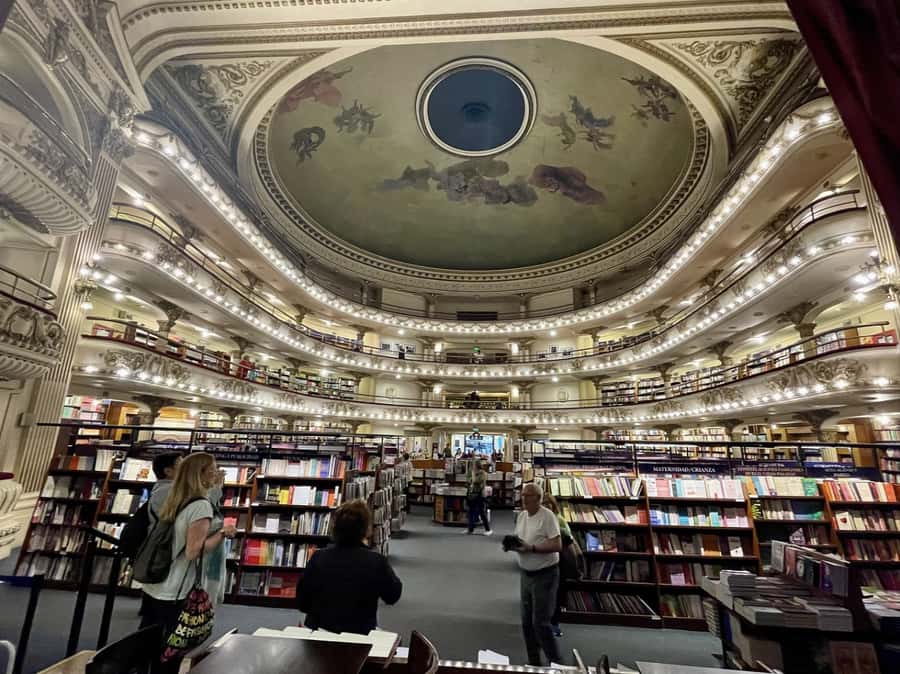
The opening stop is El Ateneo Grand Splendid, the famous bookstore inside a former theater. Even if you are not shopping for a Spanish-language novel, the setting gives you an immediate sense of Buenos Aires’ love of grand interiors and old cultural spaces. It is a smart first stop because it offers visual drama without requiring a long museum visit.
From there, you walk through leafy Plaza Rodriguez Peña. The square is tied to the Palacio Sarmiento, home to Argentina’s Ministry of Education. This part of the route helps you see Barrio Norte as more than a useful starting point. It has shaded public spaces, formal buildings, and the everyday rhythm of central Buenos Aires.
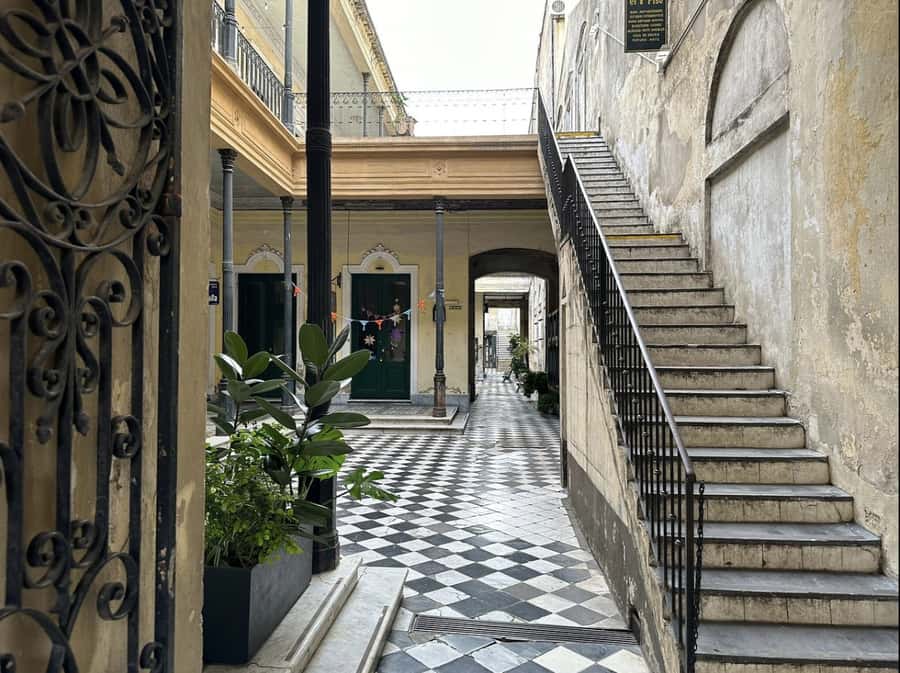
Then comes the Palacio de Aguas Corrientes, a building that can surprise you if you are expecting only plain civic architecture. Its elaborate exterior hides a practical purpose and comes with an unusual story. Your guide is important here, since the building’s value is not just what you see but why it was built and how it fits into the city’s development.
The morning also includes coffee, or a drink of similar value. That pause matters. Seven hours on foot can become a tiring march if there is no chance to sit, ask questions, and reset. Coffee gives the day a human pace before the cemetery and central city sections begin.
More Walking Tours in Buenos Aires
- Buenos Aires Hop-On Hop-Off Bus, Free Walking Tours & Discounts
★ 4.5 · 2,218 reviews - Buenos Aires: La Boca Guided Walking Tour in English
★ 4.8 · 1,587 reviews - La Boca Walking Tour
★ 5.0 · 1,029 reviews
Recoleta Cemetery and Eva Perón’s final resting place
Recoleta Cemetery is one of the day’s major stops, and admission is included. That is useful because the entry fee is listed as a value of more than $15 per person, making this more than a quick look from the gate.
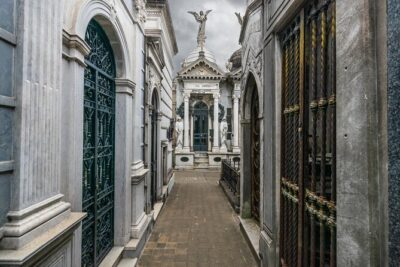
The cemetery feels less like a conventional burial ground and more like a compact city of family tombs. Narrow paths lead between ornate mausoleums, statues, carved doors, and memorials connected to Argentina’s political and cultural life. You are not simply checking off a landmark. You are seeing how Buenos Aires’ powerful families represented status, memory, and belonging.
Your guide takes you to the tomb of Eva Perón, known across Argentina as Evita. Her grave is not the grandest structure in the cemetery, but it carries enormous political and emotional weight. A guide can explain why her public image remains so powerful and why this particular family tomb became one of the city’s best-known stops.
Allow yourself to look closely at the smaller details. The cemetery’s appeal comes from the contrast between grand facades and the tight, quiet passages between them. I would keep your camera ready, but also listen carefully. The stories give meaning to what could otherwise become a parade of beautiful doors.
You then walk through Plaza Francia and see Our Lady of Pilar Church. The church is described as one of the city’s best-preserved examples of colonial architecture. It gives the Recoleta portion a religious and architectural counterpoint after the cemetery’s monuments.
This is one place where the schedule may feel full. Recoleta Cemetery deserves time, yet the tour also has many more districts to cover. If you are fascinated by cemeteries or want long independent photo sessions, you may prefer returning on your own. If your goal is to understand the city’s major sights in one day, the guided visit is a strong use of time.
Teatro Colón, Plaza Lavalle, and the city’s grand center
The route continues into San Nicolás, where you see Teatro Colón, one of the world’s famous opera houses. The walk does not list an interior visit, so expect to admire the exterior and hear about its place in Buenos Aires culture rather than attend a performance or take a full backstage tour.
Nearby Plaza Lavalle brings another change of tone. The square includes the Palacio de Justicia de la Nación, home to Argentina’s Supreme Court. This part of the city shows the concentration of national institutions in the central districts, with formal public buildings replacing the quieter residential streets of Barrio Norte and Recoleta.
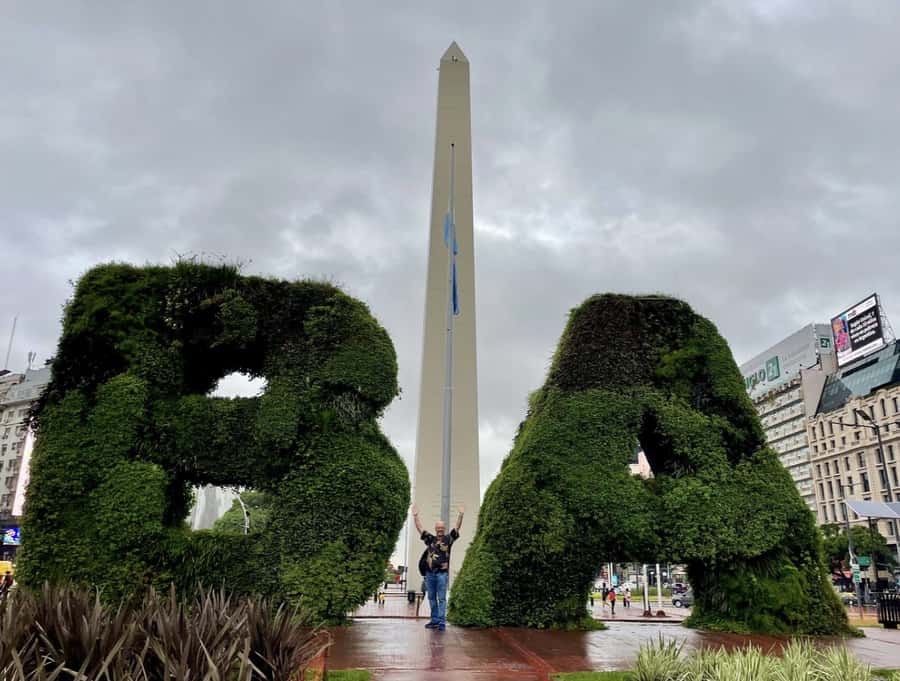
Next comes Avenida 9 de Julio and the Obelisco. The avenue is often described as the widest in the world, and the Obelisco is one of Buenos Aires’ clearest visual symbols. This is a good photo stop, especially with the green BA sign included in the route.
Do not expect a peaceful plaza here. The avenue is a major urban corridor, and the experience is about scale, traffic, signs, and the city’s big public image. The Obelisco gives you the postcard view, while the guide adds the political and civic context.
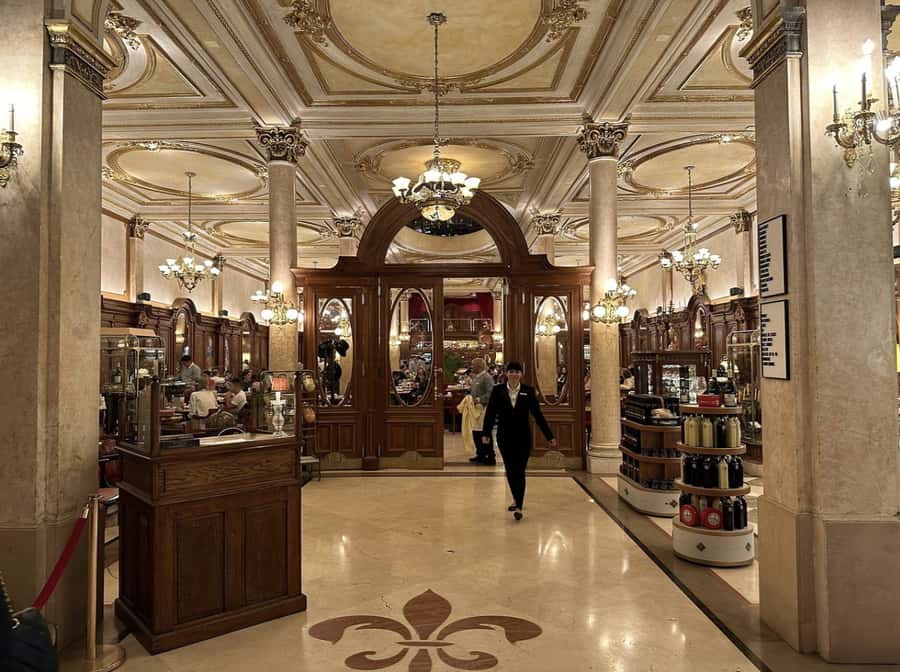
A walk down Avenida Corrientes introduces a more theatrical Buenos Aires. Known as the street that never sleeps, Corrientes is associated with restaurants, entertainment, and late-night city life. You also see Confiteria La Ideal, a beautifully restored historic cafe. The stop lets you appreciate the city’s cafe culture without requiring a separate evening outing.
Florida Street and the old heart of Buenos Aires
Florida Street is the city’s main pedestrian shopping area. It is a useful place to see Buenos Aires in motion, with shops, passersby, and grand commercial interiors packed into a central corridor.
The route includes Galería Güemes, an ornate historic gallery. Again, the value comes from having someone point out details that you could easily walk past. Buenos Aires often rewards looking upward and inward, toward decorative ceilings, old facades, and passages that do not advertise their importance from the street.
The tour then reaches the Historical City Center in Monserrat. Here, the story becomes more directly tied to the city’s beginnings. Plaza de Mayo is Buenos Aires’ main square, and the city was successfully founded there in 1580 before growing outward.
You see the Casa Rosada, the pink government building that houses the executive branch. The famous balcony is associated with President Juan Perón and Evita, who addressed crowds from it. Even if you have seen the building in photographs, standing in the square helps connect the architecture to Argentina’s political life.
The route also points out some of the city’s oldest sites, including its first church, first street, and first business. The exact length of each stop is not specified, so you should think of this as a guided orientation rather than a series of long interior visits.
Buenos Aires Cathedral is another key stop. It is the resting place of Argentine independence hero José de San Martín and the church where Pope Francis used to give mass. That combination of national history and recent global attention makes the cathedral especially worthwhile.
The old city center can be busy and visually crowded. This is where a guide earns the fee by helping you connect separate buildings, political moments, religious sites, and street names into one understandable story. Dinah’s praise for the history lessons, lively stories, and architectural details fits this part of the day particularly well.
Still Argentina, but a completely different sort of afternoon:
- Local Foodie Adventure in Buenos Aires with Sherpa Food Tours
★ 5.0 · 6,875 reviews - Buenos Aires City Private Tour with Local Guide
★ 5.0 · 3,475 reviews - Buenos Aires Small-Group City Tour
★ 5.0 · 2,226 reviews - Buenos Aires: Piazzolla Tango Show with Optional Dinner
★ 4.4 · 2,122 reviews
Taking the metro toward San Telmo
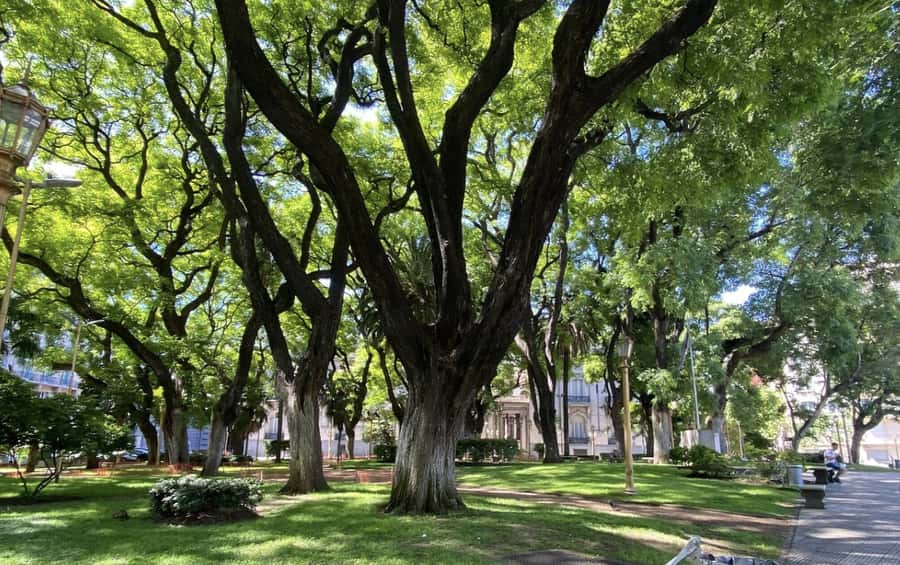
Public transport is included, with a local bus or subway used during the tour. This is a small but important feature. You are not sealed inside a tour vehicle, and you get a quick look at how residents move between districts.
The route includes the oldest subway line in the Southern Hemisphere. The ride itself may be brief, and the exact transit method can vary, but it gives the day a practical local texture. You should be ready to board promptly, keep your belongings secure, and follow the guide’s instructions in stations and on vehicles.
This is also why comfortable shoes matter. The itinerary combines extended walking with stairs, pavement, cemetery paths, plazas, and public transport. The tour is not suitable for wheelchair users, and it is not designed for people with a cold or for children under 10. The age restriction is clear, and the overall pace makes sense for independent older teens and adults who can walk for much of the day.
San Telmo Market and the final cobblestones
The last major district is San Telmo, one of Buenos Aires’ most atmospheric areas. Plaza Dorrego is a historic square lined with bars, restaurants, and handicraft sellers. It is a fitting late-day stop because it feels more informal and social than the government center.
You visit the San Telmo Indoor Market, an impressive iron structure built in 1897. Inside, you find antiques, souvenirs, restaurants, fresh food, and local produce. The market combines a working food hall with shopping and old architecture, so it is more varied than a simple souvenir stop.
The day ends along Defensa Street, a cobblestone road running through San Telmo. Antique dealers and original Spanish and Italian architecture give the street a strong sense of place. You finish near plenty of options for eating, drinking, and shopping, which is helpful because the tour does not include transportation back to your hotel.
Lunch is included during the day, with a main course and beverage. The exact restaurant and menu are not specified, so do not book this expecting a particular dish. The practical benefit is clear: you do not need to interrupt the route to arrange your own midday meal, and you receive a local food experience rather than only a list of buildings.
What $160 buys you
At $160 per person, this is not a budget walking tour. The value depends on how much you want done in one day.
Included in the price are:
- An English-speaking expert guide
- Entry to historical sites, including Recoleta Cemetery
- Coffee or an equivalent-priced drink
- A local lunch with a main course and beverage
- Public transport used during the tour
- A bottle of water
- A group limited to seven participants
The small group is the key. With no more than seven people, you have a better chance to ask about Argentine history, food, language, architecture, or practical city tips. Dale’s experience with Tracy was praised for exactly this personal quality, along with her local history and language skills. Chris received similar praise for answering questions and pointing out details that would be easy to miss alone.
You also avoid paying separately for several basics during a long day. Recoleta Cemetery admission alone is listed as more than $15, and lunch, coffee, transit, and water add up. The price is still high compared with a basic group walk, but it becomes reasonable if you value a private-feeling group and want a single overview of several districts.
The tradeoff is breadth over depth. You see a great deal, but you will not have long independent time at every stop. That is the right choice if you have only one full day in Buenos Aires or want help deciding where to return later.
Who should book this walk?
I would choose this tour if you want a first-day orientation with strong historical storytelling. It suits solo visitors, couples, and small groups who prefer conversation and questions over a large guide-and-crowd format.
It is also a good fit if you enjoy architecture, political history, cemetery art, old cafes, markets, and neighborhood contrasts. The route gives you a practical map of Buenos Aires: elegant Recoleta, formal San Nicolás and Monserrat, commercial Florida Street, and old San Telmo.
You may want a different plan if you dislike long walking days, need wheelchair access, are traveling with a child under 10, or prefer to explore each sight at your own speed. You should also leave extra energy for the evening, since the tour ends at 5 p.m. in San Telmo.
The tour has a perfect 5 rating from the three provided ratings, with especially strong praise for personal attention, local language and history, friendly guiding, useful answers, and memorable architectural details. That is a small sample, so I would not treat it as proof that every day will be identical. Still, the repeated strengths match what the itinerary is built to provide.
My call: a strong first day in Buenos Aires
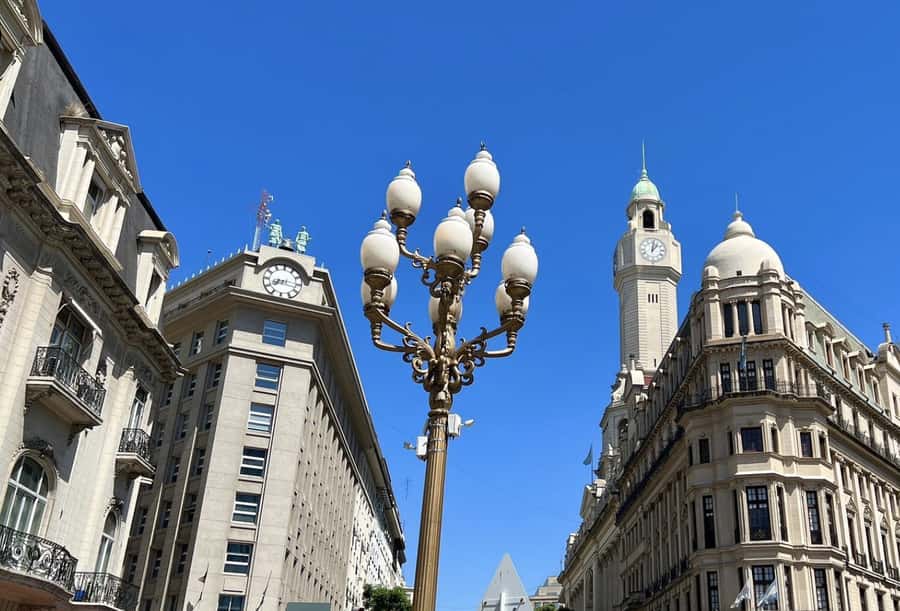
Book the BA 101 walk if you want to cover the city’s essential districts without spending your first day deciphering maps, transit routes, and political landmarks on your own. The included cemetery entry, lunch, coffee, transit, and tiny group help support the $160 cost, while guides such as Tracy and Chris appear to bring the personal storytelling this route needs.
Skip it if you want a relaxed schedule or deep interior visits. For most active adults with limited time, though, this is a practical and unusually broad introduction to Buenos Aires, ending in San Telmo where you can keep exploring after the guide says goodbye.
FAQ
How long is the Buenos Aires BA 101 walk?
The tour lasts seven hours, beginning at 10 a.m. and ending at 5 p.m.
Where does the tour begin?
It begins in the Recoleta or Barrio Norte area, near the corner of Avenida Santa Fe and Avenida Callao. Exact meeting instructions are sent by email.
Where does the tour end?
The tour ends in San Telmo, near places to eat, drink, and shop.
What neighborhoods does the route cover?
The route includes Barrio Norte, Recoleta, San Nicolás, Monserrat, the historical city center, and San Telmo.
Is Recoleta Cemetery admission included?
Yes. Entrance fees to historical sites, including Recoleta Cemetery, are included in the price.
Is food included?
Yes. The tour includes coffee or an equivalent-priced drink, a local lunch with a main course and beverage, and a bottle of water. Additional food and drinks are not included.
Does the tour use public transportation?
Yes. Public transport, such as a local bus or subway, used during the tour is included.
Is the tour conducted in English?
Yes. The tour has a live English-speaking guide.
Who cannot join the tour?
The experience is not suitable for children under 10, wheelchair users, people with a cold, or people over 95. Comfortable shoes are recommended, and smoking is not allowed.
Recently added around Buenos Aires
- Photo Session in Buenos Aires★ 5.0 · 26 reviews
- Your Personal Photographer in Buenos Aires★ 5.0 · 24 reviews
- Discover Buenos Aires’ independent art scene — Ticket included★ 5.0 · 30 reviews
- Your Private Photographer in Buenos Aires★ 5.0 · 4 reviews
- Yerba Mate Workshop – Learn to Drink Mate like a Local!★ 5.0 · 11 reviews
- Taste of Tradition: Yerba Mate & Alfajores Experience★ 4.0 · 5 reviews
- Wine tasting in OASIS Palermo★ 5.0 · 2 reviews
- Day Tour Classic★ 3.5 · 35 reviews
Walking Tours, compared.
Buenos Aires Hop-On Hop-Off Bus, Free Walking Tours & Discounts
Read our review →
German Footprint & Nazi presence – Walking Tour in Bariloche
Read our review →
Full Day Buenos Aires Private Walking Tour – Your Own Personal BA 101
Read our review →
Discover Buenos Aires: Walking Tour Through San Telmo & Center!
Read our review →
Browse the lists this tour appears in