
Reviewed · HISTORICAL TOURS
Argentine Art History Tour in Retiro neighborhood
Art gives Retiro a second identity. This three-hour walk links grand architecture, avant-garde sculpture, contemporary galleries, and famous murals, making the neighborhood feel less like a financial district and more like an open-air art lesson. I especially like the small group of up to 12 people and the chance to meet artists or gallery staff when available. The main thing to consider is that this is an art-focused walk, not a general sightseeing tour, so you will get more from it if you enjoy discussion and close looking.
I also like the way guide Tamara Kerzberg connects art with politics, money, architecture, and daily life. She speaks very good English, handles questions clearly, and brings a friendly, relaxed manner to the route. At $75 per person, the price is fair for a three-hour private-feeling experience with gallery access and expert interpretation, though it may feel high if you prefer to explore museums independently.
In This Review
- Key points to know before you book
- Starting beneath the Kavanagh Building
- Federico Manuel Peralta Ramos at Plazoleta Alberto Ginastera
- Aldo de Sousa and the workings of a contemporary gallery
- The former Di Tella site and Argentina in the 1960s
- Vía Monte and the work of reading an exhibition
- Galerías Pacífico and the art of a shopping mall
- What Tamara adds to the experience
- Is $75 a fair price?
- Who should book this Retiro art walk?
- Booking, cancellation, and practical details
- Should you book it?
- FAQ
- Where does the Argentine Art History Tour begin?
- Where does the tour end?
- How long does the experience last?
- How many people can join the tour?
- Are gallery admissions included?
- What is the cancellation policy?
Key points to know before you book
- Retiro becomes the subject: The route shows how one neighborhood links Argentine architecture, modern art, commercial spaces, and current galleries.
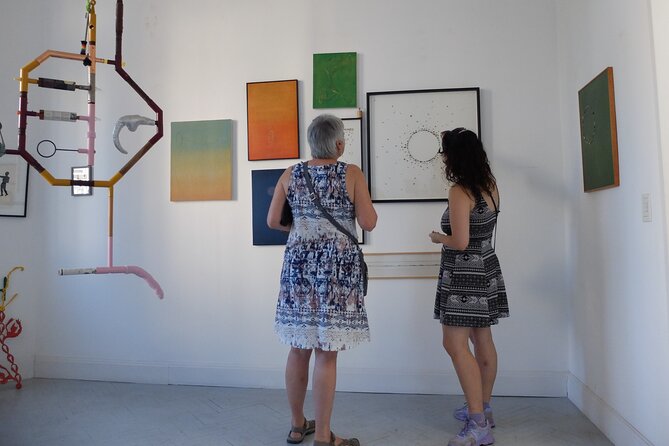
- Two contemporary galleries anchor the walk: Aldo de Sousa and Vía Monte provide a look at current exhibitions, artists, materials, and the art market.
- The Di Tella era gets serious attention: You learn how the 1960s avant-garde connected art with Cold War politics, cultural power, and changing ideas about society.
- Personal contact may be part of the visit: At some galleries, you may speak with artists, gallerists, or curators about the work on display.
- The group stays small: With a maximum of 12 people, questions are easier and the discussion should feel more direct than a large coach tour.
- The finish is indoors: Galerías Pacífico offers air conditioning, restaurants, shops, and one of Buenos Aires’s finest public art interiors after the outdoor walk.
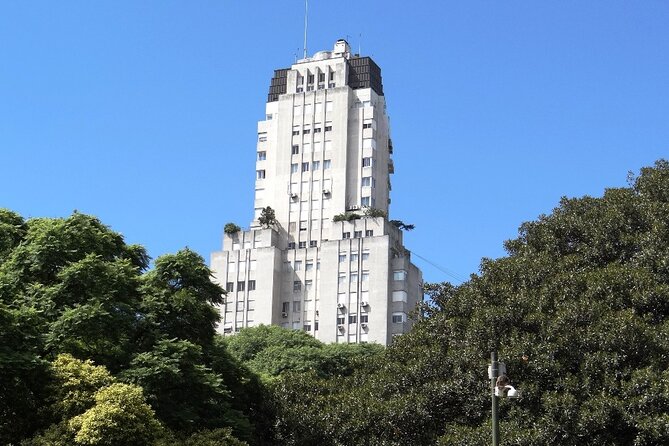
Starting beneath the Kavanagh Building
The meeting point is Plaza San Martín at 3:00 pm, in front of the Kavanagh Building. This is a smart place to begin because the building immediately puts Retiro’s architectural and social character on display.
The Kavanagh was completed in 1936 and is treated here not simply as an apartment building, but as a piece of cultural heritage. Tamara explains the famous legend tied to its construction, then places the building within the story of Buenos Aires art and architecture. You get neighborhood context before the walk moves toward sculpture and galleries.
The opening stop lasts about 15 minutes. Admission is included, and the main activity is listening from outside, looking up, and understanding why this building matters. If you are hoping to enter the Kavanagh or take a long architectural tour, adjust your expectations. The value is in the story and the setting rather than an interior visit.
Plaza San Martín is also convenient for public transportation, which makes the 3:00 pm start easy to fit into a day in central Buenos Aires. Wear comfortable shoes, since the experience moves between outdoor stops and gallery interiors.
More History Tours in Buenos Aires
- Historical Sherpa Food Tour of San Telmo with Street Food, Drinks
★ 5.0 · 920 reviews - Nazis in Buenos Aires: a historical walking tour
★ 4.9 · 193 reviews - San Telmo: Historical Guided Tour with Street Food & Drinks
★ 5.0 · 87 reviews
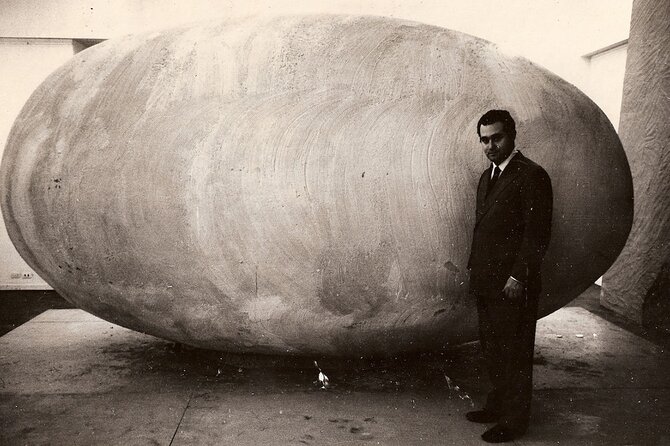
Federico Manuel Peralta Ramos at Plazoleta Alberto Ginastera
The next stop shifts from architecture to sculpture. At Plazoleta Alberto Ginastera, the focus is Nosotros Afuera by Federico Manuel Peralta Ramos.
This work opens a door into the artist’s personality and ideas. Tamara explains his eccentric public image, his belief that art and life could not be separated, and his connection to the Di Tella Institute during the 1960s. That background matters because Peralta Ramos was not an isolated oddity. He belonged to a period when Argentine artists were testing the limits of galleries, performance, humor, identity, and public behavior.
The stop lasts about 20 minutes. Rather than rushing past the sculpture for a quick photograph, you get time to consider what it says about the experimental spirit of the era. Retiro becomes more than a backdrop. It was a stage for provocative work and new ways of thinking about what art could be.
This is one of the tour’s strongest features. A sculpture in a small public square can be easy to miss when you are walking alone. With a guide, it becomes a starting point for a larger story about one artist, one institution, and an entire generation.
Aldo de Sousa and the workings of a contemporary gallery
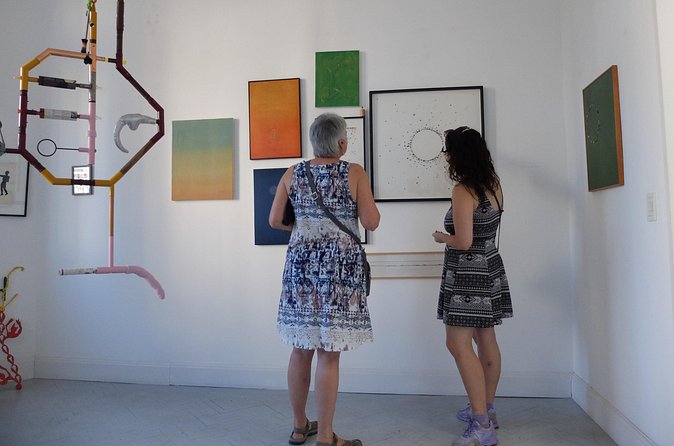
At Aldo de Sousa, the experience moves into the present. You visit a current exhibition and look closely at the works on display, with attention to their social, political, and economic setting.
This part is especially useful if you know museums but feel less certain about commercial galleries. Tamara explains how galleries represent artists, how the art market functions, and how fairs and sales influence the art system. She also draws a clear line between a gallery and a museum. A gallery is not only a place to see art. It is also a workplace, a business, a meeting point, and a place where careers are built.
The visit lasts about 40 minutes, which gives the group time to discuss several works rather than glance at an entire show. You may look at how an artist chooses materials, how a work is positioned in a room, and how the exhibition’s arrangement affects your response.
When possible, Tamara speaks with gallerists or curators, creating a more direct exchange. Some participants have also had the chance to meet artists at galleries during the walk. That possibility cannot be guaranteed, but it is a meaningful benefit when it happens.
I would pay close attention here even if contemporary art sometimes leaves you cold. The goal is not to memorize names or pretend every work is immediately appealing. It is to learn how to ask better questions: What is the artist trying to do? Why this material? Why this scale? Why this order? Those questions make later gallery visits easier.
The former Di Tella site and Argentina in the 1960s
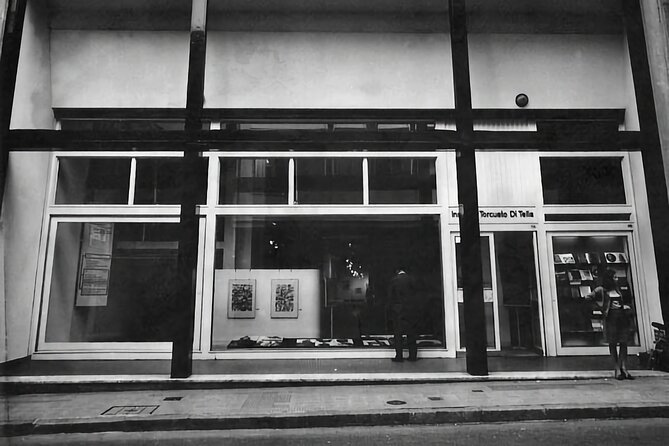
The route then reaches Galerías Larreta, in front of the former Di Tella Institute. This is the historical center of the walk.
Tamara explains why the institute changed Argentine art and why the 1960s remain such an important period. The discussion includes the international setting, the Cold War, and the cultural influence of the United States in Latin America. You are also introduced to the so-called Di Tella Generation and to key moments in the artistic avant-gardes of the decade.
This context keeps the story from becoming a simple parade of eccentric artists. Art institutions do not operate outside politics. Funding, cultural diplomacy, national identity, and ideas about modern life all shape what gets exhibited, supported, or dismissed.
The 20-minute stop should appeal to anyone interested in the connection between culture and power. It also gives the route a useful historical pivot. You have seen a modernist building and a public sculpture. Now you understand the institution that helped make experimental art part of Buenos Aires public life.
The Di Tella discussion also explains why Retiro still matters today. The neighborhood once supported major artistic experiments, and it continues to attract new gallery activity. The route links those two periods without pretending that the past and present are identical.
More history-led tours in Buenos Aires:
- Buenos Aires: La Boca Art and History Walking Tour
★ 4.8 · 55 reviews - Recoleta Cemetery – Small Group Tour of History & Secrets
★ 5.0 · 53 reviews - Buenos Aires: Historic Buenos Aires Landmarks & Icons Tour
★ 4.9 · 37 reviews - Private Evita and Peronism Historical Tour in Buenos Aires
★ 5.0 · 33 reviews
Vía Monte and the work of reading an exhibition
At Vía Monte Galería, you visit a second contemporary gallery and apply the ideas from Aldo de Sousa to another exhibition.
Here, the attention shifts to materials, scale, display choices, and the relationship between individual works. Tamara encourages you to look at the exhibition as a whole, not just at the most eye-catching piece. Every decision in a gallery matters, from the distance between works to the height of a sculpture and the amount of empty wall around it.
The visit lasts about 40 minutes. That is enough time for a real conversation, especially with a group limited to 12 people. You can ask how current artists respond to the Argentine modern tradition or challenge the experimental legacy of the 1960s.
This is where the walk becomes a practical lesson in visual judgment. You may not agree with every artistic choice, and you do not need to. The point is to see how an exhibition takes a position. A show can support a tradition, question it, or push against the commercial expectations of the art market.
The two gallery visits also balance the historical stops. Without them, the Di Tella story could feel safely locked in the past. Instead, you see how current artists and galleries continue to work within, respond to, or reject that earlier tradition.
Galerías Pacífico and the art of a shopping mall
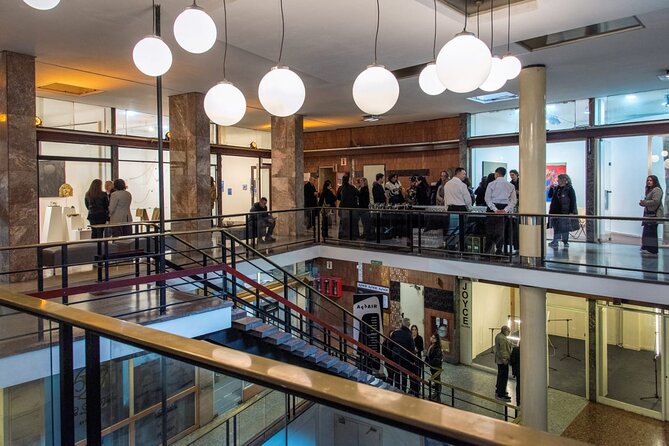
The final stop is Galerías Pacífico, a grand 1891 building inspired by the department stores of Paris. Today it is a shopping center with air conditioning, restaurants, and shops, but the central dome gives it a much larger cultural role.
In the late 1940s, the dome was painted by major Argentine artists. Antonio Berni worked with Spilimbergo, Castagnino, and Urruchúa to create the monumental murals that now dominate the central space.
This is a satisfying ending because it broadens the definition of an art destination. Art is not limited to museums with ticket desks and quiet galleries. It can appear in a shopping center, a public square, an apartment building, or a passage you cross without noticing.
The 20-minute stop gives you time to stand beneath the dome and consider the change in scale. Earlier, you were discussing individual works in small gallery rooms. Here, the art is public, decorative, monumental, and tied to a commercial building. That contrast gives the whole walk a clear final idea: Argentine art is woven into the places people use every day.
The tour ends at Galerías Pacífico, on Avenida Córdoba 550. You can continue shopping, eat at one of the restaurants, or simply enjoy the cool interior after the afternoon walk.
What Tamara adds to the experience
The route depends heavily on interpretation, and Tamara’s approach appears to be one of its main strengths. She brings art history, neighborhood history, and current gallery practice into the same conversation.
Her style is described as friendly, professional, thoughtful, and fun. That combination matters. A guide who knows the subject but speaks over the group can make art feel like homework. Tamara is praised for answering questions clearly and for connecting a question about one work to wider artistic movements and historical events.
She also speaks very good English, which is important for an experience built around discussion. If you are comfortable asking questions, the small group should give you room to do so. Local residents can enjoy it too, since the route reveals galleries and artistic spaces they might not encounter during a normal visit to Buenos Aires.
The meeting with artists is not the entire point of the tour, and it is not promised at every stop. Still, when a gallery conversation happens, it adds something that a standard museum visit cannot provide.
Is $75 a fair price?
The cost is $75 per person for about three hours. That is not a bargain walk, but the price makes more sense when you consider what you are receiving.
You are paying for a specialist-led route, two substantial contemporary gallery visits, historical interpretation at several public sites, a group capped at 12 people, and the chance of direct conversation with people working in the art world. Admission is included at the listed stops.
The value is strongest for you if you would not feel comfortable walking into unfamiliar galleries alone. Tamara helps explain what you are seeing and why each place matters. She also saves you the work of finding current exhibitions and building a sensible route between them.
The price is less compelling if your main interest is Buenos Aires architecture, shopping, or famous landmarks. You will see important buildings and murals, but this is not a broad city tour. It asks you to spend time looking, listening, and discussing.
Who should book this Retiro art walk?
I would recommend it to:
- First-time or repeat visitors who want a different side of Buenos Aires
- People interested in Argentine modern and contemporary art
- Museum fans who want to understand commercial galleries
- Design and architecture enthusiasts
- Local residents curious about Retiro’s gallery scene
- Anyone who prefers a small group and an unhurried pace
It may not suit you if you want a fast route packed with major monuments, a hands-on art activity, or a tour centered on shopping and food. The gallery visits are central, so an open mind is more useful than a long list of famous sights.
The walking is spread across three hours, with stops lasting from 15 to 40 minutes. Most people can participate, service animals are allowed, and the route is near public transportation. The start is outdoors at Plaza San Martín, while the final stop provides an air-conditioned indoor setting.
Booking, cancellation, and practical details
Confirmation is provided when you book. The experience begins at 3:00 pm at Plaza San Martín and ends at Galerías Pacífico, so you do not return to the starting point.
Free cancellation is available if you cancel at least 24 hours before the local start time. Cancellations or changes made less than 24 hours ahead are not accepted for a refund. A minimum number of participants is required, and if that number is not reached, you will be offered another date or experience, or a full refund.
Because gallery exhibitions can change, the exact artworks you see may vary. The lasting value is the method: learning how to read a gallery, place an artist within Argentine history, and notice the art already around you.
Should you book it?
Book this tour if you want art to guide your understanding of Buenos Aires rather than simply add another attraction to your schedule. The combination of Kavanagh, Peralta Ramos, the Di Tella Institute, two working galleries, and the Berni murals gives the afternoon a clear purpose.
I would make the booking especially if you are curious about how art connects with politics, money, architecture, and ordinary city life. At $75, it is best viewed as a small, discussion-led art seminar that happens to move through Retiro. If that sounds more appealing than a standard city walk, this is a strong choice.
FAQ
Where does the Argentine Art History Tour begin?
It begins at 3:00 pm in front of the Kavanagh Building at Plaza San Martín, Retiro, Buenos Aires.
Where does the tour end?
The walk ends at Galerías Pacífico, Avenida Córdoba 550. The building has air conditioning, restaurants, and shops.
How long does the experience last?
The tour lasts approximately three hours.
How many people can join the tour?
The group has a maximum of 12 participants.
Are gallery admissions included?
Admission is included at the listed stops, including the visits to Aldo de Sousa, Vía Monte Galería, and Galerías Pacífico.
What is the cancellation policy?
You can cancel for a full refund up to 24 hours before the experience begins. Cancellations or changes made less than 24 hours before the start time are not accepted for a refund.
Recently added around Buenos Aires
- Photo Session in Buenos Aires★ 5.0 · 26 reviews
- Your Personal Photographer in Buenos Aires★ 5.0 · 24 reviews
- Discover Buenos Aires’ independent art scene — Ticket included★ 5.0 · 30 reviews
- Your Private Photographer in Buenos Aires★ 5.0 · 4 reviews
- Yerba Mate Workshop – Learn to Drink Mate like a Local!★ 5.0 · 11 reviews
- Taste of Tradition: Yerba Mate & Alfajores Experience★ 4.0 · 5 reviews
- Wine tasting in OASIS Palermo★ 5.0 · 2 reviews
- Day Tour Classic★ 3.5 · 35 reviews
Historical Tours, compared.
Historical Sherpa Food Tour of San Telmo with Street Food, Drinks
Read our review →
Nazis in Buenos Aires: a historical walking tour
Read our review →
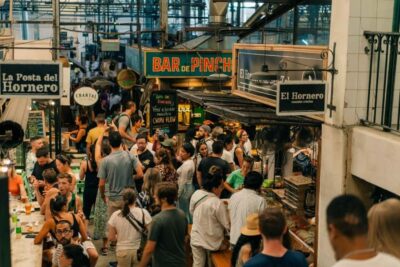
San Telmo: Historical Guided Tour with Street Food & Drinks
Read our review →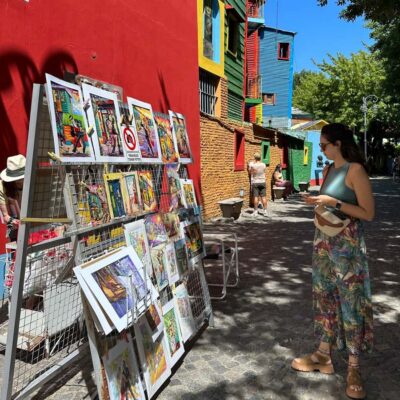
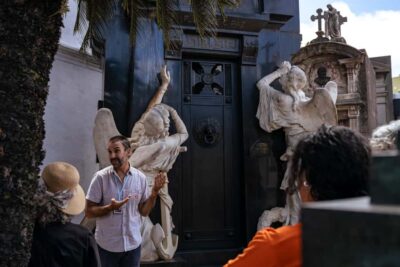
Recoleta Cemetery – Small Group Tour of History & Secrets
Read our review →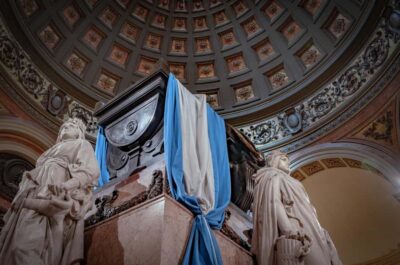
Private Evita and Peronism Historical Tour in Buenos Aires
Read our review →Browse the lists this tour appears in