
Reviewed · FOOTBALL AND STADIUM TOURS
Visit to the Diego Armando Maradona Stadium in Buenos Aires
Football memory lives here. The Diego Armando Maradona Stadium is where a 15-year-old Maradona made his official debut, and where Lionel Messi later first wore Argentina’s shirt in 2004. I like the small-group format, capped at 10 people, and the chance to see the field, benches, locker room, and museum in one visit. The main drawback is the $80 price, which may feel high if you are only mildly interested in football.
I also like that hotel pickup and drop-off are included, removing a transport chore in a city where stadium locations can take time to reach. Guides such as Camilla and Fernando have been praised for making the visit warm and lively, though the tour’s value depends heavily on how much Maradona, Messi, and Argentine club football matter to you.
In This Review
- Key things to know before you book
- Why this stadium matters beyond Buenos Aires football
- Walking through the stadium with a local guide
- Inside the Temple of Soccer museum
- Maradona, Messi, and the power of one pitch
- What the $80 price includes
- Who will enjoy this most
- Planning the day without guesswork
- The strongest parts, and the limits
- Should you book the Diego Armando Maradona Stadium tour?
- FAQ
- Where is the Diego Armando Maradona Stadium?
- How long does the tour take?
- What is the price?
- Is hotel transportation included?
- Is museum admission included?
- Is a guide provided?
- How many people can join the tour?
- Where did Maradona make his official debut?
- Did Lionel Messi play at this stadium?
- What can you see in the museum?
- Can you cancel for a refund?
Key things to know before you book
- Maradona’s first official stage: He debuted for Argentinos Juniors here on October 20, 1976, at age 15.
- A Messi connection: Lionel Messi made his first appearance in the Argentina national team shirt at this stadium in 2004.
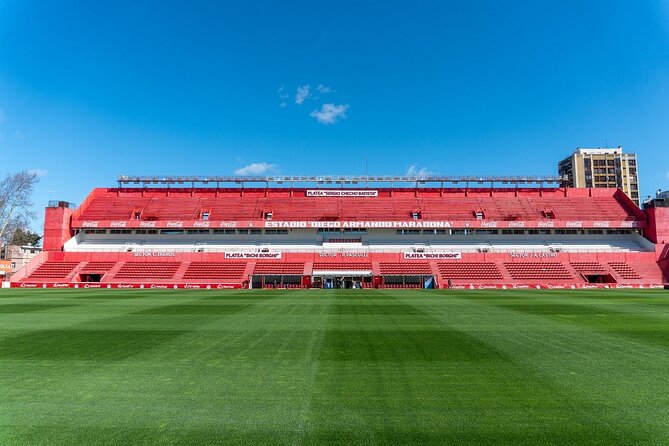
- More than a museum visit: You enter the playing area, local locker room, and bench zone, not just the exhibition space.
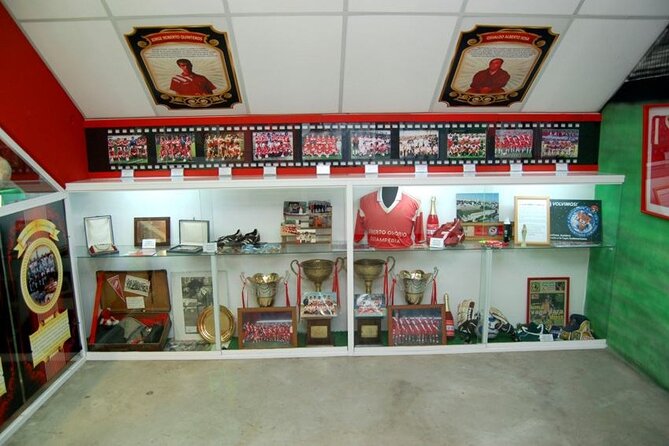
- A fan-built collection: Shirts, trophies, cards, photographs, and objects donated by supporters tell the club’s story.
- Small and personal: The group is limited to 10 people, with a Spanish-English guide.
- Easy transport: Hotel pickup and return are included, and the full visit takes about two and a half hours.
Why this stadium matters beyond Buenos Aires football
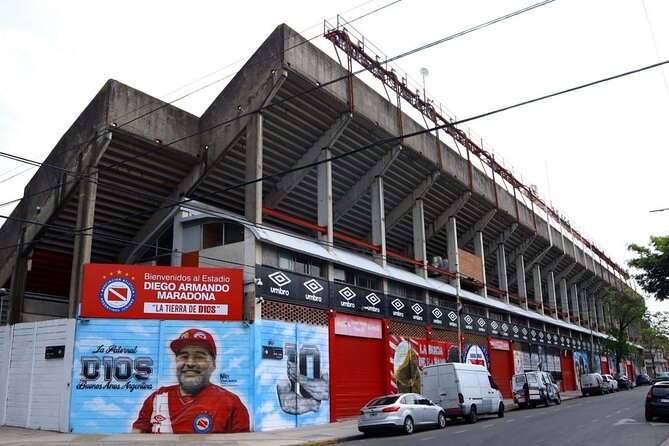
The Diego Armando Maradona Stadium is home to Argentinos Juniors, a club with a proud place in Argentine football. Its capacity is about 26,000, so this is not one of the giant arenas built for enormous international crowds. That smaller scale is part of the appeal. You get a closer look at a working club ground, with its identity tied to local supporters and famous players.
The stadium carries Maradona’s name because his story began here in a very literal way. On Wednesday, October 20, 1976, he made his official debut on this pitch at just 15 years old. He spent five years with Argentinos Juniors in the First Division and became the club’s second-highest all-time scorer, with 116 goals.
That detail changes the feel of the visit. You are not looking at a stadium that simply purchased a famous name. You are visiting the place where Maradona first appeared as a professional player. For football fans, that gives every turn through the ground a clear sense of place.
The Messi connection adds another layer. In 2004, Lionel Messi made his debut wearing the Argentina national team shirt in a friendly against Paraguay at this stadium. Maradona and Messi are not just names displayed in a museum here. Both are linked to the pitch itself.
More football and stadium visits in Buenos Aires:
- Buenos Aires: Tickets to Boca Juniors Museum & Stadium
★ 4.5 · 581 reviews - Boca Juniors Tickets for a Match at La Bombonera
★ 4.5 · 140 reviews - Soccer Match in Buenos Aires with Transfers and Local Guide
★ 5.0 · 103 reviews
Walking through the stadium with a local guide
The visit begins at Estadio Diego Armando Maradona, where you spend about an hour taking in the stadium itself. A bilingual Spanish-English guide leads the group, and the tour is limited to a maximum of 10 participants.
That group size matters. A stadium tour can feel rushed or mechanical when a large crowd is herded from one checkpoint to the next. With fewer people, you have a better chance to hear the guide clearly and ask about the club, Maradona, or the details you are seeing.
The strongest part of the guiding seems to be the human connection. Camilla has been praised for her enthusiasm, while Fernando has been singled out for making the transfer and tour more entertaining with his conversation. Guides are local, and that local connection is important at a club museum built around supporters and club life.
I would expect the tone to be more personal than polished. This is not presented as a giant commercial attraction. The stadium and museum are closely tied to Argentinos Juniors fans, and the staff’s enthusiasm is part of what gives the visit its character.
You get to see areas that help you understand how a match day works. The tour includes the playing field, the local locker room, and the bench area. Walking into the stadium like a player is one of the most praised parts of the experience, and it is easy to see why. The route gives you more than a view from the stands. It brings you into spaces normally connected with the team.
The available information does not specify how much time you spend in each stadium area or whether the pitch access varies by match schedule. That is worth keeping in mind. Stadium operations can change, so you should treat field access as part of the planned visit while allowing for possible practical adjustments.
Inside the Temple of Soccer museum
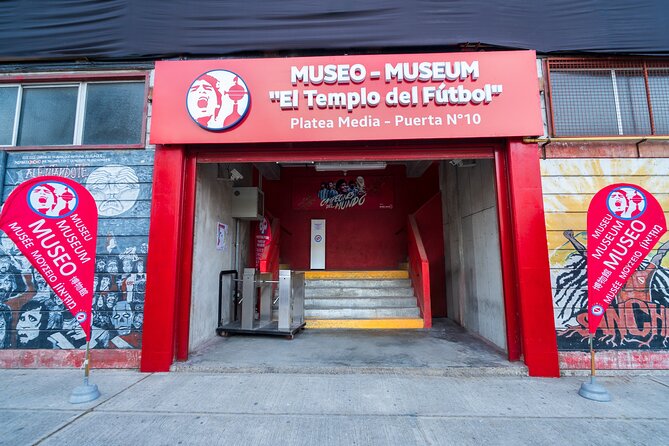
The museum takes about an hour and a half, making it the longer portion of the visit. It sits beneath one of the stadium stands and is dedicated to the football and institutional story of Argentinos Juniors.
That location gives the museum a close link to the ground. You are not walking into a separate city museum with a few football objects added later. The exhibition is under the stand, within the club’s own stadium, where the displays connect directly to the place you have just explored.
The collection includes:
- Photographs
- Player cards
- Trophies
- Shirts from different campaigns
- Other objects donated by club supporters
The supporter donations are especially important. They give the museum a club-based feel rather than the air of a carefully staged celebrity display. You can expect the collection to explain how Argentinos Juniors grew and how its fans helped preserve its story.
Maradona naturally takes center stage, but the museum is not only about him. The material covers the club’s football and institutional development, so you get a broader picture of Argentinos Juniors. If you arrive knowing little about the club, the guide’s explanation will help connect the names, trophies, and shirts.
For a visitor mainly interested in Maradona, the appeal is obvious: this is the stadium where his professional career began. For a visitor interested in Argentine football more generally, the museum offers a closer look at club culture and the way supporters protect their own memories.
I would not expect a huge, multimedia football hall. The information points to photographs, cards, trophies, shirts, and donated items rather than elaborate technology. That can be a strength if you prefer objects with a direct connection to the club. It may feel modest if you are expecting the scale of a major national football museum.
Maradona, Messi, and the power of one pitch
The unusual strength of this visit is the way two major Argentine football stories meet in the same place.
Maradona’s debut is the central event. He appeared here at 15, then played five years in the First Division for Argentinos Juniors. His 116 goals make him the club’s second-highest all-time scorer. The stadium’s name keeps that connection visible, but the tour gives it physical context. You are standing where his professional story started.
Messi’s 2004 national team debut adds a different point in time. He first wore the Argentina shirt in a friendly against Paraguay at this stadium. The contrast is fascinating. Maradona’s link is a long club apprenticeship and an early professional breakthrough. Messi’s is the beginning of his relationship with the national team.
I like that the tour does not rely on general football fame alone. The value comes from precise moments: a teenage Maradona making his official debut in 1976, and Messi appearing for Argentina in 2004. Those dates help turn a famous name into a real place and event.
If you are bringing children or teenagers who follow modern football, the Messi connection may be the easiest way to draw them in. Older fans may be more affected by the Maradona story. Either way, the guide can place both players within the club’s setting rather than discussing them as distant legends.
A few more Buenos Aires trips worth putting side by side
- Local Foodie Adventure in Buenos Aires with Sherpa Food Tours
★ 5.0 · 6,875 reviews - Buenos Aires City Private Tour with Local Guide
★ 5.0 · 3,475 reviews - Buenos Aires Small-Group City Tour
★ 5.0 · 2,226 reviews - Buenos Aires Hop-On Hop-Off Bus, Free Walking Tours & Discounts
★ 4.5 · 2,218 reviews
What the $80 price includes
The cost is $80 per person. That is not a budget museum ticket, so I would judge it as a guided half-day outing rather than a simple stadium admission.
The price includes hotel pickup and drop-off, entrance to the museum, and a bilingual Spanish-English guide. The transport alone makes the comparison less direct. You are paying for an organized experience that handles the journey, not merely entry through a stadium gate.
The two and a half hour duration also matters. About one hour is devoted to the stadium and roughly 90 minutes to the museum. That gives the visit enough time for explanation and questions, instead of squeezing the football story into a quick photo stop.
I think the price is fair for a serious football fan who wants access to the field, locker room, bench area, and museum, especially with transport included. I would hesitate if you are only looking for a quick photograph outside the stadium or if your interest in Argentine football is limited.
The group limit of 10 improves the value. A small group allows the guide to speak to people directly and makes the visit feel less like a conveyor belt. It also helps explain why this tour has earned a perfect rating from 19 submitted reviews and a 100 percent recommendation rate, though those figures represent a small sample.
Who will enjoy this most
This tour suits you best if Maradona is a major reason you are visiting Argentina. His debut here is not a side note. It is the foundation of the stadium’s identity.
You will also get a lot from the visit if you follow Messi and want to see the site of his first appearance in the Argentina national team shirt. The two-player connection makes this more unusual than a standard club-ground tour.
Club football supporters should consider it even if they are less interested in famous individuals. The museum focuses on Argentinos Juniors, its institutional story, and items preserved by supporters. That gives you a view of Argentine football at club level, not just the national-team version sold to international audiences.
The tour can work for families, couples, and solo visitors. Most people can participate, and the group is capped at 10. The bilingual format also makes it practical for English-speaking visitors who want more than a self-guided walk.
I would be less enthusiastic about it for someone with no interest in football. Buenos Aires has many cultural attractions, and $80 is a serious spend. The stadium’s importance is closely tied to the sport, so the more you care about Maradona, Messi, or Argentine clubs, the more rewarding the visit should be.
Planning the day without guesswork
The experience lasts approximately two hours and 30 minutes. Since hotel pickup and drop-off are included, you do not need to build a separate public transport plan around the stadium.
The stadium is also near public transportation, which gives you another option if you are arranging part of your day independently. Still, the included hotel transfer is the simplest choice and removes the need to work out the route before the visit.
This tour is commonly booked about nine days ahead. I would not leave it until the last minute if your Buenos Aires schedule is tight, especially because the small group limit can reduce the number of available places.
You receive confirmation at the time of booking. Free cancellation is available if you cancel at least 24 hours before the start time. Changes or cancellations inside that 24-hour window are not accepted for a refund, and the cut-off follows local time in Buenos Aires.
Because the tour includes working stadium areas, the exact order or access may depend on club activity. The supplied details promise the playing field and local locker room, but they do not state that every area is available under every condition. Keep your schedule a little flexible.
The strongest parts, and the limits
The best feature is the combination of place and story. You are not simply hearing about Maradona’s first appearance. You are visiting the stadium where it happened, then seeing club objects preserved inside the same ground.
The next strength is the access. The playing field, benches, and locker room add physical detail to the museum visit. That is why the experience feels more complete than a display of shirts and trophies alone.
The guides also receive repeated praise for enthusiasm and local knowledge. I would pay attention to the guide’s storytelling because the objects themselves may mean little without context. Camilla and Fernando are names connected with especially warm feedback, though the guide assigned to your departure may differ.
The main weakness is the price. At $80, this is a focused specialist tour, not a casual add-on. The museum may also feel modest to anyone expecting a large, high-tech exhibition. Its strength lies in club memorabilia and personal connection, not spectacle.
Should you book the Diego Armando Maradona Stadium tour?
Book it if you want a close look at the place where Maradona began his professional career, with the added Messi connection and access to the field, locker room, benches, and museum. The small group, hotel transfers, and bilingual guide make the day easy to manage.
I would skip it if football is only a minor interest or if $80 needs to cover several Buenos Aires attractions. For the right audience, though, this is a memorable, focused visit to a real club ground, not just a famous name on a sign.
FAQ
Where is the Diego Armando Maradona Stadium?
The stadium is in Buenos Aires, Argentina. It is the home ground of Argentinos Juniors.
How long does the tour take?
The full experience lasts approximately two hours and 30 minutes. About one hour is scheduled for the stadium and about one hour and 30 minutes for the museum.
What is the price?
The tour costs $80 per person.
Is hotel transportation included?
Yes. Hotel pickup and drop-off transfers are included in the experience.
Is museum admission included?
Yes. Admission to the Diego Armando Maradona museum is included.
Is a guide provided?
Yes. A bilingual guide speaking Spanish and English is included.
How many people can join the tour?
The activity has a maximum of 10 participants.
Where did Maradona make his official debut?
Diego Armando Maradona made his official debut at this stadium on October 20, 1976, at age 15.
Did Lionel Messi play at this stadium?
Yes. Lionel Messi made his debut wearing the Argentina national team shirt at the stadium in 2004, during a friendly against Paraguay.
What can you see in the museum?
The museum includes photographs, player cards, trophies, shirts from different campaigns, and other objects donated by club supporters. The visit also includes the playing field and local locker room.
Can you cancel for a refund?
Yes. You can cancel for a full refund up to 24 hours before the experience starts. Cancellations or changes made less than 24 hours before the start time are not accepted for a refund.
Recently added around Buenos Aires
- Photo Session in Buenos Aires★ 5.0 · 26 reviews
- Your Personal Photographer in Buenos Aires★ 5.0 · 24 reviews
- Discover Buenos Aires’ independent art scene — Ticket included★ 5.0 · 30 reviews
- Your Private Photographer in Buenos Aires★ 5.0 · 4 reviews
- Yerba Mate Workshop – Learn to Drink Mate like a Local!★ 5.0 · 11 reviews
- Taste of Tradition: Yerba Mate & Alfajores Experience★ 4.0 · 5 reviews
- Wine tasting in OASIS Palermo★ 5.0 · 2 reviews
- Day Tour Classic★ 3.5 · 35 reviews
Football and Stadium Tours, compared.

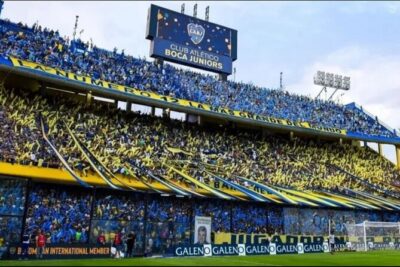
Boca Juniors Tickets for a Match at La Bombonera
Read our review →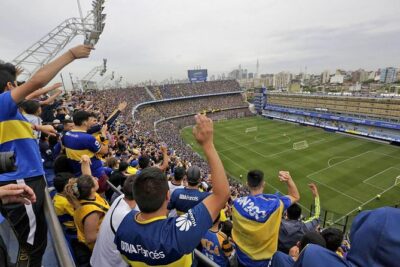
Soccer Match in Buenos Aires with Transfers and Local Guide
Read our review →

Buenos Aires Football Experience: Boca & River Stadium Tour
Read our review →Browse the lists this tour appears in