
Reviewed · FOOTBALL AND STADIUM TOURS
Tour Stadiums Argentine Football in Buenos Aires with Football Guide
Football gives Buenos Aires its pulse. I like the mix of Monumental and La Bombonera, where you enter both club museums and see the stadiums from inside, and I like the private vehicle, which keeps five hours of football stops practical. The main drawback is clear: you only enter River Plate and Boca Juniors facilities. Independiente and Racing are photo stops from outside.
This tour suits you best if football is more than a casual interest. The guide adds local stories, city context, and photo help, and guides such as Miguel, Matías, and Fabián, known as El Rojo, have earned especially warm praise for their friendliness. At $550 per group of up to four, the value improves sharply when four people share the cost, though food, drinks, and any extra baggage charges are separate.
In This Review
- Key points about Buenos Aires football
- Why this football tour works in Buenos Aires
- El Monumental: River Plate’s giant home
- River Plate Museum and the club’s story
- Independiente and Racing in Avellaneda
- La Bombonera and the Boca neighborhood
- The Boquense Passion Museum
- Lo Del Diego and Argentina’s football legend
- The guide can shape the whole day
- Is $550 a fair price?
- Who should book this experience?
- What to know before you go
- Should you book this stadium tour?
- FAQ
- How long does the football stadium tour last?
- How many people can join the private tour?
- Which stadiums can I see on the tour?
- Do I enter every stadium?
- Are the River Plate and Boca Juniors museums included?
- Are food and drinks included?
Key points about Buenos Aires football
- Two major museums included: Visit the River Plate Museum and the Boquense Passion Museum inside the clubs’ stadiums.
- Four famous football grounds: See River Plate, Independiente, Racing Club, and Boca Juniors in one private outing.
- Only two stadium interiors: River’s express visit and Boca’s museum experience are included, but the playing field is not entered.
- A private vehicle matters: Air-conditioning, bottled water, and transport between widely separated stadiums save time and effort.
- Maradona gets his own stop: Finish at Lo Del Diego, a themed bar filled with memorabilia. Drinks there cost extra.
- Best shared by four people: The $550 group price works out to $137.50 each for a full group of four.
Why this football tour works in Buenos Aires
Buenos Aires is not a city with one football shrine. Its clubs have separate neighborhoods, rivalries, colors, legends, and identities. Seeing several grounds in one outing gives you a better sense of that football culture than visiting a single museum on your own.
I particularly like the balance between major ticketed visits and quick outside stops. You spend real time at River Plate and Boca Juniors, then pause for photographs at Independiente and Racing Club. That keeps the tour moving, although serious football historians may wish for more time at every club.
The five-hour duration is well judged for a private city outing. The stops total roughly four hours and 20 minutes, leaving the remaining time for driving, photographs, and the guide’s explanations. You are not expected to make your own way across Buenos Aires between stadiums, which is a major advantage.
The group limit is four people. That means you can ask questions without competing with a large crowd, and the guide can help with photographs for everyone. A bilingual guide accompanies you throughout, so the experience is not just a series of stadium entrances.
More football and stadium visits in Buenos Aires:
- Buenos Aires: Tickets to Boca Juniors Museum & Stadium
★ 4.5 · 581 reviews - Boca Juniors Tickets for a Match at La Bombonera
★ 4.5 · 140 reviews - Soccer Match in Buenos Aires with Transfers and Local Guide
★ 5.0 · 103 reviews
El Monumental: River Plate’s giant home
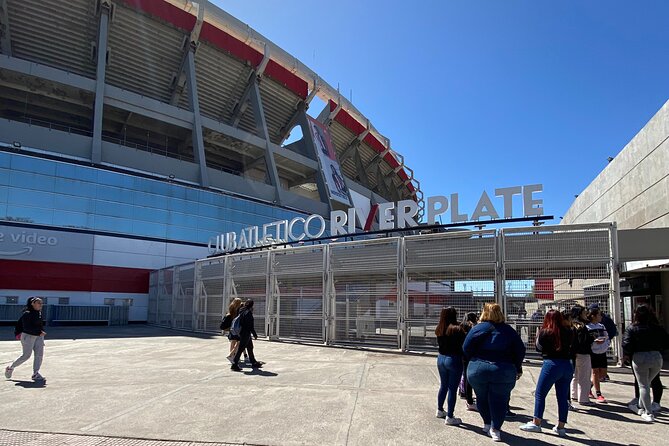
The first major stop is Estadio Monumental Antonio Vespucio Liberti, usually called El Monumental. It is Argentina’s largest football stadium, with room for more than 70,000 spectators, and it has hosted major events including the 1978 World Cup final.
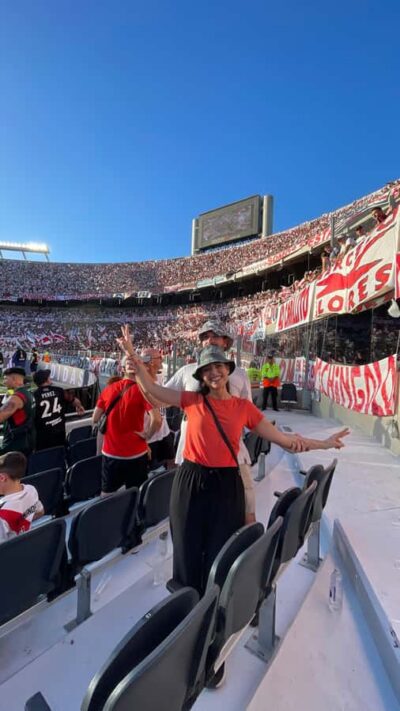
You get the express visit, lasting about 30 minutes. The visit takes you into the stadium to see it from the stands, but not onto the playing field. That distinction matters. If you expect a full behind-the-scenes stadium tour, this is a shorter stadium look rather than access to every working area.
Still, the scale is the point. From the stands, you can appreciate why El Monumental is such an important national football setting. The guide can connect the building to River Plate and to Argentina’s wider sporting story, giving the visit more meaning than a quick photograph outside.
The short timing also helps the day. You get an interior view without spending so long at the first stadium that the later stops feel rushed. Bring your camera, since photographs for all participants are included.
River Plate Museum and the club’s story
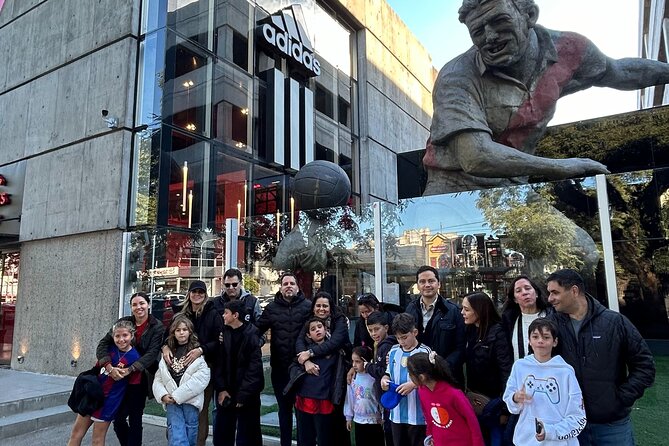
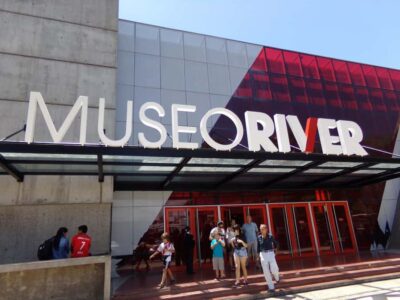
The River Plate Museum is inside El Monumental, so you do not lose time returning to the vehicle or crossing the city. The visit lasts about 30 minutes and focuses on the club’s founders, famous players, trophies, and major moments.
Interactive displays, historic objects, jerseys, photographs, and video material help explain why River Plate is one of Argentina’s major football institutions. If you know little about the club, the museum gives you the basic framework. If you already follow River, you will likely appreciate the chance to connect names and trophies with the stadium you have just seen.
Thirty minutes is enough for a useful introduction, but not enough for a slow reading of every display. I suggest listening closely to the guide first, then spending your remaining museum time on the sections that interest you most.
Independiente and Racing in Avellaneda
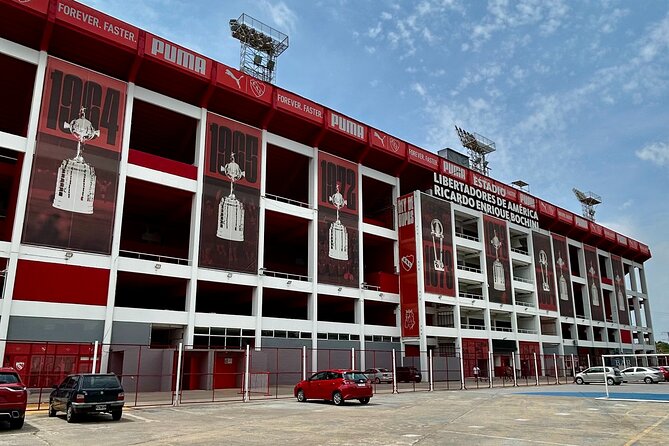
The tour next heads to Avellaneda, an important football area south of central Buenos Aires. Here you see two historic grounds, Estadio Libertadores de América and Estadio Presidente Perón, without entering either one.
At the Libertadores de América Stadium, home of Club Atlético Independiente, you have about 20 minutes for exterior photographs. Independiente is famous for its Copa Libertadores success, and the stadium remains an important symbol of that achievement. You will not see the stands or interior facilities, so think of this as a quick architectural and cultural stop.
The next photo stop is El Cilindro, the home of Racing Club. Opened in 1950, the Presidente Perón Stadium is known for its circular form and strong acoustics. Its capacity is listed at about 51,000 spectators, and the guide can explain Racing’s place among Argentina’s oldest clubs.
These two stops are brief, but they add real value. Without them, the outing would become a two-club tour focused only on River and Boca. With them, you see a wider slice of Buenos Aires football, even if the experience is limited to the outside of each stadium.
If your priority is entering stadiums, manage your expectations here. The benefit is breadth, not interior access.
A few more Buenos Aires trips worth putting side by side
- Local Foodie Adventure in Buenos Aires with Sherpa Food Tours
★ 5.0 · 6,875 reviews - Buenos Aires City Private Tour with Local Guide
★ 5.0 · 3,475 reviews - Buenos Aires Small-Group City Tour
★ 5.0 · 2,226 reviews - Buenos Aires Hop-On Hop-Off Bus, Free Walking Tours & Discounts
★ 4.5 · 2,218 reviews
La Bombonera and the Boca neighborhood
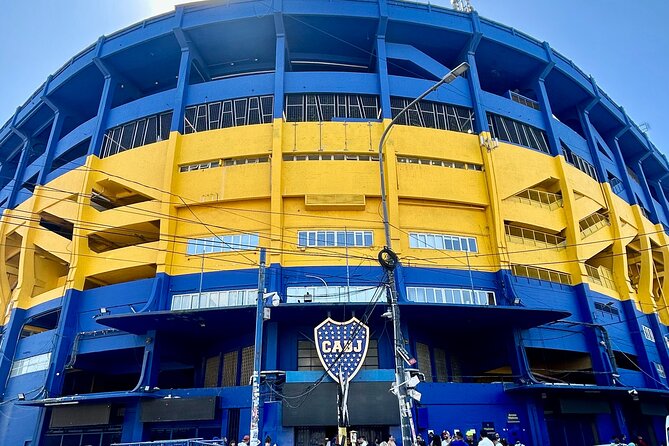
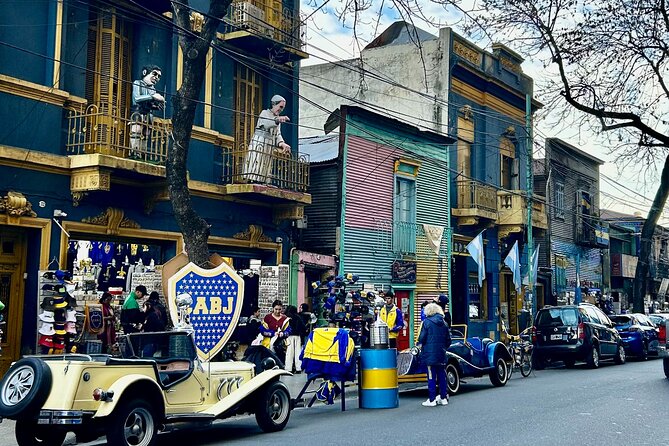
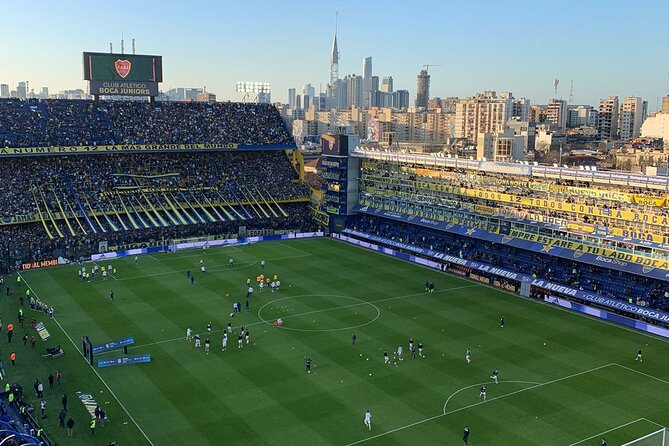
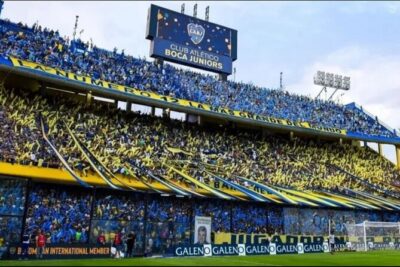
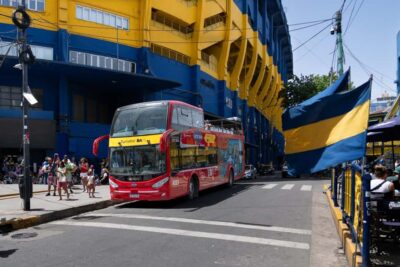
The tour then reaches Estadio Alberto J. Armando, better known as La Bombonera. It opened on May 25, 1940, and is home to Boca Juniors. The building’s unusual shape and intense reputation make it one of the most recognizable football grounds in the world.
You spend about 40 minutes outside the stadium, taking photographs and looking at the Boca architecture. The tour does not take you onto the playing field. This is another place where the wording of a full visit should be understood carefully: you see the stadium setting from outside, then enter the club museum.
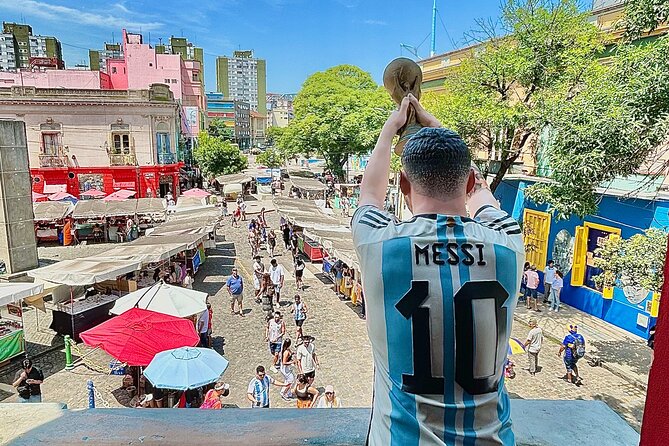
Even without a match underway, La Bombonera gives you a strong sense of Boca’s identity. The colors, murals, club imagery, and compact urban setting make this more than a standard sports venue. The guide’s role is important here. A good explanation of Boca, Diego Maradona, and the club’s rivalries adds context to what you are seeing.
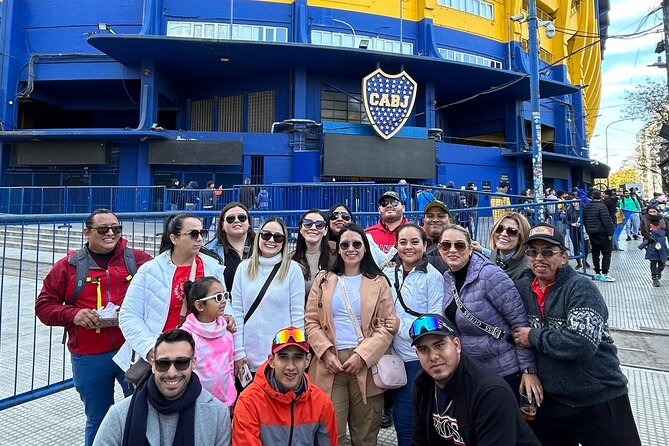
You should also leave room for photographs. The tour includes photos for all participants, which is useful when you are traveling without someone else to take pictures. Ask the guide for help rather than trying to manage group shots yourself.
The Boquense Passion Museum
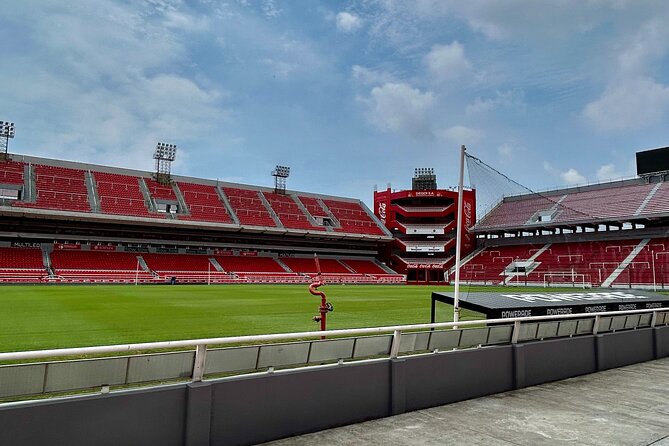
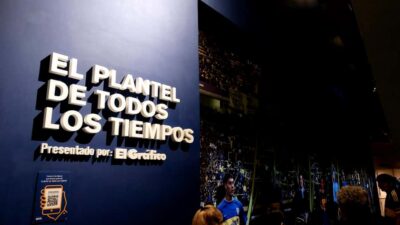
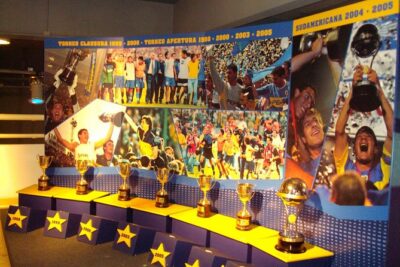
Inside La Bombonera, the Museo de la Pasión Boquense gives you the most detailed Boca experience of the day. You have about one hour here, making it the longest individual stop.
The museum covers Boca Juniors’ achievements, celebrated players, trophies, jerseys, photographs, and video footage. It is designed to show how the club’s identity was built over time, not simply to display silverware. For a football fan, an hour gives enough breathing room to look at the material without racing from case to case.
This is also the place where the tour’s bilingual format pays off. You can ask about players, competitions, and club traditions as you move through the exhibits. The guide can help turn names and dates into a story that makes sense, especially if your knowledge of Argentine football is limited.
The museum is a stronger value than the exterior Boca stop alone. If you paid for private transport and a guide but only took photographs outside, the price would be harder to justify. The museum admission gives the Boca portion real substance.
Lo Del Diego and Argentina’s football legend
The last stop is Lo Del Diego, a bar dedicated to Diego Armando Maradona. It is decorated with photographs, shirts, trophies, and other items connected with his career.
You have about one hour here. It is a relaxed way to finish after several stadiums and museums, and it lets the guide connect Maradona’s football career with Argentine sport and culture. You can order a drink if you wish, but the cost is not included.
Do not treat this as a meal stop. Snacks, food, and drinks are not part of the tour price, so plan accordingly. If you want a drink at the bar, carry money or a payment method that works locally.
The stop will appeal most to football fans who understand Maradona’s place in Argentina. Even if you are less familiar with him, the memorabilia gives you a direct look at the devotion surrounding one of the country’s most important sporting figures.
The guide can shape the whole day
The stadiums are the fixed framework, but the guide determines how connected the stops feel. The strongest feedback centers on guides who are warm, flexible, and able to add city details beyond the football grounds.
Miguel has been praised for making the day pleasant, explaining Buenos Aires and offering recommendations along the route. One particularly useful quality is his ability to connect the stadiums with murals, city stories, and football-related curiosities.
Matías has received praise for his football knowledge, friendliness, humor, and photography skills. Fabián, called El Rojo, is singled out for his close, welcoming style and his ability to make people feel at home. If you have a preferred guide, you can ask the provider about availability, but a specific guide cannot be guaranteed by the information provided.
This is not a silent transfer service. The guide provides bilingual explanations throughout, and the private format gives you more room to ask questions. That makes the outing a good choice if you want cultural context rather than a checklist of stadium names.
Is $550 a fair price?
The price is $550 per private group of up to four people. At full capacity, that is $137.50 per person for approximately five hours. For two people, the effective cost becomes $275 each, so the group size has a major effect on value.
The price includes private transport in an air-conditioned vehicle, a bilingual guide, bottled water, photos, and admission to both the River Plate Museum and Boca Juniors Museum. It also includes the stated stadium visits to River Plate and Boca Juniors, though those visits do not include the playing field.
You are paying for convenience and coverage as much as for tickets. Four stadium areas are spread across Buenos Aires, and arranging this route independently would require planning several transport legs and working around opening times. The private vehicle also lets you keep moving after the short exterior stops.
The price is less attractive if you are mainly interested in entering stadium interiors. Independiente and Racing are exterior photo stops, and the River visit is from the stands. For a person who wants a broad football day with a guide, the cost can make sense. For someone who wants a low-cost museum visit, it is probably too much.
Only one carry-on up to 12 kilograms per passenger is accepted. If you have more baggage, an additional fee may apply. That rule matters if you are going directly to or from another destination.
Who should book this experience?
I would recommend it most strongly to:
- Football fans who want River Plate and Boca Juniors in the same day
- First-time visitors who want transport handled for them
- Small groups of up to four people
- People who want football mixed with city stories and local recommendations
- Visitors who value photographs and a bilingual guide
- Fans of Maradona who want a themed final stop
It is less suitable if you want a match-day atmosphere. No match is included, and the tour does not promise access to the pitch, locker rooms, or every stadium facility.
It may also feel too quick for a devoted supporter of one club. You get only 20 minutes at each Avellaneda stadium, and the River stadium visit lasts about 30 minutes. The strength is variety, not exhaustive club study.
The experience is intended for most people to participate in, and it is a private activity for your group only. Confirmation is sent within 48 hours of booking, subject to availability. Free cancellation is available up to 24 hours before the start time. Changes or cancellations inside that period are not accepted for a refund.
What to know before you go
Wear something comfortable for getting in and out of the vehicle and moving through museum areas. The tour includes bottled water, but not snacks or meals, so eat beforehand or plan to buy food separately.
Keep your camera ready at the exterior stadiums. You have limited time at Independiente, Racing, and La Bombonera, and those stops are designed mainly for photographs and explanations.
Ask questions early. If you want club history, Maradona stories, Buenos Aires recommendations, or help with photography, tell the guide what interests you. Guides such as Miguel, Matías, and Fabián have been praised for personal attention, and a private group gives you a good chance to shape the conversation.
If you hope to attend a Boca Juniors match, ask the provider separately about tickets. Assistance with getting match tickets has been provided in some cases, but a game ticket is not included in this tour.
Should you book this stadium tour?
Book it if you want a well-organized introduction to Buenos Aires football, especially if you can split the $550 cost among four people. The combination of El Monumental, River Plate Museum, La Bombonera, Boca Museum, two Avellaneda photo stops, and Lo Del Diego gives you a wide view of the city’s football culture in one outing.
Skip it if your main goal is entering every stadium or spending a whole day at one club. The tour is strongest as a private, guided overview with two substantial museum visits and several quick exterior stops. Choose it for the range, the stories, and the ease of private transport, not for pitch access.
FAQ
How long does the football stadium tour last?
The tour lasts approximately five hours, including transport between the stadiums, museums, and Lo Del Diego.
How many people can join the private tour?
The price covers one private group of up to four people. Only your group participates in the activity.
Which stadiums can I see on the tour?
You visit River Plate’s El Monumental, Independiente’s Libertadores de América Stadium, Racing Club’s Presidente Perón Stadium, and Boca Juniors’ La Bombonera.
Do I enter every stadium?
No. You enter River Plate’s stadium for an express visit from the stands and visit the Boca area from outside before entering its museum. Independiente and Racing are exterior photo stops.
Are the River Plate and Boca Juniors museums included?
Yes. Admission to the River Plate Museum and the Boquense Passion Museum is included in the tour price.
Are food and drinks included?
No. Snacks, food, and drinks are not included. Drinks ordered at Lo Del Diego are paid for separately.
Recently added around Buenos Aires
- Photo Session in Buenos Aires★ 5.0 · 26 reviews
- Your Personal Photographer in Buenos Aires★ 5.0 · 24 reviews
- Discover Buenos Aires’ independent art scene — Ticket included★ 5.0 · 30 reviews
- Your Private Photographer in Buenos Aires★ 5.0 · 4 reviews
- Yerba Mate Workshop – Learn to Drink Mate like a Local!★ 5.0 · 11 reviews
- Taste of Tradition: Yerba Mate & Alfajores Experience★ 4.0 · 5 reviews
- Wine tasting in OASIS Palermo★ 5.0 · 2 reviews
- Day Tour Classic★ 3.5 · 35 reviews
Football and Stadium Tours, compared.
Boca Juniors Tickets for a Match at La Bombonera
Read our review →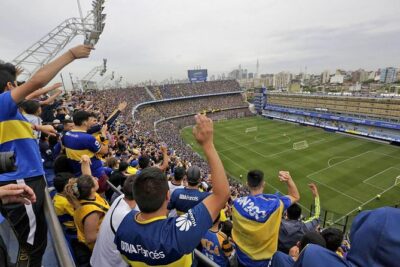
Soccer Match in Buenos Aires with Transfers and Local Guide
Read our review →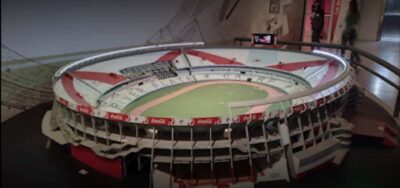
Buenos Aires Football Experience: Boca & River Stadium Tour
Read our review →Browse the lists this tour appears in