
Reviewed · WALKING TOURS
La Docta Free Walking Tour “Córdoba La Antigua”.
Córdoba’s old center tells its story on foot. La Docta’s Córdoba La Antigua tour is a lively 150-minute introduction to the city’s colonial core, with stops at the cathedral, Cabildo, Jesuit buildings, historic museums, and the National College of Monserrat. I like the route because it brings together Córdoba’s main historic sights in one walk, and I like the flexible price: you pay only a small booking deposit in advance, then decide the tour’s final value at the end.
The guides are another strong point. Tomas, Tommy, Thomas, Valeria Velez, Aldy, and Tomaz have all led highly praised tours, with particular attention given to humor, clear English, warmth, and useful historical explanations. The main consideration is that museum admission is not included, and the tour lasts two and a half hours, so comfortable shoes and a drink are essential.
In This Review
- Key points to know before you go
- Why this is a smart first walk in Córdoba
- Starting at San Martín Square
- The Jesuit block and the UNC Historical Museum
- Cabildo de Córdoba and the city’s civic story
- Córdoba Cathedral and San Martín Square
- The Jesuit Crypt beneath the modern city
- The narrowest building and small details
- The Marquis of Sobremonte’s historic house
- The Church of the Society of Jesus
- The National College of Monserrat
- From colonial Córdoba to Patio Olmos
- What the flexible price really means
- The guide makes the biggest difference
- Who should book Córdoba La Antigua?
- Booking details worth remembering
- Should you book this Córdoba walking tour?
- FAQ
- How long does the Córdoba La Antigua tour last?
- How much does the tour cost?
- Where does the tour meet?
- Where does the tour finish?
- Which languages are available?
- Are museum entrance fees included?
- What should I bring?
Key points to know before you go
- A 150-minute route through Córdoba’s historic center: You see major colonial and Jesuit landmarks without needing local transport.
- The price is flexible: A US$0.50 deposit reserves your place, then you choose what the tour was worth at the end.
- Strong guide-led storytelling: Tomas, Tommy, Valeria, Aldy, and Tomaz have been praised for humor, energy, clear English, and personal attention.
- Nine major sights are covered: The route includes San Martín Square, the cathedral, Cabildo, Jesuit Crypt, Sobremonte house, and more.
- The tour ends at Patio Olmos: This gives you a practical finish near a shopping center, rather than leaving you in an unfamiliar side street.
- Plan for a walking tour, not a museum crawl: Some buildings are visited from outside or briefly, and museum entry costs extra.
Why this is a smart first walk in Córdoba
Córdoba can feel confusing at first because its oldest buildings are scattered through a working city center. La Docta solves that problem with a compact route that links the key places in a logical order. You get the broad story of Córdoba, from its foundation and colonial period to its modern identity, before deciding which sites deserve a longer return visit.
I especially like this format for a first morning or afternoon in the city. A local guide can point out details you might pass without noticing, explain how the religious and civic buildings fit together, and give you a sense of how Córdoba developed over time.
The group setting also adds a social side. The tour is designed around shared conversation, local sounds, tastes, and small surprises. Valeria Velez was praised for using games and helping people talk with one another, while Tommy was noted for taking time to speak with people in their native languages. That sort of warmth can make a standard history walk feel less formal.
The route is not designed for deep visits inside every building. It is better understood as a well-paced orientation walk with selected stops. If you want long museum visits, quiet architectural study, or time for photographs at every corner, you will need to return independently.
More walking tours in Argentina:
- Punta Tombo Cruise Shore Excursion – Walk among penguins
★ 4.6 · 24 reviews - Buenos Aires Hop-On Hop-Off Bus, Free Walking Tours & Discounts
★ 4.5 · 2,218 reviews - Buenos Aires: La Boca Guided Walking Tour in English
★ 4.8 · 1,587 reviews
Starting at San Martín Square
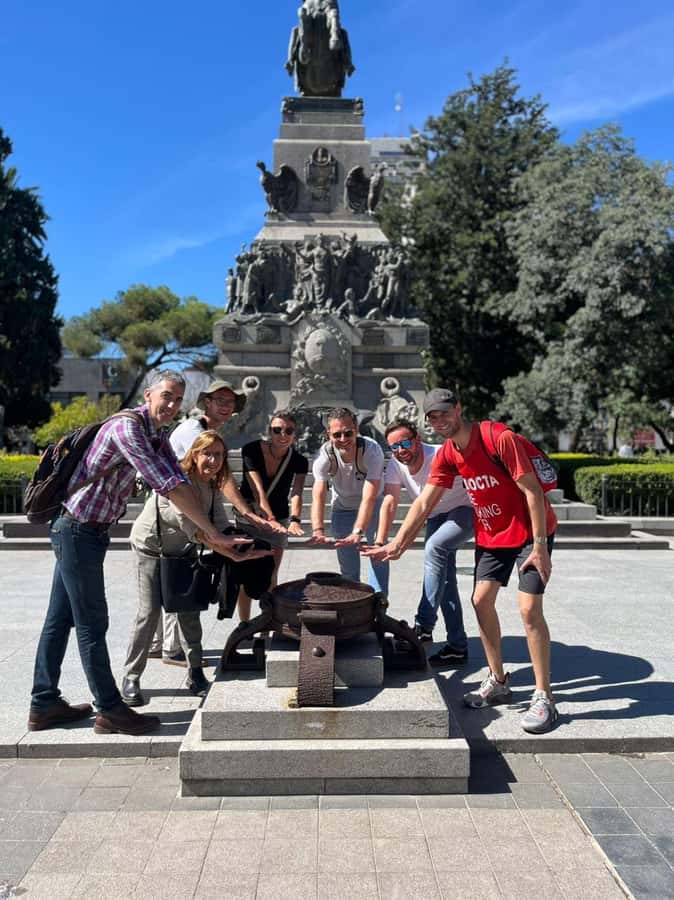
The meeting point is next to the statue in Plaza San Martín. Look for the guide wearing a red T-shirt. This is a useful detail in a busy central square, where finding the right group can otherwise take a few minutes.
Plaza San Martín is an appropriate starting point because it places you directly in Córdoba’s historic heart. From here, the guide can introduce the city’s founding, colonial development, and the role of the institutions gathered around the square.
I would arrive a little early, especially if you are not familiar with the center. The tour runs in English and Spanish, but some content may be presented in its original language. If you need the clearest possible explanation in English, tell the guide at the start.
The Jesuit block and the UNC Historical Museum
The walk moves to the UNC Historical Museum in the Jesuit block, also known as the Manzana Jesuítica. This is one of the most important cultural areas on the route, and the guided stop lasts about 15 minutes.
The Jesuit connection gives Córdoba much of its historic character. Here, the guide explains the role of the Society of Jesus and the importance of the university in the city’s development. The buildings date from Córdoba’s colonial era, with some structures more than 400 years old.
This stop works well early in the tour because it gives you a framework for the rest of the walk. You begin to see that Córdoba’s old center was not simply a collection of attractive facades. It was a place shaped by religion, education, civic power, and changing political ideas.
The time is short, so do not expect a full museum visit. The attraction is the guide’s interpretation and the chance to see the historic area as part of a larger story. If you want to examine exhibits closely, you will need extra time outside the tour.
Cabildo de Córdoba and the city’s civic story
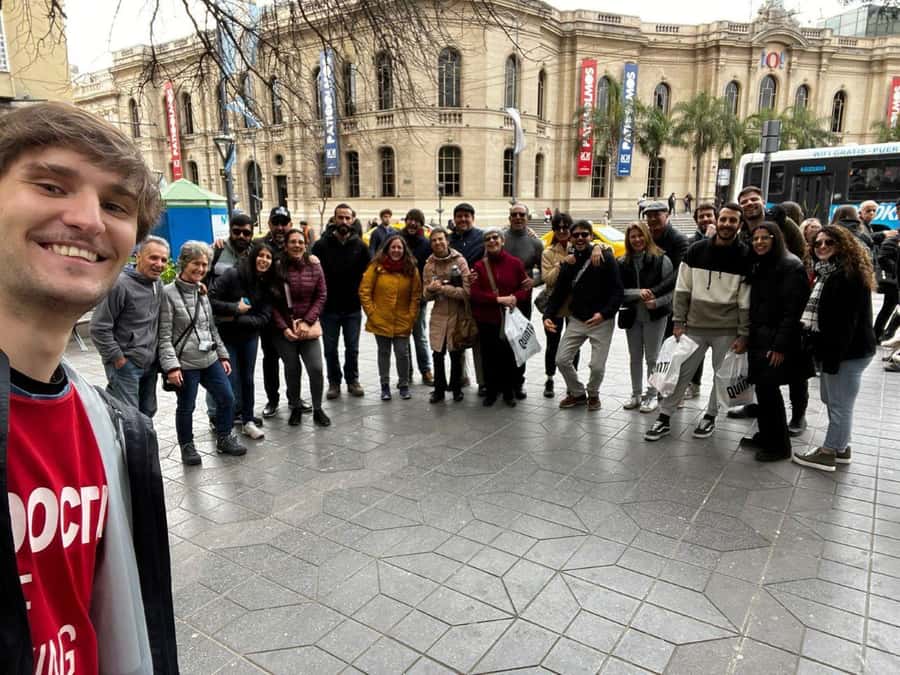
The Cabildo receives a visit of about 10 minutes. This historic civic building sits close to the cathedral and San Martín Square, making it easy to understand how public life was organized in colonial Córdoba.
The guide uses the building to explain political and civic changes. That context matters because Córdoba’s past is not only about churches and university buildings. The Cabildo represents administration, public authority, and the city’s changing relationship with wider Argentine history.
Ten minutes is enough for a concise explanation and a look at the structure, but it is not a long architectural visit. You should listen for the story rather than expect a detailed tour of every room. The short stop also helps the group keep moving at a comfortable pace.
Still Argentina, but a completely different sort of afternoon:
- From Foz do Iguaçu: Tour to Argentinian Falls
★ 4.9 · 112 reviews - TRU KAYAK – Navigating the Uruguay River
★ 5.0 · 60 reviews - Horseback riding through the Sierras
★ 5.0 · 40 reviews - Day trip to Mocona Falls and Salto Encantado Provincial Park
★ 4.5 · 6 reviews
Córdoba Cathedral and San Martín Square
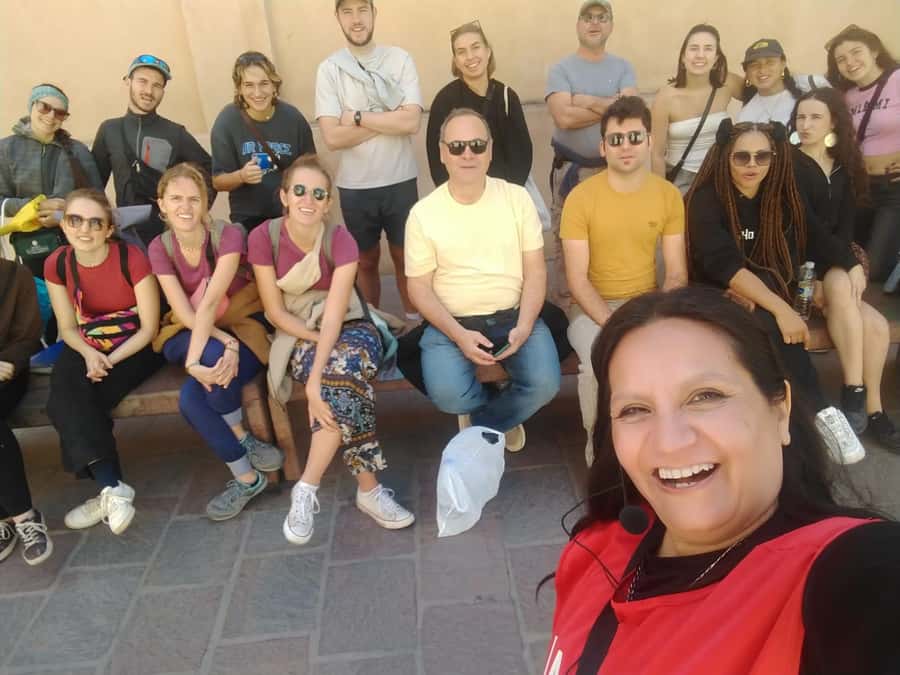
The Cathedral of Córdoba, dedicated to Nuestra Señora de la Asunción, is another central stop. The visit lasts about 10 minutes, and its location beside the square makes it one of the easiest places to appreciate as part of the city’s historic center.
The cathedral helps show the religious importance of colonial Córdoba. The guide can connect its design and use to the broader role of the Catholic Church in the city’s early life. For you, the value is not just seeing an old church, but learning why it occupies such a central place in Córdoba’s identity.
The stop is brief, so photograph quickly and keep your attention on the guide. Churches may also have their own visiting conditions, so do not assume that every interior area will be open for unrestricted viewing.
The Jesuit Crypt beneath the modern city
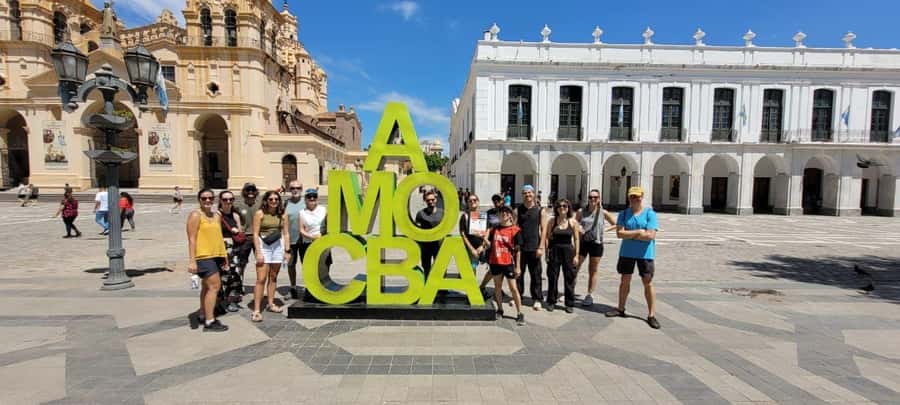
The Jesuit Crypt offers one of the route’s more unusual stops. It gives you a glimpse of an older layer of Córdoba beneath the present-day streets. The scheduled stop lasts around 10 minutes.
This is the sort of place that can be easy to miss without a guide. The crypt connects the city’s modern center with its colonial past in a direct, physical way. It also adds variety to the walk, which otherwise moves among plazas, streets, churches, and civic buildings.
The visit is short, and the experience depends on access at the time of the tour. Treat it as a focused historical stop rather than a long underground visit. If you enjoy old construction, masonry, and the way cities preserve earlier structures, this part should appeal to you.
The narrowest building and small details
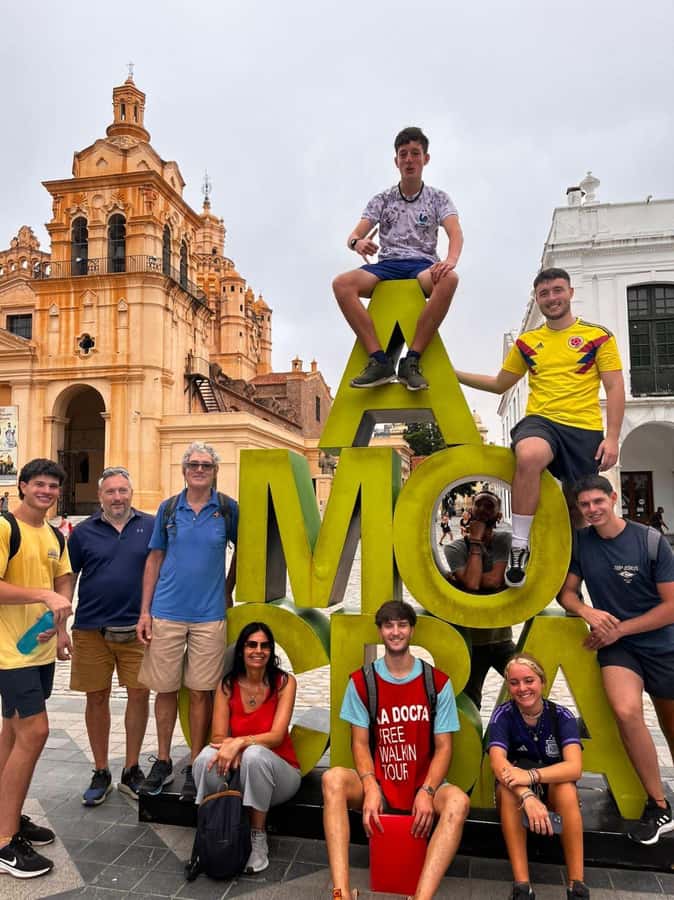
The narrowest building is listed among the tour’s sights, although the scheduled stop details do not give it a separate visit length. This is a reminder that the walk includes small urban details as well as famous monuments.
I like this kind of stop because it helps you look beyond the headline attractions. Córdoba’s character is found not only in grand churches and official buildings, but also in odd proportions, narrow facades, old arches, and practical traces of earlier city life.
One guest with a background in masonry was especially impressed by the brickwork and old archways around Córdoba. You do not need a technical background to enjoy this, but it helps to slow down and look at how the buildings were made.
The Marquis of Sobremonte’s historic house
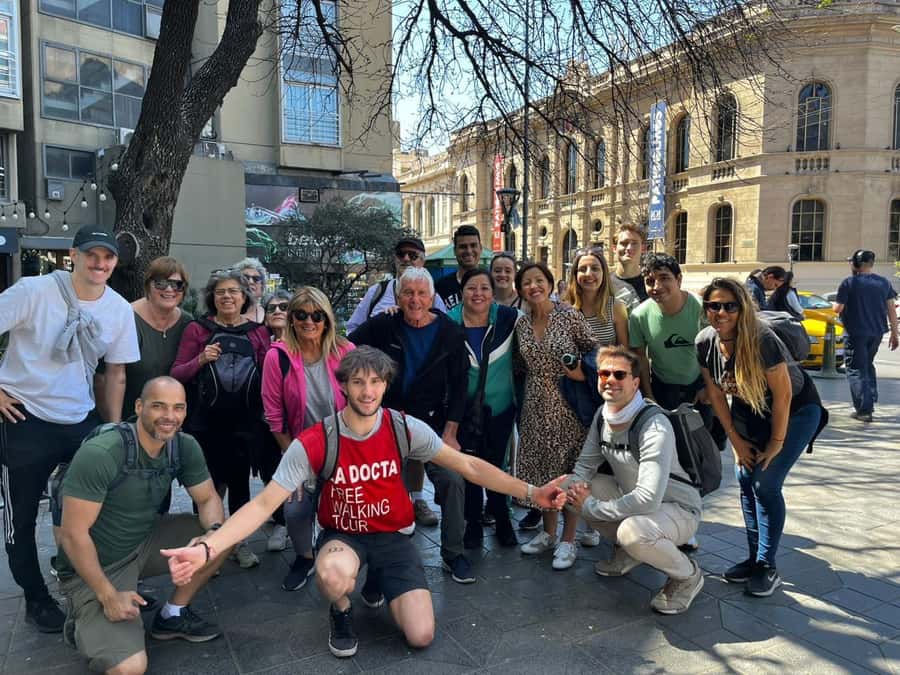
The Provincial Historical Museum housed in the Marquis of Sobremonte’s residence receives about 10 minutes on the route. This stop brings the story into a domestic setting, giving you a sense of how an important colonial-era household was organized.
The house adds balance to the tour. The cathedral and Jesuit block represent religious and educational power, while the Cabildo represents civic authority. A historic residence shows how those broader forces connected with private life.
Admission to museums is not included, so check with the guide about what you can enter during the walk and what you might want to revisit later. The short stop is useful for orientation, but it cannot replace a full museum visit.
The Church of the Society of Jesus
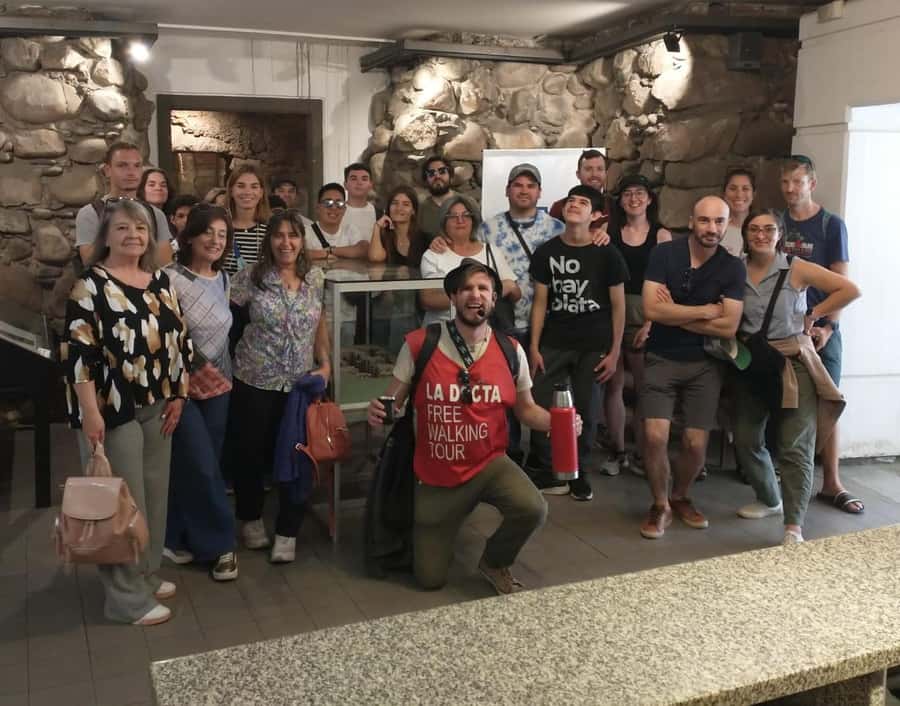
The Church of the Society of Jesus receives one of the longer stops, about 15 minutes. It is part of the Jesuit heritage that gives Córdoba its particular architectural and cultural identity.
This is a good place to ask questions. The guides have been praised for explaining difficult historical points in a clear way, and for keeping the tone friendly rather than academic. Tomas was repeatedly described as engaging and well informed, while Valeria was praised for her energy and emotional connection to the subject.
The church also gives you another chance to compare religious buildings with the surrounding civic architecture. Look at the materials, proportions, and older construction details. If you enjoy architecture, this may be one of the most rewarding parts of the route.
The National College of Monserrat
The National College of Monserrat is scheduled for a 10-minute stop. Along with the nearby university buildings, it helps explain Córdoba’s long educational tradition.
This is more than a quick photo opportunity. The college represents the city’s role as a center for learning and public life. The guide’s account connects the institution to the wider story of Córdoba, from colonial foundations to the present day.
The stop is short, so you should not expect a full academic history. Its real value is in showing how education remains part of the city’s identity and why the Jesuit block matters so much.
From colonial Córdoba to Patio Olmos
The tour finishes at Patio Olmos shopping mall. This is a practical ending point. You can stop for food, browse shops, or continue exploring the center without needing to find your way back to the starting square.
Ending at a modern shopping center also neatly contrasts with the old buildings seen earlier. You finish with a sense of Córdoba as a living city, not a preserved historic district separated from daily life.
The route takes about two and a half hours, and the exact pace may depend on the group, street conditions, and access to buildings. Wear comfortable shoes. Bring water or another drink, since this is a sustained walk with several outdoor sections.
What the flexible price really means
The US$0.50 charge is a booking deposit, not the full cost of the experience. At the end, you decide how much to pay for the guide’s work.
That arrangement offers excellent value if you want to control your spending or test a tour before committing to a fixed-price product. It also gives the guide an incentive to make the walk useful, lively, and worth supporting.
You should still budget for a fair final payment. The guide is providing 150 minutes of local interpretation, route planning, language support, and group management. The tiny deposit does not mean the tour has no real value.
Museum entrance fees are separate. If you want to return inside the UNC Historical Museum, the Sobremonte residence, or another site, plan for those costs independently.
The guide makes the biggest difference
The strongest praise is directed at the guides, especially their energy, humor, and ability to explain Córdoba in accessible terms. Tommy was described as funny and highly informed, while Tomas was praised for being friendly, engaging, and clear. One group found Valeria’s games and social approach especially memorable.
Guide assignments can vary, so you should not book solely expecting one named person. Still, the repeated pattern is encouraging: La Docta appears to place real importance on personality as well as facts.
A good guide matters on this route because several stops are brief. The story has to be clear and well timed. A dry explanation could make the walk feel like a list of buildings, while a lively guide can turn the same buildings into a connected account of Córdoba’s people and institutions.
The tour has an average rating of 4.7 from 104 ratings, with praise for the historic coverage, language skills, humor, and friendly group atmosphere. One lower score still described the tour as interesting and informative, with poor weather being the main issue. That is a useful warning: conditions can affect an outdoor walk, so bring a drink and dress for the forecast.
Who should book Córdoba La Antigua?
I would recommend this tour to first-time visitors who want a clear introduction to Córdoba before exploring alone. It suits solo visitors, couples, and people who enjoy meeting others during a city walk.
It is also a good choice if you want:
- A low-cost way to see the historic center
- English or Spanish guiding
- Colonial, religious, civic, and educational history in one route
- A guide who can point out details you might miss
- A social activity lasting about two and a half hours
You may want a different option if you dislike group walks, need a slow pace, or want extended access to museums. The tour covers many places, but several stops last only 10 minutes. It gives you a strong overview, not a full study of every building.
Booking details worth remembering
Reserve your place with the US$0.50 deposit, then pay what you think the tour deserves at the end. You can cancel up to 24 hours before the start for a full refund, and the reserve-now, pay-later arrangement keeps your plans flexible.
Check the available starting times when booking. Meet beside the statue in Plaza San Martín and look for the red T-shirt. English and Spanish are offered, but some material may be delivered in its original language.
The tour is listed as allowing you to skip the ticket line, though museum admission itself is not included. Ask the guide at the start how any included access works on that day.
Should you book this Córdoba walking tour?
Yes, if you want an inexpensive and entertaining first look at Córdoba’s old center. The route covers the city’s essential historic landmarks, the guides receive strong praise for humor and clear explanations, and the flexible pricing makes the experience easy to try.
I would book it early in your Córdoba stay, then use the finish at Patio Olmos as a launching point for lunch, shopping, or a return visit to the museum or building that caught your attention. Just remember that the walk is fast enough to cover many sights, and museum entry costs extra.
FAQ
How long does the Córdoba La Antigua tour last?
The tour lasts 150 minutes, or two and a half hours.
How much does the tour cost?
A US$0.50 deposit is required to reserve a place. The tour has no fixed final price, so you decide how much to pay at the end.
Where does the tour meet?
The meeting point is next to the statue in Plaza San Martín. Look for the guide wearing a red T-shirt.
Where does the tour finish?
The tour finishes at Patio Olmos shopping mall.
Which languages are available?
The tour is offered in English and Spanish. Some content may be presented in its original language.
Are museum entrance fees included?
No. Admission to museums is not included in the tour price.
What should I bring?
Bring comfortable shoes and drinks. You will be walking for about two and a half hours.
Recently added around Argentina
- Two day ride through the Sierras★ 5.0 · 2 reviews
- Day trip to Mocona Falls and Salto Encantado Provincial Park★ 4.5 · 6 reviews
- Horseback riding through the Sierras★ 5.0 · 40 reviews
- Punta Tombo Cruise Shore Excursion – Walk among penguins★ 4.6 · 24 reviews
- Iguassu Falls: Private Tour Argentina side★ 5.0 · 3 reviews
- Private Guided Day Hike to Glacier Ojo del Albino★ 5.0 · 2 reviews
- Luigi Bosca Winery Tour with Wine Tasting and Lunch★ 4.7 · 4 reviews
- From Cordoba: Private Wine tour & History★ 5.0 · 3 reviews
Walking Tours, compared.
Buenos Aires Hop-On Hop-Off Bus, Free Walking Tours & Discounts
Read our review →
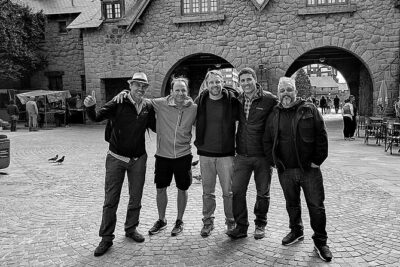
German Footprint & Nazi presence – Walking Tour in Bariloche
Read our review →
Full Day Buenos Aires Private Walking Tour – Your Own Personal BA 101
Read our review →
Discover Buenos Aires: Walking Tour Through San Telmo & Center!
Read our review →
Browse the lists this tour appears in