Reviewed · BUENOS AIRES TOURS
La Boca Out off the Beaten Track
La Boca has more stories than Caminito. This 150-minute walking experience with local guide Paola De Luca reaches old immigrant quarters, large social murals, a corrugated-metal conventillo, and Argentina’s first volunteer fire station. It gives you a useful look at the neighborhood beyond its famous painted street.
I especially like the chance to enter a typical Boca house and the invitation to coffee in a historic café dating to 1882. Paola’s childhood and youth as a La Boca neighbor also give the walk a personal angle. The main consideration is that the tour covers a lot in two and a half hours, so some stops receive a short explanation rather than a long visit.
In This Review
- Key points to know before you go
- Why this La Boca walk feels different
- Starting beside the port and immigrant arrival point
- Inside a corrugated-metal conventillo
- Meeting the neighborhood’s first firefighters
- Reading La Boca through its murals
- Anarchist papers, bordellos, and the neighborhood’s rough edges
- Boca Juniors and the Salesian Church
- Finishing at Caminito, tango, and fileteado
- Coffee in an 1882 Buenos Aires café
- The optional Quinquela Martín museum visit
- What Paola adds to the experience
- Price, pace, and practical value
- Who should book La Boca Out off the Beaten Track?
- FAQ
- Where does the tour begin?
- Where does the tour finish?
- How long does the experience last?
- Is coffee included?
- Is the Quinquela Martín museum ticket included?
- What languages does Paola speak on the tour?
- How large is the group?
- Can I cancel if my plans change?
Key points to know before you go
- A local guide with personal ties: Paola De Luca grew up in La Boca and connects neighborhood history with her own memories.
- More than Caminito: The route includes the harbor, warehouses, murals, the old train station, and streets that see fewer sightseeing crowds.
- Two rare interior visits: You enter a former conventillo cultural center and Argentina’s first volunteer firefighter station.
- A strong social and cultural focus: The walk covers immigration, mutual assistance groups, anarchist newspapers, bordellos, religion, football, and local art.
- Coffee is included: The experience ends with coffee in a Notable Café, an old Buenos Aires café dating to 1882.
- Small and bilingual: The group is limited to 10 people, with guiding in Spanish or English.
Why this La Boca walk feels different
Many first visits to La Boca begin and end at Caminito. That colorful pedestrian street is worth seeing, but it is only one small piece of the neighborhood. This tour uses Caminito as the finish, not the whole story.
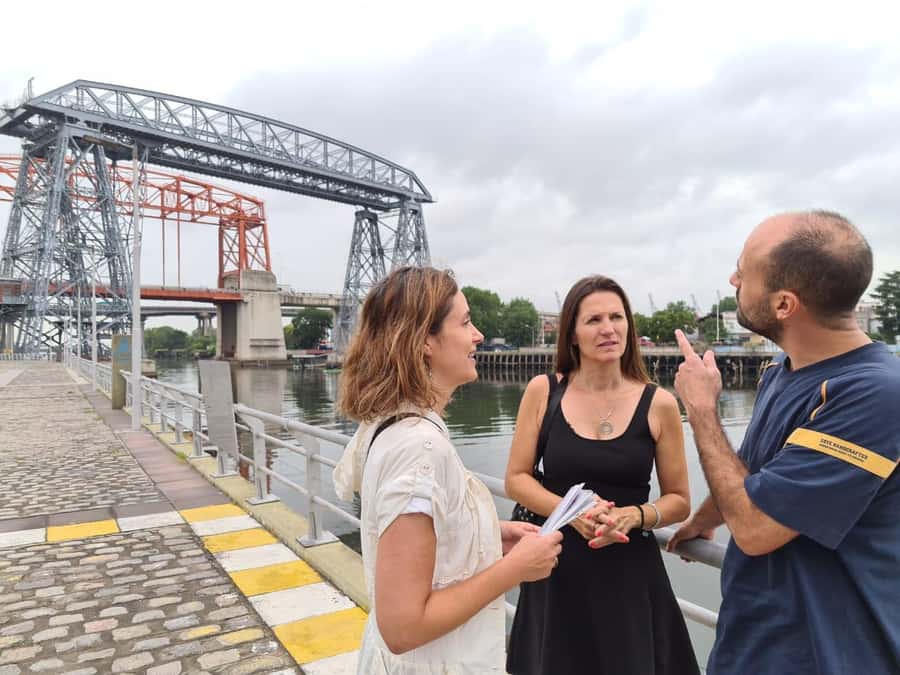
You begin at the corner of Avenida Don Pedro de Mendoza and Martín Rodríguez, close to the waterfront. From there, Paola leads you through parts of La Boca connected with immigration, work, art, sport, religion, and neighborhood life.
I like that the route treats La Boca as a living district rather than a backdrop for photographs. The painted façades are here, but so are the port buildings, old associations, religious institutions, fire services, and homes that helped newcomers build a life.
The group size matters. With no more than 10 people, you should be able to hear explanations and ask questions without shouting over a large crowd. Paola’s English is described as excellent, and she also guides in Spanish.
A few more Buenos Aires trips worth putting side by side
- Local Foodie Adventure in Buenos Aires with Sherpa Food Tours
★ 5.0 · 6,875 reviews - Buenos Aires City Private Tour with Local Guide
★ 5.0 · 3,475 reviews - Buenos Aires Small-Group City Tour
★ 5.0 · 2,226 reviews
Starting beside the port and immigrant arrival point
The meeting point is at Martín Rodríguez and Avenida Don Pedro de Mendoza. This places you near the harbor, a fitting beginning for a neighborhood shaped by arrivals from overseas.
The tour visits warehouses and a picturesque train station where large numbers of immigrants arrived. These places help explain why La Boca developed its particular character. Instead of seeing the area as simply colorful and bohemian, you begin to understand it as a practical entry point for people looking for work, shelter, community, and a fresh start.
That context is one of the tour’s strongest features. The neighborhood’s identity did not appear by accident. It grew from port activity and from communities of newcomers who needed mutual help.
You can expect the opening guided portion to last about an hour, although the route includes several themes and stops. Wear comfortable shoes and be ready for a walking tour rather than a series of long indoor visits.
Inside a corrugated-metal conventillo
One of the more unusual stops is a former conventillo. These shared tenement houses provided shelter for immigrants, often bringing many households into one building.
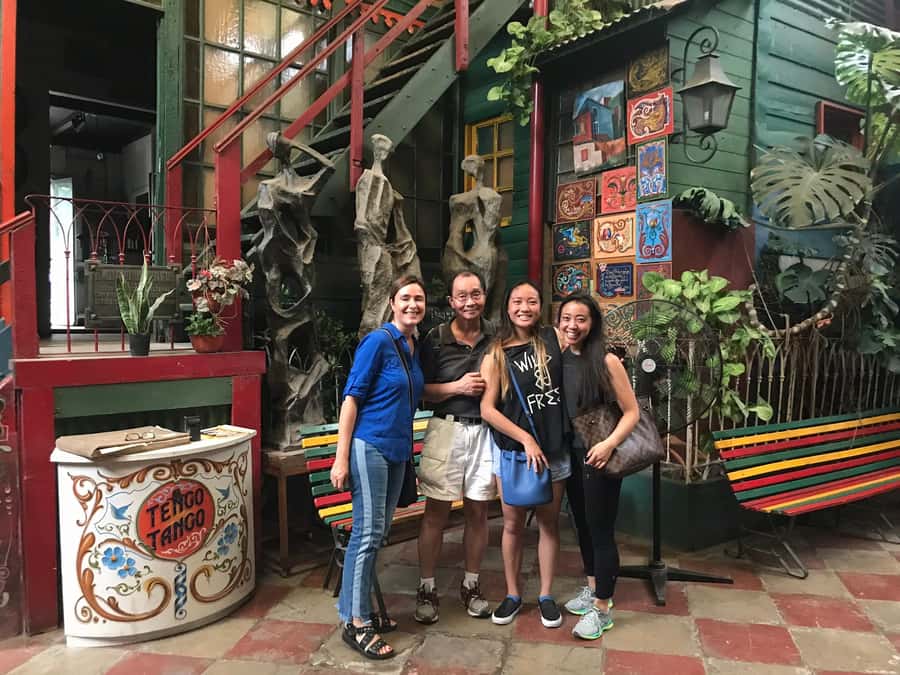
The tour takes you inside one corrugated-metal-clad conventillo that now operates as a Cultural Centre. That change in use gives the stop two layers. You see the type of structure associated with immigrant housing, while also seeing how an old building can continue serving the neighborhood through culture.
This is a valuable stop because façades alone can hide how people lived. A walk past colorful buildings may give you a picture of La Boca, but entering a typical house provides a better sense of its domestic and social history.
The building may not suit anyone who wants a polished museum interior. Its appeal lies in its connection to ordinary housing and local memory. I would treat this as a place for context, not as a grand architectural attraction.
You also visit a typical Boca house connected with local artists who were friends of Paola. The exact access and presentation may depend on the day, but the purpose is clear: to bring you closer to the homes and creative life that shaped the district.
Meeting the neighborhood’s first firefighters
The visit to the Volunteer Fire Department is one of the tour’s most distinctive elements. This was the first volunteer firefighter station created in Argentina, and entrance is included in the price.
La Boca’s immigrant communities formed mutual assistance associations because residents often had to rely on one another. A volunteer fire station tells that story in a direct way. It is not only about fire equipment. It reflects a neighborhood organizing itself, protecting its families, and building institutions when formal support was limited.
This stop also adds practical history to the walk. You are not simply hearing about immigration in broad terms. You are seeing one of the organizations that helped a rootless population become a community.
The station is a working institution with a strong local identity, not a major national museum. If you prefer famous monuments, this may feel modest. If you like small places that explain how a city works, it is likely to be a highlight.
Still Argentina, but a completely different sort of afternoon:
- Buenos Aires Hop-On Hop-Off Bus, Free Walking Tours & Discounts
★ 4.5 · 2,218 reviews - Buenos Aires: Piazzolla Tango Show with Optional Dinner
★ 4.4 · 2,122 reviews - Buenos Aires: City Highlights Guided Tour with Transfer
★ 4.7 · 1,946 reviews - Buenos Aires: Hop-On Hop-Off City Bus Tour
★ 4.2 · 1,855 reviews
Reading La Boca through its murals
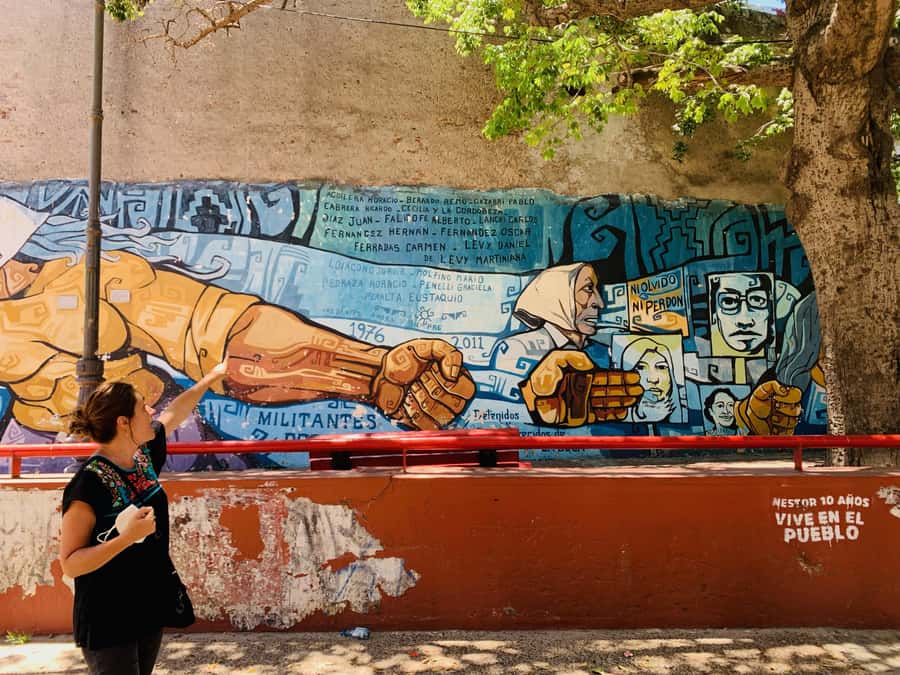
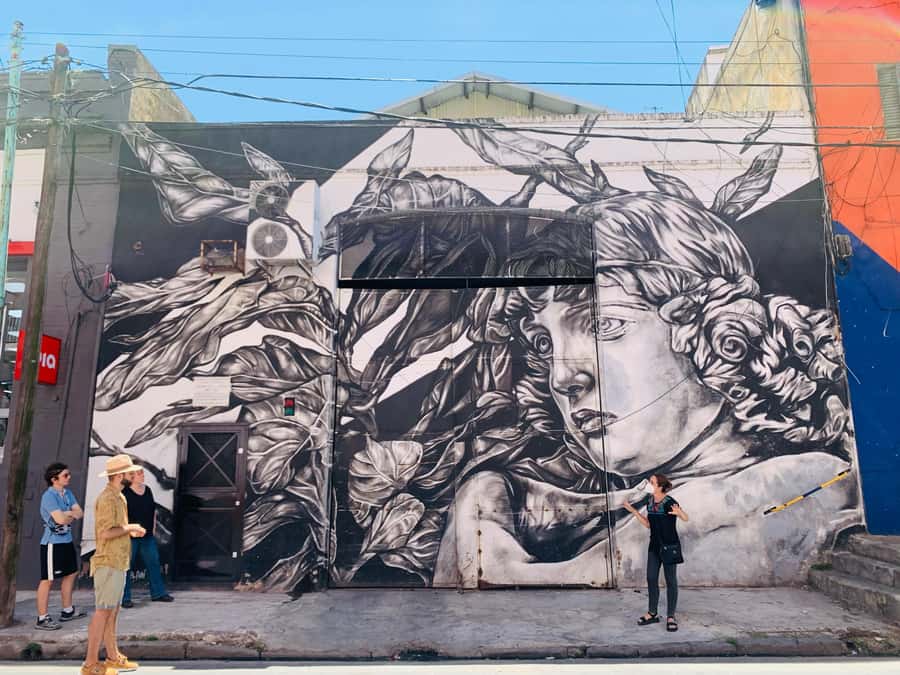
La Boca’s murals are not just decoration. The tour uses them to discuss social issues and the way local artists have represented the neighborhood’s concerns.
Paola explains the background behind the paintings, which changes how you look at them. Instead of taking a quick photograph and moving on, you get a reason to pause. The murals become part of a conversation about society, memory, identity, and the people who live in the area.
I find this especially useful in La Boca, where colorful walls can tempt you to focus only on appearance. The stories behind the images matter. They help you see why art has such a firm place in the district.
The route reaches streets and murals that are not as heavily visited as Caminito. Do not expect every corner to look freshly painted or arranged for sightseeing. That is part of the point. The walk gives you a less edited view of La Boca, with art mixed into an ordinary neighborhood setting.
Anarchist papers, bordellos, and the neighborhood’s rough edges
The tour also points out old buildings that once hosted anarchist newspapers and bordellos in the early 20th century. These details add a sharper edge to the story.
La Boca was not built around a single tidy identity. It was a port neighborhood with political arguments, social tension, working people, entertainment, religion, and football. The old newspaper offices point to political activism. The former bordellos point to another side of port life, one that is often left out of cheerful sightseeing routes.
This is where Paola’s storytelling is particularly useful. A building can look ordinary until you know what happened there. The tour encourages you to read the street as an archive, with fragments of the past still visible in the structures around you.
Some visitors may find these subjects more serious than the bright colors associated with the district. I consider that a strength, provided you want a tour that gives social context rather than only scenic stops.
Boca Juniors and the Salesian Church
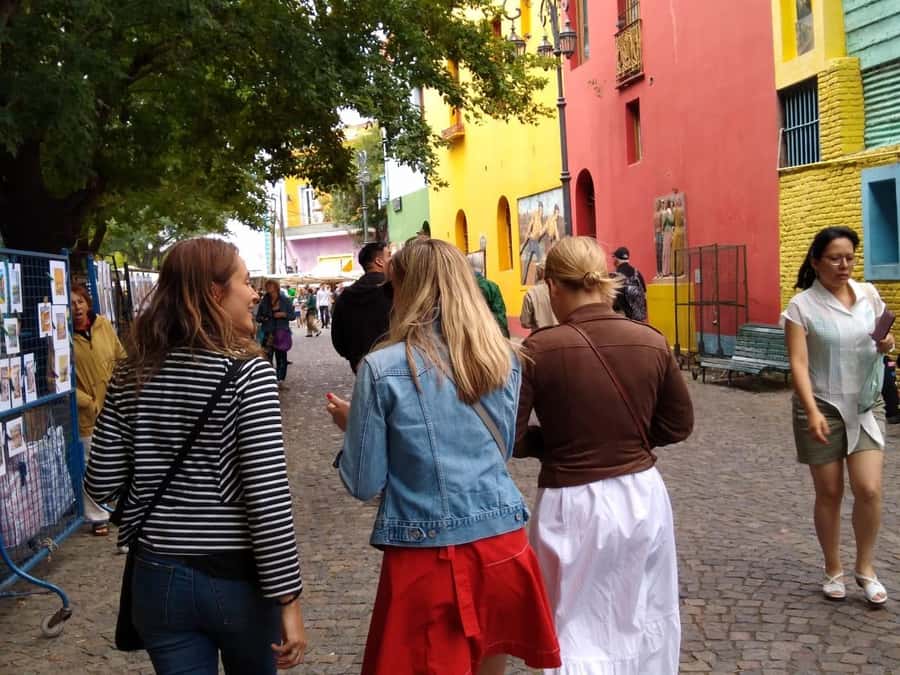
Two local icons receive attention: Boca Juniors football and religion.
You see the Boca Juniors Stadium from outside. The stadium is not presented as a stadium tour, so you should not expect an interior visit or a match-day experience. Still, its presence matters because football is woven into La Boca’s public identity.
Paola’s connection to the neighborhood lets her explain why the club means so much here. The football story is not treated as an isolated sports fact. It forms part of the neighborhood’s sense of belonging, pride, and shared identity.
The Salesian Church provides the other major point of reference. For immigrant communities without firm roots, religious institutions could offer shelter, support, and a sense of order. The church helps explain how community life developed alongside the port and the tenements.
I like the balance between football and religion. One is loud, public, and modern in its reach. The other reflects service, refuge, and community support. Together they show how La Boca’s identity was shaped by more than architecture.
Finishing at Caminito, tango, and fileteado
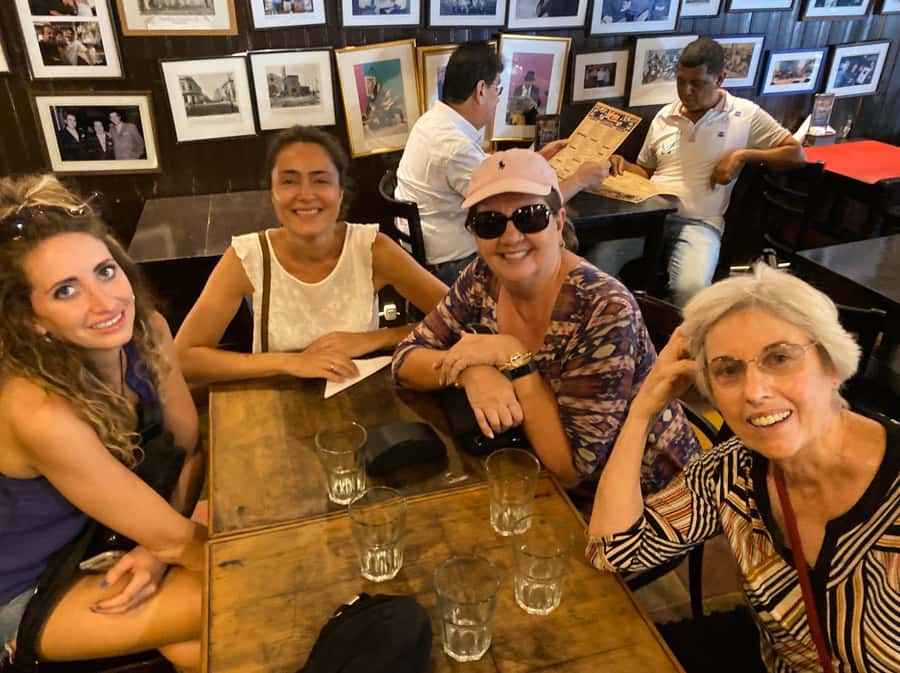
The tour finishes in Caminito, La Boca’s best-known sightseeing area. By arriving here at the end, you get a useful contrast.
After visiting less familiar streets, old institutions, and immigrant housing, the bright façades and performance traditions of Caminito make more sense. Tango and fileteado, the decorative painting style associated with Buenos Aires, appear throughout the area.
Caminito is photogenic and lively, but it can also feel more arranged for visitors than the rest of the route. That is not a criticism of the street itself. It simply works best when you understand it as one expression of La Boca, not as the complete neighborhood.
The finish is convenient because you can continue exploring Caminito after the guided portion. The stated endpoint is Caminito in La Boca, so plan any onward transport or additional sightseeing from there.
Coffee in an 1882 Buenos Aires café
The tour includes a 30-minute coffee stop in a Notable Café dating to 1882. This is a small but welcome part of the experience.
Old cafés are important to Buenos Aires life. They are places to sit, talk, write, argue about football, and watch the city pass by. Ending with coffee gives the walking route a slower final chapter after the historical explanations and street visits.
The coffee is included, while additional food is not. If you want a meal or a snack beyond the included drink, budget separately.
I like this ending because it leaves room for conversation. Paola can answer questions, and you can process the many strands of La Boca’s story without being rushed straight to the endpoint.
The optional Quinquela Martín museum visit
The route may also include a visit to the Museo de Bellas Artes de La Boca, linked to the home of Benito Quinquela Martín. The museum ticket is not included, so you should treat it as an optional extra rather than part of the basic price.
Quinquela Martín is closely associated with La Boca’s artistic identity, making the museum a natural choice if you want to continue the art theme after the murals and local homes. The supplied details do not specify how long the museum visit lasts or exactly when it fits into the walk, so ask Paola about timing if this is important to you.
The museum can be a good add-on for art lovers. If you mainly want neighborhood history and street life, the included route already offers plenty without requiring the extra ticket.
What Paola adds to the experience
Paola is the central reason this tour feels personal. She was a neighbor of La Boca during childhood and youth, and she connects local events with her own knowledge of the area.
That personal link does not replace historical explanation. It gives the history a human scale. You hear about immigrants, artists, football supporters, churches, firefighters, and residents, then see the buildings and streets connected with those subjects.
Her strongest qualities are her enthusiasm, clear English, and ability to answer questions. She is also attentive to the group’s comfort, an important point during hot weather. The small-group limit makes that personal approach easier.
I would choose this tour if you enjoy asking questions and making connections between places. It is less suitable if you want a quiet, self-guided stroll with only a few facts along the way.
Price, pace, and practical value
At $35 per person, the tour offers solid value for a 150-minute guided experience. The fee includes the guide, entrance to the Volunteer Fire Department, entrance to the conventillo, and coffee in the historic café.
The price does not include food or the Quinquela Martín museum ticket. That is easy to manage, but you should know it before booking if you want a full meal or several indoor attractions.
The value comes less from the number of sights than from access and interpretation. You enter places you would be unlikely to understand from the street, and Paola supplies the local context that connects them.
The pace is fairly full. You cover the port, warehouses, station, conventillo, fire station, murals, old buildings, stadium exterior, church, Caminito, and café. Anyone who walks slowly should allow for the possibility that the route feels brisk.
The experience is limited to 10 people and lasts 150 minutes. You can cancel up to 24 hours before the start for a full refund, and the reserve-now, pay-later option keeps your plans flexible.
The stated restrictions are worth noting. Jewelry, alcohol, and drugs are not allowed, and electric wheelchairs are not suitable for this activity. It is also listed as unsuitable for people over 95.
Who should book La Boca Out off the Beaten Track?
I would recommend this tour to you if you want more than the standard Caminito photo stop. It suits people interested in immigration, neighborhood institutions, urban art, football, religion, and the everyday story of Buenos Aires.
It is also a good choice for anyone who values a guide with local roots. Paola’s childhood connection to La Boca gives the experience a personal warmth that a purely scripted route might lack.
You may want another option if your main goal is a museum visit, a football stadium interior, or a long restaurant meal. Those are not the focus here. The tour is a walking history and culture experience, with several meaningful stops and a short café pause.
Book it if you want to understand why La Boca looks and feels the way it does. Skip it only if you are satisfied with Caminito alone or prefer a slower route with fewer subjects.
FAQ
Where does the tour begin?
It begins at the corner of Pedro de Mendoza and Martín Rodríguez in La Boca, Buenos Aires.
Where does the tour finish?
The experience finishes in Caminito, also in the La Boca neighborhood.
How long does the experience last?
The total duration is 150 minutes. The guided tour portion is listed as one hour, followed by 30 minutes for coffee, with the full route including the other visits and walking time.
Is coffee included?
Yes. Coffee at a Notable Café is included. Food is not included.
Is the Quinquela Martín museum ticket included?
No. If you choose to visit the Museo de Bellas Artes de La Boca, the entrance ticket is an additional cost.
What languages does Paola speak on the tour?
The tour is offered in Spanish and English.
How large is the group?
The experience is a small-group tour limited to 10 participants.
Can I cancel if my plans change?
Yes. You can cancel up to 24 hours in advance for a full refund. You can also reserve now and pay later.
Recently added around Buenos Aires
- Photo Session in Buenos Aires★ 5.0 · 26 reviews
- Your Personal Photographer in Buenos Aires★ 5.0 · 24 reviews
- Discover Buenos Aires’ independent art scene — Ticket included★ 5.0 · 30 reviews
- Your Private Photographer in Buenos Aires★ 5.0 · 4 reviews
- Yerba Mate Workshop – Learn to Drink Mate like a Local!★ 5.0 · 11 reviews
- Taste of Tradition: Yerba Mate & Alfajores Experience★ 4.0 · 5 reviews
- Wine tasting in OASIS Palermo★ 5.0 · 2 reviews
- Day Tour Classic★ 3.5 · 35 reviews
Buenos Aires Tours, compared.
Local Foodie Adventure in Buenos Aires with Sherpa Food Tours
Read our review →
Buenos Aires City Private Tour with Local Guide
Read our review →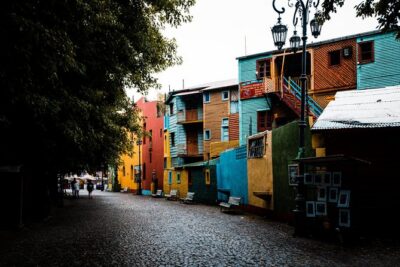
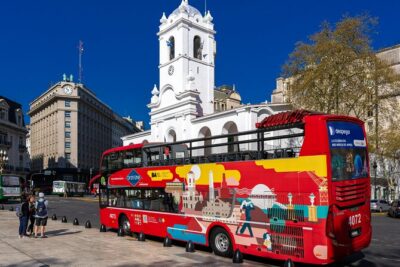
Buenos Aires Hop-On Hop-Off Bus, Free Walking Tours & Discounts
Read our review →