Reviewed · BUENOS AIRES TOURS
Buenos Aires Hop-On Hop-Off Bus and Exclusive Benefits
Buenos Aires is too big for one quick walk. Buenos Aires Bus links the city’s grand center, colorful La Boca, polished Recoleta, modern Puerto Madero, and leafy Palermo in one flexible sightseeing ride. I like the freedom to stay aboard for the full route or hop off whenever a neighborhood catches your eye. I also like the frequent service, with buses scheduled about every 15 minutes. The main caution is time: the complete loop takes roughly 3 hours and 20 minutes without stops, and traffic can stretch that much longer.
This is a useful first-day tool, especially if you are arriving with limited time or want to understand how Buenos Aires fits together. The audio guide comes in nine languages and the ticket includes discounts at selected restaurants, shops, and attractions. The weak spot is the commentary itself, which can be uneven in volume and quality, with music sometimes louder than the spoken information.
In This Review
- Key points to know before boarding
- Why this bus works in a city as large as Buenos Aires
- Starting at Plaza de Mayo and the city center
- Teatro Colón and the grand avenues
- La Boca and Caminito: the stop that deserves time
- Puerto Madero and Puente de la Mujer
- Recoleta, Palermo, and the city’s greener side
- The best way to use a 24, 48, or 72-hour pass
- Comfort, seats, and the audio guide
- Price, discounts, and what the ticket really includes
- Who will get the most from this experience
- Should you book the Buenos Aires Bus?
- FAQ
- How long does the complete Buenos Aires Bus route take?
- How often do the buses run?
- Can I use the ticket for more than one day?
- Where do I exchange my voucher?
- What languages are available for the audio guide?
- Are food and drinks included?
- Is the bus wheelchair accessible?
- What should I bring?
Key points to know before boarding
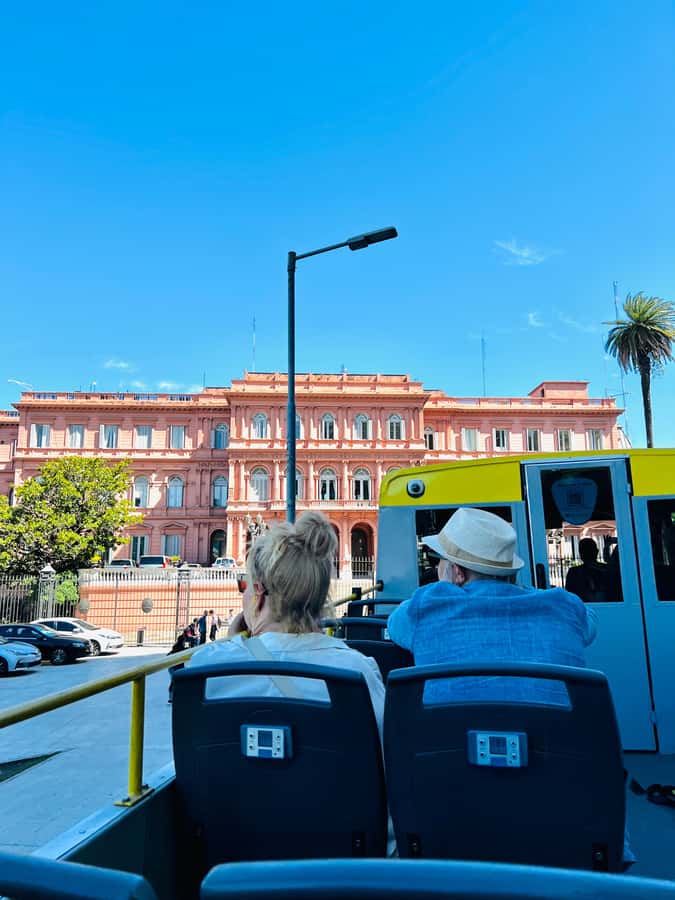
- The full route is a serious city circuit: Allow at least 3 hours and 20 minutes if you stay on board, and longer if you get off.
- The yellow bus is the practical choice: Buses generally arrive every 15 minutes, though traffic, demonstrations, and special events can cause delays.
- You get the best first look from the upper deck: Open-air seats offer good photo angles, while enclosed panoramic windows help on cold or wet days.
- The pass works best as transport plus sightseeing: Use it to connect far-flung areas instead of paying for several taxis or rideshares.
- The 48 or 72-hour option rewards a slower pace: Buenos Aires has too many worthwhile districts to explore properly in one hurried circuit.
- Audio quality can vary: Bring patience, adjust the volume, and use the ride mainly for orientation rather than a full history lesson.
Why this bus works in a city as large as Buenos Aires
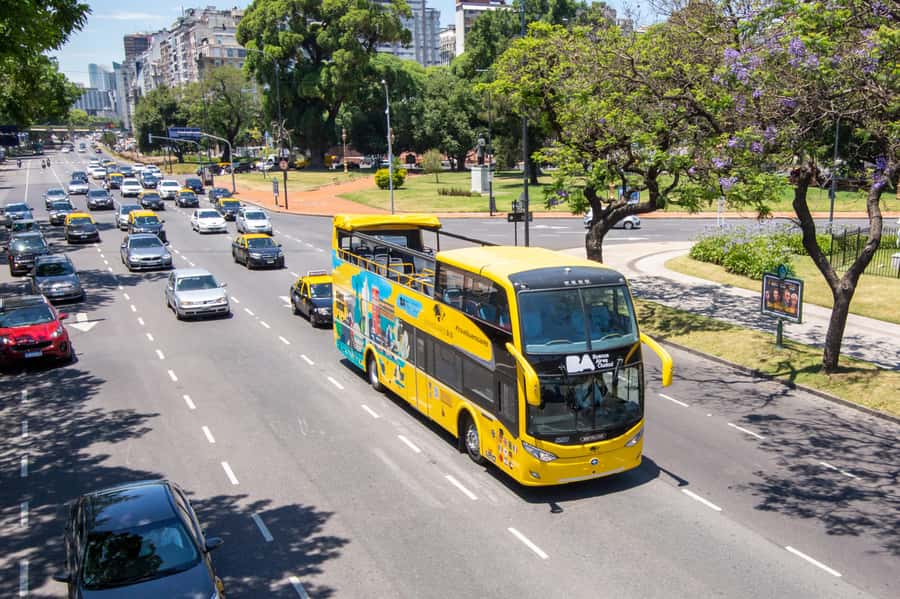
Buenos Aires spreads across a wide area, and its major sights do not sit neatly around one compact old town. Plaza de Mayo, La Boca, Recoleta, Palermo, and Puerto Madero each have a different feel and require time to connect.
That is where this bus earns its fare. You can make one broad circuit to get your bearings, then use the same ticket to return to the areas you want to see properly. It is often cheaper and simpler than arranging several taxis or rideshares across the city, especially if you plan to visit more than one district in a day.
The service is also helpful for solo visitors and first-time arrivals. You do not need to keep checking a transit map or work out a new route after every stop. Get off, walk around, and return to a marked bus stop when you are ready.
The ticket is available for 24, 48, or 72 hours, depending on the option you choose. A 24-hour pass is enough for a quick overview if you move fast. I would choose 48 hours for a balanced visit, especially if you want time in La Boca, Recoleta, and Palermo. The 72-hour ticket makes sense if you prefer short sightseeing sessions, long lunches, and less rushing.
A few more Buenos Aires trips worth putting side by side
- Local Foodie Adventure in Buenos Aires with Sherpa Food Tours
★ 5.0 · 6,875 reviews - Buenos Aires City Private Tour with Local Guide
★ 5.0 · 3,475 reviews - Buenos Aires Small-Group City Tour
★ 5.0 · 2,226 reviews
Starting at Plaza de Mayo and the city center
The central part of the route gives you the classic Buenos Aires introduction. Plaza de Mayo is the city’s symbolic heart, framed by important civic and religious buildings and connected to the grand avenues of the central district.
From the bus, you can take in the scale of the avenues without immediately committing to a long walk. This is a good place to hop off if you want to explore on foot, though the nearby sights are spread across several blocks.
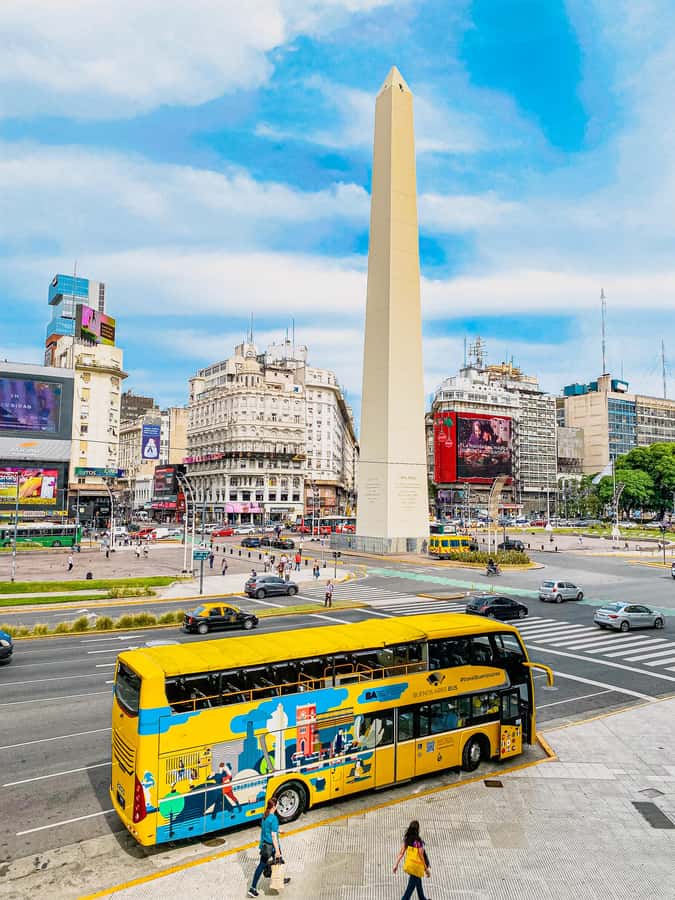
The route also passes the Obelisk, Buenos Aires’ most recognizable marker. It rises above Avenida 9 de Julio, one of the city’s broadest roads. From the upper deck, the view gives you a better sense of the city’s size than a ground-level stroll does.
This section is particularly useful early in your visit. You see the monumental center, learn the basic shape of the city, and begin to decide which districts deserve a second look. The audio commentary adds background in English, Spanish, Portuguese, French, German, Italian, Japanese, Chinese, and Russian, although the sound mix is not always consistent.
Teatro Colón and the grand avenues
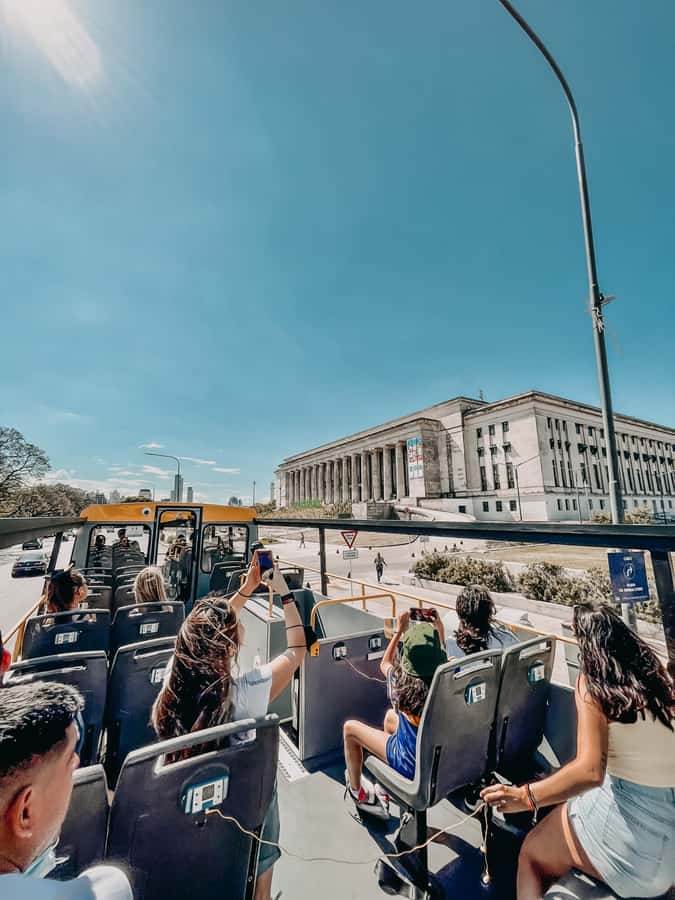
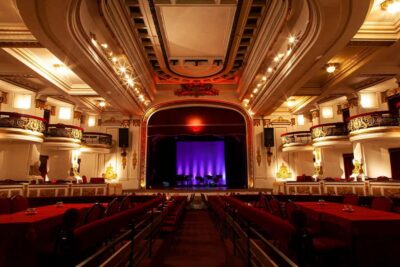
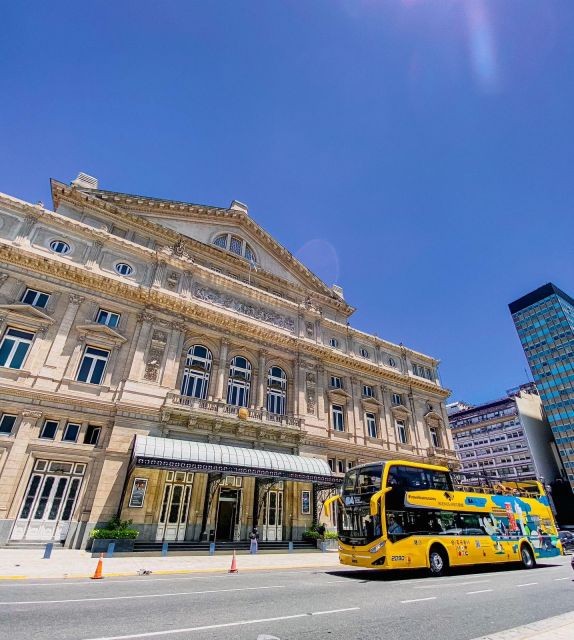
Teatro Colón is one of the major cultural landmarks along the city route. Even if you do not enter, the surrounding architecture helps explain Buenos Aires’ European-influenced style and its long connection with opera and performance.
The bus gives you a passing view rather than a full theater visit. That distinction matters. If Teatro Colón is a priority, treat the bus stop as a starting point for a separate visit, not as a substitute for going inside.
This part of the ride is strongest for orientation and photography. The upper deck gives you a broad view of facades, traffic, and wide avenues. On a cold or rainy day, an enclosed upper deck with panoramic windows can be much more comfortable than sitting outside. One useful feature is the choice between indoor and outdoor seating, depending on the weather.
The ride itself is not a guided walking tour. Commentary may provide a short explanation, then give way to music. Some audio tracks are more informative than others, and a few have been criticized for poor translations or unclear pronunciation. Keep the guide as a helpful extra, not the sole reason to buy the ticket.
La Boca and Caminito: the stop that deserves time
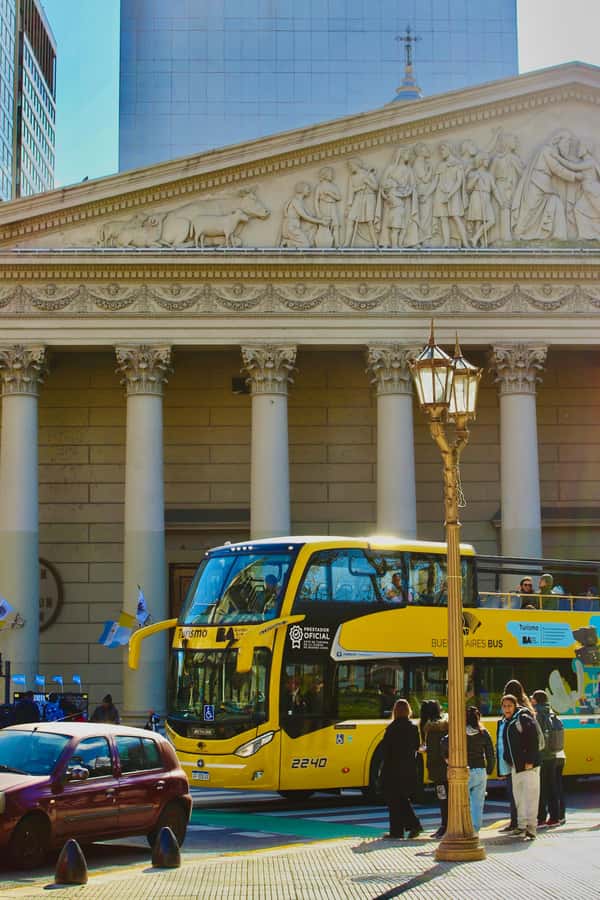
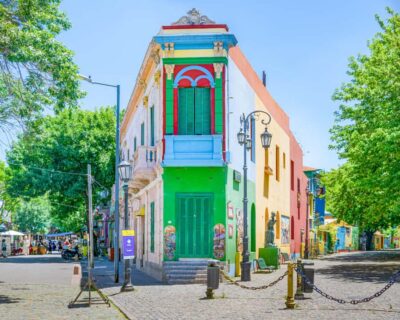
La Boca is one of the most distinctive parts of the route. Caminito is known for its colorful streets, painted buildings, and strong connection to Buenos Aires’ tango culture and football identity.
This is one of the places where you should get off rather than simply admire the view from the bus. Walk through the colorful streets, look into the small squares, and give yourself time to absorb the atmosphere. The bus is useful here because it saves you the effort of arranging separate transport between central Buenos Aires and the southern edge of the sightseeing route.
La Boca can also be one of the more crowded stops. Stay aware of your belongings and follow the marked route and busy public areas. The information provided for this activity does not promise a personal guide at every stop, so you are free to explore independently.
The journey to and from La Boca also reveals a different side of Buenos Aires from the elegant center and Recoleta. That contrast is one of the strongest reasons to use a city bus. You are not seeing a single polished district. You are comparing several very different parts of the capital in one day.
Still Argentina, but a completely different sort of afternoon:
- Buenos Aires Hop-On Hop-Off Bus, Free Walking Tours & Discounts
★ 4.5 · 2,218 reviews - Buenos Aires: Piazzolla Tango Show with Optional Dinner
★ 4.4 · 2,122 reviews - Buenos Aires: City Highlights Guided Tour with Transfer
★ 4.7 · 1,946 reviews - Buenos Aires: Hop-On Hop-Off City Bus Tour
★ 4.2 · 1,855 reviews
Puerto Madero and Puente de la Mujer

Puerto Madero offers a sharp change of tone. The former dock area is associated with modern buildings, waterside paths, and the distinctive Puente de la Mujer, or Woman’s Bridge.
This is a good stop for a slower walk, a meal, or a break from the traffic of the central avenues. The included discounts at selected restaurants may add value here, although you should check the current offers at the ticket office rather than assume every venue participates.
The bus gives you a practical way to connect Puerto Madero with the older central districts. That saves time and helps you compare the city’s historic core with its newer waterfront development.
If you stay on board, this portion is still worthwhile for the changing views. If you get off, allow more time than the bus timetable suggests. The advertised route time only covers the ride, not the walk from a stop to a landmark, lunch, or time spent exploring.
Recoleta, Palermo, and the city’s greener side
Recoleta is one of the city’s most polished districts, with grand architecture and well-known cultural sights. The bus route makes it easy to reach from the center without planning a separate connection.
Palermo brings a more spacious, leafy feel, with attractions such as the Rose Garden, known locally as El Rosedal. The upper deck is particularly useful here because you can photograph the parks and broad streets without constantly stopping to unfold a map.
This section is a strong reason to choose the bus for a full circuit. You move from the dense center to areas that feel more open and residential. The ride gives you a quick sense of how Buenos Aires changes from one neighborhood to the next.
Some stops are not directly beside the attraction named on the route. You may have a fairly long walk after getting off, so check the map before leaving the bus. A printed map is provided, but the small text and Spanish-only labels can make it hard to match stops with the audio guide. A compass would also help, since it is not always obvious which direction the bus is traveling.
The best way to use a 24, 48, or 72-hour pass
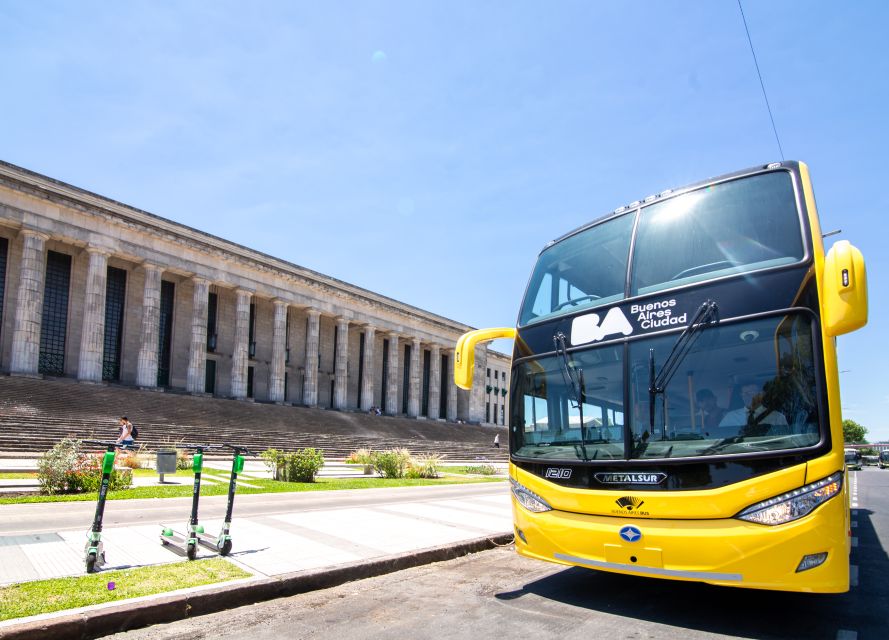
I would not begin by hopping off at the first interesting sight. Start with one complete ride if your schedule allows. This takes about 3 hours and 20 minutes without stops, and traffic may make it closer to four hours.
That first circuit helps you see the route’s order and identify the districts you want to revisit. Then use the remaining ticket time with a plan:
- Choose the 24-hour pass for a broad overview and a few carefully selected stops.
- Choose 48 hours if you want one day for orientation and another for longer visits.
- Choose 72 hours if you want to use the bus as a sightseeing shuttle between neighborhoods.
The ticket period begins with your first boarding, not necessarily at the start of the calendar day. That means you do not need to rush to board at 9 a.m. if your first use is later. Check the exact operating hours and real-time service information before setting out.
The buses are scheduled every 15 minutes, but this is not a guarantee during heavy traffic, public demonstrations, or major events. At busy times, a bus can arrive full. You may need to wait for the next one, and some people have reported waits of around 30 minutes to an hour when several buses were crowded.
Comfort, seats, and the audio guide
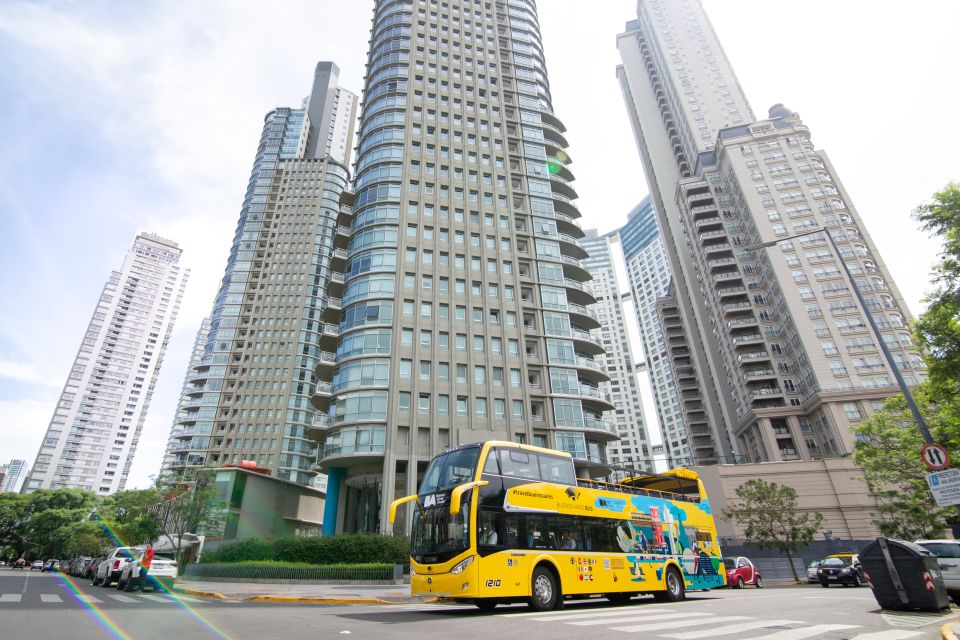
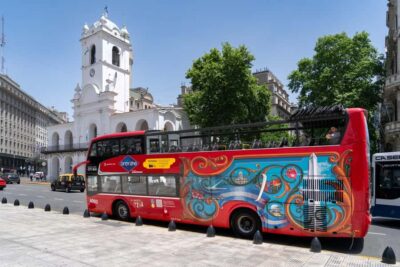
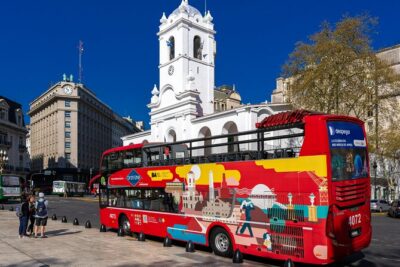
The bus has two useful seating choices. The open upper deck gives you the clearest views and best photo angles, but wind and traffic noise can make the commentary hard to hear. The enclosed upper deck, where available, is a better choice in cold or rainy weather and still offers panoramic windows.
Headphones are included, and the audio system supports nine languages. Staff are generally helpful with the equipment, and the bus also offers online tracking so you can check service information.
Sound is the main area needing improvement. Music between points of interest can be loud enough to drown out the commentary, and some recordings have awkward translations. A few passengers have also found crackling audio or equipment that did not work perfectly.
I would keep the volume low enough to avoid sudden blasts when music begins, then adjust it once the commentary starts. If the narration becomes distracting, simply enjoy the view. The route itself remains useful even when the audio falls short.
Price, discounts, and what the ticket really includes
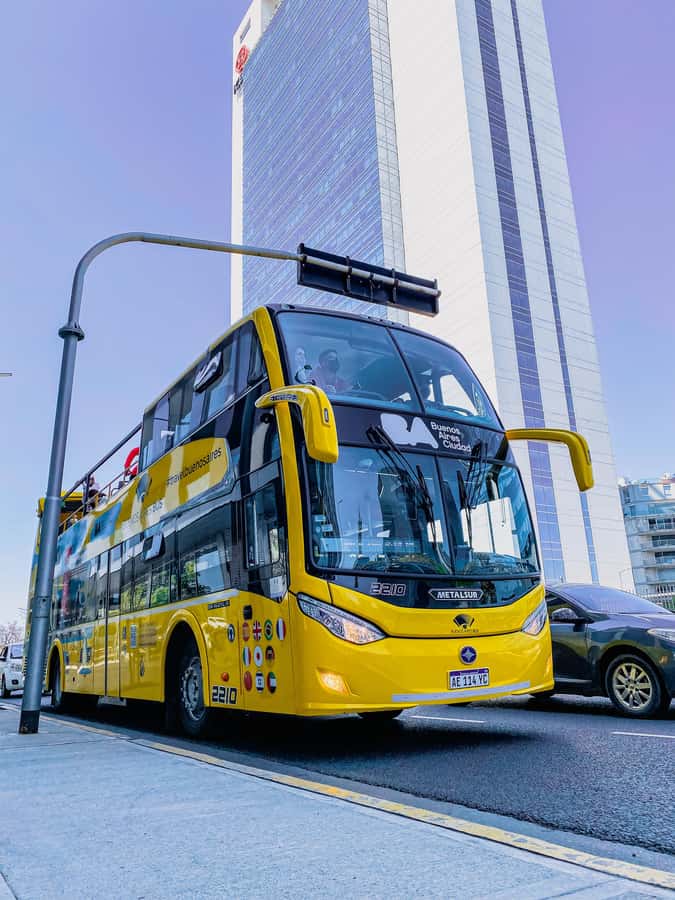
At about $35 per person, the price is reasonable if you use the pass for more than one long ride. A single panoramic circuit gives you a broad city orientation, but the strongest value comes from using the bus to connect neighborhoods over 48 or 72 hours.
Compare the fare with several taxi or rideshare trips across Buenos Aires. If you visit Plaza de Mayo, La Boca, Puerto Madero, Recoleta, and Palermo in one day, the bus can save both money and planning effort. It also lets you pause for lunch or coffee without losing the whole day to transport.
The ticket includes the bus, headphones, audio guide, online tracking, and selected discounts on clothing, restaurants, and other activities. Food, drinks, and entrance fees for attractions are not included. The discounts may be useful, but check the current list and conditions before building your budget around them.
To start, exchange your voucher at the ticket counter at 466 Córdoba Avenue. Arrive about 15 minutes before you plan to begin. Once you receive the new ticket, you can board at any bus stop. Bring your passport or identity card.
Who will get the most from this experience
I would recommend this bus to first-time visitors, people with only a day in Buenos Aires, and anyone who wants a simple overview before choosing where to spend more time. It also suits solo visitors who prefer not to coordinate several transfers.
It is useful for families and older visitors because you can rest while moving between districts. Wheelchair access is available, though you should still confirm current boarding details when booking.
You may enjoy it less if you want a detailed, expert-led account at every stop. The commentary is informative in parts, but the amount of spoken material varies. It is also not ideal for a tightly timed sightseeing plan, since traffic and crowded buses can affect your schedule.
The bus is not a replacement for walking Buenos Aires. It is a smart way to decide where to walk.
Should you book the Buenos Aires Bus?
Book it if you want a practical first look at a very large city, especially if you can use the ticket for two or three days. I would choose the 48-hour option for most people, then spend extra time in La Boca, Recoleta, Puerto Madero, or Palermo instead of trying to see everything from the seat.
Choose the 24-hour pass if your visit is short and you mainly want the full circuit. Pick 72 hours if you prefer a relaxed pace and plan to use the bus as a connection between neighborhoods.
The route, frequency, accessible buses, and friendly staff make this a solid sightseeing choice. Just allow extra time, expect some audio problems, and do not mistake the 3-hour-20-minute ride for a complete visit to Buenos Aires. It is your city orientation, transport link, and first set of ideas, all in one ticket.
FAQ
How long does the complete Buenos Aires Bus route take?
The full route takes approximately 3 hours and 20 minutes without getting off. Traffic, demonstrations, special events, and speed limits can make the ride longer.
How often do the buses run?
Buses are scheduled to arrive about every 15 minutes. Actual service can vary because of traffic and city events.
Can I use the ticket for more than one day?
Yes. Options are available for 24, 48, or 72 hours, depending on the ticket selected.
Where do I exchange my voucher?
You must exchange your voucher at the ticket counter at 466 Córdoba Avenue before boarding. After receiving your new ticket, you can board at any bus stop.
What languages are available for the audio guide?
The audio guide is available in Chinese, English, French, German, Italian, Japanese, Portuguese, Russian, and Spanish.
Are food and drinks included?
No. Food, drinks, and attraction entrance fees are not included. Alcoholic drinks are not allowed on the vehicle.
Is the bus wheelchair accessible?
Yes, the activity is wheelchair accessible.
What should I bring?
Bring your passport or identity card. You should also check the official website for real-time updates and service information before setting out.
Recently added around Buenos Aires
- Photo Session in Buenos Aires★ 5.0 · 26 reviews
- Your Personal Photographer in Buenos Aires★ 5.0 · 24 reviews
- Discover Buenos Aires’ independent art scene — Ticket included★ 5.0 · 30 reviews
- Your Private Photographer in Buenos Aires★ 5.0 · 4 reviews
- Yerba Mate Workshop – Learn to Drink Mate like a Local!★ 5.0 · 11 reviews
- Taste of Tradition: Yerba Mate & Alfajores Experience★ 4.0 · 5 reviews
- Wine tasting in OASIS Palermo★ 5.0 · 2 reviews
- Day Tour Classic★ 3.5 · 35 reviews
Buenos Aires Tours, compared.

Local Foodie Adventure in Buenos Aires with Sherpa Food Tours
Read our review →
Buenos Aires City Private Tour with Local Guide
Read our review →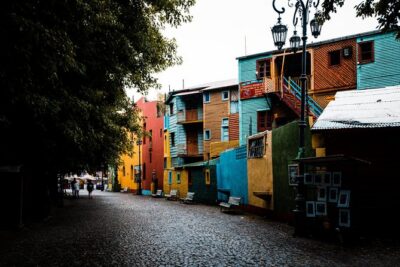
Buenos Aires Hop-On Hop-Off Bus, Free Walking Tours & Discounts
Read our review →