Reviewed · BUENOS AIRES TOURS
From Colonialism to Eclecticism, Buenos Aires arquitectonica
Buenos Aires reveals itself in stone. This three-hour walk links famous landmarks with less expected buildings, moving from the Cabildo and Casa Rosada to the Banco Hipotecario, CCK, Gran Rex, and Teatro Colón. I especially like the small group of up to four people and the chance to adjust the discussion around your architectural interests. The mate tasting and Argentine snack add a friendly cultural pause rather than simply another photo stop.
I also like that the route crosses several architectural periods in a compact part of central Buenos Aires. Juan Ignacio and Loli bring different strengths, with Juan focused on architects and dates, and Loli adding stories tied to Argentine and South American culture. The main consideration is pace: three hours on city streets can feel long in strong sun, and the tour does not include entry to Teatro Colón.
In This Review
- Key points at a glance
- Why this Buenos Aires architecture tour is different
- Plaza de Mayo and the city’s founding symbols
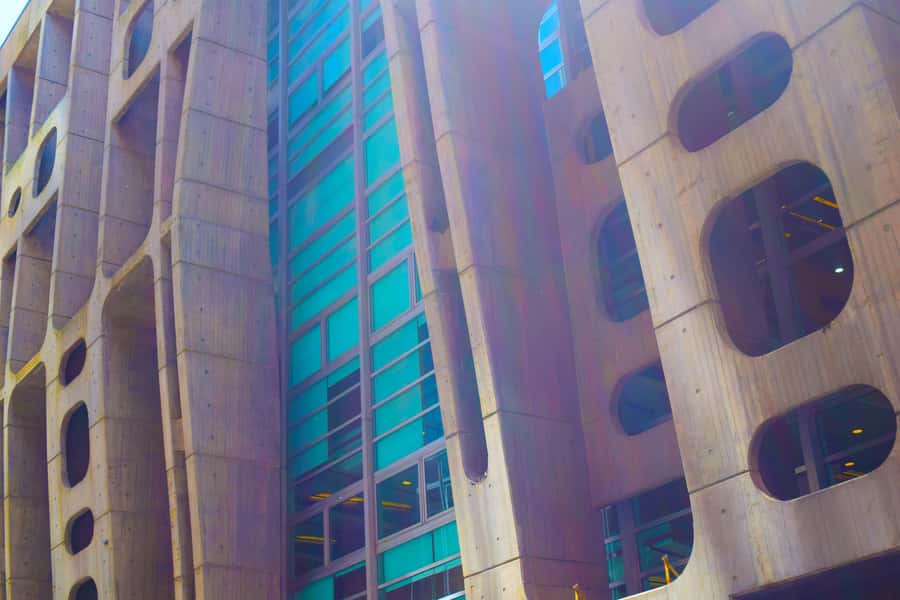
- Reconquista Street and the Banco Hipotecario’s Brutalist face
- CCK, the former Post and Telegraph Palace
- Corrientes Avenue, Gran Rex, and the Opera
- The Obelisk and a practical city panorama
- Plaza Lavalle and a final architectural contrast
- Mate, an Argentine tradition you can taste
- Teatro Colón and what is not included
- Who will get the most from the three-hour walk
- Is $25 a fair price?
- Should you book this Buenos Aires architecture tour?
- FAQ
- Where does the tour start?
- Where does the tour finish?
- How long does the tour last?
- What languages are available?
- How large is the group?
- Is Teatro Colón admission included?
- What is included in the price?
- Is lunch included?
- What should I bring?
- Can I cancel the booking?
Key points at a glance
- A compact architectural walk: Cover Plaza de Mayo, Reconquista Street, Corrientes Avenue, the Obelisk, Plaza Lavalle, and Teatro Colón in three hours.
- Brutalism beside colonial buildings: The Banco Hipotecario and CCK provide a sharp contrast to the Cabildo, Metropolitan Cathedral, and Casa Rosada.
- A very small group: With a limit of four people, you have a better chance to ask questions and shape the conversation.
- Mate is part of the tour: You taste the traditional Argentine drink and learn why it matters in local culture.
- A useful Obelisk viewpoint: A pause near the Obelisk staircase gives broad views across Avenida 9 de Julio and Corrientes Avenue.
- A city walk, not an indoor museum tour: Teatro Colón entry costs extra, and much of the experience focuses on exterior details and urban history.
Why this Buenos Aires architecture tour is different
Many first walks through Buenos Aires focus on grand plazas, historic politics, and the usual postcard views. This tour uses the buildings themselves as the organizing idea. That changes how you look at the center. A facade is not only decoration. It can show a period’s taste, technology, politics, and idea of public life.
You begin at Bolívar 65, at the intersection of Bolívar Street and Avenida de Mayo, beside Plaza de Mayo. The route then heads north and west through central Buenos Aires before reaching Teatro Colón. It is a practical introduction to the city because the stops are close enough to connect on foot, yet varied enough to avoid a parade of similar facades.
The tour is offered in English or Spanish and costs $25 per person. For a small-group walk with a live guide, that is a reasonable price, especially if you value conversation over a large scripted group. Water, a traditional Argentine snack, and mate tasting are included. Lunch and Teatro Colón admission are not.
A few more Buenos Aires trips worth putting side by side
- Local Foodie Adventure in Buenos Aires with Sherpa Food Tours
★ 5.0 · 6,875 reviews - Buenos Aires City Private Tour with Local Guide
★ 5.0 · 3,475 reviews - Buenos Aires Small-Group City Tour
★ 5.0 · 2,226 reviews
Plaza de Mayo and the city’s founding symbols
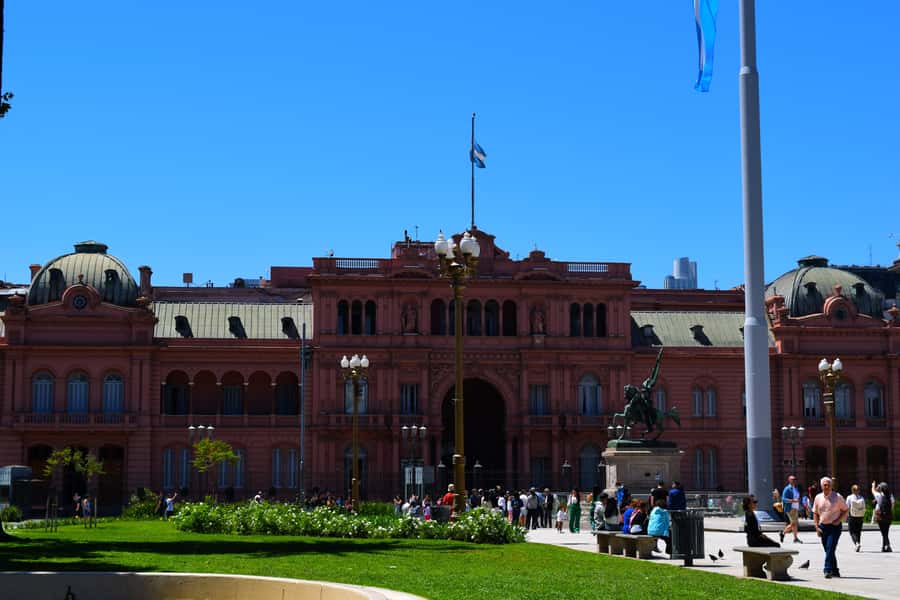
Plaza de Mayo is the right place to begin because it gathers several of Buenos Aires’ most important public buildings in one view. You see the Cabildo, the Metropolitan Cathedral, Casa Rosada, and Banco Nación. Each carries a different architectural language and a different role in Argentina’s public life.
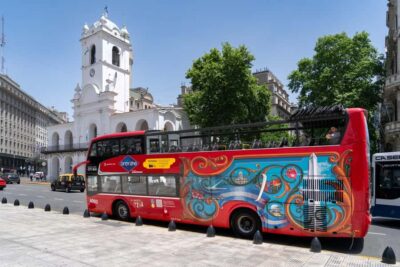
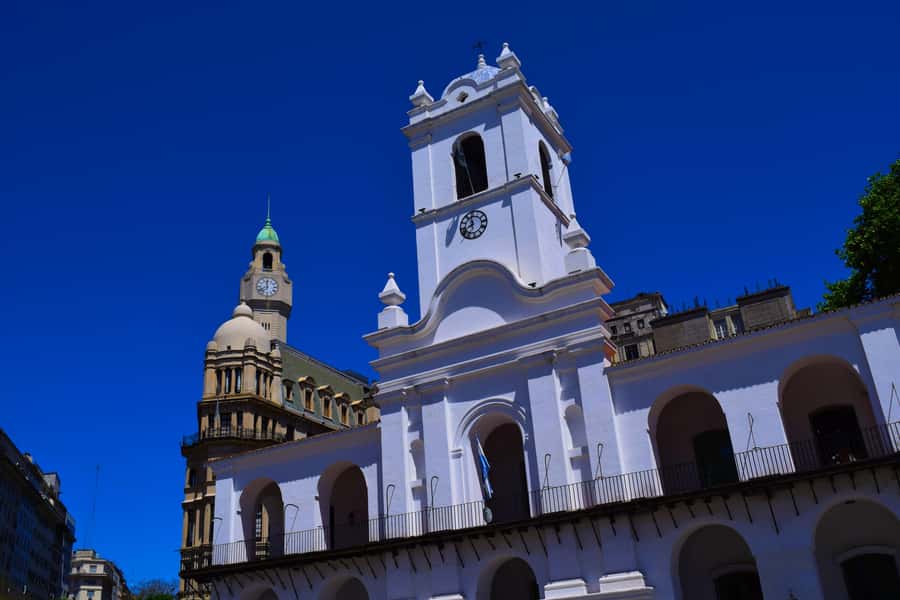
The Cabildo offers the clearest link to the colonial city. Its familiar facade helps set the starting point for the tour, but the guide’s job is to move you beyond the basic postcard description. Look for how the building fits into the square and how its form differs from the larger civic structures around it.
The Metropolitan Cathedral adds another layer. Here, the interest is not just the religious function, but the way a major church occupies a central political square. Casa Rosada brings the executive branch into the same scene, while Banco Nación represents the financial power that helped shape the modern capital.
I like this opening because it gives you a visual lesson before the walk becomes more specialized. You do not need a background in architecture. If you can compare a colonial civic building, a cathedral, a government palace, and a bank, you already have the basic tools for the rest of the route.
Reconquista Street and the Banco Hipotecario’s Brutalist face
From Plaza de Mayo, the walk continues along Reconquista Street toward the Banco Hipotecario headquarters. This is one of the most useful stops for anyone who assumes Buenos Aires is mainly about ornate European-style buildings.
The bank’s Brutalist facade brings hard lines, heavy concrete forms, and a more forceful modern character into the center. Its appearance can feel blunt beside the older buildings, which is exactly why it works well on this route. You see how Microcentro allows several periods to occupy the same few blocks.
This stop also reflects the tour’s promise to include buildings outside the standard sightseeing circuit. You may not have planned your day around a bank headquarters, but the building becomes memorable once someone points out its design choices and place in the city.
The format is especially useful here. Juan Ignacio is described as having a strong grasp of the architects connected with different periods, including their lifetimes and professional context. Loli adds cultural stories and links to wider South American life. With only four people, you can ask why a building looks the way it does instead of simply hearing a prepared paragraph and moving on.
CCK, the former Post and Telegraph Palace
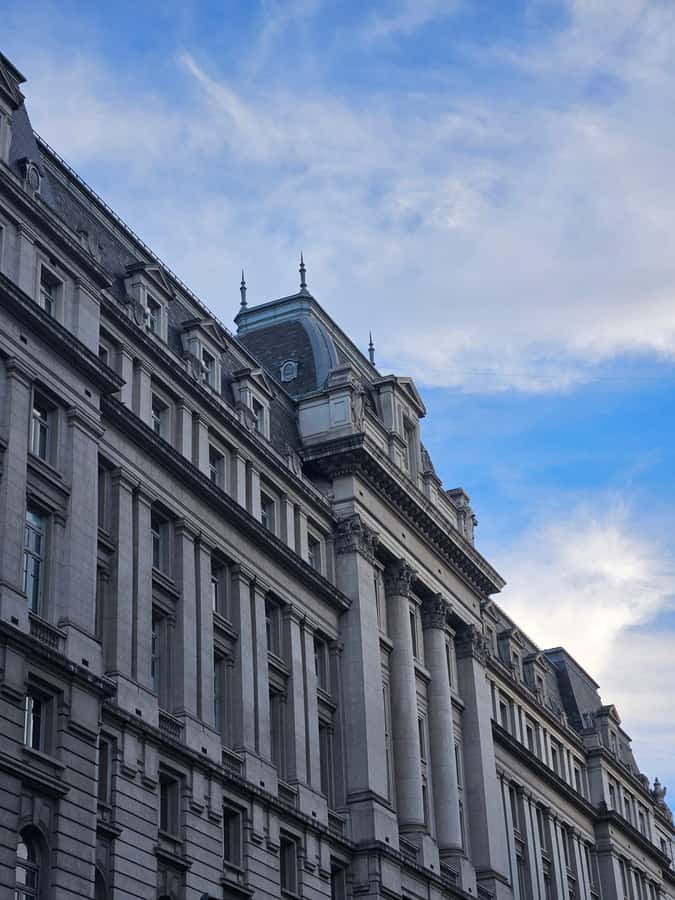
The next major stop is the Centro Cultural Kirchner, formerly the Palacio de Correos y Telégrafos, or Post and Telegraph Palace. The tour pauses at the facade and explains the building’s earlier role and later cultural identity.
This is a good point to think about how cities reuse large public buildings. A post and telegraph palace once supported communication across the country. Today, the CCK is known as a cultural center. The change says something about how Buenos Aires has adapted older civic structures to newer public purposes.
The stop is primarily exterior, so you should not expect a full indoor visit as part of the three-hour walk. Still, the facade and story help connect architecture with the changing needs of the city. That is one of the tour’s strongest ideas: buildings are not frozen objects. Their meaning shifts as Buenos Aires changes around them.
Still Argentina, but a completely different sort of afternoon:
- Buenos Aires Hop-On Hop-Off Bus, Free Walking Tours & Discounts
★ 4.5 · 2,218 reviews - Buenos Aires: Piazzolla Tango Show with Optional Dinner
★ 4.4 · 2,122 reviews - Buenos Aires: City Highlights Guided Tour with Transfer
★ 4.7 · 1,946 reviews - Buenos Aires: Hop-On Hop-Off City Bus Tour
★ 4.2 · 1,855 reviews
Corrientes Avenue, Gran Rex, and the Opera
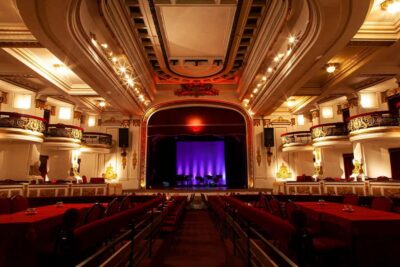
The route then turns toward Corrientes Avenue, one of the city’s best-known streets for nightlife, culture, and theater. The walk passes the Gran Rex and the Opera, two major entertainment landmarks with long connections to Buenos Aires’ performance life.
The Gran Rex is an especially good exterior stop because its clean, large-scale design feels different from the older civic buildings near Plaza de Mayo. The Opera adds another theater facade and another example of how Corrientes became a public stage in its own right.
You will learn about the theaters’ earlier high points and their continuing role as places for shows and large gatherings. The point is not simply that Buenos Aires has theaters. It is that these buildings help explain the city’s relationship with music, stage performance, evening culture, and public celebration.
This part of the route may appeal most to visitors who enjoy cities after dark, even if the tour takes place during the day. The daytime view lets you examine the architecture without the distraction of a full theater crowd. At the same time, you only see the exteriors unless you arrange separate admission.
The Obelisk and a practical city panorama
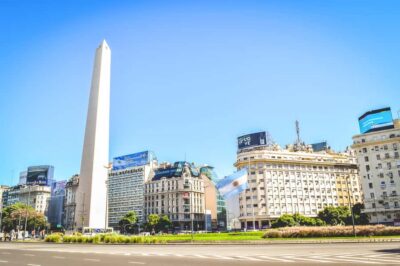
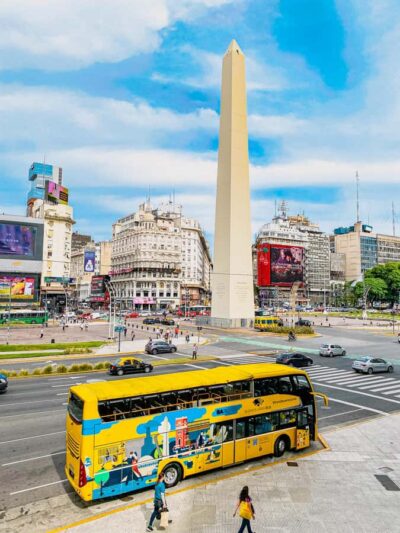
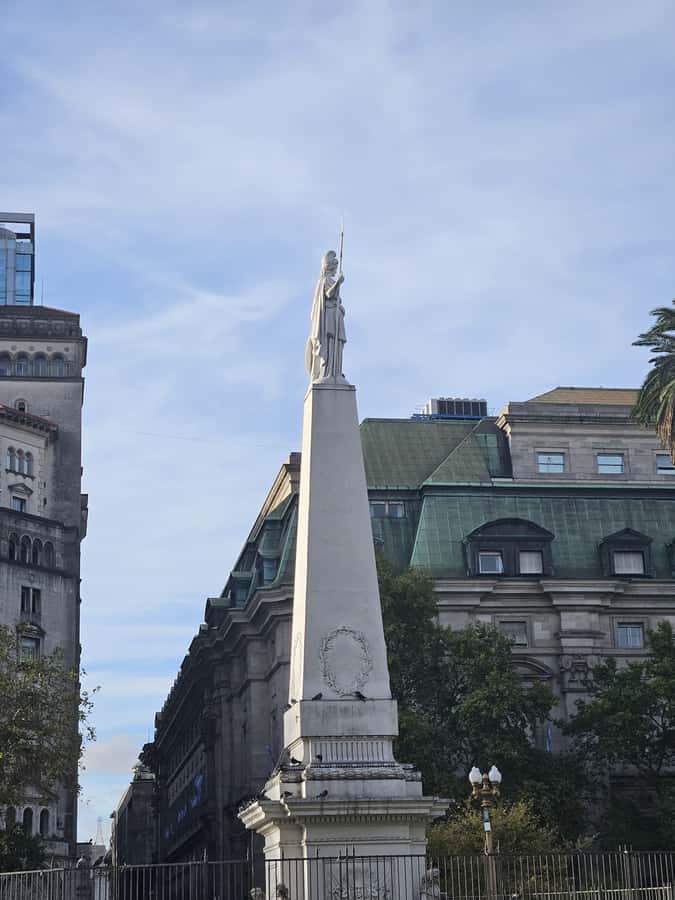
The first major part of the walk ends at the Obelisk and Plaza de la República. This is the spot where Buenos Aires’ scale becomes easiest to read. The Obelisk marks one of the city’s most recognizable intersections and carries strong political and social meaning.
A brief pause at the Obelisk staircase provides a panoramic viewpoint toward Avenida 9 de Julio and Corrientes Avenue. This is one of the tour’s most practical photo opportunities because you can see the roads, towers, traffic, and theater district relate to one another instead of viewing each landmark in isolation.
The crossing can be visually powerful, but it is also a busy urban setting. Stay close to the guide and follow local crossing signals. The stop is about orientation as much as photography. After seeing the Obelisk from ground level, the elevated view helps you understand why this point functions as a symbol of the capital.
Plaza Lavalle and a final architectural contrast
The final section moves toward Plaza Lavalle, where the Courts Palace faces the Julio Argentino Roca School. These buildings continue the tour’s habit of placing different public functions side by side.
The Courts Palace represents the legal system and institutional authority. The school offers a different public purpose, centered on education. Looking at them together gives you another chance to compare scale, facade treatment, and civic identity.
This is also where the tour’s broader theme comes into focus. Buenos Aires architecture is not one style repeated across the city. The center contains colonial references, grand civic buildings, financial structures, modern concrete forms, theater architecture, and educational and judicial buildings. The walk is valuable because it teaches you to notice those shifts rather than treating the city center as one historic block.
Mate, an Argentine tradition you can taste
The walk finishes near Teatro Colón with a mate tasting and a short explanation of the drink’s history and place in Argentine culture. Water and a traditional snack are included, along with the mate experience.
I consider this one of the best features because it changes the tone of the tour. You have spent the morning looking upward at facades and listening to architectural detail. Mate brings the focus back to daily life and social custom. It also gives you something concrete to remember beyond building names and dates.
The snack has included typical Argentine biscuits on at least one tour, though the exact item may vary. The tasting is not presented as a meal, so eat beforehand if you need a full breakfast or lunch. It is a cultural introduction, not a substitute for dining.
The guides’ personal style is central here. Juan and Loli have been praised for sharing their knowledge with generosity and ease, and for connecting architecture with Argentine culture. Their approach appears conversational, so this tour should suit you if you like asking questions and learning through discussion.
Teatro Colón and what is not included
Teatro Colón is the final landmark. The tour ends with the option to remain and take a guided visit inside the theater, but that admission is not included in the $25 price.
That separation is useful because it lets you choose. If you are mainly interested in architecture from the street, you can finish after the exterior explanation. If you want to see the interior, plan for an additional ticket and time. The provided details do not specify the separate admission price, visit length, or availability, so check those before booking the add-on.
The theater is a fitting ending. It gathers several subjects from the walk: public culture, performance, architectural style, and the way a building can become part of a city’s identity. It also gives you a clear next step if you want to continue exploring after the guide departs.
There is one practical point to confirm. The route description ends at Teatro Colón, while the meeting information says the activity ends back at the meeting point. Ask the provider to clarify the exact finish location when you book. The stated route itself clearly finishes at or near the theater.
Who will get the most from the three-hour walk
I would choose this tour if you want more than a checklist of major sights. It suits people who enjoy facades, city planning, public buildings, and the small stories behind places that are easy to pass without noticing.
It is also a good fit if you have already seen Plaza de Mayo and the Obelisk but want a fresh way to understand them. The tour revisits familiar landmarks while adding less obvious stops such as Banco Hipotecario and the former Post and Telegraph Palace.
The group limit of four is a major benefit for solo visitors, couples, or a small family group. You can ask about a particular period or request more attention to a preferred style. The experience is less suited to anyone who dislikes walking, outdoor sightseeing, or pauses focused on exterior architecture.
Bring comfortable shoes, sunglasses, a hat, sunscreen, and comfortable clothing. Water is included, but sun protection still matters. The route includes busy central avenues and several open plazas, so dress for conditions rather than for a formal theater visit.
Is $25 a fair price?
At $25, the tour offers three hours with a live English or Spanish-speaking guide, a group capped at four, water, a traditional snack, and mate tasting. I see the price as good value if you want personal guidance and cultural context rather than only photographs.
The value comes mainly from the guide interaction. A large group might give you the same landmarks, but a small group gives you more room to ask about architects, periods, and local customs. The ability to adjust the tour around your interests adds another useful layer.
The price does not cover lunch or entry to Teatro Colón, so budget separately if you want the indoor theater visit. The tour also does not replace a full Buenos Aires food tour or a dedicated museum visit. It is a focused architecture walk with a modest cultural tasting.
Free cancellation is available up to 24 hours before the activity for a full refund, and you can reserve now and pay later. Those flexible terms help if your Buenos Aires schedule is still changing.
Should you book this Buenos Aires architecture tour?
Book it if you want to understand why Buenos Aires feels architecturally mixed, and if you prefer a small, conversational walk to a standard group circuit. The combination of Plaza de Mayo landmarks, Brutalist Banco Hipotecario, the CCK, Corrientes theaters, the Obelisk, Plaza Lavalle, and Teatro Colón gives you a broad view in three hours.
I would be especially happy to recommend it to architecture fans, repeat visitors, and curious first-time visitors who want local context. Juan Ignacio and Loli’s different strengths, the mate tasting, and the option to shape the discussion make the experience feel personal.
Skip it if your priority is going inside every major building, eating a full meal, or avoiding several hours on foot. Also confirm the final meeting point and Teatro Colón admission before booking. For the right audience, $25 buys a thoughtful introduction to central Buenos Aires and a better eye for the buildings you will keep seeing afterward.
FAQ
Where does the tour start?
It starts in Plaza de Mayo at Bolívar 65, at the intersection of Bolívar Street and Avenida de Mayo.
Where does the tour finish?
The route description finishes at Teatro Colón. The meeting information also says the activity ends back at the meeting point, so confirm the exact finish location with Viajes de Juani tours before booking.
How long does the tour last?
The walking tour lasts three hours.
What languages are available?
The live tour guide is available in English and Spanish.
How large is the group?
The activity is limited to four participants.
Is Teatro Colón admission included?
No. Entry to Teatro Colón is not included. You have the option to stay afterward and take a guided visit inside the theater.
What is included in the price?
The price includes an English or Spanish-speaking guide throughout the tour, water, a traditional Argentine snack, and a mate tasting.
Is lunch included?
No. Lunch is not included.
What should I bring?
Bring comfortable shoes, sunglasses, a hat, sunscreen, and comfortable clothing.
Can I cancel the booking?
Yes. You can cancel up to 24 hours in advance for a full refund. You can also reserve now and pay later.
Recently added around Buenos Aires
- Photo Session in Buenos Aires★ 5.0 · 26 reviews
- Your Personal Photographer in Buenos Aires★ 5.0 · 24 reviews
- Discover Buenos Aires’ independent art scene — Ticket included★ 5.0 · 30 reviews
- Your Private Photographer in Buenos Aires★ 5.0 · 4 reviews
- Yerba Mate Workshop – Learn to Drink Mate like a Local!★ 5.0 · 11 reviews
- Taste of Tradition: Yerba Mate & Alfajores Experience★ 4.0 · 5 reviews
- Wine tasting in OASIS Palermo★ 5.0 · 2 reviews
- Day Tour Classic★ 3.5 · 35 reviews
Buenos Aires Tours, compared.
Local Foodie Adventure in Buenos Aires with Sherpa Food Tours
Read our review →
Buenos Aires City Private Tour with Local Guide
Read our review →
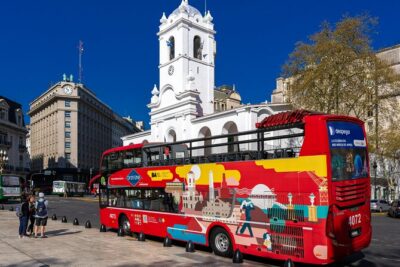
Buenos Aires Hop-On Hop-Off Bus, Free Walking Tours & Discounts
Read our review →