Reviewed · BUENOS AIRES TOURS
Buenos Aires to get to know each other.
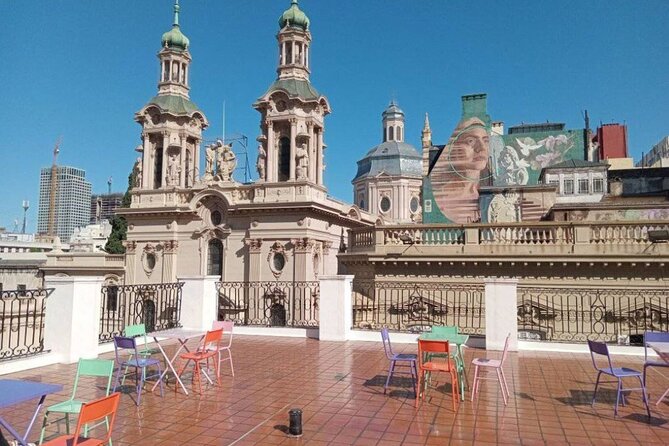
Buenos Aires rewards a curious first walk. This three-hour city tour links the old political center, striking architecture, the Obelisk, and Teatro Colón, giving you a useful first look at how Buenos Aires fits together. The route runs from Palacio Libertad to the opera house and is limited to 12 people.
I especially like the architecture focus, from the unusual Otto Wulff building to the five domes of Edificio Bencich. I also like the chance to hear local stories from guide Angel Mati, whose strongest praise centers on his passion for Buenos Aires, history, and design. The main concern is provider reliability: one serious account describes a confirmed booking with no guide appearing and no response to calls or messages.
In This Review
- Key points before you book
- Why this route works for a first look at Buenos Aires
- Starting at Palacio Libertad and the old Post Office Palace
- Plaza de Mayo: the civic heart of the city
- Colonial corners around Buenos Aires Museo
- Colegio Nacional and San Ignacio Loyola
- Otto Wulff, a building full of eyes and animals
- Edificio Bencich and the five domes
- The Obelisk and a quick view over the city
- Teatro Colón and the final stretch
- What the $35 price really buys you
- The guide factor and a practical caution
- Who should take this Buenos Aires walk?
- Should you book Buenos Aires to Get to Know Each Other?
- FAQ
- How long does the tour last?
- Where does the tour start?
- Where does the tour end?
- Is the tour offered in English?
- How many people can join the tour?
- Is food included?
- Are admission fees included?
- What is the cancellation policy?
Key points before you book
- The route moves from Palacio Libertad to Teatro Colón, crossing the historic center rather than circling one small area.
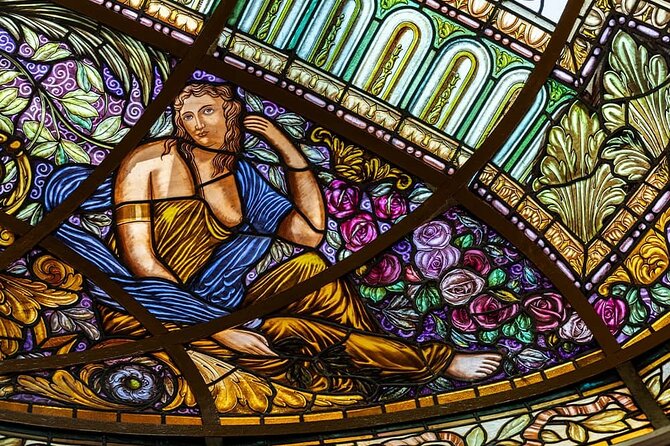
- Architecture is the main attraction, with Baroque, Italianate, Art Nouveau, Neoplateresque, colonial, and modernist details along the way.
- The small group limit is 12 people, a useful size for questions and close street-level viewing.
- The Obelisk includes access to a viewpoint, adding a city view to what is otherwise a walking tour.
- Food is not included, so bring extra cash if you want empanadas, a choripán, a meat sandwich, salad, or wine.
- The tour lasts about three hours to three hours and 20 minutes, with several short stops rather than long museum visits.
Why this route works for a first look at Buenos Aires
Buenos Aires can feel confusing at first. Its wide avenues, grand public buildings, old churches, modern towers, and European-inspired facades do not always reveal how the city developed. This route helps by putting the pieces in a sensible order.
You begin at Palacio Libertad, formerly the Centro Cultural Kirchner, near Avenida Corrientes and Luna Park. From there, the route heads toward Plaza de Mayo, San Telmo and the old colonial center, then turns north toward the Obelisk and Teatro Colón. You are not simply checking off famous sights. You are following a broad line through the city’s civic, religious, commercial, and cultural core.
The tour is offered in English and uses a mobile ticket. It includes all fees and taxes, but not meals or personal purchases. Public transportation is nearby, and the meeting and ending points are central enough to fit neatly into a day of sightseeing.
The schedule is brisk. Most stops last 10 to 20 minutes. That is enough time for an explanation, photographs, and a closer look at a facade, but not enough for a full museum visit or an extended interior tour. I would treat this as an orientation walk, not a series of guided admissions.
A few more Buenos Aires trips worth putting side by side
- Local Foodie Adventure in Buenos Aires with Sherpa Food Tours
★ 5.0 · 6,875 reviews - Buenos Aires City Private Tour with Local Guide
★ 5.0 · 3,475 reviews - Buenos Aires Small-Group City Tour
★ 5.0 · 2,226 reviews
Starting at Palacio Libertad and the old Post Office Palace
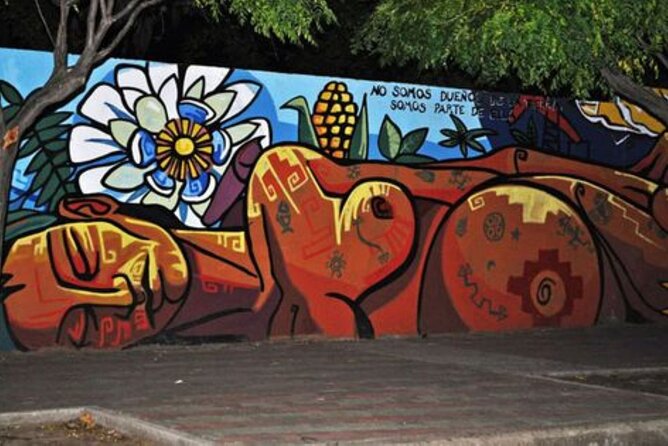
The meeting point is Palacio Libertad, at Sarmiento 151. The building was formerly the Post Office Palace and is now a cultural center with free activities. Its location, close to Avenida Corrientes and Luna Park, puts you in one of the city’s key central zones from the start.
The scheduled stop is about 20 minutes, and admission is not included. The value here comes from the building’s role and setting. You get an early sense of Buenos Aires as a city that has repeatedly reused grand public spaces for new cultural purposes.
Do not expect a long indoor program from the tour itself. The stop is short, and the route has several more buildings ahead. If you arrive early, the surrounding streets give you a practical place to get oriented before the group begins.
Plaza de Mayo: the civic heart of the city
Plaza de Mayo is the tour’s clearest history lesson. It is the city center, with Casa Rosada facing the square and buildings around it showing European, colonial, and postmodern influences.
The guide points out the three immense avenues that open from the plaza, as well as the remains of an old fort behind the Government House. These details help explain why this space matters. Plaza de Mayo is not just a pretty public square. It is the point from which political power, public gatherings, and major city routes radiate.
This stop lasts about 20 minutes, and admission is included. That wording matters because you are not being asked to pay an extra entrance fee for the square or the included portion of the visit. The time is still short, so expect an outdoor explanation rather than a complete tour of Casa Rosada.
Bring water. Buenos Aires can make a three-hour walk feel longer than the clock suggests, especially if the day is warm and the group pauses in open squares.
Colonial corners around Buenos Aires Museo
The Buenos Aires Museo, also known as Museo de la Ciudad, brings the route into a more intimate part of the historic center. The stop includes the oldest house in the city, known as Altos de Elorriaga, along with the Baroque Convent of San Francisco and El Ávila, described as the city’s oldest bookstore.
You also see the Victorian building of the Pacific Railway Company, topped by an onion dome. The surrounding alleyways are compared with Barcelona, a useful clue to the atmosphere: tight streets, layered facades, and a mix of old styles that reward looking upward.
The scheduled time is only 15 minutes, and museum admission is not included. That makes this another exterior-focused stop unless you choose to return later on your own. I like the variety here. After the broad political scale of Plaza de Mayo, the route shifts to houses, religious buildings, shops, and side streets.
If your interest is architecture, this may be one of the most rewarding parts of the walk. If you want to spend time inside every museum and church, the fixed schedule will feel too fast.
Still Argentina, but a completely different sort of afternoon:
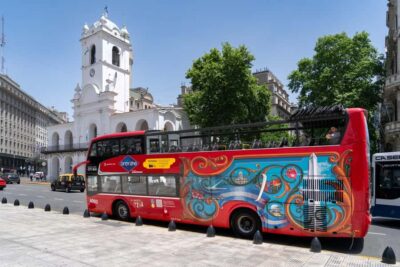
- Buenos Aires Hop-On Hop-Off Bus, Free Walking Tours & Discounts
★ 4.5 · 2,218 reviews - Buenos Aires: Piazzolla Tango Show with Optional Dinner
★ 4.4 · 2,122 reviews - Buenos Aires: City Highlights Guided Tour with Transfer
★ 4.7 · 1,946 reviews - Buenos Aires: Hop-On Hop-Off City Bus Tour
★ 4.2 · 1,855 reviews
Colegio Nacional and San Ignacio Loyola

Colegio Nacional de Buenos Aires is linked with the University of Buenos Aires and has been an important national school since the late 19th century. Its alumni include presidents and scientists, and Albert Einstein gave a master class there.
The history is impressive, but the stop is only about 10 minutes. Think of it as a quick look at an institution tied to Argentina’s intellectual and political life, followed by a nearby religious landmark.
That landmark is San Ignacio Loyola, described as the oldest church in Buenos Aires. Its colonial Baroque design is a strong contrast to the school’s institutional character, and the church is associated with tunnels beneath the building. Admission is not included, so the amount of interior access may depend on the schedule and current opening arrangements.
This pair of stops works well because you see two different kinds of authority side by side: education and religion. The guide’s historical explanations are especially useful here. Angel Mati is praised for connecting buildings with people and events rather than treating facades as isolated objects.
Otto Wulff, a building full of eyes and animals
Edificio Otto Wulff is the route’s most eccentric architectural stop. The building features sculptures of South American animals, numerous eyes, and Atlantes, the sculpted figures that appear to hold up part of the structure.
It was designed by Hungarian architect Rônow and has two domes with references to the Austro-Hungarian crown. The style is identified as Jugendstil, a form of Art Nouveau, and the building is presented as unique in the world for that combination of details.
The stop lasts about 15 minutes, with admission not included. That is not much time for a building this visually busy. You will want to look slowly at the upper stories, where the animals and human figures are easy to miss from street level.
This is where a guide adds real value. A quick photograph will show you the outline, but a good explanation can point out the symbolic details. If you enjoy unusual buildings more than standard postcard views, Otto Wulff may be your favorite stop.
Edificio Bencich and the five domes
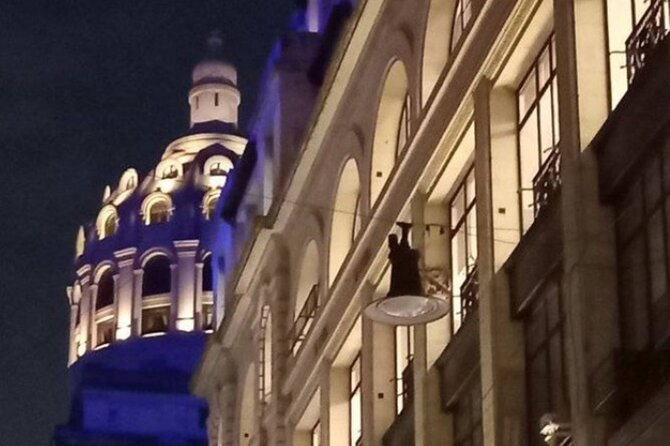
Edificio Bencich changes the mood again. At the corner known for its five domes, the former Boston Bank building displays Spanish Neoplateresque design. Look for octagonal roofs, Art Deco domes, finials, and gazebos opening over the North Diagonal.
The description sounds technical, but you do not need an architecture degree to enjoy it. The useful thing is learning to compare shapes: rounded domes against pointed roof forms, heavy ornament against open sky, and Spanish-inspired decoration beside Buenos Aires avenues shaped by later urban planning.
The stop takes about 15 minutes and is free. That helps the $35 price feel more reasonable, since the route includes several notable buildings without a string of extra entry charges.
This is a good place to ask questions. The group limit of 12 should make it easier to hear the guide and get a direct answer, though the experience will still depend on the day’s pace and the guide’s presentation.
The Obelisk and a quick view over the city
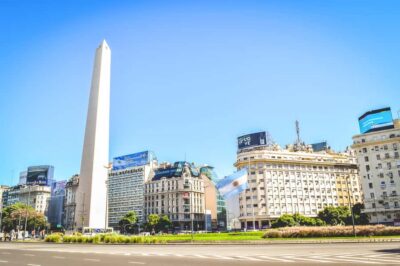
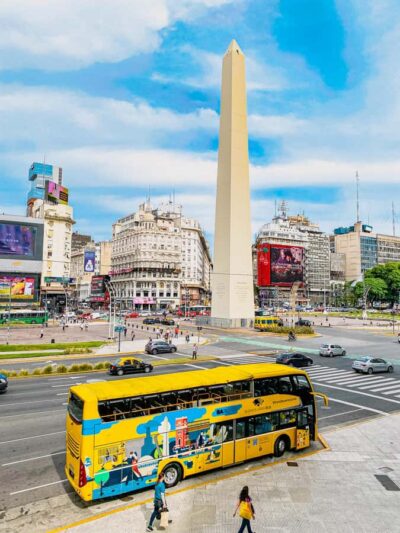
The Obelisk is one of Buenos Aires’s clearest symbols. Alberto Prebisch designed it during the city’s modernist renewal, at a time when the old Belle Époque character was giving way to the modernist direction of the 1930s.
The tour includes access to a viewpoint, which gives this stop something more than a roadside photograph. The Obelisk is also tied to national celebrations, so the guide can place the monument in both an architectural and public-life context.
The scheduled stop is about 10 minutes. That is short, but the viewpoint makes it one of the route’s more memorable moments. Keep your expectations practical: this is a brief look, not a long observation session.
The Obelisk sits among major traffic routes, so stay close to the group and listen for instructions. This is an urban walk, not a quiet stroll through a park.
Teatro Colón and the final stretch
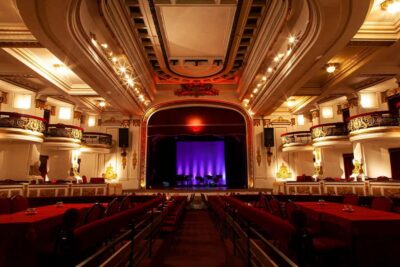
The tour ends at Teatro Colón, on Cerrito 628. Buenos Aires’s National Colosseum is known for its Italianate design, major acoustics, chamber subfloors, and the celebrated performers who built careers there.
The theater is surrounded by a dense collection of buildings and public spaces, including Lavalle, the Palace of Tribunals, Teatro Hispano Cervantes, Libertad Synagogue, and Escuela Roca. Even if you do not enter, the area provides a fitting final chapter: opera, law, education, religion, and public squares all gathered within a few blocks.
The scheduled stop is about 15 minutes, and admission is not included. You finish at a useful central location, close to transport and other sights. If you want to visit the theater properly, you will need to make separate arrangements.
Ending here also makes the tour easy to combine with an evening plan. You can continue around the central area, arrange a meal, or head back by public transportation without returning to the starting point.
What the $35 price really buys you
At $35 per person, the tour is priced as a guided city orientation rather than a museum-heavy excursion. You are paying for about three hours of structure, local explanation, route planning, and access to the Obelisk viewpoint, along with included fees and taxes.
The price is fair if you value context. Buenos Aires has enough ornate buildings to fill a camera, but the city becomes more interesting when someone explains why a building looks Hungarian, Spanish, Italianate, colonial, or modernist. Several stops are free or exterior views, so the cost is not going toward a long list of paid admissions.
The value is weaker if you mainly want entry into museums, churches, or Teatro Colón. Most stops last 10 to 20 minutes, and several list admission as not included. In that case, you may prefer to use the route as a map for later independent visits.
Meals are not included. The food options listed include empanadas, breaded meat, meat sandwiches, choripán, salad, and red wine. Bring extra cash if you want to buy something, and bring water regardless.
The guide factor and a practical caution
Angel Mati receives strong praise for his historical and architectural explanations, his friendly manner, and his ability to answer questions about Buenos Aires. One particularly useful strength is his attention to local culture beyond standard monuments. He has also helped arrange football match tickets and guidance after a tour, though that is separate from the advertised experience and should not be treated as part of the package.
Several accounts describe him as passionate about the city and especially good with architecture. That fits this route, which asks a guide to explain many styles in a short period.
There is also a serious warning. One customer arrived for a confirmed afternoon booking, contacted the guide before and after the scheduled start, and reported that nobody appeared or responded. The account also says no refund had arrived at the time it was written.
That single report conflicts sharply with the positive accounts, but it is too serious to ignore. I would confirm the meeting point and start time directly before setting out, keep the booking confirmation on your phone, and use the platform’s support process quickly if the guide does not appear. This is not a criticism of the route itself. It is a reminder that a good itinerary still depends on dependable operations.
Who should take this Buenos Aires walk?
I would recommend it most strongly to first-time visitors who want a guided introduction to central Buenos Aires. It suits people who enjoy buildings, city planning, political history, churches, and local stories more than long indoor museum visits.
It also works for visitors with only a short stay. The route covers enough ground to show how the central districts connect, and the finish at Teatro Colón leaves you in a useful part of the city.
You may want something else if you dislike walking, need long stops, or want a detailed tour inside Casa Rosada, San Ignacio Loyola, Buenos Aires Museo, or Teatro Colón. The tour is also less suitable if you need a fully flexible schedule, since the stop lengths are set and the route has several points to cover.
Most people can participate, and the tour is near public transportation. Still, wear sensible shoes and carry water. The city streets, traffic crossings, and repeated short stops require steady movement.
Should you book Buenos Aires to Get to Know Each Other?
Book it if you want a compact, architecture-led introduction to central Buenos Aires, especially if you like hearing the story behind strange domes, old schools, churches, banks, and public monuments. The Obelisk viewpoint and the finish at Teatro Colón add useful highlights to a route that could otherwise feel like a standard city walk.
I would be cautious about booking without confirming the operator close to the date. The guide’s reported strengths are a good match for the itinerary, but the no-show account raises a real service concern. For a $35 tour, the price is reasonable when the experience runs as planned. Make the booking if you value local interpretation, but protect your schedule by checking that the tour is still operating before you leave for Palacio Libertad.
FAQ
How long does the tour last?
The experience lasts approximately three hours to three hours and 20 minutes.
Where does the tour start?
It starts at Palacio Libertad, Centro Cultural Domingo Faustino Sarmiento, at Sarmiento 151 in Buenos Aires.
Where does the tour end?
The tour ends at Teatro Colón, at Cerrito 628.
Is the tour offered in English?
Yes. English is listed as the available language.
How many people can join the tour?
The maximum group size is 12 people.
Is food included?
No. Food and drinks are not included. Listed options include empanadas, breaded meat, meat sandwiches, choripán, salad, and red wine.
Are admission fees included?
All fees and taxes are included, but admission is not included at several stops, including Palacio Libertad, Buenos Aires Museo, Colegio Nacional de Buenos Aires, Edificio Otto Wulff, and Teatro Colón. The Plaza de Mayo and Obelisk portions list admission as included, while Edificio Bencich is free.
What is the cancellation policy?
You can cancel up to 24 hours before the start time for a full refund. Cancellations or changes made less than 24 hours before the start time are not refunded. If poor weather causes the tour to be canceled, you will be offered another date or a full refund.
Recently added around Buenos Aires
- Photo Session in Buenos Aires★ 5.0 · 26 reviews
- Your Personal Photographer in Buenos Aires★ 5.0 · 24 reviews
- Discover Buenos Aires’ independent art scene — Ticket included★ 5.0 · 30 reviews
- Your Private Photographer in Buenos Aires★ 5.0 · 4 reviews
- Yerba Mate Workshop – Learn to Drink Mate like a Local!★ 5.0 · 11 reviews
- Taste of Tradition: Yerba Mate & Alfajores Experience★ 4.0 · 5 reviews
- Wine tasting in OASIS Palermo★ 5.0 · 2 reviews
- Day Tour Classic★ 3.5 · 35 reviews
Buenos Aires Tours, compared.
Local Foodie Adventure in Buenos Aires with Sherpa Food Tours
Read our review →
Buenos Aires City Private Tour with Local Guide
Read our review →
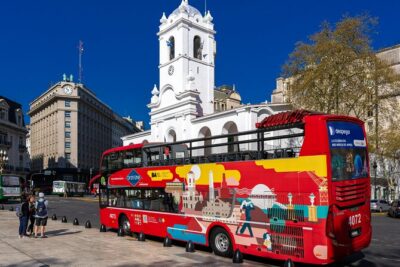
Buenos Aires Hop-On Hop-Off Bus, Free Walking Tours & Discounts
Read our review →