Reviewed · BUENOS AIRES TOURS
Buenos Aires for curious people
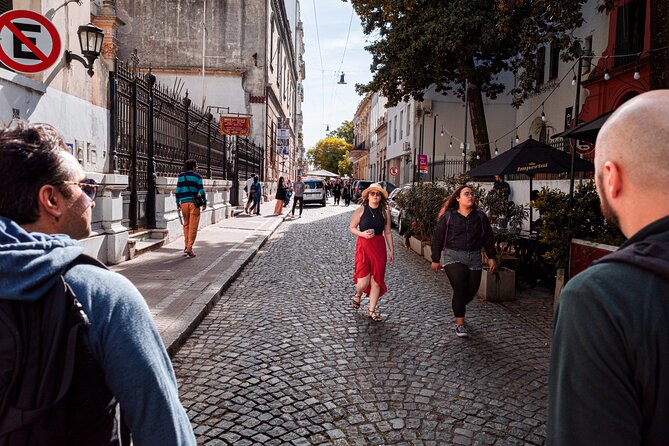
History gets personal on these streets. Buenos Aires for Curious People is a two to three hour walking tour through San Telmo and the city center, built for people who want more than quick photos of Plaza de Mayo. You visit major sights such as Casa Rosada and Plaza Dorrego, but the route also includes a former detention center, a Swedish church, an old café, and other places that most standard city walks skip. I especially like the small group of no more than eight people and the guide’s focus on Argentine politics, culture, and everyday life.
The guides are another strong point. Nico, Nicolas, Ignacio, Sophia, and Santiago are praised for clear English, lively storytelling, and a willingness to answer difficult questions. I also like the use of old maps and photographs to show how Buenos Aires changed. The main drawback is pace: it is a real walking tour, and one account found that slow participants made the afternoon harder for everyone.
In This Review
- Key points at a glance
- What kind of Buenos Aires tour is this?
- Starting at Bar Britanico and Parque Lezama
- A Swedish church and the layers of San Telmo
- Memory Walk and Argentina’s difficult recent past
- San Pedro González Telmo and colonial Buenos Aires
- Plaza Dorrego, the social heart of old San Telmo
- Mercado San Telmo and the city’s Italian connections
- From Puente de la Mujer to Casa Rosada
- Why the small group matters
- The guides and the teaching style
- Price, timing, and practical value
- Who should book Buenos Aires for Curious People?
- Should you book it?
- FAQ
- How much does the tour cost?
- How long does the experience last?
- How many people can join the tour?
- Where does the tour start?
- Where does the tour end?
- Is admission to the stops included?
- Can I cancel for a full refund?
- What happens if bad weather cancels the tour?
- Are service animals allowed?
Key points at a glance
- A serious history walk: The tour connects the founding of Buenos Aires with Argentina’s military dictatorship, politics, economics, and modern social issues.
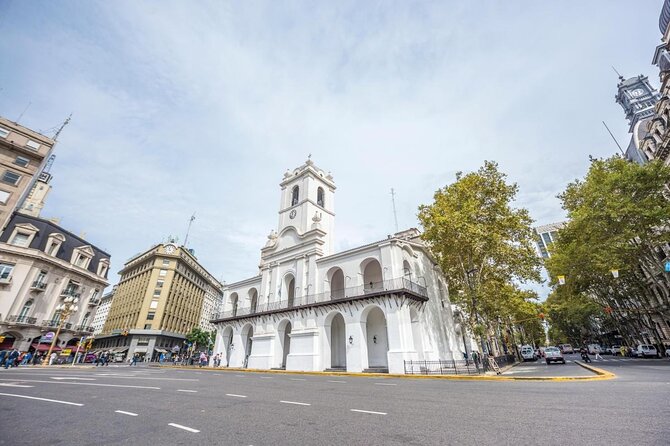
- San Telmo beyond the postcard: You see the parish church, Plaza Dorrego, Mercado San Telmo, and less familiar corners of the old quarter.
- A very small group: With a maximum of eight people, it is easier to hear the guide and ask questions.
- Thoughtful guides: Nico and Nicolas are noted for history, politics, architecture, and Argentine culture, while other tours have been led by Ignacio, Sophia, or Santiago.
- A sobering stop: Memory Walk concerns a former clandestine detention, torture, and extermination center used from 1976 to 1979.
- Good value at $33: You get several hours of guided context and finish near Casa Rosada, with no separate admission charge for the listed stops except Casa Rosada itself.
What kind of Buenos Aires tour is this?
This is not a standard hop-on, hop-off introduction. It is a walking lesson in how Buenos Aires developed, how Argentina’s past still affects public life, and why the city can feel both European and distinctly porteño.
The route covers the oldest part of Buenos Aires, especially San Telmo. You will see familiar landmarks, but the guide’s real work lies in connecting them. A church becomes part of the colonial story. A market helps explain immigration and neighborhood life. A government building opens the door to questions about power and national identity.
The tone is academic without needing to be dry. Several guides have backgrounds in history or museum work, and the strongest praise goes to their ability to explain complicated subjects in plain English. Nicolas, in particular, is described as a history professor who uses maps and old photographs. Nico is praised for his background in the city, architecture, politics, food, and Argentine culture.
That makes this a good choice if you enjoy asking questions. It is less suitable if you want constant movement, quick photo stops, or a light introduction with little political content. The tour addresses painful periods as well as attractive buildings, so you should expect some serious moments.
A few more Buenos Aires trips worth putting side by side
- Local Foodie Adventure in Buenos Aires with Sherpa Food Tours
★ 5.0 · 6,875 reviews - Buenos Aires City Private Tour with Local Guide
★ 5.0 · 3,475 reviews - Buenos Aires Small-Group City Tour
★ 5.0 · 2,226 reviews
Starting at Bar Britanico and Parque Lezama
The meeting point is Bar Britanico, at Brasil 399, near Parque Lezama. The café is listed as the first stop, with about five minutes there, while Parque Lezama is described as the actual starting point for the historical walk.
That pairing sets the mood nicely. Bar Britanico belongs to the old part of Buenos Aires, and it gives you an immediate sense of the neighborhood’s long-established character. Do not expect a lengthy café visit. This is a brief orientation before the walk gets underway.
Parque Lezama receives about 30 minutes. It is important because the first fort was established here in 1536. That early date gives the guide a natural starting point for explaining the city’s beginnings and the forces that shaped its growth.
I like beginning in a park rather than at a grand government building. You get a sense of place first, then build toward the monuments. The stop also helps explain why San Telmo matters. This is not just a pretty district with antique shops and old façades. It is tied to the earliest chapters of Buenos Aires.
A Swedish church and the layers of San Telmo
The next stop is Club Sueco Restaurante, connected with a Swedish church from 1944. The listed visit takes around ten minutes.
At first, this may seem like an unusual choice. That is precisely the point. A short look at a Swedish institution shows the city as a place shaped by migration and international communities, not only by Spanish colonial roots. The tour repeatedly uses such details to widen the story beyond famous buildings.
You should not expect an extended interior visit or a formal religious tour. The value is in the explanation and the contrast with the surrounding district. With a small group, you can ask how this community fits into Buenos Aires and how immigration affected the city’s neighborhoods.
Memory Walk and Argentina’s difficult recent past
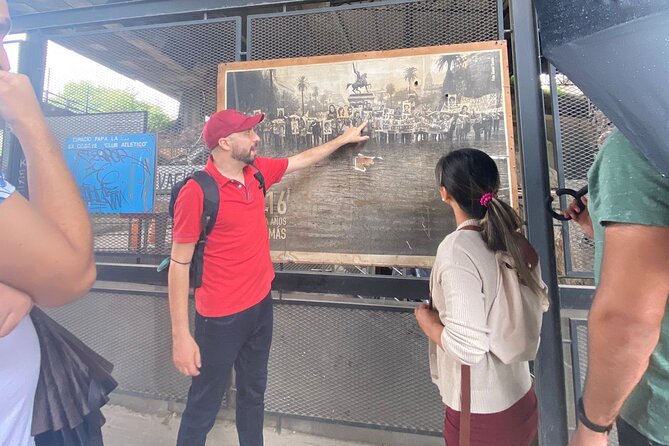
Memory Walk is the most serious stop. It marks a former clandestine center for detention, torture, and extermination that operated from 1976 to 1979.
This part of the route changes the mood. The tour is not only about colonial architecture, cafés, markets, and elegant public squares. It also addresses Argentina’s military dictatorship and the human cost of political repression.
I see this as one of the experience’s most valuable features, but it will not suit everyone. The subject can be distressing, and the guide’s role is to provide context rather than entertainment. If you want a cheerful orientation walk, this stop may feel heavy. If you want to understand Argentina as it is, including the parts that are painful to discuss, it adds necessary weight.
The guide’s ability matters greatly here. The strongest accounts describe clear explanations of politics and society, with room for questions. A small group is useful because you can pause, listen, and ask for clarification without shouting across a crowd.
Still Argentina, but a completely different sort of afternoon:
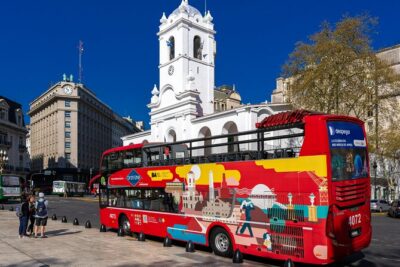
- Buenos Aires Hop-On Hop-Off Bus, Free Walking Tours & Discounts
★ 4.5 · 2,218 reviews - Buenos Aires: Piazzolla Tango Show with Optional Dinner
★ 4.4 · 2,122 reviews - Buenos Aires: City Highlights Guided Tour with Transfer
★ 4.7 · 1,946 reviews - Buenos Aires: Hop-On Hop-Off City Bus Tour
★ 4.2 · 1,855 reviews
San Pedro González Telmo and colonial Buenos Aires
Parroquia de San Pedro González Telmo is a colonial Catholic church, with about 15 minutes allotted.
This stop shifts the focus back to the older foundations of the neighborhood. The church helps you read San Telmo as a historic district rather than simply a market area. The guide can place religious life, colonial society, and the development of the old city into a larger story.
Again, the tour appears to emphasize explanation over a long interior visit. The listed admission is free, and the schedule gives enough time to understand why the church matters without turning the experience into a specialist architecture tour.
If you are interested in buildings, this is one of the places where a good guide adds real value. A façade alone tells you little. Context tells you why it was built, who used it, and how it fits the neighborhood.
Plaza Dorrego, the social heart of old San Telmo
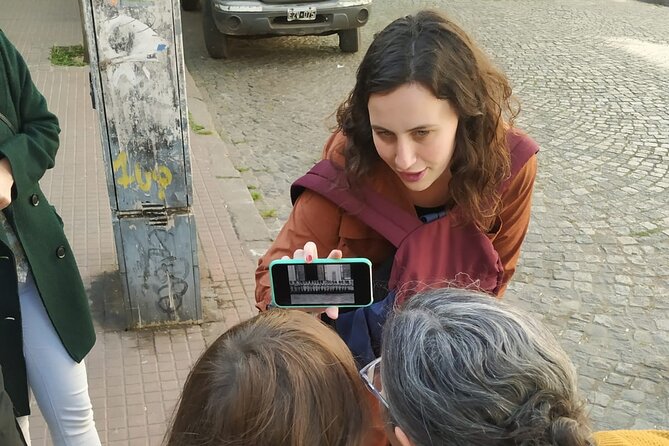
Plaza Dorrego is the old town’s main square, with about 15 minutes here.
This is one of the more recognizable San Telmo stops and a natural place to connect history with street life. You get the visual appeal of the old quarter, but the guide also explains the square’s role within the neighborhood.
The short timing keeps the walk moving. You will not spend half the tour waiting for a perfect photograph. Instead, Plaza Dorrego acts as a bridge between the church and Mercado San Telmo.
That balance is one of the tour’s strengths. You see attractive public spaces, but the experience does not reduce Buenos Aires to scenery. The guide keeps returning to people, politics, migration, and change.
Mercado San Telmo and the city’s Italian connections
Mercado San Telmo receives the longest stop so far, about 30 minutes. It is a local market built by Italian immigrants.
This is where the route becomes especially useful for understanding daily life. Markets reveal how a city eats, trades, and gathers. The Italian connection also gives the guide another way to explain immigration and the mix of cultures that shaped Buenos Aires.
You may find food, stalls, and local activity here, but the stated tour information does not promise a tasting or include purchases. Bring money if you want to buy something, but treat that as optional rather than part of the ticket.
A break for snacks or the bathroom has been included on some tours, and one account praised two short coffee and bathroom breaks. That is worth knowing on a two to three hour walk. The exact break pattern may depend on the guide and the group, but you should have an opportunity to pause.
From Puente de la Mujer to Casa Rosada
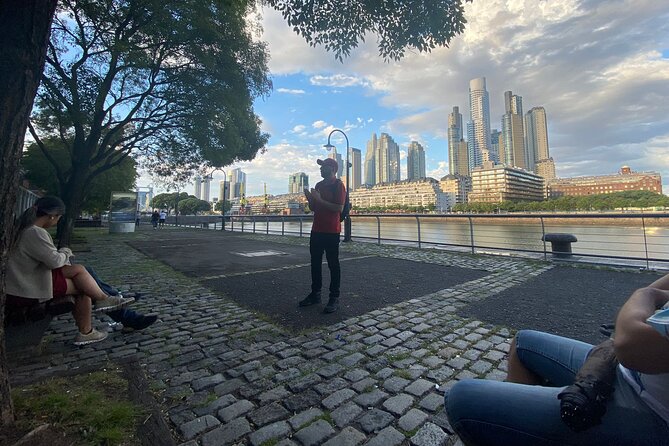
Puente de la Mujer is a striking modern contrast to San Telmo’s older streets. The bridge was designed by Spanish architect and structural engineer Santiago Calatrava, and the stop lasts about 15 minutes.
Its inclusion broadens the route beyond the oldest quarter. You move from colonial and nineteenth-century settings toward a more modern architectural statement. The bridge also helps show that Buenos Aires is not one historical period frozen in place.
The tour ends at Casa Rosada, at Balcarce 78, after about 25 minutes there. This is the president’s office and one of the city’s defining political landmarks.
Casa Rosada is a fitting finish because the whole walk prepares you to see it as more than a pink façade. By this point, you have discussed the city’s founding, religious institutions, immigration, repression, and public life. The government building becomes the final piece in that conversation.
Admission to Casa Rosada is not included. The other listed stops have no admission charge, so the $33 price mainly pays for the guide and the small-group experience rather than entrance tickets. Confirm what access is available on your date if entering the building matters to you. The advertised experience guarantees the stop, not a paid admission.
Why the small group matters
A maximum of eight people is a major advantage here. This tour depends on conversation, and a large crowd would make the political and historical explanations harder to follow.
Small groups also help with questions. You can ask about Argentine economics, the dictatorship, architecture, food, or recommendations for the rest of your time in Buenos Aires. Several accounts describe guides taking time to hear individual interests and responding patiently.
The group size can also create a more relaxed atmosphere. One participant compared the experience to exploring with a friend who happens to know the city extremely well. That is a useful description of the intended style: informed, conversational, and personal rather than scripted.
The tradeoff is that the experience depends on the pace and interests of the people booked that day. A slow group can make the walk less efficient. The tour operator cannot easily know in advance how quickly everyone will move, so anyone with serious walking limitations should consider this before booking.
The guides and the teaching style
The named guides include Nico, Nicolas, Ignacio, Sophia, and Santiago. The guide assigned to your departure may vary, but the shared style described across the experience is clear: strong command of Argentine history, politics, architecture, and culture, with excellent English noted several times.
Nico is praised for being a local whose family has lived in Buenos Aires for at least three generations. Ignacio is described as a history professor who explains facts clearly and checks that everyone can hear and stay comfortable. Sophia is praised for patience with a long list of questions.
The guides also appear willing to adapt. One bilingual participant wanted to practice Spanish while a partner needed English, and an additional guide was brought along to help. That is a special case, not a standard promise, but it shows the provider’s attention to communication.
You will get the most from this tour if you participate. Ask why a building matters. Ask how a political event changed the city. Ask for food suggestions or ideas for the rest of your stay. The guides are repeatedly praised for answering questions rather than rushing to the next stop.
Price, timing, and practical value
At $33 per person, this is good value if you want interpretation rather than simply a route through San Telmo. The fee covers roughly two to three hours with a guide and a maximum group of eight. Since most stops have no admission charge, the value rests on the guide’s preparation and the quality of the explanations.
The tour is often booked about 35 days ahead, so I would not leave it until the last minute if your dates are fixed. Confirmation is provided at booking, and the meeting point is near public transportation.
Wear comfortable walking shoes. The route includes parks, plazas, market streets, and several neighborhoods, and one account makes clear that the pace can be demanding for people who need frequent stops. A coffee or snack break may be built in, but you should still arrive ready to walk.
Service animals are allowed, and most people can participate. The activity requires good weather. If poor weather cancels it, you are offered another date or a full refund.
Free cancellation is available until 24 hours before the start time. Cancelling later, or making changes within that window, does not qualify for a refund. The cut-off follows local Buenos Aires time.
Who should book Buenos Aires for Curious People?
I would choose this tour if you want a serious introduction to Buenos Aires and Argentina. It suits solo visitors, couples, families with older children, and friends who enjoy history, politics, architecture, and conversation.
It is especially useful early in your stay. The route gives you a framework for later visits to museums, neighborhoods, markets, and political sites. You may also leave with practical suggestions for food and additional places to see.
I would skip it if you want a short sightseeing loop with little walking or if difficult twentieth-century history is not what you want on holiday. It is also not the best match for anyone who needs a very slow, highly flexible pace.
Should you book it?
Yes, if you want to understand Buenos Aires rather than simply photograph it. The combination of San Telmo, Plaza Dorrego, Mercado San Telmo, Memory Walk, Puente de la Mujer, and Casa Rosada gives you a broad route with real substance.
Book it for the guide, the small group, and the questions you can ask along the way. The $33 price is fair because the experience turns ordinary streets and buildings into a readable story. Just plan for a genuine walk, bring an open mind, and be ready for both the charming and difficult sides of Argentina.
FAQ
How much does the tour cost?
The tour costs $33 per person.
How long does the experience last?
The walking tour lasts approximately two to three hours.
How many people can join the tour?
The maximum group size is eight people.
Where does the tour start?
It starts at Bar Britanico, Brasil 399, C1154AAC, Buenos Aires, near Parque Lezama.
Where does the tour end?
The tour ends at Casa Rosada, Balcarce 78, C1064AAC, Buenos Aires.
Is admission to the stops included?
The listed stops have no admission charge except Casa Rosada, where admission is not included.
Can I cancel for a full refund?
Yes. You can cancel at least 24 hours before the start time for a full refund.
What happens if bad weather cancels the tour?
You will be offered a different date or a full refund if poor weather causes cancellation.
Are service animals allowed?
Yes, service animals are allowed. The experience is also near public transportation, and most people can participate.
Recently added around Buenos Aires
- Photo Session in Buenos Aires★ 5.0 · 26 reviews
- Your Personal Photographer in Buenos Aires★ 5.0 · 24 reviews
- Discover Buenos Aires’ independent art scene — Ticket included★ 5.0 · 30 reviews
- Your Private Photographer in Buenos Aires★ 5.0 · 4 reviews
- Yerba Mate Workshop – Learn to Drink Mate like a Local!★ 5.0 · 11 reviews
- Taste of Tradition: Yerba Mate & Alfajores Experience★ 4.0 · 5 reviews
- Wine tasting in OASIS Palermo★ 5.0 · 2 reviews
- Day Tour Classic★ 3.5 · 35 reviews
Buenos Aires Tours, compared.
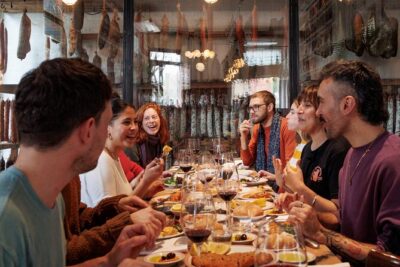
Local Foodie Adventure in Buenos Aires with Sherpa Food Tours
Read our review →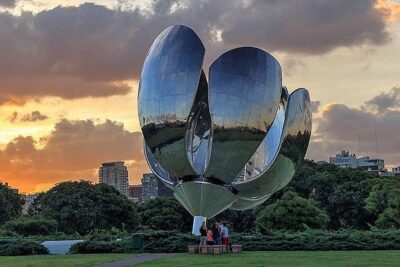
Buenos Aires City Private Tour with Local Guide
Read our review →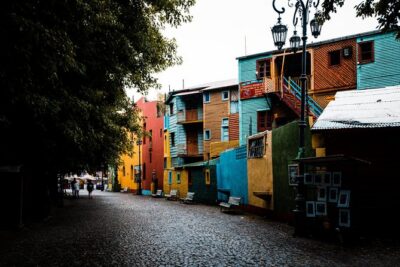
Buenos Aires Hop-On Hop-Off Bus, Free Walking Tours & Discounts
Read our review →