
Reviewed · ASADO AND ARGENTINE FOOD
BA: Premium Empanadas & Alfajores Cooking Experience in Palermo
Come hungry, leave with recipes. This family-friendly class gives you a tasty introduction to Argentina through two national favorites: savory empanadas and dulce de leche-filled alfajores. I like the small-group format, capped at 12 people, and the chance to learn from local instructors such as Tomás, Carolina, Catalina, Catarina, and Maria. You also get mate tea and cultural context, not just a cooking demonstration.
I also like that the class works for children and first-time cooks. The instructions are meant for any age, and the finished food becomes your meal. The main consideration is that the class may not be as hands-on as you expect: some ingredients can be prepared ahead of time, and one morning group felt slightly rushed. If you want advanced culinary training, this is too basic. If you want a cheerful, practical taste of Buenos Aires, it makes good sense.
In This Review
- Key points to know before booking
- Why cooking empanadas tells you something about Argentina
- From dough to crimped edges
- Alfajores and the dulce de leche payoff
- A class built around eating your own work
- What the small group changes
- Is the activity truly hands-on?
- Location, timing, and practical planning
- What you pay for at $48
- Who should book this Palermo cooking class?
- Booking, cancellation, and family details
- Should you book this experience?
- FAQ
- Where does the cooking class take place?
- How long does the experience last?
- What foods will I make?
- Is mate tea included?
- Is the class suitable for children?
- What is included in the price?
- Is transportation included?
- What is the cancellation policy?
Key points to know before booking
- Two Argentine classics in one class: You prepare both empanadas and alfajores, then eat the results.
- A small group helps: The maximum is 12 people, with past sessions ranging from four to about 12 participants.
- Good for families: Children aged 8 and 10 enjoyed the activity, and the class is designed for any age.
- Mate adds local flavor: You taste Argentina’s traditional herbal tea while hearing about culture and customs.
- The class is beginner-friendly: You learn dough preparation, fillings, folding, crimping, cookie making, and dulce de leche filling.
- Plan ahead: The experience is often reserved about 24 days before the date, though free cancellation is available up to 24 hours before the start.
Why cooking empanadas tells you something about Argentina
Food is one of the easiest ways to get past the postcard version of Buenos Aires. Empanadas are not simply a snack here. They are a practical part of everyday eating, with fillings and styles that vary across Argentina.
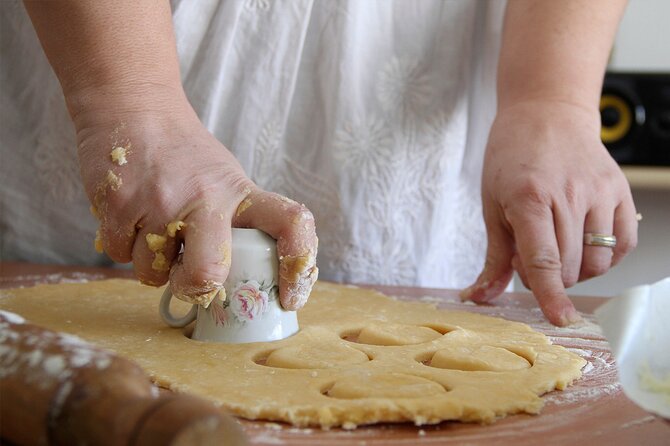
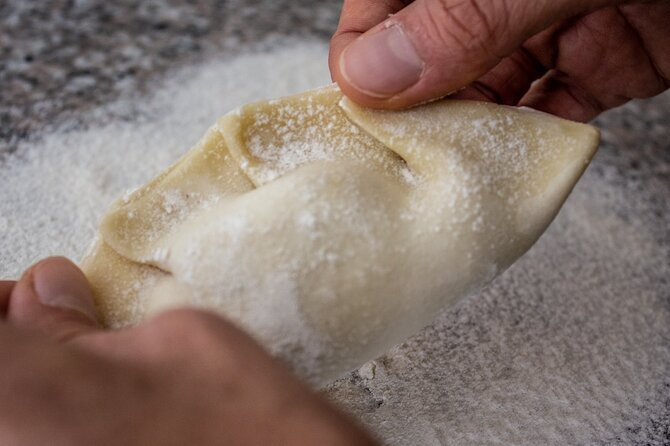
This class gives you a chance to handle the dough, add the filling, and learn the fold that keeps the pastry closed. That last step matters. Empanadas are easy to eat, but folding and crimping them neatly takes a little practice. You will learn by doing rather than by watching a chef work at a distance.
The filling is described as traditional, with meat used in at least some sessions. One morning group found the meat filling a little mild, so you should not expect a fiercely spiced dish. That may actually suit families and cautious eaters. Argentine empanadas often depend more on a balanced filling, tender dough, and good seasoning than on heat.
I like the way the class connects the food to regional customs. Tomás, one of the instructors named in past sessions, has talked about Argentine culture and food traditions from different parts of the country. The amount of cultural explanation can vary with the instructor, but the better sessions offer more than a recipe. You get a small window into how Argentines eat and gather.
More Asado Experiences in Buenos Aires
- Buenos Aires: 9-Course Argentine Meat Tasting at Fogón Asado
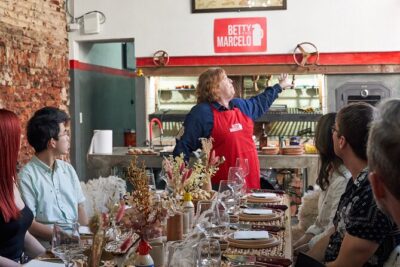
★ 4.9 · 826 reviews - Join a Local Family Asado in Buenos Aires with Betty and Marcelo
★ 5.0 · 686 reviews - Buenos Aires: Empanadas and Alfajores Guided Cooking Class
★ 4.8 · 486 reviews
From dough to crimped edges
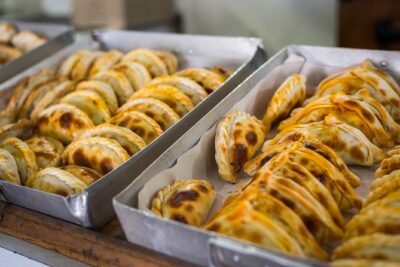
The empanada portion begins with the basic building blocks: dough, filling, and folding. You prepare or work with the dough, add the filling, and shape each pastry before it goes into the oven.
This is a useful activity for children because each stage has a clear result. A child can spoon in filling, press the edges, or try the decorative crimp. Adults get the same simple pleasure, along with the usual challenge of making every empanada look less like a folded envelope and more like something ready for a bakery window.
The experience is not designed to turn you into a professional chef. One family summed it up well: come for the fun, not the expectation that you will open an Argentine restaurant afterward. That is a fair way to frame it. You will pick up a method you can repeat at home, but the real value is the shared activity and the chance to eat what you made.
The baking time creates a natural pause. Rather than waiting in silence, you taste mate and hear about Argentine life. Mate is a strong herbal infusion traditionally shared in social settings. Here, it gives the class a local touch without requiring you to commit to a full cultural lecture.
You should also expect the pace to be fairly brisk. The stated duration is about two hours and 30 minutes, which must cover two separate foods, baking, conversation, and eating. Most people will find that length comfortable, but a group that wants long, detailed cooking instruction may feel hurried.
Alfajores and the dulce de leche payoff
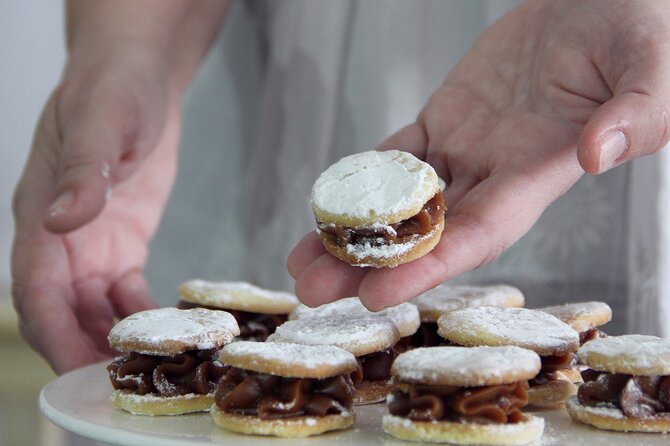
After the empanadas, the class turns to the sweet course: alfajores. These are delicate, crumbly cookies filled with dulce de leche, Argentina’s beloved thick caramel-like milk spread.
This part often wins people over. The cookie dough is gentler than the empanada work, and the finished alfajores provide a clear reward. You prepare the cookies, add the creamy filling, and get to taste them fresh rather than buying a packaged version in a shop.
The alfajor lesson also gives you a good take-home idea. One French-speaking family said they learned things they planned to make at home, and several families enjoyed the process with their children. The recipe is approachable enough to repeat, provided you can find the ingredients.
There is a nice contrast between the two dishes. Empanadas are savory, folded, and meal-like. Alfajores are sweet, crumbly, and assembled with care. In one class, the alfajores were considered the stronger part of the meal, while the meat filling needed more seasoning. Your results will depend on the instruction and the group, but the dessert is likely to be the safer crowd-pleaser.
A class built around eating your own work
The best feature of this experience is simple: you eat what you make. That changes the mood from a formal lesson into a relaxed meal with a purpose.
Several families appreciated that the food was substantial enough to replace lunch. One group arrived at the end with no appetite for another meal, so I would schedule this around your day rather than treating it as a small snack stop. The class is listed at approximately two and a half hours, and the food is served as part of the experience.
Some past sessions also included wine, though wine is not listed among the standard inclusions. Do not book this expecting wine unless the provider confirms it for your date. Mate tea is the drink specifically included.
You receive the ingredients and tools needed for the class, so you do not need to bring cooking equipment. Gratuities are optional and transportation is not included. The activity ends where it begins, at Gorriti 4882 in Palermo.
More asado and Argentine cooking in Buenos Aires:
- The Asado Experience – Premium Steak
★ 5.0 · 347 reviews - Authentic Rooftop Asado Experience with Argentine Wine Pairing
★ 5.0 · 274 reviews - Buenos Aires: Empanada & Alfajor Cooking Lesson in Palermo
★ 4.6 · 186 reviews - Parrilla Tour Palermo
★ 5.0 · 185 reviews
What the small group changes
The maximum group size is 12. That is small enough to keep the room social without turning the class into a crowd.
Past groups have been as small as four people, which creates a more personal setting. A six-person group also described the space as cozy and well suited to a family activity. If you land in a small session, you should have more room to ask questions and more direct contact with the instructor.
A full group of 12 will feel livelier. That can be fun, especially if you want to meet people, but it may also mean less individual attention during the folding and shaping work. Parents should keep this in mind if a child needs close guidance.
The instructors have received especially strong praise for being patient, welcoming, and easy to follow. Tomás has been singled out for his cooking experience and cultural explanations. Carolina, Catalina, Catarina, and Maria have also been named positively in past sessions. Since the instructor can vary, the tone and depth of the conversation may not be identical each time.
The most consistent strength is the friendly approach. Children have been included rather than treated as a problem, and the class has worked for couples as well as families.
Is the activity truly hands-on?
Mostly, but you should set your expectations correctly. You will make items and take part in shaping and filling them. The activity is not a passive tasting, and you will not simply watch a chef prepare everything.
At the same time, one small group found that certain ingredients had already been prepared. That can help the class fit inside its two-and-a-half-hour schedule, but it reduces the from-scratch feeling. If you want to learn every stage, including long dough preparation and detailed filling work, ask the provider what will be ready before you arrive.
The class is aimed at beginners and all ages. That is a strength for a family seeking an easy activity, but it also explains why the instruction is not technically demanding. You will learn the core steps, not professional kitchen methods.
I would describe the experience as participatory rather than intensive. You will have a real role in preparing the food, but the class is also about conversation, culture, and eating together. That balance is why it works so well as a break from museums and sightseeing.
Location, timing, and practical planning
The meeting point is Gorriti 4882, C1414BJN, in Buenos Aires. It is in Palermo and near public transportation, which makes it practical to reach without arranging a private transfer.
The activity begins and ends at the same location. That is useful when planning your day because you do not need to calculate a return route from a separate finishing point. Still, leave enough time to arrive at the correct address, especially if you are coming with children or carrying bags.
The morning start is one of the class’s practical advantages. A morning cooking session leaves the afternoon open for Palermo, museums, shopping, or a slower café stop. It also gives you an enjoyable alternative to another standard sightseeing tour.
The advertised duration is approximately two hours and 30 minutes. A past group felt rushed even though the class remained within the stated timing, so do not schedule a tight appointment immediately afterward. Cooking, eating, and group activities rarely finish with the precision of a train timetable.
The experience is often booked around 24 days ahead. That suggests you should reserve early if your Buenos Aires dates are fixed, particularly if you need a family-friendly time or want to keep a small group.
What you pay for at $48
At $48 per person, the price is not just for a plate of food. It covers the class, local instruction, ingredients, tools, mate tea, and the time spent preparing and eating two Argentine specialties.
The value is strongest if you treat this as both a meal and a cultural activity. A restaurant can serve you empanadas and alfajores more cheaply, but it cannot give you the folding lesson, the cooking practice, or the chance to ask about Argentine food customs. You are paying for participation and company as much as for the dishes.
Families should also consider the entertainment value. The class can fill a morning, keep children involved, and provide a break from walking around the city. Several families found it fun enough that the children stayed engaged through the cooking and tasting.
The value is weaker for an experienced cook who wants advanced technique or a highly detailed culinary lesson. The recipes are intentionally approachable, and some preparation may be done in advance. For most visitors, though, the point is not culinary mastery. It is a pleasant way to make a meal and understand two famous Argentine foods.
Who should book this Palermo cooking class?
I would recommend it most strongly to families with children, couples who enjoy food, and anyone who wants a low-pressure activity in Buenos Aires.
It suits you if:
- You want to eat a proper meal during the experience.
- You enjoy learning by making rather than only tasting.
- You are new to Argentine cuisine.
- You need an activity that works for children.
- You like small groups and informal conversation.
- You want a morning plan near public transportation.
You may want something else if you are seeking a serious chef’s workshop, extensive knife skills, or a lesson that covers every ingredient from its raw state. You should also ask about the current menu if you have strong preferences about seasoning, since one past group found the meat filling mild.
The class is also a good choice for a rest day. It gives you a fixed two-and-a-half-hour plan without the physical demand of a long city tour. You can sit, cook, talk, and eat, then continue exploring Palermo at your own pace.
Booking, cancellation, and family details
Confirmation is provided when you book. Free cancellation is available if you cancel at least 24 hours before the local start time. Cancellations or changes made inside that 24-hour window are not refunded or accepted.
The maximum group size is 12, but the final number can be smaller. Transportation is not included, so you make your own way to Gorriti 4882. The class ends back at the meeting point.
The activity is recommended by all people who have rated it, with an overall score of 4.9 from 23 reviews. That is a small sample, but the pattern is clear: the strongest praise goes to the welcoming instructors, the family-friendly format, the tasty alfajores, and the pleasure of eating food you helped prepare.
Should you book this experience?
Yes, if you want a friendly introduction to Argentine food rather than a demanding cooking course. The empanadas give you a savory lesson in dough and folding, while the alfajores provide a sweet, highly satisfying finish. Mate tea and local stories add just enough culture to keep the class from feeling like a generic cooking activity.
Book it early if your schedule is firm, and leave space afterward in case the class runs at a relaxed pace. Go with realistic expectations about pre-prepared ingredients and the beginner level. For families, couples, and food-loving visitors looking for an easy half-day activity in Palermo, $48 is a reasonable price for the instruction, meal, and shared experience.
FAQ
Where does the cooking class take place?
The meeting point is Gorriti 4882, C1414BJN, in Buenos Aires, Argentina. The location is near public transportation.
How long does the experience last?
The cooking experience lasts approximately two hours and 30 minutes.
What foods will I make?
You will make Argentine empanadas and alfajores. The empanadas include dough, traditional fillings, folding, and crimping. The alfajores are crumbly cookies filled with dulce de leche.
Is mate tea included?
Yes. Mate tea is included in the experience and is served while the empanadas bake.
Is the class suitable for children?
Yes. The experience is designed for all ages and is described as family-friendly. Families with children aged 8 and 10 have enjoyed the class.
What is included in the price?
The price includes the empanadas and alfajores class, a professional local host, ingredients, tools, and mate tea.
Is transportation included?
No. You are responsible for getting to and from the meeting point. The activity ends back at Gorriti 4882.
What is the cancellation policy?
You can cancel for a full refund up to 24 hours before the experience start time. Cancellations or changes made less than 24 hours in advance are not accepted or refunded.
More Cooking Classes in Buenos Aires
- Argentine Experience Interactive Dining and Cooking
★ 5.0 · 1,382 reviews - Cooking Class Designed by Michelin Chef @ Argentine Experience
★ 5.0 · 1,123 reviews - Private Cooking Lessons and Food Tasting in Buenos Aires
★ 5.0 · 223 reviews - Pachamama – Argentine Cooking Experience in Buenos Aires
★ 5.0 · 144 reviews
Recently added around Buenos Aires
- Photo Session in Buenos Aires★ 5.0 · 26 reviews
- Your Personal Photographer in Buenos Aires★ 5.0 · 24 reviews
- Discover Buenos Aires’ independent art scene — Ticket included★ 5.0 · 30 reviews
- Your Private Photographer in Buenos Aires★ 5.0 · 4 reviews
- Yerba Mate Workshop – Learn to Drink Mate like a Local!★ 5.0 · 11 reviews
- Taste of Tradition: Yerba Mate & Alfajores Experience★ 4.0 · 5 reviews
- Wine tasting in OASIS Palermo★ 5.0 · 2 reviews
- Day Tour Classic★ 3.5 · 35 reviews
Asado and Argentine Food, compared.
Join a Local Family Asado in Buenos Aires with Betty and Marcelo
Read our review →

Authentic Rooftop Asado Experience with Argentine Wine Pairing
Read our review →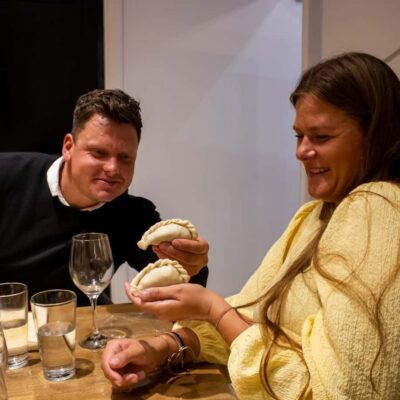
Browse the lists this tour appears in