
Reviewed · BARILOCHE TOURS
Adrenaline Rafting on the Manso River to the Andes Border
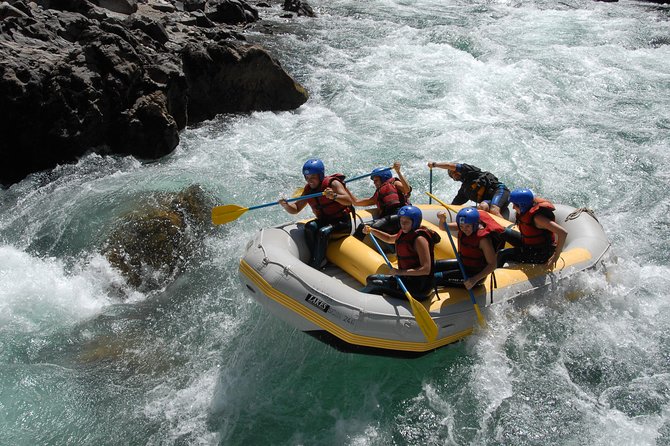
Pack a towel and leave room for adventure. This full-day Manso River trip takes you far beyond Bariloche’s usual sights, with mountain roads, clear water, named rapids, and a walk back through remote country. I like the way all rafting gear and river clothing are provided, and I also like the English-speaking guide support, especially for safety instructions and paddle commands. The main drawback is the long day and fairly demanding physical level, with lunch and transport to the meeting point not included.
The rafting itself is not the most extreme whitewater you can find, but it offers a fine mix of excitement and scenery. I especially like the chance to swim from the raft in calmer stretches, plus the relaxed coffee and croissants before the river section. You need to be at Morales 564 by 8:30 a.m., bring a passport, and accept that weather or low enrollment can change the plan.
In This Review
- Key points at a glance
- Leaving Bariloche for Route 40
- Coffee, croissants, and the safety briefing at Ranch Josh
- Getting dressed for the Manso River
- The Manso River and its named rapids
- The cross line and the walk back
- Lunch, changing clothes, and the long ride home
- Is $157 a fair price?
- Who will enjoy this Manso River day?
- Timing, season, and cancellation terms
- Should you book it?
- FAQ
- Where does the rafting tour start?
- How long does the experience last?
- What is included in the price?
- Is lunch included?
- What should I bring?
- What is the minimum age?
- How difficult is the rafting?
- When does this tour operate?
Key points at a glance
- A remote Manso River route: You leave Bariloche by Route 40 and reach the river near the edge of Nahuel Huapi National Park.
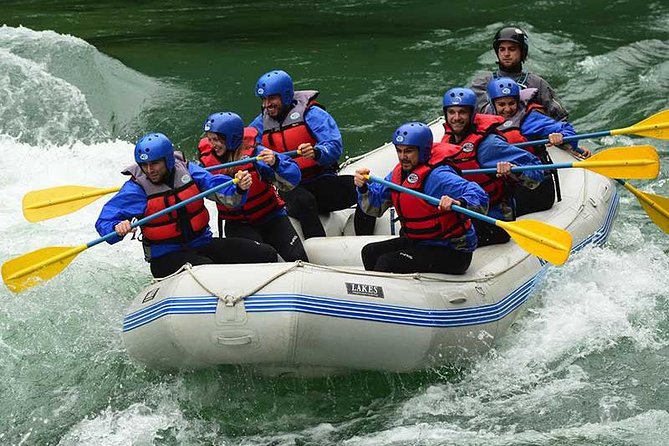
- Named rapids with character: Cajón de Terciopelo, Agujero de Ozono, El Tobogancito, Garganta Profunda, Éxtasis, Huevo Revuelto, Colmillo, and Internacional make the run feel like a real expedition.
- Coffee before the wetsuit: At Ranch Josh, you get coffee, tea, and croissants while the group gathers and prepares for the river.
- Good support for first-time rafters: Guides explain how to paddle, where to sit, and how to follow commands before the action begins.
- A demanding but social day: The experience lasts about 10 hours, includes a hike after the river section, and serves a maximum of 20 people.
- Best from November through April: This is a seasonal activity, with weather playing an important part in whether the trip runs.
Leaving Bariloche for Route 40
Your day starts at Morales 564 in central San Carlos de Bariloche at 8:30 a.m. From there, the group heads down Route 40 toward the edge of Nahuel Huapi National Park. The trip is not a quick transfer to a nearby launch point. You should expect a long drive, so this outing works best when you treat the road time as part of the adventure rather than a minor delay.
An air-conditioned vehicle is included, which matters on a full day out. You will be away from the city for most of the day, and the vehicle gives you a place to rest before and after the rafting. The advertised group limit is 20 people, a useful ceiling for an outdoor activity where clear instructions and orderly gear changes matter.
There is a small point to clarify before you book. The highlights refer to hotel pickup and drop-off, but the detailed meeting information says pickup and drop-off are not included and gives Morales 564 as both the start and end point. I would plan to reach the meeting point yourself unless the operator confirms a pickup arrangement directly.
A few more Bariloche trips worth putting side by side
- Bariloche: 7 Lakes & San Martin de Los Andes Road Trip
★ 4.5 · 624 reviews - German Footprint & Nazi presence – Walking Tour in Bariloche
★ 5.0 · 337 reviews - Bariloche: Circuito Chico with optional Cerro Catedral
★ 4.5 · 316 reviews
Coffee, croissants, and the safety briefing at Ranch Josh
The first major stop is Camping La Pasarela de El Manso, with the group continuing to Ranch Josh. This is where the river day begins in a practical way. Coffee, tea, and croissants are served while everyone gathers, which gives you time to wake up, use the facilities if available, and get ready without being rushed.
The safety chat is important, not just a formality. Before you enter the water, the guide explains how to paddle and how to sit in the raft. That basic instruction makes the experience more approachable if you have never rafted before, while still giving stronger paddlers a clear idea of how the boat will work.
The English-speaking guide is another real advantage. River commands need to be understood quickly, and a shared language removes one needless worry. Guides also add much of the fun between the technical parts. Mati is specifically praised for making the trip exciting and enjoyable, while the wider guide team is described as lively and funny.
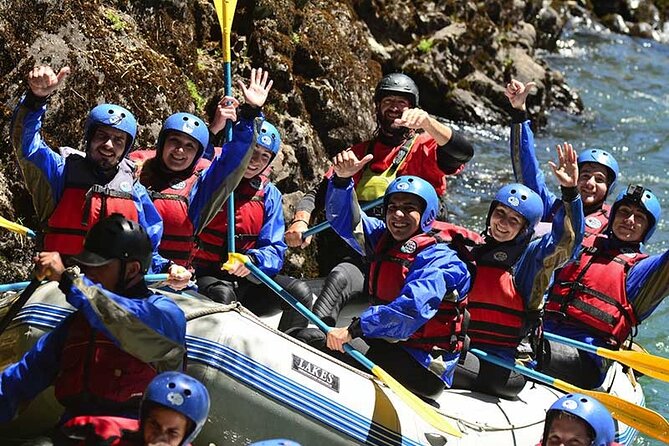
You then receive the supplied river clothing and safety equipment. The package includes a neoprene suit, waterproof jacket, and safety kayak support. The kayak is an important part of the river setup, providing safety coverage while the raft groups work through the run.
Getting dressed for the Manso River
Bring a bathing suit, water-resistant footwear or sandals, and a towel. The wetsuit and waterproof jacket are provided, but your own clothing still matters. Shoes should stay secure in moving water, and a towel will make the change back into dry clothes much more comfortable.
The sequence can involve more than one vehicle transfer. One account describes getting suited up at the camp, then riding in vans to the actual launch point. That is useful to know because the camp is not necessarily where you begin rafting. Keep your personal items organized, and do not assume you will be able to grab something from the vehicle once the group reaches the river.
Lunch is not included. It can be ordered at the camp, and it has been described as reasonably priced and good. You may also have the chance to buy photos afterward for an added fee. Carry water for the day, as it is specifically listed among the items to bring, and remember that drinks outside the included morning coffee are your own expense.
The Manso River and its named rapids
The river section is the heart of the experience. The Manso cuts through a remote part of the region, and the route includes a series of named features that give the day a clear rhythm. You pass through Cajón de Terciopelo, Agujero de Ozono, Gritá y doblá a la izquierda, El Tobogancito, Garganta Profunda, Éxtasis, Huevo Revuelto, Colmillo, and Internacional.
The names are playful, but you should still take the physical requirement seriously. The activity is rated medium to high in difficulty, and a moderate level of fitness is required. You will need to listen, paddle, hold your position, and deal with the effort of getting in and out of the raft.
This is not promoted as the biggest or most violent whitewater run in the world. The appeal is the balance between rapids and scenery. You get enough movement to feel the rush, but the experience also leaves room to notice the river water, canyon walls, and Andean surroundings.
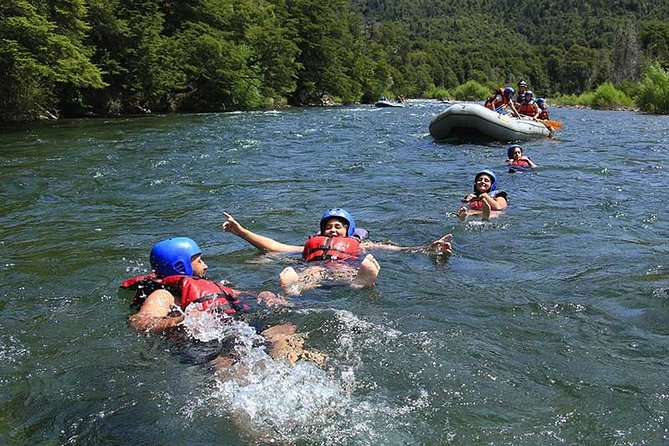
In calmer sections, you might be able to jump from the raft and swim. That adds a playful break to the rafting and lets you enjoy the water at a slower pace. The option depends on the guide and river conditions, so do not treat it as a guaranteed part of every departure.
The rapids themselves each bring a small change in mood. The tight-sounding Cajón de Terciopelo and Garganta Profunda suggest confined sections, while El Tobogancito promises a more slide-like moment. Huevo Revuelto and Colmillo give the route a memorable local vocabulary. You do not need to remember every name, but hearing them called out helps you feel that you are following a real river route rather than taking a generic rafting ride.
Still Argentina, but a completely different sort of afternoon:
- Fly Fishing Bariloche
★ 5.0 · 305 reviews - Bariloche: German Immigration and History Walking Tour
★ 4.8 · 169 reviews - San Martín de los Andes por 7 Lagos
★ 4.4 · 155 reviews - Circuito Chico
★ 4.5 · 146 reviews
The cross line and the walk back
At the cross line, the water section ends and you begin the return on foot. This is easy to overlook when reading a rafting description, but it affects the day. You are not simply stepping out of the raft beside a vehicle and heading home. The route includes a walk, adding to the physical effort and making sturdy water footwear especially useful.
The walk also helps explain why the excursion feels more like an outdoor expedition than a short amusement ride. You see the river from another angle, leave the boat behind, and continue under your own power before returning to the camp and vehicles.
Because the total outing lasts around 10 hours, the walking section may feel tiring after the rafting. If you have limited mobility or do not usually handle active day trips well, this is a point to consider carefully. The operator gives the experience a medium to high difficulty rating, so the outing is not designed as a passive sightseeing trip.
Lunch, changing clothes, and the long ride home
After the water and walking sections, you return to the camp. This is where you can change out of the wetsuit and order lunch. Food and drinks cost extra, but the meal is described as reasonably priced, which makes the camp a convenient place to eat rather than a forced luxury stop.
The meal also gives the group a chance to slow down. A rafting day can be noisy and energetic on the river, so a seated break helps before the return journey. The setting and food have been praised as part of the family experience, but you should still budget for lunch if you do not want to carry your own plan.
Then the vans take you back toward Bariloche. The excursion ends at the same meeting point where you started. With an 8:30 a.m. departure and an approximate 10-hour duration, expect to return in the evening, though the precise arrival time can depend on road conditions, group pace, and river operations.
Is $157 a fair price?
At $157 per person, this is not a budget half-day activity. It is a full-day outing with transport in an air-conditioned vehicle, a professional guide, river clothing, safety equipment, and morning coffee with croissants. The value improves if you want a single organized day that combines road travel, a remote setting, rafting, swimming opportunities, walking, and a meal stop.
You are also paying to avoid arranging the difficult pieces yourself. There is no need to find the river access point, rent a wetsuit, organize safety support, or work out how to move the group between camp and launch point. For an English-speaking visitor, the instruction and guide support add practical value.
The price does not cover lunch, drinks, or possibly transport from your hotel to Morales 564. Photos may also cost extra. Those add-ons are not unusual, but they mean the final cost will be higher than the headline price if you buy lunch and pictures.
I would compare this outing with a shorter local rafting trip only if your main goal is maximum time on the rapids. The Manso trip makes more sense if you value the remote setting and full-day format. Several people describe the scenery and water quality as exceptional, even while noting that the rapids are less intense than those found in other destinations.
Who will enjoy this Manso River day?
I would recommend it to active adults, families with teenagers, and first-time rafters who want instruction and organized support. The minimum age is 14, and the experience suits anyone comfortable with moderate physical effort, wet clothing, a long vehicle ride, and a walk after rafting.
It is especially appealing if you want to get away from Bariloche’s more familiar tourist routes. The route toward the Andes border takes you into a less developed setting, and the mix of river action and mountain views gives the day more variety than a short ride near town.
I would think twice if you want a relaxed sightseeing day, dislike long drives, or need a low-effort activity. The morning starts early, the river section requires active participation, and the return walk adds work after the rapids. You should also be comfortable with plans that depend on weather and minimum enrollment.
The English option is helpful, but confirm the guide language and pickup details when booking. The published information says the activity is offered in English, while the meeting instructions require you to start at Morales 564. That is a small detail, but it can affect your morning plans in Bariloche.
Timing, season, and cancellation terms
The rafting season runs from November through April. That limits when you can take the trip, but it also reflects the need for suitable river and weather conditions. The activity requires good weather, and a cancellation for poor conditions results in a choice between a different date or a full refund.
You can cancel for a full refund up to 24 hours before the start time. Changes or cancellations inside that 24-hour window are not accepted for a refund. The same 24-hour rule applies to the local cutoff time, so check the time zone and date carefully when making changes.
A current valid passport is required on the day of travel. Confirmation is provided when you book, and the group size is capped at 20. These details are simple, but I would keep your passport and confirmation easy to reach on the morning of departure.
Should you book it?
Book this Manso River trip if you want a substantial outdoor day rather than a quick rafting fix. The best reasons are the remote Route 40 journey, the clear river, the named rapids, the helpful safety instruction, and the chance to mix paddling with swimming, walking, and a camp lunch.
Skip it if you need hotel pickup confirmed, want very intense whitewater, or prefer a short and easy activity. For everyone else, the $157 price is reasonable for the amount of equipment, guiding, transport during the excursion, and time outside Bariloche. Bring a towel, water, secure footwear, and enough energy for the walk back.
FAQ
Where does the rafting tour start?
The listed meeting point is Morales 564, R8400 San Carlos de Bariloche, Río Negro, Argentina. The activity starts at 8:30 a.m. and ends back at the same meeting point.
How long does the experience last?
The outing lasts approximately 10 hours, including the drive from Bariloche, preparation, rafting, the walk after the river section, lunch time, and the return journey.
What is included in the price?
The price includes an air-conditioned vehicle, a professional guide, safety kayak support, a neoprene suit, a waterproof jacket, and morning coffee with croissants.
Is lunch included?
No. Lunch and drinks are not included, but lunch can be ordered directly at the camp.
What should I bring?
Bring a bathing suit, water, water-resistant footwear or sandals, and a towel. A current valid passport is also required on the day of the activity.
What is the minimum age?
The minimum age is 14 years.
How difficult is the rafting?
The activity has a medium to high physical requirement and difficulty rating. You should have a moderate level of physical fitness and be prepared to paddle, spend time in the water, and walk after the rafting.
When does this tour operate?
The rafting season runs from November through April. The activity also requires good weather and a minimum number of participants to operate.
Recently added around Bariloche
- Snow excursion in Bariloche – Suitable for the whole family★ 4.5 · 3 reviews
- MATE tasting ceremony – (Argentina traditional tea)★ 5.0 · 2 reviews
- Exclusive Sailboat Trip through the Lakes of Bariloche★ 4.0 · 9 reviews
- Transfer from the Airport to Bariloche★ 3.5 · 4 reviews
- Snow Baptism Adventure: Skiing and Snowboarding at Cerro Catedral★ 4.0 · 5 reviews
- Camino de los siete Lagos, bilingüe★ 4.0 · 4 reviews
- GERMAN TREKKING TO BERGHOF – Mountain stories★ 4.5 · 4 reviews
- 10 Secrets of Bariloche, Nahuel Huapi, and Patagonia★ 5.0 · 46 reviews
Bariloche Tours, compared.
German Footprint & Nazi presence – Walking Tour in Bariloche
Read our review →
Bariloche Small Circuit: Mt Campanario and Llao Llao Peninsula
Read our review →Browse the lists this tour appears in