
Reviewed · BARILOCHE TOURS
10 Secrets of Bariloche, Nahuel Huapi, and Patagonia
Bariloche has more stories than scenery. This compact walk gives you a quick cultural introduction to the city, moving from the Civic Center and Patagonia Museum to the Nahuel Huapi waterfront, cathedral, and famous chocolate street. I like the way it helps you get your bearings without committing half a day, and I especially like that walking lets the guide reach city corners a larger vehicle cannot.
The tour costs $41 per person and runs for about 90 minutes, making it a sensible first-day activity if your schedule is tight. Guide Diego earns especially high praise for his English, detailed explanations, photographs, and stories. The main drawback is the strict non-refundable policy, so you should book only when your morning plans are firm.
In This Review
- Key points to know before you book
- Why this short Bariloche walk is worth your morning
- Meeting Diego at the Civic Center
- Puerto San Carlos and the Nahuel Huapi shoreline
- The Cathedral of Our Lady of Nahuel Huapi
- Rapanui and Bariloche’s Chocolate Street
- What $41 buys you in practical terms
- Group size, timing, and the walking pace
- Who will get the most from this experience
- Booking cautions and the final decision
- FAQ
- Where does the Bariloche walking tour begin?
- What time does the tour start?
- Where does the tour finish?
- How long does the experience last?
- What places are included?
- Is admission included at the stops?
- How large can the group be?
- Can I cancel or change my booking?
Key points to know before you book
- The 9:00 a.m. start keeps the tour useful for a first morning in Bariloche, especially if you want a city introduction before heading into the surrounding area.
- Guide Diego is a major part of the experience, with clear English and a strong grasp of Bariloche and Patagonia.
- The Civic Center and Patagonia Museum area provide the historical frame, while the waterfront and cathedral add local character.
- Rapanui puts you on Bariloche’s famous Chocolate Street, with a short visit to an iconic chocolate shop.
- The group is capped at 20 people, small enough for a more personal walk than a large coach excursion.
- The tour returns to its starting point, at the Bariloche Tourism Office on Libertad 56.
Why this short Bariloche walk is worth your morning
Bariloche is often treated as a launchpad for Nahuel Huapi National Park, mountain roads, lake outings, and Patagonia adventures. That is understandable. The scenery outside town gets much of the attention. Yet the city itself has a useful story to tell, and this walk gives you a compact way to hear it.
I like the tour’s simple shape. You begin in the civic center, move toward the lake, visit the cathedral, and finish along the pedestrian chocolate street. The route links major sights rather than sending you through a long list of unrelated stops. In about an hour and a half, you get a first look at how public life, religion, the waterfront, and local food fit together.
The short format also matters. You may be in Bariloche for only a few days, with a full schedule of excursions. This experience does not ask you to surrender an entire morning or afternoon. It gives you a city overview, then leaves the rest of the day open.
The tradeoff is depth. At 90 minutes, this is an introduction rather than an exhaustive study of Bariloche. If you want long museum time, extensive architecture analysis, or a full food tour, you will need a separate activity. I would use this walk to understand the city first, then decide where to return on your own.
A few more Bariloche trips worth putting side by side
- Bariloche: 7 Lakes & San Martin de Los Andes Road Trip
★ 4.5 · 624 reviews - German Footprint & Nazi presence – Walking Tour in Bariloche
★ 5.0 · 337 reviews - Bariloche: Circuito Chico with optional Cerro Catedral
★ 4.5 · 316 reviews
Meeting Diego at the Civic Center
The meeting point is the Secretaría de Turismo Bariloche, also called the tourist information office, at Libertad 56. The tour begins at 9:00 a.m. and ends back at this same location. That return is useful because you do not need to work out a new pickup point after the walk.
The first stop is the Centro Cívico, or Civic Center, with time around the Museum of Patagonia. Admission is free. This is the right place to begin because it introduces the public face of Bariloche before the tour moves into more personal and religious subjects.
Guide Diego is worth noting here. His English is described as impeccable, and his explanations include facts, photographs, and stories rather than only a list of dates. That mix should help if you want context without a formal lecture. He also accommodated a late arrival, though I would not treat that as a reason to arrive late. A punctual start gives you the full experience and avoids putting pressure on the group.
The Civic Center stop is listed as about 10 minutes. That is enough for an orientation and outside discussion, but not enough for a full museum visit. You should think of the Museum of Patagonia as part of the setting and historical conversation, not as a separate museum tour with extended indoor time.
Puerto San Carlos and the Nahuel Huapi shoreline
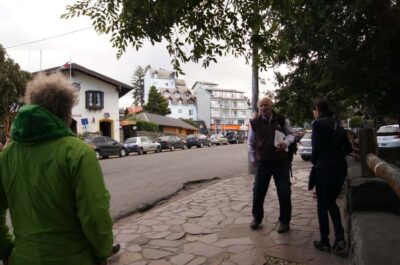
From the civic center, the walk continues toward Puerto San Carlos and the coastal boardwalk. This section lasts about 20 minutes and is one of the tour’s most useful changes of pace. After the formal civic buildings, you get a closer look at Bariloche’s relationship with Nahuel Huapi.
The tour promises additional stories and secrets around the port and waterfront. The supplied details do not list the exact stories, so I would avoid expecting a fixed set of dramatic revelations. Instead, the value lies in having a guide interpret an area you might otherwise pass quickly while taking photographs.
Walking is important here. A vehicle can show you the lake from a road, but it cannot pause as naturally along a pedestrian route or connect small stops at street level. You can take in the setting at a human pace, listen to Diego’s explanation, and keep the lakefront tied to the city’s past and present.
This is also a good point to consider the weather. The tour is outdoors and takes place on foot, so conditions can shape your comfort. The supplied information does not specify a weather cancellation policy or special equipment. Wear practical walking shoes and dress for the forecast, especially if you expect to spend time beside the water.
The Cathedral of Our Lady of Nahuel Huapi
The cathedral receives another 20 minutes, and it is likely the strongest stop for visitors who enjoy architecture. The tour covers the building’s design, stories connected with it, unusual stained-glass windows, and the Via Crucis, or Stations of the Cross.
That combination gives you more than a quick photograph from outside. You get a chance to notice how the building tells its story through structure and decoration. The stained glass is singled out as particularly distinctive, and one particularly enthusiastic account called the cathedral the favorite part of the walk.
I like this stop because it broadens the picture of Bariloche. The city is not only a base for nature outings or a place to buy chocolate. A cathedral visit adds a religious and artistic layer, and the guide’s explanation can help you notice details that are easy to miss when you enter alone.
The time is still limited. Twenty minutes is enough for an introduction to the architecture, windows, and Via Crucis, but you should not expect a long quiet visit. If the cathedral becomes your favorite stop, note what you want to examine more closely and return later at a slower pace, provided opening conditions allow it. The tour information does not provide separate admission details or visiting hours.
Still Argentina, but a completely different sort of afternoon:
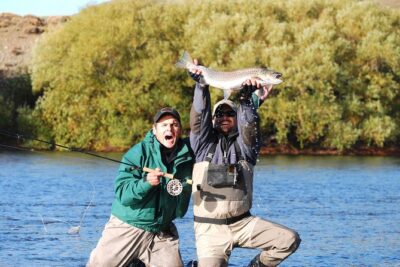
- Fly Fishing Bariloche
★ 5.0 · 305 reviews - Bariloche: German Immigration and History Walking Tour
★ 4.8 · 169 reviews - San Martín de los Andes por 7 Lagos
★ 4.4 · 155 reviews - Circuito Chico
★ 4.5 · 146 reviews
Rapanui and Bariloche’s Chocolate Street
The final main stop is Rapanui, reached along the principal pedestrian road known for its chocolate shops. The tour includes a short visit to an iconic chocolate store, and the food stop helps end the walk on an easy, memorable note.
Bariloche’s chocolate identity is not treated as a random shopping break here. It is part of the city’s public image and local culture. You get to see the pedestrian street where that identity is displayed, then connect the sightseeing with a taste of the city’s most famous specialty.
The available information describes the stop as a short chocolate visit, while one account specifically praises the chocolate tasting. I would expect a brief introduction or tasting opportunity rather than a full workshop or extended sampling session. The details do not promise a set number of samples, a purchase credit, or a cooking demonstration.
That distinction matters if you are comparing this walk with a dedicated chocolate tour. This stop gives you a pleasant introduction and a chance to decide which shops deserve a return visit. It does not replace a longer food-focused experience.
What $41 buys you in practical terms
At $41 per person, this is not the cheapest way to stroll around Bariloche. You can walk through public areas independently, and the Civic Center, waterfront, cathedral, and pedestrian street are not presented with separate admission charges on this tour.
The value comes from interpretation and structure. You are paying for a local guide, a planned route, stories that connect the stops, and a low-stress start in an unfamiliar city. For a first morning, that can be worthwhile. You avoid spending time guessing which landmarks matter or trying to piece together the city’s story from isolated signs.
The price makes the most sense for you if you value clear English explanations and want a short introduction before larger Patagonia outings. It makes less sense if you prefer exploring alone, already know Bariloche well, or mainly want a chocolate tasting. In those cases, the public sights may be enough without a guided walk.
The 4.9 rating from 46 reviews and 98 percent recommendation figure point to a consistently strong experience, though a small sample is not a guarantee that every departure will feel identical. The guide is clearly central to the tour’s appeal, so Diego’s communication style and storytelling ability are important parts of the value.
Group size, timing, and the walking pace
The maximum group size is 20 people. That is not a private tour, but it is still modest compared with a large sightseeing bus. You should have a reasonable chance of hearing the guide, especially in the Civic Center, waterfront, and cathedral areas.
The listed stops total about 70 minutes: 10 minutes at the Civic Center, 20 minutes at Puerto San Carlos, 20 minutes at the cathedral, and 20 minutes at Rapanui. The full experience lasts about 90 minutes, leaving time for walking between places and transitions.
The 9:00 a.m. departure has two practical advantages. First, it gives you an early orientation before you set out on other activities. Second, it leaves much of the day available for your own plans. If you have a fixed excursion soon after the walk, leave plenty of extra time because the duration is approximate.
The tour is near public transportation, which makes the start convenient if you are staying elsewhere in Bariloche. The information says most people can participate, but it does not provide detailed accessibility notes, distances, surface conditions, or assistance arrangements. If you need specific mobility support, ask the provider before booking.
Who will get the most from this experience
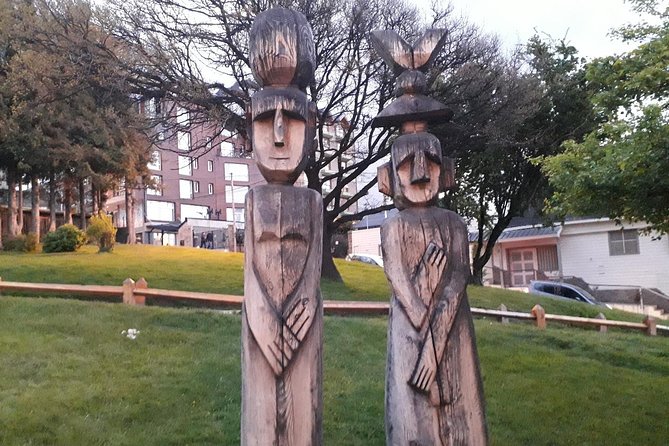
I would recommend this walk to first-time visitors who want a clear introduction without a long commitment. It suits you especially well if you enjoy local stories, architecture, and city life as much as mountain views.
It also works for visitors with limited time. The route covers four distinct parts of Bariloche in a compact period, and the return to the tourist office makes it easy to continue your day from a known point.
English-speaking visitors should pay attention to the praise for Diego’s English. Clear communication can make a short tour much more useful, particularly when the subject moves from civic buildings to religious art and local food.
Families and mixed-interest groups may also find the route practical. One person can enjoy the city’s history, another can focus on the cathedral, and everyone gets a chocolate stop at the end. The group cap of 20 keeps the format more manageable, though it is still a shared tour.
I would be less likely to book it if my main goal were a long museum visit, a serious architectural study, or extensive chocolate sampling. The experience offers a taste of each subject, not a full treatment of any one of them.
Booking cautions and the final decision
Confirmation arrives at the time of booking, and the activity requires a minimum number of participants. If the provider cancels because that minimum is not reached, you are offered another date or experience, or a full refund.
Your own cancellation terms are much stricter. The $41 payment is non-refundable, and you cannot change the booking for any reason. That makes timing important. I would avoid booking this on a morning when your arrival, transport, or other plans are uncertain.
So, should you book it? Yes, if you want a polished first look at Bariloche, especially with guide Diego, a short schedule, and a mix of civic history, waterfront stories, cathedral details, and chocolate. The cathedral and the guide’s storytelling appear to be the strongest reasons to choose it.
Skip it if you are comfortable exploring independently and only want the public sights. For most first-time visitors with a free 9:00 a.m. start, though, $41 is a fair price for a focused orientation that helps the rest of your Bariloche visit make more sense.
FAQ
Where does the Bariloche walking tour begin?
It begins at Secretaría de Turismo Bariloche, the tourist information office, at Libertad 56, R8400 San Carlos de Bariloche, Río Negro, Argentina.
What time does the tour start?
The tour starts at 9:00 a.m.
Where does the tour finish?
The activity ends back at the original meeting point, the tourist information office on Libertad 56.
How long does the experience last?
The experience lasts approximately 1 hour and 30 minutes.
What places are included?
The route includes the Centro Cívico and Museum of Patagonia area, Puerto San Carlos and the coastal boardwalk, the Cathedral of Our Lady of Nahuel Huapi, and Rapanui on the main pedestrian chocolate street.
Is admission included at the stops?
The listed stops show free admission. The tour also includes a short visit to an iconic chocolate store, with chocolate tasting praised as part of the experience.
How large can the group be?
The tour can have a maximum of 20 participants.
Can I cancel or change my booking?
The experience is non-refundable and cannot be changed for any reason. If the provider cancels because the minimum number of participants is not reached, you will be offered another date or experience, or a full refund.
Recently added around Bariloche
- Snow excursion in Bariloche – Suitable for the whole family★ 4.5 · 3 reviews
- MATE tasting ceremony – (Argentina traditional tea)★ 5.0 · 2 reviews
- Exclusive Sailboat Trip through the Lakes of Bariloche★ 4.0 · 9 reviews
- Transfer from the Airport to Bariloche★ 3.5 · 4 reviews
- Snow Baptism Adventure: Skiing and Snowboarding at Cerro Catedral★ 4.0 · 5 reviews
- Camino de los siete Lagos, bilingüe★ 4.0 · 4 reviews
- GERMAN TREKKING TO BERGHOF – Mountain stories★ 4.5 · 4 reviews
- Rent of Bike MTB in Circuito Chico★ 4.0 · 8 reviews
Bariloche Tours, compared.
German Footprint & Nazi presence – Walking Tour in Bariloche
Read our review →
Bariloche Small Circuit: Mt Campanario and Llao Llao Peninsula
Read our review →Browse the lists this tour appears in