
Reviewed · TANGO SHOWS
Tour cultural a pie de 3 horas por la historia del Tango
Tango begins on foot, not on a stage. This three-hour walk follows Corrientes Street through Buenos Aires history, from old tango halls and theaters to a working milonga porteña, where locals keep the dance alive. I like the way the tour connects music, nightlife, and city history instead of treating tango as a stand-alone performance. I also like the stop at El Beso, a permanent milonga, because it gives you a look at how porteños experience tango today.
The main consideration is pace. You cover many stops in three hours, and the route includes walking, standing, and uneven city movement. The tour is not suitable for wheelchair users or people with mobility impairments, and drinks at the milonga cost extra. Still, for $80, the combination of a guided downtown walk, historic-bar snacks, and a milonga visit offers a strong introduction to Buenos Aires tango culture.
In This Review
- Key points to know before booking
- Why Corrientes Street is the right place to learn tango
- Starting at Avenida Corrientes 348
- Salón Marabú and the old tango world
- The Lola Membrives Theatre and Corrientes at work
- Corrientes and Esmeralda: a famous city corner
- Confitería Ideal and Teatro Ópera Orbis
- The Obelisk and the center of Buenos Aires
- La Giralda and a historic-bar break
- Teatro General San Martín and the modern cultural scene
- Los Galgos Bar and Enrique Santos Discépolo
- El Beso, the permanent milonga
- Is $80 a fair price?
- Timing, walking, and practical comfort
- Who will enjoy this walk most?
- Should you book the Corrientes tango walk?
- FAQ
- Where does the tango walking tour begin?
- Where does the tour end?
- How long does the experience last?
- What languages are available?
- How do I identify the guide?
- Is the milonga visit included?
- Are drinks at the milonga included?
- Is food included?
- What should I bring?
- Is the tour suitable for wheelchair users?
Key points to know before booking
- Corrientes Street is the backbone of the tour: You follow the avenue known for late-night theaters, bookstores, cinemas, cafes, and pizzerias.
- The tour explains tango beyond dance steps: You learn how tango moved from the port neighborhood of La Boca into central Buenos Aires and reached its golden age around Corrientes.
- You visit a working milonga: El Beso, also known as La Casa de la Milonga Permanente, is the final stop and the tour’s most direct connection to present-day tango life.
- Historic details appear in ordinary places: Facades, bars, theaters, and street corners become clues to the city’s artistic and political past.
- Snacks at a historic bar are included: Drinks at the milonga are not included, so bring some extra money if you want one.
- The guide matters here: Dino has been praised for his warmth, patience, and detailed way of explaining Buenos Aires.
Why Corrientes Street is the right place to learn tango
Tango is often sold as a polished evening show, complete with dramatic lighting and choreographed footwork. Those shows can be enjoyable, but this walk takes a different route. It uses downtown Buenos Aires as the classroom.
Tango was declared an Intangible Cultural Heritage of Humanity by UNESCO. The tour places that honor in a street-level setting. You see where music, theater, literature, politics, cafes, and nightlife met. That context helps you understand why tango is not simply a dance. It is also a way of expressing longing, pride, humor, and the tough poetry of city life.
The route centers on Corrientes Street, often called the street that never sleeps. The phrase fits the story the tour tells. In the 1940s, Corrientes was linked with Carlos Gardel, tango halls, nightlife, and artistic bohemia. In the 1960s and early 1970s, its cafes and bars also hosted political, cultural, and literary discussions.
You will not just hear dates and names. You will look at theaters, old facades, bars, and corners where different parts of Buenos Aires life overlapped. Late-opening bookstores, art cinemas, and all-night pizzerias complete the picture. I like this approach because it gives you something to notice later when you walk the city on your own.
More tango shows and dinner nights in Buenos Aires:
- Buenos Aires: Piazzolla Tango Show with Optional Dinner
★ 4.4 · 2,122 reviews - Buenos Aires: Tango Show at Tango Porteño & Optional Dinner
★ 4.6 · 981 reviews - Intimate Underground Tango Show by Secreto Tango Society
★ 5.0 · 893 reviews
Starting at Avenida Corrientes 348
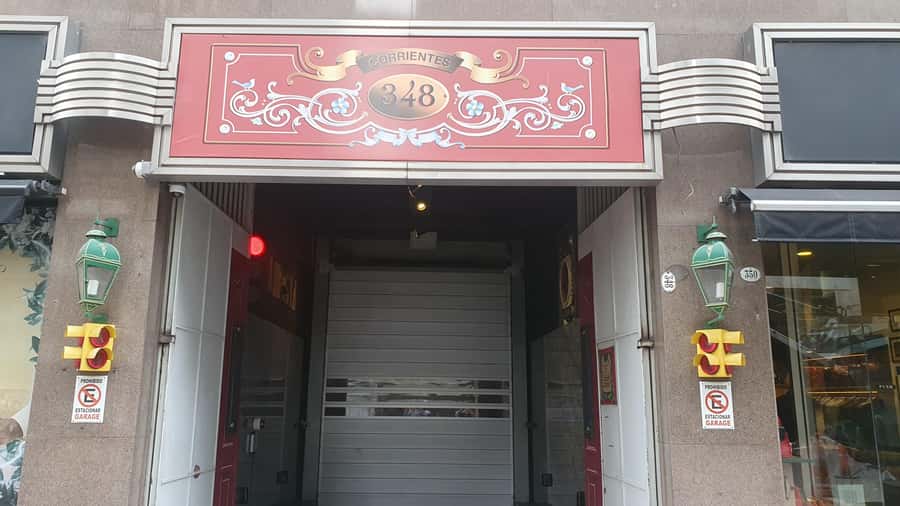
The tour begins at Av. Corrientes 348. You should arrive ready to walk, with comfortable shoes, water, and a camera. The meeting instruction is simple: look for the guide holding a sign marked Milonga City.
The route is downtown, so the first moments are about getting your bearings among major streets, theaters, facades, and busy city movement. The guide’s role is important from the start. A good explanation can turn a plain-looking building into part of a larger story about performers, writers, musicians, and night owls.
The tour is offered in English, German, and Spanish. If Dino leads your group, you may get the warm, relaxed style that earned him particular praise. He was described as cheerful, patient with questions, and eager to show his city. That matters on a history walk, where a friendly guide can make a long chain of facts feel personal rather than academic.
Salón Marabú and the old tango world
Salón Marabú is one of the early stops. You spend about 20 minutes here with time to visit, take photos, and hear the guide’s explanation.
The name carries the feel of old tango nightlife. This is where the tour begins to connect the music with the social world around it. Instead of seeing tango only as a performance for tourists, you start to see it as part of the city’s evening routine and artistic life.
Expect a fairly focused stop rather than a long indoor visit. The overall walk has many locations to cover, so the guide needs to keep the group moving. That is useful if you want a broad introduction, but it may feel brief if you hope to study every building in detail.
The Lola Membrives Theatre and Corrientes at work
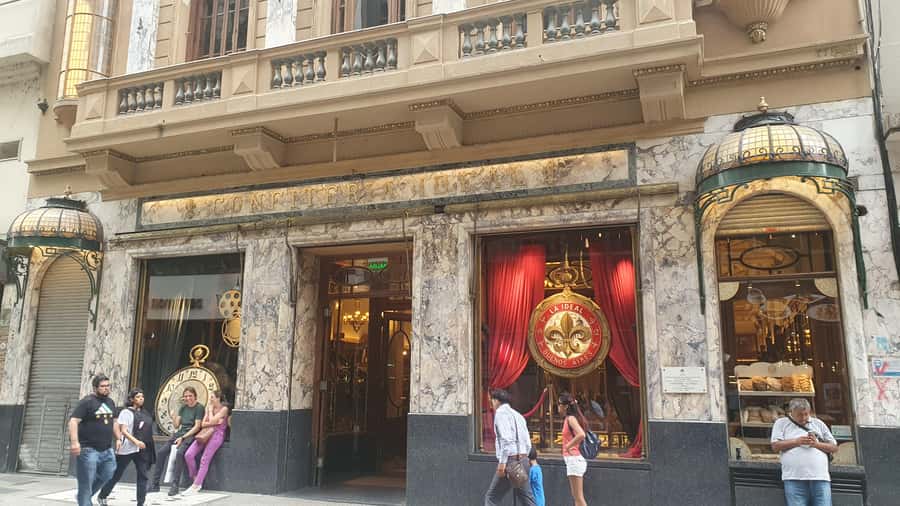
The Lola Membrives Theatre receives a guided visit of about 20 minutes, with another photo opportunity later in the route. The repeated mention of this theater suggests that it plays more than one role in the walk, first as a historical stop and later as part of the street’s visual story.
The theater helps explain why Corrientes became such a cultural center. Tango did not develop in isolation from stage entertainment. Theaters, music halls, bars, and cafes supported the same nightlife that allowed tango to grow.
You should pay attention to the building itself, not just the explanation. The tour focuses on traces left by history in facades and architecture. This is one of its strengths. You are asked to read the street, not merely listen to a lecture while walking past it.
A few more Buenos Aires trips worth putting side by side
- Local Foodie Adventure in Buenos Aires with Sherpa Food Tours
★ 5.0 · 6,875 reviews - Buenos Aires City Private Tour with Local Guide
★ 5.0 · 3,475 reviews - Buenos Aires Small-Group City Tour
★ 5.0 · 2,226 reviews - Buenos Aires Hop-On Hop-Off Bus, Free Walking Tours & Discounts
★ 4.5 · 2,218 reviews
Corrientes and Esmeralda: a famous city corner
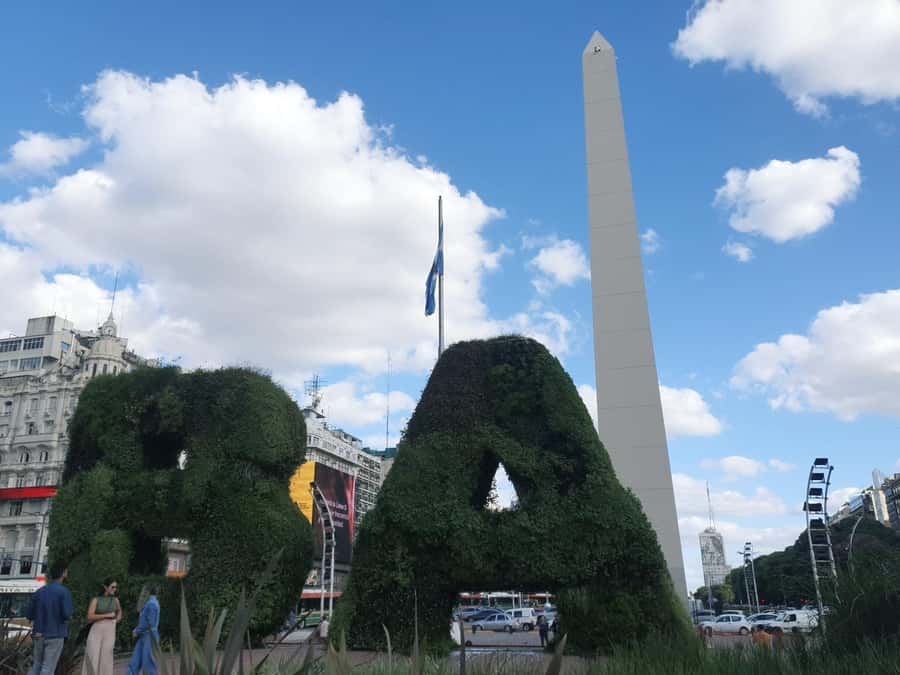
The intersection of Corrientes and Esmeralda gets its own 20-minute guided stop. Crossroads matter in a city history tour because they show how different neighborhoods and activities met.
Here, the guide connects the central avenue with the culture of Buenos Aires at its busiest and most creative. You learn how the area became linked with tango, nightlife, public discussion, and entertainment. The point is not only that famous people passed through. It is that the street itself supported a particular way of living, with people moving between cafes, theaters, bars, and late-night food.
You will want to keep your camera ready, but do not spend the whole stop looking through the screen. The value here is the explanation of what the corner represents.
Confitería Ideal and Teatro Ópera Orbis
Confitería Ideal is a photo and visit stop with roughly 20 minutes of guided attention. A historic confitería gives the tour another setting for understanding Buenos Aires social life. Cafes and elegant meeting places were part of the city’s cultural machinery, not just places to grab a quick drink.
The tour also visits Teatro Ópera Orbis. The theater adds another layer to Corrientes as an entertainment district. You can expect a short presentation and time for photos rather than a full theater performance or backstage visit.
These stops are especially useful if you enjoy architecture and urban details. The tour does not depend on a single grand attraction. It builds its story from several buildings and public places, which makes the experience feel more like a city walk than a museum visit.
The Obelisk and the center of Buenos Aires
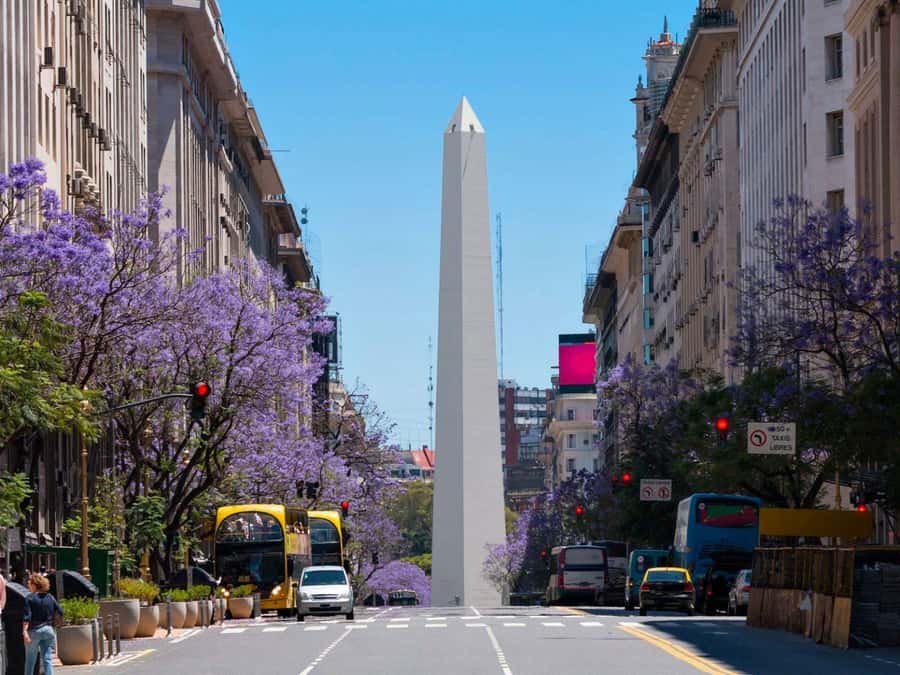
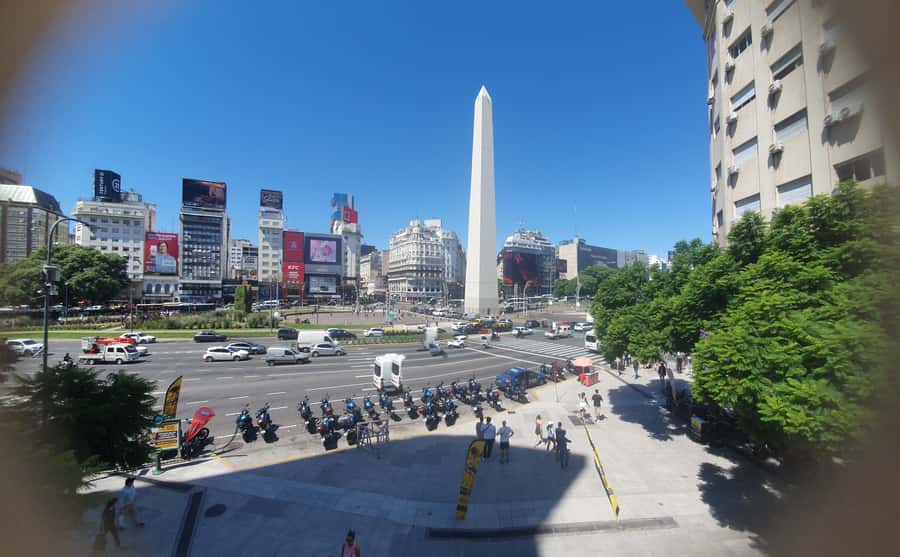
The Obelisk is one of the route’s best-known landmarks. You get about 20 minutes for a visit, guided explanation, and photos.
This is the point where the walk’s smaller clues meet a major symbol of Buenos Aires. The Obelisk sits in the middle of the city’s traffic and public life, so it gives you a strong sense of scale after visiting older venues and corners.
Do not expect the Obelisk stop to be a private or quiet moment. It is a central city landmark, and the experience is about seeing it in context. The guide links it with Corrientes and the surrounding cultural district, helping you understand why this part of Buenos Aires has carried such importance for so long.
La Giralda and a historic-bar break
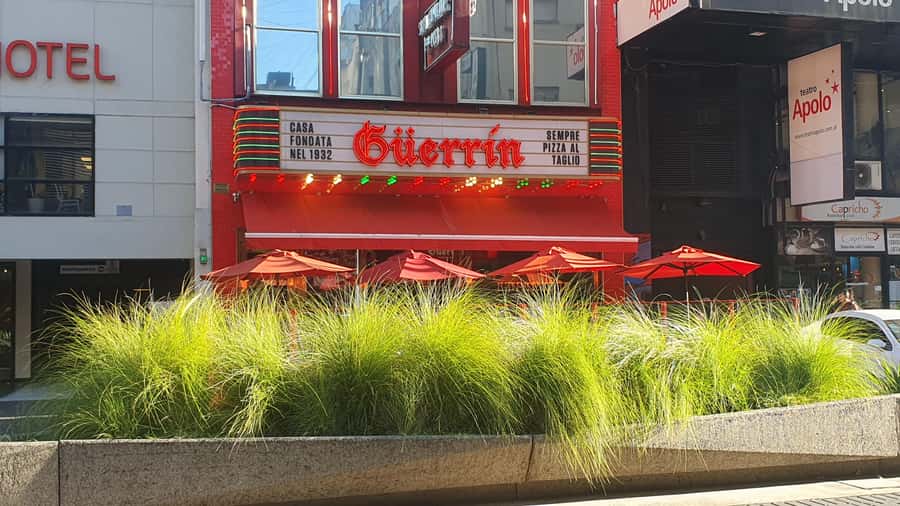
La Giralda includes a longer stop of about 30 minutes, with time for a break, photos, and guided commentary. This is also where the included snack at a historic bar becomes relevant.
A break is welcome during a walking tour with many stops. You can rest your feet, take in the old setting, and continue the conversation with the guide. The snack is a modest but useful inclusion because it gives you a taste of the cafe-and-bar culture that shaped Corrientes.
The exact snack is not specified, so do not book this expecting a full meal. You should still eat before the tour if you tend to get hungry. The break is part of the cultural experience, but it is not designed to replace lunch or dinner.
Teatro General San Martín and the modern cultural scene
The Teatro General San Martín receives another 20-minute guided stop and photo opportunity. This theater helps the tour move beyond the classic tango era.
Corrientes is not only about the 1940s. Its cultural identity continued through the 1960s and early 1970s, when cafes and bars became places for political, literary, and cultural debate. Teatro General San Martín fits that wider story of Buenos Aires as a city where performance and public discussion share the same streets.
I appreciate that the route includes this broader period. If every stop focused only on Gardel and old tango legends, the city could seem frozen in the past. This theater points toward a living cultural scene that changed with the decades.
Los Galgos Bar and Enrique Santos Discépolo
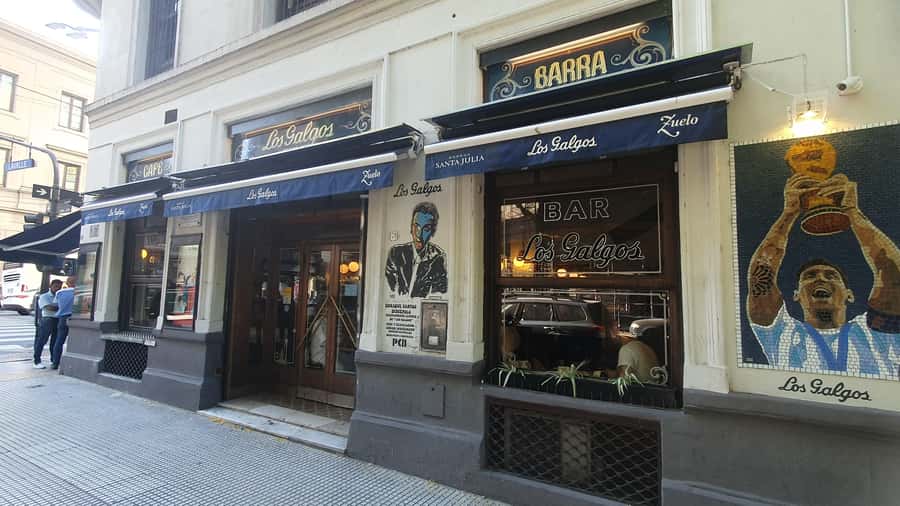
Los Galgos Bar is another 20-minute stop for photos and guided commentary. Like La Giralda, it helps you see how traditional bars fit into the daily life of Buenos Aires.
Bars on this walk are not filler stops. They show where people talked, argued, read, met friends, and watched the city pass by. The tour’s focus on bars and cafes gives you a useful way to understand porteño life outside formal attractions.
The brief stop at Enrique Santos Discépolo lasts about 10 minutes. Because it is shorter, expect a focused explanation rather than a long visit. The name brings the tour back to the creative personalities tied to tango and Buenos Aires culture.
This section of the route may appeal most if you like literary and artistic connections. If you want nonstop dancing, it may feel like a detour. That is the tradeoff: the experience explains the world around tango, not just tango itself.
El Beso, the permanent milonga
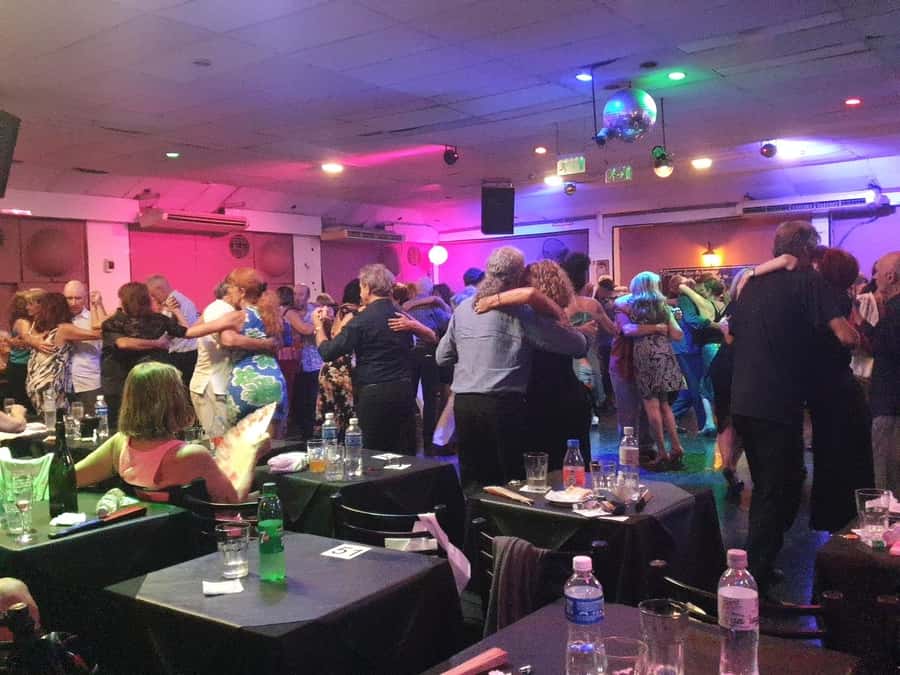
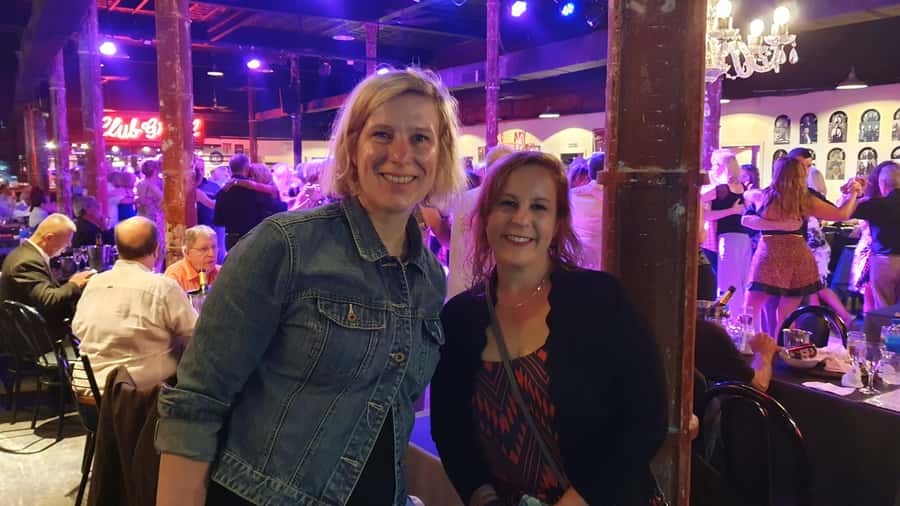
The final stop is El Beso, La Casa de la Milonga Permanente, where you spend about 50 minutes. This is the tour’s clearest answer to a common question: how do local people actually experience tango?
A milonga is not simply a stage show. It is a social setting built around tango dancing. The visit lets you see the setting and understand how tango functions as part of city life. You should expect an introduction to the venue and time connected with the milonga, but the supplied details do not promise a full-length professional performance or a dance lesson.
One verified booking described the milonga show as an excellent part of the experience. That praise makes sense. After walking through old theaters, bars, and streets associated with tango, arriving at a real milonga gives the history a present-day setting.
Drinks at El Beso are not included. The entrance is covered, but you should budget separately if you want something from the bar. The tour ends here, so you can leave after the visit rather than retracing the route to the starting point.
Is $80 a fair price?
At $80 per person, this is not the cheapest way to see downtown Buenos Aires. The price is easier to justify if you would otherwise pay separately for a city walking tour, a historic-bar visit, and entry to a milonga.
The value comes from the connection between the parts. You are not just visiting a bar, then a theater, then a tango venue with no explanation. The guide ties them together through Corrientes Street and the story of tango’s movement from La Boca into the downtown center.
The included snack helps, though it is not a major meal. The milonga ticket is the more important inclusion because it gives you access to the final cultural experience without requiring you to arrange it yourself.
I would see this as good value for someone who wants context and a guided introduction. It is less attractive if you already know Buenos Aires tango history, plan to attend a full evening tango show, or prefer to explore at your own speed.
Timing, walking, and practical comfort
Three hours is enough to cover the route, but the schedule is active. Several stops last about 20 minutes, with a 30-minute break at La Giralda and about 50 minutes at El Beso. That leaves limited time for long detours or unplanned stops.
Wear comfortable shoes. Bring water and a camera. You should also expect to stand during some explanations and photo stops.
There is no hotel pickup or drop-off, so you need to reach Av. Corrientes 348 on your own. The guide holds a Milonga City sign, which should make the meeting point easier to identify.
The activity is not suitable for wheelchair users or people with mobility impairments. If you have difficulty walking or standing, this is not the right format. The tour’s value depends on moving between many downtown locations.
Free cancellation is available up to 24 hours before the start for a full refund. You can also reserve now and pay later, which helps if your Buenos Aires schedule is still changing.
Who will enjoy this walk most?
I would recommend it to you if you want to understand why tango matters to Buenos Aires rather than simply watch dancers for an evening. It suits first-time visitors who like city history, architecture, old cafes, theaters, and stories about creative life.
It also works well for people who want a guide who can answer questions. Dino, in particular, has been praised for being warm, patient, and generous with local detail. Guides can vary, but that gives you a useful idea of the tone Milonga City aims for.
You may want a different experience if you are looking for an elaborate dinner show, a private dance lesson, or a slow architectural tour. The walk is broad and energetic. It introduces many places, but most stops are short.
Should you book the Corrientes tango walk?
Book it if you want a three-hour cultural introduction that links tango with theaters, cafes, bars, architecture, and the changing life of Buenos Aires. The final visit to El Beso is the strongest reason to choose it, since you see tango in a milonga rather than only in a formal performance.
Skip it if mobility is a concern, if you dislike a quick pace, or if you want a full evening show with dinner and drinks included. For everyone else, the tour offers a useful balance of history and present-day culture, with enough practical structure to help you make sense of downtown Buenos Aires.
FAQ
Where does the tango walking tour begin?
The tour begins at Av. Corrientes 348 in downtown Buenos Aires.
Where does the tour end?
The tour ends at El Beso, also called La Casa de la Milonga Permanente.
How long does the experience last?
The walking tour lasts three hours.
What languages are available?
The live tour guide is available in English, German, and Spanish.
How do I identify the guide?
Look for the guide holding a sign marked Milonga City.
Is the milonga visit included?
Yes. The ticket to visit an authentic milonga porteña is included.
Are drinks at the milonga included?
No. Drinks at the milonga are not included.
Is food included?
A snack at a historic bar is included. The information does not specify the exact snack.
What should I bring?
Bring comfortable shoes, water, and a camera.
Is the tour suitable for wheelchair users?
No. The activity is not suitable for wheelchair users or people with mobility impairments.
Recently added around Buenos Aires
- Photo Session in Buenos Aires★ 5.0 · 26 reviews
- Your Personal Photographer in Buenos Aires★ 5.0 · 24 reviews
- Discover Buenos Aires’ independent art scene — Ticket included★ 5.0 · 30 reviews
- Yerba Mate Workshop – Learn to Drink Mate like a Local!★ 5.0 · 11 reviews
- Taste of Tradition: Yerba Mate & Alfajores Experience★ 4.0 · 5 reviews
- Your Private Photographer in Buenos Aires★ 5.0 · 4 reviews
- Wine tasting in OASIS Palermo★ 5.0 · 2 reviews
- Day Tour Classic★ 3.5 · 35 reviews
Tango Shows, compared.
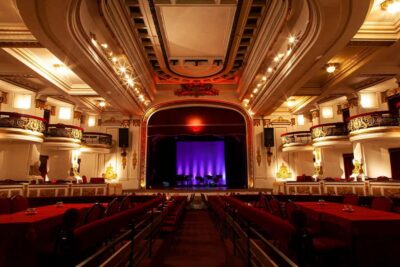
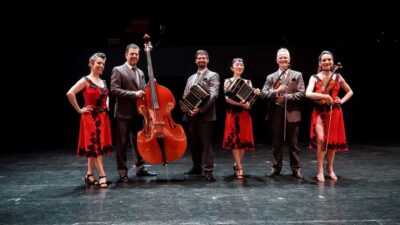
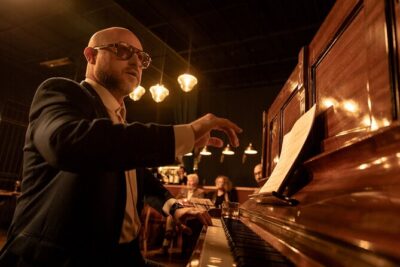
Intimate Underground Tango Show by Secreto Tango Society
Read our review →
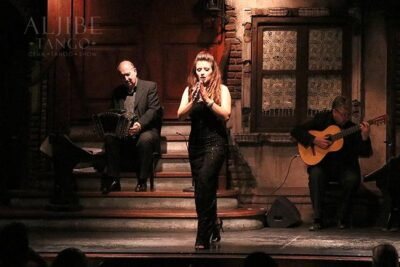
Early Tango Dinner Show with Optional Traditional Bus Transfer
Read our review →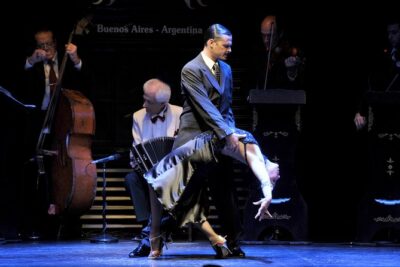

Tango Porteño: The Best Tango Night in Buenos Aires
Read our review →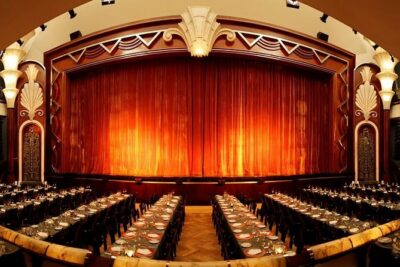
Skip the Line Ticket for Tango Porteño Show with Dinner Platea
Read our review →Browse the lists this tour appears in