
Reviewed · SCOOTER RENTALS
Tour Buenos Aires in one day on Electric Scooters
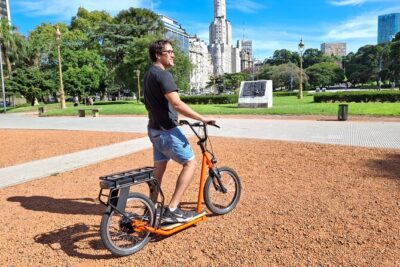
Buenos Aires rewards a little speed. This five-hour electric scooter tour covers about 16 kilometers, linking major sights with stories about soccer, politics, food, faith, and everyday Argentine life. You get more ground than on foot, yet the small group keeps the outing personal.
I especially like the mix of city landmarks and local snacks, from mate with a dulce de leche alfajor to fernet with chipá. I also like the guides, including Rita, Mike, and Miguel, who are praised for clear scooter instruction, strong English, warmth, and an easy sense of humor. The main consideration is simple: you need to know how to ride a bicycle, and the scooters may not suit everyone with balance or knee problems.
In This Review
- Key things to know before you book
- Why an electric scooter works well in Buenos Aires
- Starting at Plaza Estado del Vaticano
- The Obelisco and Argentina’s public memory
- Pink buildings, financial crisis, and national politics
- Puerto Madero and the Woman’s Bridge
- The Monumental Tower and the Malvinas memorial
- Plaza San Martín and the fernet stop
- Recoleta’s university, flower, and cemetery
- Ending in Palermo with choripán
- What the $89 price really buys you
- Who will enjoy this tour most
- Should you book the Buenos Aires scooter tour?
- FAQ
- How long does the electric scooter tour last?
- How far does the tour travel?
- What food and drinks are included?
- Where does the tour begin and end?
- How many people can join the tour?
- Do I need to know how to ride a bicycle?
Key things to know before you book
- Sixteen kilometers in five hours: You cover central Buenos Aires, Puerto Madero, Recoleta, and Palermo without spending the day on foot.
- Three food and drink moments: Mate and alfajor are included, as are fernet and chipá. Choripán and beer at the finish cost extra.
- A small group of no more than nine: That gives you a better chance to hear the guide and ask questions.
- The route mixes serious and playful subjects: Expect Malvinas, the Corralito, public protests, Argentine faith, soccer, barbecue, and local slang.
- The tour begins at 10 a.m. and ends in Plaza Serrano: You finish in Palermo, a useful area for continuing your afternoon.
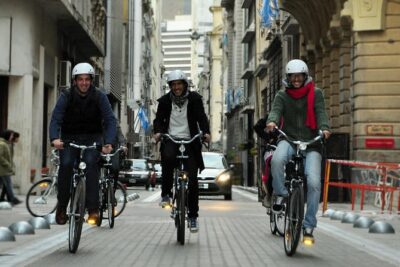
- A bicycle-level skill is required: Helmets and reflective belts are supplied, but this is still an active street experience.
Why an electric scooter works well in Buenos Aires
Buenos Aires is spread across several districts that are easy to recognize on a map but tiring to connect on foot. This route uses electric scooters to bridge that gap. You can see the Obelisco, Puerto Madero, Recoleta, and Palermo in one outing, rather than giving each area a separate half-day.
I like the pace promised here. The route is not simply a fast ride past buildings. Stops usually last 10 to 15 minutes, with longer pauses for food and conversation. That gives you time to hear the explanation, look around, and take photographs without turning the day into a race.
The scooter also changes your view of the city. You are outdoors, close to street life, and moving at a relaxed pace. The description’s warning about windblown hair is playful, but accurate enough to be useful. Wear something comfortable and secure anything loose.
This is not the right pick if you want a museum-heavy day or a slow architectural tour. Most of the experience takes place outside, and the city traffic environment requires attention. You should be comfortable balancing, steering, braking, and riding a bicycle before booking.
More Day Trips in Buenos Aires
- Gaucho Day Trip from Buenos Aires: Santa Susana Ranch
★ 4.0 · 272 reviews - Colonia del Sacramento Small-Group Day Trip
★ 4.5 · 155 reviews - Gaucho Experience: A Day Trip to Don Silvano Ranch
★ 4.0 · 148 reviews
Starting at Plaza Estado del Vaticano
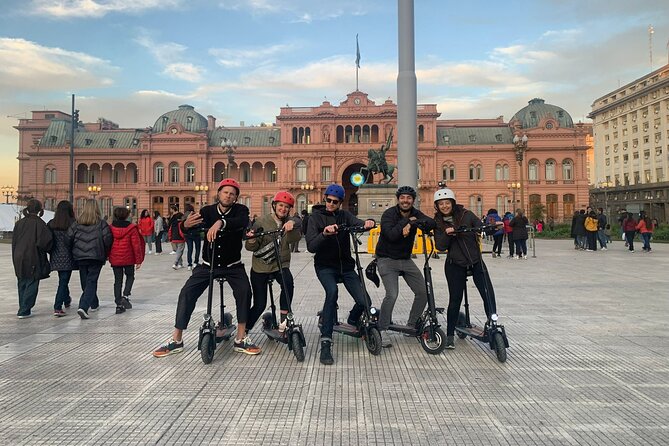
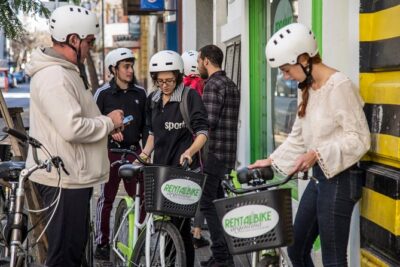
The meeting point is at Tres Sargentos 463, with a 10 a.m. start. The first part includes an introduction to the scooters and a chance to practice. Mike and Rita are specifically praised for explaining the controls and making sure people could handle the scooters before setting off.
That early check matters. One person had difficulty with a scooter seat during practice and chose not to continue, partly because of replaced knees and balance concerns. The operator explained that the seat’s movement came from the scooter suspension, but the practical lesson remains: use the practice time honestly. If the scooter feels unstable or your knees make balancing difficult, speak up before the group leaves.
At Plaza Estado del Vaticano, the guide sets up the larger theme of the day: Argentine identity told through places, habits, arguments, food, and national memories. The stop also begins the food portion, with mate and an alfajor filled with dulce de leche.
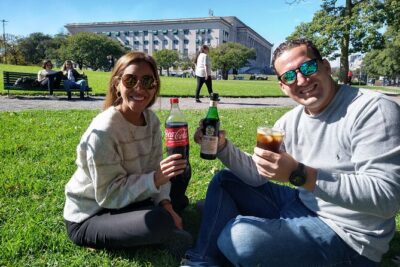
Mate is more than a drink in Argentina. Here, it gives you a small entry into a social custom that can otherwise feel mysterious. The alfajor adds a sweet, familiar counterpoint. Since this is an included tasting, you do not need to budget extra for it.
The Obelisco and Argentina’s public memory
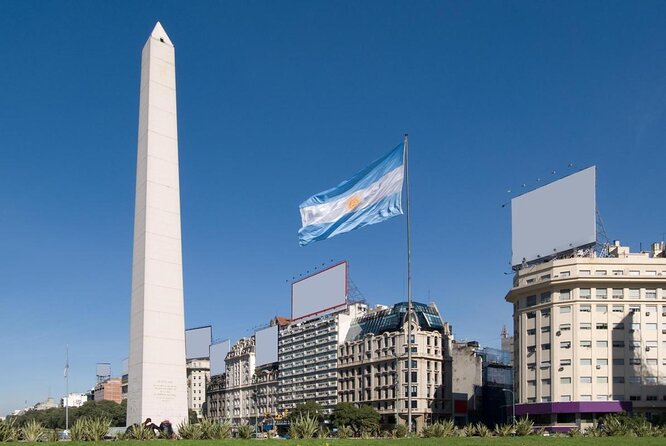
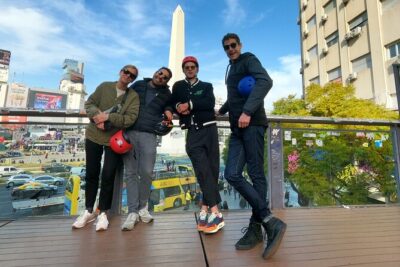
The Obelisco is a short stop, about 10 minutes, but it is one of the city’s essential photo points. The guide presents it as a great witness to Buenos Aires, a useful idea because this monument has seen celebrations, demonstrations, and public gatherings unfold around it.
The tour does not treat the Obelisco as an isolated monument. It connects the landmark with the way Argentines use city spaces for celebration and protest. That approach makes the stop more useful than a quick photograph with no context.
You will not spend long here, so keep your camera ready. The route’s value comes from the number of places linked together, not from extended time at any single monument.
Pink buildings, financial crisis, and national politics
At the Banco de la Nación Argentina, the discussion turns to the Corralito, the severe banking restrictions that shaped Argentine public life in the early 2000s. This is one of the more political stops, and it helps explain why economic decisions remain such a powerful subject in Argentina.
The itinerary also includes a prompt about why a building is pink. That question fits the tour’s style: instead of only listing dates and names, the guide uses visible details to open a conversation about power and national symbolism.
The next stop is the Centro Cultural Kirchner, known as CCK, followed by Luna Park. The cultural center represents Buenos Aires’ ongoing interest in art and public culture. Luna Park adds a sporting and entertainment angle, with the promise of records and memorable events.
These stops are brief, usually around 10 minutes each. I would expect an overview rather than an interior visit or a full architectural lecture. You are paying for a broad city introduction, not admission to a series of attractions.
A few more Buenos Aires trips worth putting side by side
- Buenos Aires to Iguazu Falls: Private Day Trip, Flights Included
★ 5.0 · 58 reviews - Buenos Aires in One Day Private Walking Tour
★ 4.5 · 46 reviews - Colonia Day Trip & Optional Private Transfers from Buenos Aires
★ 3.0 · 45 reviews - Iguazu Falls Private Day Trip from Buenos Aires with Airfare
★ 4.5 · 35 reviews
Puerto Madero and the Woman’s Bridge
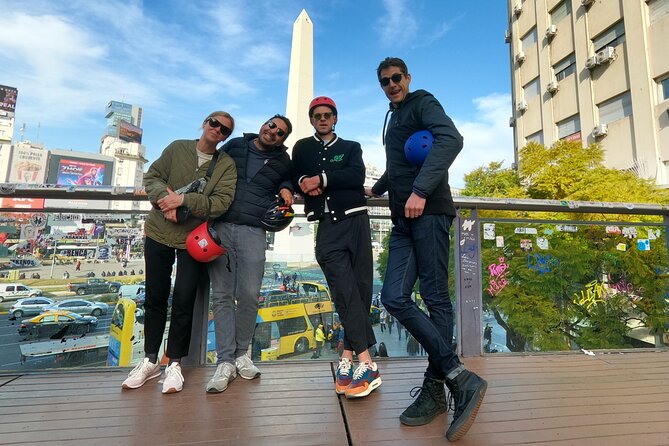
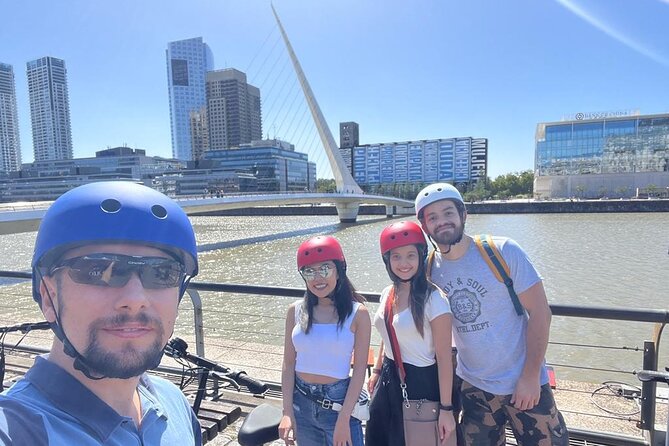
Puente de la Mujer, or the Woman’s Bridge, is one of the tour’s most photogenic pauses. The bridge was designed by Santiago Calatrava, and the guide asks you to consider what its shape is meant to convey.
The stop lasts about 25 minutes and includes the mate and alfajor tasting if you did not have it earlier, or serves as the main setting for that part of the food program. Mate with chocolate alfajor and dulce de leche gives you something distinctly Argentine while you take in the modern waterfront setting.
Puerto Madero brings a sharp change from the older central streets. You move from grand civic buildings and crowded avenues to a newer district with a more contemporary feel. I like that contrast because it prevents the route from presenting Buenos Aires as only one kind of city.
Do not expect a long waterfront stroll. You are on a scooter tour, so the stop is designed for explanation, photos, and a snack rather than extended wandering.
The Monumental Tower and the Malvinas memorial
The Torre Monumental is next, with a question built into its identity: is it the Monumental Tower or the Tower of the English? That name reflects the complicated relationship between Argentina and Britain, a subject that leads naturally into the Malvinas War.
At the Monumento a los Caídos en Malvinas, the route addresses the conflict and Argentine memory of it. The supplied itinerary uses an odd phrase about an Argentine victory four years later, so I would listen carefully to the guide’s explanation rather than rely on that wording as a historical summary.
The Malvinas memorial stop is brief, around 10 minutes, but it adds weight to the morning. This is not only a sightseeing ride. You are also being introduced to subjects that remain emotionally important in Argentina.
Plaza San Martín and the fernet stop
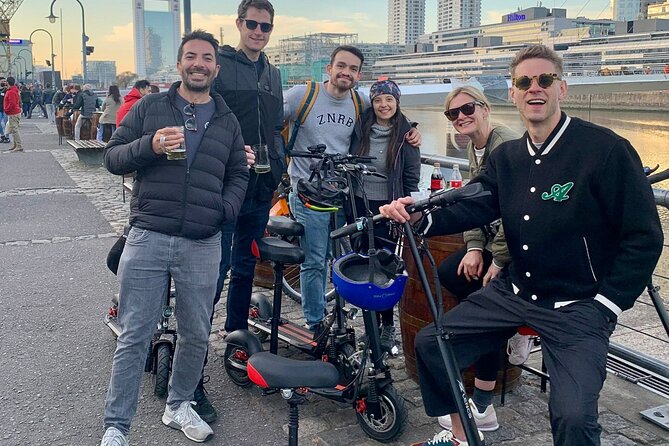
Plaza General San Martín provides one of the clearest looks at the connection between public space and Argentine politics. The tour discusses the country’s high level of protest activity, then pairs the subject with fernet and chipá.
Fernet is a bitter herbal amaro, commonly associated with Argentina’s drinking culture. Chipá is a small bread made with cassava and cheese. Together, they offer a more savory and adult tasting than the earlier alfajor and mate.
Alcohol is included here, so keep that in mind if you do not drink. The food and drink are part of the tour’s character, but you can decide how much to sample. The description does not promise substitute items, so contact the operator before booking if you have dietary or drink-related concerns.
This stop lasts about 25 minutes. It is a good point to ask questions, since the route has moved from monuments into social behavior, public anger, and the way Argentines relate to authority.
Recoleta’s university, flower, and cemetery
The route then heads toward the Facultad de Derecho at the University of Buenos Aires. The stated theme is free, quality education for everyone. Even without entering the faculty, the stop gives you a window into national ideas about public institutions and access.
Floralis Genérica follows, with modernity and resilience as its themes. The large metal flower is one of the city’s recognizable modern symbols, and its opening and closing mechanism has long made it a popular stop. The itinerary does not specify whether the flower will be open, so treat the visit as a chance to see the sculpture rather than a guaranteed mechanical display.
La Recoleta Cemetery is one of the route’s major cultural stops. The theme, luxury even in death, points to the ornate mausoleums and elite families associated with this famous cemetery. You have about 15 minutes, enough for an introduction and a look at the setting, but not enough for an unhurried cemetery visit.
If Recoleta Cemetery is high on your list, you may want to return separately. A guided overview here helps you understand why it matters, while a later visit lets you wander at your own pace.
The Basilica de Nuestra Señora del Pilar comes next. The guide connects Argentine faith, the Pope, and the playful football reference to God. That combination reflects the tour’s broad approach: religion is presented alongside national personality and soccer culture, rather than in isolation.
Ending in Palermo with choripán
The route finishes in Plaza Serrano, in Palermo, after a final stop lasting about an hour. The area is described as a center for writers, painters, philosophers, and psychoanalysts, with a bohemian character that still shapes its identity.
The final meal is at the choripanería al paso called @Chori. Choripán is grilled sausage served in bread, usually finished with chimichurri. Argentine craft beer is also part of the final tasting, but both the choripán and beer are excluded from the $89 price.
That extra cost is worth noting when you compare this tour with other half-day activities. The included scooter, helmet, reflective belt, mate, alfajor, fernet, and chipá make the price easier to understand. Still, you should budget separately for the final food and drink.
Ending in Palermo is practical. You are not returned to the original meeting point, but you finish in an area known for food, shopping, and nightlife. The end address is on Serrano in Plaza Serrano, so plan your next move from there rather than backtracking to central Buenos Aires.
What the $89 price really buys you
At $89 per person, this is not a cheap transport option. It is a guided orientation to Buenos Aires that combines equipment, instruction, food tastings, city commentary, and a long route through several districts.
The strongest value comes from the coverage. In five hours, you reach places that would take considerable effort to connect by walking. The maximum group size of nine is another plus, especially if you want to ask about Argentine politics, food, or local customs.
The price is less attractive if you mainly want scooter rental. You are paying for the guide and the interpretation, not just the ride. You also need to add the cost of the choripán and beer at @Chori.
The tour is currently rated 4.9 from 33 ratings, with 97 percent recommending it. The praise focuses heavily on the guides. Rita is described as warm, fluent in English, and well informed about Buenos Aires. Mike is praised for combining historical detail with a light tone that worked for a family with a 10-year-old. Miguel is described as especially attentive and pleasant.
Those details matter more than a high score alone. A scooter tour can become stressful if instructions are rushed or the guide leaves the group behind. Here, the repeated praise for patient instruction and friendly commentary is a real reason to consider booking.
Who will enjoy this tour most
I would choose this experience for a first or early visit to Buenos Aires, especially if you want a broad introduction before exploring individual neighborhoods in more depth.
It suits you best if:
- You can comfortably ride a bicycle.
- You enjoy being outdoors for several hours.
- You want food and social customs included in sightseeing.
- You like a guide who discusses politics and national identity, not only buildings.
- You prefer a small group to a large bus tour.
- You want to cover central Buenos Aires, Puerto Madero, Recoleta, and Palermo in one day.
Families may also like it. One account specifically describes the guide keeping a 10-year-old engaged while still explaining the city’s past. That said, every member of your group needs to meet the bicycle-riding requirement.
I would be cautious if you have significant balance limitations, knee problems, or discomfort on moving vehicles. The practice session is important, and you should not feel pressured to continue if the scooter does not feel safe.
The activity depends on good weather. If poor weather cancels the outing, you are offered another date or a full refund. You can also cancel for a full refund up to 24 hours before the start time. Confirmation arrives when you book, and the meeting point is near public transportation.
Should you book the Buenos Aires scooter tour?
Book it if you want a lively city orientation with real local flavor, and you are comfortable riding for 16 kilometers. The combination of Rita, Mike, or Miguel’s commentary, small-group attention, varied neighborhoods, and Argentine tastings gives you far more than a simple landmark circuit.
Skip it if you cannot ride a bicycle, need a fully seated sightseeing vehicle, or want long visits inside museums and historic buildings. Also remember that the final choripán and beer are extra.
For the right rider, this is a smart first-day choice. You see a large slice of Buenos Aires, learn the stories behind its arguments and rituals, and finish in Palermo with the city still open for your evening.
FAQ
How long does the electric scooter tour last?
The tour lasts approximately five hours and begins at 10 a.m.
How far does the tour travel?
The route covers about 16 kilometers through Buenos Aires.
What food and drinks are included?
Mate with a chocolate alfajor filled with dulce de leche, plus fernet accompanied by chipá, are included. The choripán and beer at @Chori are not included.
Where does the tour begin and end?
It begins at Tres Sargentos 463 in Buenos Aires and ends at @Chori on Serrano in Plaza Serrano, Palermo.
How many people can join the tour?
The maximum group size is nine travelers.
Do I need to know how to ride a bicycle?
Yes. The experience is not recommended for people who do not know how to ride a bicycle. Helmets and reflective belts are provided, and the guides allow time to practice with the scooters before departure.
Recently added around Buenos Aires
- Photo Session in Buenos Aires★ 5.0 · 26 reviews
- Your Personal Photographer in Buenos Aires★ 5.0 · 24 reviews
- Discover Buenos Aires’ independent art scene — Ticket included★ 5.0 · 30 reviews
- Your Private Photographer in Buenos Aires★ 5.0 · 4 reviews
- Yerba Mate Workshop – Learn to Drink Mate like a Local!★ 5.0 · 11 reviews
- Taste of Tradition: Yerba Mate & Alfajores Experience★ 4.0 · 5 reviews
- Wine tasting in OASIS Palermo★ 5.0 · 2 reviews
- Day Tour Classic★ 3.5 · 35 reviews
Scooter Rentals, compared.
E-Scooter City Tour: Exploring Buenos Aires North & South
Read our review →Browse the lists this tour appears in