
Reviewed · SKIP THE LINE
Teatro Colon Skip-the-Line plus Palaces of Buenos Aires Tour
Buenos Aires saves its grandest rooms for the curious. I like the skip-the-line Teatro Colón entry and the thoughtful walk past French-style palaces, embassies, and former aristocratic homes. The main caution is that the theater portion and palace walk may happen in a different order than expected.
The tour gives you a useful introduction to Buenos Aires’ Belle Époque, when Argentina’s wealthy families built an extravagant European-style city. I also like the small group limit of 12, though guide quality and English clarity can vary, and one poor guide can change the entire experience.
In This Review
- Key points to know before booking
- Why Teatro Colón deserves your time
- How the Belle Époque shaped Buenos Aires
- Casey Palace and the Ministry of Culture
- The French Embassy and the Pereda Palace
- The Four Seasons and the Alzaga Unzué Palace
- Fernández Anchorena Palace and the Duhau residences
- What the walking pace is really like
- Timing, meeting point, and order of the tour
- Is $68 a good value?
- Who should book this experience?
- Should you book the Teatro Colón and Palaces tour?
- FAQ
- Where does the tour begin?
- Where does the tour end?
- How long does the experience last?
- Is admission to Teatro Colón included?
- Does the tour include palace interiors?
- Can children join the tour?
- What is the cancellation policy?
Key points to know before booking
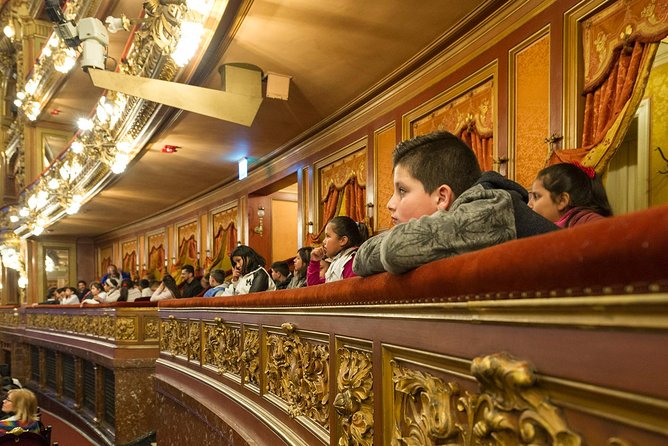
- Teatro Colón is the main prize: You get included admission and skip-the-line access to one of the world’s celebrated opera houses, with about 50 minutes inside.
- The palace walk adds city context: You pass the Duhau, Fernández Anchorena, Pereda, Casey, and Maguire residences, plus the French and Brazilian embassies.
- Belle Époque history ties it together: The guide explains how wealth, European tastes, immigration, social class, and the world wars shaped Buenos Aires.
- Expect an exterior-focused walk: Most palace stops last about 10 minutes, and the tour does not promise entry into these private buildings.
- Timing needs attention: The usual order may change according to Teatro Colón availability, so check the meeting instructions carefully.
- The $68 price is fair for the right visitor: It works best if you want the theater plus a guided introduction to Recoleta’s grand architecture in one compact outing.
Why Teatro Colón deserves your time
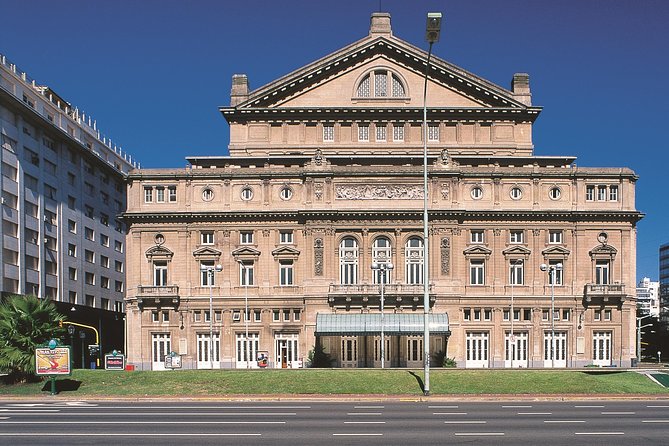
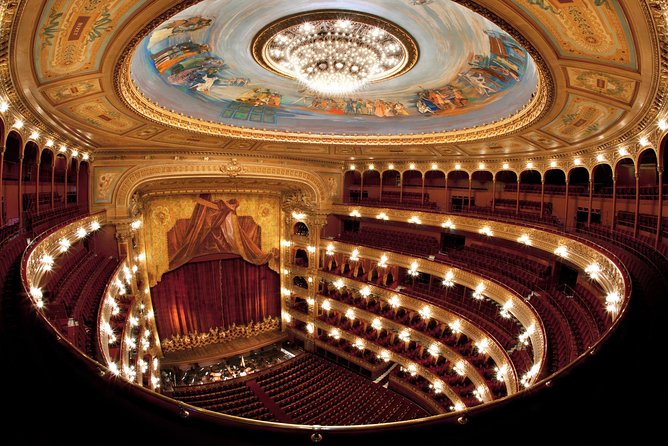
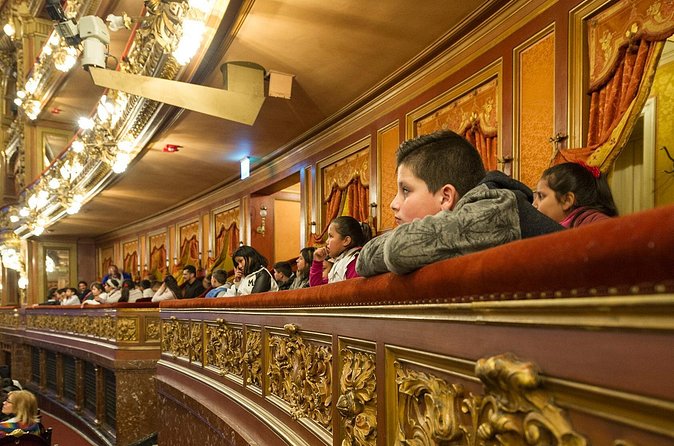
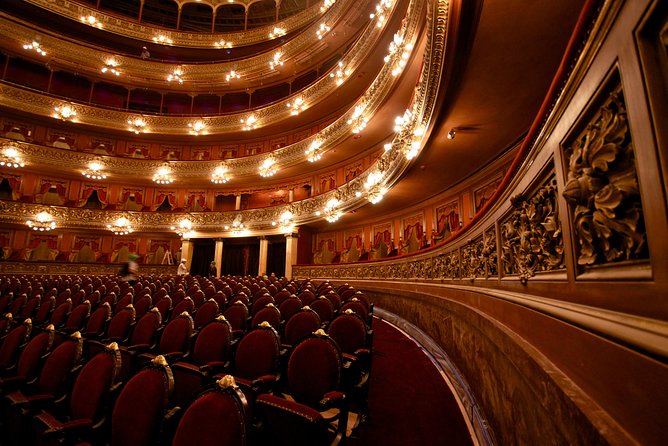
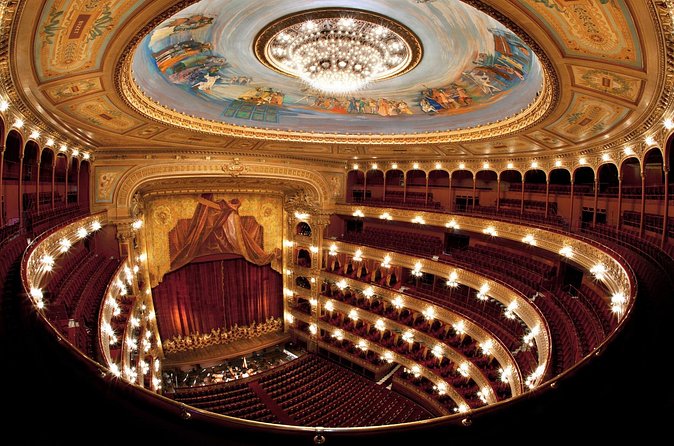
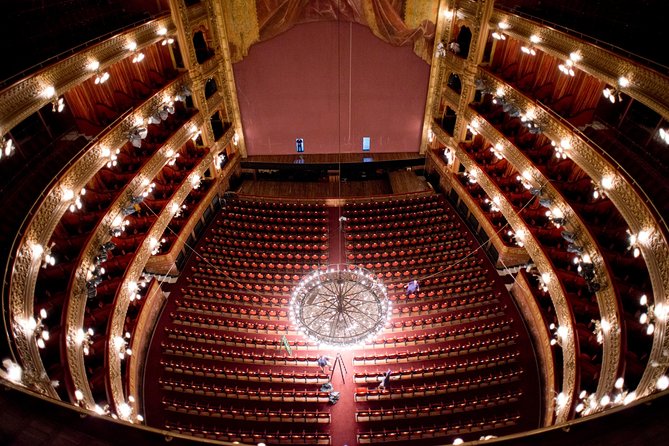
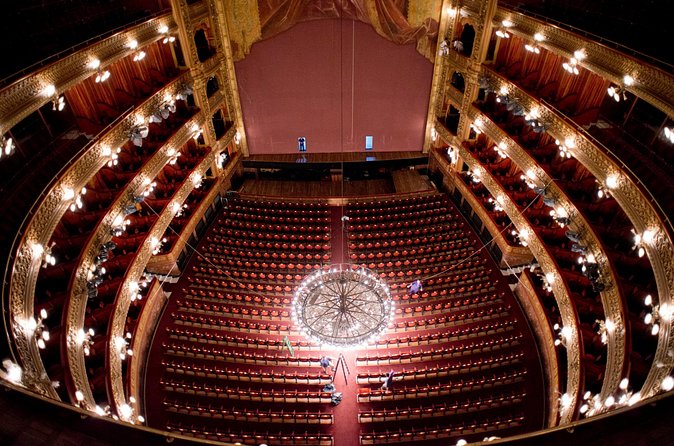
Teatro Colón is the reason many people book this experience, and it earns that attention. The opera house is widely regarded as one of the world’s top performance venues for its size, acoustics, and long artistic record.
Your visit begins near the theater at Tucumán 1171. Skip-the-line access matters here because it removes one of the tour’s biggest annoyances: figuring out the entry process and waiting separately for a ticket.
Inside, the guided visit lasts about 50 minutes. You can expect attention to the theater’s ornate interior design, mural work, enormous stage, and celebrated acoustics. The building is polished and grand without needing much help from a guide, but the commentary gives the details a place in Buenos Aires’ story.
The theater tour has received the strongest praise of any part of the experience. Guides and theater staff have been described as warm, funny, organized, and excellent at explaining the building. Julieta, Florencia, Alicia, Ana, and Mariela are among the guides singled out for making the experience engaging and easy to follow.
I would set your expectations correctly, though. This is not a full backstage technical tour. You should not assume access behind the scenes, to dressing rooms, or to working areas beyond what the theater visit allows. One person found the theater tour less substantial than expected, while another felt the one-hour visit was exactly the right length.
That difference comes down to what you want. If you need an exhaustive opera-house tour, this may feel brief. If you want to see the grand public spaces, hear the essential story, and take photographs without spending half your day in line, the format works well.
A few more Buenos Aires trips worth putting side by side
- Skip the Line Ticket for Tango Porteño Show with Dinner Platea
★ 4.5 · 430 reviews - Teatro Astor Piazzolla Skip-the-Line Ticket
★ 4.5 · 367 reviews - Skip the Line: Tango Porteño Only Show Ticket
★ 4.0 · 194 reviews
How the Belle Époque shaped Buenos Aires
The walking portion explains why so many Buenos Aires buildings look as if they belong in Paris, London, or an old European capital. During the Belle Époque, Argentina’s agricultural and export wealth helped a small upper class build lavish homes along Avenida Alvear and nearby streets.
The architecture tells only half the story. Your guide also discusses social customs, class divisions, Argentina’s economic situation, immigration, and the effects of the First and Second World Wars on Argentine society.
That wider frame is important. The palaces were not simply decorative projects. They reflected a society where wealthy families looked to Europe for manners, architecture, art, and status, while poor immigrants arrived from Europe and elsewhere in search of work.
A good guide turns the walk from a parade of attractive façades into a lesson about power and inequality. Mariela was praised for adjusting the pace to the group and making time for questions. Alicia was described as an encyclopedia of Buenos Aires, while other guides received praise for humor and clear storytelling.
The quality is not guaranteed every time. One English-speaking participant found the guide difficult to understand, and another reported offensive comments about immigrants. That is a serious concern, especially since immigration is central to Argentina’s national story. The provider said it would address the complaint.
Casey Palace and the Ministry of Culture
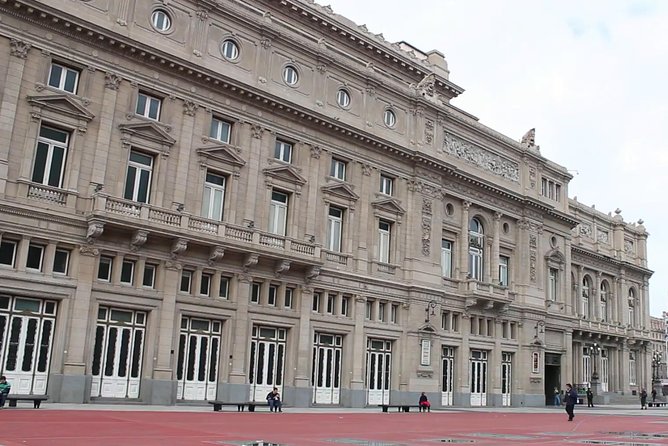
The first palace stop is Casey Palace, now home to Argentina’s Ministry of Culture. It sits at Alvear Avenue and Rodríguez Peña Street in Recoleta.
The building is easy to recognize. Its red and gray exposed-brick façade is trimmed with Paris-style stone, ornamental details, and dark slate mansard roofs. The combination gives it a distinctly French academic appearance, though the building is not simply a copy of one European model.
You spend about 10 minutes here. The stop is primarily about the exterior, so you should treat it as an architectural viewing point rather than a palace interior visit.
This is a good early example of how the tour works. You pause, look upward, hear the background, and then continue along the avenue. If you enjoy façades, rooflines, stonework, and architectural comparison, the pace feels efficient. If you want to enter every building, you may find the visit frustrating.
The French Embassy and the Pereda Palace
The French Embassy occupies the former Ortiz Basualdo-Zapiola residence. Built between 1912 and 1918, it is considered one of the clearest examples of French academic architecture in Buenos Aires.
Your guide points out the building’s mixture of styles and its artistic details. The embassy is still an active diplomatic building, so the experience is an exterior look rather than a palace tour inside.
Across from it, near Plaza Carlos Pellegrini, is Pereda Palace, now the Brazilian Embassy. The building resembles a 20th-century château and offers one of the clearest expressions of French influence on Buenos Aires architecture.
The palace’s story is especially entertaining. Its grand façade, staircases, high ceilings, Carrara marble, and art collection reflect an owner with exacting tastes. Two different architects were involved because the project was altered and completed over time.
You get about 10 minutes at the stop. That sounds short, but the building can be understood well from the street, especially when your guide explains the unusual design history. You will not be touring the embassy’s interiors, so keep your camera ready and listen for the details that are easy to miss on your own.
Still Argentina, but a completely different sort of afternoon:
- Local Foodie Adventure in Buenos Aires with Sherpa Food Tours
★ 5.0 · 6,875 reviews - Buenos Aires City Private Tour with Local Guide
★ 5.0 · 3,475 reviews - Buenos Aires Small-Group City Tour
★ 5.0 · 2,226 reviews - Buenos Aires Hop-On Hop-Off Bus, Free Walking Tours & Discounts
★ 4.5 · 2,218 reviews
The Four Seasons and the Alzaga Unzué Palace
The Four Seasons Hotel Buenos Aires occupies the Alzaga Unzué palace, a former private residence that recalls the social contrasts of early 20th-century Argentina.
The house combines English Edwardian influence with the French château style favored by its owners. Scottish architect Robert Russell spent four years on the construction, creating the kind of hotel particulier associated with the Belle Époque: a large urban mansion organized across four floors for one family.
The story is useful because it shows how personal taste shaped these homes. Felix preferred English design, while Elena admired the castles of the Loire. The result was a blend rather than a single pure style.
Today, the palace forms part of a luxury hotel, but the tour still treats it primarily as an exterior stop. You spend about 10 minutes here. I would pay attention to the contrast between the old mansion and its current hotel role, which neatly illustrates how Buenos Aires has reused many of its grand residences.
Fernández Anchorena Palace and the Duhau residences
The Fernández Anchorena Palace is one of the few surviving upper-class residences on Avenida Alvear. It now belongs to the Holy See and serves as the Apostolic Nunciature in Buenos Aires.
Its location gives the stop added importance. You are looking at a building that remains tied to diplomacy and the Catholic Church, not simply a preserved private home. The guide can help you understand how the avenue once functioned as a corridor of elite residences.
Nearby, the Duhau Palace is now the Park Hyatt Buenos Aires. It was declared a historic monument in 2002 and is one of the clearest remaining examples of Buenos Aires’ Belle Époque architecture.
The Duhau brothers bought the property in the 1930s and hired architect León Dourge to create the current French neoclassical building. The palace’s architectural changes are part of the story, as is the former owners’ interest in design.
You spend about 10 minutes at the Duhau Palace. The hotel setting gives you a tantalizing glimpse of how historic architecture can remain in active use, but do not expect a complete inspection of the hotel’s private areas.
The Maguire Residence, at the corner of Rodríguez Peña and Alvear, completes this group of buildings. It is one of the few surviving mansions from a former line of upper-middle-class homes that were later demolished or converted into hotels.
The residence became a National Historic Monument in 2002, along with the Duhau Palace and Apostolic Nunciature. All three were connected to the French-origin Duhau family. This final stop helps explain the scale of change along Avenida Alvear: an entire corridor of mansions once defined the area, but only a few remain.
What the walking pace is really like
The palace section is a series of short stops, usually about 10 minutes each. You walk between buildings through Recoleta streets and along Avenida Alvear, with the guide explaining what you are seeing rather than taking you through every doorway.
This makes the tour manageable for families and for anyone who prefers a compact city walk. One family praised the relaxed pace, useful start time, and two-hour length. Most people can participate, and children are welcome when accompanied by an adult.
The walk can feel less comfortable in hot weather. One person found it tiring to spend two hours outside before entering the theater when the order was changed. If the day is warm, bring water, wear comfortable shoes, and consider the possibility that the palace walk may come first.
The group limit is listed as 12 people. That is small enough for questions and street-level commentary, though one participant felt the group was larger than ideal. You may also receive a multilingual guide, so ask clearly if you need English explanations repeated or slowed down.
Timing, meeting point, and order of the tour
The meeting point is next to Teatro Colón at Tucumán 1171, in central Buenos Aires. The activity ends back at the same meeting point, and you arrange your own transportation to and from the tour.
The advertised experience lasts about two hours, while the included tour information also describes a 2.5-hour guided visit. The listed stops add up to roughly 50 minutes inside Teatro Colón plus seven short exterior stops, not counting the walking time between them. In practical terms, allow around two to two and a half hours.
Do not assume the theater always comes first. The usual plan may begin at Teatro Colón, but theater availability can move that visit to later in the day. One group expected to enter at 1 p.m. and discovered that its theater visit was scheduled for 3 p.m., with the walking tour first.
That is the most important planning tip here: read the meeting instructions carefully and look for the guide, not only the theater entrance. A guide may be waiting near the theater with your ticket, but the group may begin walking before entering the building.
If you arrive late or go to the wrong location, contact the operator promptly. One guide, Franco, handled a 30-minute mistake by offering two practical options and rearranging the visit. That kind of flexibility is valuable, but it should not replace checking the details before you leave.
Is $68 a good value?
At $68 per person, this is not the cheapest way to see Teatro Colón. You are paying for more than the admission ticket, though. The price includes skip-the-line access, the theater entrance fee, a professional local guide, and a guided walk through one of Buenos Aires’ most architecturally important districts.
The value is strongest if you want historical explanation. On your own, you can admire the buildings, but you may not know that the Alzaga Unzué palace blends Edwardian and Loire Valley influences, that Pereda Palace involved two architects, or that the Maguire, Duhau, and Nunciature properties share a family connection.
The value is weaker if you only want to enter the opera house. Several people felt the theater was the best part and suggested that the palace walk added less. You could also find the cost high if the guide’s English is difficult to follow or if the order change leaves you walking in extreme heat.
Still, the small group and included entry make the price reasonable for visitors who want a structured introduction rather than a simple ticket. It is particularly useful early in your Buenos Aires stay, when you want to understand Recoleta’s architecture before exploring the area on your own.
Free cancellation is available until 24 hours before the start time. Changes made inside that 24-hour window are not accepted, so keep your plans firm once you reach the cutoff.
Who should book this experience?
I would recommend it to first-time visitors who want the city’s grand architecture explained in plain language. It suits couples, families, and solo visitors who enjoy walking but do not want a full-day excursion.
It is also a good choice for music lovers who want an easy way to visit Teatro Colón without handling the admission process themselves. The theater is beautiful enough to justify the outing, and the palace route gives you a different view of Buenos Aires than the usual cafés, plazas, and tango venues.
You may want to skip it if you need extensive backstage access, dislike exterior sightseeing, or have difficulty walking in warm weather. It is also not ideal if you require highly consistent English commentary and cannot tolerate a guide whose pace or pronunciation may vary.
Should you book the Teatro Colón and Palaces tour?
Book it if you want Teatro Colón plus a concise history walk in one outing. The opera house is the strongest part, and the palace route gives you a useful explanation of Argentina’s European ambitions, class divisions, and changing city life.
Before paying, confirm the start time and ask whether the theater visit comes first. Arrive at Tucumán 1171 with comfortable shoes, allow up to 2.5 hours, and keep an open mind about the order.
For most visitors, the tour is worthwhile because it connects Buenos Aires’ grandest buildings to the society that created them. Just remember that you are seeing palace exteriors, not touring private interiors, and the guide makes a major difference.
FAQ
Where does the tour begin?
The tour begins next to Teatro Colón at Tucumán 1171, C1049AAW Buenos Aires, Argentina.
Where does the tour end?
The activity ends back at the Teatro Colón meeting point.
How long does the experience last?
The tour is described as approximately two hours, while the included guided-tour information lists 2.5 hours. Allow up to 2.5 hours for the full experience.
Is admission to Teatro Colón included?
Yes. The Teatro Colón admission fee and skip-the-line access are included.
Does the tour include palace interiors?
The listed palace and embassy stops are guided exterior visits. Admission is not included for those stops.
Can children join the tour?
Yes. The experience is considered kid-friendly, but children must be accompanied by an adult.
What is the cancellation policy?
You can cancel at least 24 hours before the start time for a full refund. Cancellations or changes made less than 24 hours before the start time are not accepted.
Recently added around Buenos Aires
- Photo Session in Buenos Aires★ 5.0 · 26 reviews
- Your Personal Photographer in Buenos Aires★ 5.0 · 24 reviews
- Discover Buenos Aires’ independent art scene — Ticket included★ 5.0 · 30 reviews
- Your Private Photographer in Buenos Aires★ 5.0 · 4 reviews
- Yerba Mate Workshop – Learn to Drink Mate like a Local!★ 5.0 · 11 reviews
- Taste of Tradition: Yerba Mate & Alfajores Experience★ 4.0 · 5 reviews
- Wine tasting in OASIS Palermo★ 5.0 · 2 reviews
- Day Tour Classic★ 3.5 · 35 reviews
Skip the Line, compared.
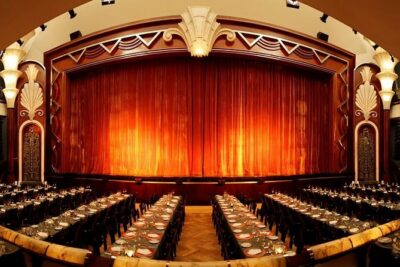
Skip the Line Ticket for Tango Porteño Show with Dinner Platea
Read our review →
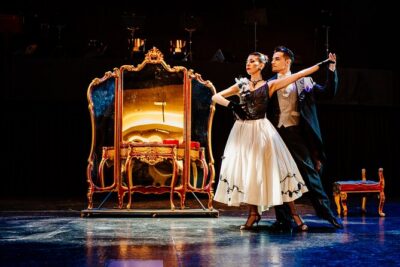
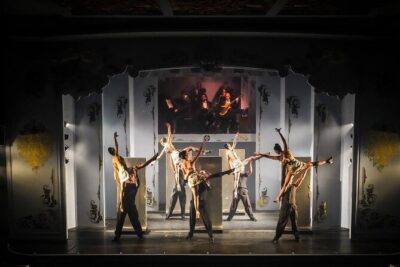
Cafe de los Angelitos Skip the Line Tango Show Optional Dinner
Read our review →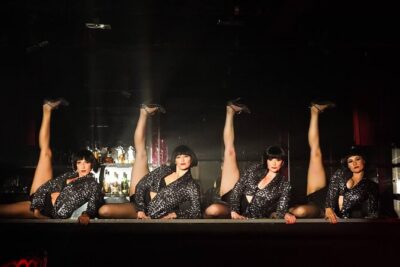
Rojo Tango Show: Skip the Line Ticket including Private Transfer
Read our review →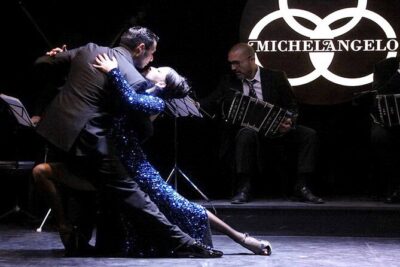
Michelangelo Tango Show Skip The Line Ticket W/Optional Dinner In Buenos Aires
Read our review →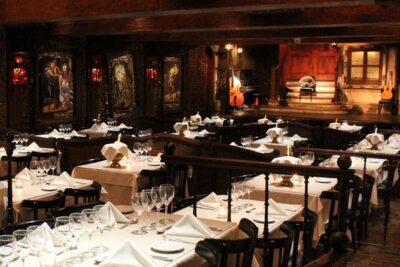
Aljibe Earlier Tango Show Skip the Line Ticket W/Optional Dinner in Buenos Aires
Read our review →
Skip the Line: Tango Show Ticket at Señor Tango with Optional Dinner
Read our review →Browse the lists this tour appears in