
Reviewed · TANGO SHOWS
Tango like a Local in Buenos Aires
Tango begins after dark. This four-hour Buenos Aires experience gives you a private lesson with a professional dancer, then takes you to a local milonga where people dance for pleasure, not for a stage audience. I like the personal teaching and the chance to see the social rules of tango up close. My one caution is the late schedule: the meeting time is around 9 p.m., and the class may begin as late as 10 p.m.
I also like that wine and private transport are included. Guides such as Nicole, Matías, Candela, Martina, Victoria, Jamila, Mala, and Rafael have helped make this feel warm and personal, with patient instruction for complete beginners. The main trade-off is that snacks cost extra, and the exact milonga can change with the night.
In This Review
- Key points to know before you book
- Why this Buenos Aires tango night feels different
- The lesson: basic tango without the pressure
- Entering a real milonga after class
- Wine, music, and the social side of tango
- How the late schedule shapes your evening
- Is $149 a fair price?
- Who will enjoy this most?
- Practical tips for making the night work
- Should you book Tango like a Local?
- FAQ
- How long does Tango like a Local in Buenos Aires last?
- What time does the experience begin?
- Is private transportation included?
- Are drinks and food included?
- Do I need previous tango experience?
- What happens if I need to cancel?
Key points to know before you book
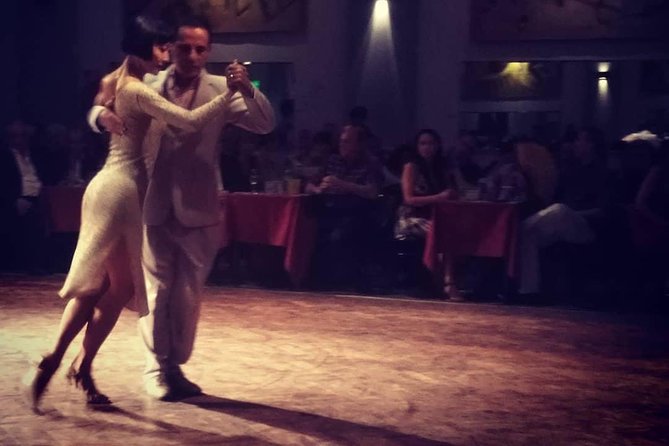
- You learn before you watch: A professional tango dancer teaches basic steps, posture, hand placement, leading, and movement before you enter the milonga.
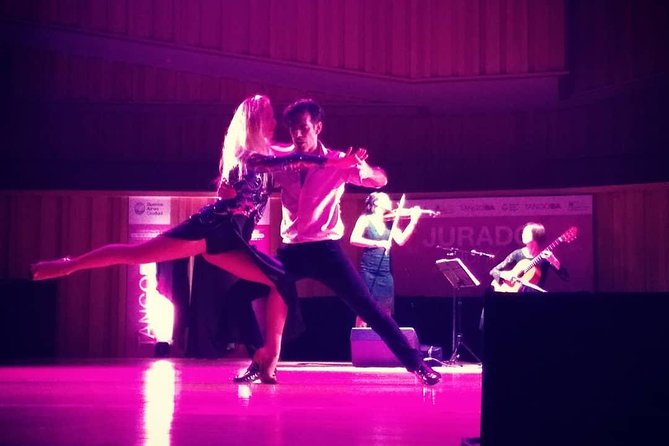
- The milonga is local, not a stage show: You watch regular dancers and may see live music or a professional exhibition.
- The late timing is part of the culture: The meeting time is flexible because milongas open at different times, but the class begins by 10 p.m. at the latest.
- Private transport keeps the night simple: Transport between the lesson and milonga is included, with Uber or a cab used on some evenings.
- Beginners are welcome: The lesson is designed to build enough confidence for you to try a few steps in public if you wish.
- Wine is included, food is not: A bottle of wine is provided for the table to share, while snacks such as empanadas can be bought in Argentine pesos.
Why this Buenos Aires tango night feels different
Many tango evenings in Buenos Aires are built around a polished performance, a fixed menu, and a room full of visitors. This experience takes another route. You first learn a few basics, then enter a milonga, the social dance gathering where local tango enthusiasts meet, watch, talk, and dance.
That distinction matters. A stage show can be beautiful, but it tells you little about how tango works as a living social custom. At a milonga, you see couples sitting around the edge of the floor, waiting for the right moment to dance. You hear the music as dancers hear it. You also begin to notice the quiet etiquette that makes the floor function.
The experience is not only about learning steps. It gives you a way to understand what you are seeing. Without a lesson, tango can look impossibly technical. After an hour of instruction, you can recognize the basic walk, the embrace, the lead, and the response. You may still be a beginner, but the room becomes easier to read.
The small maximum group size, 10 people, helps keep the evening more personal than a large coach outing. The lesson itself is described as private, with individual attention from a professional dancer. That makes a difference if you are nervous, have different dance backgrounds from your partner, or simply want permission to make mistakes.
More tango shows and dinner nights in Buenos Aires:
- Buenos Aires: Piazzolla Tango Show with Optional Dinner
★ 4.4 · 2,122 reviews - Buenos Aires: Tango Show at Tango Porteño & Optional Dinner
★ 4.6 · 981 reviews - Intimate Underground Tango Show by Secreto Tango Society
★ 5.0 · 893 reviews
The lesson: basic tango without the pressure
Your evening starts with a private class taught by a professional tango dancer. The exact teacher may vary. Past evenings have included Nicole and Matías, Candela, Martina, Victoria, Mala, and Rafael, each bringing a slightly different teaching style and background.
The lesson covers the building blocks rather than promising instant mastery. You can expect work on basic steps, posture, hand position, movement, and the difference between leading and following. One especially useful feature is the attention to how the dance feels between two people, rather than treating it as a set of rigid foot patterns.
That approach suits beginners. Tango can look intimidating because experienced dancers make it appear effortless. A patient instructor helps take away that fear. Candela, for example, is praised for explaining the basics clearly and allowing a first-time dancer to build confidence gradually. Rafael has taught students how to move, where to place their hands, and how to lead.
The class also works for mixed-level couples. If you have dance experience and your partner has little, the teacher can give both of you something useful to work on. One evening paired an experienced dancer with a near-beginner, and both found the lesson enjoyable and informative.
You should not expect to leave ready for a competition. The useful goal is smaller: learn enough to understand the dance, try a few movements, and feel comfortable entering a social setting. If you want to continue, the lesson may give you a clear starting point for classes at home.
Some instructors may record a short video of your final attempt. That can be a fun souvenir and a reminder of how far you can progress with practice. Still, ask your instructor if this matters to you, since the precise format may differ.
Entering a real milonga after class
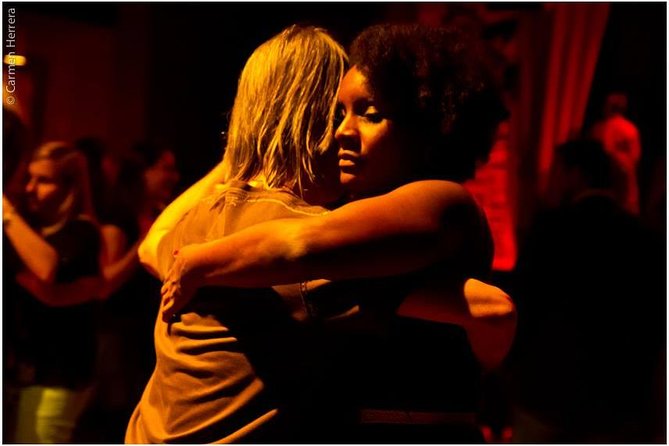
After the lesson, you travel by private transport to a local milonga. The destination changes because Buenos Aires has milongas on different nights and at different times. Examples mentioned for this experience include El Beso and Maldita Milonga.
This changing venue is a strength, not a flaw. It means the evening can match the night’s schedule and music. It also means you should not book this expecting one fixed room or one identical program every time.
At El Beso, one solo participant had a front table reserved, with a clear view of the floor. At Maldita Milonga, a Wednesday evening included a live orchestra. Other nights may include live music, a professional exhibition, or simply the pleasure of watching regular dancers move through the tanda, a group of songs played for dancing.
The guide explains the customs as you go. That is valuable because a milonga has rules that are not always obvious from the outside. You learn how dancers interact, how the floor is organized, and when it is appropriate to join in. You also have someone who can answer questions that would otherwise leave you quietly guessing.
You may be invited to try the floor yourself. This is optional, and you should not feel obliged to perform. The lesson is intended to give you confidence, not to turn the evening into an exam. For a first visit, simply watching can be a complete experience.
A memorable part of this setting is the sense of connection between the guide and the local tango community. Nicole and Matías, for instance, have been described as knowing many people at the milonga and introducing newcomers to friends. That personal link helps the night feel less like a ticketed attraction and more like an introduction.
Wine, music, and the social side of tango
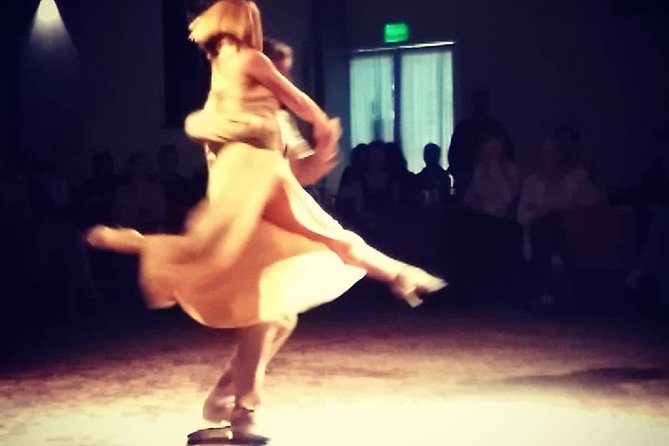
Wine for the table is included, which gives the evening an easy social rhythm. You can sit, watch the dancers, and discuss what you have just learned without worrying about ordering a drink immediately.
Food is not included. Snacks are available for purchase in Argentine pesos, and empanadas have been part of some evenings. Bring pesos if you expect to eat. Since the activity lasts about four hours and runs late, a snack may be sensible, especially if dinner was early.
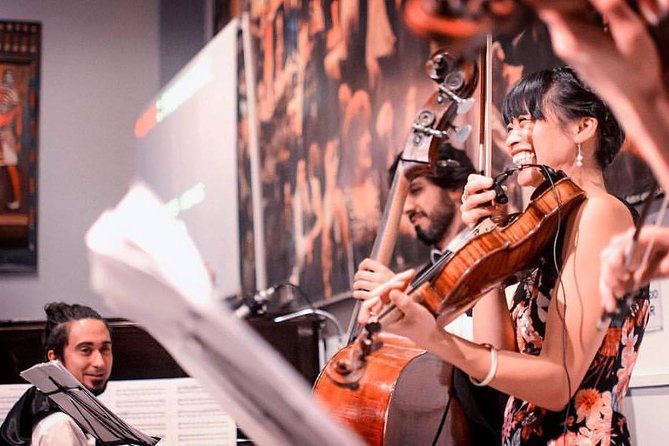
Live music is possible but not guaranteed. Some nights may feature an orchestra, while others focus on recorded tango music and dancing. You should treat the music program as a pleasant possibility rather than a promise.
You may also see a professional exhibition. Again, this depends on the milonga and the night. The main attraction remains the local dance floor, where you can watch people who attend regularly.
That is what gives this evening its cultural value. The dancers are not there simply to entertain an audience. They are taking part in a tradition that includes social contact, music, style, and ritual. You see tango as a habit of city life, not only as a theatrical export.
A few more Buenos Aires trips worth putting side by side
- Local Foodie Adventure in Buenos Aires with Sherpa Food Tours
★ 5.0 · 6,875 reviews - Buenos Aires City Private Tour with Local Guide
★ 5.0 · 3,475 reviews - Buenos Aires Small-Group City Tour
★ 5.0 · 2,226 reviews - Buenos Aires Hop-On Hop-Off Bus, Free Walking Tours & Discounts
★ 4.5 · 2,218 reviews
How the late schedule shapes your evening
The advertised meeting time is 9 p.m., but it is flexible because Buenos Aires milongas begin at different times. The lesson starts by 10 p.m. at the latest, and the entire experience lasts about four hours.
Plan your day around a late night. This is not a sunset activity or an early dinner outing. The schedule may work well after a relaxed afternoon, but it can be tiring if you have already spent the day on your feet.
The flexible meeting time is useful, but it requires clear communication. Confirm the exact meeting details before you set out, especially if you are arranging dinner or another evening activity. Do not schedule anything immediately afterward.
Private transport is included and removes much of the stress of moving between the class and the milonga. Past participants have used an Uber or cab, while the experience itself lists private transportation as included. The activity begins and ends at the meeting point in Buenos Aires.
The meeting point is near public transportation, which gives you another way to reach the start. Still, the included transport is particularly helpful late at night and lets you focus on the experience rather than route planning.
Is $149 a fair price?
At $149 per person, this is not the cheapest way to encounter tango in Buenos Aires. You can watch a performance for less, and you can find a basic dance class without the milonga visit.
The value here comes from combining several services in one evening: a private lesson, professional guidance, transport, entry into a local tango setting, wine, and help understanding what is happening. You are paying for access and context as much as for dancing.
I think the price makes sense if you are curious about tango but would not feel comfortable walking into a milonga alone. A guide who speaks with you, explains the customs, and knows where to sit can save you from feeling lost. The personal teaching also gives the evening a clear purpose.
It is less attractive if your main goal is a polished stage spectacle. There is no promise of a full theatrical production, elaborate costumes, or a fixed cast. This is a social tango evening, and its appeal depends on your interest in seeing ordinary people dance.
The price is also easier to justify for solo visitors and couples who value a small-group experience. A large group would dilute the personal feel, but the maximum of 10 keeps the scale manageable.
Who will enjoy this most?
This experience is a strong choice for an absolute beginner. You do not need previous dance training, and the teaching is designed to help you feel comfortable with the basic movements.
It also suits a solo visitor. The guide can introduce you to the setting, explain the rules, and help you feel less conspicuous arriving alone. One solo participant described spending more than two hours at the milonga and receiving an insider’s view of the tango community.
Couples with different dance abilities can benefit as well. The private format allows the instructor to adjust the pace and address individual problems instead of forcing both people through a standard group routine.
It is also a good fit for anyone who wants culture rather than a staged attraction. You may watch ordinary dancers, meet people connected to the local scene, and see a side of Buenos Aires that is easy to miss.
You might skip it if you dislike late nights, do not want to participate in any dancing, or prefer a fixed itinerary. The evening’s venue and music can change, and snacks require extra payment in pesos.
Practical tips for making the night work
Wear clothing that lets you move comfortably. The experience is not presented as a formal dress requirement, but tango involves close movement and footwork, so restrictive clothing or uncomfortable shoes could make the lesson harder.
Arrive ready to be corrected. Good tango teaching involves small changes to posture, hand placement, balance, and timing. The aim is not to look perfect immediately. It is to notice how the dance works.
Bring some Argentine pesos if you may want empanadas or another snack. Wine is included, but food is not.
Keep the next morning flexible if possible. The activity starts late and lasts around four hours. You may not return to the meeting point until well after midnight.
If you have limited English or Spanish, tell the provider when arranging the experience. The guides have varied language backgrounds. Nicole has translated for Matías, and Rafael has taught in English, but the exact guide affects how communication works.
Cancellation is flexible up to 24 hours before the start time for a full refund. Cancellations or changes made less than 24 hours before the local start time are not accepted, so make your decision early if your plans may shift.
Should you book Tango like a Local?
Book it if you want to understand tango from the inside, even if you have never danced before. The most praised parts are the patient private instruction, the warm guides, and the chance to visit a real milonga instead of watching only a staged show.
I especially like the progression from lesson to observation. First you learn what the dancers are doing. Then you see those ideas used in a social setting, with music, etiquette, friends, and local regulars around you.
Choose another evening if you want a guaranteed orchestra, a fixed venue, or a theatrical performance. Those elements may appear, but they are not the core promise.
For curious beginners, solo visitors, and couples seeking a personal cultural experience, the $149 price is reasonable. Set aside the whole late evening, bring pesos for snacks, and arrive willing to watch before you dance. That is the best way to get the most from Buenos Aires tango.
FAQ
How long does Tango like a Local in Buenos Aires last?
The experience lasts approximately four hours, including the lesson, transport, and time at the milonga.
What time does the experience begin?
The meeting time is around 9 p.m. and may be adjusted because milongas begin at different times. The class starts by 10 p.m. at the latest.
Is private transportation included?
Yes. Private transportation is included, and the activity ends back at the meeting point in Buenos Aires.
Are drinks and food included?
Alcoholic beverages are included, with wine provided for the table to share. Snacks are not included but can be purchased in Argentine pesos.
Do I need previous tango experience?
No. The lesson teaches the basics and is suitable for beginners. Most people can participate.
What happens if I need to cancel?
You can receive a full refund if you cancel at least 24 hours before the local start time. Cancellations or changes made less than 24 hours beforehand are not accepted.
Recently added around Buenos Aires
- Photo Session in Buenos Aires★ 5.0 · 26 reviews
- Your Personal Photographer in Buenos Aires★ 5.0 · 24 reviews
- Discover Buenos Aires’ independent art scene — Ticket included★ 5.0 · 30 reviews
- Your Private Photographer in Buenos Aires★ 5.0 · 4 reviews
- Yerba Mate Workshop – Learn to Drink Mate like a Local!★ 5.0 · 11 reviews
- Taste of Tradition: Yerba Mate & Alfajores Experience★ 4.0 · 5 reviews
- Wine tasting in OASIS Palermo★ 5.0 · 2 reviews
- Day Tour Classic★ 3.5 · 35 reviews
Tango Shows, compared.
Intimate Underground Tango Show by Secreto Tango Society
Read our review →
Early Tango Dinner Show with Optional Traditional Bus Transfer
Read our review →

Tango Porteño: The Best Tango Night in Buenos Aires
Read our review →
Skip the Line Ticket for Tango Porteño Show with Dinner Platea
Read our review →Browse the lists this tour appears in