
Reviewed · FOOD & DRINK
Small Group Tasting to Become a Mate Expert in Buenos Aires
Mate brings strangers together. This 90-minute Buenos Aires workshop explains the drink’s origins, production, social meaning, and proper preparation in a small group capped at 14 people. I like that it teaches a useful local custom rather than simply offering a sample, and I especially like the chance to taste several blends with Argentine sweets.
The warm, informal teaching style is another strong point. Tomás, also called Tomi or Tommy, is praised for his humor, patience, storytelling, and careful attention to questions. The main consideration is time: 90 minutes goes quickly, and one participant felt the history portion could have been a little longer.
In This Review
- Key points to know before booking
- Why mate makes such a good Buenos Aires lesson
- Starting at Matienzo 1559 in Buenos Aires
- First lesson: what yerba mate is and where it comes from
- Learning your way around yerbas and mate equipment
- The tasting: several blends, sweets, and hands-on practice
- The ritual of sharing mate
- Language, group size, and the pace of the class
- The diploma and shop discount
- Is $29 a fair price?
- Who should book this mate workshop?
- Should you book the Buenos Aires mate experience?
- FAQ
- Where does the mate workshop begin?
- Where does the activity end?
- How long does the experience last?
- How many people can join the group?
- Is the experience available in Spanish?
- What is included in the tasting?
- Do I receive anything at the end?
Key points to know before booking
- You taste several mate blends: Try traditional and flavored yerbas, including options such as chai, and compare them side by side.
- You learn the full ritual: The session covers how to prepare, share, and drink mate, not just how it tastes.
- The group stays small: With a maximum of 14 people, you get room to ask questions and practice.
- Tomi is a major part of the experience: His friendly, funny teaching style receives repeated praise.
- Argentine sweets are included: The tasting pairs the mate blends with typical local treats.
- You leave with a diploma: The certificate is a playful souvenir and proof that you completed the workshop.
Why mate makes such a good Buenos Aires lesson
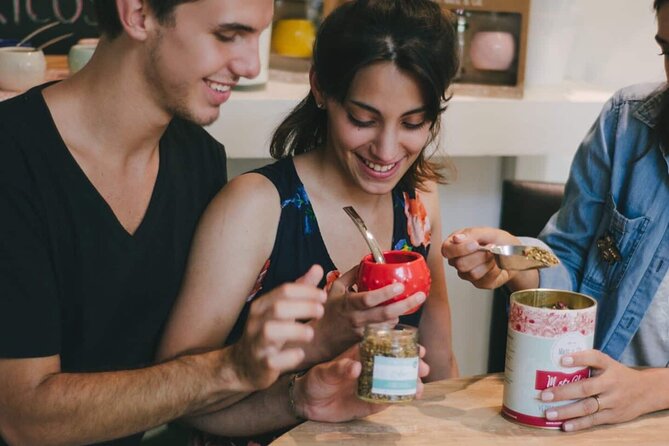
Mate is not simply a hot drink. In Argentina, it is tied to friendship, conversation, hospitality, and daily routine. A workshop gives you a way to understand this custom from the inside, instead of watching someone pass a gourd around and wondering what you are supposed to do.
I like the format because it gives you both cultural background and a practical skill. You learn what yerba mate is, where it comes from, how it is produced, what properties are associated with it, and how people consume it in Argentina and elsewhere. Then you get to prepare and taste it yourself.
That combination matters. You can read about mate in a guidebook, but the social rules make more sense when someone explains them while demonstrating the ritual. By the end, you should understand why the person preparing the mate matters, how the drink is shared, and why the gourd and straw are more than decorative objects.
The workshop also works well if you are unsure about mate. The flavor can be unfamiliar, and the traditional preparation may look complicated at first. Sampling several blends lets you find a style you prefer, including flavored options that may feel gentler than the classic taste.
More Food Tours in Buenos Aires
- Local Foodie Adventure in Buenos Aires with Sherpa Food Tours
★ 5.0 · 6,875 reviews - Historical Sherpa Food Tour of San Telmo with Street Food, Drinks
★ 5.0 · 920 reviews - Buenos Aires: 9-Course Argentine Meat Tasting at Fogón Asado
★ 4.9 · 826 reviews
Starting at Matienzo 1559 in Buenos Aires
The experience begins at Tte. Benjamín Matienzo 1559 in Buenos Aires. It returns to the same meeting point, so you do not need to arrange a second pickup location or figure out where the lesson ends.
The provided information does not describe a walking tour or a series of city sights. Think of this as a focused cultural workshop in one location. That is useful on a busy Buenos Aires itinerary because it takes about an hour and a half and can fit neatly between other plans.
The meeting point is near public transportation. You will want to check the exact route and allow enough time to arrive, since the experience begins at a fixed location rather than collecting you from your hotel.
The group can include up to 14 people. That is small enough for a personal class but large enough to create the social feeling that makes mate meaningful. You may meet people from several countries, and the activity has been described as friendly and comfortable for couples, families, solo visitors, and groups of friends.
First lesson: what yerba mate is and where it comes from
The opening section sets up the drink itself. You learn about yerba mate’s meaning, origin, production process, and use in Argentina and around the world.
This part is important because mate is often treated as a novelty by first-time visitors. The workshop gives you a clearer picture of the plant and the finished product before you start drinking. You learn that different yerbas can vary, and that the market offers more choice than one standard green mixture.
The level of detail appears to suit beginners best. People who have never tried mate can get the basic story and vocabulary they need. If you already drink it, you may still pick up useful information about cultivation, harvesting, blends, and the social custom around serving it.
One small limitation is that the session has a lot to cover. You get an introduction to the background and production of mate, but the lesson is not designed as a long historical seminar. If your main interest is the full historical story, you may find the practical tasting takes priority.
Learning your way around yerbas and mate equipment
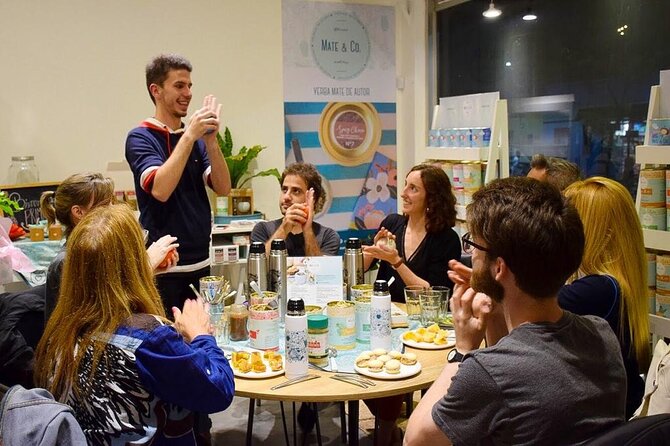
The workshop then moves from the plant to the tools. You learn about different yerbas on the market, along with mate cups, straws, and other accessories.
This is where the class becomes useful for anyone who wants to continue the habit after leaving Argentina. You can compare blends and pay attention to what suits your taste before buying supplies. The experience also covers the curing process for a mate cup, a detail that is easy to overlook when you see the finished object in a shop.
The straw, or bombilla, is part of the technique. The workshop explains how the accessories work within the ritual, rather than presenting them as souvenirs with no context. That practical approach can save you from buying the wrong item or preparing mate in a way that misses the point.
I would pay close attention here if you plan to take mate home. The workshop ends with discounts in the shop, and the tasting helps you decide which blend or accessory you actually want. You do not have to guess based on packaging alone.
Still Argentina, but a completely different sort of afternoon:
- Buenos Aires City Private Tour with Local Guide
★ 5.0 · 3,475 reviews - Buenos Aires Small-Group City Tour
★ 5.0 · 2,226 reviews - Buenos Aires Hop-On Hop-Off Bus, Free Walking Tours & Discounts
★ 4.5 · 2,218 reviews - Buenos Aires: Piazzolla Tango Show with Optional Dinner
★ 4.4 · 2,122 reviews
The tasting: several blends, sweets, and hands-on practice
The tasting is the heart of the experience. You learn how to prepare a proper mate and sample the available blends, including original and flavored varieties. Typical Argentine sweets accompany the drinks, giving you something to eat between tastings.
Trying several blends is more useful than tasting only one. You can compare the traditional profile with flavored choices and notice how your preference changes. One person particularly liked the chai blend, but the class gives you enough variety to make your own choice.
The sweets also help turn the lesson into a relaxed social occasion. They are not just an extra snack. Pairing the mate with Argentine treats gives you another small connection to local food culture and keeps the session from feeling like a technical demonstration.
The practical lesson focuses on how to prepare the drink correctly. You get to see the process, ask questions, and try the method yourself. If you have already prepared mate at home, this is still a chance to refine your technique. One participant who had been drinking mate independently said the workshop improved their understanding of preparation and ritual.
Do not expect a full meal. The food is described as typical Argentine sweets served with the tasting, so plan another meal if you need lunch or dinner.
The ritual of sharing mate
The most valuable part of the workshop may be the explanation of the ritual. Mate is usually shared, and the preparation and passing of the drink carry social meaning. The class explains how the custom fits into everyday Argentine life.
This makes the experience feel more personal than a standard food tasting. You are not only deciding whether you like the flavor. You are learning why people offer mate, how the drink creates a shared moment, and what the person serving it is expected to do.
Tomi’s teaching style seems especially important here. He is described as organized, patient, funny, welcoming, and attentive to each person in the group. He answers questions without rushing people, and he makes an effort to involve the whole room.
That matters for a ritual with unfamiliar rules. You can ask a basic question without feeling awkward, and you can watch the process before trying it. Families have found the lesson useful for connecting with Argentine heritage, while couples and solo participants have used it as a friendly introduction to local culture.
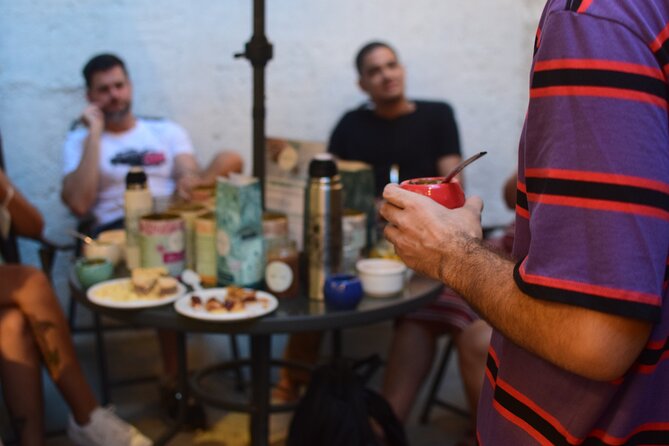
The atmosphere is described as cozy and home-like. That fits the subject well. Mate is about sitting together and talking, not standing in a line for a quick sip.
Language, group size, and the pace of the class
The experience is available in Spanish as well as English. The supplied information does not state every scheduled language or whether each session is bilingual, so check the option that suits you when booking.
English-speaking visitors have praised Tomi’s ability to explain the drink clearly and answer detailed questions. This is a strong choice if you want cultural context without struggling through a technical lesson in Spanish.
The maximum group size is 14. That is not a private class, but it should still allow for questions and participation. A mixed group can add to the experience because mate is designed for sharing, though people who want a quiet, one-on-one lesson may prefer a smaller private setting if one is available.
At around 90 minutes, the pace is lively. You cover the meaning and origin of mate, production, types of yerba, equipment, curing, preparation, tasting, and the social ritual. That is a lot in one sitting, so listen actively and ask about the points that matter most to you.
The short format is also part of the value. You do not need to give up half a day to learn a local custom, and the activity can work well early in a Buenos Aires visit. Taking it near the start of your stay may help you understand the mate gourds and thermoses you see afterward.
The diploma and shop discount
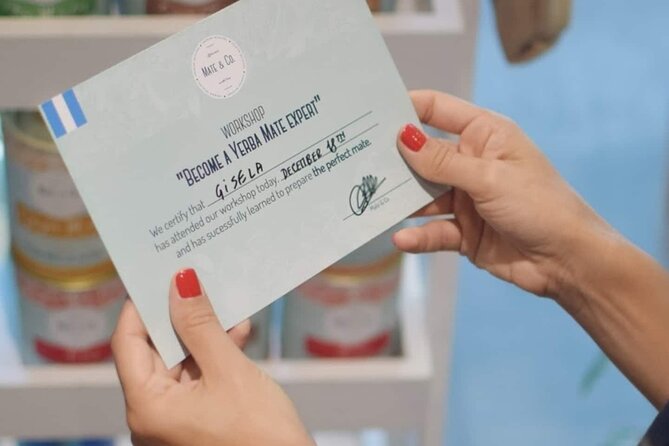
At the end, you receive a diploma certifying your participation. It is not a formal professional qualification, but it is a fun keepsake and a reminder of the technique you learned.
The closing also includes discounts in the shop. This adds value if you intend to buy yerba, a gourd, a straw, or related accessories. It matters less if you are traveling light or have no interest in continuing the habit at home.
I would treat the diploma as a charming extra, not the reason to book. The real value comes from tasting different blends, learning the preparation, and understanding the social role of mate.
Is $29 a fair price?
At $29 per person, this is reasonably priced for a 90-minute small-group cultural activity in Buenos Aires. You receive instruction, several tastings, Argentine sweets, a diploma, and access to shop discounts.
The value is strongest if you are new to mate or want to buy supplies with more confidence. A few cups of mate alone would not give you the background, technique, and social context covered here. The lesson also saves you from treating mate like an ordinary tea and missing the ritual.
For experienced mate drinkers, the price depends on your goals. If you already know the production story, equipment, and preparation method, the tasting of different blends and the cultural conversation may be the main draw.
The high rating and full recommendation from the supplied feedback support the value, especially for Tomi’s teaching. Still, the session is short, and anyone seeking a long academic history of mate may want a more specialized class.
Who should book this mate workshop?
I would recommend it to first-time visitors who want an easy way into Argentine culture. It is also a good fit for families, couples, solo visitors, and friends who enjoy food, drinks, and hands-on activities.
It suits you particularly well if:
- You have never tried mate and want a comfortable introduction.
- You want to learn how to prepare it correctly at home.
- You are interested in Argentine customs, not just sightseeing.
- You want to compare traditional and flavored yerbas.
- You plan to buy mate supplies in Buenos Aires.
- You enjoy meeting people in a small group.
It may be less suitable if you dislike herbal drinks, do not want a tasting activity, or prefer a long historical lecture. The class is practical and social, with the history serving as a foundation for the tasting.
Service animals are allowed. The meeting point is near public transportation, and confirmation is provided at booking. Free cancellation is available up to 24 hours before the start time for a full refund. Changes or cancellations inside that window are not accepted, and the activity requires a minimum number of participants.
Should you book the Buenos Aires mate experience?
Yes, if you want a short, friendly lesson that helps you understand one of Argentina’s most recognizable daily customs. The combination of preparation practice, several blends, sweets, and cultural explanation gives you more than a simple drink tasting.
I especially like the chance to learn from Tomi, whose humor and patience help make an unfamiliar ritual feel easy. Book it if you want to leave Buenos Aires able to recognize different yerbas, prepare mate with more confidence, and understand why Argentines share it.
If you already know mate well, choose it for the blend tasting and cultural exchange rather than basic instruction. For most first-time visitors, $29 is a sensible price for a useful local experience that lasts only 90 minutes and ends with a small diploma to take home.
FAQ
Where does the mate workshop begin?
It begins at Tte. Benjamín Matienzo 1559, C1426DAA, in Buenos Aires, Argentina.
Where does the activity end?
The workshop ends back at the same meeting point.
How long does the experience last?
The activity lasts approximately 1 hour and 30 minutes.
How many people can join the group?
The maximum group size is 14 people.
Is the experience available in Spanish?
Yes. Availability can be checked in Spanish as well.
What is included in the tasting?
You taste different mate blends, including original and flavored options, and they are served with typical Argentine sweets.
Do I receive anything at the end?
Yes. You receive a diploma certifying your participation in the workshop. The closing also includes discounts in the shop.
Recently added around Buenos Aires
- Photo Session in Buenos Aires★ 5.0 · 26 reviews
- Your Personal Photographer in Buenos Aires★ 5.0 · 24 reviews
- Discover Buenos Aires’ independent art scene — Ticket included★ 5.0 · 30 reviews
- Your Private Photographer in Buenos Aires★ 5.0 · 4 reviews
- Yerba Mate Workshop – Learn to Drink Mate like a Local!★ 5.0 · 11 reviews
- Taste of Tradition: Yerba Mate & Alfajores Experience★ 4.0 · 5 reviews
- Wine tasting in OASIS Palermo★ 5.0 · 2 reviews
- Day Tour Classic★ 3.5 · 35 reviews
Food & Drink, compared.
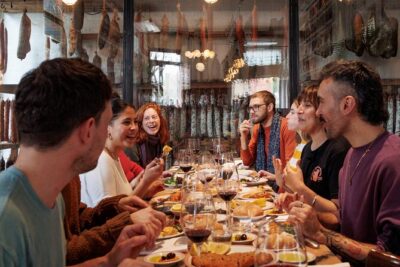
Local Foodie Adventure in Buenos Aires with Sherpa Food Tours
Read our review →
Historical Sherpa Food Tour of San Telmo with Street Food, Drinks
Read our review →
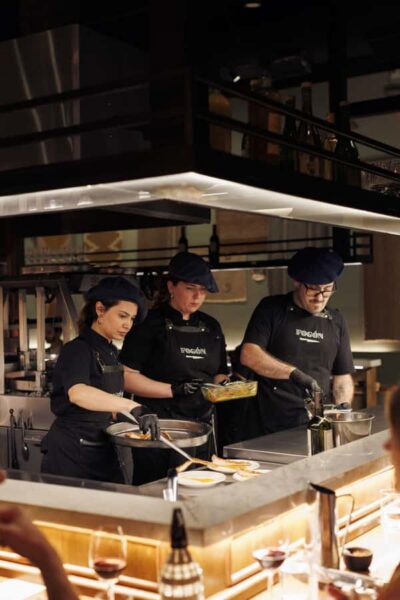

5hs Small Group City Tour of Buenos Aires (Optional Street Food)
Read our review →
Browse the lists this tour appears in