Reviewed · TOURS
San Telmo – Colonial Tour Buenos Aires
Old Buenos Aires tells its stories on foot. This two-hour San Telmo walking tour connects colonial landmarks, Afro-Argentine history, popular culture, and the city’s founding in one compact route. I like the clear focus on stories, and I like that the group is limited to 15 people. The main consideration is that the tour covers a lot in two hours, so you should expect an energetic overview rather than long visits inside each site.
The $30 price feels fair for an English-speaking guided walk, especially since admission is free and the route links several San Telmo sights that can be hard to understand on your own. The 3:30 pm start also gives you a useful afternoon introduction to one of Buenos Aires’ most characterful areas, though the fixed start and ending points require a little planning.
In This Review
- Key points at a glance
- Why San Telmo makes a strong first history walk
- Meeting at Avenida Presidente Julio A. Roca
- From a small village to a major capital
- San Lorenzo Passage and colonial Buenos Aires
- The Minimal House and Afro-Argentine stories
- Mafalda and the city’s popular icons
- Eva Perón Foundation and the Ezeiza Mansion
- San Telmo Market and the neighborhood’s bohemian character
- Finishing at Lezama Park and Buenos Aires’ foundation
- Is $30 a good value for two hours?
- Who should book this San Telmo walk?
- Should you book it?
- FAQ
- How long is the San Telmo Colonial Tour?
- What time does the tour start?
- Where does the tour begin?
- Where does the tour end?
- What language is the tour offered in?
- How much does the tour cost?
- Is admission included?
- How large is the group?
- Can I cancel for a full refund?
Key points at a glance
- Colonial San Telmo in two hours: Follow Buenos Aires from small village to major capital through streets, passages, parks, and old buildings.
- Stories beyond grand buildings: The route includes Indigenous peoples, Afro-Argentine communities, education, and the city’s colonial-era development.
- Mafalda and Eva Perón: Popular culture and modern Argentine politics are part of the walk, not an afterthought.
- A small group of up to 15: This gives the guide a better chance to answer questions and keep the walk together.
- Ends at Lezama Park: The tour finishes beside the Monument to Don Juan de Garay, near an important site linked with Buenos Aires’ foundation.
- Simple afternoon logistics: Meet at Av. Presidente Julio A. Roca 595 at 3:30 pm and finish at Brasil 400.
Why San Telmo makes a strong first history walk
San Telmo is one of the best parts of Buenos Aires for connecting the present city with its early roots. Its streets bring together colonial stories, old houses, public spaces, artistic character, and everyday city life. You are not simply looking at façades. You are following the changes that turned a small settlement into a huge cosmopolitan capital.
That broad time span is the main strength of this experience. The walk begins with the earliest people and the colonial period, then moves through education, immigration-era society, Afro-Argentine life, famous figures, and popular icons. I like this approach because it avoids treating Buenos Aires as if its story began with grand European-style avenues.
You should expect the guide to use the neighborhood as a classroom. The route is built around explanations and anecdotes, with fun facts mixed into serious subjects. That format suits you if you want history told in a conversational way rather than through a long lecture.
The English-language setting also matters. A local neighborhood can be easy to photograph but harder to interpret. A guide can explain why a narrow passage, old mansion, park, or market matters, helping you notice details that would otherwise become background scenery.
A few more Buenos Aires trips worth putting side by side
- Local Foodie Adventure in Buenos Aires with Sherpa Food Tours
★ 5.0 · 6,875 reviews - Buenos Aires City Private Tour with Local Guide
★ 5.0 · 3,475 reviews - Buenos Aires Small-Group City Tour
★ 5.0 · 2,226 reviews
Meeting at Avenida Presidente Julio A. Roca
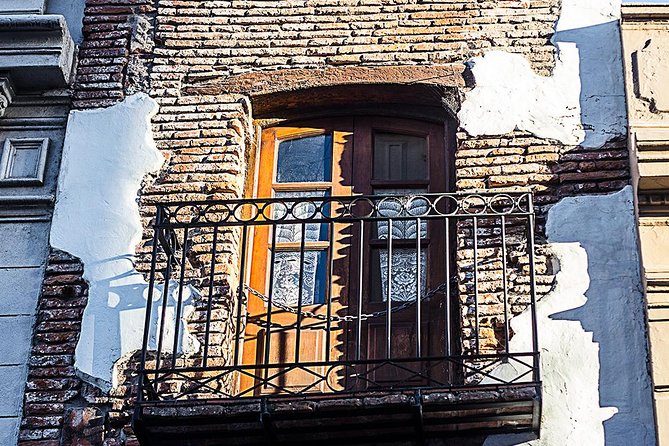
The walk begins at Av. Presidente Julio A. Roca 595 at 3:30 pm. Because the meeting point is an address rather than a named attraction, I would allow time to find the exact spot and keep the booking confirmation available on your phone. The mobile ticket is convenient, and confirmation is provided when you book.
The tour is offered in English, which makes it useful if you want historical context without arranging a private guide. A maximum of 15 people is a practical middle ground. It is small enough to feel more personal than a large city walk, while still keeping the price at $30 per person.
The start time creates a clear afternoon plan. You can use the walk as an introduction before spending more time in San Telmo on your own, or make it one part of a larger day in Buenos Aires. The supplied details do not promise a food stop, museum entry, or extended time inside the market, so plan this as a walking and storytelling experience.
From a small village to a major capital
One of the central themes is the growth of Buenos Aires. You will hear how the city developed from a small village into the large, cosmopolitan capital you see today. San Telmo gives that subject a useful setting because the neighborhood helps tie urban change to older streets and buildings.
The story begins with the Indigenous peoples of Argentina. Including this subject is important because it places the city’s colonial development in a wider human setting. You get a reminder that Buenos Aires was not created in an empty space, and that the story of the region includes people and cultures from before the city took its current form.
The route also covers the Apple of Lights, a subject connected with early Buenos Aires and its institutions. You should treat this part as context rather than a long architectural visit. The value is in understanding how power, education, religion, and public life helped shape the city.
Education in Argentina is another topic on the walk. That may seem less immediately exciting than old mansions or famous characters, but it helps explain how the country developed as a modern society. I appreciate that the tour includes this kind of civic history. It gives you more than a parade of picturesque buildings.
San Lorenzo Passage and colonial Buenos Aires
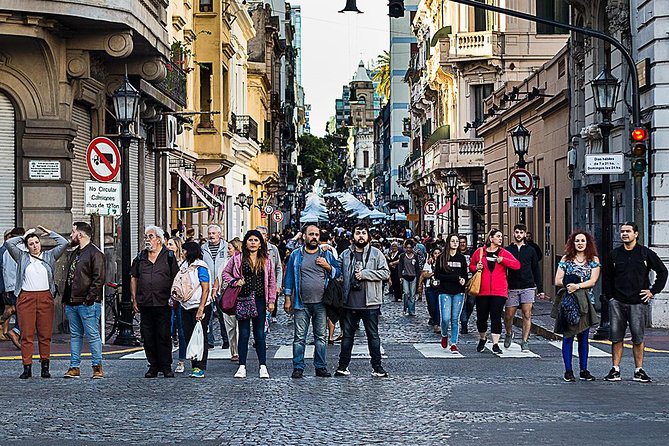
San Lorenzo Passage is one of the route’s key colonial stops. A passageway can reveal the scale and texture of old Buenos Aires more effectively than a broad avenue. It gives the guide a place to discuss how people lived, moved, and built during the colonial period.
The exact emphasis will depend on the guide, but you can expect the passage to be used as a setting for stories about colonial Buenos Aires. This is where the walk’s short format becomes both useful and limiting. You will get a focused explanation, but you may not have time to linger over every architectural detail.
I would pay attention to the relationship between the passage and the surrounding streets. The tour is designed to connect each location into a larger story, so the value comes from the links between stops. If you prefer a slow architectural survey with lots of photography time, this may feel brisk.
If you enjoy hearing how ordinary spaces hold unusual stories, this should be one of the more appealing parts of the walk. San Telmo’s character is not only found in major monuments. It is also in narrow routes, old walls, and small changes in street scale.
Still Argentina, but a completely different sort of afternoon:
- Buenos Aires Hop-On Hop-Off Bus, Free Walking Tours & Discounts
★ 4.5 · 2,218 reviews - Buenos Aires: Piazzolla Tango Show with Optional Dinner
★ 4.4 · 2,122 reviews - Buenos Aires: City Highlights Guided Tour with Transfer
★ 4.7 · 1,946 reviews - Buenos Aires: Hop-On Hop-Off City Bus Tour
★ 4.2 · 1,855 reviews
The Minimal House and Afro-Argentine stories
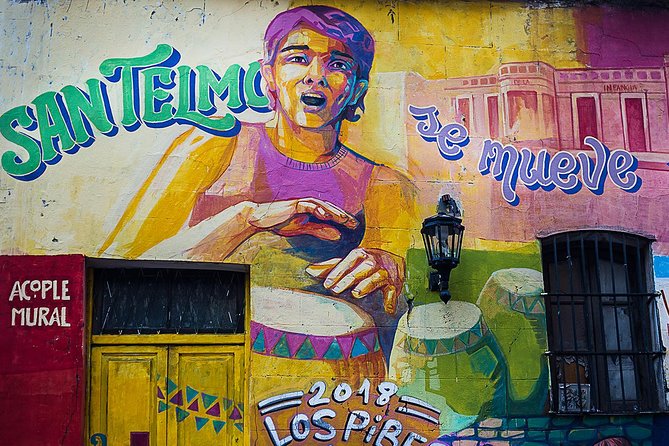
The Minimal House is included as a stop, with a focus on Afro-Argentine history. This is a valuable part of the route because it brings a community often overlooked in quick city introductions into the center of the story.
The subject gives the tour social depth. Buenos Aires is often presented through colonial buildings, grand civic spaces, and European influence. A discussion of Afro-Argentine life challenges that narrow picture and helps you see the city as a place shaped by different communities.
You may find this stop especially useful if you want more than the standard tourist version of Buenos Aires. The tour does not treat San Telmo as a pretty old quarter alone. It asks you to consider who lived here, whose stories were preserved, and which parts of the past deserve more attention.
Because the experience lasts about two hours, expect an introduction rather than a full course in Afro-Argentine history. Still, the inclusion of the Minimal House gives the walk a stronger human focus. It is one of the reasons I would choose this route over a basic architecture-only stroll.
Mafalda and the city’s popular icons
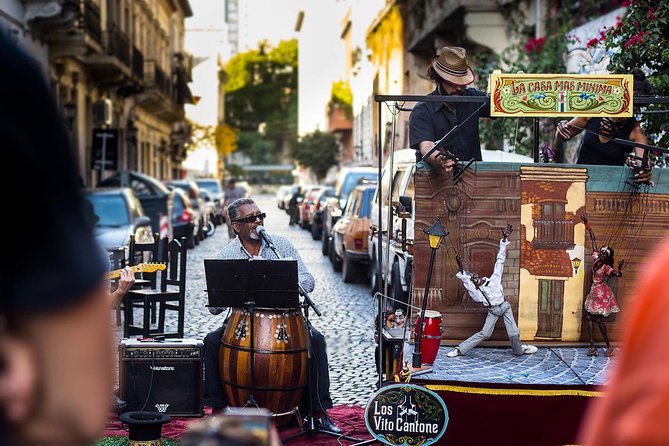
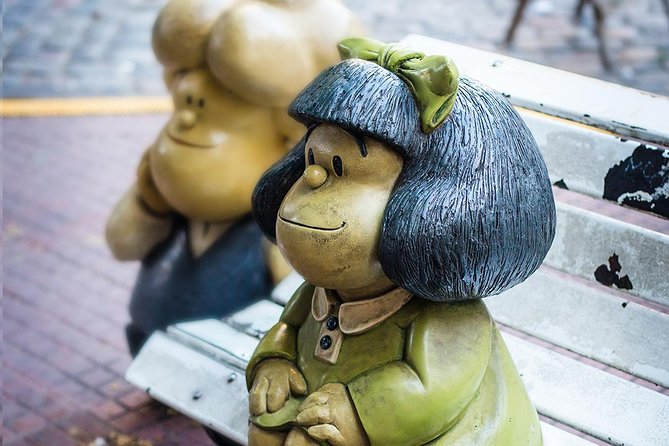
Do you know Mafalda? If not, this tour gives you a chance to meet one of Argentina’s best-known popular characters. Mafalda brings a lighter, more familiar tone to the route and shows how Buenos Aires history is also expressed through comics, humor, and public culture.
This stop works well because it breaks up the older historical material. After colonial stories, education, and community history, a popular icon gives you a different way to think about Argentine identity. You are not only studying the past. You are also seeing how the city represents itself in everyday culture.
The guide is expected to mix fun facts with explanations, and the Mafalda subject fits that style. A previous comment about the experience specifically praised the guide’s clear explanations and fun manner. No guide name is provided, so you should not expect to request a particular person, but the available description points to an approachable teaching style.
If you already know Mafalda, you may enjoy the cultural context. If you do not, the stop still works as a window into Argentine humor and public life. It also gives the walk a more personal feel than a route limited to dates and buildings.
Eva Perón Foundation and the Ezeiza Mansion
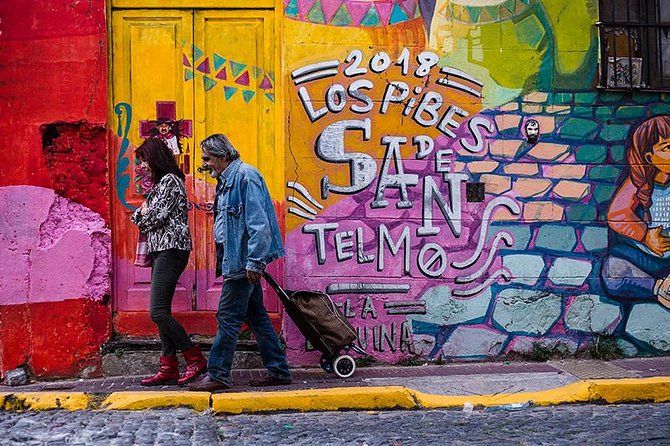
The walk includes the former Eva Perón Foundation. Eva Perón remains a major and often debated figure in Argentina, so this stop adds modern political and social history to the colonial theme.
The foundation’s presence helps show how San Telmo’s story continues beyond the colonial period. You can expect the guide to explain the site’s connection with Eva Perón and the work associated with her foundation. The supplied details do not promise entry, so plan to view and discuss the place from the route rather than assume an interior visit.
The Ezeiza Mansion adds another architectural and social marker. Old mansions can be easy to admire without understanding, but a guide can place them within the neighborhood’s changing identity. The stop should appeal to you if you enjoy seeing how homes and buildings reflect social history.
Together, these two locations widen the walk’s time frame. You move from colonial Buenos Aires to the era of Eva Perón and the city’s changing public identity. That range is ambitious for a short tour, but it gives the afternoon a useful rhythm.
San Telmo Market and the neighborhood’s bohemian character
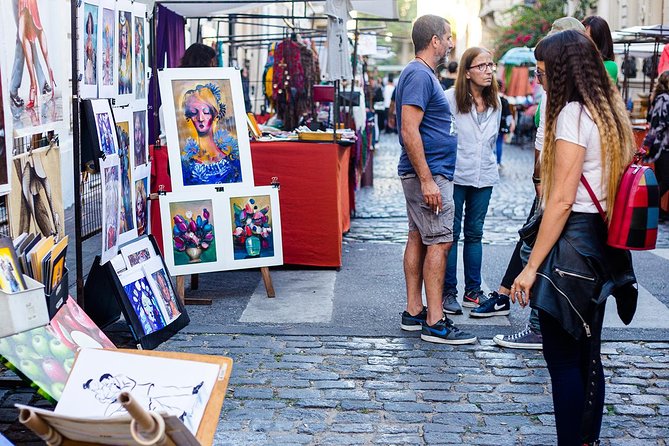
San Telmo Market is part of the route, and it is one of the places where the neighborhood’s artistic and bohemian character comes into view. The market is a natural stop for understanding San Telmo as a living district rather than a collection of historic displays.
You should not assume that the tour includes a meal, shopping time, or a long market visit. The stated duration is about two hours, and the market appears within a larger walking route. If you want to browse stalls or stop for food, save time before or after the guided walk.
Still, the market matters because it gives the historical story a present-day setting. You can see how old San Telmo continues to function as part of Buenos Aires. The guide’s explanations help connect the market to the neighborhood’s broader identity.
I like the balance here. The route includes serious subjects, but it also lets you experience a place with personality. One direct comment described San Telmo as artistic and bohemian, and that is a useful way to think about the area. Come ready for stories, but also leave room to notice the atmosphere around you.
Finishing at Lezama Park and Buenos Aires’ foundation
The tour ends at Brasil 400, at Lezama Park beside the Monument to Don Juan de Garay. This is an important finishing point because the route closes with the foundation of Buenos Aires.
Ending in a park gives the walk a change of pace after the streets and built-up parts of San Telmo. More importantly, it brings the city’s beginning back into focus. The guide can connect the foundation story with the larger theme of how Buenos Aires grew and changed.
The end point is not the same as the starting address, so you should plan your next move before the walk begins. The details place the finish near Lezama Park and the monument, and the area is near public transportation. That makes it practical for continuing your day, but you should still check your onward route in advance.
This final stop gives the tour a clear shape. You start with the city’s development and finish near a site linked to its foundation. In between, you encounter colonial life, social history, cultural icons, Eva Perón, the market, and old residences.
Is $30 a good value for two hours?
At $30 per person, I see this as a reasonably priced guided introduction rather than a bargain sightseeing marathon. The tour lasts about two hours, admission is free, and the group can include no more than 15 people. Those points make the cost easier to justify if you value explanation and structure.
You are paying for the guide’s ability to connect scattered subjects. On your own, you could walk through San Telmo and see the market, passage, mansion, park, and other locations. What you would miss is the thread linking Indigenous history, colonial development, Afro-Argentine life, education, Mafalda, Eva Perón, and the city’s foundation.
The value is strongest for a first visit or for anyone who wants historical orientation before exploring alone. It is less compelling if you want extended shopping, food, museum interiors, or a very slow photo walk.
Free cancellation is available if you cancel at least 24 hours before the 3:30 pm start. Changes or cancellations made inside that period are not accepted for a refund, so keep the cut-off in mind when planning your Buenos Aires schedule.
Who should book this San Telmo walk?
I would choose this tour if you enjoy history told through places and stories. It suits you especially well if you want to understand San Telmo’s role in Buenos Aires rather than simply wander through an attractive old neighborhood.
It is also a good fit for people interested in social history. The focus on Indigenous peoples, Afro-Argentine communities, education, and Eva Perón gives the route more range than a simple colonial architecture walk.
Families and mixed-age groups may appreciate the change of subject from colonial tales to Mafalda and the market. The guide’s clear, entertaining style should help keep the experience moving, though the amount of material means younger children may not follow every historical point.
You should think twice if you dislike walking tours, need frequent long breaks, or want guaranteed entry into buildings. The information provided does not promise interior access or a meal stop. This is a compact outdoor route built around narration.
Should you book it?
Book it if you want an English-language introduction to San Telmo with a small group, a clear two-hour structure, and more than the usual pretty-building tour. The strongest reasons are the wide range of subjects, the emphasis on clear storytelling, and the finish at Lezama Park, where the city’s foundation comes back into the picture.
Skip it if your main goal is market shopping, food, or lengthy time inside historic buildings. For most first-time visitors who want to understand why San Telmo matters, $30 is a fair price for a focused afternoon walk. Bring your phone confirmation, arrive ready at 3:30 pm, and keep your schedule flexible enough to continue exploring after the guide says goodbye.
FAQ
How long is the San Telmo Colonial Tour?
The tour lasts approximately two hours.
What time does the tour start?
The tour starts at 3:30 pm.
Where does the tour begin?
The meeting point is Av. Presidente Julio A. Roca 595, C1067ABA, Buenos Aires.
Where does the tour end?
The tour ends at Brasil 400, near Lezama Park and beside the Monument to Don Juan de Garay.
What language is the tour offered in?
The tour is offered in English.
How much does the tour cost?
The listed price is $30 per person.
Is admission included?
The walking tour itself has no admission ticket charge. The provided details list admission as free.
How large is the group?
The experience allows a maximum of 15 participants.
Can I cancel for a full refund?
Yes. You can cancel at least 24 hours before the experience start time for a full refund. Cancellations or changes made less than 24 hours before the start time are not accepted for a refund.
Recently added around Buenos Aires
- Photo Session in Buenos Aires★ 5.0 · 26 reviews
- Your Personal Photographer in Buenos Aires★ 5.0 · 24 reviews
- Discover Buenos Aires’ independent art scene — Ticket included★ 5.0 · 30 reviews
- Your Private Photographer in Buenos Aires★ 5.0 · 4 reviews
- Yerba Mate Workshop – Learn to Drink Mate like a Local!★ 5.0 · 11 reviews
- Taste of Tradition: Yerba Mate & Alfajores Experience★ 4.0 · 5 reviews
- Wine tasting in OASIS Palermo★ 5.0 · 2 reviews
- Day Tour Classic★ 3.5 · 35 reviews
Tours, compared.
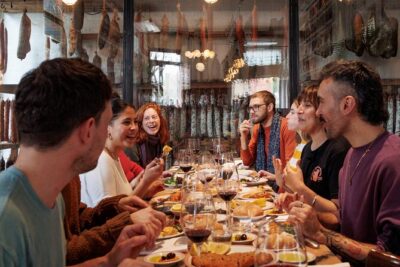
Local Foodie Adventure in Buenos Aires with Sherpa Food Tours
Read our review →
Buenos Aires City Private Tour with Local Guide
Read our review →
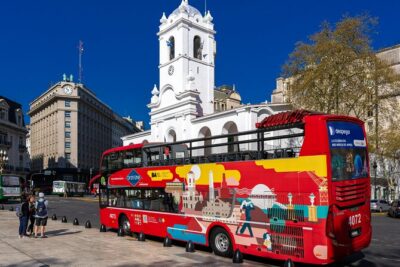
Buenos Aires Hop-On Hop-Off Bus, Free Walking Tours & Discounts
Read our review →