
Reviewed · PRIVATE TOURS IN BUENOS AIRES
Private Tour Jewish Buenos Aires
Buenos Aires keeps its Jewish story close to the street. This private four-hour tour links Once’s synagogues, schools, shops, and Yiddish theater with places of memory and worship across the city. I like the way it treats Jewish life as part of Buenos Aires today, not as a museum subject sealed behind glass.
I also like the private format and hotel, apartment, or cruise-terminal pickup. Guide Matias Aizenberg, a professor of Argentine and Jewish history, has been praised for turning a standard sightseeing outing into a thoughtful conversation, sometimes adding broader city context when conditions call for it. The main consideration is price: at $175 per person, plus a requested $15 donation for Temple Libertad and its museum, this is a serious investment for four hours.
In This Review
- Key points to know before booking
- Why Jewish Buenos Aires deserves a closer look
- Walking through Once, Buenos Aires’ traditional Jewish quarter
- AMIA and the hard memory of 1994
- Temple Libertad and the Jewish Museum
- Plaza de la Shoa and Holocaust remembrance
- A private vehicle changes the pace
- The guide can make or break this subject
- Is $175 per person fair?
- Who should book this tour?
- Final call: book it for depth, not speed
- FAQ
- How long does the Private Tour Jewish Buenos Aires last?
- What locations are included?
- Is hotel pickup included?
- Is transportation provided during the tour?
- Is this a private tour?
- Is the donation for Temple Libertad and the Jewish Museum included?
- What is the cancellation policy?
Key points to know before booking
- Once is the tour’s street-level heart: You see kosher food stores, Jewish schools, synagogues, a Yiddish theater, and the old shmatte clothing trade.
- Matias Aizenberg may be your guide: He teaches Argentine and Jewish history at the National University and the University of Buenos Aires.
- AMIA brings recent memory into focus: The current building replaces the community center destroyed in the 1994 terrorist attack.
- Temple Libertad is a major highlight: It is identified as Argentina’s first synagogue, with a museum holding Torahs, menorahs, religious art, and immigrant-kept objects.
- The tour is private and flexible: Only your group participates, with an air-conditioned vehicle and pickup included.
- Budget about $190 per person: The tour costs $175, and the suggested donation for the temple and museum is $15.
Why Jewish Buenos Aires deserves a closer look
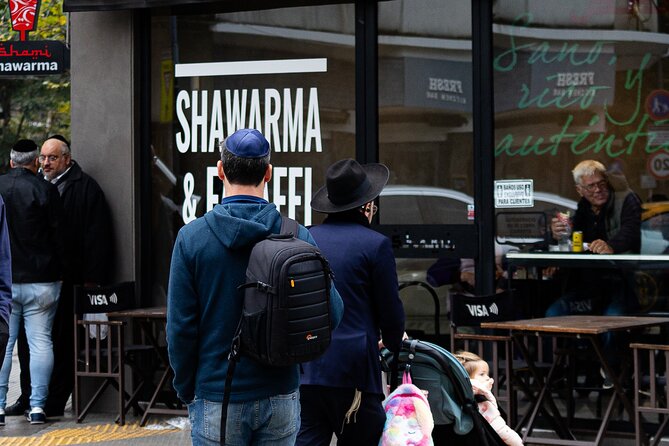
Buenos Aires is often introduced through tango, grand avenues, Italian cafes, and European-looking architecture. That is only part of the city. Jewish life has shaped its neighborhoods, businesses, schools, religious institutions, food culture, and public memory for generations.
This tour gives you several ways to understand that story. In Once, you walk through an active neighborhood rather than simply viewing a monument. At AMIA, you face a painful modern event. At Temple Libertad, you see religious objects and the physical traces of immigration. At Plaza de la Shoa, the focus shifts to Holocaust remembrance in a public park.
That mix matters. You are not getting four versions of the same stop. You move from everyday life to community identity, then to worship, immigration, and remembrance.
The tour lasts about four hours, so it fits well into a morning or afternoon in Buenos Aires. The private setup also gives you room to ask questions, adjust the pace, and follow a topic that catches your interest. That flexibility is especially useful here because the subject can move quickly from architecture to family stories, from food to terrorism, or from Argentine politics to Jewish religious practice.
More Private Tours in Buenos Aires
- Buenos Aires City Private Tour with Local Guide
★ 5.0 · 3,475 reviews - Private Airport Transfer In or Out : Ezeiza (EZE) – Buenos Aires
★ 5.0 · 548 reviews - Private Full-Day Iguazu Falls Tour with Airfare from Buenos Aires
★ 4.5 · 387 reviews
Walking through Once, Buenos Aires’ traditional Jewish quarter
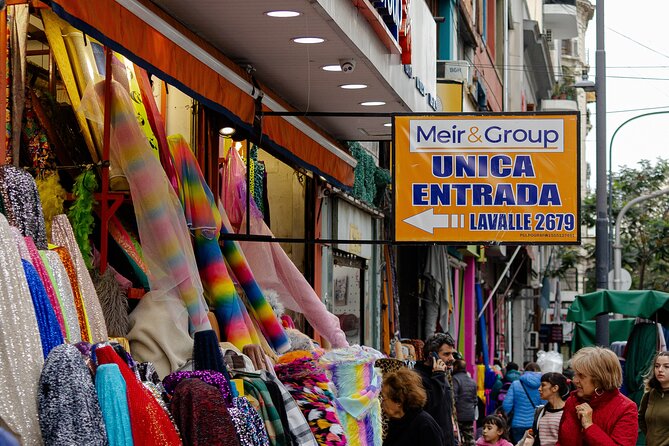
The tour begins in El Once Barrio Comercial, the most traditional Jewish area on the route. The scheduled walk lasts about 30 minutes, making this a brisk introduction rather than a long neighborhood exploration.
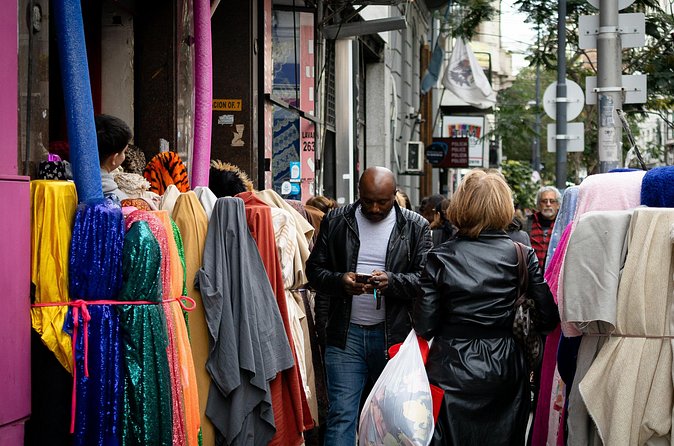
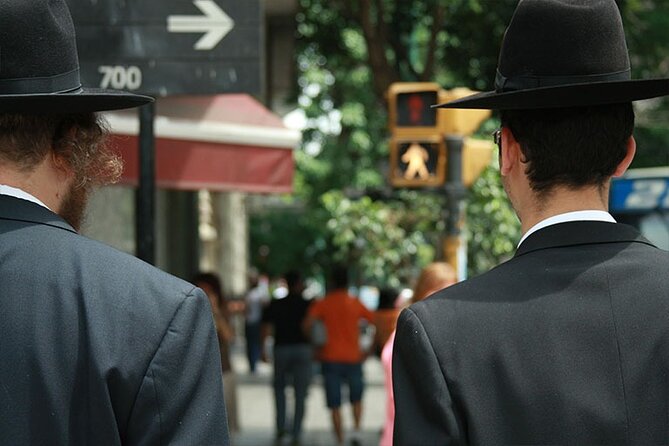
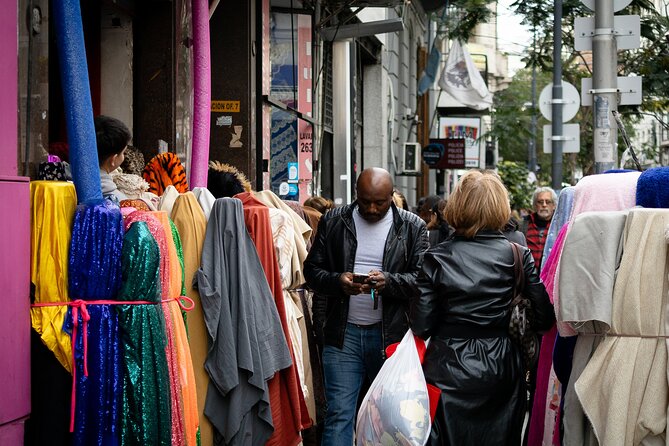
Once is useful because it shows Jewish Buenos Aires in ordinary settings. You may see the outside of major synagogues, Jewish schools, kosher food stores, and a Yiddish theater. You also encounter the classic shmatte trade, a term linked to the clothing and garment businesses long associated with the area.
I like this opening because it gives the tour a human scale. Religious buildings matter, but so do grocery counters, storefronts, schools, and places where families conduct daily business. You begin to see a community as a network of institutions and habits, not only as a group defined by past tragedy.
The narrow streets are part of the point. This is not a polished monument district designed for easy sightseeing. You are moving through a working commercial neighborhood, and the setting may feel crowded or visually busy depending on the time of day. The short visit means you will not have time to explore every shop or stop for a full meal, so think of Once as an introduction with local texture.
A guide with family ties to Buenos Aires Jewish life can add much more here than a simple list of buildings. Matias Aizenberg has been praised for sharing personal connections and insider details, including a family synagogue that was opened specially for one private group. That kind of access is not guaranteed on every departure, but it shows why the private format can matter.
AMIA and the hard memory of 1994
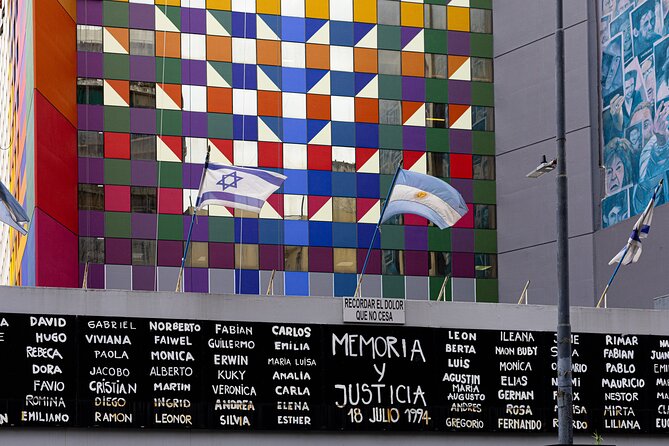
The next stop is the new AMIA building, visited for about 15 minutes. AMIA is the Argentine Jewish Community Center, and its original building was destroyed in a terrorist attack in 1994. Eighty-five people died, and many more were wounded.
This is a brief stop, but its meaning is large. After seeing Jewish life in Once, you encounter an institution shaped by violence and loss. The building is not simply another address on a city tour. It represents the ongoing presence of the community and the memory of those killed.
You should expect this part of the tour to be serious. The visit is not designed as a long museum program, and admission is free. Its value comes from the guide’s explanation and from placing the event within the story of Jewish Buenos Aires.
The short time also protects the rhythm of the outing. The tour does not linger at one difficult subject for too long before moving to the older religious and immigrant history at Temple Libertad. Still, if you want an extended visit focused on the 1994 attack, this four-hour tour may feel limited.
Temple Libertad and the Jewish Museum
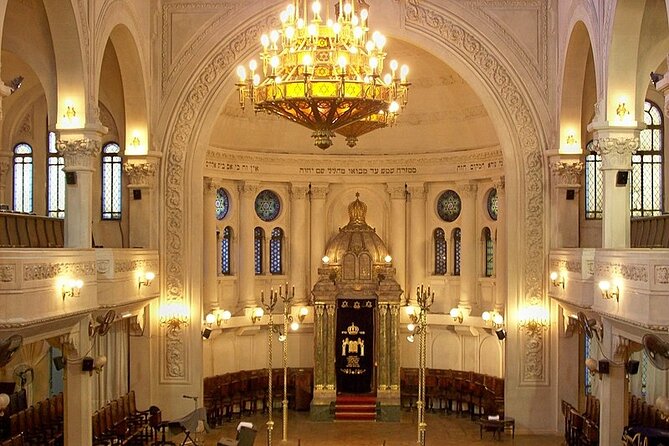
From Once and AMIA, the tour heads to Temple Libertad, described as Argentina’s first synagogue and one of its most symbolic Jewish buildings. The visit lasts about 50 minutes, the longest scheduled stop.
This is likely the most substantial indoor portion of the outing. The Jewish Museum beside the temple holds religious art, menorahs, Torahs, and objects brought to Argentina by Jewish immigrants. These items help connect public history with family movement. An object carried across the ocean can say more about migration than a broad date on a timeline.
The temple also gives you a chance to consider how Jewish communities established a lasting place in Argentina. The building is not only a religious site. It reflects the growth of Jewish institutions in a country shaped by immigration and changing urban life.
A requested donation of $15 per person covers Temple Libertad and the Jewish Museum. It is not included in the $175 tour price, so add it when planning your budget. The tour data describes this as tzedaka, a charitable contribution, rather than a standard admission charge.
The museum visit may appeal most to you if you enjoy objects and architecture as much as spoken history. Torahs, menorahs, and religious art provide something concrete to look at while your guide explains their place in Jewish practice. If you prefer a relaxed, unhurried museum visit, keep in mind that 50 minutes includes the temple and museum together.
A few more Buenos Aires trips worth putting side by side
- Local Foodie Adventure in Buenos Aires with Sherpa Food Tours
★ 5.0 · 6,875 reviews - Buenos Aires Small-Group City Tour
★ 5.0 · 2,226 reviews - Buenos Aires Hop-On Hop-Off Bus, Free Walking Tours & Discounts
★ 4.5 · 2,218 reviews - Buenos Aires: Piazzolla Tango Show with Optional Dinner
★ 4.4 · 2,122 reviews
Plaza de la Shoa and Holocaust remembrance
The final listed stop is Plaza de la Shoa, surrounded by Palermo’s parks. Here you visit the National Monument to the Victims of the Holocaust for about 20 minutes.
The setting changes the mood again. After the close streets of Once and the institutional setting of AMIA, you are in an open public space. The monument places Holocaust remembrance within the wider city, rather than keeping it inside a synagogue or museum.
Twenty minutes is enough for a focused visit and explanation, but not for a long reflective walk. The stop works best as the final note in the tour because it gathers several themes together: Jewish identity, immigration, persecution, public memory, and the place of remembrance in modern Argentina.
The itinerary lists admission as free. Since the tour includes transportation, you do not need to plan a separate transfer between the neighborhoods and Palermo. That saves time in a city where traffic can turn a short distance into a slow one.
A private vehicle changes the pace
The tour includes an air-conditioned vehicle, a professional guide, and pickup and drop-off at your hotel, apartment, or cruise-ship terminal. That is a practical advantage in Buenos Aires, especially when the route crosses different parts of the city.
The itinerary combines a short walking section with several vehicle transfers. You are not expected to spend all four hours on foot, which makes the outing easier for most people. The supplied information says most people can participate and that the tour is near public transportation, though the included pickup means you may not need to use it.
Because this is a private activity, only your group takes part. That can make a major difference on a subject that invites questions. You can ask for more explanation about family migration, religious objects, Argentine Jewish institutions, or the 1994 attack without worrying about holding up a large group.
The private format also gives the guide some room to respond to circumstances. One group arrived on a public holiday when several places were closed. Matias Aizenberg reportedly turned the problem into an advantage by using the quieter streets and adding more general Buenos Aires sightseeing. That does not guarantee every closed site can be replaced, but it suggests useful flexibility.
You should still confirm the operating day and timing when booking. The listed hours are Monday through Sunday, 8:00 a.m. to 4:00 p.m., for the stated operating period. Religious institutions, museums, and community sites can have their own schedules, so an early check is sensible.
The guide can make or break this subject
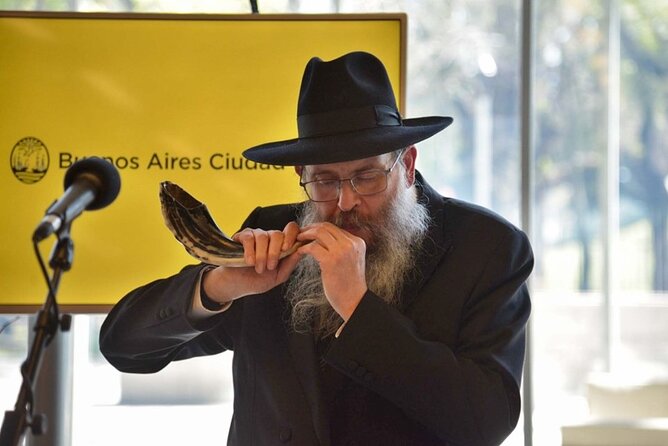
The strongest feature here is the guide. Matias Aizenberg is described as a professor who teaches Argentine and Jewish history at the National University and the University of Buenos Aires. That academic background matters because the tour covers several sensitive and complicated subjects in a short time.
You are not simply looking for dates and names. You need help connecting Once’s commercial life to Jewish immigration, Temple Libertad to religious practice, AMIA to recent Argentine history, and Plaza de la Shoa to public remembrance. A guide who can explain those links gives the tour purpose.
Aizenberg has also been praised for storytelling, warmth, and practical help with questions about Buenos Aires beyond the Jewish route. His personal connection to the city and to Jewish family history can add an unusual layer. One especially memorable private visit involved a synagogue founded by his great-grandfather, in the neighborhood where he grew up and celebrated his bar mitzvah. That particular visit should be treated as a possibility rather than a promised feature, but it shows the kind of personal context this tour can offer.
The tone appears friendly rather than formal. You may begin with a guide and finish feeling that you have met a local historian who wants you to understand his city. That is a strong fit if you like conversation and context. If you prefer a highly scripted tour with little discussion, the personal approach may feel less predictable.
Is $175 per person fair?
At $175 per person, this is not a budget sightseeing tour. Add the $15 donation for the temple and museum, and the effective cost is about $190 per person. The value depends on how much you want from the guide and how many people are in your private group.
For a couple or small family, the price buys private transportation, hotel pickup, a four-hour route, and a specialist guide. You are paying for time saved, direct transfers, and the chance to ask questions without a large group setting. A standard city tour may cost less, but it is unlikely to give Jewish Buenos Aires this level of attention.
The value is strongest for people with family ties to Argentina or Jewish heritage, and for anyone who wants more than a quick photo stop at a synagogue. It is also useful early in your stay because the guide may add general advice about Buenos Aires.
The price is harder to justify if you want a self-guided neighborhood walk, have only a passing interest in Jewish history, or are traveling alone on a tight budget. Four hours is enough for a thoughtful introduction, not an exhaustive study of every Jewish site in the city.
Who should book this tour?
I would recommend it to you if you want a focused look at Jewish Buenos Aires with a historian at the center of the experience. Families tracing Jewish roots may value the links between immigration, institutions, religious objects, and neighborhood life.
It also suits first-time visitors who want a cultural tour with practical transport built in. The route moves beyond the usual Buenos Aires highlights and gives you a better sense of how one community has shaped the city.
The subject matter includes terrorism, Holocaust remembrance, and immigration, so this is not a light sightseeing outing. You should book it if you are comfortable giving serious topics their proper weight.
The tour may be less suitable if you want long visits at each site. Once receives only about 30 minutes, AMIA about 15, and Plaza de la Shoa about 20. Temple Libertad and the Jewish Museum receive the most time, about 50 minutes, while the rest of the four-hour period includes travel and explanation.
Final call: book it for depth, not speed
You should book this private Jewish Buenos Aires tour if you want personal guidance, historical context, and a route that connects ordinary community life with places of memory. The best reasons are the specialist guide, private vehicle, flexible conversation, and unusual access to the Once neighborhood and Temple Libertad.
I would skip it if your budget is tight or if you want a broad Buenos Aires overview with only a brief Jewish stop. For everyone else, the cost can be justified by the depth of the subject and the quality of the guide, especially if Matias Aizenberg leads your visit. Plan on $190 per person including the stated donation, allow four hours, and approach the tour with time to listen.
FAQ
How long does the Private Tour Jewish Buenos Aires last?
The tour lasts approximately four hours.
What locations are included?
The route includes El Once Barrio Comercial, the new AMIA building, Temple Libertad and the Jewish Museum of Buenos Aires, and Plaza de la Shoa with the National Monument to the Victims of the Holocaust.
Is hotel pickup included?
Yes. Pickup and drop-off are included at your hotel, apartment, or cruise-ship terminal.
Is transportation provided during the tour?
Yes. The tour includes a comfortable ride in an air-conditioned vehicle.
Is this a private tour?
Yes. Only your group participates in the activity.
Is the donation for Temple Libertad and the Jewish Museum included?
No. A $15-per-person donation to Temple Libertad and the Jewish Museum is not included in the tour price.
What is the cancellation policy?
You can cancel up to 24 hours before the experience start time for a full refund. Cancellations or changes made less than 24 hours before the start time are not accepted for a refund.
Recently added around Buenos Aires
- Photo Session in Buenos Aires★ 5.0 · 26 reviews
- Your Personal Photographer in Buenos Aires★ 5.0 · 24 reviews
- Discover Buenos Aires’ independent art scene — Ticket included★ 5.0 · 30 reviews
- Your Private Photographer in Buenos Aires★ 5.0 · 4 reviews
- Yerba Mate Workshop – Learn to Drink Mate like a Local!★ 5.0 · 11 reviews
- Taste of Tradition: Yerba Mate & Alfajores Experience★ 4.0 · 5 reviews
- Wine tasting in OASIS Palermo★ 5.0 · 2 reviews
- Day Tour Classic★ 3.5 · 35 reviews
Private Tours in Buenos Aires, compared.
Buenos Aires City Private Tour with Local Guide
Read our review →
Private Airport Transfer In or Out : Ezeiza (EZE) – Buenos Aires
Read our review →
Private Full-Day Iguazu Falls Tour with Airfare from Buenos Aires
Read our review →
Private City Tour with a friend in Buenos Aires
Read our review →
Private Tour: Buenos Aires and Delta del Tigre with Local Guide
Read our review →
Full Day Buenos Aires Private Walking Tour – Your Own Personal BA 101
Read our review →
Buenos Aires Private City Tour with Local Guide
Read our review →
Browse the lists this tour appears in