Reviewed · TOURS
From Buenos Aires: Magical and Mysterious Campanopolis Tour
A fantasy village hides outside Buenos Aires. I like Campanopolis for its clever use of recycled landmarks and the unusual story of Don Antonio Campana, who built his medieval-style world without plans or architects. I also like that the visit includes entry, transport, and a guided walk for $52. The main drawback is language: the on-site tour is mainly in Spanish or Portuguese, with only a general overview for English speakers.
This is a six-hour outing with about 75 minutes each way by bus or coach and roughly three hours at the park. Bring water and snacks, since food options are limited. I would also think twice before bringing very young children, because the visit involves walking and listening to a guide in fairly quiet spaces.
In This Review
- Campanopolis at a glance
- Why this strange village is worth the trip
- Leaving Teatro Colón for the Ezeiza area
- First look at the castle-like citadel
- Three museums and thousands of salvaged details
- The language question is the key decision
- Three hours inside the park
- Is $52 a fair price?
- Who will enjoy Campanopolis most
- Practical tips for a smoother visit
- FAQ
- Where does the Campanopolis tour leave from?
- How long does the full tour last?
- What is included in the $52 price?
- Is food included?
- Is the tour fully available in English?
- Which days and times does the tour operate?
- Should you book this Campanopolis tour?
Campanopolis at a glance
- Forty buildings made from old and recycled materials, linked by alleys, passages, and secret corners.
- Striking salvaged objects, including iron columns from Galerías Pacífico and gates from the Palermo Hippodrome.
- Three small museums, devoted to wood, iron, and ornamental finials called caireles.
- Three hours inside the park, enough for the guided tour, photographs, and some free wandering.
- Departure from Teatro Colón, at Cerrito 628, with return to the same central Buenos Aires location.
- Spanish and Portuguese are the strongest guide languages, while English support is limited on site.
Why this strange village is worth the trip
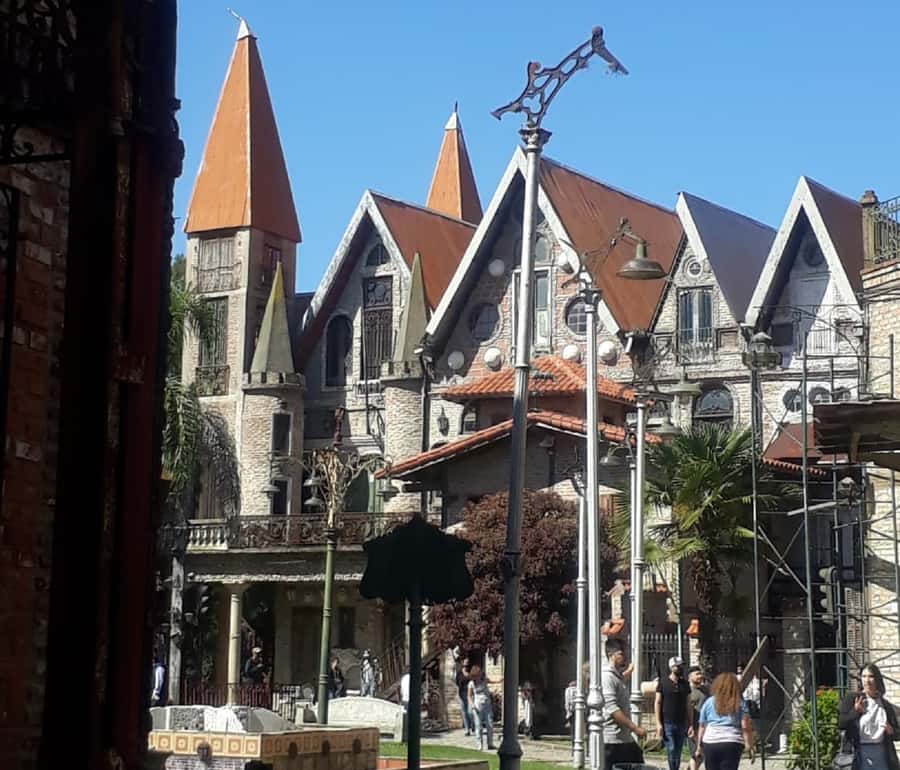
Campanopolis is not a traditional medieval town, and it is not an archaeological site. It is an elaborate private fantasy built from pieces of Argentina’s past. That distinction matters. You are not coming for polished architecture or a textbook account of colonial Buenos Aires. You are coming to see what one determined man created from salvaged material, imagination, and a willingness to ignore normal building rules.
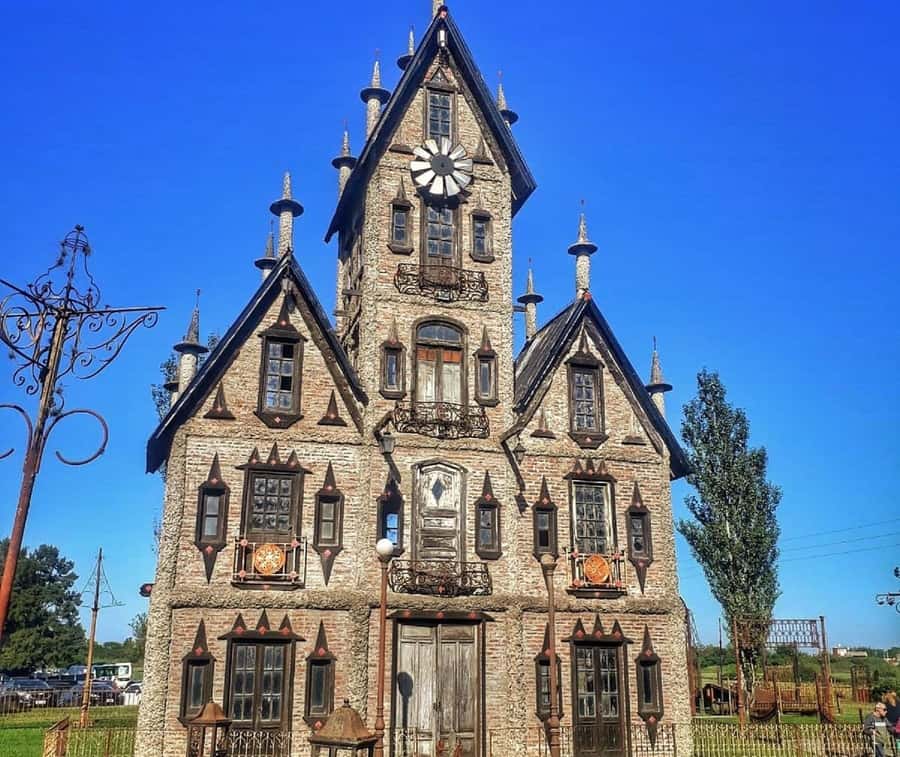
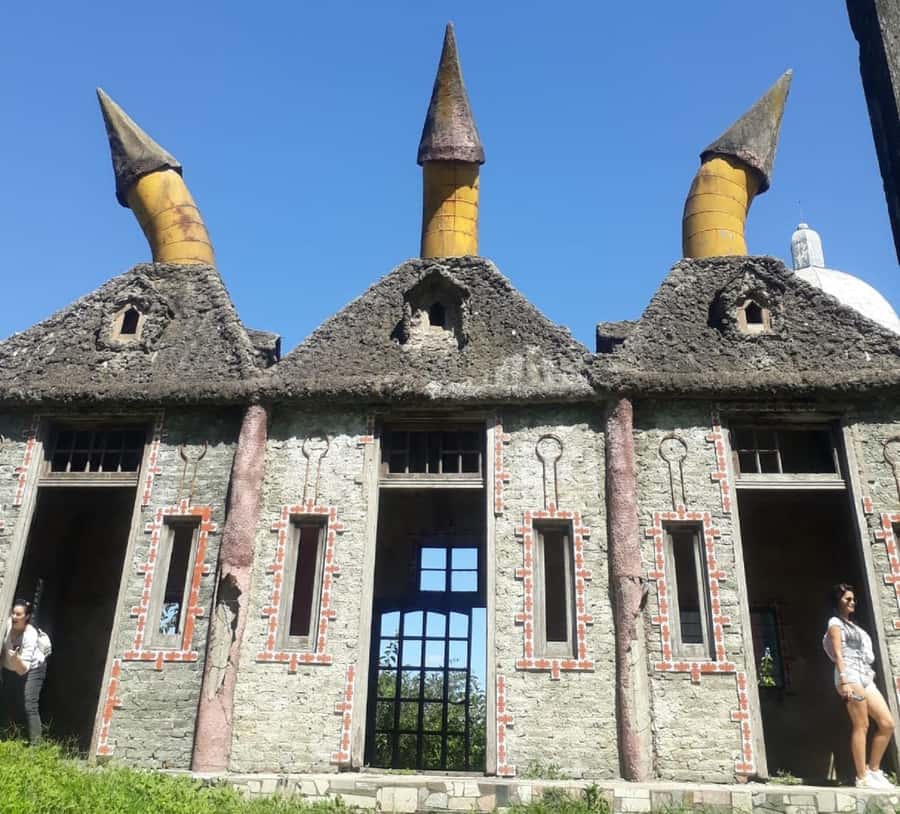
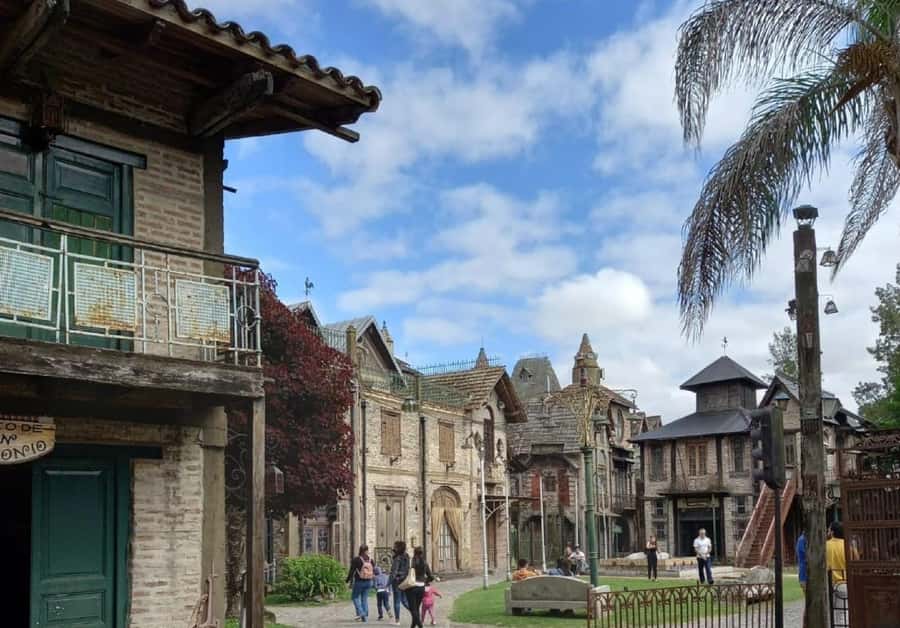
The setting is near the Ezeiza forests, in a nature reserve area outside the city. The buildings form a compact citadel of stone, brick, iron, and slag. Their styles suggest castles, chapels, towers, and storybook houses, but the whole place has a handmade quality. It can feel like a film set that was allowed to keep growing after filming ended.
I find the recycled details more interesting than the general medieval theme. The old iron columns from Galerías Pacífico connect this odd village to one of Buenos Aires’s grand commercial landmarks. Gates from the Palermo Hippodrome and lights and clocks associated with Plaza de Mayo give the site another layer. You are not just looking at imitation castles. You are also looking at fragments rescued from demolition, auctions, and older city spaces.
That is where Don Antonio Campana’s achievement comes into focus. He was not simply decorating a garden with a few antique objects. He built about 40 structures and joined them with narrow routes, passages, and tucked-away places. The result reflects his persistence as much as his taste. His project was also linked to seeking relief while dealing with illness, which gives the site a more personal reason for existing.
A few more Buenos Aires trips worth putting side by side
- Local Foodie Adventure in Buenos Aires with Sherpa Food Tours
★ 5.0 · 6,875 reviews - Buenos Aires City Private Tour with Local Guide
★ 5.0 · 3,475 reviews - Buenos Aires Small-Group City Tour
★ 5.0 · 2,226 reviews
Leaving Teatro Colón for the Ezeiza area
The meeting point is on the sidewalk at Cerrito 628, beside the Teatro Colón. This is a useful central pickup point, but it is not hotel pickup. You need to make your own way there and be ready at the correct time.
On Wednesdays, Thursdays, and Fridays, the meeting time is 11:30 AM. On Saturdays and Argentine public holidays, it is 8:00 AM. The earlier departure is important because the park has a different schedule on certain dates, including March 24 and April 7, when it opens only in the morning.
The ride to Campanopolis is listed as about 75 minutes. That is a long enough journey to affect how you plan the day, though it also gives you a chance to rest. One useful piece of advice is to bring a bottle of water, protein bars, or a light snack for the vehicle. Food and drinks are not included, and there is not much to eat at the park.
The road time also corrects one easy misunderstanding. Campanopolis may be described as roughly half an hour from Buenos Aires in broad promotional terms, but this organized outing allows about an hour and 15 minutes each way. I would plan on the full six hours, not a quick half-day jaunt.
The transport has been described as comfortable, and the driver as polite and competent. Still, the quality of the trip depends partly on traffic and on how much information you expect during the ride. The accompanying guide may explain some of Campanopolis’s background on the way, but the main storytelling happens inside the park.
First look at the castle-like citadel
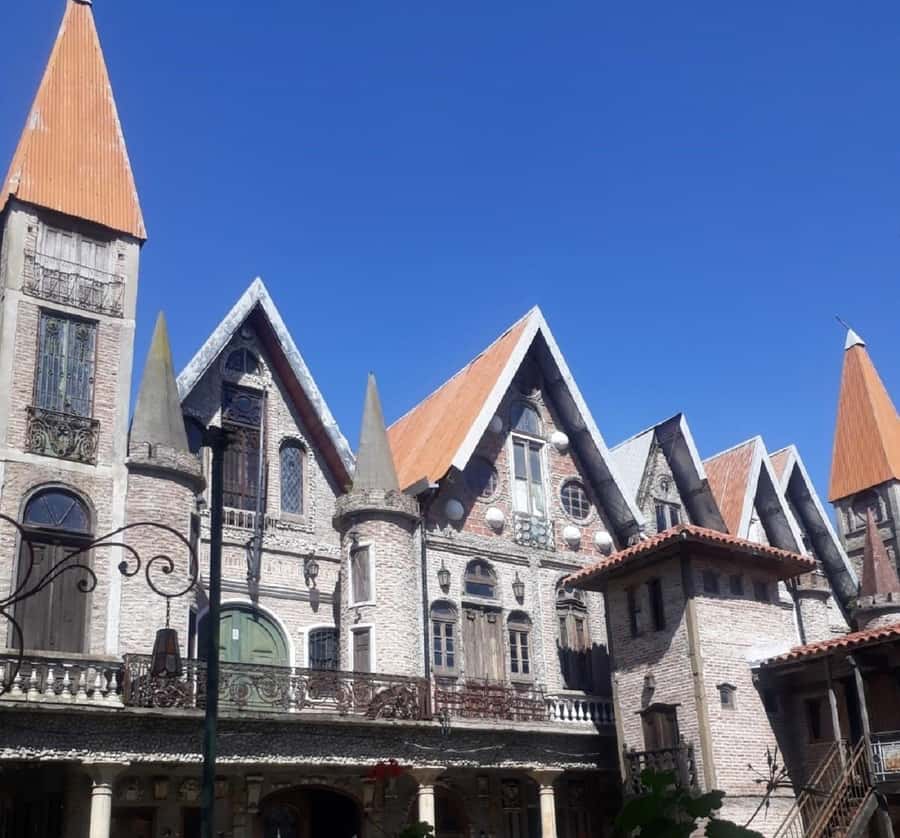
After arrival, you generally have some time to look around and take photographs before the formal guided walk begins. This is a good arrangement. Campanopolis is visually crowded, and a few free minutes help you get your bearings before someone starts pointing out the important pieces.
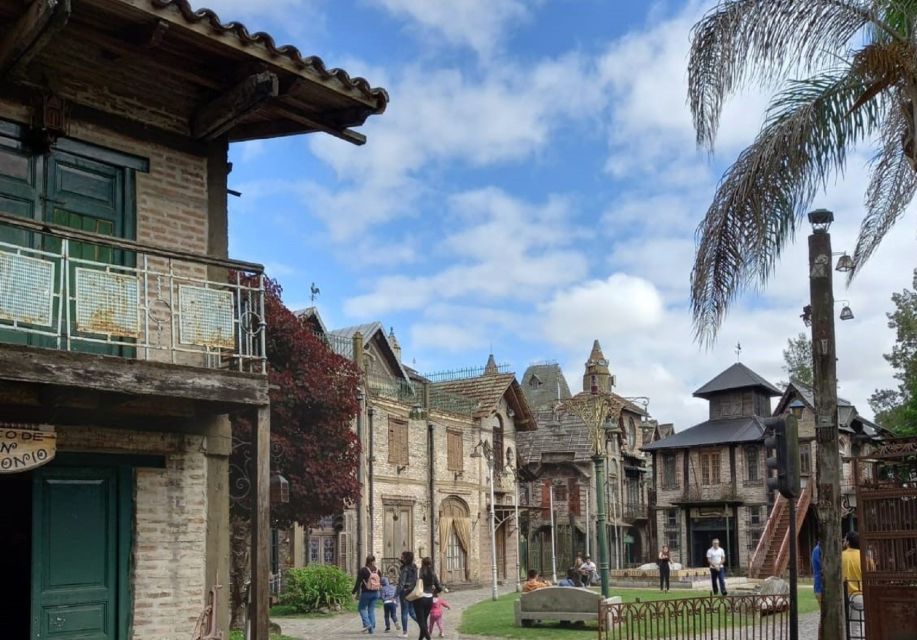
The first impression is likely to be the maze itself. Buildings are connected by alleys and passages rather than laid out like a normal museum. Some routes lead to courtyards or small houses; others reveal an iron detail, a clock, or a carved ornament. You will want to stop often, so do not treat the visit as a fast march from one landmark to the next.
The 12 stone houses are among the most storybook-like parts of the site. Built from stone, slag, and brick, they have the rough, compact look of homes from a children’s tale. The Snow White comparison makes sense as a mood, though you should expect an eccentric Argentine creation rather than a Disney-style attraction.
Photography is a major reason to come. The mix of towers, antique materials, winding paths, and greenery creates unusual angles almost everywhere. The place is especially suited to people who enjoy architectural details and imaginative settings more than formal museum displays.
Three museums and thousands of salvaged details
The visit includes the Museum of Wood, the Iron Museum, and the Caireles Museum. These collections help explain the building process, since the overall village can otherwise seem like a large collection of unrelated objects.
The Museum of Wood focuses attention on another material used throughout the project. Wood can be easy to overlook when stone towers and iron gates take the eye, so this stop gives the construction a broader context.
The Iron Museum is especially relevant because metal is one of Campanopolis’s visual signatures. Old columns, gates, lamps, and other ironwork help bridge the gap between the city that supplied the materials and the fantasy village that received them.
The Caireles Museum is the most specialized stop. Caireles are decorative architectural elements, often used on railings, balconies, and ornamental structures. If you like small design details, this collection may be more rewarding than the larger buildings. It also shows how Campana used repetition and decoration to turn discarded pieces into a unified style.
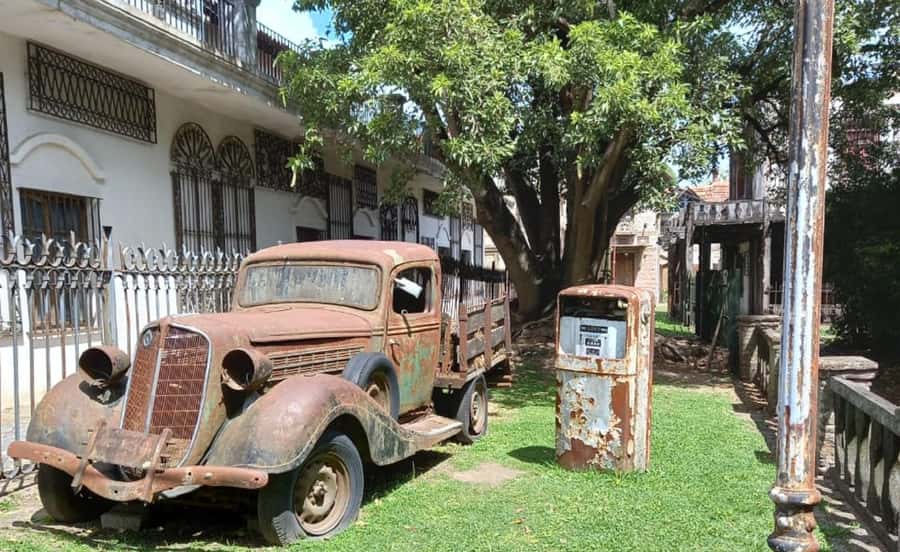
The park contains thousands of valuable antiques and reused objects, but the appeal is not simply their age or price. The fun lies in spotting where they appear and guessing how they were given a second life. The guide’s explanations are helpful here, especially if you understand Spanish or Portuguese.
Still Argentina, but a completely different sort of afternoon:
- Buenos Aires Hop-On Hop-Off Bus, Free Walking Tours & Discounts
★ 4.5 · 2,218 reviews - Buenos Aires: Piazzolla Tango Show with Optional Dinner
★ 4.4 · 2,122 reviews - Buenos Aires: City Highlights Guided Tour with Transfer
★ 4.7 · 1,946 reviews - Buenos Aires: Hop-On Hop-Off City Bus Tour
★ 4.2 · 1,855 reviews
The language question is the key decision
This is the most important practical issue before booking. The activity is presented with Spanish, Portuguese, and English support, but the guided tour inside the park is offered exclusively in Spanish and Portuguese. If English-speaking visitors join, the guide provides a general account of the site’s history and points out the main features.
That means English support should not be understood as a full English-language tour. You may receive useful orientation, but you should not expect every story, object, and architectural detail to be explained in English.
If you speak Spanish or Portuguese, the experience is much stronger. The guide can explain Campana’s methods, identify the recycled landmarks, and make sense of the three museums. Portuguese speakers appear to have a particularly practical option because tours can be conducted in Portuguese on site.
If you speak only English, I would book only if you are comfortable exploring visually and catching a broad explanation rather than a complete translation. The village is still unusual enough to enjoy without understanding every word, but the historical and personal story will have less impact.
One English-speaking customer selected English during booking and found the actual tour language disappointing. I would confirm the current language arrangement before paying if detailed English interpretation is important to you.
Three hours inside the park
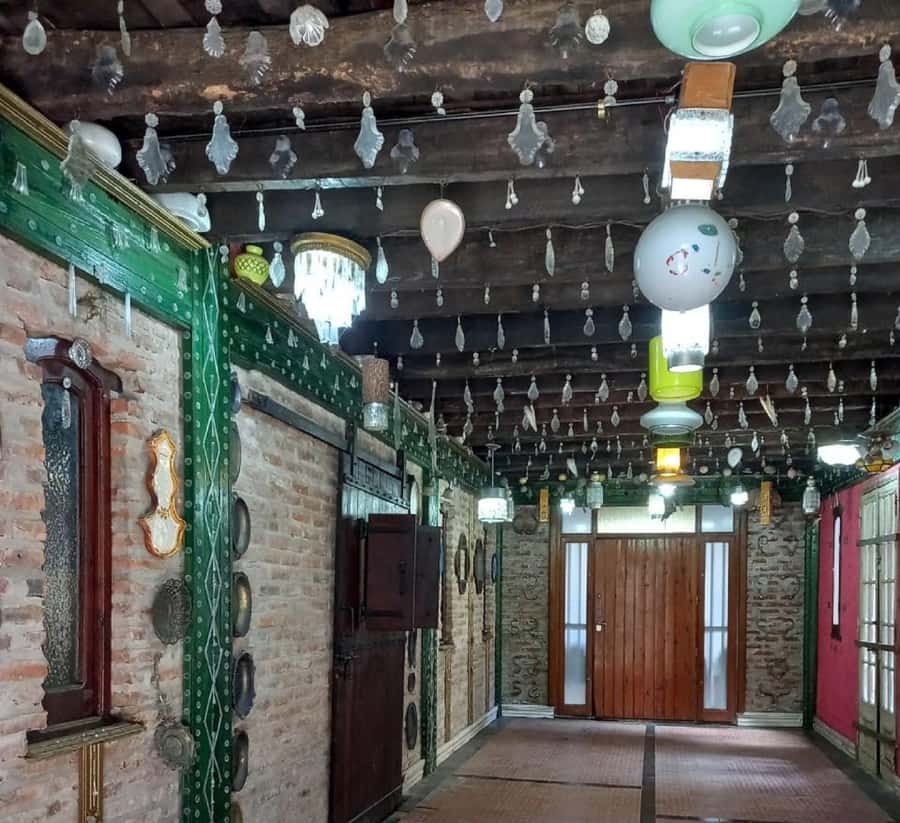
The allotted three hours is a sensible amount of time. It gives you room for the guided visit, photography, the museums, the 12 stone houses, and some independent looking around. A shorter stop would feel rushed because the site depends on small discoveries.
You will walk a fair amount. Paths, alleys, and passages are part of the point, but the route is not a seated museum visit. Comfortable shoes make sense, and you should keep water with you.
The guided portion helps prevent the place from becoming a collection of pretty façades. Without context, you might notice a grand gate but miss its connection to the Palermo Hippodrome. You might admire an old clock without understanding its link to Plaza de Mayo. The guide turns scattered objects into a story about salvage and persistence.
At the same time, do not expect the precision of a major national museum. Campanopolis is personal, irregular, and a little mysterious by design. That is part of its charm, but it also means the experience may feel less polished than a standard city attraction.
Families should consider the pace carefully. The walking can be tiring, and children who are restless may make it difficult to hear the guide. There is no stated child restriction, but I would choose another outing for very young children unless they are comfortable walking and listening for several hours.
Is $52 a fair price?
At $52 per person, the tour includes round-trip transport from central Buenos Aires, entry to Campanopolis, and a guide. Since the park is outside the city and the round trip takes about 150 minutes, the transport has real value. You avoid arranging a separate journey and can return to the same Teatro Colón meeting point.
The price is less attractive if you expect a fully English-language guided tour or a meal. Food and drinks are not included, and the park does not offer much to eat, so your actual cost should include snacks and water.
I see this as a fair price for the right visitor. It works best if you value a smooth transfer and a specialist attraction that is difficult to compare with ordinary Buenos Aires sightseeing. It works less well if you want a quick excursion, a full day of historical monuments, or detailed commentary in English.
The 4.6 rating from 150 published ratings supports the idea that the outing is generally well organized and unusual. The strongest praise centers on the site’s beauty, the good transport arrangements, helpful staff, and the chance to see something quite different from the usual Buenos Aires circuit. The language limitation is the clearest warning.
Free cancellation up to 24 hours before departure and the option to reserve now and pay later make the booking less rigid. Those terms are useful for a Buenos Aires visit where weather, flights, and city plans can shift, but you should still check the exact departure time for your date.
Who will enjoy Campanopolis most
I would recommend this tour to you if you like:
- Handmade architecture and unusual building projects.
- Salvaged objects with links to famous city locations.
- Storybook settings that are eccentric rather than polished.
- Photography, small museums, and slow exploration.
- Half-day outings that include transport from central Buenos Aires.
- Spanish or Portuguese guided visits.
I would be more cautious if you need:
- A complete English-language tour.
- Restaurant facilities or included refreshments.
- A short trip with very little road time.
- A stroller-friendly or low-walking activity.
- A conventional history lesson about Buenos Aires.
The outing also suits repeat visitors who have already covered the Teatro Colón, Plaza de Mayo, Recoleta, and the city’s main museums. Campanopolis gives you a different view of Argentina, one built through personal obsession rather than official planning.
Practical tips for a smoother visit
Arrive at Cerrito 628 before the stated meeting time. The bus or coach returns to the same location, so the central pickup point is easy to use if you are already in the downtown area.
Carry water and light snacks. This is the single most useful preparation because meals and drinks are not included and food choices at the park are limited.
Wear shoes suitable for several hours of walking. You will move through alleys, passages, and outdoor areas, and the attraction rewards taking your time.
Keep your expectations clear about the guide. Spanish and Portuguese speakers receive the best version of the commentary. English speakers get a general overview and key points, not necessarily a complete translation.
Allow the full six hours in your day. The listed travel time is about 75 minutes each way, with three hours at Campanopolis. Do not schedule a tight activity immediately after returning to Buenos Aires.
FAQ
Where does the Campanopolis tour leave from?
The meeting point is on the sidewalk at Cerrito 628, beside the Teatro Colón in Buenos Aires.
How long does the full tour last?
The activity lasts six hours. The journey takes about 75 minutes each way, with approximately three hours at Campanopolis.
What is included in the $52 price?
The price includes Campanópolis entry tickets, transport from the meeting point and back, and a guide.
Is food included?
No. Food and drinks are not included, and it is sensible to bring water and light snacks because there is not much to eat at the park.
Is the tour fully available in English?
The on-site guided tour is offered in Spanish and Portuguese. English-speaking visitors receive a general overview of the site’s history and its main points, so this is not a full English-language tour.
Which days and times does the tour operate?
On Wednesdays, Thursdays, and Fridays, the meeting time is 11:30 AM. On Saturdays and Argentine public holidays, the meeting time is 8:00 AM. On March 24 and April 7, the park opens only in the morning, with an 8:00 AM departure.
Should you book this Campanopolis tour?
Book it if you want an odd, photogenic, handmade attraction and you enjoy seeing how discarded city materials can become something new. The combination of Campana’s personal story, the recycled ironwork, the three museums, and the maze of storybook buildings makes this unlike a standard Buenos Aires day trip.
I would choose it confidently for Spanish or Portuguese speakers. English-only visitors should book with a clear understanding that the commentary will be limited. Bring snacks, allow the full six hours, and expect walking rather than a passive sightseeing stop.
For the right audience, Campanopolis is worth the ride because it feels personal, inventive, and wonderfully strange.
Recently added around Buenos Aires
- Photo Session in Buenos Aires★ 5.0 · 26 reviews
- Your Personal Photographer in Buenos Aires★ 5.0 · 24 reviews
- Discover Buenos Aires’ independent art scene — Ticket included★ 5.0 · 30 reviews
- Your Private Photographer in Buenos Aires★ 5.0 · 4 reviews
- Yerba Mate Workshop – Learn to Drink Mate like a Local!★ 5.0 · 11 reviews
- Taste of Tradition: Yerba Mate & Alfajores Experience★ 4.0 · 5 reviews
- Wine tasting in OASIS Palermo★ 5.0 · 2 reviews
- Day Tour Classic★ 3.5 · 35 reviews
Tours, compared.
Local Foodie Adventure in Buenos Aires with Sherpa Food Tours
Read our review →
Buenos Aires City Private Tour with Local Guide
Read our review →

Buenos Aires Hop-On Hop-Off Bus, Free Walking Tours & Discounts
Read our review →