
Reviewed · PRIVATE TOURS IN BUENOS AIRES
Evita Perón Private Tour: the woman behind “Don´t cry for me Argentina” and more
Evita still speaks from Buenos Aires walls. I like the private format, which gives your party room to ask questions, and I like the way the tour connects famous sights to Eva Perón’s political life. The main consideration is the price: at $180 per person, it makes the most sense if you have a strong interest in Evita, Peronism, or Argentine politics.
This is not just a celebrity biography with a few photo stops. You move from Plaza de Mayo to the Obelisk, Luna Park, the Evita Museum, and Recoleta Cemetery, building the story in stages. The subject is politically charged, so you should expect more than a polished legend. Your guide may help you sort out the woman, the public figure, and the competing views of her legacy.
In This Review
- Key points to know before booking
- Why Eva Perón makes such a good Buenos Aires subject
- Plaza de Mayo and the balcony that shaped her image
- The Obelisk and Evita’s public image
- The Faculty of Engineering and a project that never became Evita’s foundation
- Luna Park, where Eva and Juan Perón met
- The Evita Museum gives the story its substance
- Recoleta Cemetery and Evita’s final resting place
- What the private format adds
- Is $180 per person a fair price?
- Who should book this Evita tour?
- Should you book it?
- FAQ
- How long does the Evita Perón private tour last?
- How much does the tour cost?
- Is the tour private?
- What places are included?
- Are admission tickets included?
- Can service animals join the tour?
- What is the cancellation policy?
Key points to know before booking
- Evita’s balcony at Casa Rosada gives the tour its strongest opening, linking a famous film song to a real political stage.
- The private setting means only your group participates, making it easier to ask direct questions about Eva Perón and Argentina.
- The Evita Museum receives the longest stop, with 1 hour and 40 minutes for clothing, photographs, personal objects, and exhibits about her work.
- Luna Park adds a personal chapter, marking the place where Eva and Juan Perón first met.
- Recoleta Cemetery provides a quiet ending, with time to visit Evita’s final resting place.
- Guides make a major difference, and Martina, Veronica, and Lorena are specifically praised for their warmth, flexibility, and command of the subject.
Why Eva Perón makes such a good Buenos Aires subject
Eva Perón is one of those historical figures who refuses to stay in the past. Her name remains tied to Argentina’s working class, women’s political participation, social aid, Peronism, celebrity culture, and the country’s long-running political arguments.
That gives this tour a useful focus. Instead of seeing Buenos Aires as a string of unrelated sights, you follow one person through the city’s public spaces, institutions, and memorials. You see where she addressed crowds, where a grand public project was planned, where she met Juan Perón, and where her memory is preserved.
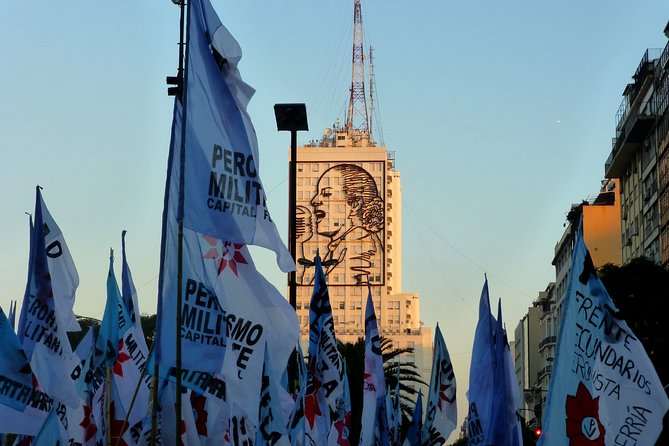
The tour also helps separate popular culture from local history. Many people first encounter Evita through the song Don’t Cry for Me Argentina, but the balcony behind that song is part of a much larger story. At Casa Rosada, your guide can explain why Plaza de Mayo became so important to Eva’s public image and why demonstrations connected to Peronism still gather in this part of the city.
I would choose this experience if you want context rather than a quick photograph. It is especially useful if you know only the musical version of Evita and want to understand why her name still carries such force in Argentina.
More Private Tours in Buenos Aires
- Buenos Aires City Private Tour with Local Guide
★ 5.0 · 3,475 reviews - Private Airport Transfer In or Out : Ezeiza (EZE) – Buenos Aires
★ 5.0 · 548 reviews - Private Full-Day Iguazu Falls Tour with Airfare from Buenos Aires
★ 4.5 · 387 reviews
Plaza de Mayo and the balcony that shaped her image
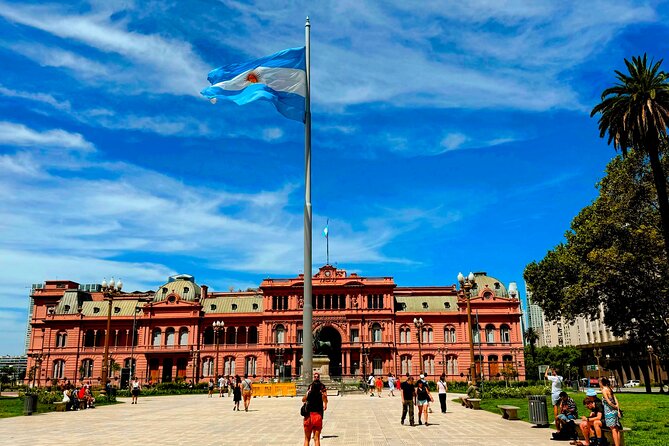
The tour begins at Plaza de Mayo, Buenos Aires’ main square. Allow about 40 minutes here, with no admission charge.
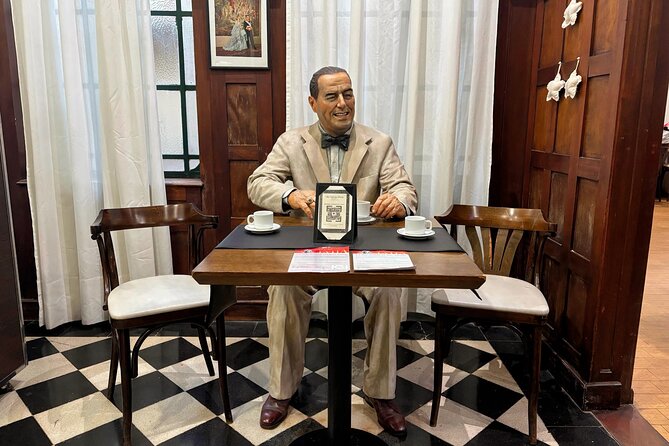
This is the right starting point because the square is both a civic stage and a place of memory. You will see the Pink House, or Casa Rosada, where Eva Perón made some of her most famous public appearances. The balcony is the visual centerpiece, and it gives the phrase Don’t Cry for Me Argentina a physical location.
A good guide should do more than point upward. The value here comes from explaining how Eva used public speaking, mass gatherings, and emotional connection to build her political role. She was not Argentina’s president, but she became a powerful public force beside President Juan Domingo Perón.
This stop is also where the tour can introduce the tension around her legacy. Eva was admired by many working-class Argentines for her social programs and advocacy. Others viewed her methods, public style, and political influence with suspicion. You will get more from the square if you listen for both sides rather than treating her as either saint or villain.
Because Plaza de Mayo is a major city gathering place, the setting may feel busy or politically active. That is part of its meaning, not a flaw. You are standing in a place where Argentine history has repeatedly moved from speeches into public action.
The Obelisk and Evita’s public image
The next stop is Plaza de la República, home of the Obelisk. The visit lasts about 15 minutes and is free.
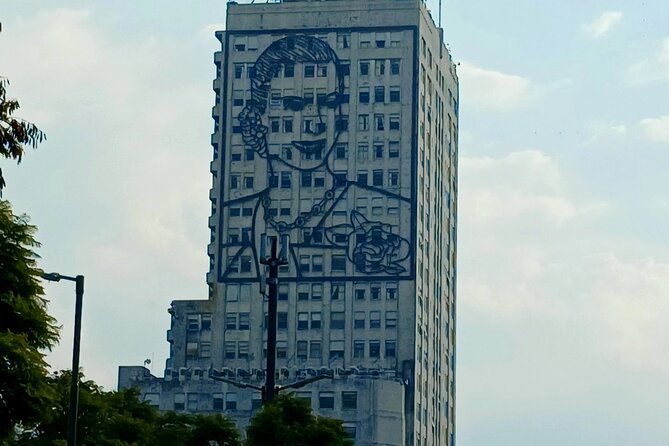
The Obelisk is one of Buenos Aires’ best-known landmarks, but this stop is really about the view toward a large portrait of Evita. It also places you near a central location for demonstrations supporting or opposing her.
That makes the stop brief but useful. You are not spending another long period at a monument. Instead, you get a quick orientation to the scale of Evita’s public image and the way Buenos Aires turns political figures into part of the city’s visual life.
I would treat this as a context stop rather than a major sightseeing visit. The value depends on your guide explaining what the portrait represents and why public demonstrations matter in Evita’s story. If you are mainly interested in clothing, photographs, and personal possessions, the museum will offer much more. If you want to understand how politics appears in everyday Buenos Aires, this short pause earns its place.
The Faculty of Engineering and a project that never became Evita’s foundation
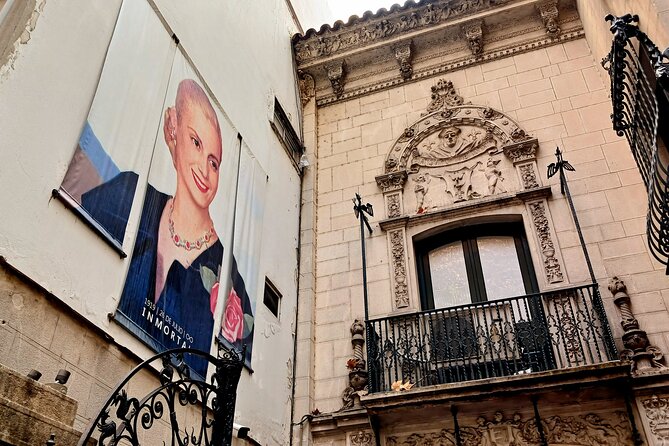
The tour then visits the imposing Faculty of Engineering building, with about 15 minutes here.
The building was intended to become part of Eva Perón’s Charity Foundation. That unfinished or redirected purpose gives you a different view of her work. Evita is often remembered through speeches and portraits, but her public role also involved plans for large-scale social aid.
This stop is valuable because it moves the story beyond personality. You can ask what the foundation aimed to do, how it fit into Peronist politics, and why grand public projects mattered to Eva’s image. The building itself becomes evidence of ambition, state power, and the limits of political plans.
There is no admission ticket, and the stop is short. Do not expect an indoor museum visit here. You are seeing the exterior and using it as a starting point for discussion. The experience depends heavily on the guide, which is one reason the private format matters.
A few more Buenos Aires trips worth putting side by side
- Local Foodie Adventure in Buenos Aires with Sherpa Food Tours
★ 5.0 · 6,875 reviews - Buenos Aires Small-Group City Tour
★ 5.0 · 2,226 reviews - Buenos Aires Hop-On Hop-Off Bus, Free Walking Tours & Discounts
★ 4.5 · 2,218 reviews - Buenos Aires: Piazzolla Tango Show with Optional Dinner
★ 4.4 · 2,122 reviews
Luna Park, where Eva and Juan Perón met
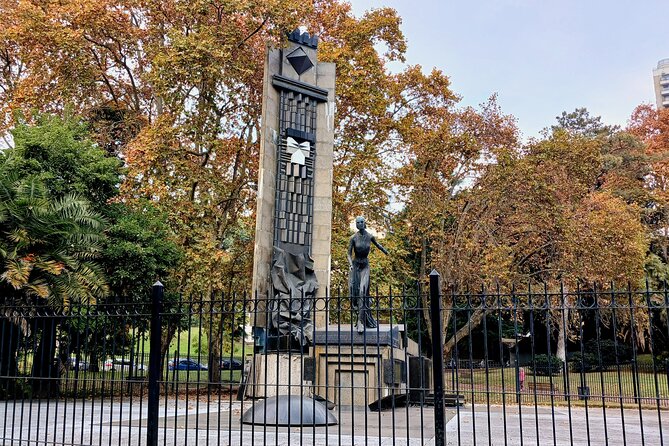
At Luna Park, you spend about 10 minutes learning about the meeting between Eva and Juan Perón.
This is a small stop, but it adds a personal thread to a story that can otherwise become very political. Their meeting changed both of their lives and shaped Argentina’s public life for years. Seeing the place connected to that beginning helps make the relationship feel less abstract.
The visit is not designed as a long venue tour. It is a short exterior or location-based stop, with no admission charge. I like the change of pace here. After Casa Rosada, political demonstrations, and the Charity Foundation, Luna Park brings the focus back to the couple at the center of the story.
Do not expect the site alone to explain the whole relationship. The guide’s storytelling carries the stop. Lorena, Martina, and Veronica were all praised for making the subject clear and engaging, and that kind of personal delivery is particularly useful at brief stops such as this one.
The Evita Museum gives the story its substance
The Evita Museum is the longest scheduled visit, lasting about 1 hour and 40 minutes. Admission is included.
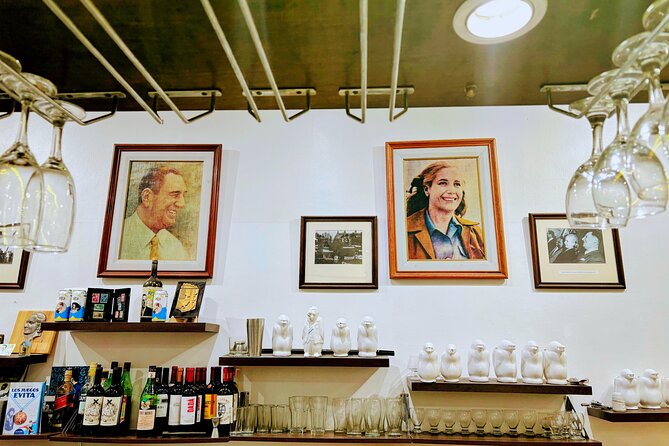
This is where the tour moves from city landmarks to material evidence. You can see dresses, personal objects, photographs, and mementos connected to Eva Perón. Interactive displays cover her early career as an actress, relationship with Juan Perón, political work, and social programs.
The museum also places Evita within everyday Argentine life during her era. Displays of contemporary objects and photography help show the world around her, rather than presenting her as an isolated celebrity. That wider frame matters. You begin to see why her story includes class, gender, work, media, and government.
I like that the museum comes after several city stops. By this point, you have already heard about the balcony, demonstrations, the Charity Foundation, and Luna Park. The objects in the museum can then answer questions raised earlier. A dress is not only clothing. A photograph is not only a souvenir. Each item can support a different version of Eva’s public identity.
The museum’s gift shop is another practical bonus if you want books or souvenirs. One couple with a particular interest in Evita found the visit especially useful because the guide established the background first. That is exactly the right order. Without context, a museum of personal items can feel like a collection of memorabilia. With context, it becomes a way to test the story you have been hearing.
The length is generous, but it can also be the point where the four-hour schedule feels full. If you prefer a fast overview, 100 minutes in one museum may seem long. If you want clothing, photographs, political explanation, and social context, this is the part that justifies the tour’s price.
Recoleta Cemetery and Evita’s final resting place
The final stop is Recoleta Cemetery, with about one hour included. Admission is included.
Recoleta is a fitting ending because Eva’s burial place has its own complicated story. The cemetery gives you a calmer setting after the public energy of Plaza de Mayo and the Obelisk. Here, the focus shifts from speeches and crowds to memory, family, and the way a nation preserves famous figures.
Your guide will take you to Evita’s final resting place and explain why it matters. The cemetery itself is a major Buenos Aires sight, so you receive more than a single grave visit. You have time to appreciate the setting and connect Evita to the city’s wider tradition of memorials and prominent families.
I consider this extra hour one of the tour’s best choices. Ending at the cemetery prevents the experience from feeling like a sequence of political talking points. It gives you a chance to pause and consider the gap between Eva’s short life, her enormous public reputation, and the years of argument that followed.
Wear comfortable shoes and expect to walk during the overall experience. The tour includes several outdoor stops, and the cemetery portion rewards a slower pace. The supplied details do not specify a particular route inside Recoleta, so ask your guide how much walking is planned if mobility is a concern.
What the private format adds
Only your party participates, which changes the tone. You can ask why Evita remains admired, how Peronism shaped Argentina, or which parts of her image came from political strategy. In a large group, those questions can be hard to fit in. Here, the guide can adjust the conversation to your interests.
The format also allows some flexibility in how much time you spend discussing each location. The listed schedule is approximately four hours, with the museum and cemetery taking up most of the time. The shorter stops work as links between the main chapters.
The guide is the heart of the experience. Martina is praised for being professional and warm, with one guest saying she brought Eva’s life and legacy into focus. Veronica is praised for setting up the museum visit well and for explaining Evita’s life clearly. Lorena receives especially strong praise for combining information about Buenos Aires, Argentina, and Evita with a pleasant afternoon. Those comments suggest a service that depends on the individual guide, but they also identify what to request if guide choice is possible.
Some bookings also include a driver. Brian and Davey are both praised for pleasant service, and Davey’s clean, comfortable car was considered suitable for two or three people in the back. The tour is private, but the supplied information does not promise a specific vehicle or driver for every departure, so treat those names as examples rather than guarantees.
Is $180 per person a fair price?
The cost is $180 per person. That is not a casual sightseeing rate, especially for a four-hour experience. You are paying for a private guide, a focused subject, transport support in some bookings, and admission to the Evita Museum and Recoleta Cemetery.
The value improves if you are traveling with two or three people who would otherwise need to arrange several separate visits. You also avoid the scattered feeling that can come from visiting the balcony, museum, and cemetery on different days without a connecting story.
The price is harder to justify if you have only a passing interest in Eva Perón. Buenos Aires has many free public sights, and you can visit the city’s famous squares without booking a private tour. The museum and cemetery are the strongest paid components, while Plaza de Mayo, the Obelisk, the Faculty of Engineering, and Luna Park have no admission charge.
For me, the price makes sense when you want interpretation and conversation, not simply entry tickets. It is a specialist tour, and specialist tours work best when the subject already interests you.
Who should book this Evita tour?
I would recommend it to:
- First-time Buenos Aires visitors who want political context with their sightseeing
- Fans of the musical who want to meet the real historical figure behind it
- People interested in Argentine politics, Peronism, or women in public life
- Couples and small groups who value a private guide
- Museum visitors who prefer a guide to explain what they are seeing
- Anyone who wants to combine central Buenos Aires with Recoleta Cemetery in one outing
I would think twice if you want a general city tour, dislike political subjects, or prefer to spend four hours moving quickly between major landmarks. Evita’s story includes admiration, criticism, social policy, celebrity, and political conflict. The experience is strongest when you are willing to consider all of those parts.
Confirmation is provided at booking. Service animals are allowed, the tour is near public transportation, and most people can participate. You can cancel for a full refund up to 24 hours before the start time, but changes or cancellations inside that window are not accepted.
Should you book it?
Book this tour if Eva Perón is more than a name from a song. The sequence of Plaza de Mayo, the Obelisk, the Charity Foundation site, Luna Park, the museum, and Recoleta Cemetery gives you a clear four-hour story with a strong beginning and a reflective ending.
At $180 per person, it is a focused splurge, not a bargain city outing. But with a strong guide such as Martina, Veronica, or Lorena, the private setting can turn familiar Buenos Aires sights into a sharper lesson in Argentina’s public life. If that is the kind of experience you want, this is a worthwhile choice.
FAQ
How long does the Evita Perón private tour last?
The tour lasts approximately four hours.
How much does the tour cost?
The listed price is $180 per person.
Is the tour private?
Yes. Only your group participates in the private tour or activity.
What places are included?
The tour visits Plaza de Mayo, the Obelisk at Plaza de la República, the Faculty of Engineering, Luna Park, the Evita Museum, and Recoleta Cemetery.
Are admission tickets included?
Admission is free at Plaza de Mayo, the Obelisk, the Faculty of Engineering, and Luna Park. Admission to the Evita Museum and Recoleta Cemetery is included.
Can service animals join the tour?
Yes. Service animals are allowed.
What is the cancellation policy?
You can cancel up to 24 hours before the experience begins for a full refund. Cancellations or changes made less than 24 hours before the start time are not accepted or refunded.
Recently added around Buenos Aires
- Photo Session in Buenos Aires★ 5.0 · 26 reviews
- Your Personal Photographer in Buenos Aires★ 5.0 · 24 reviews
- Discover Buenos Aires’ independent art scene — Ticket included★ 5.0 · 30 reviews
- Your Private Photographer in Buenos Aires★ 5.0 · 4 reviews
- Yerba Mate Workshop – Learn to Drink Mate like a Local!★ 5.0 · 11 reviews
- Taste of Tradition: Yerba Mate & Alfajores Experience★ 4.0 · 5 reviews
- Day Tour Classic★ 3.5 · 35 reviews
- Wine tasting in OASIS Palermo★ 5.0 · 2 reviews
Private Tours in Buenos Aires, compared.
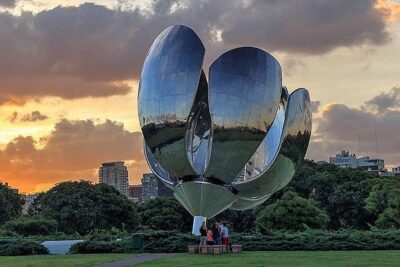
Buenos Aires City Private Tour with Local Guide
Read our review →
Private Airport Transfer In or Out : Ezeiza (EZE) – Buenos Aires
Read our review →
Private Full-Day Iguazu Falls Tour with Airfare from Buenos Aires
Read our review →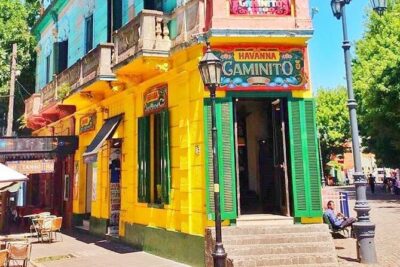
Private City Tour with a friend in Buenos Aires
Read our review →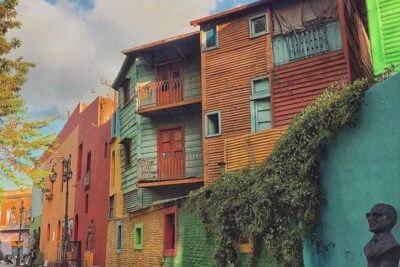
Private Tour: Buenos Aires and Delta del Tigre with Local Guide
Read our review →
Full Day Buenos Aires Private Walking Tour – Your Own Personal BA 101
Read our review →
Buenos Aires Private City Tour with Local Guide
Read our review →
Browse the lists this tour appears in