
Reviewed · CYCLING TOURS
E-Bike Tour in the Southern Circuit of Buenos Aires
Buenos Aires rewards you on two wheels. This 3.5-hour e-bike ride links San Telmo, La Boca and Puerto Madero, giving you a broad look at the city without wearing out your legs. I like the safe route and the chance to cover far more ground than you could comfortably manage on foot. I also like the small maximum of nine riders, which should make stops and questions easier.
The main drawback is the weather policy. The tour requires good weather, and a cancellation may happen even when rain seems unlikely. One booking was canceled with only a 3 percent rain forecast, so I would keep a little flexibility in your Buenos Aires schedule. At $65 per person, the value is strongest if you want history, neighborhoods, food tastes and easy transportation in one outing.
In This Review
- Key points at a glance
- Why an e-bike works so well in southern Buenos Aires
- Starting at Puente de la Mujer and Puerto Madero
- Plaza de Mayo and the city’s earliest chapters
- La Manzana de las Luces and old Buenos Aires
- San Telmo, Plaza Dorrego and colonial traces
- Parque Lezama and the National Historical Museum
- La Boca, La Bombonera and the fire brigade
- Caminito, tango and Quinquela Martín
- Usina del Arte and the food stop
- Puerto Madero’s port story and Lola Mora
- Costanera Sur and the final ride
- Is $65 a fair price?
- Practical details before you reserve
- Who should book this Buenos Aires ride?
- Should you book the E-Bike Tour in the Southern Circuit?
- FAQ
- How long does the e-bike tour last?
- Where does the tour begin?
- Where does the tour end?
- How many people can join the tour?
- Is the tour available with a mobile ticket?
- What food and drinks are included?
- Is admission to La Bombonera included?
- Is admission to the Costanera Sur Ecological Reserve included?
- Is admission to Usina del Arte included?
- Can I cancel for a full refund?
Key points at a glance
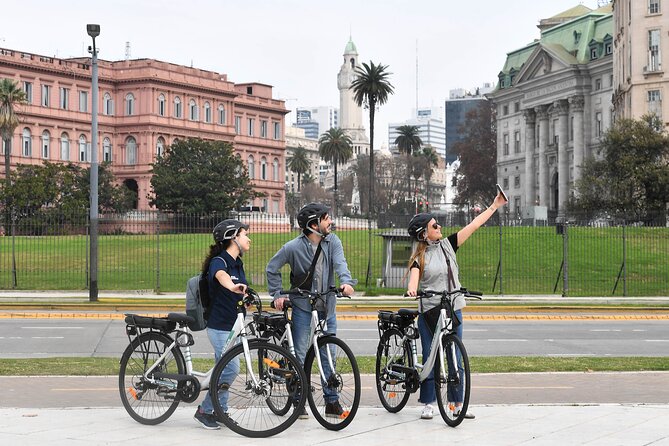
- New e-bikes and a safety-minded route: The bikes make the long southern circuit comfortable, while the route is designed to cover substantial ground without rushing between major areas.
- A small group of up to nine: This is a more personal setup than a large coach tour, especially useful in busy Plaza Dorrego and Caminito.
- Three classic Argentine tastes: Medialunas, choripán and coffee add a simple but welcome food element to the sightseeing.
- A wide city sampler: You move from the polished waterfront of Puerto Madero to colonial San Telmo, football-centered La Boca and the Costanera Sur reserve.
- A guide can shape the experience: Frani received especially strong praise for mixing historical explanation, local culture and an easygoing tone.
- Weather can change the plan: Free cancellation is available up to 24 hours before departure, but a last-minute cancellation for poor weather is also possible.
Why an e-bike works so well in southern Buenos Aires
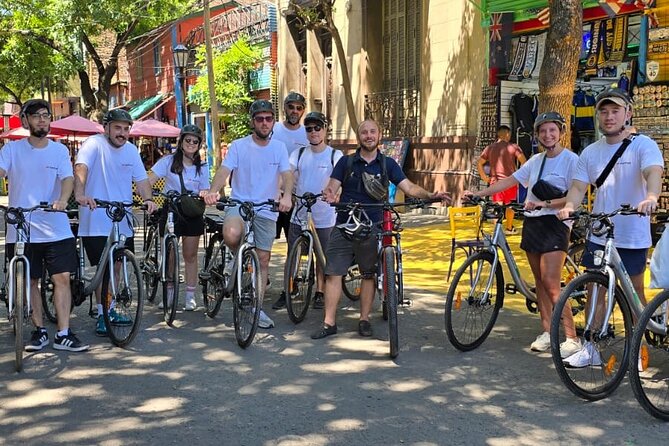
Buenos Aires is a walking city, but its southern sights are spread across several neighborhoods. You could visit them by taxi, bus or a series of long walks. The e-bike offers a better middle ground: you remain outside with the city around you, yet the motor assistance takes much of the strain out of the distance.
The route also gives you useful contrasts. Puerto Madero feels modern and carefully redeveloped. San Telmo carries old colonial streets and market culture. La Boca brings immigrant stories, football, tango and brightly painted buildings. By the end, the Costanera Sur reserve offers open space beside the Río de la Plata.
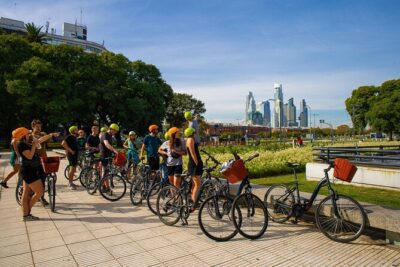
I especially like the small group size here. Nine is still large enough to feel social, but it is not a crowd. You should have a better chance to hear the guide at Plaza de Mayo, ask about the Bombonera or stop for a quick photo without holding up a busload of people.
The listed duration is about three hours and 30 minutes. That is enough time for a strong overview, not enough for long museum visits or an unhurried exploration of every neighborhood. Think of it as a first-day orientation with local flavor, rather than a complete examination of Buenos Aires.
More bike rides around Buenos Aires:
- Bike Tour: Half-Day City Highlights of Buenos Aires
★ 5.0 · 1,083 reviews - Buenos Aires: North or South Buenos Aires Bike Tour
★ 4.7 · 719 reviews - Highlights of BA by Bike – Part one
★ 5.0 · 285 reviews
Starting at Puente de la Mujer and Puerto Madero
The meeting point is Macacha Güemes 351, in Puerto Madero. The tour begins at Puente de la Mujer, the white pedestrian bridge that has become one of the neighborhood’s familiar symbols. The guide explains the bridge’s design, its connection to tango and the tribute to women that appears throughout Puerto Madero.
The stop itself is brief, about five minutes, so expect a quick introduction rather than a detailed architectural visit. Still, it is a sensible opening. You begin in a former port district that has become one of the city’s most expensive areas, then hear how the neighborhood changed from an underused dock area into a fashionable part of Buenos Aires.
The route also points out the Old Post Office Palace, now a cultural center with concert halls and art exhibitions. Even if you do not enter, the building helps connect the modern waterfront with the city’s older civic and commercial life.
Plaza de Mayo and the city’s earliest chapters
At Plaza de Mayo, you get about 15 minutes to hear how Buenos Aires began and how its first years shaped the capital. The Cabildo and the Cathedral provide the visual anchors, while the guide explains important events that took place around the square.
This is one of the most useful history stops because the plaza is not simply an attractive open space. It has been a setting for major political and social events, and it remains a central reference point for understanding Argentina. The short timing means you should listen closely and save detailed photographs for another visit.
The nearby Catholic church, described as the city’s oldest and built in 1722 by Jesuit fathers, adds another layer to the area. The tour does not promise an extended interior visit, so treat this as a historical orientation rather than a church tour.
La Manzana de las Luces and old Buenos Aires
La Manzana de las Luces, or the Block of Enlightenment, receives about 15 minutes. Its importance comes from the institutions once based there, including the first National Library, the University of Buenos Aires and the Colegio Real San Carlos.
The place also connects to the education of figures who later became important in Argentine public life. That makes it more than another old building. It shows how religion, schooling and politics developed close together in the early city.
The value here depends heavily on the guide’s storytelling. A quick look at historic walls will not tell you much by itself. A guide who can explain why this block mattered turns a short stop into a useful piece of the city’s story.
A few more Buenos Aires trips worth putting side by side
- Local Foodie Adventure in Buenos Aires with Sherpa Food Tours
★ 5.0 · 6,875 reviews - Buenos Aires City Private Tour with Local Guide
★ 5.0 · 3,475 reviews - Buenos Aires Small-Group City Tour
★ 5.0 · 2,226 reviews - Buenos Aires Hop-On Hop-Off Bus, Free Walking Tours & Discounts
★ 4.5 · 2,218 reviews
San Telmo, Plaza Dorrego and colonial traces
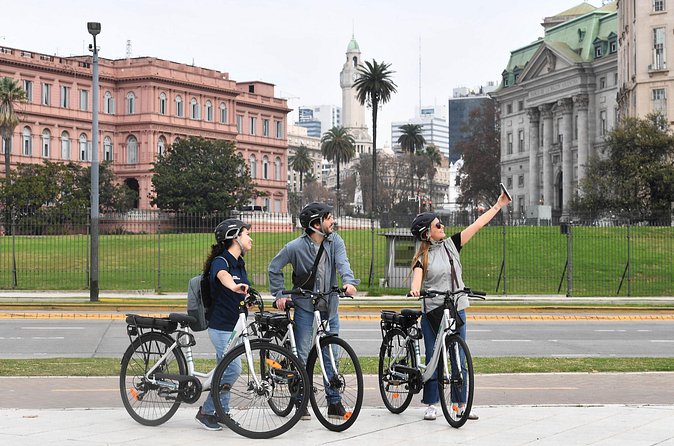
Plaza Dorrego is one of the longer early stops, with about 25 minutes. You learn how San Telmo grew from a cart stop south of Buenos Aires into one of the city’s best-known historic neighborhoods.
The square is a good place to understand San Telmo’s character. It has a traditional feel, public life and a strong connection to the city’s older working neighborhoods. The experience includes tastes of Argentine food and drink, including a medialuna, choripán and coffee. These are modest samples, not a full meal, but they make the history more tangible.
A choripán, a sausage served in bread, is especially fitting for a city tour because it is simple, local and familiar across Argentina. A medialuna gives you a sweeter taste of the country’s café culture. If you have a large appetite, do not treat the tastings as lunch.
The route also calls at an old mansion connected with an archaeological discovery. Beneath it, remains of colonial tunnels, cisterns and other materials were found. This is the sort of detail that can change your view of Buenos Aires. The city may look flat and modern at street level, but its earlier structures can still be found below.
Another stop concerns a house only 2.50 meters wide, known as the oldest house in Buenos Aires. Its narrow frontage reflects housing assigned to freed slaves, who were given small spaces beside the property of their former owners. It is a compact site, but the social history behind it is significant.
Parque Lezama and the National Historical Museum
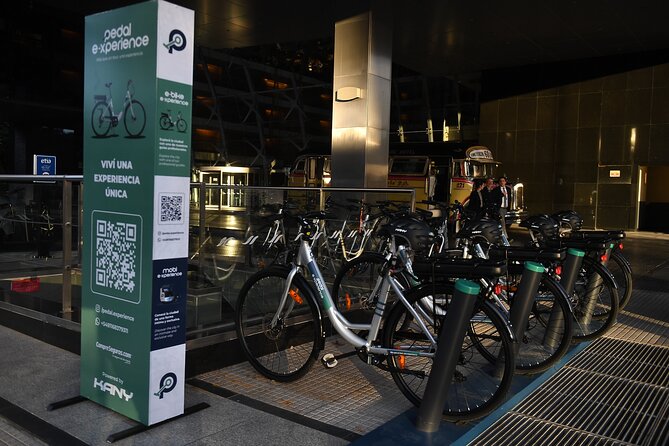
Parque Lezama gets about 20 minutes. The park is tied to the first Spanish settlement in the Río de la Plata and to the beginnings of the National Historical Museum.
The museum occupies a 19th-century mansion and covers native peoples, conquest, colonial rule, the May Revolution and the social development of Buenos Aires. The tour description suggests a look at the site and its setting, not a long museum session, so you may want to return separately if Argentine history is a major interest.
I like this stop because it places national history in a public park rather than keeping every important story inside a formal museum. You get a pause from traffic, a chance to look around and a reminder that Buenos Aires was shaped by many groups and periods, not one single founding moment.
La Boca, La Bombonera and the fire brigade
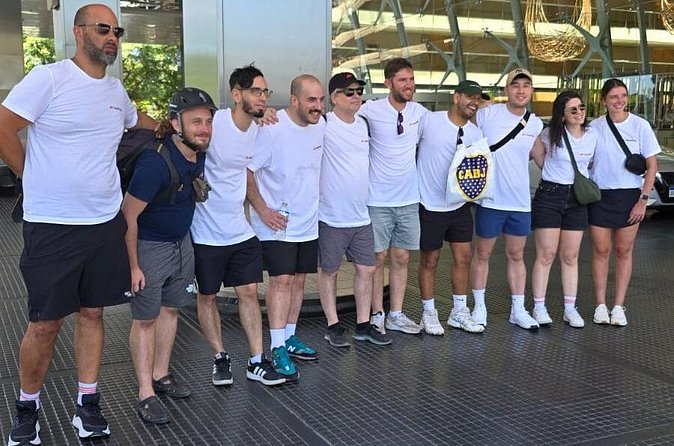
The move to La Boca changes the mood. At Estadio Alberto J. Armando, better known as La Bombonera, the guide gives an overview of the football club’s origins and some of the famous athletes connected with it.
The stop lasts around 20 minutes, and admission to the stadium is not included. That point matters. You should expect an exterior-oriented visit or a short look around the area, not a full stadium tour with museum access. Football fans will get the most from the stories, while nonfans may appreciate the chance to see how strongly the club shapes La Boca’s identity.
The route also includes a space honoring volunteer firefighters. La Boca suffered repeated fires, and local residents organized to protect their neighborhood. This small memorial helps you see the district as more than a colorful tourist quarter. Its character grew from work, immigration, hardship and local cooperation.
Caminito, tango and Quinquela Martín
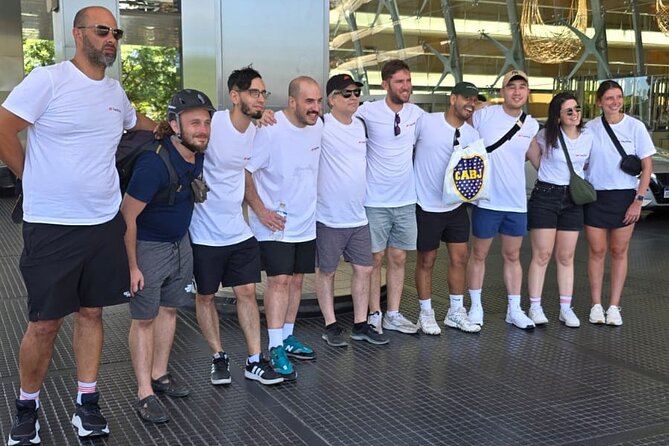
Caminito is another 25-minute stop and one of the most recognizable parts of Buenos Aires. The guide explains La Boca’s development from a peripheral district into a heavily visited part of the city, along with the role of immigration in the neighborhood’s culture.
The area is also tied to the origins of tango and to the famous figure of Carlos Gardel. You get a compact lesson in how music, migration and public image became linked in Buenos Aires.
Caminito can feel highly arranged for sightseeing, so I would not confuse it with an untouched working neighborhood. Its value is in the stories, colors and cultural symbols, not in pretending that every corner remains as it was decades ago. The guide’s explanation helps separate the real history from the postcard presentation.
The tour also points out a school and museum created through a donation by artist Benito Quinquela Martín. The project was meant to support primary education and showcase Argentine artists, and it opened in 1936. That detail gives La Boca a stronger artistic and civic context.
Usina del Arte and the food stop
Usina del Arte receives the longest scheduled visit, about 40 minutes, with admission included. The former power station is one of La Boca’s major cultural buildings, and the guide explains its founding and its connection to the neighborhood’s working-class roots.
This is a useful counterpoint to Caminito. Instead of focusing only on painted façades and tango imagery, the stop shows how an industrial building became a place for music and art. It also gives the group more time to slow down after several short historical stops.
The route then takes you to a classic Buenos Aires restaurant for the food portion of the experience. The listed tastes include medialunas, choripán and coffee. Since the exact serving arrangement is not specified, I would plan on sampling rather than a substantial sit-down meal.
Puerto Madero’s port story and Lola Mora
The ride returns to Puerto Madero for about 25 minutes. Here, the guide explains the plan for Buenos Aires’s second port, the problems that led to its decline and the later redevelopment that turned the district into the city’s most expensive neighborhood.
That sequence is one of the clearest examples of how Buenos Aires keeps changing. You can compare old port infrastructure with restaurants, towers and promenades that now define the area. The contrast works particularly well after seeing the older districts.
The route includes a work by Lola Mora, the Tucumán-born artist. Created in Rome, the sculpture represents the birth of Venus, surrounded by tritons and nereids, the water divinities that give the work its name. It is a small art history lesson in an urban setting, and a reminder that Argentina’s public art includes important women artists.
Costanera Sur and the final ride
The final stop is Reserva Ecológica Costanera Sur, with about 20 minutes. The guide covers the origin and growth of the city’s most important green area and takes you along a promenade honoring major figures in Argentine sport.
The reserve provides a welcome change after the dense streets of San Telmo and La Boca. You get open air, a quieter setting and a chance to see how the city protects a large natural area beside the river. The visit is still brief, so do not expect a full nature walk or an extensive exploration of the reserve.
Admission is not included. The tour ends back at Macacha Güemes 351, so you do not need to arrange a separate return transfer. That makes the starting point practical if you are staying near central Buenos Aires or using public transportation.
Is $65 a fair price?
At $65, this tour costs more than renting a standard bicycle and exploring one neighborhood on your own. But the comparison is not quite fair. The price includes an e-bike, a guide, a planned route, historical interpretation, food and drink tastes, and admission to Usina del Arte.
I see the value in the amount of ground covered. You visit ten principal stops and several smaller points in three and a half hours. Reproducing that route independently would require careful planning and likely a mix of taxis, buses and walking.
The value is weaker if you want long museum visits, extensive time at La Bombonera or a full meal. Several stops last only 15 to 25 minutes, and two named attractions have admission costs that are not included. You are paying for breadth and ease, not exhaustive access.
The experience also seems best suited to people who are comfortable riding a bicycle and want an active introduction to the city. The bikes are described as brand new, and one strong account singled out the route’s safety and the comfort of covering so much ground. Those are important advantages for a first day in Buenos Aires.
Practical details before you reserve
Confirmation is provided at booking, and mobile tickets are accepted. The meeting point is Macacha Güemes 351, with the return to that same location. The area is near public transportation.
Most people can participate, but the activity still involves riding for several hours and getting on and off the bike at repeated stops. I would allow extra time to reach the starting point, especially since the route begins in Puerto Madero and the experience starts at a fixed location.
The group is capped at nine people. The tour is usually reserved about nine days ahead, so booking in advance is sensible if your dates are fixed. The small group and limited schedule are useful reasons to reserve early.
Free cancellation is available until 24 hours before the start time. After that, the amount paid is not refunded and changes are not accepted. Because the tour requires good weather, the provider may offer another date or a full refund if conditions are poor. A minimum number of participants is also required, with the same choice of another date, another experience or a refund if the tour does not operate.
Who should book this Buenos Aires ride?
I would choose this experience if you want a quick but substantial introduction to the southern side of Buenos Aires. It suits you if you enjoy moving through neighborhoods, hearing the stories behind landmarks and trying a few local foods along the way.
It is also a good match for first-time visitors who want to understand the city’s geography. You see how close, yet different, San Telmo, La Boca and Puerto Madero can feel. The e-bike keeps the pace manageable and reduces the need to plan transport between them.
I would hesitate if your main goals are indoor museum time, a full stadium visit or a long meal. I would also avoid making this your only scheduled activity on a day when rain is possible. The cancellation policy is fair, but the weather decision may not match your own forecast.
The strongest element is the combination of a safe-feeling route, new bikes and a guide such as Frani, who was praised for balancing historical information with local culture. That blend helps the tour feel like more than a checklist of landmarks.
Should you book the E-Bike Tour in the Southern Circuit?
Book it if you want to see a lot of Buenos Aires in one active outing and value a guide who can connect food, football, tango, port history and neighborhood life. The $65 price is reasonable for the bike, guidance, tastings and included Usina del Arte entry, especially with only nine riders.
Skip it if you need guaranteed operation in uncertain weather or prefer to explore at your own pace. For everyone else, this is a practical first look at the city’s southern districts, with enough local detail to help you decide where to return on foot later.
FAQ
How long does the e-bike tour last?
The experience lasts approximately 3 hours and 30 minutes.
Where does the tour begin?
It begins at Macacha Güemes 351, C1106 Buenos Aires, in the Puerto Madero area.
Where does the tour end?
The tour returns to the same meeting point at Macacha Güemes 351.
How many people can join the tour?
The maximum group size is nine participants.
Is the tour available with a mobile ticket?
Yes. Mobile tickets are accepted.
What food and drinks are included?
The experience includes tastings of medialunas, choripán and coffee.
Is admission to La Bombonera included?
No. Admission to Estadio Alberto J. Armando, La Bombonera, is not included.
Is admission to the Costanera Sur Ecological Reserve included?
No. Admission to the reserve is not included.
Is admission to Usina del Arte included?
Yes. Admission to Usina del Arte is included.
Can I cancel for a full refund?
Yes, if you cancel at least 24 hours before the experience begins. Poor weather or failure to meet the minimum number of participants may also lead to another date or a full refund.
Recently added around Buenos Aires
- Photo Session in Buenos Aires★ 5.0 · 26 reviews
- Your Personal Photographer in Buenos Aires★ 5.0 · 24 reviews
- Discover Buenos Aires’ independent art scene — Ticket included★ 5.0 · 30 reviews
- Your Private Photographer in Buenos Aires★ 5.0 · 4 reviews
- Yerba Mate Workshop – Learn to Drink Mate like a Local!★ 5.0 · 11 reviews
- Taste of Tradition: Yerba Mate & Alfajores Experience★ 4.0 · 5 reviews
- Wine tasting in OASIS Palermo★ 5.0 · 2 reviews
- Day Tour Classic★ 3.5 · 35 reviews
Cycling Tours, compared.
Bike Tour: Half-Day City Highlights of Buenos Aires
Read our review →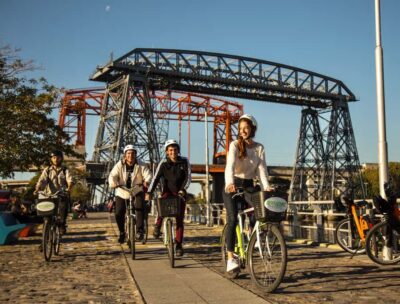
Ultimate Buenos Aires Bike Tour: All-Day All-Inclusive All-City
Read our review →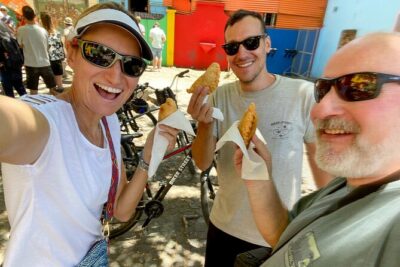
Full Day Bike Tour in BA Foodie and Cultural Immersion Max 6 ppl
Read our review →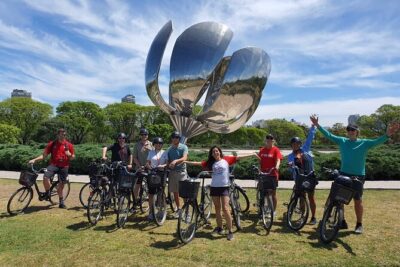
Half-Day Recoleta and Palermo Bike Tour in Buenos Aires
Read our review →
Browse the lists this tour appears in