
Reviewed · CYCLING TOURS
E-Bike Tour in the Northern Circuit of Buenos Aires
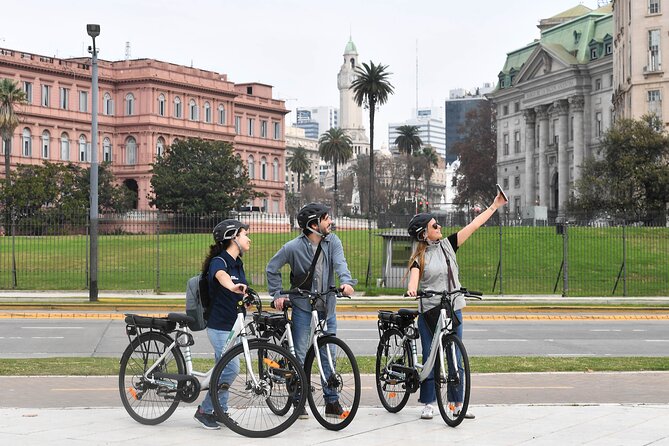
Buenos Aires opens up on two wheels. This 3.5-hour e-bike ride links Puerto Madero, Retiro, Palermo, Recoleta, and the city center, giving you a fast but human-scale look at the capital. I especially like the small maximum group of nine and the mix of landmarks with local tastes, including alfajores, mate, and choripán. The main concern is reliability: one booking ended in a no-show after the guide became ill, with no notice at pickup time.
I also like that the $65 price includes the bicycle, helmet, lock, snack tasting, mate, and a classic Argentine lunch. You should know, though, that the tour does not include admission to Teatro Colón or other paid attractions, and the long route leaves little time for extended visits inside museums or monuments.
In This Review
- Key points to know before you book
- Why an e-bike works well in Buenos Aires
- Puerto Madero begins with tango and modern design
- Retiro connects bullrings, British influence, and grand shopping
- Floralis Genérica is the best food break
- Palermo adds gardens, football, and open space
- Monumento de los Españoles tells Palermo’s origin story
- Recoleta brings together art, architecture, and memory
- Recoleta Cemetery is both a landmark and a lunch stop
- Teatro Colón finishes the city-center loop
- What the $65 price really covers
- The reliability question deserves attention
- Who should book this northern circuit ride
- FAQ
- Where does the e-bike tour begin and end?
- How long does the tour last?
- How many people can join the tour?
- Is lunch included?
- Are attraction admission fees included?
- What happens if the weather is poor?
- Should you book it?
Key points to know before you book
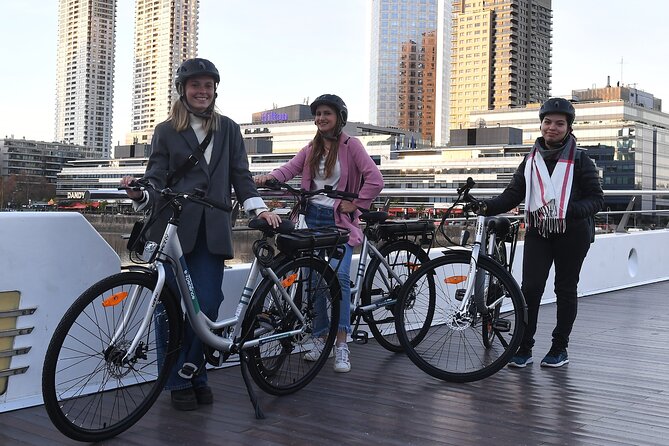
- A northern Buenos Aires sampler: Ride through Puerto Madero, Retiro, Palermo, Recoleta, and central Buenos Aires in one outing.
- A small group of up to nine: The limited size should make it easier to hear the guide and ask questions.
- Food is part of the tour: The price includes alfajores, mate, and a traditional Argentine dish, with choripán listed among the featured foods.
- Several stops are photo and storytelling stops: You see major sights, but most admission fees are not included.
- The route covers a lot of ground: E-bikes make the distance practical, but the schedule is brisk.
- Weather and minimum numbers matter: Poor weather or too few bookings can lead to a new date or a full refund.
Why an e-bike works well in Buenos Aires
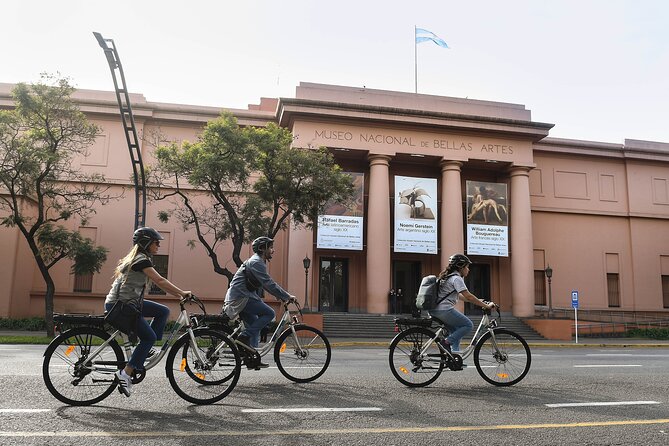
Buenos Aires is too spread out for a comfortable walking tour that covers all these districts. On foot, Puerto Madero, Retiro, Palermo, Recoleta, and the Teatro Colón area would make for a tiring day with plenty of backtracking. The e-bike turns the city into one connected route.
I like this format because you get street-level views without spending the whole day on buses or taxis. You can move from the modern waterfront to old aristocratic neighborhoods, then on to parks, museums, churches, and civic buildings. The electric assistance also helps keep the pace manageable across a route with many separate stops.
The tradeoff is time. Three and a half hours sounds generous, but this route includes at least nine named stops and several additional sights passed along the way. I would treat it as a guided introduction, not as a substitute for a full visit to the National Museum of Fine Arts, Recoleta Cemetery, Teatro Colón, or the Japanese Garden.
The tour begins and ends at Macacha Güemes 351 in Puerto Madero. The meeting point is near public transportation, but hotel pickup and drop-off are not included. Bring your mobile ticket, arrive with enough time to get fitted to the bike, and expect to return to the same spot.
More bike rides around Buenos Aires:
- Bike Tour: Half-Day City Highlights of Buenos Aires
★ 5.0 · 1,083 reviews - Buenos Aires: North or South Buenos Aires Bike Tour
★ 4.7 · 719 reviews - Highlights of BA by Bike – Part one
★ 5.0 · 285 reviews
Puerto Madero begins with tango and modern design
The first formal stop is Puente de la Mujer, the sweeping pedestrian bridge in Puerto Madero. The guide explains the bridge’s construction, its connection to tango, and the way women’s names appear throughout the neighborhood.
This is a useful opening because Puerto Madero can seem almost too new when compared with older Buenos Aires. The bridge gives the guide a chance to explain both the neighborhood’s modern identity and the city’s close ties to tango. You get about 25 minutes here, enough for photographs and a short talk without turning the stop into a long architectural lecture.
From there, the route heads toward the Centro Cultural Kirchner, known as the CCK. The building began as the Central Post Office Palace before becoming a major cultural center. The outside provides an easy lesson in how Buenos Aires has reused grand public buildings for modern cultural life.
Admission to the cultural center is not included, so you should not assume that the bike tour includes an interior visit. The value here is the explanation and the exterior view, not an extended museum stop.
The route also refers to an important city sports institution that began with a connection to boxing and hosted figures such as Carlos Monzón and Ringo Bonavena before earning the name Palacio del Deporte. The supplied schedule does not clearly identify this stop by name, so I would ask the guide to point it out as you pass. It adds a welcome sports angle to a route otherwise heavy on architecture, politics, and culture.
Retiro connects bullrings, British influence, and grand shopping
At Torre Monumental, the guide turns to the origins of Retiro. The story includes the neighborhood’s first bullrings and its link to the English invasions, giving you a different window into Buenos Aires than the usual tango and palace stories.
The tower stop lasts about 20 minutes. Admission is not included, and the stop appears designed for an outside look rather than a climb or interior visit. That is fine for a city overview, but you should set your expectations accordingly.
The route then passes through an exclusive shopping area dating from the period when Buenos Aires aristocracy held great social power. This part of the ride helps explain why Retiro and nearby central districts have such a polished, formal look. I appreciate that the tour does not treat shopping streets as mere commercial zones. Their layout and buildings reflect the city’s old social order.
Another passing point is the oldest institution of higher education in Buenos Aires, one of the country’s largest by student numbers. Presidents and several Nobel Prize winners studied there. It is an efficient way to connect the city’s streets with Argentina’s academic and political life, though the schedule does not give this point a separate timed stop.
Floralis Genérica is the best food break
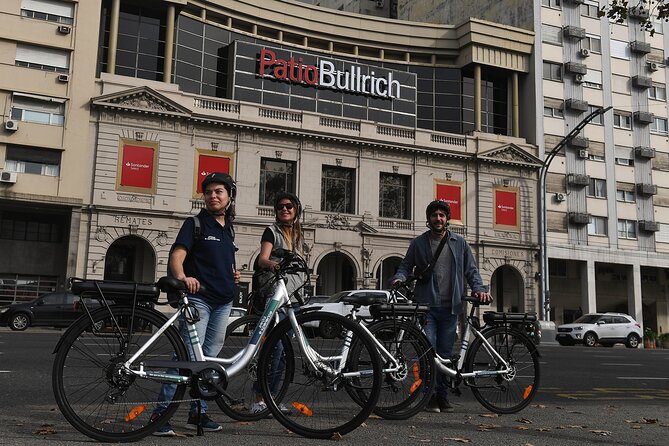
Floralis Genérica is one of the route’s strongest stops. The giant metal flower is a modern Buenos Aires landmark, and the guide covers the donation that made the project possible along with the problems the sculpture has faced over time.
You get about 35 minutes here, which is longer than at several of the architectural stops. That extra time matters because it includes a tasting of classic Argentine sweets and mate, the country’s signature drink. Alfajores are specifically included, and the tour presents mate as part of the country’s everyday culture rather than as a token sample.
I like this pause because it gives you something to do beyond taking a picture. Food and drink can make a city explanation stick, especially when the guide explains how they fit into local life. Mate is also a social custom, so this is a more personal cultural encounter than simply pointing at a monument.
The tour description also lists choripán among the traditional foods included in the experience. At lunch, traditional Argentine products are offered, with the exact dish presented as a classic national specialty. Since the schedule uses both snack and lunch language, I would think of the food as a tasting-style meal rather than a long restaurant lunch.
A few more Buenos Aires trips worth putting side by side
- Local Foodie Adventure in Buenos Aires with Sherpa Food Tours
★ 5.0 · 6,875 reviews - Buenos Aires City Private Tour with Local Guide
★ 5.0 · 3,475 reviews - Buenos Aires Small-Group City Tour
★ 5.0 · 2,226 reviews - Buenos Aires Hop-On Hop-Off Bus, Free Walking Tours & Discounts
★ 4.5 · 2,218 reviews
Palermo adds gardens, football, and open space
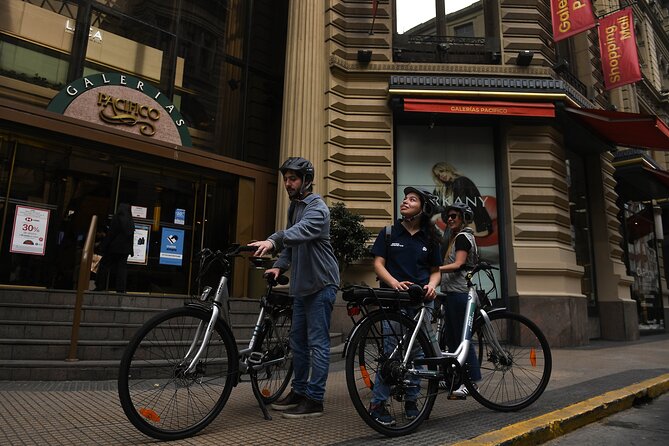
The route continues through Palermo, one of the city’s major green districts. A stop near the Japanese Garden brings in a different side of Buenos Aires. The garden was built in 1967 for the visit of Emperor Akihito and Empress Michiko and is described as the largest Japanese-style garden outside Japan.
The garden is an additional point on the route rather than one of the numbered timed stops. Admission is not listed as included, so you should not count on entering. Even from the route, its presence gives the guide a chance to show how Buenos Aires has incorporated international influences into its parks and public spaces.
At the Planetario Galileo Galilei, the conversation shifts to the Palermo planetarium and the origins of football in Buenos Aires. This pairing may seem unusual, but it makes the stop more memorable. You get astronomy, city development, and sport in one short explanation.
The planetarium stop lasts about 20 minutes, with admission not included. I would see it as a quick outside visit and photo opportunity. If the planetarium is a priority for you, plan a separate visit rather than expecting enough time for a full program.
The route also passes a restaurant and café area that has grown into a major food center, surrounded by parks and attractive views. This is useful for anyone planning later meals in Palermo, though the tour’s own food tasting means you may not be hungry enough to stop there afterward.
Monumento de los Españoles tells Palermo’s origin story
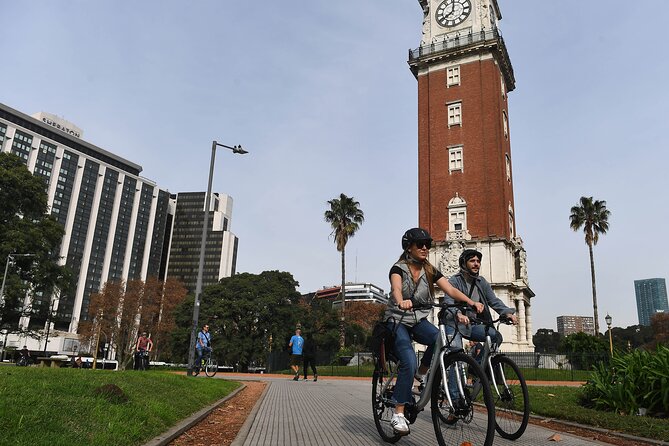
The Monumento de los Españoles receives about 35 minutes, making it another major pause. The guide connects it to the visit of Infanta Isabel at the beginning of the 20th century and then traces Palermo through figures such as Juan Manuel de Rosas and Domingo Faustino Sarmiento.
The story continues into the creation of Parque 3 de Febrero, one of the defining green spaces in this part of the city. This stop is valuable because it ties together politics, public parks, foreign visitors, and the changing identity of Palermo.
I would expect a substantial outdoor explanation here, not admission to a building. The free admission listing refers to the stop itself, while the route’s main value comes from the guide’s context and the chance to see the monument in its wider setting.
Recoleta brings together art, architecture, and memory
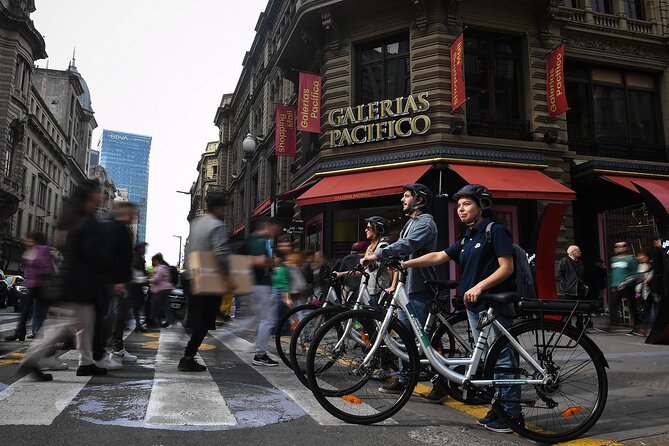
The Biblioteca Nacional is a short 15-minute stop. The guide contrasts the former Unzué Palace with the present brutalist National Library building. That contrast gives you two sharply different ideas of Buenos Aires architecture in a single location: elite domestic grandeur and bold modern concrete.
The route then points out several important Recoleta sights. The National Museum of Fine Arts holds Argentina’s largest collection of Argentine art, along with works by Van Gogh, Picasso, El Greco, and other major European artists. The museum deserves far more time than a bicycle tour can provide, so I would mark it for another day if art is important to you.
You also pass the former convent of the Recollect monks, who gave the neighborhood its name. The building now functions as a cultural center with 27 exhibition rooms, a microcinema, and an auditorium. Again, this is an exterior or passing reference, not a dedicated interior visit.
The Church of Our Lady of Pilar is another key point. It is the second-oldest Catholic temple in Buenos Aires after the Church of San Ignacio, and its construction is tied to the early development of Recoleta. These nearby sights explain why Recoleta feels so different from the newer waterfront at the start of the tour.
Recoleta Cemetery is both a landmark and a lunch stop
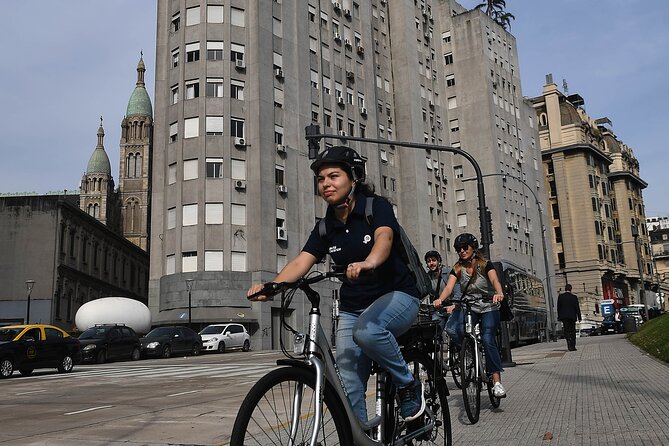
The route’s Recoleta Cemetery stop focuses on the neighborhood’s origins and its direct link to the cemetery’s later establishment. You get about 15 minutes, and admission is not included.
That timing is the clearest limitation of this part of the ride. Recoleta Cemetery is a place where you can easily spend an hour or more studying mausoleums, names, sculpture, and Argentine political history. Fifteen minutes is enough for orientation, a brief exterior look, and a plan for returning independently. It is not enough for a full cemetery visit.
This is also where the tour pauses for lunch, with traditional Argentine products offered. The inclusion of lunch makes the $65 price more reasonable, especially when combined with the mate and alfajor tasting. Still, I would not book this expecting a formal sit-down meal with a long break. The schedule keeps moving.
Teatro Colón finishes the city-center loop
The final named stop is Teatro Colón, one of the world’s major opera houses. The guide explains the building and the nearby area, including its connection to the origins of the Argentine railway and one of the country’s best-known popular revolutions.
You get about 20 minutes here. Admission is not included, so the tour does not replace a guided theater visit or performance. That is not necessarily a problem. The outside setting alone gives you a strong final image of Buenos Aires as a city of grand civic buildings, cultural ambition, and political drama.
The route ends back at Macacha Güemes 351. Since the tour begins in Puerto Madero and finishes there, you should plan any later activity with that return point in mind.
What the $65 price really covers
At $65 per person, I see fair value if you want transport, orientation, and food in one package. The bicycle, helmet, lock, alfajores, mate, and lunch are included, and the small group should make the guide’s commentary easier to follow.
The value drops if you mainly want entrance visits. Teatro Colón, the planetarium, the CCK, Recoleta Cemetery, and other cultural sites do not come with admission. You are paying for a guided route through the city, not a collection of tickets.
The ride also saves you the cost and effort of arranging transport between five major districts. For a first day in Buenos Aires, that can be worthwhile. I would use it early in your stay, then return on foot to the places that catch your interest.
The tour is suitable for most participants according to the provided information, but you should be comfortable riding a bicycle for roughly three and a half hours. The electric assistance helps with effort, yet it does not turn the outing into a passive sightseeing bus.
The reliability question deserves attention
The clearest warning is a report of a no-show at the pickup time after the guide became ill. The owner was contacted directly, but no notification had arrived before the scheduled start. That is a serious service problem, even though it may have been an isolated event.
I would confirm the tour close to departure and make sure the meeting instructions and provider contact details are saved on your phone. Do not schedule a nonrefundable dinner, airport transfer, or timed attraction immediately afterward.
The overall score is based on only two published ratings, so it is not enough evidence to judge the usual operating standard with confidence. One account praised the comfortable e-bikes, the city coverage, and the guide’s information. Those are meaningful strengths, but the small sample also means you should book with a little flexibility.
Who should book this northern circuit ride
I would recommend it to first-time visitors who want a broad look at Buenos Aires without spending the day underground or in taxis. It is also a good fit if you enjoy architecture, public monuments, neighborhood stories, and small food tastings more than long museum visits.
The tour suits couples, friends, and independent visitors who like an active morning or afternoon. A maximum of nine people is a real advantage for anyone who prefers a quieter outing to a large coach group.
I would choose something else if your main goals are a full Teatro Colón interior tour, serious museum time, or a detailed visit to Recoleta Cemetery. The route touches all of those areas, but its purpose is to connect them.
You can cancel free of charge up to 24 hours before the start time. Changes made inside that window are not accepted, and no refund is provided for late cancellation. Bad weather or failure to reach the minimum number of bookings can lead to a new date or a full refund.
FAQ
Where does the e-bike tour begin and end?
The tour begins at Macacha Güemes 351 in Buenos Aires and returns to the same meeting point.
How long does the tour last?
The experience lasts approximately 3 hours and 30 minutes.
How many people can join the tour?
The maximum group size is nine participants.
Is lunch included?
Yes. A tasting of a classic Argentine dish is included, along with a traditional snack and mate.
Are attraction admission fees included?
No. Admission to Teatro Colón and other paid attractions is not included in the tour price.
What happens if the weather is poor?
The experience requires good weather. If it is canceled because of poor weather, you will be offered another date or a full refund.
Should you book it?
I would book this tour if you want a compact, active introduction to northern Buenos Aires and value the combination of landmarks, local food, and a small group. The comfortable e-bikes, wide route, mate tasting, alfajores, and included lunch give the outing more substance than a basic city ride.
I would skip it if you need guaranteed operational precision or want to spend real time inside the major attractions. The no-show report is worth taking seriously, so confirm close to the start and keep your schedule flexible. For most first-time visitors, though, this is a useful way to see how Puerto Madero, Retiro, Palermo, Recoleta, and central Buenos Aires fit together before exploring your favorite corners at a slower pace.
Recently added around Buenos Aires
- Photo Session in Buenos Aires★ 5.0 · 26 reviews
- Your Personal Photographer in Buenos Aires★ 5.0 · 24 reviews
- Discover Buenos Aires’ independent art scene — Ticket included★ 5.0 · 30 reviews
- Your Private Photographer in Buenos Aires★ 5.0 · 4 reviews
- Yerba Mate Workshop – Learn to Drink Mate like a Local!★ 5.0 · 11 reviews
- Taste of Tradition: Yerba Mate & Alfajores Experience★ 4.0 · 5 reviews
- Wine tasting in OASIS Palermo★ 5.0 · 2 reviews
- Day Tour Classic★ 3.5 · 35 reviews
Cycling Tours, compared.
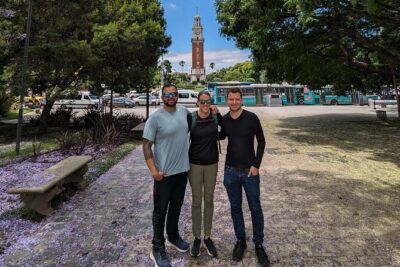
Bike Tour: Half-Day City Highlights of Buenos Aires
Read our review →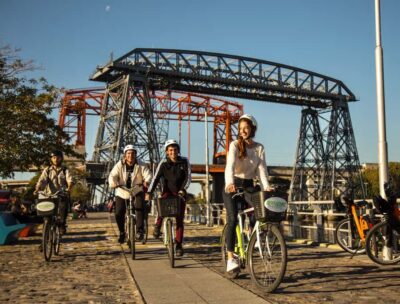
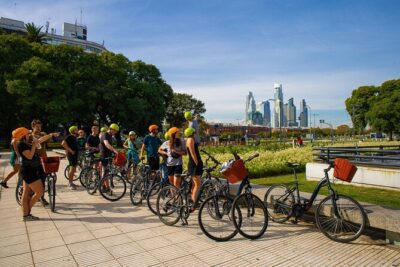
Ultimate Buenos Aires Bike Tour: All-Day All-Inclusive All-City
Read our review →
Full Day Bike Tour in BA Foodie and Cultural Immersion Max 6 ppl
Read our review →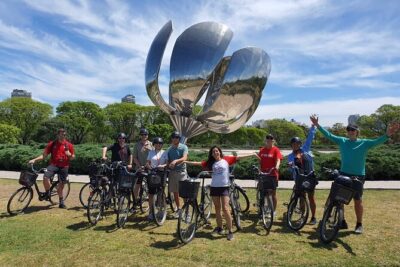
Half-Day Recoleta and Palermo Bike Tour in Buenos Aires
Read our review →
Browse the lists this tour appears in