Reviewed · TOURS
2 Hour Tour in Buenos Aires Parisina
Buenos Aires wears Europe well. This private walk shows you the city’s Parisian side through grand palaces, diplomatic mansions, old clubs, and elegant squares in Retiro. I like the small private format, which lets your group focus on the guide rather than a crowd, and I like the route’s clear architectural theme. You also get a look inside the first floor and rear garden of Palacio Paz, plus 30 minutes at the Museo de Arte Hispanoamericano Isaac Fernández Blanco. The main drawback is timing: the listed stops add up to more than two hours if explored at an unhurried pace, and one published comment describes the walk as taking three hours.
The experience costs $42.91 per person and is offered in English with a mobile ticket. The guide’s style appears to be a major strength, with praise for energy, patience, and passion. Still, this is primarily an architecture and city-history walk, so you should not book it expecting a broad tour of Buenos Aires’ neighborhoods, food, or major museums.
In This Review
- Key points about Buenos Aires Parisina
- Why this walk reveals Buenos Aires’ European side
- Starting at Plaza General San Martín
- Palacio Paz and Palacio San Martín
- Estrugamou, Sofitel, and Bencich
- Thirty minutes at the Fernández Blanco Museum
- A Catalan square and two diplomatic palaces
- Jockey Club and Carlos Pellegrini Square
- What you get for $42.91
- Timing, walking, and practical planning
- Who will get the most from Buenos Aires Parisina
- Should you book this private Retiro walk?
- FAQ
- How long is the Buenos Aires Parisina tour?
- How much does the tour cost?
- Is the tour private?
- What language is offered?
- Where does the tour begin?
- Where does the tour end?
- Is the museum admission included?
- How much time is spent at the Fernández Blanco Museum?
- Is the tour near public transportation?
- Can I cancel for a full refund?
Key points about Buenos Aires Parisina
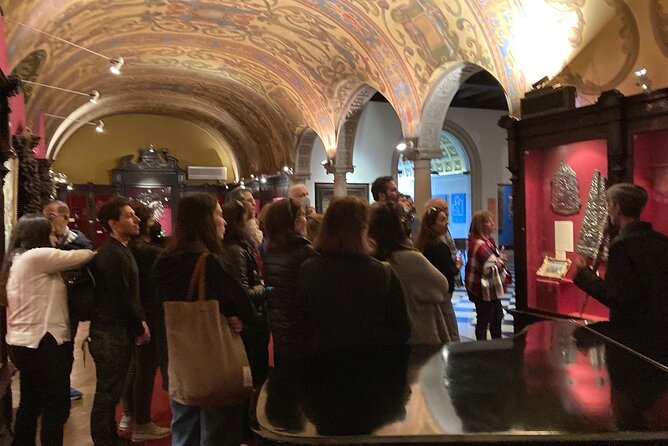
- A private Retiro walk: Only your group takes part, giving you a more personal tour than a large public outing.
- Palacio Paz access: You visit the first floor and rear park of this impressive former residence, now associated with the Military Circle.
- A concentrated museum visit: The Museo de Arte Hispanoamericano Isaac Fernández Blanco receives the longest stop, about 30 minutes.
- Parisian-style architecture: The route links palaces, embassies, residential buildings, and formal squares in Buenos Aires’ Retiro area.
- A short central-city route: You begin at Plaza General San Martín and finish at Plazoleta Carlos Pellegrini.
- Strong guide praise: The clearest compliments focus on the guide’s energy, patience, and enthusiasm.
Why this walk reveals Buenos Aires’ European side
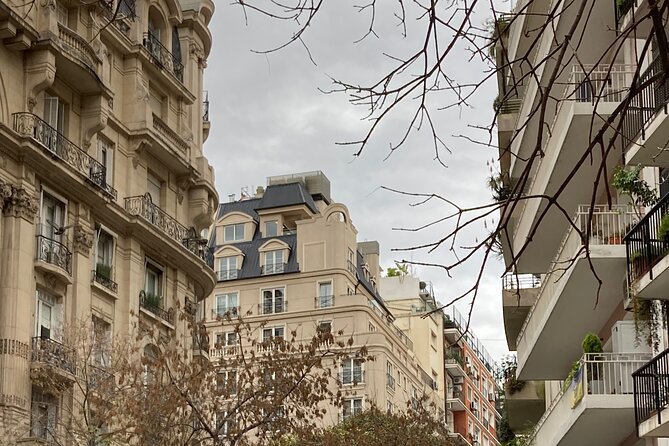
Buenos Aires Parisina is built around a simple idea: Buenos Aires has an impressive collection of European-style buildings, and the best way to understand them is to see them together.
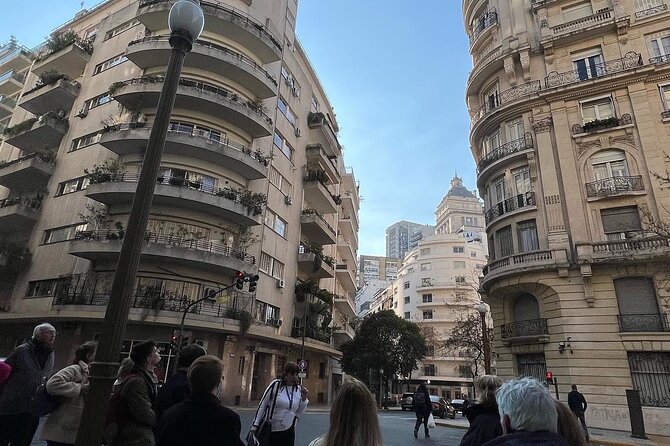
You move through the area around Plaza General San Martín, Retiro, and Avenida Alvear. This is one of the city’s most polished districts, where former family mansions, diplomatic residences, private clubs, hotels, and apartment buildings share the same streets. The route helps you connect the buildings to the families, institutions, and immigrant communities that shaped this part of the capital.
I like this approach because it avoids treating architecture as a series of isolated façades. Palacio San Martín belonged to the Anchorena family before the Argentine state acquired it. Palacio Estrugamou shows how grand residential construction continued into the 1920s. The Bencich building reflects the work of builders from Trieste, Italy. Each stop adds another piece to the story of how Buenos Aires adopted and adapted European design.
The tour is also compact. You are not spending half a day crossing the city by bus. Instead, you remain in one central area and see a string of important sites on foot. That makes it useful early in a Buenos Aires stay, when you want to get your bearings around Retiro and Recoleta.
A few more Buenos Aires trips worth putting side by side
- Local Foodie Adventure in Buenos Aires with Sherpa Food Tours
★ 5.0 · 6,875 reviews - Buenos Aires City Private Tour with Local Guide
★ 5.0 · 3,475 reviews - Buenos Aires Small-Group City Tour
★ 5.0 · 2,226 reviews
Starting at Plaza General San Martín
The meeting point is Plaza General San Martín, Buenos Aires, C1006. This central square gives the walk a fitting start. It is surrounded by some of the city’s finest institutional and residential architecture, so you begin with the grand setting rather than spending the first part of the tour getting there.
The route ends at Plazoleta Carlos Pellegrini, at Avenida Alvear 1350. Because the tour has different start and end points, you should plan your next stop accordingly. The finish is still in a central part of the city, but it is not the same place where you began.
The experience is listed at approximately two hours. The stop times supplied for the route total about 105 minutes before allowing for walking between buildings, explanations, and the two small square stops. One published account describes the walk as lasting three hours, so I would leave extra time rather than schedule a tight lunch reservation immediately afterward.
Palacio Paz and Palacio San Martín
The first stop is Palacio Paz, also known as the Circulo Militar. You visit only the first floor and the rear park, with about 15 minutes allocated to the site. That limitation matters. You are not getting a full tour of every room, but the visit still gives you a direct look inside one of the district’s grand residences.
A short interior visit can be more useful than simply viewing a façade from the pavement. It lets you see how the building’s formal character continues indoors, while the rear park gives you a different angle on the property. Since admission is included, this is one of the better-value moments in the walk.
Next comes Palacio San Martín, about ten minutes away in the schedule. The palace once belonged to the Anchorena family and was later acquired by the Argentine state. Its academic style reflects the formal taste of Buenos Aires’ wealthy families and public institutions.
Ten minutes is enough for a focused explanation and exterior viewing, but not for a long architectural study. If you like ornate façades, family histories, and the way private mansions became public buildings, this stop will be rewarding. If you prefer to enter every building, you may find the pace restrictive.
Estrugamou, Sofitel, and Bencich
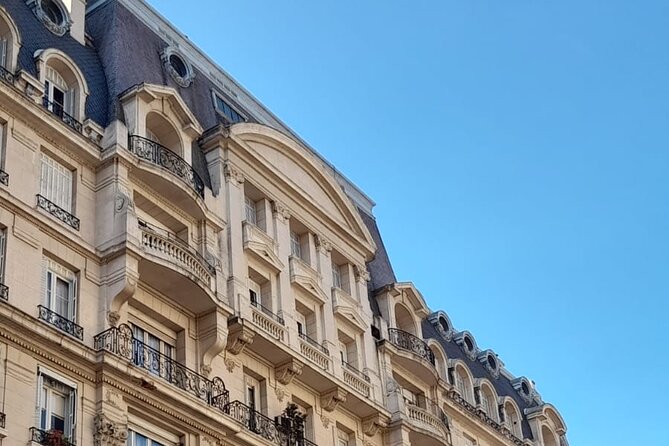
Palacio Estrugamou is a residential building constructed in 1924. It is located in Retiro and represents the stately residential architecture associated with the middle decades of the 20th century.
This stop is a reminder that Buenos Aires’ grand style is not limited to palaces. Some of the city’s most elegant buildings were created as apartment houses. Estrugamou shows how wealthy urban living was packaged in a large residential structure, allowing multiple households to enjoy a prestigious address and formal design.
The schedule gives it ten minutes. That should suit you if the guide’s explanation is the main attraction, but you will want your camera ready before arriving so you do not lose time examining details.
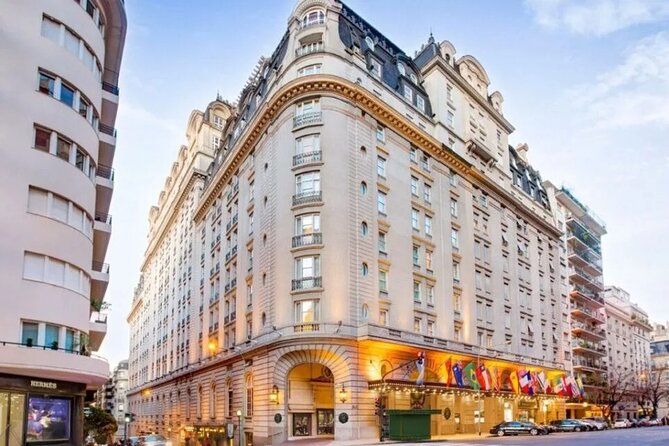
The next stop is the Sofitel Buenos Aires Recoleta, a building once connected to the Argentine Navigation Company Nicolás Milhanovich. It occupies an entire block and is marked by a lighthouse tower. That unusual feature gives the building a memorable profile and breaks up the usual pattern of domes, columns, and mansard roofs.
You spend about five minutes here. It is a quick look, but the lighthouse tower makes the stop worthwhile. It also shows how commercial and transportation interests helped shape the city’s prestigious architecture.
Edificio Bencich follows, with about ten minutes. It is one of several residential buildings built by Bencich Hermanos, builders born in Trieste, Italy. This detail adds an immigrant dimension to the tour. Buenos Aires’ European appearance was not created by one country alone. Italian, French, Spanish, and other influences came together through families, architects, builders, and institutions.
I find this part of the route especially useful because it moves beyond the easy label of Parisian Buenos Aires. The buildings may suggest Paris, but the people behind them came from different places, and their work reflects a much broader European connection.
Still Argentina, but a completely different sort of afternoon:
- Buenos Aires Hop-On Hop-Off Bus, Free Walking Tours & Discounts
★ 4.5 · 2,218 reviews - Buenos Aires: Piazzolla Tango Show with Optional Dinner
★ 4.4 · 2,122 reviews - Buenos Aires: City Highlights Guided Tour with Transfer
★ 4.7 · 1,946 reviews - Buenos Aires: Hop-On Hop-Off City Bus Tour
★ 4.2 · 1,855 reviews
Thirty minutes at the Fernández Blanco Museum
The longest stop is the Museo de Arte Hispanoamericano Isaac Fernández Blanco, with about 30 minutes set aside for the visit.
The museum’s collection covers two distinct periods of Latin American and Argentine creative development. One part focuses on the colonial world at the Palacio Noel site, while the institution also presents art from the 19th and 20th centuries.
This is more than a quick photograph outside a handsome building. You get time to look at objects and art connected to the colonial period and later Argentine culture. Thirty minutes is not enough to see every display in depth, but it gives the tour a welcome change of pace after several architectural exteriors.
I like the museum stop because it adds cultural material to an architecture-heavy morning. Palaces tell you how powerful families lived. Art and historical objects show how ideas, faith, design, and daily life developed across different periods.
Keep your expectations practical. This is one portion of a larger walking route, not a dedicated museum visit. If the museum is your main reason for booking, you may want to return separately and give it more time. If you want a well-chosen introduction, the half-hour stop works much better.
A Catalan square and two diplomatic palaces
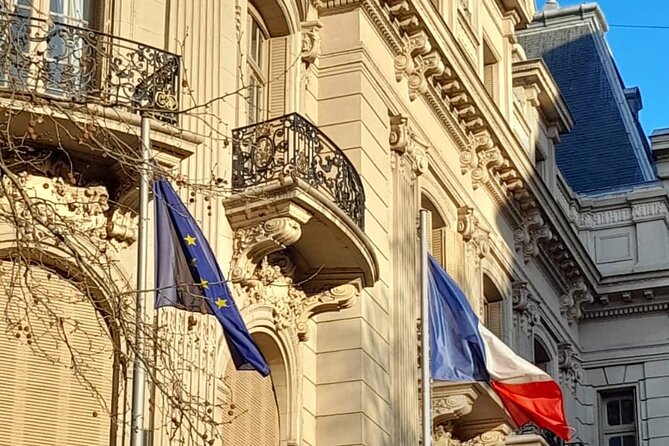
The route also includes a square donated by Catalans who entered Argentina during the 20th century. The supplied details do not give the square’s name or a precise stop duration, but its presence adds a useful human angle to the walk.
This small detail helps explain why the architecture of Buenos Aires cannot be reduced to French influence. Immigrant communities shaped the city through businesses, associations, donations, and public projects. A square connected to Catalan immigrants gives you a glimpse of that civic contribution.
The French Embassy comes next. It occupies the Ortiz Basualdo Palace, and the current ambassador is Romain Nadal, who has held the post since 2023. The stop lasts about ten minutes.
You should expect to view the embassy from outside unless the guide tells you otherwise. Diplomatic buildings are working institutions, so the value here is the setting, architecture, and political context rather than a full interior visit. The Ortiz Basualdo Palace fits naturally into this route because it links French cultural influence with Argentina’s diplomatic life.
The Brazilian Embassy is another ten-minute stop. The building was once owned by Mr. Pereda, an Argentine landowner, and later became the Brazilian Embassy. The ambassador and family currently live there.
This stop offers another example of a private residence becoming a diplomatic property. It also gives the tour a South American counterpoint to its European references. Buenos Aires may be called Parisian in appearance, but its regional connections matter just as much.
Because these are embassy buildings, you should be prepared for a mainly exterior experience. The guide’s explanation is important here. Without context, an embassy can look like another mansion. With context, you can see how elite residences, national identity, and foreign relations overlap in the same district.
Jockey Club and Carlos Pellegrini Square
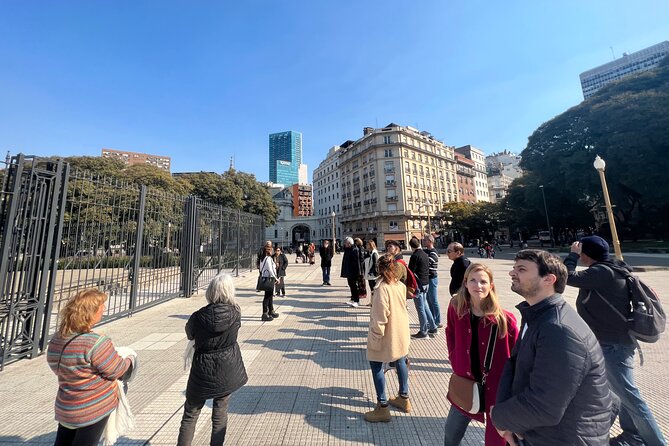
The Jockey Club receives about five minutes. It was an important club of the 1880 generation, and its members created the San Isidro racecourse.
This is a brief but useful stop because it introduces the social world behind the buildings. The generation associated with the Jockey Club helped shape Argentina’s political, economic, and cultural life. The racecourse connection shows how private clubs were tied to public institutions and leisure culture.
The walk finishes at Plazoleta Carlos Pellegrini on Avenida Alvear. The square honors Carlos Pellegrini, a former president of Argentina who helped rescue the country’s finances in two years. He belonged to the generation of the 1880s, the same broad social and political world connected to the Jockey Club and the grand residences along the route.
Ending here gives the tour a clear point. You move from architecture to the people and institutions that commissioned it, then finish with a figure linked to Argentina’s political development. It is a better ending than simply stopping outside the last building.
What you get for $42.91
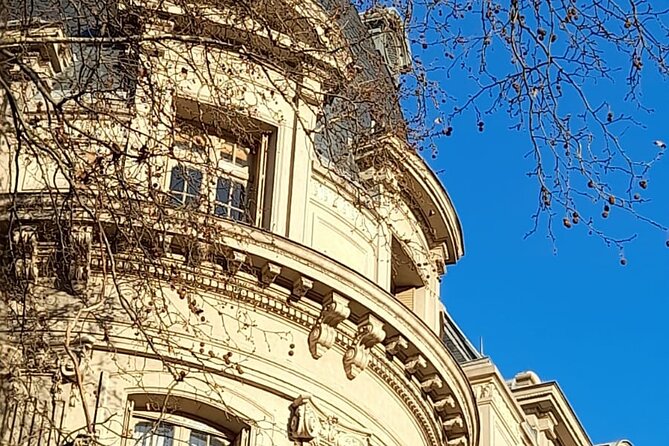
At $42.91 per person, the price makes the most sense if you value a private guide and a tightly focused route. You are paying for interpretation, not just access. The listed admissions are free, so the central value comes from the guide’s explanations, local knowledge, route planning, and ability to connect the buildings.
For a solo visitor, the cost is more noticeable. For a couple, family, or small group, the private format can feel more reasonable because only your party participates. You avoid a large group and have a better chance of asking questions about a building, an immigrant community, or Argentine politics.
The two strongest comments about the experience praise the guide’s energy, patience, and passion. One describes seeing Buenos Aires’ European heart in only a few hours. Another calls it an amazing walk through the city’s Parisian atmosphere and places the duration closer to three hours.
That enthusiasm is worth noting, but the small number of published ratings means you should keep your expectations measured. The available rating is 5 from two reviews, which is encouraging but not a large sample. I would book it for the format and subject matter, not solely for the rating.
Timing, walking, and practical planning
The tour is offered in English and includes a mobile ticket. It begins at Plaza General San Martín and ends at Plazoleta Carlos Pellegrini, so you need to account for the one-way route when planning your day.
The tour is near public transportation, which makes reaching the start point easier. Most people can participate, and service animals are allowed. The details do not specify the walking distance, surface conditions, or number of stairs, so you should ask the provider if those issues matter for your group.
The schedule moves quickly at several stops. Palacio Paz receives 15 minutes, Palacio San Martín ten, Palacio Estrugamou ten, the Sofitel building five, Bencich ten, each embassy ten, and the Jockey Club five. The museum gets the most time at 30 minutes.
I would wear comfortable shoes and keep the morning flexible. The route is not a race, but the short stops leave little room for long photo sessions at every building. If you are an architecture enthusiast, you may want to photograph details as you walk and return later to the buildings that catch your eye.
Free cancellation is available if you cancel at least 24 hours before the local start time. Changes or cancellations made inside that window are not accepted for a refund, so check your plans before the deadline.
Who will get the most from Buenos Aires Parisina
I would recommend this walk to you if you enjoy architecture, city history, diplomatic buildings, grand residences, and the social story behind Buenos Aires’ most formal districts.
It also suits a first visit. The route gives you an introduction to Retiro and nearby Recoleta without asking you to spend a full day on a huge city tour. The private format is useful if you want to ask questions or keep the pace suited to your group.
You may want something else if your priority is tango, markets, cafés, street art, football, or everyday neighborhood life. This is a polished architectural circuit, not a general introduction to every side of Buenos Aires.
I would also think twice if you need a precisely timed two-hour activity. The stop schedule suggests a longer outing once walking and explanations are included, and one account places the experience at three hours. Leave breathing room in your plans.
Should you book this private Retiro walk?
Book it if you want a focused look at Buenos Aires’ palaces, embassies, private clubs, and grand apartment buildings, especially with your own group and an English-speaking guide. Palacio Paz, the Fernández Blanco Museum, and the sequence of former family residences give the walk enough variety to avoid becoming a simple façade tour.
Skip it if you want extensive interior access or a broad overview of the whole city. The route is narrow by design, and several stops are short exterior visits.
For the right audience, $42.91 is a fair price for a private, carefully themed introduction to the European side of Buenos Aires. Just allow more than two hours, wear comfortable shoes, and treat the tour as a starting point for returning to the buildings and museum that interest you most.
FAQ
How long is the Buenos Aires Parisina tour?
The tour is listed as approximately two hours. The scheduled stop times total about 105 minutes before walking and explanations, and one published comment describes the experience as taking three hours.
How much does the tour cost?
The price is $42.91 per person.
Is the tour private?
Yes. Only your group participates in the activity.
What language is offered?
The tour is offered in English.
Where does the tour begin?
The meeting point is Plaza General San Martín in Buenos Aires, postal code C1006.
Where does the tour end?
The tour ends at Plazoleta Carlos Pellegrini, Avenida Alvear 1350, postal code C1014 AAN.
Is the museum admission included?
Admission tickets are listed as free for the Museo de Arte Hispanoamericano Isaac Fernández Blanco and the other stops.
How much time is spent at the Fernández Blanco Museum?
The scheduled visit to the museum is about 30 minutes.
Is the tour near public transportation?
Yes. The experience information states that it is near public transportation.
Can I cancel for a full refund?
Yes, if you cancel at least 24 hours before the experience start time. Cancellations or changes made less than 24 hours before the start are not accepted for a refund.
Recently added around Buenos Aires
- Photo Session in Buenos Aires★ 5.0 · 26 reviews
- Your Personal Photographer in Buenos Aires★ 5.0 · 24 reviews
- Discover Buenos Aires’ independent art scene — Ticket included★ 5.0 · 30 reviews
- Your Private Photographer in Buenos Aires★ 5.0 · 4 reviews
- Yerba Mate Workshop – Learn to Drink Mate like a Local!★ 5.0 · 11 reviews
- Taste of Tradition: Yerba Mate & Alfajores Experience★ 4.0 · 5 reviews
- Wine tasting in OASIS Palermo★ 5.0 · 2 reviews
- Day Tour Classic★ 3.5 · 35 reviews
Tours, compared.
Local Foodie Adventure in Buenos Aires with Sherpa Food Tours
Read our review →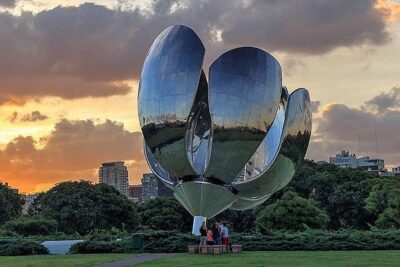
Buenos Aires City Private Tour with Local Guide
Read our review →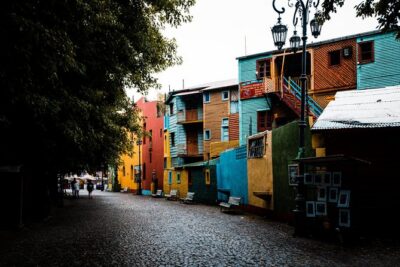
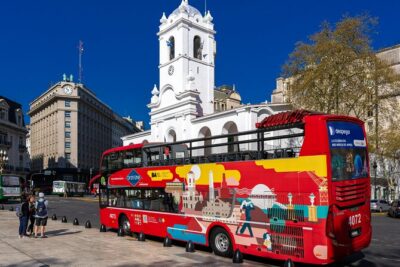
Buenos Aires Hop-On Hop-Off Bus, Free Walking Tours & Discounts
Read our review →