
Reviewed · CYCLING TOURS
Private Off the Beaten Path: Hidden Urban Art Bike Tour
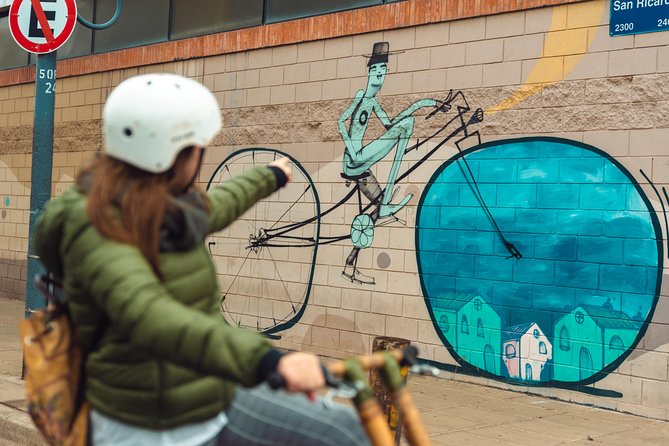
Street art turns a bike ride into city school. This private four-hour tour carries you from San Telmo into La Boca and Barracas, where murals open windows onto soccer, politics, neighborhood life, and Argentine identity. I like the access to working-class streets most visitors miss, and I like the relaxed rhythm: ride a while, stop for art, walk around, sip mate, and continue. The main catch is simple: you need to feel comfortable cycling in city traffic and on less touristy streets.
The tour costs $115 per person, which is a serious price for a half-day outing, but the private format helps explain it. You get a dedicated English or Spanish-speaking guide, bike, helmet, water, snacks, and a coffee or mate stop. Guide personalities matter here. Past tours have been led by people such as Raymond and Daniel, both praised for linking the artwork to local history, soccer, politics, and daily life. Bikes may show some wear, so do not expect a polished racing machine.
In This Review
- Key points to know before you pedal off
- Why a bicycle works so well in southern Buenos Aires
- Calle Lanín: a quiet street changed by art
- Barracas and Alfredo Segatori’s enormous mural
- Caminito beyond the postcard
- La Boca’s murals, collectives, and local stories
- Design collectives and the city’s creative side
- What the $115 price really buys
- Timing, fitness, and what to bring
- Who should book this art ride?
- Should you book the Hidden Urban Art Bike Tour?
- FAQ
- How long does the Hidden Urban Art Bike Tour last?
- Where does the tour begin?
- Where does the tour end?
- Is the tour private?
- What neighborhoods does the route visit?
- What is included in the tour price?
- Is an e-bike available?
- Do I need to be fit to take the tour?
- What happens if the weather is bad?
Key points to know before you pedal off
- You ride from San Telmo to La Boca and Barracas: The route connects several southern neighborhoods in one outing, mostly away from the standard sightseeing circuit.
- The art is the guide to the city: Murals and mosaics lead into stories about working-class communities, religion, football, politics, and local artists.
- Calle Lanín is a major highlight: Marino Santa Maria helped transform a once-drab street into a colorful art corridor later recognized by UNESCO as a site of cultural interest.
- Barracas has large-scale work: You see Alfredo Segatori’s El Regreso de Quinquela, spread across three buildings and described as the world’s largest street mural.
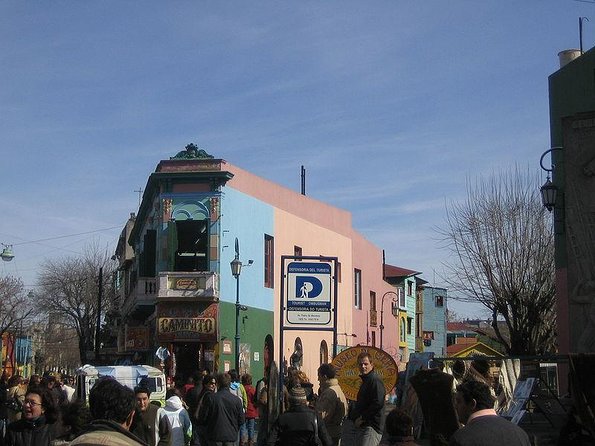
- Caminito gets a different treatment: You learn why this famous strip became a colorful Buenos Aires landmark, then see art beyond the usual postcard view.
- The tour is private and active: Only your group participates, but you need moderate fitness and urban cycling confidence.
Why a bicycle works so well in southern Buenos Aires
San Telmo is the starting point, at Balcarce 1016. You meet your guide in the early afternoon, receive a bike and helmet, and get a short orientation before setting off. The opening portion is not wasted time. Your guide explains how the ride works, offers urban cycling advice, and previews the route.
A bicycle gives you a useful middle ground. You cover more ground than on foot, but you can still stop quickly when a painted wall or small side street catches your eye. A bus would carry you between neighborhoods, but it would not let you pause beside a stencil, turn down a quiet lane, or walk around a mosaic passage.
The route is not built around grand monuments. It moves through backstreets and ordinary city corridors, with about eight stops where you can leave the bike and look closely. That matters because street art often rewards a few minutes on foot. You can see layers of paint, small details, signatures, and the way a work fits its building.
This is also a cultural tour disguised as an art tour. Your guide may use one mural to explain a football rivalry, a political message, or a neighborhood tradition. That broader approach is one reason the experience earns such strong marks. You are not simply collecting photographs of pretty walls.
More Private Tours in Buenos Aires
- Buenos Aires City Private Tour with Local Guide
★ 5.0 · 3,475 reviews - Private Airport Transfer In or Out : Ezeiza (EZE) – Buenos Aires
★ 5.0 · 548 reviews - Private Full-Day Iguazu Falls Tour with Airfare from Buenos Aires
★ 4.5 · 387 reviews
Calle Lanín: a quiet street changed by art
Calle Lanín is one of the most memorable stops because its story is as important as its appearance. The street was once described as grey and nearly lifeless. Artist Marino Santa Maria helped bring it back to life with painted façades and decorative treatment, turning an ordinary lane into a local art statement.
The stop lasts about 15 minutes, which is enough for a walk and explanation but not a long gallery visit. Look closely rather than rushing to take one wide photograph. The appeal is in the details across the façades and in the way a whole street, rather than a single wall, becomes the artwork.
The street has been listed by UNESCO as a site of cultural interest. That designation gives the place added weight, but the setting remains low-key. You do not arrive at a grand museum with labels and a gift shop. You see art integrated into a residential neighborhood.
For me, this is exactly the sort of place the tour handles well. It shows how local creativity can change the way people see a street without turning the area into a formal attraction. It also gives you a useful contrast with Caminito, where the color and tourist attention are much more obvious.
Barracas and Alfredo Segatori’s enormous mural
The route continues into Barracas, another southern neighborhood with a strong working-class character. Here you see El Regreso de Quinquela, a huge mural by Alfredo Segatori, also known as Pelado.
The work stretches across three buildings. It was once described as the longest mural painted by one person and is now recognized as the longest in Argentina. The scale is the first thing you notice, but your guide’s explanation helps you read the work rather than simply admire its size.
Barracas also brings you closer to Buenos Aires’s contemporary art and design scene. You may see a collaborative mural connected with the Styles Street Art Convention, along with works by artists including Pum Pum, Mart, Pol Corona, and Martin Ron. The range is useful. Some pieces are decorative, some carry a direct message, and others show technical skill on a very large scale.
Pasaje Lanín and Segatori’s mural are different kinds of experiences. One is intimate and spread through a small street. The other is broad, bold, and impossible to take in from one glance. Together they show why this tour is better suited to anyone curious about how public art works in a city, not only to dedicated graffiti fans.
Caminito beyond the postcard
Caminito is the best-known stop on the route, and it can feel much more tourist-focused than the other neighborhoods. Its painted buildings and strong connection to La Boca make it one of Buenos Aires’s most photographed places.
The tour gives you context for how Caminito became such a colorful city landmark. You also get a Stealth Stencil stop, a more playful way to think about how street artists work in public space. The visit lasts about an hour and a half, making it the longest listed stop.
That extra time helps you look beyond the obvious colors. Your guide points out nearby murals and explains the local meaning behind the art. You also sample mate, the herbal drink that is part of everyday Argentine culture. The drink is included, along with bottled water, snacks, and coffee or tea.
Caminito is not the reason to book this tour by itself. You can visit it without a bike. Its value here is that it appears within a larger route that places the famous strip beside less familiar streets in La Boca and Barracas. You get the iconic view, then gain a better sense of the neighborhood around it.
Keep your expectations realistic. The tour does not turn Caminito into an empty secret corner. It is a well-known part of Buenos Aires. The quieter and more revealing sections come before and after it.
More bike rides around Buenos Aires:
- Bike Tour: Half-Day City Highlights of Buenos Aires
★ 5.0 · 1,083 reviews - Buenos Aires: North or South Buenos Aires Bike Tour
★ 4.7 · 719 reviews - Highlights of BA by Bike – Part one
★ 5.0 · 285 reviews - Ultimate Buenos Aires Bike Tour: All-Day All-Inclusive All-City
★ 5.0 · 207 reviews
La Boca’s murals, collectives, and local stories
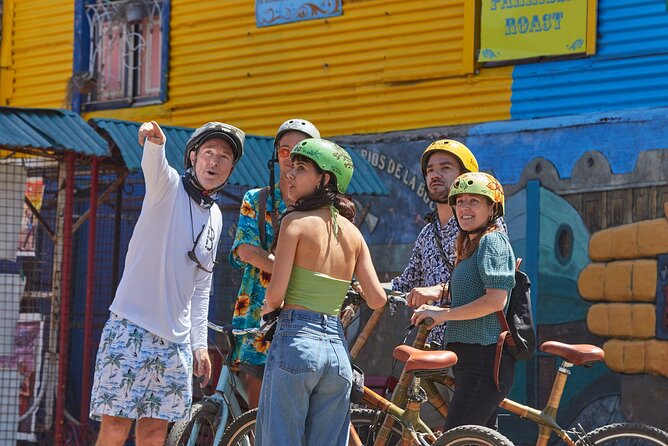
The La Boca section includes several murals and works connected with the COLOR BA festival. The area is historically Italian and working class, and it is also closely linked with Boca Juniors football club. Those connections give the street art plenty of material.
Creative groups such as Red Sudakas and Triangulo Dorado appear along the route. Your guide explains how Argentine street art developed and how artists use walls to speak about community life, identity, and public issues.
This is where a strong guide makes a real difference. A newer guide may know the material well but present it in a less polished way. An experienced guide such as Raymond or Daniel can turn a ride into a wide-ranging conversation, with topics reaching from Argentine politics to religion and the psychology of looking at art.
You should allow room for discussion. The tour is not a timed parade from one wall to the next. The pace includes breaks to walk, take photographs, and talk. If you prefer a quick list of landmarks with little explanation, you may find it slower than expected. If you enjoy asking questions, the private format gives you space to shape the conversation.
The safety question deserves a practical answer. The route includes backstreets as well as busier thoroughfares, and the company specifically asks for comfort with urban riding and non-touristy areas. The experience has been described as feeling safe, but you still need to pay attention, follow your guide, and ride within your ability.
Design collectives and the city’s creative side
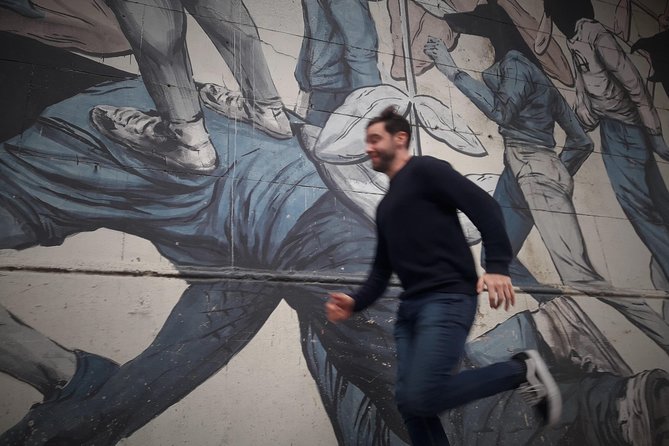
The tour is not limited to outdoor walls. You also visit parts of Buenos Aires’s contemporary design district, including the Metropolitan Design Center and the Cooperativa Vieytes.
The Metropolitan Design Center represents the city’s more organized design culture. It gives the art tour a useful change of pace, moving from informal street work to a place focused on creative practice and design.
Cooperativa Vieytes occupies a former ice cream factory. The building’s earlier use and its new collective identity make it an interesting stop, while the symbolic mural adds another layer to the visit. This is the sort of detail you could easily miss on a standard neighborhood walk.
These stops also explain the tour’s name. You are not only looking for painted walls. You are seeing how artists and designers use old industrial spaces, shared studios, public buildings, and neighborhood streets.
The route offers no promise of a formal studio visit every time, so keep that part flexible. You may see a collective space and learn about its role rather than meet an artist. One particularly good guide may have local connections that add a personal encounter, but that should be treated as a pleasant possibility, not a guaranteed feature.
What the $115 price really buys
At $115 per person, this tour costs more than a basic group bike ride. The value comes from the private setting and the amount of guiding rather than from luxury equipment.
Your price includes:
- A bicycle and helmet
- An English or Spanish-speaking guide
- Bottled water
- Snacks
- Coffee or tea mate
- Local taxes
An e-bike is available for an additional fee. That could be worthwhile if you are unsure about managing four hours of riding, though the supplied information does not specify the extra charge or how many e-bikes are available.
I would view the tour as good value for someone who wants one focused half-day activity and personal conversation. You see several neighborhoods, receive cultural interpretation, and get practical suggestions for the rest of your Buenos Aires stay. One strong benefit of booking it early in your visit is that your guide may point you toward places and activities worth exploring later.
The private format matters more than it might at first seem. You can ask about a particular artist, linger at a mural, or adjust the pace within reason. A group tour may be cheaper, but it would give you less control over those choices.
The bikes are the weak spot. They do the job, but maintenance may not be perfect. Bring a practical attitude and judge the tour for its access and guiding, not for high-end cycling gear.
Timing, fitness, and what to bring
The outing lasts about four hours and operates in all weather conditions. Dress for the forecast, since much of the experience takes place outside and the tour does not simply move from one indoor attraction to another.
You need moderate physical fitness. The ride is described as manageable, but this is still a half-day on a bicycle, with city riding and stops in areas away from the main tourist routes. If cycling in traffic makes you tense, this may not be the right activity.
I would wear comfortable clothes and shoes, bring sun protection when needed, and leave room in your schedule after the tour. You return to San Telmo, but a four-hour ride with frequent stops can leave you ready for a quiet meal.
The meeting point is easy to identify: Balcarce 1016 in San Telmo. The tour ends at the same place, which simplifies your plans. It is near public transportation, and service animals are allowed.
Cancellation is flexible if your plans change early. You can receive a full refund by canceling at least 24 hours before the local start time. Changes or cancellations made inside that window are not accepted for a refund.
Who should book this art ride?
I would recommend this experience to you if you:
- Want to get beyond the usual Buenos Aires sights
- Like public art, design, photography, or local culture
- Are comfortable cycling in an urban setting
- Prefer a private guide to a large group
- Want neighborhood context instead of a simple list of photo stops
- Like tours that leave room for conversation and questions
It is less suitable if you want a relaxed vehicle tour, dislike cycling, or prefer polished museums and major monuments. The route includes ordinary streets, working-class neighborhoods, and city traffic. That is the point, but it also requires a little flexibility.
Families and mixed-ability groups should think carefully about the biking requirement. An optional e-bike may help, but it costs extra, and the tour still takes place in an urban environment.
Should you book the Hidden Urban Art Bike Tour?
Book it if you want to see Buenos Aires through its walls rather than only through its famous buildings. The strongest parts are the combination of La Boca and Barracas, Calle Lanín’s street-wide artwork, Segatori’s giant mural, and the chance to connect public art with football, politics, design, and neighborhood life.
I would book it near the beginning of your stay, especially if you value local advice. The tour can give you a useful feel for the city and help you decide where to spend your remaining days.
At $115, it is not a bargain-basement activity. It is a specialized private tour with useful extras, personal guiding, and access to places you may not reach on foot. If you are a confident city cyclist and want an unusual half-day with real local texture, the price is justified. If you mainly want to photograph Caminito, visit independently and save your money.
FAQ
How long does the Hidden Urban Art Bike Tour last?
The tour lasts approximately four hours.
Where does the tour begin?
It begins at Balcarce 1016 in the San Telmo neighborhood of Buenos Aires.
Where does the tour end?
The tour ends back at the San Telmo meeting point.
Is the tour private?
Yes. Only your group participates in the private tour or activity.
What neighborhoods does the route visit?
The route includes San Telmo, La Boca, and Barracas, with stops such as Calle Lanín, Caminito, and other nearby art locations.
What is included in the tour price?
The price includes local taxes, bicycle use, helmet use, an English or Spanish-speaking guide, bottled water, snacks, and a coffee or tea mate stop.
Is an e-bike available?
Yes. An e-bike is available as an optional extra fee.
Do I need to be fit to take the tour?
You should have a moderate level of physical fitness and feel comfortable riding a bicycle in an urban setting and in non-touristy areas.
What happens if the weather is bad?
The tour operates in all weather conditions, so you should dress appropriately for the local forecast.
Recently added around Buenos Aires
- Photo Session in Buenos Aires★ 5.0 · 26 reviews
- Your Personal Photographer in Buenos Aires★ 5.0 · 24 reviews
- Discover Buenos Aires’ independent art scene — Ticket included★ 5.0 · 30 reviews
- Your Private Photographer in Buenos Aires★ 5.0 · 4 reviews
- Yerba Mate Workshop – Learn to Drink Mate like a Local!★ 5.0 · 11 reviews
- Taste of Tradition: Yerba Mate & Alfajores Experience★ 4.0 · 5 reviews
- Wine tasting in OASIS Palermo★ 5.0 · 2 reviews
- Day Tour Classic★ 3.5 · 35 reviews
Cycling Tours, compared.
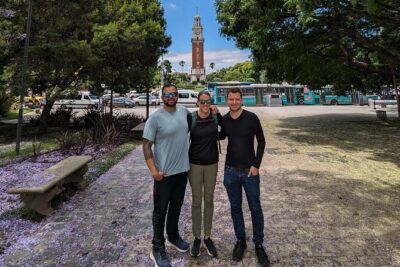
Bike Tour: Half-Day City Highlights of Buenos Aires
Read our review →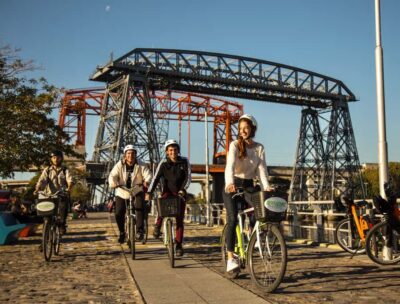
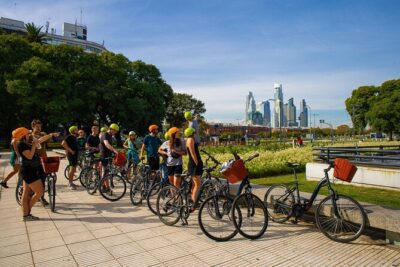
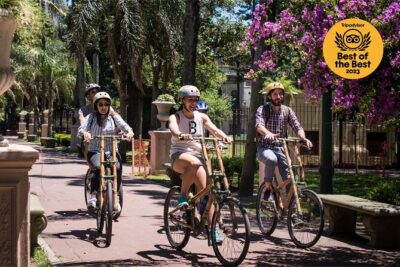
Ultimate Buenos Aires Bike Tour: All-Day All-Inclusive All-City
Read our review →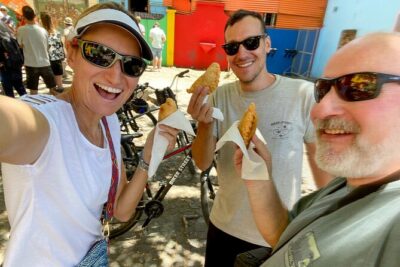
Full Day Bike Tour in BA Foodie and Cultural Immersion Max 6 ppl
Read our review →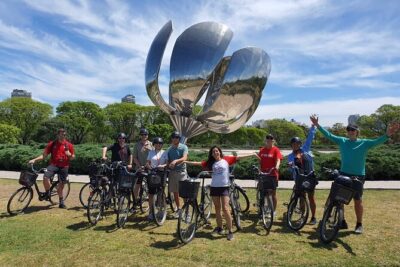
Half-Day Recoleta and Palermo Bike Tour in Buenos Aires
Read our review →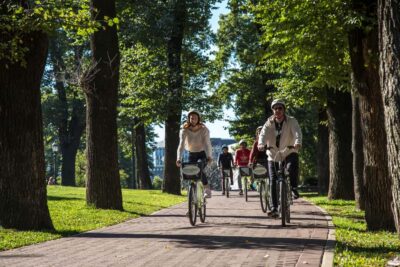
Browse the lists this tour appears in