
Reviewed · 2-DAY EXPERIENCES
From Salta: 2-Day Guided Trip to Cafayate and Cachi
Two Andean worlds in two days. This guided trip pairs Cafayate’s red-rock valleys and Torrontés wine with Cachi’s high mountain roads, cactus fields, and colonial streets. I like the dramatic variety and the chance to leave the driving to a bilingual guide. I also like the low $56 price, though long road stretches, crowded vehicles, and uneven pickup times may test your patience.
The first day focuses on Provincial Route 68, La Quebrada de las Conchas, and a winery near Cafayate. The second follows the Gorge of Escoipe, Cuesta del Obispo, El Valle Encantado, and Los Cardones National Park before reaching Cachi. Guides such as Julio and Montserrat have received praise for clear English explanations, but one poor experience involved a late pickup, unclear drop-off information, and a guide who forgot a hotel stop.
In This Review
- Key points to know before booking
- Why this two-day trip works
- Day one: tobacco farms and Route 68
- Garganta del Diablo and the red-rock formations
- Cafayate winery and Torrontés
- Day two: from Escoipe to Cuesta del Obispo
- El Valle Encantado and the Inca straight road
- Cachi: colonial streets and local culture
- Guides and language support
- Transport, comfort, and what to pack
- Who should book this experience?
- FAQ
- How long does the experience last?
- What languages are available?
- Is hotel pickup included?
- Is food included?
- Is the winery entry included?
- Is the tour suitable for people with back problems?
- Should you book it?
Key points to know before booking
- Two very different routes: Cafayate brings dry red cliffs and vineyards, while Cachi offers high mountain scenery, cactus country, and colonial buildings.
- The red-rock stops are the first-day stars: Garganta del Diablo and Casa de los Loros provide memorable photo stops along Route 68.
- Cuesta del Obispo is the rougher ride: Expect about two hours on low-quality dirt roads, followed by about two hours on the highway during the return.
- The winery visit is included: The Cafayate stop introduces local production and the area’s famous Torrontés wine.
- Vehicle comfort can vary: The booking describes an air-conditioned Mercedes-Benz minivan, but one recent account found a full, uncomfortable bus and another vehicle that was old and not especially clean.
- Cachi rewards a slower pace: You get time for the main square, church, museum, craft market, and lunch before returning to Salta.
Why this two-day trip works
Salta is a fine base for day trips, but the province changes quickly once you leave the city. In two days, you move from tobacco country and subtropical valleys to red sandstone formations, high mountain passes, and giant cardon cacti.
I like the contrast. A single day to Cafayate gives you geology and wine. A single day to Cachi gives you mountain roads and Andean culture. Put together, the two routes show how much scenery fits around Salta.
The price is unusually appealing at $56 per person. Transportation, a driver-guide, bilingual guiding in Spanish and English, downtown hotel pickup, and the winery entry ticket are included. You still pay for food, drinks, personal purchases, and any entrance fees not covered by the tour.
That low price makes sense for a shared road trip rather than a private outing. You are buying access to a lot of territory, not luxury transport or a carefully controlled schedule. For many people, that is a good deal. If you need extra legroom, quiet conditions, or precise timing, you may prefer a private car.
The two outings may not run in the order described. The agency can change the sequence based on availability, so keep your plans flexible.
A few more Salta trips worth putting side by side
- From Salta: Full-Day Trip to Salinas Grandes and Purmamarca
★ 4.6 · 914 reviews - From Salta: Full-Day Tour to Cafayate with Wine Tasting
★ 4.5 · 478 reviews - From Salta: Salinas Grandes, Purmamarca & Los Colorados Hike
★ 4.3 · 356 reviews
Day one: tobacco farms and Route 68
Pickup takes place from the lobby or reception of a downtown Salta hotel between 7:00 and 7:40 in the morning. This window is useful because it covers different hotel routes, but you should be ready early and keep your phone available. Pickup times have shifted, and one account noted the vehicle arrived 20 minutes ahead of schedule.
The route heads south on Provincial Route 68 through the Lerma Valley. At first, the setting is agricultural rather than barren. You pass farms and tobacco plantations, with tobacco leaves drying in the sun. Old and new chimneys made from adobe and clay add an unusual local detail. These structures reflect the practical side of the valley’s tobacco trade, a welcome change from simply rushing toward the famous rock formations.
You continue through Cerrillos, La Merced, and El Carril on the wider regional route network, depending on the day’s plan. The small towns help you see that this is a working province, not just a backdrop for sightseeing.
As the road approaches Alemania, the scenery turns sharper and drier. Red hills begin to crowd the road, and the stone formations become the main event. This transition is one of the pleasures of the day: green agricultural land gives way to bare rock and warm earth tones without a long flight or complicated transfer.
Garganta del Diablo and the red-rock formations
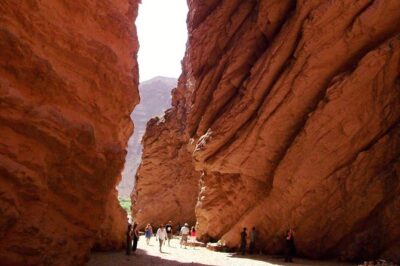
The Quebrada de las Conchas is the visual high point of the Cafayate outing. Its cliffs and folds were shaped over long periods by wind and water, creating walls, cuts, and chambers in red, orange, and brown stone.
Garganta del Diablo, or Devil’s Throat, is the best-known formation. Its tall, narrow rock opening gives the stop a sense of scale that photographs struggle to capture. You can expect time to look, take pictures, and hear the guide explain the local setting.
Casa de los Loros, or House of the Parrots, is another named formation along the route. The formations have memorable names, but the real pleasure is watching the rock change as the road continues. Light, shadows, and the angle of the cliffs keep the drive from feeling like one repeated viewpoint.
This section does involve road time. If you suffer from back problems, the operator lists the trip as unsuitable. Comfortable shoes and loose, comfortable clothing are sensible, especially when you are getting in and out at several roadside stops.
Cafayate winery and Torrontés
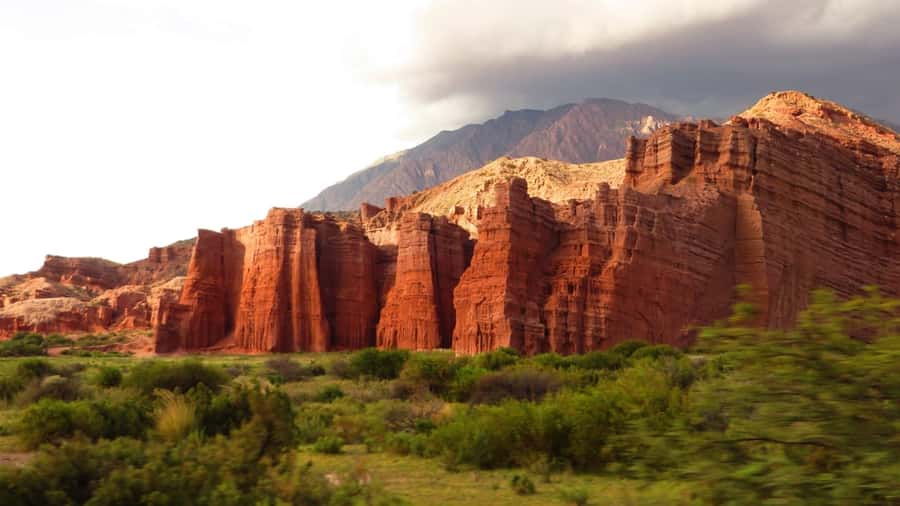
Cafayate is closely linked with wine, especially Torrontés, a white grape associated with Argentina. The included winery visit gives the day some structure beyond scenery. You learn about local wine production and the role of the region’s vineyards.
The winery entry is included, but lunch and drinks are not. Plan to pay for your own meal and any tasting or purchase that is not part of the included visit. The available details do not specify how much wine you taste or whether a meal is offered, so do not book this expecting a full food-and-wine program.
After lunch, the return to Salta uses a different route. That is a useful design choice. You are not simply retracing the same road, and the change lets you see another side of the province during the afternoon drive.
The first day is probably the easier choice if your priorities are photographs, rock formations, and wine. It is also the better fit if you want a clear headline attraction and less emphasis on mountain altitude.
Still Argentina, but a completely different sort of afternoon:
- Full-Day Tour Cafayate Calchaqui Valleys with Wine
★ 4.5 · 347 reviews - From Salta: Cafayate, land of wines and imposing ravines
★ 4.4 · 347 reviews - From Salta: Serranías del Hornocal & Hill of 14 Colors Tour
★ 4.4 · 339 reviews - From Salta: Cachi and Los Cardones National Park Tour
★ 4.5 · 285 reviews
Day two: from Escoipe to Cuesta del Obispo
The Cachi route begins again from Salta, generally using the 7:00 to 7:40 pickup window. It passes through Cerrillos, La Merced, and El Carril before turning onto Provincial Route 33.
The Gorge of Escoipe and Los Laureles introduce the day with steep walls, winding roads, and a more enclosed feeling than the open red-rock valley near Cafayate. The route is scenic, but it is not a quick transfer. The tour information warns of about two hours on low-quality dirt roads, so this is the day when road comfort matters most.
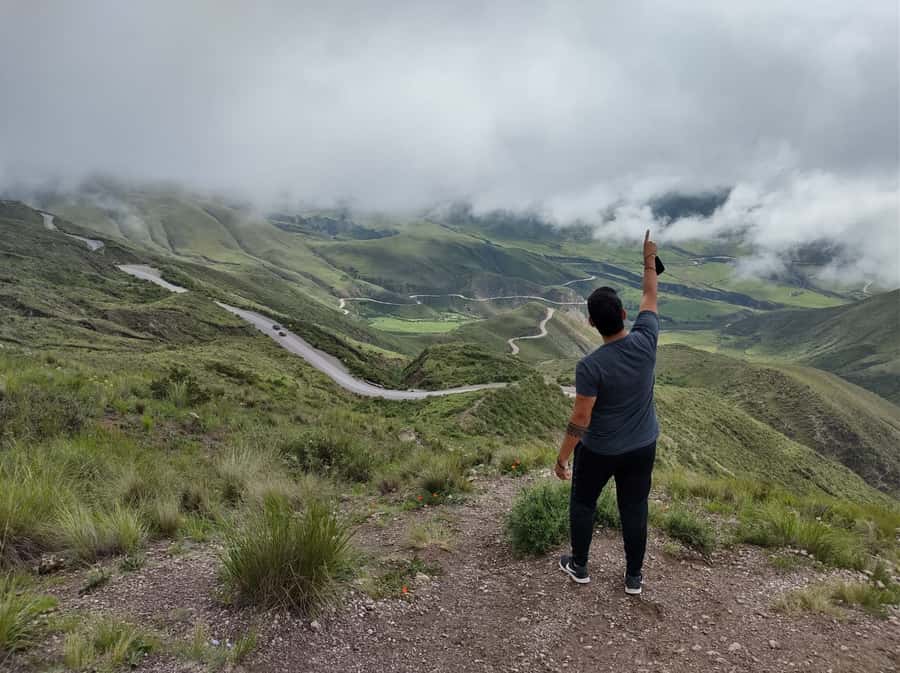
Next comes Cuesta del Obispo, or Bishop’s Slope. The road climbs through sharp bends and natural rock walls toward a summit at 3,348 meters above sea level. The changing altitude is part of the experience. The route begins in warmer, lower valleys and gradually reaches a high, open setting where the vegetation and colors look very different.
The drive is impressive, but it is not gentle. If you have back trouble, this is the clearest reason to choose another outing. Even without a health concern, I would bring water, avoid a heavy breakfast, and keep your camera secured when the road becomes rough.
The guide may point out condors above the road. These large birds are known as the King of the Sky, and spotting one depends on conditions and luck. The tour promises the chance to look for them, not a guaranteed sighting.
El Valle Encantado and the Inca straight road
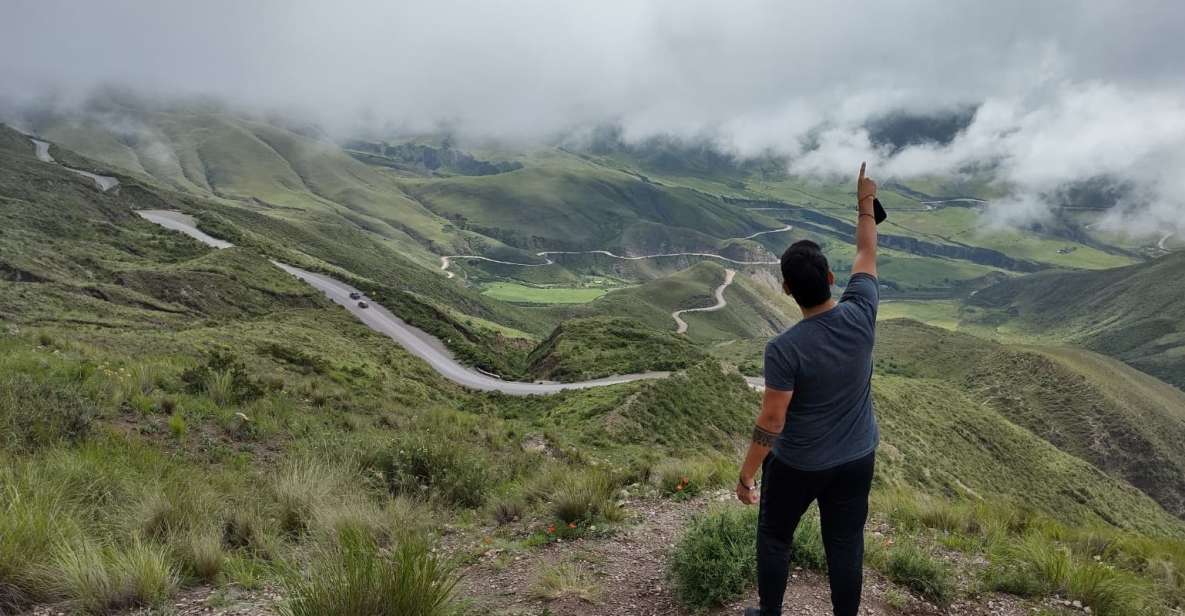
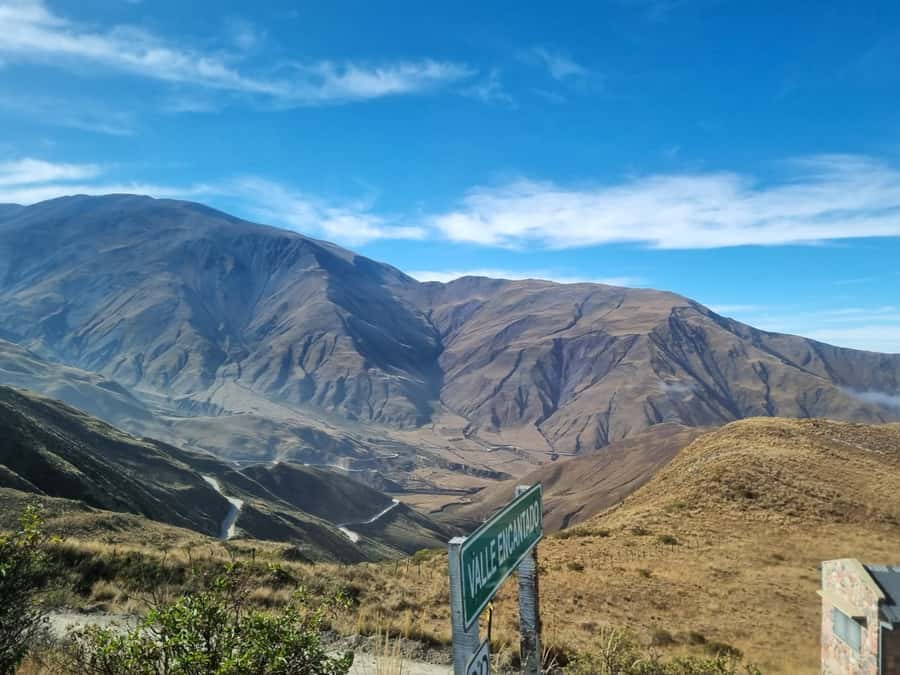
El Valle Encantado, or Enchanted Valley, offers a different mood from the harsh red cliffs of Route 68. The name fits the rounded forms and storybook quality of the high valley. It is a stop for taking in the view rather than ticking off a single monument.
As you leave the subtropical valleys, the route reaches Recta del Tin Tin. This famously straight section was built during the Inca period. The road’s length and direct line make a striking contrast with the twisting Cuesta del Obispo.
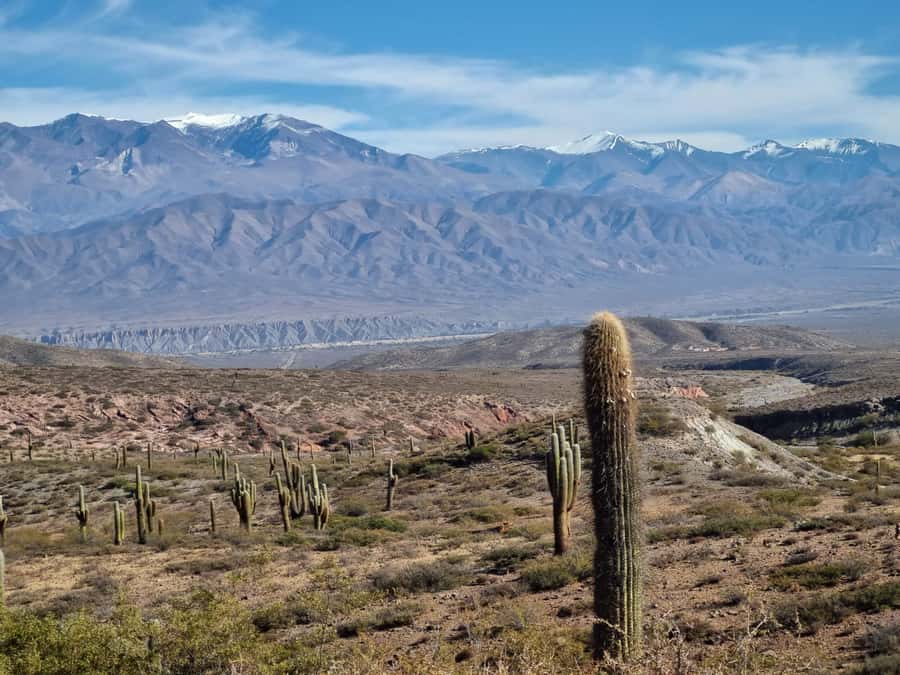
You then enter Los Cardones National Park, named for its abundance of cardon grande cactus formations. These tall cacti give the high plateau its character. The park is especially valuable because it shows how quickly the province changes with altitude: thick valley growth gives way to open ground and widely spaced cactus plants.
The scenery here is broad and spare. You should not expect the color-packed drama of the Cafayate gorge at every turn. Instead, the appeal comes from distance, silence, high roads, and the sense of moving through a very different ecological zone.
Cachi: colonial streets and local culture
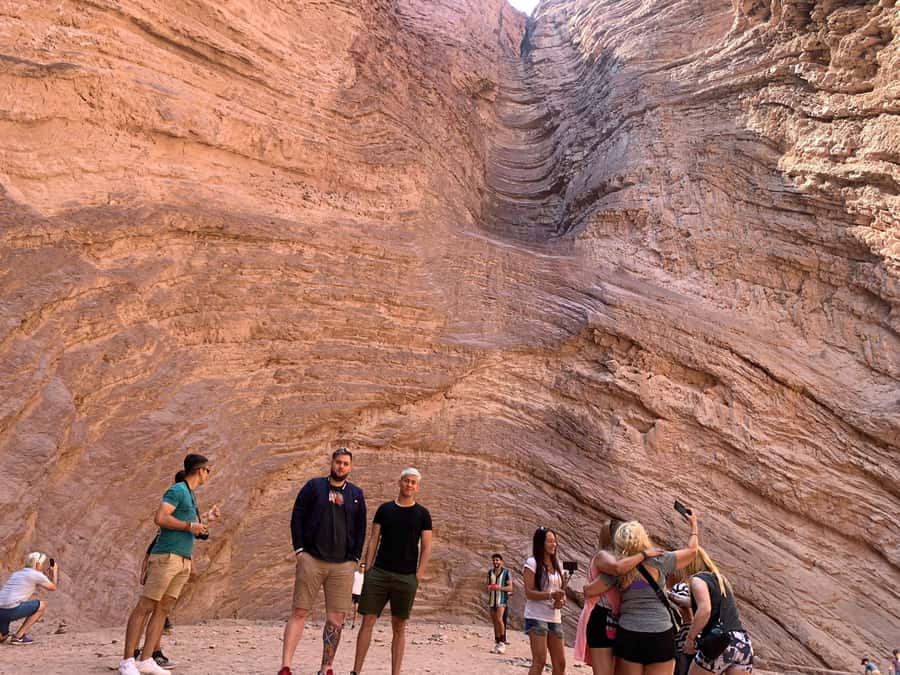
The group reaches Cachi around lunchtime. Food is not included, so you will have to choose and pay for your own meal. The schedule allows time to walk around town afterward rather than treating Cachi as only a lunch stop.
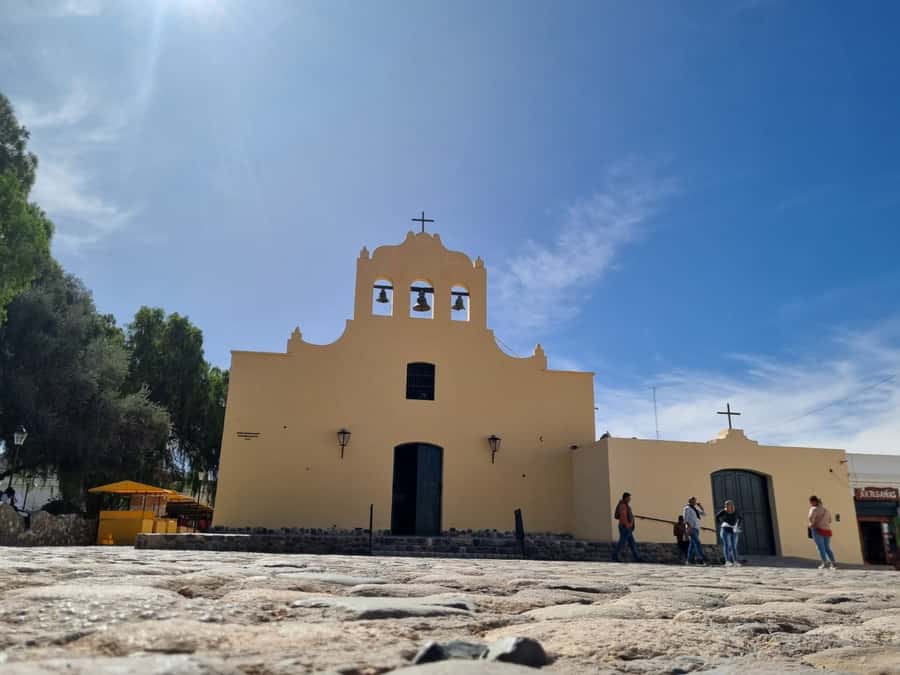
Cachi’s central area is known for well-preserved colonial architecture. The town church on the main square is an obvious place to begin, and the compact center makes it easy to explore on foot during the free time.
A historical museum covers the history of Aboriginal communities. This gives the visit more context than a quick photo stop, although the amount of time available will depend on the group’s schedule and return journey.
The craft market is useful for small souvenirs, and you have time to browse before leaving. I like this part of the day because it brings the trip back to daily life after hours of mountain scenery. Cachi is not just a viewpoint. It is a town where you can walk, eat, look at local crafts, and see how the region’s past remains visible in its buildings.
Do not expect a long independent visit. You are on a shared schedule, and the return drive to Salta takes time. Use the first part of your stop for the church and main square, then fit in the museum, craft market, and lunch.
Guides and language support
The experience provides a certified bilingual guide in Spanish and English. Guides Julio and Montserrat have been praised for giving useful explanations and translating well. Julio, in particular, has been credited with sharing plenty of information about the places along the route.
That matters on a long drive. Without commentary, several hours in a minibus can feel like transportation only. A good guide connects the tobacco fields, geology, wine, road history, condors, cactus park, and Aboriginal communities into one story.
There are practical limits. One recent account found that the microphone worked poorly, especially from the back of a full vehicle. If you care about hearing every explanation, try to sit nearer the front when possible. Group size and vehicle condition can vary from one day to the next.
One serious service complaint involved an unclear pickup, a late arrival, and a missed hotel drop-off that was corrected only after the vehicle had gone two blocks. This appears to be an individual bad experience, but it is a reason to confirm your pickup point and keep the hotel address handy.
Transport, comfort, and what to pack
The tour provides air-conditioned Mercedes-Benz minivan transportation. The stated vehicle standard is good, but actual comfort may differ. One account described a first-day bus packed to the last seat, with an uncomfortable back row and a speaker that was hard to hear. The second day used a larger vehicle with fewer people, but it was described as old and not especially clean.
That inconsistency is worth weighing against the price. You may get a comfortable minivan, or you may find the seating tighter than expected. If you are tall, prone to motion sickness, or sensitive to rough roads, ask the agency about the expected vehicle before paying.
Pack:
- Passport or identity card
- Comfortable walking shoes
- Comfortable clothing
- Water and money for food, drinks, entrance fees, and souvenirs
The exact weather can change across the two routes, but the altitude on Cuesta del Obispo reaches 3,348 meters. Layers are a practical choice. You will want flexibility between warmer lower valleys and cooler high roads.
The tour offers free cancellation up to 24 hours before departure and allows you to reserve now and pay later. Those terms help if your Salta plans are not fixed, but they do not remove the need to allow two full days for the experience.
Who should book this experience?
I would choose this trip if you want to see both major road routes from Salta without arranging several transfers yourself. It suits visitors who enjoy scenery, photography, local wine, small towns, and long drives through changing terrain.
It is also a strong choice for English-speaking visitors who want live explanations without hiring a private guide. The best moments come from the contrast between the two days, not from one polished attraction.
I would hesitate if you have back problems or dislike rough roads. The Cachi route includes about two hours on poor dirt roads, and both days involve substantial time in a vehicle. I would also think twice if your ideal tour means a small group, guaranteed front-facing seats, or a modern, spotless vehicle.
At $56, the value is hard to ignore if the shared transport works for you. You get two major excursions, the winery entry, hotel pickup, bilingual guidance, and access to places that would be tiring to connect independently. The tradeoff is comfort and control.
FAQ
How long does the experience last?
The experience lasts two days. Starting times should be confirmed when you check availability, with downtown hotel pickup generally scheduled between 7:00 AM and 7:40 AM.
What languages are available?
The live tour guide service is available in Spanish and English.
Is hotel pickup included?
Yes. Pickup and drop-off are included for hotels in downtown Salta. Pickup takes place from the hotel lobby or reception.
Is food included?
No. Food and drinks are not included. You should bring money for lunch, drinks, and personal expenses.
Is the winery entry included?
Yes. The entry ticket to one winery in Cafayate is included.
Is the tour suitable for people with back problems?
No. The activity is listed as unsuitable for people with back problems because the routes include long drives and about two hours on low-quality dirt roads.
Should you book it?
Book this experience if you want maximum scenery for a modest price and can accept shared transport, changing schedules, and long road hours. Cafayate gives you red-rock formations and Torrontés wine, while Cachi brings Cuesta del Obispo, condor country, Los Cardones, and colonial streets.
Before booking, confirm the pickup details, ask about the likely vehicle, and plan to sit near the front if hearing the guide matters to you. If you want comfort above all else, choose a private option. If you want a broad, affordable taste of Salta Province and do not mind a bumpy ride, this two-day pairing is a very good use of your time.
Recently added around Salta
- Rafting on the River Oath★ 5.0 · 3 reviews
- Floated by Kayak in the Oath Canyon★ 5.0 · 5 reviews
- Juramento River Rafting Adventure: Conquer the Rapids★ 3.5 · 4 reviews
- Unveiling Cafayate: Premium Wine Road Adventure★ 5.0 · 2 reviews
- Tilcara: 2 hours cycling tour trough the rural area★ 5.0 · 5 reviews
- Salta: Tour to the Salinas Grandes and Purmamarca★ 3.7 · 3 reviews
- Salta or Jujuy: Iruya and Salinas Grandes 2-Day Tour★ 4.3 · 3 reviews
- From Salta: Quebrada de Humahuaca, Purmamarca and Tilcara★ 4.2 · 43 reviews
2-Day Experiences, compared.
Iguazu in 2 Days: Argentina & Brazil Sides of Iguazu Falls
Read our review →
Iguazú Experience in 2 days: Argentine and Brazilian Falls
Read our review →
Iguazu Falls: Visit to Argentinian and Brazilian Side in two days
Read our review →
2-Day Iguazu Falls with Optional Airfare from Buenos Aires
Read our review →
Browse the lists this tour appears in