
Reviewed · SALINAS GRANDES AND HUMAHUACA TOURS
From Salta: 2 Day Guided Trip to Cafayate & Salinas Grandes
Red rock and white salt make a fine pairing. This two-day outing links Salta Province’s best-known sights, from tobacco farms and the Garganta del Diablo to a Cafayate winery and the huge Salinas Grandes. I like the wide variety of scenery and the fact that air-conditioned transport handles the long drives. I also like the chance to visit Cafayate without arranging separate transport.
The main trade-off is time spent on the road. Day two reaches high mountain roads and the salt flats, so the schedule may feel demanding, especially if you have back problems. The winery visit is useful, though the wine tasting may be conducted only in Spanish. One guest gave special praise to Fernando, calling him a great driver and guide.
In This Review
- Key points at a glance
- Why this two-day Salta trip works
- Day one: tobacco farms and the road to Cafayate
- Garganta del Diablo and the red-rock scenery
- Cafayate’s winery visit and wine culture
- Day two: entering the Quebrada de Humahuaca
- Seven Colors Hill and the Cuesta de Lipán
- Salinas Grandes, Argentina’s white salt desert
- What the transport and guiding mean for you
- Price, meals, and what is included
- Who should book this experience
- Should you book this Salta to Cafayate and Salinas Grandes trip?
- FAQ
- How long does the tour last?
- Where does hotel pickup take place?
- What languages does the guide speak?
- Is transportation included?
- Is the winery entry included?
- Are meals and drinks included?
- Is the tour suitable for people with back problems?
- What should I bring?
- Can I cancel for a refund?
Key points at a glance
- Two very different days: Day one follows valleys, farms, red rock, and vineyards. Day two climbs through the Quebrada de Humahuaca to salt flats and high mountain scenery.
- Garganta del Diablo: This dramatic red rock formation is one of the most memorable stops on the route to Cafayate.
- Cafayate wine country: You visit a local winery and learn about the region’s wine industry, with entry included.
- Salinas Grandes: The enormous white salt desert is one of Argentina’s Seven Natural Wonders, with crystal-blue pools adding color.
- Purmamarca and Seven Colors Hill: You get time in the town and a trip up to its famous multicolored mountain.
- Good value at $68: Transport, a bilingual guide, hotel pickup in central Salta, and the winery entry are included. Meals and other tickets are extra.
Why this two-day Salta trip works
Salta Province rewards travelers who enjoy scenery that changes by the hour. The route begins among farms and tobacco fields, passes through dry red-rock country, reaches vineyards around Cafayate, then shifts completely on day two to the Quebrada de Humahuaca and the Salinas Grandes.
I like this format because you do not spend your whole holiday arranging separate buses or transfers. The tour connects places that are spread far apart, using an air-conditioned Mercedes-Benz minivan and a guide who speaks English and Spanish.
The price is $68 per person, which is good value for two full sightseeing days if you want the major sights without hiring a car. You still pay for lunch, drinks, and any entry tickets beyond the winery, so keep some Argentine pesos or another payment option ready for meals.
This is not a slow village-to-village trip. It is a road trip with several sightseeing stops. You should expect long stretches in the vehicle, but the views are a major part of the experience rather than dead time.
More runs up to Salinas Grandes and the Quebrada:
- From Salta: Full-Day Trip to Salinas Grandes and Purmamarca
★ 4.6 · 914 reviews - From Salta: Salinas Grandes, Purmamarca & Los Colorados Hike
★ 4.3 · 356 reviews - Full-Day Tour Salinas Grandes and Purmamarca from Salta
★ 4.0 · 220 reviews
Day one: tobacco farms and the road to Cafayate
Pickup is from downtown hotels within fifteen blocks of Plaza 9 Julio. Once you are aboard the minivan, the first route follows National Route 68 through the Valle de Lerma.
The valley gives you a gentler introduction to Salta Province. You pass farms and tobacco plantations, with tobacco leaves laid out to dry. This is an easy detail to miss if you are focused only on famous viewpoints, but it gives the drive a local, working character. You are seeing an agricultural region rather than simply crossing empty countryside.
The route then continues toward Cafayate, passing the quiet settlement of Alemani. The scenery gradually becomes drier and more dramatic. Green farm country gives way to exposed rock, sharper colors, and formations shaped by wind and water.
I would keep your camera close during this section. The tour is designed around views from the road as much as formal stops, and the changing scenery is one of its strongest features.
Garganta del Diablo and the red-rock scenery
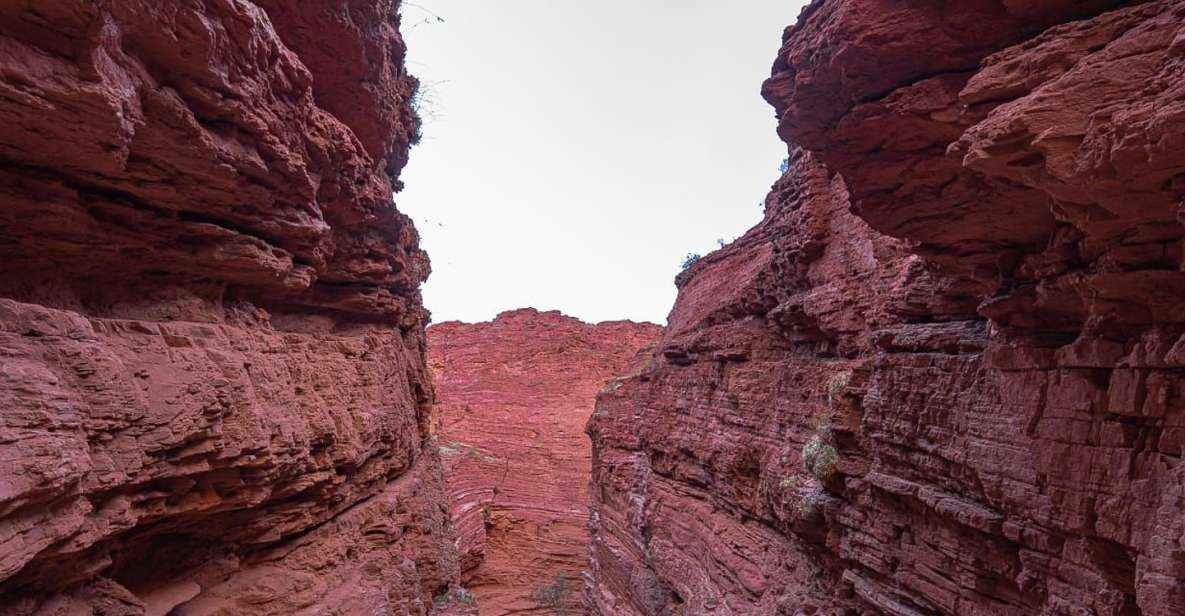
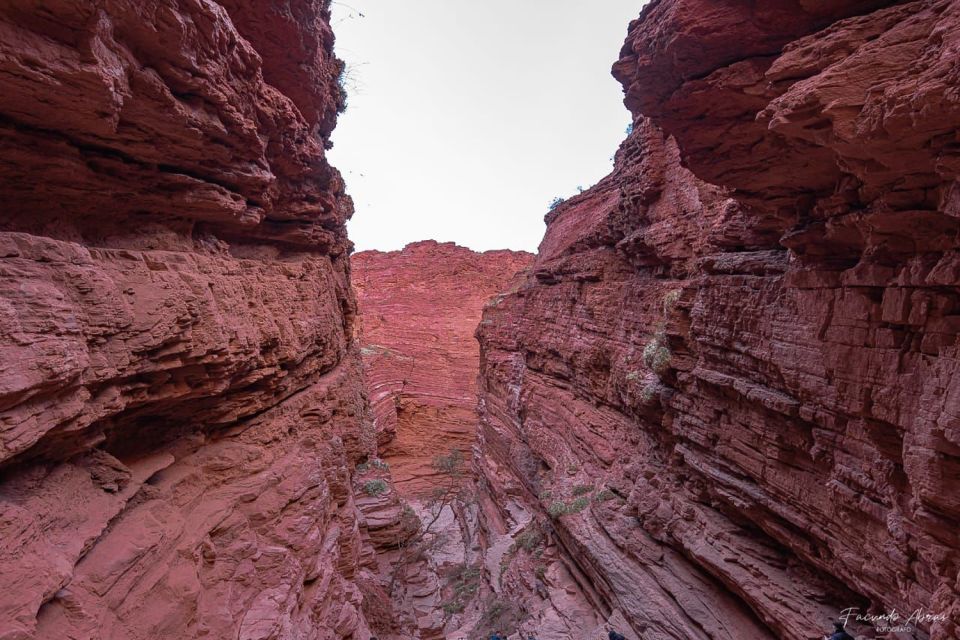
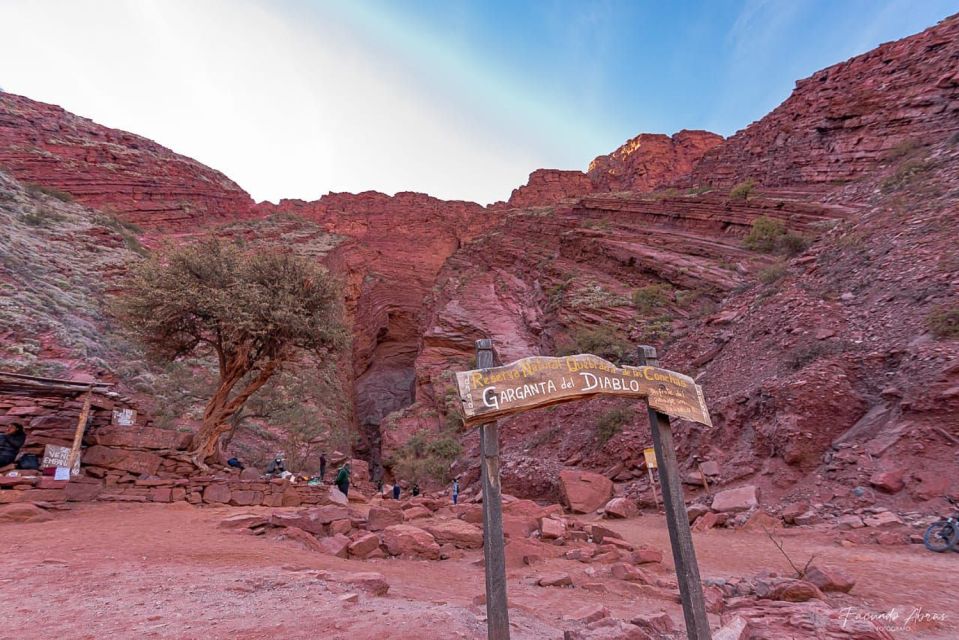
The stop at Garganta del Diablo is a highlight of the first day. Its name means Devil’s Throat, and the formation is a narrow, dramatic cleft in the red rock.
You get the kind of sight that makes a short stop worthwhile. The rock walls rise around the opening, creating a strong sense of scale and enclosure. It is not polished or built up like a city attraction. The appeal is the raw shape and color of the formation.
The red-rock country around the route gives the day its character. If you enjoy geology, photography, or simply unusual scenery, this part of the trip will likely be more rewarding than the town stops. Wear comfortable clothes and shoes, and bring water. The supplied information does not give exact walking distances, so it is best to be ready for some uneven ground around viewpoints.
Cafayate’s winery visit and wine culture
Cafayate is known for vineyards and winemaking, making the winery visit a natural centerpiece of day one. Entry to the winery is included, so you can learn about the local industry without paying an extra admission fee.
The value here is not just the tasting itself. The visit gives you context for the vineyards you see around Cafayate and shows how this dry part of Argentina supports wine production. If you already enjoy wine, you will appreciate having a local stop built into the route. If you know little about Argentine wine, it offers a simple introduction.
There is one practical point to keep in mind: the wine tasting may be conducted only in Spanish. The tour guide speaks English and Spanish, but that does not necessarily mean every part of the winery presentation will be bilingual. You can still enjoy the visit, but English speakers should keep expectations realistic.
Lunch is not included. You can grab food in Cafayate before the drive back to Salta, but the exact restaurant and menu are not specified. Bring water and plan for a paid meal rather than assuming food is covered by the tour price.
The return to Salta uses a different route, which helps keep the day from feeling like a simple out-and-back drive. You see more of the province and get another set of views from the minivan.
A few more Salta trips worth putting side by side
- From Salta: Full-Day Tour to Cafayate with Wine Tasting
★ 4.5 · 478 reviews - From Salta: Cafayate, land of wines and imposing ravines
★ 4.4 · 347 reviews - Full-Day Tour Cafayate Calchaqui Valleys with Wine
★ 4.5 · 347 reviews - From Salta: Serranías del Hornocal & Hill of 14 Colors Tour
★ 4.4 · 339 reviews
Day two: entering the Quebrada de Humahuaca
The second day heads toward the UNESCO World Heritage Listed Quebrada de Humahuaca. This is a completely different setting from the Cafayate route, with dry mountain valleys, high passes, and bold bands of color.
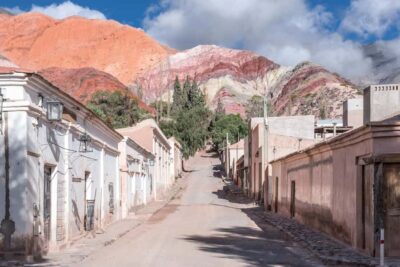
The first major stop is Purmamarca, a small town with a main square and traditional restaurants. You have time to explore the square before heading up to Seven Colors Hill.
Purmamarca works well as a base for the morning because it gives you both a town stop and access to the surrounding mountains. I like that the itinerary does not rush straight to the salt flats. The town adds a human scale to a day otherwise dominated by immense mountain scenery.
The amount of free time is not specified, so do not count on a long independent visit. Stay aware of the guide’s meeting instructions, especially if you want time for photographs or a meal later in the day.
Seven Colors Hill and the Cuesta de Lipán
Seven Colors Hill is one of the best-known sights near Purmamarca. Its appeal comes from the visible bands and layers in the mountains, with different tones packed into one broad formation.
This is a good place to slow down and look carefully. The colors are not a single painted surface. They come from the rock itself, and the view changes with the light and your angle.
After Purmamarca, the minivan climbs the Cuesta de Lipán, a rugged mountain road leading toward the Salinas Grandes. This is where the tour becomes more demanding physically. The route gains height, and the road itself is part of the experience.
People with back problems should think carefully before booking. The tour specifically notes that it is not suitable for people with back problems, and a long day on winding mountain roads may be uncomfortable even when the scenery is excellent.
Bring comfortable clothing, water, and your camera. You should also carry your passport or identity card, as this is listed among the items to bring.
Salinas Grandes, Argentina’s white salt desert
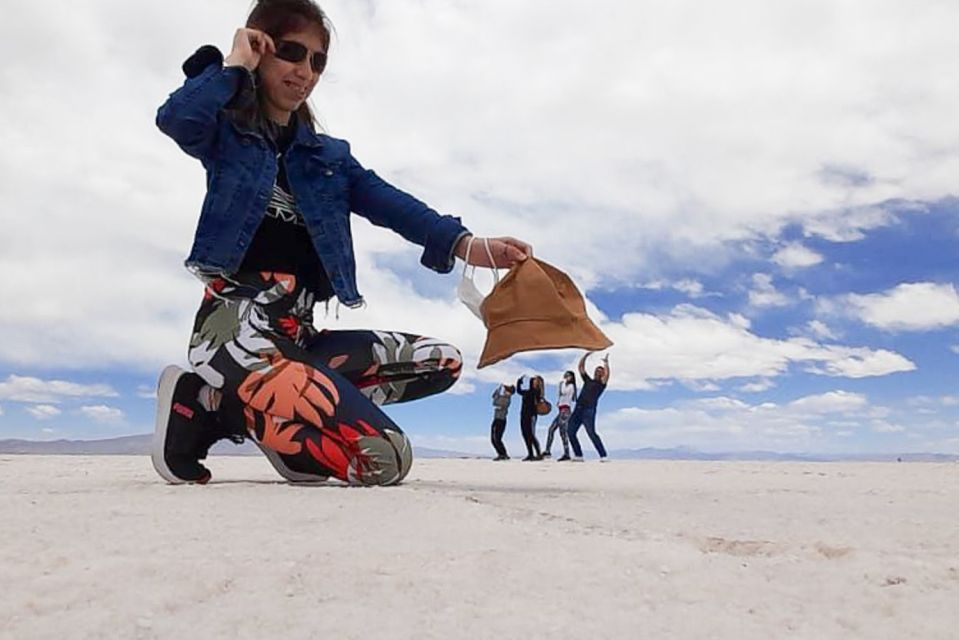
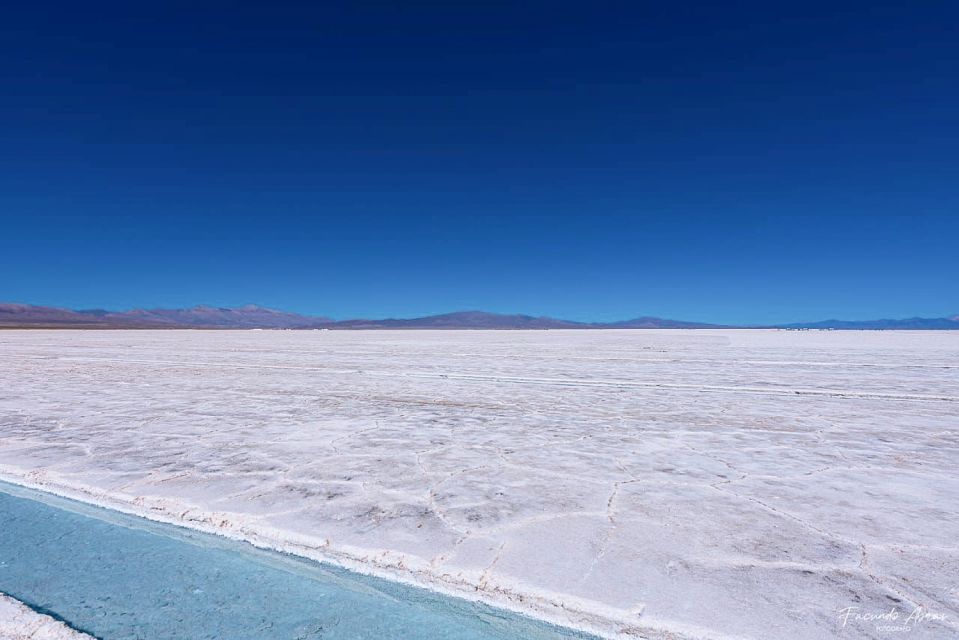
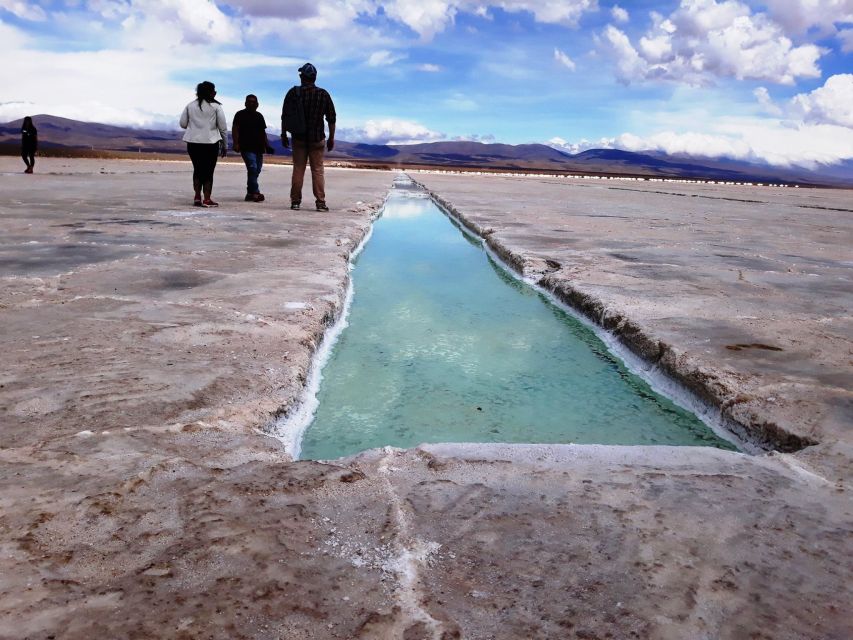
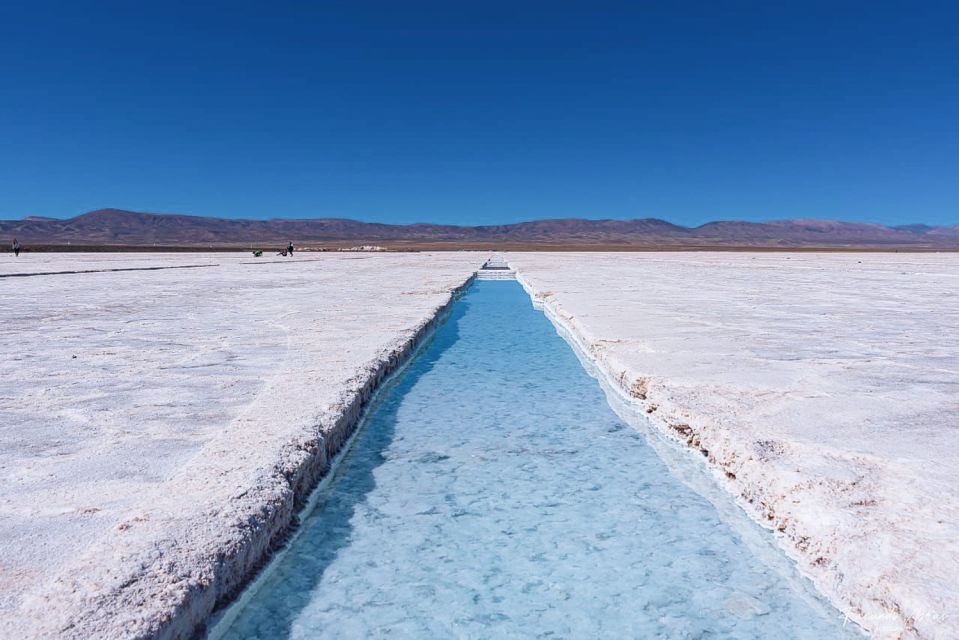
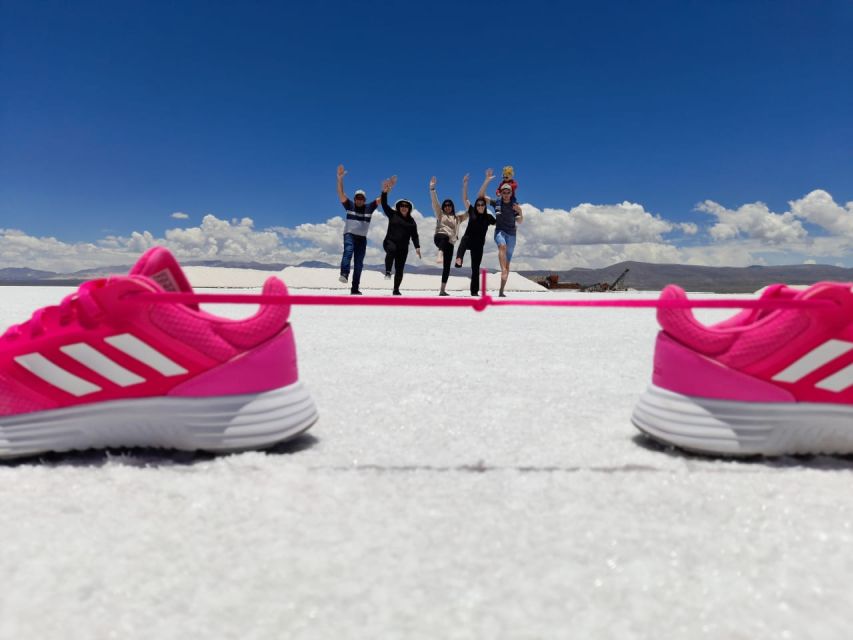
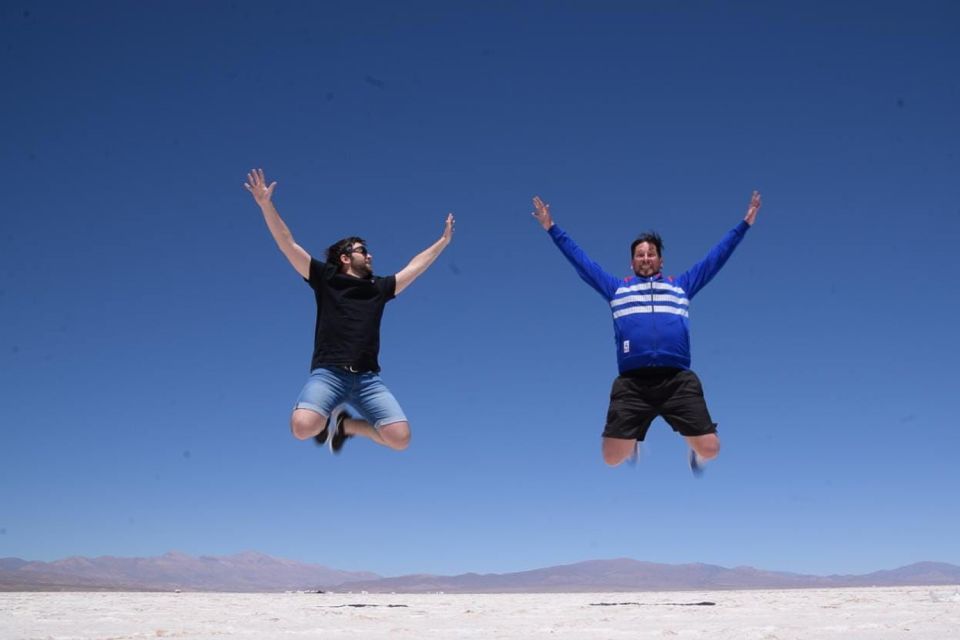
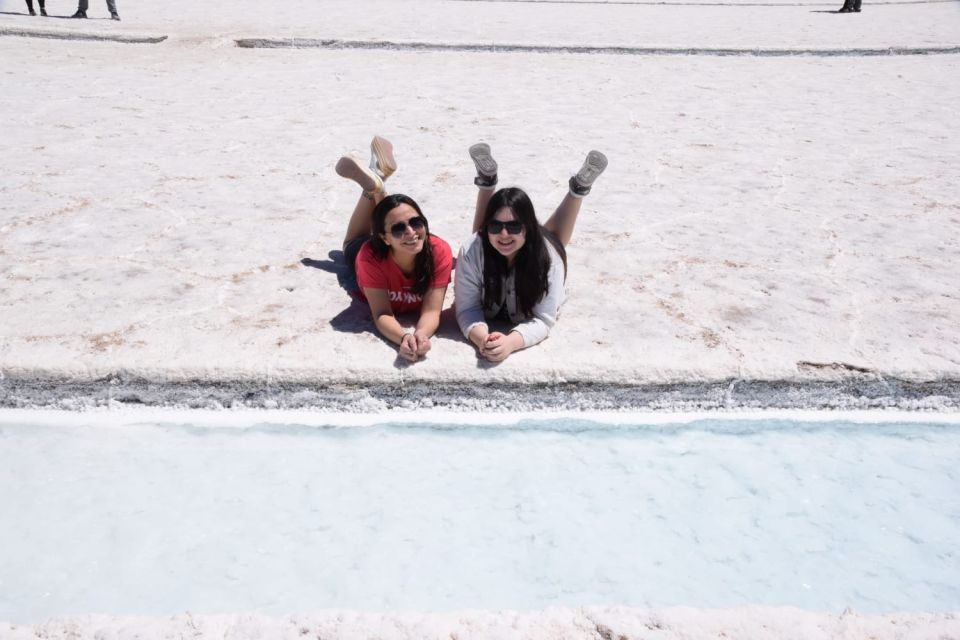
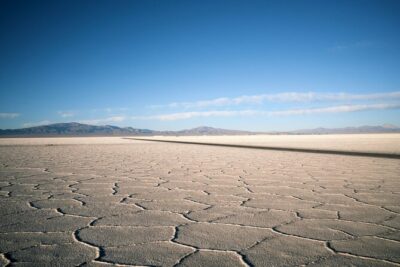
Salinas Grandes is the visual payoff of day two. The salt flats stretch across a broad white expanse, broken by crystal-blue pools and the strong blue of the sky.
The scale is the point. You are not looking at a small salt pond or a single viewpoint. You get free time to admire a huge salt desert, and that open space creates the tour’s most striking contrast with the tight red-rock formations from day one.
The salt flats are listed among Argentina’s Seven Natural Wonders, and it is easy to see why they feel so unusual. The surface is bright, spare, and almost abstract. Photographs can flatten the scene, so give yourself time to take in the emptiness and the sharp color contrast.
The tour does not specify the exact length of the stop or any special walking route. Use the free time for photographs, but stay close enough to follow the guide’s return instructions. Water matters here, and comfortable clothing will make the stop easier.
After the salt flats, you return to Purmamarca for lunch at one of the traditional restaurants. Food and drinks are not included, so budget separately for this meal. The return transfer to Salta finishes the second day.
What the transport and guiding mean for you
An air-conditioned Mercedes-Benz minivan is a practical choice for these routes. You avoid the work of driving unfamiliar roads, and air conditioning matters during long hours in a dry region.
The group size is not provided, so you should not book this expecting a private tour or a guaranteed small group. The guide speaks English and Spanish, and the bilingual setup is useful for general explanations, meeting points, and questions during the drives.
The strongest personal praise is directed at Fernando, described as both a great driver and guide. That matters on a trip with long transfers and mountain roads. A calm driver and clear instructions can make a noticeable difference, particularly on day two.
Still, guide quality can vary by departure. The tour offers English and Spanish guiding, but the language used at the winery may be Spanish only. If detailed wine explanations are important to you, ask about the language before departure.
Price, meals, and what is included
At $68 per person, this is an inexpensive way to cover two major day routes from Salta. The package includes:
- Pickup and drop-off from eligible downtown hotels
- Air-conditioned Mercedes-Benz minivan transport
- An English and Spanish-speaking guide
- Entry to the winery
You pay separately for food and drinks, plus any other entry tickets. That keeps the base price low, but the final cost will be higher once you add two lunches and anything else you purchase.
The hotel rule is important. Pickup and drop-off are available only from hotels within fifteen blocks of Plaza 9 Julio. If you are staying farther out, you may need to reach the central pickup area on your own, though the supplied details do not state how that meeting arrangement works.
The booking terms are flexible: you can cancel up to 24 hours before the activity for a full refund, and you can reserve now and pay later. Starting times depend on availability, so check the schedule before committing your plans.
Who should book this experience
I would recommend this tour to you if you want Salta’s major natural sights in a short stay and prefer having transport arranged. It suits photographers, first-time visitors to the province, and anyone who likes a mix of town stops, food, wine, and dramatic scenery.
It is also a good fit if you want to compare two very different parts of northern Argentina. Cafayate gives you vineyards and red rock. The Quebrada and Salinas Grandes give you mountain color, high roads, and salt desert.
I would hesitate if you dislike long drives, need a relaxed pace, or have back problems. You should also think twice if you want extensive independent time at each stop. This is a structured two-day route, not a flexible private itinerary.
Should you book this Salta to Cafayate and Salinas Grandes trip?
Book it if you have limited time in Salta and want a cost-effective way to see Cafayate, Garganta del Diablo, Purmamarca, Seven Colors Hill, and Salinas Grandes. The included transport and winery entry make $68 a strong starting price, and the route gives you a broad look at the province.
Skip it if comfort, long stops, or full English explanations at the winery matter more than covering ground. For most active visitors who can handle extended minivan rides, this is a useful and scenic introduction to northern Argentina.
FAQ
How long does the tour last?
The experience lasts two days.
Where does hotel pickup take place?
Pickup and drop-off are available from hotels in downtown Salta within fifteen blocks of Plaza 9 Julio.
What languages does the guide speak?
The live guide speaks English and Spanish.
Is transportation included?
Yes. Transportation is provided in an air-conditioned Mercedes-Benz minivan.
Is the winery entry included?
Yes. The entry ticket to the winery is included.
Are meals and drinks included?
No. Food and drinks are not included, so you pay for lunch and beverages separately.
Is the tour suitable for people with back problems?
No. The experience is specifically listed as unsuitable for people with back problems.
What should I bring?
Bring your passport or identity card, camera, water, and comfortable clothes.
Can I cancel for a refund?
Yes. You can cancel up to 24 hours in advance for a full refund.
Recently added around Salta
- Floated by Kayak in the Oath Canyon★ 5.0 · 5 reviews
- Juramento River Rafting Adventure: Conquer the Rapids★ 3.5 · 4 reviews
- Rafting on the River Oath★ 5.0 · 3 reviews
- Unveiling Cafayate: Premium Wine Road Adventure★ 5.0 · 2 reviews
- Tilcara: 2 hours cycling tour trough the rural area★ 5.0 · 5 reviews
- Salta: Tour to the Salinas Grandes and Purmamarca★ 3.7 · 3 reviews
- Salta or Jujuy: Iruya and Salinas Grandes 2-Day Tour★ 4.3 · 3 reviews
- From Salta: Quebrada de Humahuaca, Purmamarca and Tilcara★ 4.2 · 43 reviews
Salinas Grandes and Humahuaca Tours, compared.
Full-Day Trip to Salinas Grandes and Purmamarca
Read our review →
Salinas Grandes, Purmamarca & Los Colorados Hike
Read our review →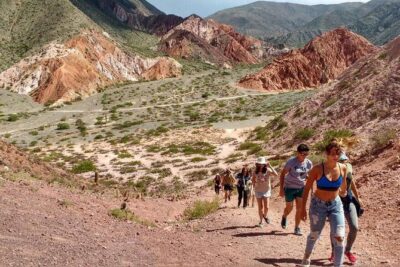
Full-Day Tour Salinas Grandes and Purmamarca from Salta
Read our review →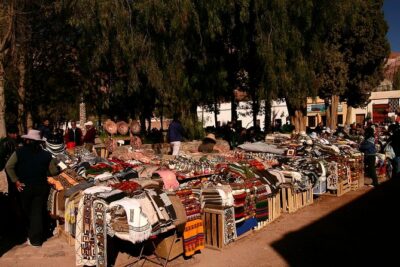
Salinas Grandes and Purmamarca: Full Day Excursion from Salta Capital
Read our review →
Full-Day Tour to Humahuaca, Purmamarca and Tilcara
Read our review →
Browse the lists this tour appears in