
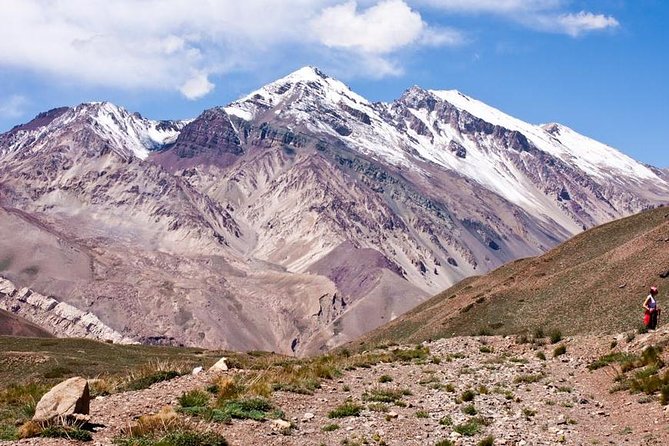
Reviewed · ACONCAGUA AND THE HIGH ANDES
Wonders of the High Andes from Mendoza
The Andes make a long day worthwhile. From Mendoza, this $67 outing carries you through the Cordon del Plata, Potrerillos Dam, Uspallata, Puente del Inca, Aconcagua viewpoints, and the high village of Las Cuevas. I like the huge range of scenery packed into one trip, and I like that hotel pickup, an air-conditioned vehicle, and a bilingual guide remove the worry of mountain driving.
The catch is the length. This is roughly a 10-hour, 400-kilometer road outing, not a relaxed mountain walk. I would also confirm the English guiding arrangements before paying, since some guides have provided excellent English commentary while others have struggled to speak much English at all.
In This Review
- Key points to know before booking
- Why this mountain day is worth your time
- Leaving Mendoza at 7:30 in the morning
- Potrerillos Dam and the Cordon del Plata
- Uspallata and the old Huarpe and Inca frontier
- Puente Picheuta, Polvaredas, and Punta de Vacas
- Penitentes and the high mountain road
- Puente del Inca and its strange natural arch
- Aconcagua viewpoint: the main photograph of the day
- Las Cuevas at 3,200 meters
- Cristo Redentor and the Chilean border
- The guide and language question
- Altitude, weather, and comfort
- Who should book this tour?
- Should you book the High Andes day trip?
- FAQ
- How long does the Wonders of the High Andes tour last?
- What time does the tour start?
- Is hotel pickup included?
- Is food included in the price?
- Can I visit Cristo Redentor on every departure?
- How high does the tour go?
- How many people can join the tour?
Key points to know before booking
- Aconcagua is the headline view: You stop at a viewpoint for photographs of the highest mountain in the western hemisphere, listed here at about 6,900 meters.
- Cristo Redentor is seasonal: The monument visit depends on weather and road traffic, and the excursion reaches it only from January through March.
- Expect a full day in a vehicle: The road connects many far-apart stops, so sightseeing is broken into short visits between long drives.
- The group may be large: The regular service can carry up to 40 people, despite occasional smaller vehicles.
- Lunch costs extra: Food and drinks are not included, and meals at remote mountain stops can be expensive and uneven in quality.
- Altitude is a real concern: Las Cuevas sits at about 3,200 meters, and Cristo Redentor rises to around 4,200 meters.
Why this mountain day is worth your time
Mendoza is famous for vineyards, but the Andes are the other half of the province’s identity. This trip takes you west along the Mendoza River and Route 7 toward the Chilean border, trading vines and city streets for dry peaks, colored rock, old bridges, snow, and wide open sky.
I like this tour most as a first look at the region. You do not need to rent a car, study a mountain map, or worry about trucks and changing road conditions. The vehicle handles the long climb while you watch the scenery shift from the lower valley to high, bare mountain country.
At $67 per person, the value is strong if you want transport and a broad introduction to the Andes. The price includes the guide, an air-conditioned vehicle, and pickup and return at selected hotels. It does not include lunch, drinks, or any optional entrance fee connected with Penitentes. You are paying mainly for the distance covered and the convenience of having someone else manage the road.
The tradeoff is time. You spend much of the day sitting in a van or bus. If your idea of a mountain trip means hiking for several hours, this is the wrong outing. If you want to see many famous points in one day, it makes good sense.
More drives up into the high Andes:
- From Mendoza: High Andes Aconcagua Mountain Tour
★ 4.4 · 767 reviews - Tour Aconcagua Park in Small Group from Mendoza with Barbecue Lunch
★ 5.0 · 388 reviews - High Mountain, Aconcagua and Inca Bridge
★ 5.0 · 384 reviews
Leaving Mendoza at 7:30 in the morning
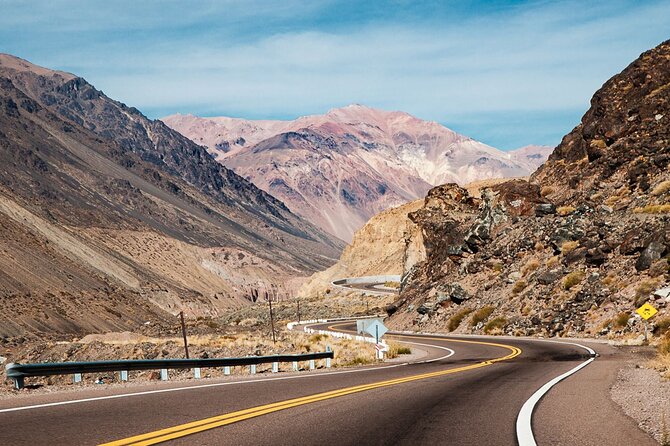
Pickup begins around 7:30 a.m. at selected hotels in Mendoza. The vehicle may make several collections, so the stated time can be a starting point rather than the exact moment you leave the city. Be ready early and check the confirmed pickup details carefully.
This early departure matters because the route is long. The return is usually around 5:30 p.m., while summer departures that reach Cristo Redentor can run until about 8 p.m. That later finish is not a small detail. Plan a light evening afterward.
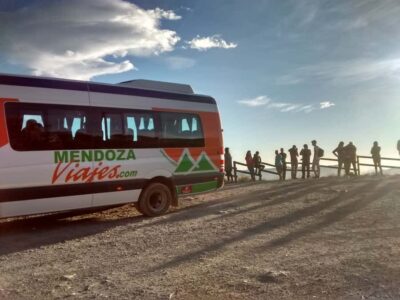
The vehicle is air-conditioned, which helps on a full day in the sun. Still, comfort depends on the group and vehicle assigned. Some outings use a minibus, while the regular service can include as many as 40 people. A crowded vehicle makes the long return feel longer, especially if you are in the back.
Potrerillos Dam and the Cordon del Plata
The first stretch follows the Mendoza River, with views toward the Cordon del Plata and Potrerillos Dam. The dam is an important water and power project for the region, supplying electricity and distributing water used for irrigation.
This is a useful opening because it shows why the mountains matter beyond their scenery. The river, reservoirs, and irrigation network support life in an otherwise dry part of Argentina. The stop itself may be more of a passing view than a long formal visit, so keep your camera ready from the vehicle.
The peaks here are lower and more varied than the high border country later in the day. Their colors change with the light, and the rock often looks striped or layered. If you enjoy geology, pay attention to the shifting shades rather than waiting only for Aconcagua.
Uspallata and the old Huarpe and Inca frontier
Uspallata is the first substantial stop, with about an hour scheduled. The town sits in a broad mountain valley and is linked with a pre-Hispanic Huarpe settlement and the southern edge of the Inca Empire.
That context gives the stop more weight than a simple coffee break. The route through the Andes was used long before modern roads and border crossings. You can think of Uspallata as an old meeting point between valley communities, mountain routes, and imperial expansion.
The stop also gives you a chance to stretch your legs. Bring water and a small snack, since food is not included. Some visitors have found the morning stop useful for a quick bite, but the quality and price of food along this route can vary.
A few more Mendoza trips worth putting side by side
- All Day, Small Group, Luxury Wine Tour with Gourmet Lunch
★ 5.0 · 1,040 reviews - From Mendoza: 3 Wineries, Olive Oil Factory Tour & Tasting
★ 4.6 · 901 reviews - Mendoza: Half-Day Wine Tour with Tastings
★ 4.3 · 727 reviews - Half Day Winery Tour
★ 4.5 · 533 reviews
Puente Picheuta, Polvaredas, and Punta de Vacas
After Uspallata, the outing continues through several historic settlements and roadside points, including Picheuta, Polvaredas, and Punta de Vacas. The schedule groups these places into about an hour, so do not expect a long walk at each one.
Puente Picheuta is an old bridge and one of the more distinctive reminders that this route has carried people across difficult terrain for centuries. The surrounding villages add human scale to an otherwise enormous setting. Small structures, rail remnants, and road cuts help you read the valley as a working corridor rather than an empty postcard.
This is also where the tour’s rhythm becomes clear: drive, stop, photograph, hear a short explanation, and drive again. I find that pattern practical for covering so much ground, but it can feel rushed if you want time to explore each site quietly.
Penitentes and the high mountain road
Los Penitentes was once known as a ski resort and provides broad views of the surrounding peaks. The visit is scheduled for about an hour, but any entrance cost is not included.
Do not book this day expecting a full ski-resort experience. The appeal here is the setting and the panorama, not a long activity program. In winter, fresh snow can make the route especially striking, but the ski facilities may not be operating.
The road itself is part of the attraction. You climb steadily through increasingly bare terrain, with enormous slopes close to the route and sharp peaks beyond. The driver’s skill matters on these roads, so a guided vehicle is a sensible choice for anyone who does not feel comfortable handling mountain traffic.
Puente del Inca and its strange natural arch
Puente del Inca is one of the best-known sights on the route. The natural bridge formed over mineral-rich thermal springs, producing an unusual golden and rust-colored structure above the river.
The scheduled visit is only about 10 minutes, which tells you how to approach it. This is a quick viewpoint and photo stop, not an extended walk or soaking experience. The colors and shape are memorable, but you may wish for more time if the area is busy.
The bridge also works as a visual preview of the high Andes geology. Mineral deposits, eroded rock, and water have shaped a place that looks almost constructed. It is a small stop with a lot of visual impact.
Aconcagua viewpoint: the main photograph of the day
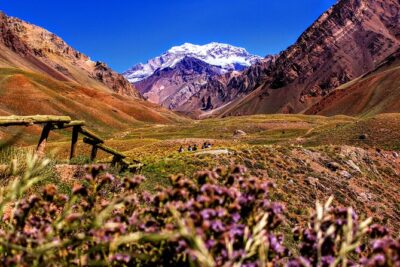
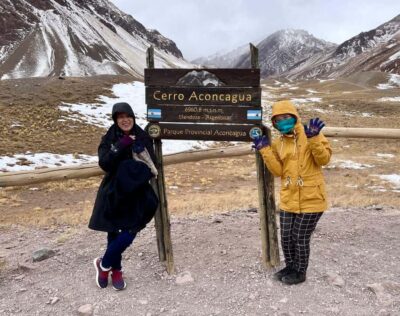
The Aconcagua viewpoint gives you about 30 minutes to photograph the mountain. At roughly 6,900 meters, Aconcagua is the highest mountain in the western hemisphere, and this is the trip’s major natural attraction.
The view is never guaranteed. Clouds can cover the summit, and weather can change quickly. That is part of mountain travel, not a failure of the tour, but you should set your expectations accordingly. You may see the full peak, a partial outline, or a wall of cloud where the mountain should be.
The viewpoint is not a summit excursion and does not provide a hiking route to Aconcagua. It is a roadside viewing stop. For most visitors, that is enough to understand the scale of the mountain and take the defining photo of the day.
Bring a warm layer even in summer. The air becomes noticeably colder at altitude, and wind can make a short stop uncomfortable. A refillable water bottle is also useful. One practical tip is to carry a bottle that can be topped up with safe water where permitted, rather than relying only on drinks sold at remote stops.
Las Cuevas at 3,200 meters
The final village is Las Cuevas, an unusual European-style settlement near the international tunnel to Chile. At about 3,200 meters, it is much higher than Mendoza and noticeably different in climate and atmosphere.
You have about an hour here. The village is also the access point for the road toward Cristo Redentor, which rises to approximately 4,200 meters. Conditions can be cold, windy, and stark, especially outside summer.
Lunch is on your own. This is the part of the day where I would be cautious about assuming the meal will be memorable. Remote restaurants may charge more than you expect, and food quality has been inconsistent. One recent price cited for lunch was 20,000 Argentine pesos including a drink, but prices can change quickly in Argentina.
If you prefer control, bring snacks and treat the meal stop as optional. Food and drinks are not included, so you are free to buy something, carry your own supplies, or simply keep the break short.
Cristo Redentor and the Chilean border
The Cristo Redentor de los Andes monument represents friendship and union between Argentina and Chile. Its setting high above the border makes it more than a standard roadside statue. You get a strong sense of how difficult this crossing once was and how exposed the region remains.
The visit is usually about an hour when conditions allow. The access road can be affected by snow, weather, and heavy truck traffic. The tour specifically limits this visit to January through March, and even then, reaching the monument is not guaranteed.
This is the most important seasonal warning in the entire experience. Some departures stop at Las Cuevas or another viewpoint instead of continuing to Cristo Redentor. The mountain scenery can still be excellent, but the day will not match the most ambitious version of the route.
In summer, reaching the monument can extend the return to around 8 p.m. I would choose this option only if you are comfortable with a very long day. The reward is a high border viewpoint that few short Mendoza excursions can match.
The guide and language question
The tour includes professional English and Spanish guiding, but the quality of the English explanation can vary. Some guides, including Federico, Rocío, Paula, Esteban, and Bibiana, have been praised for clear explanations and caring service. Others have spoken mainly Spanish or struggled to remember the English-speaking passengers during the drive.
That inconsistency matters because much of the experience happens from the vehicle. You are not simply looking at mountains. A good guide can explain the Huarpe and Inca connection, the dam, the border route, and the geology as the scenery passes.
I would contact the operator before departure and confirm that an English-speaking guide is assigned. A short information sheet in English would also help, but you should not assume one will be provided. If the language service is important to you, get the confirmation in writing.
Altitude, weather, and comfort
Altitude sickness is the main physical concern. One person reported nausea, dizziness, tiredness, shortness of breath, body aches, and blurred vision after the route climbed higher. Another person on the same outing had no trouble at all, so reactions differ sharply.
Take altitude seriously. Drink water, avoid treating the high stops as a race, and tell the guide if you feel unwell. The experience reaches roughly 4,200 meters near Cristo Redentor, a serious change from Mendoza’s lower elevation.
Weather can alter the route. Snow may prevent the Cristo Redentor visit, and clouds may hide Aconcagua. On the other hand, fresh snow can make the entire day especially beautiful. Pack warm clothing, even if Mendoza feels hot when you leave.
Who should book this tour?
I would choose this tour if you have one free day in Mendoza and want to see the Andes without driving. It suits first-time visitors, photographers, geology fans, families who prefer vehicle-based sightseeing, and anyone eager to reach the Aconcagua viewpoint and border country in one outing.
I would think twice if you dislike long bus rides, need a small group, or want substantial walking time. The regular service may carry up to 40 people, and the schedule leaves limited time at many stops.
The $67 price is fair for the distance, transport, guide, and hotel convenience. It becomes less attractive if you expect lunch, guaranteed English commentary, a small group, or a guaranteed Cristo Redentor visit. Those are the points to clarify before booking.
Free cancellation is available if you cancel at least 24 hours before the start time. If poor weather cancels the outing, you should be offered another date or a full refund. Pickup and drop-off apply only to selected hotels, so check that detail rather than assuming every address is covered.
Should you book the High Andes day trip?
Yes, if your priority is seeing a lot of mountain country in one day for a modest price. The route offers real variety: a working dam, old settlements, a mineral bridge, a famous mountain viewpoint, a high border village, and, in the right season, Cristo Redentor.
Book it with realistic expectations. This is a long road day with altitude, changing weather, extra meal costs, and possible language or group-size issues. Confirm the English guide, pack water and warm clothes, and accept that nature may hide Aconcagua or close the final road. With that preparation, this is one of the more practical ways to trade Mendoza’s city and wine country for the raw scale of the Andes.
FAQ
How long does the Wonders of the High Andes tour last?
The tour lasts approximately 10 hours. It generally returns to Mendoza around 5:30 p.m., but summer departures that reach Cristo Redentor may return around 8 p.m.
What time does the tour start?
The stated start time is 7:30 a.m. Hotel pickup begins around that time at selected Mendoza hotels.
Is hotel pickup included?
Yes, hotel pickup and drop-off are included for selected hotels. The activity ends back at the meeting point in Mendoza.
Is food included in the price?
No. Food and drinks are not included, so you should budget separately for lunch and refreshments.
Can I visit Cristo Redentor on every departure?
No. The visit depends on weather and traffic conditions and is available only from January through March.
How high does the tour go?
Las Cuevas is about 3,200 meters above sea level. Cristo Redentor is approximately 4,200 meters above sea level.
How many people can join the tour?
The activity can have a maximum of 40 travelers. The vehicle may be a minibus or a larger bus, depending on the number of bookings.
Recently added around Mendoza
- Transportation around Mendoza or others states!!! Trips.. transfers★ 5.0 · 46 reviews
- wine tours in wine country mendoza Argentina★ 5.0 · 6 reviews
- Maipú: Historical Vineyards, Premium Olive and Vigilant Experience★ 5.0 · 8 reviews
- Extended Flight with Instructor★ 4.5 · 18 reviews
- Zipline Adventure: Exploring Potrerillos Valley★ 4.5 · 10 reviews
- Winery Tour with Lunch and Blend Game★ 5.0 · 15 reviews
- Wine Tour in Huentala Wines Departing from Ciudad Mendoza★ 5.0 · 11 reviews
- Wine tour with lunch★ 4.5 · 33 reviews
Aconcagua and the High Andes, compared.
Tour Aconcagua Park in Small Group from Mendoza with Barbecue Lunch
Read our review →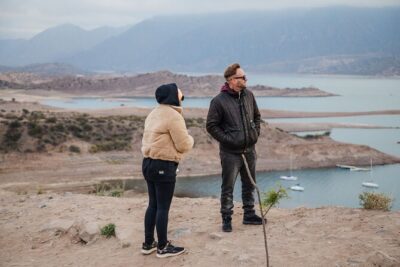
Helicopter Overflight – Landing in the Cordillera – A30
Read our review →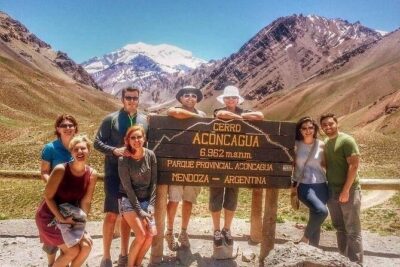
Tour Full Day High Mountain: Potrerillos, Uspallata from Mendoza
Read our review →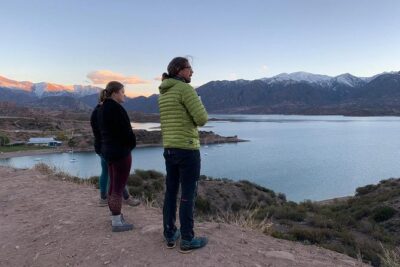
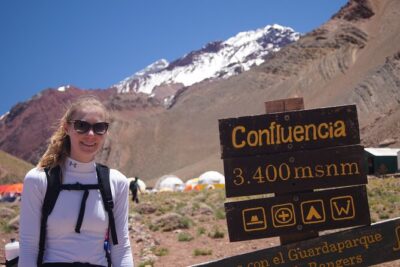
Trekking to Confluencia, Aconcagua first base camp
Read our review →Browse the lists this tour appears in