
Reviewed · CYCLING TOURS
Experience the Lighted Night of Buenos Aires in a Bike
The city tells better stories after sunset. This three-hour bike ride links Buenos Aires icons with sharp historical commentary, giving you a fast but meaningful look at the capital. I especially like the small group of up to 10 people and the chance to stop for a choripán or other local food at Costanera Sur.
I also like that the route moves beyond the usual postcard stops. You hear about Eva Perón, Argentina’s independence, the making of 9 de Julio Avenue, and the city’s political past while seeing the monuments lit at night.
The main consideration is physical effort. You need a moderate fitness level, and cycling through central Buenos Aires after dark may not suit anyone who wants a slow, completely relaxed sightseeing outing. Food, bottled water, and attraction admissions cost extra.
In This Review
- Key points to know before you book
- Why Buenos Aires works so well by bicycle at night
- Starting at Teatro Colón and Plaza Lavalle
- The Obelisco and the scale of 9 de Julio Avenue
- Eva Perón, Plaza de Mayo, and Argentina’s political story
- Costanera Sur and the best chance to eat locally
- Puente de la Mujer and the waterfront lights
- CCK and the final return through Plaza San Martín
- What the $35 price really covers
- Pace, group size, and practical comfort
- Who will enjoy this night bike tour
- Final verdict: should you book it?
- FAQ
- How long is the night bike tour?
- What language is the tour offered in?
- Where does the tour begin?
- Where does the tour end?
- Is a bicycle included?
- Are a helmet and bike lights provided?
- Is dinner included?
- How large is the group?
- What happens if the weather is poor?
Key points to know before you book
- A history-focused night ride: Guide Ricky has been praised for turning each stop into a clear, passionate history lesson rather than simply naming buildings.
- Nine central Buenos Aires stops: The route includes Teatro Colón, the Obelisco, Plaza de Mayo, Puente de la Mujer, and more.
- A practical food stop: At Costanera Sur, you can buy choripán, provoleta, churrasquito, or bondiola from a food truck.
- Small-group format: The maximum is 10 people, which should make it easier to hear the guide and ask questions.
- Everything needed for the ride is supplied: The price includes a bicycle, helmet, and bike lights.
- Weather matters: The experience needs good weather, and cancellations for poor conditions may lead to a new date or a full refund.
Why Buenos Aires works so well by bicycle at night
Buenos Aires can feel enormous on foot. Its grand avenues, formal squares, theaters, monuments, and waterfront districts are spread across a wide central area. A bicycle lets you cover ground without reducing the evening to a blur seen through a taxi window.
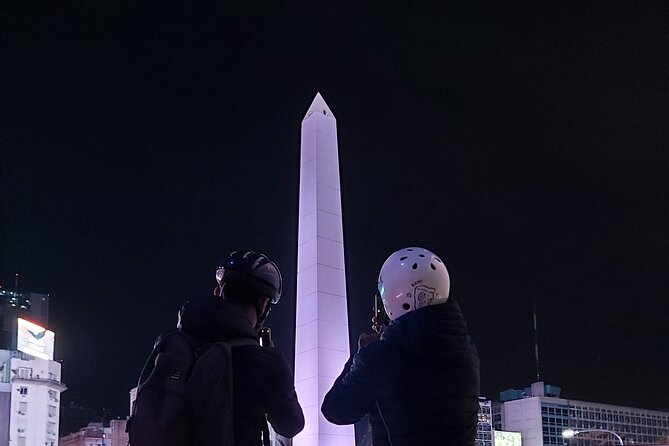
The night setting adds a useful change of mood. Teatro Colón glows against the darker streets. The Obelisco rises above the bright intersection of 9 de Julio and Corrientes. At Plaza de Mayo, the buildings and open space encourage you to pause and listen rather than simply pass through.
I also like the way the route mixes architecture with politics. Buenos Aires is not just a collection of handsome facades. Its public spaces carry arguments about independence, power, social movements, military rule, celebrity, and national identity. A strong guide can make those connections easier to follow, and Ricky’s presentation is the feature most praised in the available feedback.
The tour is offered in English, which matters for a history-heavy route. If you want a short orientation to the city that includes stories you may not find in a standard sightseeing loop, this format has real value.
More bike rides around Buenos Aires:
- Bike Tour: Half-Day City Highlights of Buenos Aires
★ 5.0 · 1,083 reviews - Buenos Aires: North or South Buenos Aires Bike Tour
★ 4.7 · 719 reviews - Highlights of BA by Bike – Part one
★ 5.0 · 285 reviews
Starting at Teatro Colón and Plaza Lavalle
The meeting point is at Arroyo 889, in the city of Buenos Aires. From there, the ride begins with Teatro Colón, one of the city’s most famous cultural buildings.
You stop for about 20 minutes, enough time to view the illuminated exterior and take photographs. Admission is not included, but this tour does not appear to include an interior visit. That is important if you want a full theater tour. Here, the focus is the building’s place in the city and the way it looks at night.
Next comes Palacio de Tribunales beside Plaza Lavalle. The National Supreme Court gives the stop a more formal, civic tone. The surrounding square also helps explain Buenos Aires’ old European influence, including the architectural style behind its nickname as the Little Paris of South America.
I like this opening because it gives you two kinds of Buenos Aires within a short distance: the performing arts and the machinery of government. The stops last about 15 to 20 minutes, so you should expect short explanations, photographs, and a return to the bicycles rather than an extended architectural study.
The Obelisco and the scale of 9 de Julio Avenue
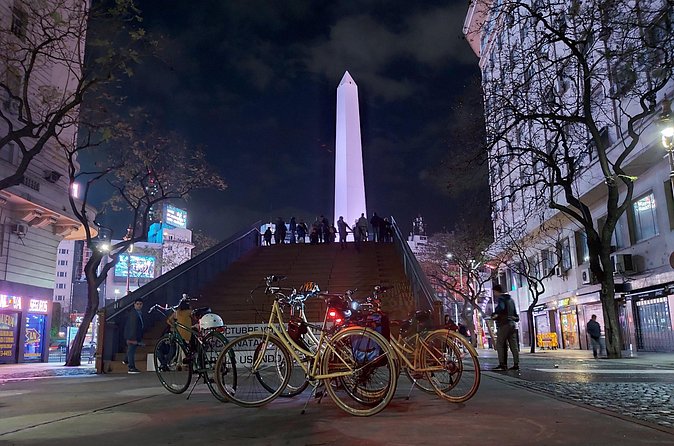
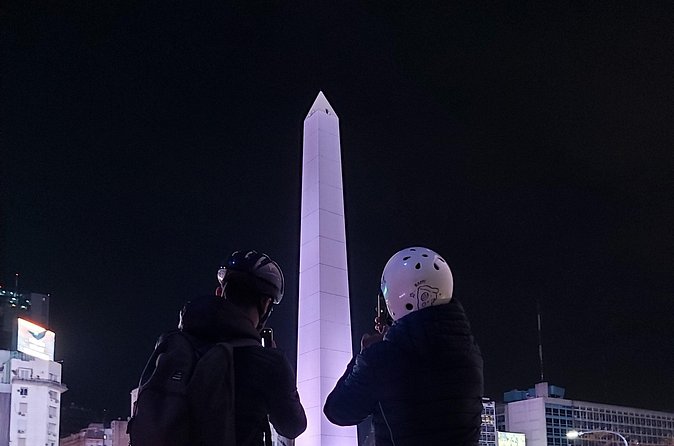
The Obelisco is the tour’s most recognizable urban landmark. It sits at the intersection of 9 de Julio and Corrientes Avenues, one of the city center’s defining points.
You have about 20 minutes here. That gives you time to take in the monument and the surrounding traffic, lights, signs, and wide avenues. The Obelisco is particularly effective at night because it functions as both a monument and a marker of city energy.
The guide’s historical approach can add much more than a standard photograph. One especially memorable detail from the tour’s historical commentary concerns the creation of 9 de Julio Avenue. Eighteen blocks of buildings were demolished to make room for the avenue, and material from that demolition was dumped toward the river. That area later helped form part of what is now the Costanera Sur Ecological Reserve.
That story changes how you see the avenue. It is not simply a very wide road. It reflects a major urban decision, with a human and environmental cost. I value details like this because they turn an impressive view into a question: who shaped the city, and what disappeared to create it?
Eva Perón, Plaza de Mayo, and Argentina’s political story
The stop at the Monument to Eva Perón shifts the tour from architecture to personality and political memory. Eva Perón remains one of Argentina’s most famous and disputed figures, and her story is closely tied to that of Juan Perón.
The scheduled stop lasts about 20 minutes. You should expect an explanation of the couple’s political importance and lasting effect on Argentina, rather than a visit inside a museum or a formal admission-based attraction. The subject can be emotional and politically charged, so the guide’s tone matters.
The strongest feedback about this experience highlights Ricky’s passionate, uncensored, and balanced storytelling. That combination is useful here. Eva and Juan Perón are not figures you understand well through a simple list of dates. Their place in Argentine public life involves admiration, criticism, loyalty, conflict, and long-running debate.
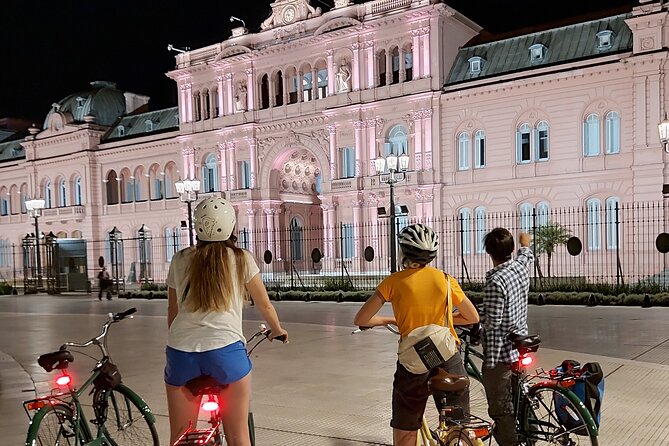
Plaza de Mayo brings the story back to the country’s founding. This is the square where leaders gathered during the movement to end Spanish rule. You spend around 20 minutes learning about the decisions made there and the events that shaped Argentina’s break with colonial power.
I would pay close attention at this stop. The square may look open and straightforward, but its meaning comes from the events associated with it. The guide’s role is to point out the details that a quick photograph will not reveal.
A few more Buenos Aires trips worth putting side by side
- Tango Porteño: The Best Tango Night in Buenos Aires
★ 4.6 · 567 reviews - Buenos Aires: Puerto Madero Sunset Cruise with Open Bar
★ 4.1 · 439 reviews - Buenos Aires by Night Small-Group City Tour
★ 4.5 · 113 reviews - Buenos Aires by Night: Small Group City Tour
★ 4.8 · 83 reviews
Costanera Sur and the best chance to eat locally
Costanera Sur is the longest stop, at about 30 minutes. It is also the only planned food break, so it gives the ride a welcome change of pace.
A food truck offers choripán, provoleta, churrasquito, and bondiola. These are classic Argentine street-food choices, and prices are described as reasonable, but the meal is not included. Bring enough Argentine pesos or another accepted form of payment for your own dinner, though the supplied details do not specify payment methods.
Choripán is the obvious first choice for many visitors: grilled sausage in bread, usually eaten casually and without ceremony. Provoleta offers grilled cheese, while churrasquito and bondiola provide meatier options. I like that you are not being taken to a formal restaurant. A food truck stop fits the bicycle format and keeps the evening tied to ordinary city life.
The nearby Ecological Reserve is also explained during the stop. You should not expect a reserve walk or a nature excursion. Instead, the guide connects the area to the city’s growth and the earlier story about construction debris near the river.
This is a good point to judge your own preferences. If you want a polished dinner with table service, this will feel basic. If you prefer a quick local bite and time to chat with the group, it is one of the tour’s most useful features.
Puente de la Mujer and the waterfront lights
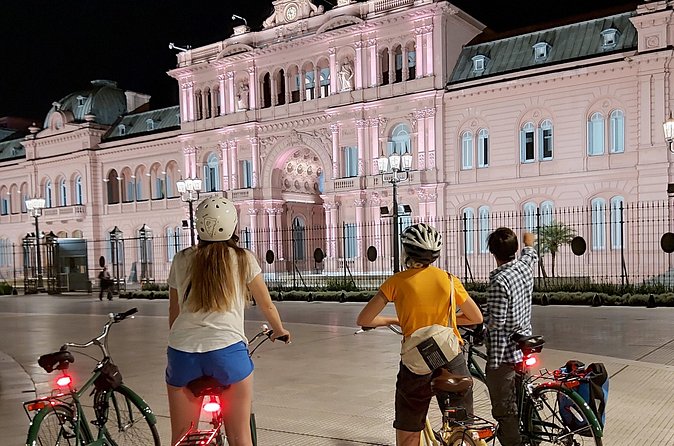
After food, the ride continues to Puente de la Mujer in the Puerto Madero area. The tour stops on one side of the bridge for a short explanation and photographs.
You have about 20 minutes here. That is enough for a quick look at the bridge’s distinctive form and the illuminated waterfront setting. The stop is lighter on political history and heavier on visual appeal, giving you a break after the denser material at Plaza de Mayo and Costanera Sur.
The tour does not promise a full walk across the bridge or an extended exploration of Puerto Madero. You stop, hear the explanation, take pictures, and continue. That limitation is worth noting if this is the area you most want to explore. You may prefer to return separately during daylight or allow extra time before or after the ride.
Still, as part of a wider route, Puente de la Mujer works well. It shows a newer, more contemporary side of Buenos Aires after the grand theaters, courts, and historic squares.
CCK and the final return through Plaza San Martín
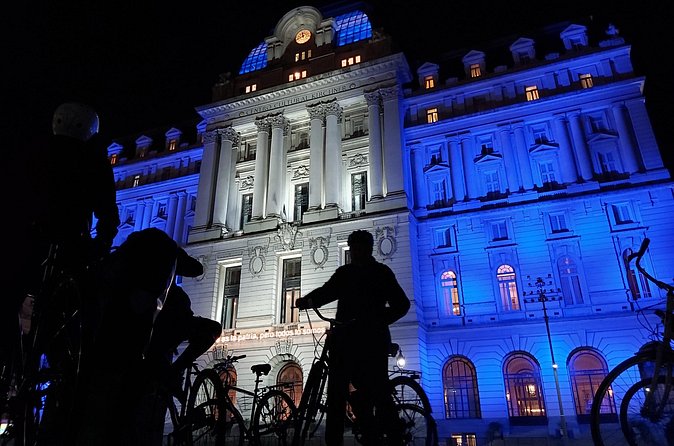
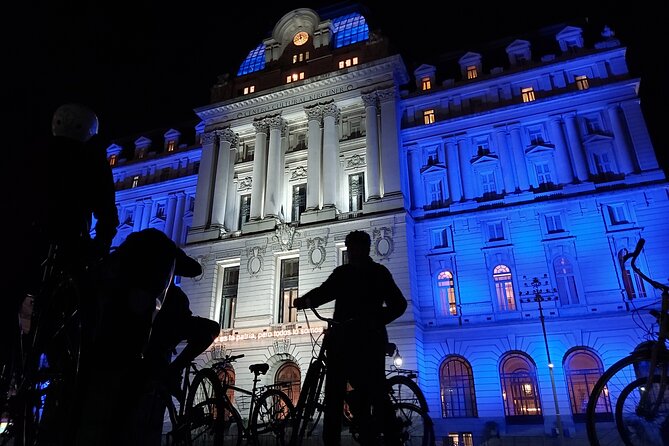
The next stop is in front of Centro Cultural Kirchner, commonly known as CCK. The ride spends about 15 minutes here, with a short explanation and time for photographs. Admission is not included, and the stop is outside rather than an indoor cultural visit.
This brief pause keeps the route moving. By this stage, you have seen political buildings, a major monument, a waterfront bridge, and a cultural center. The range is part of the value: you are not spending three hours circling one neighborhood or hearing the same architectural story repeated.
The final listed stop is Plaza San Martín de Tours, where you look at a monument connected with an important Argentine leader and freedom fighter. The visit lasts about 20 minutes before you return to the shop at Arroyo 889.
Ending at a formal square gives the ride a calmer finish than the noisy Obelisco. It also brings the route back toward the kind of grand public spaces that define central Buenos Aires. The activity ends at its original meeting point, which simplifies the rest of your evening.
What the $35 price really covers
At $35 per person, the tour offers a bicycle, helmet, bike lights, an English-speaking guide, and roughly three hours of structured sightseeing. For a small group with a guide who provides substantial historical context, that is a fair price.
The value depends heavily on what you want from a city tour. If you only want to see famous monuments, you could visit several of these places independently at little cost. The Obelisco, Plaza de Mayo, Puente de la Mujer, and many outdoor monuments do not require admission.
You are paying mainly for the route, equipment, organization, safety items, and storytelling. The feedback gives particular weight to Ricky’s ability to explain why places matter, not merely identify them. His explanation of the 9 de Julio Avenue demolition is a good example of the added value: the ride connects an urban view to a wider story about power, planning, and the riverfront.
The extra costs are modest but should be clear in your budget. Bottled water is not supplied. Dinner at the food truck is on your own. Attraction admission is also excluded, although the route appears designed around exterior viewing rather than included interior visits.
Pace, group size, and practical comfort
The maximum group size is 10 people. That is small enough to keep the guide’s voice within reach and makes the experience more personal than a large coach excursion. It also means the ride may feel more social, especially during the food stop.
You need a moderate level of physical fitness. The information does not provide a precise distance, bicycle model, or road-by-road riding conditions, so I would not assume the route is effortless. You will be cycling for much of a three-hour activity, with several stops along the way.
The supplied equipment includes a helmet and bike lights. Those are essential for a night ride, especially around major avenues and central traffic. Wear comfortable clothing and shoes suitable for cycling, and bring water since bottled water is not included.
Because the activity requires good weather, keep some flexibility in your schedule. If poor weather cancels the tour, you can be offered another date or a full refund. The same applies if the minimum number of participants is not reached. For a full refund after a change of plans, cancel at least 24 hours before the start time. Late cancellations and changes are not accepted.
Who will enjoy this night bike tour
I would recommend this ride to you if you want a first look at central Buenos Aires with enough historical explanation to make the sights meaningful. It suits an active visitor who likes moving between neighborhoods instead of staying at one square for a long time.
It is particularly useful early in your stay. After three hours, you will have seen many of the city’s major reference points and can decide where to return for a longer visit. Plaza de Mayo, Teatro Colón, and Puerto Madero all deserve more time if you want to explore them fully, but the bike ride helps you place them on the mental map.
History fans should get the most from it, especially if you appreciate political stories that include conflict and uncomfortable details. Ricky’s approach, as described in the available feedback, is passionate, uncensored, and unbiased. The strongest praise calls the experience a history lesson rather than an ordinary tour, and that is the right expectation to set.
I would be more cautious about booking if you dislike cycling in cities, need a very gentle pace, or want indoor visits to the theater and cultural buildings. This is an outdoor overview with selected stops, not a museum tour or a food tour.
Final verdict: should you book it?
Book this experience if you want history, city lights, and local food in one compact evening. The combination is stronger than the individual stops alone. You see famous Buenos Aires landmarks, but the guide’s stories give them context and connect them to the city’s political and physical development.
The best reason to choose it is the guiding. Ricky’s detailed explanation of the city, including the dramatic reshaping of 9 de Julio Avenue and the formation of the Costanera Sur area, suggests a tour built around cause and effect rather than memorized facts.
Skip it if you want a leisurely dinner, a museum visit, or a ride with almost no physical demand. For an active visitor with three hours to spare, the $35 price is reasonable, the group is small, and the route offers a useful first portrait of Buenos Aires after dark.
FAQ
How long is the night bike tour?
The experience lasts approximately three hours.
What language is the tour offered in?
The tour is offered in English.
Where does the tour begin?
It begins at Arroyo 889, C1007AAB, in the Autonomous City of Buenos Aires.
Where does the tour end?
The activity ends back at the original meeting point.
Is a bicycle included?
Yes. Bicycle use is included in the tour price.
Are a helmet and bike lights provided?
Yes. The tour includes use of a helmet and bike lights.
Is dinner included?
No. The food truck stop is on your own. You can buy choripán, provoleta, churrasquito, or bondiola during the stop at Costanera Sur.
How large is the group?
The tour has a maximum of 10 participants.
What happens if the weather is poor?
The experience requires good weather. If it is canceled because of poor weather, you will be offered a different date or a full refund.
Recently added around Buenos Aires
- Photo Session in Buenos Aires★ 5.0 · 26 reviews
- Your Personal Photographer in Buenos Aires★ 5.0 · 24 reviews
- Discover Buenos Aires’ independent art scene — Ticket included★ 5.0 · 30 reviews
- Your Private Photographer in Buenos Aires★ 5.0 · 4 reviews
- Yerba Mate Workshop – Learn to Drink Mate like a Local!★ 5.0 · 11 reviews
- Taste of Tradition: Yerba Mate & Alfajores Experience★ 4.0 · 5 reviews
- Wine tasting in OASIS Palermo★ 5.0 · 2 reviews
- Day Tour Classic★ 3.5 · 35 reviews
Cycling Tours, compared.
Bike Tour: Half-Day City Highlights of Buenos Aires
Read our review →
Ultimate Buenos Aires Bike Tour: All-Day All-Inclusive All-City
Read our review →
Full Day Bike Tour in BA Foodie and Cultural Immersion Max 6 ppl
Read our review →
Half-Day Recoleta and Palermo Bike Tour in Buenos Aires
Read our review →
Browse the lists this tour appears in